分类: politics

  • Spain launches regularization process to recognize rights of Dominicans

    Spain launches regularization process to recognize rights of Dominicans

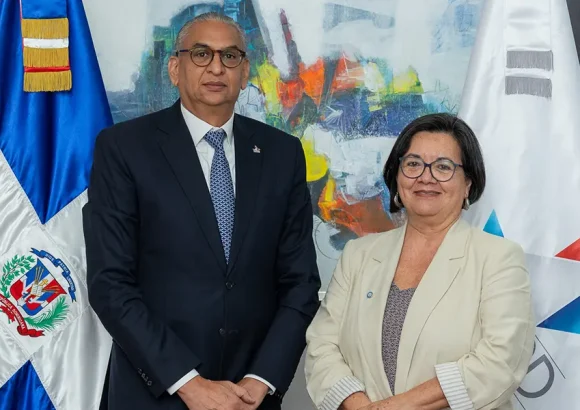
    In a high-profile diplomatic meeting held in Santo Domingo, Spanish Foreign Minister José Manuel Albares has announced a landmark new regularization scheme that will grant formal legal status to Dominican residents living in Spain, marking a significant step forward in recognizing the rights of one of the country’s largest migrant communities from the Caribbean.

    Following extensive talks with his Dominican counterpart, Roberto Álvarez, Albares publicly acknowledged the far-reaching contributions the Dominican diaspora has made to Spain’s economic dynamism and social diversity over decades. The minister confirmed that the program will expand in the coming weeks, allowing a growing number of undocumented Dominican residents to formalize their status and access full legal protections.

    Beyond migration policy, the two top diplomats used the meeting to align on a range of shared regional priorities, most notably coordinated action to promote long-term stabilization in neighboring Haiti, which has grappled with years of political collapse and humanitarian crisis. Albares underlined Spain’s long-standing commitment to nurturing close strategic collaboration with the Dominican Republic, emphasizing that both nations view their bilateral partnership as a cornerstone of their foreign policy in the Latin American and Caribbean region.

    Albares also reaffirmed Spain’s consistent support for inclusive development initiatives across the Dominican Republic, highlighting the shared Spanish language as a foundational cultural and political bridge that fosters constructive dialogue and peaceful cooperation amid an increasingly fragmented global order. Looking ahead, the Spanish foreign chief drew particular attention to the upcoming Ibero-American Summit, set to take place in Madrid on November 4 and 5, framing the gathering as a critical multilateral platform for advancing regional integration and addressing pressing geopolitical challenges facing Spanish-speaking nations worldwide.

  • Dominican Army strengthens border oversight through regional tour

    Dominican Army strengthens border oversight through regional tour

    SANTO DOMINGO – In a proactive move to shore up national border defenses, Dominican Army Commander Jorge Iván Camino Pérez has completed a multi-day inspection tour of high-priority border zones across three northern provinces: Independencia, Elías Piña, and Dajabón. The operational review was designed to strengthen on-ground oversight of border activities and reinforce the country’s territorial security protocols.

    The inspection kicked off in Jimaní, where the commander first stopped at El Rodeo Fortress, the central command base for the 14th Infantry Battalion. During his stop, he held briefings with battalion leadership to review current operational protocols and address any emerging challenges facing on-duty troops. Following the fortress visit, Camino Pérez traveled to several frontline military posts and official border checkpoints to assess day-to-day operations firsthand, speaking with deployed soldiers to understand working conditions and security gaps.

    From Jimaní, the commander moved to Pedro Santana, a municipality in Elías Piña province, to inspect security arrangements at the Artibonito River bridge. This crossing is a critical infrastructure link on the main international highway connecting the Dominican Republic and neighboring Haiti, making it a high-priority site for border monitoring and security management.

    The tour then proceeded to military facilities across the municipalities of Restauración and Dajabón, with stops at the Libón River bridge, the Villa Anacaona military detachment, and dozens of remote border outposts positioned along the dividing line. Many of these outposts are located in isolated terrain, making regular oversight critical to ensuring consistent security enforcement.

    Camino Pérez wrapped up his inspection at Beller Fortress, the main military installation in Dajabón, where he addressed assembled troops. In his remarks, he emphasized the strategic importance of the Dominican border and urged all service members to maintain constant, heightened vigilance to counter unauthorized activity and uphold the country’s territorial integrity.

    Army spokesperson later clarified that the series of inspections is not an ad-hoc measure, but part of a sustained, ongoing monitoring program rolled out by the Dominican armed forces. The program has two core objectives: first, to safeguard the country’s national territory from incursions and cross-border illicit activity, and second, to improve security conditions that support and protect communities living along the border line.

  • Two Bills to receive first reading in the National Assembly on Thursday, April 30, 2026

    Two Bills to receive first reading in the National Assembly on Thursday, April 30, 2026

    BASSETERRE, Saint Kitts – On April 28, 2026, the St. Kitts and Nevis Information Service (SKNIS) released official notice confirming that a regular sitting of the country’s National Assembly has been scheduled for 10:30 a.m. local time on April 30, 2026. The sitting will take place at the National Assembly Chambers inside Government Headquarters in Basseterre, and the official Order Paper for the meeting has already been finalized and distributed.

    At the upcoming sitting, the legislative body will mark the next step in the current administration’s push for strengthened good governance across the country, with two amendment bills scheduled to receive their first reading. The government has repeatedly framed this legislative agenda as a core commitment to embedding greater transparency, public accountability, and adherence to the rule of law in national governance.

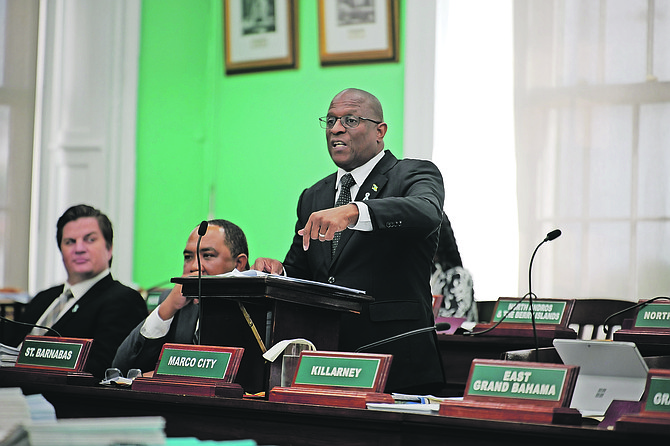
    Leading off the introduction of new legislation, Prime Minister Dr. Terrance Drew – who also holds cabinet portfolios for Finance, National Security, Citizenship and Immigration, Health, and Social Security – will request parliamentary leave to introduce the Banking (Amendment) Bill 2026 for its first reading before the chamber. Following the prime minister’s introduction, Attorney-General Garth Wilkin, the cabinet minister responsible for Justice and Legal Affairs, will move to introduce the Evidence (Amendment) Bill 2026 for its first reading.

    To ensure full public access to the proceedings, multiple broadcast and streaming options have been arranged for residents across St. Kitts and Nevis. The full sitting will be carried live via ZIZ Radio 96 FM and a network of participating local radio stations. Television viewers can watch the session live on Channel 5 in St. Kitts and Channel 98 in Nevis. For digital audiences, the St. Kitts and Nevis Information Service will stream the entire sitting live to its official Facebook and YouTube platforms. Once the text of the two bills is finalized for public distribution, full digital copies will be posted to the SKNIS official website in the dedicated ‘Bills’ content section for public review.

    This announcement comes as part of the administration’s ongoing effort to advance institutional reform through targeted legislative updates, aligned with its stated commitments to open governance.

  • Netanyahu’s rivalen bundelen de krachten; zullen zij het veiligheidsbeleid van Israël veranderen?

    Netanyahu’s rivalen bundelen de krachten; zullen zij het veiligheidsbeleid van Israël veranderen?

    Israeli Prime Minister Benjamin Netanyahu faces a new coordinated challenge ahead of upcoming national elections, as two of his most prominent political rivals have announced a merger to form a new opposition party dedicated to ousting his far-right coalition government.

    The new alliance, led by former right-wing lawmaker Naftali Bennett and centrist opposition leader Yair Lapid, has branded itself “BeYachad” — Hebrew for “Together” — and has centered its early policy messaging on domestic priorities, most notably reforming military conscription requirements to include ultra-Orthodox Jewish communities. On major regional security issues that dominate Israeli political discourse, however, analysts widely expect the new party to maintain a policy stance largely aligned with that of Netanyahu’s administration, the most right-wing government in Israel’s history. If the alliance takes power, that continuity means Israeli foreign and security policy would see little substantive shift across core regional fronts.

    As of yet, BeYachad has not released a full formal policy platform. Below is a breakdown of the party’s known positions on key regional issues, drawn from recent public statements from its leaders and insider sources.

    ### Position on Iran
    Bennett, 54, and Lapid, 62, have issued unwavering public support for Netanyahu’s decision to join the United States in carrying out military strikes against Iran, a stance that aligns with broad public backing for the military campaign across Israeli society. Shortly after Israeli airstrikes on Iran commenced, Lapid described the operation as a “just war against evil” in an interview with Reuters.

    Despite this initial backing, both leaders have since criticized Netanyahu for failing to achieve what they frame as Israel’s core strategic objectives in the campaign — chief among them the overthrow of Iran’s clerical-led government. Even so, neither Bennett nor Lapid has called for a resumption of hostilities after an April 8 ceasefire halted exchanges of fire between Israel, the U.S., and Iran following the joint strikes.

    A source close to the new party, speaking on condition of anonymity, described the two leaders as “hawkish” and “uncompromising on Iran” while also noting they bring pragmatic approach to the issue. “They understand that diplomatic agreements and post-conflict statecraft are just as necessary to achieve long-term strategic goals as military force,” the source added.

    ### Position on Lebanon
    Bennett and Lapid also support Israeli military operations in Lebanon, and both have openly criticized the April 17 ceasefire that was intended to end fighting between the Israel Defense Forces and Iran-backed Hezbollah militant group, arguing the agreement has failed to eliminate the persistent threat Hezbollah poses to northern Israel.

    Shortly before the IDF launched its ground incursion into southern Lebanon in March, Lapid stated Israel must take all necessary measures to protect its civilian population along the northern border. After the ceasefire was announced, Lapid emphasized that the only viable long-term solution is the permanent removal of all Hezbollah threats to northern Israeli territory.

    Bennett has been even more scathing in his assessment of the truce. In an April 17 post to Facebook, he wrote: “We can already count down to the next round of fighting. Hezbollah started rebuilding its presence in southern Lebanon this morning, and it is rearming with more rockets to prepare for the next confrontation.”

    ### Position on Gaza
    On the ongoing conflict in Gaza, where Israeli forces have continued to carry out deadly strikes despite an October ceasefire, both Bennett and Lapid have attacked Netanyahu for failing to fully dismantle Hamas following the group’s October 7, 2023 cross-border attack. The two leaders argue Netanyahu’s approach has left Hamas’ governing and military capacity intact.

    In January, Lapid told audiences that Netanyahu’s government had secured the “worst possible outcome” in Gaza, noting Hamas still retains tens of thousands of active fighters and maintains control over a small stretch of coastal Gaza territory under the terms of the current ceasefire.

    Earlier this month, Bennett echoed that criticism in a Facebook post, arguing that Netanyahu’s policy — which included allowing limited humanitarian aid into Gaza after a three-month total blockade in 2025 — has directly helped Hamas reconsolidate its control. “This is being done with the help of hundreds of aid trucks that Netanyahu’s government delivers to them every single day,” Bennett wrote.

    Netanyahu, for his part, has framed the devastating military campaign in Gaza — which has destroyed most of the enclave’s infrastructure and killed more than 72,000 Palestinians according to local health officials — as a strategic success. He has left open the option of a full resumption of large-scale combat if Hamas refuses to disarm under a U.S.-brokered negotiation process, a requirement Hamas has rejected to date.

    ### Position on Palestinian Statehood
    Public opinion polling shows a majority of Israeli voters oppose the creation of an independent Palestinian state in the occupied West Bank, Gaza, and East Jerusalem, and a BeYachad-led government would be unlikely to enact major policy changes on this issue regardless of its leaders’ past nuanced positions.

    Netanyahu has long been a staunch opponent of Palestinian statehood, and his administration has accelerated Israeli settlement construction in the West Bank, a move cabinet ministers have openly acknowledged is intended to permanently undermine any future prospects for Palestinian independence.

    Lapid, who aligns with many centrist and left-leaning Israeli figures, has previously stated support for a two-state solution as the correct path forward, a position he laid out in 2022. Bennett, by contrast, has rejected the two-state framework. When asked by U.S. broadcaster ABC why he opposed the solution in a 2024 interview, Bennett argued any Palestinian state would inevitably become a base for terrorist violence against Israelis.

    “What we have learned over the past 30 years is that every time we handed the Palestinians a piece of land, they did not build it into a peaceful, prosperous Singapore. They turned it into a terror state, and began killing Israelis,” Bennett said at the time.

    Across the West Bank file, all three political leaders — Netanyahu, Bennett, and Lapid — have publicly condemned violence carried out by Israeli settlers against Palestinian communities. Settler attacks have surged in frequency and severity under Netanyahu’s tenure, and critics accuse the prime minister of tacitly tolerating attacks that see settlers burn Palestinian villages and assault local residents. Netanyahu’s office has repeatedly denied these accusations.

  • A peace signature against the blockade

    A peace signature against the blockade

    Across Cuba right now, a quiet but powerful wave of civic action is sweeping the island nation. The growing “My Signature for the Homeland” movement is far more than a symbolic gesture or empty political slogan — it is a deliberate, conscious act of collective resistance against the long-standing international blockade that has shaped daily life for generations of Cubans.

    History has a way of elevating small, intentional acts into defining markers of national identity. A single stroke of ink on a petition sheet carries more moral weight than any weapon of aggression. Today, Cuba is uniting around this movement: millions of hands reach for paper, and every name added becomes a line of defense, a moral bulwark against the collective punishment that has sought to break the Cuban people’s resolve.

    As the movement’s organizers emphasize, this initiative is first and foremost a profound act of civic duty. The siege Cuba endures is not merely a physical barrier that blocks oil tankers from reaching its ports, cutting off critical supply chains. It is a deliberate attempt to erode the nation’s collective soul, to wear down public commitment to Cuban sovereignty through systemic economic and social hardship.

    The U.S.-led blockade operates as a cruel, indiscriminate machinery of punishment that spares no segment of the Cuban population. It does not differentiate between children, elderly people, rural farmers, or urban workers. Its impact is felt in every shortage of staple bread, every gap in access to life-saving medicine, every scarcity of fuel that grinds daily activity to a halt, and every separated family kept from the embrace they have waited years to share. There are few more fundamentally inhumane acts than coercing an entire population to surrender its inherent dignity by inflicting widespread suffering on ordinary families.

    Yet on this island shaped by decades of struggle, the Cuban people have chosen a response far more powerful than resentment: radical national unity. Adding one’s signature to the movement is no passive symbolic act. It is a public message to the entire world: Cubans choose to build cross-border solidarity rather than succumb to fear and division. It is an act of guarding the concept of “the Homeland” — the intangible, shared territory of the national heart that holds the legacy of José Martí, the revered Cuban independence leader, and the quiet sacrifice of thousands of anonymous Cubans who sustained the nation through years of hardship.

    Martí, often called the Apostle of Cuban independence, once taught that “Homeland is humanity.” Today, as every new signature links to the last, forging an unbroken chain of principled resistance, Cubans are defending peace as their first and most foundational line of defense. Cuba has never sought war, but it will not accept the slow, gradual death imposed by the ongoing blockade. Cubans do not crave revenge; they crave the ability to breathe freely, to build their nation without the constant shadow of punitive legislation that punishes them simply for existing as a sovereign people.

    This civic movement carries a unique beauty: it turns a collective act of national resistance into an intimate, personal choice. When a Cuban signs their name, they are not just adding a name to a list — they are standing with the mother waiting for a life-saving shipment of medicine, the engineer waiting for access to critical raw materials to build the nation’s future, and the child who deserves to grow up without the weight of external hatred. Participants do not sign out of bitterness; they sign with the clear certainty that the blockade can only be overcome through the power of truth and active, principled peace.

    Every signature added is a small piece of the Cuban Homeland that refuses to return to colonial status. Every full sheet of signatures is a verse of quiet, unyielding civil resistance. So long as there are Cuban hands willing to write their name and affirm their commitment to national sovereignty, the blockade — this unjust collective punishment — will never hold legal or moral force in the hearts of the Cuban people.

    Because Cuba is not signing a document of surrender. It is signing for life, for peace, and for the inherent dignity of a people that has never accepted existence on its knees. That signature, that commitment, is as deeply, inherently Cuban as the palm trees that line the nation’s coasts.

  • Fidel and unconventional warfare: An early warning about the assault on consciousness

    Fidel and unconventional warfare: An early warning about the assault on consciousness

    Decades before modern phrases like “fake news” and “cognitive warfare” entered everyday public discourse, Fidel Castro Ruz, the iconic founding leader of the Cuban Revolution, had already mapped out the hidden mechanisms of power that major world powers would unleash through digital information and communication technologies.

    Crucially, Castro’s perspective was never rooted in opposition to technological progress itself. A close look at his legacy reveals a consistent commitment to expanding digital access and technical expertise across Cuba: he championed the development of the island’s first domestic computer, established the country’s preeminent University of Information Sciences, and launched the nationwide Joven Club de Computación (Youth Computer Club) initiative to bring digital literacy to generations of young Cubans.

    Instead, his words represented a prescient, far-sighted warning: he accurately foresaw that cyberspace would evolve into the central battlefield of a quiet, unconventional war designed to colonize the minds of people across the Global South. Castro framed the internet as inherently contested terrain. He never rejected its transformative potential for marginalized nations, noting in a 2012 address at the launch of the book *Guerrillero del Tiempo*: “The internet is a revolutionary tool that allows us to receive and transmit ideas in both directions—something we must know how to use.”

    Yet as early as 2006, when the U.S. government formally announced the creation of its Air Force Cyberspace Special Command, Castro sounded an urgent alarm that rings even louder in today’s hyper-connected world. “The internet can be used with the worst intentions in the world, as envisioned by the CIA and the Pentagon,” he warned at the time. This core duality defined his entire framework on digital power: the network itself is not the enemy; the danger lies in how U.S. imperialism and its allied powers would weaponize it for geopolitical gain.

    At the heart of Castro’s analysis was a sharp critique of mass psychological manipulation. In a landmark November 2005 address delivered at the University of Havana’s Aula Magna, he laid out a critical distinction that explains the effectiveness of 21st century unconventional conflict. “When they first emerged, the mass media took hold of people’s minds and ruled not only on the basis of lies, but also of conditioned reflexes,” he explained. “A lie is not the same as a conditioned reflex. A lie affects knowledge; a conditioned reflex affects the ability to think.”

    This core thesis exposes that the goal of this digital warfare is not merely to spread false information—it is to erase a population’s capacity for critical thought. Through endless repetition of ideological slogans that seep into the collective subconscious, adversaries can reshape public opinion without overt military intervention. Castro illustrated this dynamic with a stark, direct example: “Because they have already created reflexes in you: ‘This is bad, this is bad; socialism is bad, socialism is bad,’ and all the ignorant, all the poor, and all the exploited saying: ‘Socialism is bad.’ ‘Communism is bad,’ and all the poor, all the exploited, and all the illiterate repeating: ‘Communism is bad.’”

    Today, that dynamic has been amplified exponentially by algorithmic curation and viral social media platforms, turning this repetitive messaging into a constant, pervasive assault on independent consciousness.

    Castro’s analysis expanded further to connect digital psychological warfare to the global military-industrial complex. In an August 2009 reflection titled *The Empire and the Robots*, he denounced the stark global inequality that drives weapons development: while more than one billion people across the planet faced chronic hunger, the United States accounted for 42% of total global military spending, pouring vast resources into developing “technologies for killing.”

    The question he posed nearly 20 years ago remains as urgent as ever: “If robots in the hands of transnational corporations can replace imperial soldiers in wars of conquest, who will stop the transnational corporations in their search for markets for their devices?” This shift toward the dehumanization of war—replacing on-the-ground soldiers with drones, algorithms, and autonomous weapons—works hand in hand with psychological warfare: it turns mass destruction into a distant, abstract spectacle, making it far easier to manipulate public perception to justify military aggression. Recent examples, such as Project Maven, the partnership between the Pentagon, tech firms Palantir, Anthropic and its AI Claude, in strikes targeting Venezuela and Iran, confirm Castro’s early insight.

    All of Castro’s interconnected warnings about unconventional warfare coalesce into a overarching diagnosis he labeled “knowledge imperialism.” Repeatedly across his speeches, he framed this as the “main battlefront of the imperialist war,” with an ultimate goal of breaking the sovereign will of independent nations without firing a single shot. Instead of overt military invasion, imperial powers rely on cultural subversion and systematic information manipulation to achieve their geopolitical aims.

    In 2017, Cuban President Raúl Castro Ruz formally reaffirmed this framework before the country’s National Assembly, emphasizing that massive U.S. investments in digital and cultural tools were designed to “refine the tools of the so-called ‘unconventional war’” to provoke political destabilization and restore capitalist rule on the island.

    In the decades since Fidel Castro first issued these warnings, his early analysis has become a core part of Cuban state doctrine, and an essential lens for interpreting 21st century geopolitical conflict. In an era where social media amplifies manufactured conditioned reflexes, algorithms target and segment users to spread tailored misinformation, and autonomous weapons replace frontline soldiers, Castro’s words carry the weight of a fulfilled prophecy—one that is ultimately a call to defend popular sovereignty through critical knowledge and commitment to truth.

  • Na vertrek Colli barst strijd los om macht en geld bij VKI

    Na vertrek Colli barst strijd los om macht en geld bij VKI

    A high-profile leadership shakeup at Suriname’s leading fisheries inspection body has ignited a bitter public dispute over governance, institutional independence and ministerial authority, with the outgoing director stepping down early to avoid formal removal amid claims of sustained pressure and intimidation. After more than two decades at the helm of the Viskeuringsinstituut (VKI), Juliette Colli-Wongsoredjo announced her resignation before her planned removal from office, prompting immediate intervention from Suriname’s Minister of Agriculture, Livestock and Fisheries Mike Noersalim. The minister quickly appointed Arisha Sital-Sewbaran as acting director and named Rashley Resida, current secretary of the VKI Supervisory Board, as second co-signatory for institutional financial transactions, granting him authority to co-approve all transactions worth more than 10,000 Surinamese dollars. As of the time of the dispute, the VKI holds a bank balance of more than $600,000 in its operating account, and unlike many state entities, the institution is entirely funded by the domestic fishing industry rather than government tax revenue. The unfolding conflict came to public light during a widely attended press conference held at the Banquet Hall of Torarica, where representatives of major industry groups including the Federation of Suriname Farmers (FSA), the Suriname Seafood Association, small-scale artisanal fishing communities, along with members of the VKI Supervisory Board and their legal counsel outlined their deep concerns about recent developments at the inspection body. All speakers at the event stressed the critical importance of preserving VKI’s operational independence, a core requirement for its international accreditation and market access. Amid the leadership chaos, VKI’s full staff has issued a formal statement calling for calm, continuity and institutional stability. In an open letter addressed to the Supervisory Board, staff members confirmed that all core daily operations of the VKI remain fully functional, including import and export processing, routine product inspections, mandatory certification workflows, laboratory testing, and administrative support services, all of which are operating on schedule and to required standards. The staff also expressed their full backing for the Supervisory Board’s ongoing agenda focused on increasing institutional transparency, strengthening governance frameworks, and rebuilding public and sector trust in the body. They called on all involved stakeholders to respect the need for calm and allow space for a thorough, objective fact-finding process, arguing this approach is in the best interest of Suriname’s entire fishing sector and the country’s international reputation. Speakers at the press conference highlighted the transformative growth VKI achieved under Colli’s 20-plus years of leadership, describing her as a transformative figure comparable to iconic Surinamese leader Eddy Jharap for the institution. Under her direction, VKI upgraded its operational standards to fully align with European Union regulations, a position it maintains today, giving the institution a unique, respected standing across the Caribbean region. Speakers also pushed back against recent claims that the VKI has failed to complete required financial reporting. FSA chair Tania Lieuw-A-Sjoe clarified that all annual financial reports have been completed and filed on schedule, and the institution only received an extension to 2026 to adapt its reporting formats to the new international IFRS accounting standards. All annual financial statements have consistently been audited by independent accountants in line with global regulatory requirements, and the national audit body CLAD served as the external auditor through 2020. Press conference organizers also noted that they only learned of Minister Noersalim’s formal letter to the Supervisory Board – copied to President Jennifer Simons – appointing the new acting director and co-signatory during the event itself. Industry representatives have formally challenged the minister’s legal authority to unilaterally appoint a second co-signatory, arguing the move directly violates VKI’s official founding statutes. Under existing institutional rules, the director holds sole signing authority for transactions under 10,000 Surinamese dollars, while larger transactions require co-signature from either the Supervisory Board chair or a second co-signatory. By statute, this second co-signatory must be nominated by the sitting director and approved by the full Supervisory Board. Industry representatives also noted that by long-standing convention, the co-signatory is always a representative of the fishing sector, since all operating funds are contributed directly by sector participants. The previous co-signatory was Udo Karg, who now sits as a member of the VKI Supervisory Board. According to industry accounts, Colli refused to approve Resida’s appointment as co-signatory on the grounds that he lacks broad support within the fishing sector. Questions have also been raised about Resida’s conduct during a recent meeting with President Jennifer Simons, particularly around adherence to requirements for confidentiality and data privacy. After these concerns emerged, the FSA formally requested a public accounting from the Supervisory Board, but Lieuw-A-Sjoe said the body failed to provide satisfactory answers, leading to a further erosion of trust. Colli had previously nominated Supervisory Board member Mark Lall for the co-signatory position, but the group never responded to that nomination. “We have no clarity on what the underlying agenda here is, but it is surprising that they have been able to push their changes through despite our objections,” Lieuw-A-Sjoe said. “We are now waiting to see what the next steps will be.” Beyond the immediate leadership dispute, the sector has expressed serious anxiety about an upcoming regulatory audit by the European Union, a critical check that VKI has passed without incident for many consecutive years. Lieuw-A-Sjoe confirmed that Colli stepped down because she felt systematically intimidated and pressured by members of the Supervisory Board and a special “quick scan” review team, including unfounded accusations of money laundering tied to the institution’s financial management. Colli has issued a formal ultimatum to Minister Noersalim and the Supervisory Board, threatening legal action if the accusations of financial misconduct and mismanagement are not backed up by concrete evidence. That ultimatum was set to expire on April 28.

  • Guyana’s aviation sector protests Venezuelan President’s ‘Essequibo’ brooch in meetings with CARICOM leaders

    Guyana’s aviation sector protests Venezuelan President’s ‘Essequibo’ brooch in meetings with CARICOM leaders

    A diplomatic dispute over the contested Essequibo Region has flared up again after Venezuelan President Delcy Rodriguez wore a controversial map brooch during back-to-back official visits to Caribbean Community (CARICOM) member states, drawing sharp condemnation from a leading Guyanese industry group.

    The incident unfolded on April 27, 2026, during Rodriguez’s second visit to a CARICOM nation in less than three months. Meeting with Barbadian Prime Minister Mia Mottley in Bridgetown, the Venezuelan leader was spotted wearing a lapel brooch that re-draws Venezuela’s map to incorporate the 159,000-square-kilometer Essequibo Region – a territory long recognized by international law as part of Guyana. This was not an isolated choice: Rodriguez wore the exact same brooch during an April visit to Grenada for talks with Prime Minister Dickon Mitchell, photographs of the encounter confirm.

    Within hours of the Barbados meeting, the Aviation Operators Association of Guyana (AOAG), a trade body representing the country’s privately-owned domestic aviation carriers, issued a strongly worded statement condemning the gesture as deliberate, provocative aggression. The group labeled the brooch an “offensive emblem” and framed Rodriguez’s repeated use of the symbol during high-level diplomatic engagements as “continued provocative conduct” that undermines regional norms of peaceful dispute resolution.

    “This calculated act is not diplomacy. It is theatrical aggression, wrapped in symbolism and intended to offend, intimidate, and destabilize,” the AOAG statement read. “It is especially insulting when displayed before the leaders and peoples of CARICOM, a community founded on mutual respect, sovereignty, and the peaceful settlement of disputes.”

    The association called on all CARICOM member states to stand in solidarity with Guyana, urging regional governments to remain vigilant and reject any attempt – whether symbolic or practical – to legitimize what it calls Venezuela’s unlawful territorial claim. “The Caribbean must never provide a stage for territorial adventurism,” the statement added.

    The long-running territorial dispute over Essequibo is currently working its way through the International Court of Justice (ICJ), the United Nations’ highest court for state-to-state disputes. Next month, the court will open multiple days of public hearings to hear arguments from both sides on the merits of the case, which centers on the legal validity of the 1899 Arbitral Tribunal Award that established the current border between Venezuela and what was then British Guiana. The ICJ is expected to issue a binding ruling on the dispute in the first quarter of 2027.

    The AOAG emphasized that for more than 125 years, Guyana has maintained uninterrupted, peaceful, and internationally recognized sovereign administration over the entire Essequibo Region. The group argued that Rodriguez’s reliance on symbolic cartographic claims does not alter established international law, nor does it weaken Guyana’s commitment to defending its territorial integrity.

    “Indeed, such conduct diminishes Venezuela far more than it threatens Guyana,” the statement continued. “It reflects a government more interested in manufacturing external disputes than addressing internal crises. A badge does not confer sovereignty. A lapel pin cannot erase treaties, arbitral awards, or the will of a free people.”

    The AOAG reaffirmed the group’s unwavering position that the Essequibo Region has always been, and will forever remain, an inseparable part of Guyana’s sovereign territory.

    Regional dynamics add a layer of complexity to the dispute: while all CARICOM member states have formally backed Guyana’s territorial claim, many small Caribbean island nations have maintained close fraternal ties with successive Venezuelan governments, dating back to the Hugo Chavez administration. In exchange for these warm relations, Venezuela has long provided the bloc with concessionary oil prices and other forms of development assistance, creating divisions in regional responses to Caracas’ ongoing claims.

  • Honourable Spencer Brand Minister of Labour in the Nevis Island Administration World Day for Safety and Health at Work 2026 Address

    Honourable Spencer Brand Minister of Labour in the Nevis Island Administration World Day for Safety and Health at Work 2026 Address

    On April 28, 2026, marking the annual World Day for Safety and Health at Work, Honourable Spencer Brand, Minister of Labour within the Nevis Island Administration, delivered a keynote address centering on the urgent need to prioritize psychosocial wellbeing in workplaces across the island, framing the issue as a foundational driver of economic prosperity and social resilience.

    This year’s global observance carries the official theme “Good Psychosocial Working Environment: A Pathway to Thriving and Strong Organization”, a framing that Brand leveraged to reaffirm a core governing priority: that Nevis’ workers are the territory’s most valuable asset. He emphasized that their mental and emotional wellness is not a secondary concern, but a non-negotiable requirement for a high-functioning public sector, growing private industry, and connected, resilient communities.

    While the Nevis Island Administration has a long-standing track record of upholding basic workplace safety standards and expanding fair employment opportunities, Brand acknowledged that shifting global and local realities have created new demands that go far beyond minimum regulatory compliance. Rapid digital transformation, steadily growing workloads for many workers, and persistent global economic uncertainty have elevated psychosocial risks, requiring a proactive, people-centered approach to build workspaces where every employee feels valued, heard, and emotionally and physically secure.

    Research and on-the-ground experience confirm that workplaces defined by respectful culture, manageable workloads, accessible peer and managerial support, and inclusive leadership deliver measurable benefits: better overall worker health, higher sustained productivity, more cohesive cross-team collaboration, and greater workforce confidence, Brand noted.

    To advance this goal across Nevis’ public and private sectors, Brand laid out three interconnected guiding pillars that will shape the administration’s policy and outreach efforts moving forward.

    The first pillar is people-first leadership. Brand stressed that organizational leaders set the cultural tone for entire workplaces: when leaders prioritize empathy and open communication, workers feel safe to raise concerns about burnout, workload imbalance, or other stressors without fear of retaliation. To embed this approach, he announced the administration’s commitment to expanding targeted training for leaders at all levels, equipping them to identify early signs of worker burnout, distribute workloads more sustainably, and support staff through compassionate, confidential care.

    The second pillar is expanded, stigma-free access to robust mental health support. Brand noted that universal access to professional counseling, employee assistance programs, and specialized workplace health services is critical to addressing psychosocial risks. The administration will prioritize ongoing efforts to reduce cultural stigma around seeking mental health support in workplaces, expand access to evidence-based wellbeing initiatives including stress management training and peer support networks, and ensure no worker is left without resources to care for their mental health.

    The third pillar is cultivating an inclusive, collaborative workplace culture. Sustainable psychosocial health relies on foundational trust, mutual respect, and open lines of communication between leadership and staff, Brand explained. The administration will encourage all employers across Nevis to facilitate ongoing structured dialogue between teams and management, implement fair workload distribution, expand flexible work arrangements where feasible, and embed inclusive decision-making processes that center the diverse perspectives of all workers.

    As the governing body, Brand reaffirmed the Nevis Island Administration’s ongoing commitment to strengthening regulatory policies that protect worker psychosocial health, expanding access to resources for small and large businesses alike, and raising public awareness of overlooked psychosocial workplace risks. He noted that the government will continue to partner with businesses of all sizes to embed a culture that prioritizes mental health and empathetic, people-centered leadership.

    Yet Brand emphasized that building healthy workplaces is not a responsibility that falls to government alone. Employers, workers, industry organizations, and local communities all have a critical role to play in creating safer, more supportive work environments across the island. The collective benefits of this work are impossible to ignore: when workers feel consistently supported in their wellbeing, they deliver stronger performance, collaborate more effectively, and help build more resilient organizations and communities across Nevis.

    Brand added that the public sector will lead by example, demonstrating that investing in worker wellbeing and boosting productivity are not competing goals, but mutually reinforcing priorities. By walking this path publicly, the government can set a benchmark for private sector employers and strengthen public services, local business performance, and the overall long-term resilience of Nevis as a territory.

    In closing, Brand called on all residents, employers, and workers across Nevis to join the collective effort to improve workplace psychosocial health. He stressed that a positive, supportive work environment is not a one-time policy achievement, but an ongoing commitment that requires consistent attention and collaboration. As the world marks this annual observance, Brand urged all stakeholders to pledge to protect the wellbeing of Nevis’ workforce and build workplaces where every person can grow and thrive. He closed by wishing all observers a meaningful World Day for Safety and Health at Work 2026, and extended a blessing for the continued prosperity of Nevis.

  • Who Truly Owns and Runs the National Bus Company?

    Who Truly Owns and Runs the National Bus Company?

    A sharp public controversy over the ownership and governance of Belize’s National Bus Company (NBC) is intensifying, as industry stakeholders, government officials, and law enforcement navigate competing claims, disrupted traffic, and conflicting narratives around fare pricing.

    The conflict moved to a new level last week when the Belize Bus Association (BBA) leveled formal conflict of interest allegations against Belize’s Minister of Transport, Dr. Louis Zabaneh, tying his leadership of the transport sector to undisclosed influence over the state-linked bus operator. As the claims gained public traction, reporters pressed the minister for clarity during a Saturday press conference, asking pointedly: who ultimately owns and operates the National Bus Company?

    Dr. Zabaneh offered a clear breakdown of the venture’s structure, framing it as an ongoing public-private partnership designed to expand reliable public transit across the country. He confirmed that as of current operations, the Government of Belize holds a 60% majority stake in NBC, while existing bus operators hold the remaining 40% equity, with potential future participation from institutional investors still pending. As the government’s representative on the project, the Minister of Transport appoints all government-nominated board members, a roster he outlined to confirm transparency: government seats are held by board chair Louge, Genelle Neal, former Senator Elena Smith, and prominent trade unionist Miriam Paz. Operator representatives include Sergio Chuc (owner of Westline), Jamie Williams (owner of James Bus Line), and a Codd, who represents the collective interests of small operators holding a 10% combined stake. The company’s chief executive officer is Vanzie, a former co-owner of Floria Bus Line.

    The controversy extends far beyond ownership, however, spilling over into a bitter dispute over fare pricing that has divided the BBA and the Ministry of Transport. The BBA has pushed for widespread fare increases, arguing it must match the per-mile rates charged by NBC, which the association claims reach as high as 19 cents per mile. Dr. Zabaneh rejected that claim outright, pushing back on the BBA’s narrative and noting that any move by NBC to raise fares to the maximum allowed rate would directly contradict the government’s public commitment to shielding consumers from rising living costs.

    “It would have been bordering on hypocrisy if the NBC had gone and increased their prices right up to the maximum when I as minister had been saying we do not want to increase prices,” he explained. “We want to ensure we mitigate the impact of higher prices on our people.” The minister confirmed that NBC’s highest actual fare is just 16 cents per mile, applied only on the western route. He also added a key clarification to address circulating rumors: the NBC receives no operating subsidies from the government, with all expenses covered by the company’s own revenue as a public-private operating entity. “It is just like if government was to send a check with any private business out there, something would be very wrong with that. It would be corruption,” he noted.

    With negotiations over broad fare hikes stalled, the conversation around Belize’s public transit sector has now shifted to the longstanding demand for government fuel subsidies. Frustrated by the deadlock, bus operators blocked the busy Phillip Goldson Highway on the morning of the protest, bringing traffic to a complete standstill and forcing law enforcement to manage a tense public standoff.

    Acting Superintendent Stacy Smith, a police staff officer, explained that law enforcement planners had monitored the planned protest for days and deployed a de-escalation focused strategy to balance the right to peaceful protest with the public’s right to free movement. “We recognize the issue that was raised affects all Belizeans and we want to afford persons who are disgruntled the ability to protest,” Smith said. “We have recognized the need to maintain law and order to ensure citizens are able to move and get to their respective location at their liberty.”

    The police approach focused on avoiding violent confrontation, with uniformed officers deployed along the highway to maintain order and prevent clashes between protesters and other community members. According to Smith, the strategy succeeded: the protest concluded without major incidents, with only three people detained and issued minor violation tickets before being released. No injuries or significant property damage were reported.

    This report is adapted from a transcript of a televised evening news broadcast, with all statements preserved for accuracy and context.