分类: politics

  • Role of GOJ audit committees in hurricane recovery transparency underscored

    Role of GOJ audit committees in hurricane recovery transparency underscored

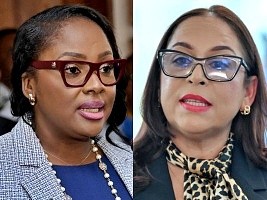
    KINGSTON, Jamaica — Jamaican financial authorities have positioned government auditors as critical pillars in the nation’s hurricane recovery framework, emphasizing their role in maintaining fiscal transparency during reconstruction efforts. Finance Minister Fayval Williams addressed the Government of Jamaica Audit Committees’ Conference Wednesday, framing oversight professionals as essential architects of national rebuilding.

    Speaking at The Jamaica Pegasus hotel under the conference theme ‘Governance in Action: Strengthening Trust, Risk Oversight and Resilience,’ Williams asserted that auditors provide indispensable safeguards for reconstruction funds allocated after Hurricane Melissa’s devastating impact. The minister characterized audit committees as operational guardians who translate principles of accountability into measurable public outcomes.

    Williams directly linked audit oversight to Jamaica’s Vision 2030 development objectives, noting that while committee members might not be primary reporters on progress metrics, their work fundamentally enables ministries and agencies to execute mandates effectively. She emphasized that understanding institutional roles within Jamaica’s medium-term socioeconomic policy framework represents a professional necessity rather than an option for oversight personnel.

    The address acknowledged Hurricane Melissa’s severe consequences, including compromised infrastructure, displaced families, and battered communities. Williams contrasted this destruction with the demonstrated resilience of Jamaican citizens and their determination to rebuild.

    Cabinet Secretary Audrey Sewell reinforced these sentiments, detailing how auditing practices evolved during the crisis response. She revealed that real-time auditing procedures implemented under the Hurricane Melissa Relief Initiative have strengthened institutional credibility among international partners and diaspora communities. This approach, Sewell noted, has facilitated continued support through grants and concessional financing arrangements.

    Both officials emphasized that Jamaica’s coordinated disaster response stemmed directly from years of foundational audit work, including identified system gaps, raised concerns about controls, and documented lessons from previous assessments. This historical oversight enabled the government to renew outdated systems and develop robust strategies before the hurricane crisis, providing institutional resilience when tested by natural disaster.

  • Several PLP nomination races are heating up

    Several PLP nomination races are heating up

    The Progressive Liberal Party’s candidate selection process entered a vigorous phase yesterday as eleven aspirants presented their cases before the party’s Candidates Committee, signaling intense internal competition ahead of the upcoming general election. The PLP headquarters transformed into a vibrant political arena with dozens of supporters creating a festive atmosphere through music, Junkanoo rushes, and enthusiastic chanting while adorned in party regalia.

    In the Freetown constituency, a notable contest emerged between incumbent MP Wayne Munroe and long-time party member Ormanique Bowe, who arrived with substantial supporter presence. Ms. Bowe, a local business owner, emphasized her role as a maternal figure for the constituency, expressing strong confidence in her nomination prospects. Mr. Munroe responded to the challenge with philosophical acceptance, acknowledging competition as a sign of party strength while maintaining his belief in being the optimal candidate.

    The St. Anne’s constituency witnessed three contenders—Keno Wong, Latorna McPhee, and Chris Saunders—vying for nomination. Mr. Wong, former chairman of the National Neighbourhood Watch Council, cited community encouragement as his motivation, while Mr. Saunders, a veteran journalist, referenced the unexpected political shift in Georgia as inspiration for potential change despite previous electoral setbacks.

    Former Senator Robyn Lynes adopted a strategic approach by expressing openness to any available constituency rather than challenging sitting MPs, emphasizing her decision emerged from financial stability, family preparedness, and spiritual guidance rather than personal ambition. Meanwhile, Tasha Bullard-Hamilton presented her vision for Bimini and The Berry Islands, highlighting ancestral connections and presenting comprehensive development plans addressing healthcare, education, and infrastructure.

    Several incumbent MPs including Wayde Watson (Bain and Grants Town), Zane Lightbourne (Yamacraw), Patricia Deveaux (Bamboo Town), and Lisa Rahming (Marathon) also underwent the committee review process. The party announced intentions to ratify its second candidate batch on Thursday, expected to include Sylvanus Petty, Kirk Cornish, Clay Sweeting, and Bradley Fox Jr.

  • Senator Lalite-Ettienne: Parts not easily sourced, timeframe too short for repairs

    Senator Lalite-Ettienne: Parts not easily sourced, timeframe too short for repairs

    In a nuanced Senate deliberation on January 20, Independent Senator Alicia Lalite-Ettienne endorsed the government’s Motor Vehicles and Road Traffic (Amendment) Bill while advocating for practical adjustments to its grace period provisions. The visually impaired senator drew upon her husband’s experiences as a taxi driver to highlight systemic challenges in vehicle maintenance within Trinidad and Tobago’s import-dependent automotive ecosystem.

    Senator Lalite-Ettienne articulated how sourcing specific vehicle components—particularly for models like the Toyota Yaris—often requires international procurement, with lead times extending to months rather than days. She emphasized that while the bill’s 3-7 day compliance window appears reasonable theoretically, it fails to account for logistical realities in developing nations without local manufacturing capabilities. The senator specifically requested implementation of a documentation system that motorists could present to law enforcement while awaiting parts, noting that current enforcement approaches lack necessary flexibility.

    The legislative amendment, previously passed in the House of Representatives on January 16, establishes graduated grace periods for regulatory violations, allowing motorists to rectify issues before automatic fines trigger. Government Senator David Nakhid responded that discretion remains essential in enforcement, acknowledging that legislation cannot anticipate all practical complexities.

    Opposition Senator Janelle John-Bates raised complementary concerns regarding administrative burdens on under-resourced police and licensing officers. She cited the 2018 case of Patrick Awong—detained for eight hours over a previously paid fine—as evidence of systemic vulnerabilities that could exacerbate under the new timeline pressures. Senator John-Bates warned that automated systems could generate penalties despite compliance if certification paperwork experiences processing delays.

    Despite these concerns, Senator Lalite-Ettienne affirmed her fundamental support for the legislation, framing vehicle maintenance as a civic responsibility comparable to personal health management. The debate highlighted the ongoing tension between legislative idealism and implementational practicality in Trinidad and Tobago’s governance landscape.

  • Venezuelan ambassador: Region stands united for peace, sovereignty

    Venezuelan ambassador: Region stands united for peace, sovereignty

    Caribbean nations have demonstrated remarkable regional solidarity in response to what they characterize as unlawful US military actions against Venezuela. The First Regional Conference: The Voices of the Caribbean in Defense of Venezuela and International Law convened on January 19, bringing together over 180 political and civil representatives from across the hemisphere to address escalating tensions.

    The gathering, which included delegates from Trinidad and Tobago, Antigua and Barbuda, Barbados, Cuba, Jamaica, and numerous other Caribbean states, plus representation from Palestine’s Gaza Strip, focused on coordinating a unified response to the January 3rd military operation that resulted in the capture of Venezuelan President Nicolás Maduro and First Lady Cilia Flores.

    Venezuelan Ambassador to Trinidad and Tobago Álvaro Sánchez Cordero stated that the conference served as a platform to articulate coordinated proposals between social and solidarity movements throughout the Caribbean. Participants unanimously condemned the Trump administration’s military intervention, which reportedly resulted in over 100 casualties and what attendees labeled the ‘unlawful kidnapping’ of Venezuela’s constitutional leaders.

    The primary objectives emerging from the conference included establishing an international solidarity network to defend national sovereignty, developing actionable plans to influence foreign policy reformulation across participant nations, and creating legal instruments to preserve Caribbean unity and territorial integrity.

    Maduro and Flores, who appeared before a New York court on January 5th pleading not guilty to narcoterrorism and drug trafficking charges, are scheduled for their next court appearance on March 17th. Meanwhile, Venezuelan Vice President Delcy Rodríguez has assumed the role of interim president following Maduro’s capture.

    The conference represents the initial phase of coordinated activities that will include expert presentations on international law, analytical sessions, and thoughtful discussions aimed at maintaining regional stability against external threats.

  • Jamaican-American legislator first to officially endorse NY governor for re-election

    Jamaican-American legislator first to officially endorse NY governor for re-election

    NEW YORK — In a significant political development, Assemblyman Brian Cunningham, a Jamaican-American representative from Brooklyn’s 43rd District, has officially declared his support for Governor Kathy Hochul’s re-election campaign. This endorsement marks the first from a state legislator in the upcoming race.

    Cunningham, who entered the Assembly in March 2022, emphasized the productive working relationship he has cultivated with the Governor. He highlighted that their collaboration is fundamentally rooted in achieving tangible outcomes for Brooklyn residents, noting that Hochul has consistently demonstrated her commitment through decisive action rather than mere rhetoric.

    The Assemblyman pointed to substantial state investments exceeding US$1.3 billion allocated to his district under Hochul’s administration. These funds have been strategically directed toward critical areas including affordable housing initiatives, transportation infrastructure, educational programs, public safety enhancements, economic development projects, and community infrastructure improvements.

    Addressing rumors about potentially joining the ticket as Hochul’s running mate, Cunningham described these investments as transformative for Central Brooklyn communities. He praised the Governor’s approach to equity, emphasizing her understanding that genuine progress requires meeting communities at their point of need and allocating resources where they are most essential.

    Cunningham, who grew up in a working-class household with Jamaican immigrant parents, commended Hochul’s leadership style as being characterized by compassion, competence, and a profound dedication to working-class New Yorkers. He expressed anticipation toward continuing their partnership in building a stronger, safer, and more affordable New York for all residents.

    Prior to his legislative role, Cunningham built an extensive career in public service through positions in government operations, community development, and nonprofit leadership. His experience includes serving as Chief of Staff in the New York City Council and later as a Special Assistant in the New York State Senate. Currently, he holds the position of First Vice Chair at the New York State Association of Black, Puerto Rican, Hispanic & Asian Legislators, Inc.

  • Government policy only from government offices

    Government policy only from government offices

    The United National Congress (UNC), having secured a decisive victory in last April’s general election with a 29-12 parliamentary majority, followed by a clean sweep of all 15 seats in the January 12 Tobago House of Assembly election by its Tobago allies, now faces mounting criticism over its administrative practices. Despite this commanding mandate, concerns have emerged regarding the apparent conflation of party and state functions.

    Over the past month, multiple government ministers have chosen to deliver official policy announcements from the UNC’s party headquarters in Chaguanas rather than from government offices. This practice, while common when the party was in opposition, has raised eyebrows now that the UNC holds governmental power. The briefings have featured prominent cabinet members including Foreign Affairs Minister Sean Sobers, Housing Minister David Lee, Transport Minister Eli Zakour, and several others, all speaking from party premises flanked by both national and party flags.

    Journalists have reported difficulties in accessing these events, with many briefings announced merely as online occurrences without clear venue information until the last moment. Notably, only a January 14 briefing by Attorney General John Jeremie and Minister of Lands Saddam Hosein was conducted at an appropriate government ministry.

    When questioned about this blending of party and government functions, UNC Public Relations Officer Dr. Kirk Meighoo offered a straightforward defense: ‘Our members form the government and that is government policy. The UNC forms the government. We were voted in by the majority and that is how democracy works.’

    However, editorial analysis suggests that if the previous administration had similarly conducted government business from PNM headquarters, the UNC would have undoubtedly criticized such practices. The current approach raises important questions about institutional separation between governing party and state apparatus, with advocates emphasizing that utilizing proper government offices for official announcements would better serve democratic norms and transparency in Trinidad and Tobago.

  • Long, winding road to self-government

    Long, winding road to self-government

    The recent electoral triumph of a Tobago-based political party in the Tobago House of Assembly (THA) elections has created a pivotal moment for advancing the island’s long-standing pursuit of genuine internal self-government. This development comes after decades of unfulfilled promises and political maneuvering that have repeatedly raised and dashed the hopes of Tobagonians.

    Audley Graham, in a compelling editorial submission, argues that any legitimate legislative arrangement must fundamentally treat the Tobagonian people with fairness, dignity, and respect. This necessitates establishing frameworks that enable Tobago to generate its own revenue, develop critical infrastructure, and exercise substantial control over local resources.

    Rather than initiating new legislative drafts, Graham recommends that Chief Secretary Farley Augustine appoint a dedicated secretary for devolution and governance matters. This official should synthesize existing proposals dating back to the Seemungal draft of the 1970s through the most recent bill from the Rowley administration, creating a robust legislative document that reflects Tobago’s aspirations.

    The editorial highlights how successive central governments—both PNM and UNC administrations—have consistently demonstrated insufficient political will to facilitate authentic self-government for Tobago. These administrations have typically employed token approaches that disregard the unique intersectional identity of Tobagonians within the unitary state of Trinidad and Tobago.

    Graham points to Tobago’s proven governance capabilities, noting that key architects of the nation’s early independence era—including Doddridge Alleyne, Eugenio Moore, Victor Bruce, and ANR Robinson—hailed from Tobago. The current practice of delaying tactics, such as appointing joint select committees under the guise of bipartisan cooperation, only serves the self-interest and neo-colonial ambitions of Trinidad-based parties.

    The prolonged denial of Tobago’s self-determination aspirations not only harms Tobagonians economically and psychologically but also weakens the nation’s overall economic potential. Graham warns that continued delays risk hardening the resolve of minority elements who might advocate for secession—an outcome beneficial to no party, least of all Tobago itself.

    With the people of Tobago having clearly expressed their political will through the ballot box, the editorial concludes that their democratic voice must now be respected through concrete action toward meaningful self-governance.

  • Kelton Dalso selected as UPP St. George caretaker after primary

    Kelton Dalso selected as UPP St. George caretaker after primary

    In a strategic political development, United Progressive Party (UPP) Political Leader Jamale Pringle has officially welcomed attorney Kelton Dalso to his team of Caretakers following a primary election in St. George. The selection process, conducted on Monday, January 19, saw participation from 16 eligible branch members despite the modest electorate size.

    Pringle praised the turnout and engagement, highlighting the community’s commitment to revitalizing the St. George unit. ‘The active involvement of our members demonstrates a collective desire to restore St. George’s prominence within our party structure,’ Pringle noted.

    Dalso, recently called to the Bar of England and Wales, brings a unique blend of legal expertise and local business acumen to the role. Described as a native son of St. George and a seasoned participant in national affairs, his appointment signals the UPP’s commitment to fielding credible candidates. ‘Brother Dalso possesses the dynamism and dedication required not merely to advance our branch but to secure the St. George constituency for the United Progressive Party,’ Pringle asserted.

    The political leader also extended gratitude to fellow aspirants Kem Riley and Jermaine Kentish for their willingness to serve, acknowledging their contribution to a competitive selection process. Additionally, Pringle commended the St. George Branch Executive for administering the primary with professionalism and integrity.

  • DRC government organizes humanitarian aid and operations in Uvira

    DRC government organizes humanitarian aid and operations in Uvira

    In response to the recent withdrawal of the Congo River Alliance-March 23 Movement (AFC/M23), Prime Minister Judith Suminwa Tuluka has convened an emergency cabinet meeting to address the humanitarian crisis. The meeting, attended by senior security officials and government ministers, focused on developing a comprehensive response to the extensive displacement caused by the nearly two-month occupation.

    The Prime Minister revealed that the rebel occupation has resulted in the displacement of approximately 267,000 individuals, including a particularly vulnerable group of 12,000 unaccompanied minors. Addressing this mass displacement, Suminwa Tuluka identified facilitating the safe return of these populations as the government’s immediate priority.

    However, the Prime Minister established strict protocols for repatriation efforts, mandating that no return operations be authorized without thorough preliminary assessments of residential conditions. This cautious approach aims to prevent further vulnerability among returning populations. The Ministry of Social Affairs and the General Directorate of Migration (DGM) have been tasked with implementing these assessment protocols and managing the return process.

    Government Spokesperson Patrick Muyaya further elaborated that the administration faces significant challenges in restoring public services in Uvira, where suspected AFC/M23 elements may still operate. The effective reestablishment of governmental authority and public services in these areas remains a critical component of the stabilization strategy.

  • Vietnam underscores historic responsibility of CPV’s 14th Congress

    Vietnam underscores historic responsibility of CPV’s 14th Congress

    In a landmark address opening Vietnam’s 14th National Party Congress, State leader Cuong outlined an ambitious strategic framework that will guide the nation’s trajectory through 2030 and beyond. The gathering, comprising 1,586 delegates representing over five million party members, constitutes a pivotal moment for determining Vietnam’s future direction and national destiny.

    Cuong emphasized that the congress transcends mere objective-setting for the 2026-2030 period, representing instead a comprehensive blueprint for decades to come. The conclave seeks to galvanize national development aspirations while fostering pride and resilience across Vietnamese society. A central focus involves mobilizing all available resources and growth engines to strengthen national unity and harness contemporary opportunities.

    The comprehensive agenda addresses synchronized advancement across multiple domains: renewal initiatives, construction projects, development processes, and homeland defense. These efforts align with President Ho Chi Minh’s vision of establishing Vietnam as a nation comparable to global powers, fulfilling the aspirations of both the revered leader and the Vietnamese populace.

    Characterizing the 14th Congress as inaugurating a new developmental epoch, Cuong highlighted its embodiment of resolute political determination and collective national solidarity. The overarching vision pursues a Vietnam distinguished by peace, independence, democracy, prosperity, civilization, and happiness—steadily progressing toward socialist ideals through coordinated implementation of these strategic priorities.