分类: politics

  • WATCH: PM Browne Hopeful Partial U.S. Visa Restrictions Will Be Dropped After June Review

    WATCH: PM Browne Hopeful Partial U.S. Visa Restrictions Will Be Dropped After June Review

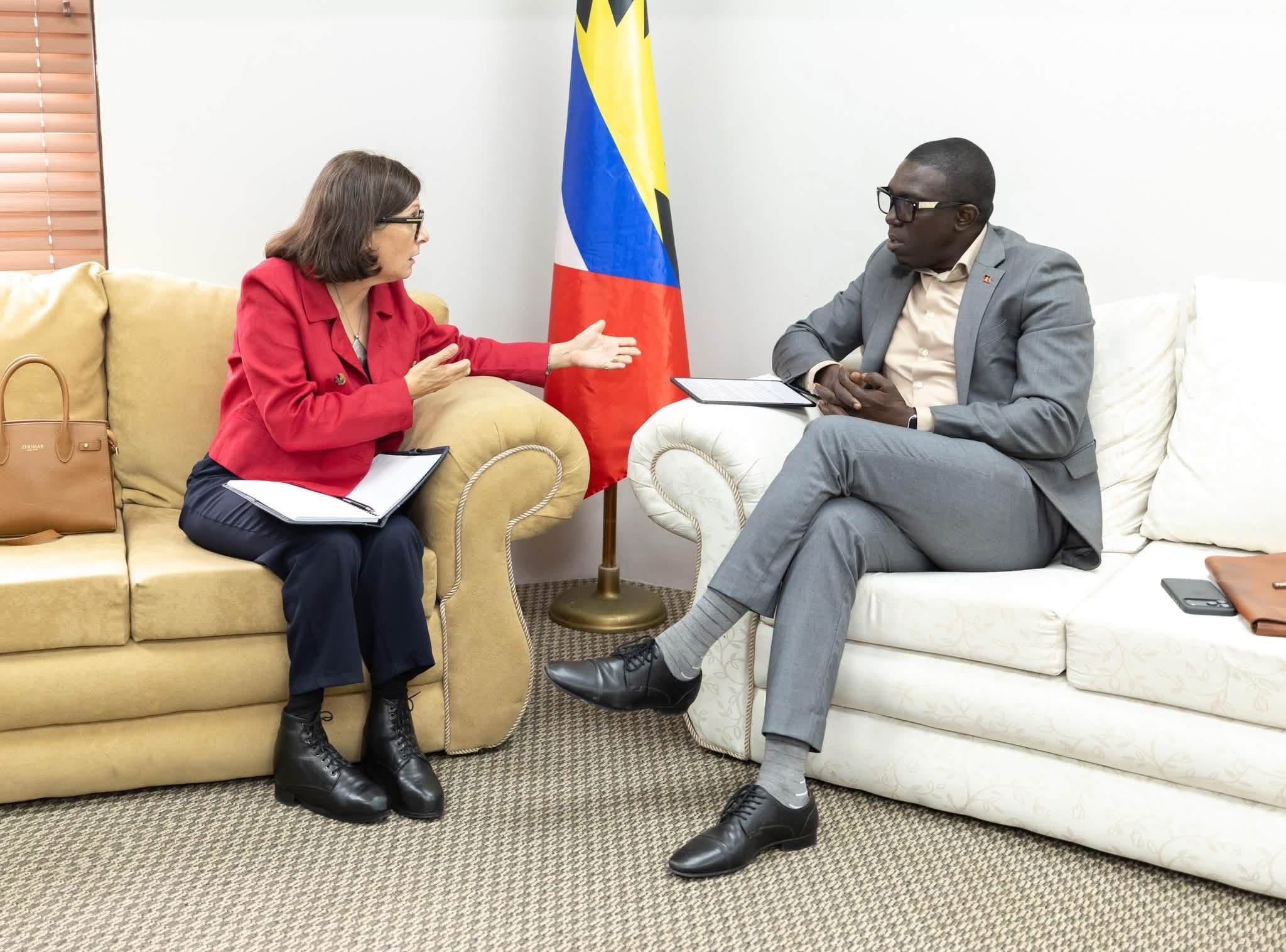
    Diplomatic talks between the government of Antigua and Barbuda and the United States Department of State are ongoing, with Prime Minister Gaston Browne expressing cautious optimism that Washington will lift the partial visa restrictions currently imposed on the nation’s citizens when the policy comes up for its scheduled review this June.

    In a recent televised interview with ABS Television, Browne revealed that high-level discussions with senior U.S. officials – including Deputy Secretary of State Landau – have centered entirely on resolving the visa restriction dispute. The prime minister stressed that his administration’s core goal is to see the policy expire without renewal, allowing the two countries to return to their pre-restriction visa arrangement for Antigua and Barbuda travelers.

    A key point of contention from the Antiguan and Barbudan side is that the restrictions were put in place based on what Browne calls a fundamentally false claim. The U.S. allegedly justified the limits by arguing that the country’s popular citizenship-by-investment program fails to require residency for program participants, an assertion Browne flatly denies.

    Browne went on to outline that Antigua and Barbuda has upheld rigorous compliance protocols for its investment immigration program for more than 10 years, including aligning all applicant screening processes directly with U.S. sanctions lists and automatically rejecting applications from individuals linked to sanctioned jurisdictions. “We have a sanction-list-only programme that moves in tandem with the United States,” Browne explained, emphasizing the nation’s long-standing commitment to meeting international security standards.

    The prime minister also shared that even some senior State Department officials have privately acknowledged misgivings about how the restriction was originally implemented. “We would have spoken to members in the State Department … and they regretted that such action was taken based on a false premise,” Browne said.

    Reaffirming his government’s clean record, Browne emphasized that neither he nor any member of his administration have engaged in activity that would warrant the imposition of visa restrictions. He stressed that Antigua and Barbuda has remained “totally compliant” with all relevant international norms and agreements. Moving forward, the nation will continue sustained diplomatic engagement with U.S. officials to secure a full, permanent reversal of the partial visa restrictions.

  • Contract signed for Balthazar Bridge Reconstruction and Soubise Coastal Protection

    Contract signed for Balthazar Bridge Reconstruction and Soubise Coastal Protection

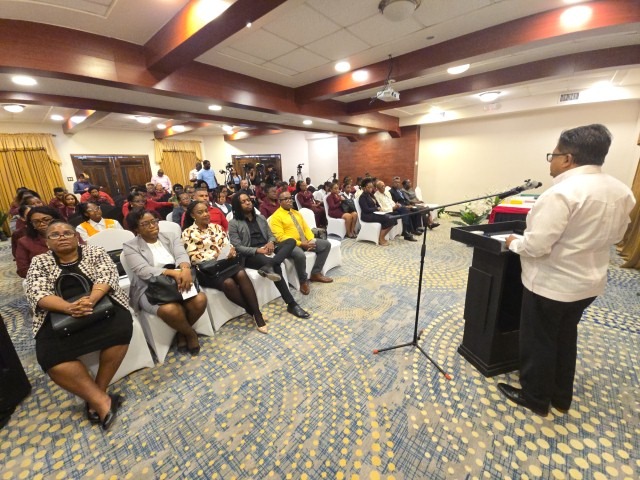
    The Caribbean island nation of Grenada has officially entered a new delivery phase for its flagship disaster resilience infrastructure initiative, with the government inking three civil works contracts worth a combined total of EC$36.25 million to upgrade key at-risk assets. The formal signing ceremony, hosted at the Ministry of Infrastructure’s conference room, paves the way for on-the-ground construction work to launch within the next few months, bringing long-awaited flood and storm protection to vulnerable communities in the St Andrew region.

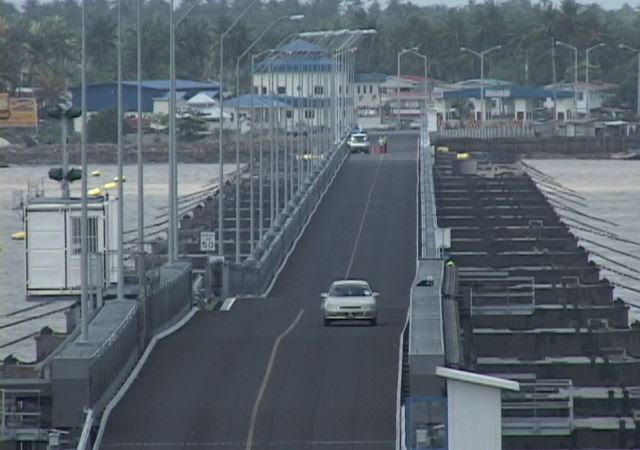
    The contracted works fall under Component 1 of the national Grenada Resilience Improvement Project (GRIP), an overarching program designed to reinforce critical public infrastructure across the country against extreme weather and natural disasters. Two of the project’s three lots focus on coastal protection infrastructure along the Soubise coastline, while the third covers full reconstruction of the Balthazar Bridge, a key transportation link for the area.

    Breaking down the awarded contracts, General Earth Movers Limited (GEML), a local Grenadian construction firm, secured two of the three tenders. The company will lead the EC$20.7 million reconstruction of the Balthazar Bridge, and also take on the EC$4.34 million first phase of Soubise coastal protection works. The second phase of Soubise’s coastal protection upgrades, which includes installation of rock and step revetments to stem coastal erosion, has been awarded to Construction & Industrial Equipment Limited (CIE) for a contract value of EC$11.21 million.

    Alva Browne, Grenada’s Permanent Secretary for Infrastructure, signed the agreements on behalf of the Government of Grenada, with senior leadership representatives from GEML and CIE signing on behalf of their respective companies. The ceremony was attended by multiple high-ranking government officials, including Prime Minister Dickon Mitchell, who also serves as the country’s Minister for Infrastructure. Other dignitaries in attendance included Delma Thomas, Minister for Youth and Sports, Minister for Mental Health, Wellness and Religious Affairs, and Parliamentary Representative for St Andrew NorthWest, as well as David Andrew, Minister of Education and caretaker parliamentarian for St Andrew SouthEast.

    In his remarks at the signing, Prime Minister Mitchell emphasized the critical public safety and economic importance of the GRIP initiative, noting that stronger disaster-resilient infrastructure will protect Grenadian communities from the growing impacts of climate change and extreme weather events. He also recognized the collaborative efforts of the Ministry of Mobilisation, Implementation and Transformation, the Ministry of Infrastructure, and the GRIP internal project management team for advancing the initiative from planning to the contract award and execution phase.

    All contracted civil works are scheduled for completion within 13 months of the official signing date, meaning upgraded infrastructure is expected to be fully operational by mid-2027 if construction proceeds on schedule. The GRIP project is part of Grenada’s broader national strategy to build long-term climate resilience across its transport and coastal infrastructure sectors, as small island developing states continue to face disproportionate risks from climate-driven sea level rise and extreme storm activity.

  • Pringle Says UPP Will Be Held Accountable From First 100 Days

    Pringle Says UPP Will Be Held Accountable From First 100 Days

    As the country’s upcoming general election draws near, United Progressive Party (UPP) leader Jamale Pringle has made a landmark pledge to voters, promising strict public accountability from the first day of his administration’s term through its final day if his party secures victory.

    Speaking to a packed rally of supporters in St. Philip’s South on Monday evening, Pringle emphasized that voters have every right to hold a UPP government to the commitments laid out in the party’s official election manifesto. “You must hold us accountable for our promises to you and for every cent of your tax dollars,” Pringle told the gathered crowd, framing his party’s governance plan around clear, measurable timelines that stretch from the critical first 100 days in office through the full five-year parliamentary term.

    The opposition leader positioned this accountability vow as a direct rebuke of the incumbent administration, which he argued has failed to deliver on its own past promises to voters. Pringle stressed that the pledge is core to the UPP’s broader mission to build a transparent, public-centered government that answers directly to the people it serves, rather than operating behind closed doors.

    Pringle also used the campaign event to detail the origins of the UPP’s newly released manifesto, noting that every policy included in the document was shaped by months of extensive, grassroots consultations with a diverse cross-section of national society. These consultations included input from single parents, working-class citizens, retired pensioners, local business owners, and community leaders from every region of the country.

    During those outreach sessions, Pringle explained, citizens consistently raised urgent, everyday concerns that have gone unaddressed under the current government. Top issues included the soaring cost of living, crumbling road infrastructure, ongoing access gaps for clean drinking water, and the alarming rise in gun-related violent crime. Participants also highlighted unmet needs in healthcare access, affordable housing, and broad economic strain facing working and middle-class households.

    According to Pringle, the final UPP manifesto directly integrates this public input, building concrete, actionable policy plans to tackle every one of the key challenges shared by citizens. “We were able to craft a manifesto that addresses these things with clear plans on how we will fix them,” he said, describing the document as a truly people-driven blueprint for national governance that reflects the on-the-ground experiences and top priorities of everyday Antiguans and Barbudans.

    With election day quickly approaching, Pringle closed his remarks by urging all UPP supporters to turn out in force to cast their ballots, reiterating that every one of the party’s pledges will remain open to full public scrutiny throughout their term if the electorate grants the UPP a mandate to govern.

  • Newton attacks Pringle’s record in as MP for All Saints East and St. Luke

    Newton attacks Pringle’s record in as MP for All Saints East and St. Luke

    As Antigua and Barbuda prepares for its upcoming general election on April 30, campaigning has intensified in the competitive constituency of All Saints East and St Luke, where Antigua and Barbuda Labour Party (ABLP) candidate Lamin Newton has launched a sharp critique of opposition leader Jamale Pringle, the incumbent representative for the seat. Newton claims that Pringle has completely failed to deliver for his constituents over two consecutive terms in office, questioning why voters would grant him a third term in power.

    During a high-energy campaign blitz through the constituency, Newton framed the upcoming election as a critical turning point for local residents, urging them to rally behind the ABLP’s full slate of candidates to deliver long-overdue change. “We gave Jamal Pringle two terms and he has done absolutely nothing,” Newton told assembled supporters. “And he has the audacity to come and ask you for a third one. For what?”

    Central to Newton’s campaign platform is a landmark land access initiative designed to expand homeownership opportunities for local residents. He revealed that campaign planners have already identified 50 acres of viable, available land specifically earmarked for distribution to constituents in the Olsen area of the constituency, stating that long-time residents deserve the chance to own their own piece of land in the community they call home.

    Beyond land reform, Newton has also committed to sweeping infrastructure upgrades across multiple smaller communities within All Saints East and St Luke, prioritizing long-delayed road paving projects. He confirmed that an ABLP victory would deliver full resurfacing works for roads in Arsene, Switzerland, Paris, John Hughes, and Old Road, addressing decades of neglect that have left local residents navigating poorly maintained thoroughfares.

    Newton doubled down on his critique of Pringle’s representative record, arguing that the opposition leader has failed to actively advocate for the constituency’s needs at the national cabinet level. He went as far as claiming that Pringle never once submitted a formal letter to the national Cabinet on behalf of his constituents, a failure that has left local priorities sidelined in national policy discussions.

    Closing his remarks to the crowd of supporters, Newton urged every eligible voter in the constituency to turn out to cast their ballot on April 30, framing the election as a rare opportunity for residents to correct the course of local representation and deliver tangible benefits to their communities. “When we win, you all win,” he emphasized, positioning his candidacy as a direct path to improved livelihoods for all voters in All Saints East and St Luke.

  • WATCH: PM Browne says Lamin Newton could become future prime minister

    WATCH: PM Browne says Lamin Newton could become future prime minister

    As the April 30 general election in Antigua and Barbuda draws closer, the ruling Antigua and Barbuda Labour Party (ABLP) has intensified its on-the-ground campaigning across key constituencies. During a high-energy campaign stop in the All Saints district, incumbent Prime Minister Gaston Browne took the stage to rally support behind his party’s local candidate, Lamin Newton, framing him as a rising political star with the credentials to one day lead the entire nation.

    Addressing a crowd of enthusiastic ABLP supporters, Browne positioned Newton as the face of a fresh, next-generation leadership that the country needs to sustain its forward momentum. “This is a man who can even become prime minister of this country,” Browne told attendees, emphasizing the candidate’s readiness to take on responsibility and deliver tangible results for local residents.

    In a sharp rebuke of opposition leader Jamale Pringle, Browne drew a clear line between the ABLP’s candidate and the head of the opposition. He argued that after two terms leading the opposition bloc, Pringle has failed to grow into the role of a national leader, claiming that “Pringle just not ready yet… After two terms, he has not grown. If anything, he has disintegrated.”

    Browne went on to lay out key policy pledges that Newton would deliver if elected, focusing on bread-and-butter issues that matter most to All Saints constituents. He urged local voters to embrace new political talent, noting that Newton has already taken proactive steps to advance development in the area. Among the candidate’s top commitments are targeted upgrades to local infrastructure, starting with repairs for crumbling existing roads, expanded access to educational scholarships for local students, and expanded access to land ownership for area residents.

    In a specific announcement that resonated with attendees, Browne confirmed that Newton has already secured identification of a 50-acre plot of land in the All Saints region that will be subdivided into smaller parcels and distributed directly to local residents. The initiative, designed to address longstanding demand for affordable buildable land in the constituency, is being framed as a concrete example of the ABLP’s commitment to delivering on campaign promises before voters even cast their ballots.

    The campaign blitz marks a key milestone in the lead-up to the April 30 vote, with the ruling party leaning into incumbency and a promise of continued progress to lock in support across key swing districts.

  • Benjamin Rejects Four-Day Work Week as “Theoretical” for Antigua and Barbuda

    Benjamin Rejects Four-Day Work Week as “Theoretical” for Antigua and Barbuda

    As the April 30 general election campaign in Antigua and Barbuda heats up, a leading candidate and senior government official has pushed back against one campaign policy proposal that is gaining global traction, arguing it is completely disconnected from the nation’s economic reality. Sir Steadroy Benjamin, the country’s Attorney General and incumbent candidate seeking re-election for the St. John’s City South constituency, has publicly dismissed calls to adopt a four-day work week, labeling the idea a theoretical, unworkable concept for the small island developing state.

    During a recent candidate interview ahead of the vote, Benjamin drew a clear distinction between the economic conditions of large, developed nations and the unique structure of Antigua and Barbuda’s economy. He noted that while a shortened work week may deliver positive results in advanced, diversified economies, that success cannot be replicated when the policy is transplanted without adjustment into smaller, developing contexts. “That four-day work week works in countries which are developed, diversified economies; those do not work in societies like ours,” Benjamin stated, adding that “these fanciful theoretical ideas that they’ve got, you can’t transplant that into Antigua and Barbuda.”

    The pushback from Benjamin comes as the four-day work week has emerged as one of the new policy topics being debated by candidates and voters across the country during this election cycle. Framing the debate around the four-day work week as a microcosm of a larger divide in this campaign, Benjamin positioned the proposal as an untested, imported idea that contrasts sharply with the incumbent government’s track record of proven, practical governance.

    Benjamin emphasized that all national policies must be tailored to Antigua and Barbuda’s specific economic challenges and structural idiosyncrasies, rather than being copied wholesale from other countries. Echoing a widely held principle of context-specific policy making, he argued, “We have our own special idiosyncrasies… we must cut the cloth to fit our bodies.” To back up his argument for a grounded approach to governing, he pointed to existing incumbent policies that have delivered tangible results for residents, including recent public sector wage increases and a portfolio of ongoing economic development initiatives moving forward across the country.

  • Anchor Concierge Seeks Retraction Over Claims Involving Principal Nicholas Line

    Anchor Concierge Seeks Retraction Over Claims Involving Principal Nicholas Line

    The leadership team at Anchor Concierge Super Yacht Services Ltd. has issued an official statement pushing back against and correcting false allegations shared publicly by Honorable Minister E. P. Chet Greene during a recent radio talk show segment.

    In the on-air discussion, Greene made two damaging and unsubstantiated insinuations about Nicholas Line, the founding principal of the super yacht services firm. First, he incorrectly claimed that Line backs an independent candidate running in the upcoming national election set for April 30, 2026. Second, he implied that Line’s purported support for the candidate is rooted in affiliation with a so-called “White Power” movement. Both claims are completely factually inaccurate, according to the company’s statement.

    The false narrative carries significant reputational risk, the firm notes: it has already created unnecessary confusion among Anchor Concierge’s mixed base of local and international clients, as well as its key partners across the global maritime industry. As a prominent stakeholder in the yachting and maritime sector, Line, his family, and his entire team hold uncompromising commitments to professional integrity and transparent public positioning. For this reason, the company says it is critical to push back against the blatant misrepresentation of Line’s political beliefs and affiliations.

    To address the damage already done to Line’s personal reputation and the standing of Anchor Concierge Super Yacht Services Ltd., the firm has formally requested that Minister Greene issue a full public retraction of the false claims, paired with a formal public apology. This action is necessary to mitigate long-term harm to the professional standing of both Line and the company.

    In closing, the leadership expressed gratitude for the ongoing trust and support extended by its clients and the general public in the lead-up to the April 2026 polls, as the company works to resolve this misinformation campaign.

  • KPB 2.0’ stands her ground

    KPB 2.0’ stands her ground

    On the eve of the first anniversary of her United National Congress (UNC) administration taking office, Prime Minister Kamla Persad-Bissessar delivered a blunt, unapologetic warning to her political opponents and critics during an exclusive interview with local outlet the Express: “If you come for my eye, I will take your whole head.”

    April 28, 2026 marks exactly 12 months since the UNC secured victory in the 2025 general election, ending a decade-long tenure of the previous People’s National Movement (PNM) government that left the Caribbean nation with soaring crime and economic stagnation. Referred to by the UNC as “KPB 2.0”, this iteration of Persad-Bissessar’s leadership marks a sharp departure from the more conciliatory approach she adopted during her earlier time in office.

    In a wide-ranging 19-question interview, the 74-year-old prime minister outlined a new, hard-nosed governing philosophy rooted in data-driven decision-making and uncompromising action for law-abiding citizens. “My disposition is more stoic, hard-nosed and focused on helping those who help themselves,” she explained, rejecting calls for the passive “turn the other cheek” approach she embraced in past tenures. “I have no intention of trying to please everyone. My aim is to please the law-abiding people who go out every day and make an honest day’s work to positively contribute to society. It is either peace or total war, no in-between.”

    Addressing widespread criticism that her confrontational tone is unbefitting of a head of government and undermines national unity, Persad-Bissessar pushed back forcefully, arguing that repeated concessions to bad-faith critics only embolden hostility. She dismissed most criticism as the product of personal bias, political allegiance and irrational hatred, noting that she only accepts input from qualified, fair-minded analysts. She rejected the idea of unifying with opposition factions that she accuses of pushing exploitative policies that would steal from hardworking workers to reward their political base.

    Responding to questions about ongoing labor protests and fears of growing civil unrest amid worker dissatisfaction, the prime minister emphasized that legal protest is a protected right, but it will not shift her government’s policy priorities, which are rooted in what is best for the country as a whole. She pointed to her administration’s fulfillment of a key campaign promise: a 10% wage increase that has already been rolled out to more than 51,000 workers across the public service, national energy, and education sectors.

    On the international and regional front, Persad-Bissessar has upended long-standing Trinidad and Tobago diplomatic norms by openly breaking with traditional neutrality to align closely with the administration of U.S. President Donald Trump, while taking an unusually firm stance against long-standing operating procedures within the Caribbean Community (Caricom). When asked about the diplomatic shift, she explained that the U.S. administration’s conservative, pro-capitalist policy framework aligns with her own, and that she expects the alignment to deliver tangible benefits: increased foreign direct investment, accelerated economic growth, and improved regional security against transnational criminal networks. She pushed back against claims of regional isolation, confirming Trinidad and Tobago has no plans to leave Caricom, but declined to publicly outline future negotiating strategies for regional reform.

    Crime, long the most urgent domestic issue facing Trinidad and Tobago, has been a core focus of the Persad-Bissessar administration. The prime Minister expressed full confidence in her national security ministers Roger Alexander and Wayne Sturge, highlighting significant early gains: murders are down 42%, serious crimes have dropped 30%, and violent crime has fallen 32% from the previous administration’s highs. She defended the decision to implement two states of emergency, noting that while the measure is not a permanent solution to the country’s crime crisis, it is a valuable tactical tool. Persad-Bissessar also criticized the previous PNM government for delaying the measure until just before the 2025 election, using it as a political gimmick after more than 5,000 murders and 8,000 sexual assaults occurred on their watch. She declined to detail full future crime-fighting strategies, arguing that tipping off criminal organizations would undermine operational success.

    When asked to rate her government’s performance after one year, Persad-Bissessar said that judgment should be left to the voting public, but acknowledged that the administration has made significant progress cleaning up the mess left by 10 years of PNM rule. “We have been there for 12 [months] and the fixes cannot be made overnight,” she said. “I do think we are off to a good start: We employed 15,000 people and got murders down by 42%, stabilised the economy with growth in 2027 projected at 3%.” She pointed to progress on the legislative agenda, financial management and national security as the administration’s biggest early wins, and confirmed she has not received any corruption complaints against her cabinet, which she described as corruption-free.

    On questions of internal party governance, Persad-Bissessar said there is currently no leadership vacancy, and argued that political power must be earned rather than handed over. She added that the UNC membership will select the next party leader when the time comes, closing with another sharp warning to potential challengers: “if you come for my head, make sure you don’t miss!” She expressed full confidence that the UNC will win re-election in the 2030 general election.

    Addressing criticism that some UNC ministers engage in unprofessional, distasteful outbursts on social media, the prime minister said she does not micromanage ministers’ personal expression, and that freedom of speech is protected within the bounds of the law. She noted that voters will ultimately hold ministers accountable for their behavior at the ballot box.

    Looking ahead to the administration’s second year in office, Persad-Bissessar promised continued progress on job creation and economic expansion, alongside a ruthless crackdown on criminal networks and their associates that refuse to comply with the law. When asked about personal reflections on her 74th birthday, held earlier in April, she shared a quiet personal note: she mourns her late parents and loved ones, and urged all citizens to cherish their close family members. Closing with a sharp quip about persistent unsubstantiated rumors about her health circulating among opposition supporters, she joked that PNM fans seem to know more about her health than she does.

  • WIN FOR SHAMFA

    WIN FOR SHAMFA

    In a decisive internal election held Sunday, Shamfa Cudjoe-Lewis has claimed victory in a head-to-head contest for the leadership of the People’s National Movement (PNM) Tobago Council, defeating rival candidate Kelvon Morris. The former Member of Parliament for Tobago West made history as the fourth woman to hold a top national political leadership position in Trinidad and Tobago, following in the footsteps of President Christine Kangaloo, Prime Minister Kamla Persad-Bissessar, and Opposition Leader Pennelope Beckles.

    Speaking to reporters Monday outside the PNM Tobago headquarters in Scarborough, Cudjoe-Lewis called for unified action to rebuild the party’s standing in Tobago, noting that internal elections often create rifts that need mending. “My first priority will be reaching out to my challenger and every candidate who stepped forward to serve,” she said. “That work is critical to rebuilding our party, strengthening our connections, and repairing any damage done over the course of the campaign. We are one family, so we need to have those difficult conversations to move forward—we need every hand on deck to rebuild the PNM.”

    Cudjoe-Lewis expressed that she feels both grateful and humbled by the outpouring of support from party members, saying she is fully prepared to take on the challenges of the new role. “I’m pleased, and I’m humbled that so many people placed their confidence and trust in me for this enormous task,” she shared. “I know this will not be easy. It will take serious commitment and discipline, but I am ready to get to work.”

    With unofficial results showing she secured 63% of the vote—1,228 votes compared to Morris’ 730, ahead of the official release of full results—Cudjoe-Lewis emphasized that her victory is a win for the party’s grassroots base. She ran a people-focused, grassroots campaign centered on listening to rank-and-file members about their priorities for the PNM, a strategy rooted in her past experience as a youth leader and sitting legislator. “This campaign was about knocking on doors, calling members, and having the intimate conversations I’ve always had with our supporters,” she explained. “We connected, we listened, we engaged, and we showed up for the people of Tobago.”

    Looking ahead to her first term as leader, Cudjoe-Lewis outlined an early policy priority: cleaning up and verifying the PNM Tobago Council’s membership roll to ensure more smooth internal elections in future cycles.

    For his part, defeated candidate Kelvon Morris—who had earned the backing of high-profile PNM figures including former Chief Secretary Kelvin Charles and former political leader Tracy Davidson-Celestine—has extended a hand of cooperation to the new leader, saying he will fully support Cudjoe-Lewis moving forward. Morris framed unity as the top priority for the party after the election, noting that the democratic process had spoken clearly. “First and foremost, I want to extend my sincere congratulations to Mrs. Shamfa Cudjoe-Lewis,” Morris said. “This is what democracy is all about: the membership has made their choice, and she has my full support, now and going forward.”

    Morris pushed back against any suggestion that his association with senior party figures hurt his electoral performance, noting both candidates ran on a platform of party unity. “Mr. Charles and Mrs. Davidson-Celestine are valuable assets to the PNM, and I don’t believe my connection to them had any bearing on this result,” he said. “Nothing went wrong in this campaign. This was simply a case of members having two good options, and on this occasion they chose Shamfa Cudjoe-Lewis as their preferred leader. People make their choices based on their own priorities, and I am proud of the campaign we ran.”

    Morris closed by reaffirming his unwavering commitment to both the PNM and the people of Tobago. “As we move ahead, my commitment to the party remains unchanged, and Tobago will always be my top priority,” he said. “I will play my part in holding the current leadership accountable, while continuing to contribute meaningfully to the development of both our party and our island. My commitment to the people of Tobago does not end today—it continues with purpose, responsibility, and resolve.”

  • President en luchtverkeersleiders maken afspraken om rust te herstellen

    President en luchtverkeersleiders maken afspraken om rust te herstellen

    On Monday, Suriname President Jennifer Simons convened a high-stakes meeting at her cabinet with leadership of the Suriname Air Traffic Controllers Association (SATCA) to address escalating recent disruptions and long-running frictions in the country’s aviation sector. The dialogue produced preliminary agreements covering two of the most contentious issues: air traffic controllers’ pay framework and the uninterrupted delivery of critical air navigation services.

    According to official statements from the Communication Service of Suriname, Raymond Landveld, Minister of Transport, Communication and Tourism, described the closed-door talks as candid, solution-focused, and aimed at restoring stability to the country’s civil aviation authority after days of operational disruption.

    During the meeting, President Simons made clear her dissatisfaction with the industrial action taken by air traffic controllers to press their demands. She emphasized that the group should have flagged the persistent challenges to the national government much earlier, which would have allowed policymakers enough time to develop targeted, collaborative solutions before service was interrupted. In a turn that de-escalated tensions, SATCA representatives acknowledged that the action strategy they chose was not the appropriate way to resolve their grievances.

    The core sticking point in the dispute remains the existing pay structure for air traffic controllers. SATCA has argued that there is an unfair pay gap between its members and other technical staff at the civil aviation authority, who earn higher compensation for comparable roles. To move negotiations forward, both sides have agreed to reconvene within two to three weeks to refine and finalize a mutually acceptable proposal that addresses the union’s concerns.

    Minister Landveld additionally confirmed that the ongoing training program for new air traffic controllers will continue as scheduled, and will be accelerated wherever possible to address the chronic staff shortages that have exacerbated the current crisis.

    In recent days, the existing personnel shortfalls and industrial action have created widespread disruptions for Surinamese communities and travelers. Passengers have missed connecting and outbound flights, and a medical air ambulance service was even forced to divert to neighboring Guyana to land during the peak of the disruption. Suriname’s national government is now pinning its hopes on the agreed resumption of normal work to head off further chaos and restore reliable aviation services across the country.