
As a small island nation with a licensed on-road vehicle fleet of roughly 40,000 units, Dominica faces a persistent, structural drain on its foreign exchange reserves that ties directly to its reliance on imported fossil fuels for transport and power generation. In 2023 alone, the country spent US$56.3 million on imported mineral fuels and oils, US$52.26 million of which went to refined non-crude petroleum. Half of that total import bill funded land transport, with the remainder covering diesel-powered electricity generation—a massive expenditure for a small national economy that has only grown since new fuel price hikes took effect on March 30, 2026.
分类: politics
-

St Thomas councillors clash over claim of sexual activity in shelters
A heated political clash unfolded at the monthly session of the St Thomas Municipal Corporation in Jamaica on Thursday, sparked by a sitting councillor’s sharp rebuke of the Jamaica Teachers’ Association (JTA) president over public allegations of sexual activity in hurricane-run school shelters.
The controversy traces back to comments JTA President Mark Malabver made earlier this week during the opening of the JTA Education Conference in Hanover. Malabver, who also serves as principal of Yallahs High School in St Thomas and previously held the role of People’s National Party (PNP) candidate and caretaker for the St Thomas Western constituency, told delegates the union had received credible reports that displaced shelter residents were engaging in sexual acts where children could see them at some western Jamaican schools still being used as emergency housing months after Hurricane Melissa hit the island.
Though the schools named in Malabver’s claims are located in western Jamaica, the issue landed on the agenda of the eastern St Thomas municipal meeting due to Malabver’s deep professional and political ties to the parish. Dean Jones, a Jamaica Labour Party councillor representing the Trinityville Division, opened the floor with a blistering attack on the JTA leader, accusing him of exploiting his union position for political gain.
Jones argued that proper protocol required Malabver to escalate any confidential claims of misconduct to relevant state bodies — specifically the Ministry of Education or Ministry of Local Government — before airing the unconfirmed allegations publicly. “I want to say to the president of the Jamaica Teachers’ Association that, if you’re seeking political mileage, you need to look elsewhere. You cannot politicise the office that you’re sitting in,” Jones charged. “He’s one of the worst presidents that the JTA has ever seen in the history of this country, and for that reason, you need to apologise to the nation for that statement that you have made about what happened in the shelter. You should have done due diligence. You should have called the person that is in charge before you go publicly and say these things.”
Jones emphasized that neither he nor his party condone the alleged behavior, but insisted due process must take priority over public grandstanding. “We agree, we are not condoning what you said happened in the school, in the shelter, we are against it. But at the end of the day, due process must follow. Go and do the right thing. Speak to the relevant authority before you come public,” he added.
Jones’ remarks drew an immediate pushback from Hubert Williams, a PNP councillor representing the White Horses Division in St Thomas, who countered that dismissing the claims out of hand ignores the far more urgent question of their veracity and the ongoing disruption of education from prolonged use of schools as hurricane shelters.
Williams noted that months after Hurricane Melissa displaced hundreds of residents across the island, schools should be returned to their core function of teaching and learning, rather than continuing to operate under disruptive shift systems or with entire classrooms blocked off for shelter use. “Where we would have a problem is if what Mr Malabver said was not factual. But I think once he is saying something, we can’t prove that what he’s saying is not factual… if these statements are factual, then the people of Jamaica should know about it,” Williams argued. “It is my honest opinion that the school must be restored to its original function. And if these things are going on, I think what we should do as a people, is since Mr Malabver made his statement, do the necessary investigation to find out if Mr Malabver is just trying to cause trouble. Because these are worrying things that we should be really concerned about, if it’s true, more than just shake them out like that.”
In his original remarks, Malabver called the reported incidents “deeply troubling” and warned that the prolonged use of school campuses as emergency shelters has created learning environments that are unsafe and unsuitable for students. Following the public controversy, Jamaica’s Ministry of Education confirmed it had not received any formal complaint about the alleged incidents prior to Malabver’s public comments, but has launched a formal investigation into the claims to determine their accuracy.
-

African charity sues Prince Harry for defamation
LONDON — A UK-based HIV/AIDS charity with deep royal roots has launched high-profile legal action against its own co-founder, Prince Harry, Duke of Sussex, alleging he orchestrated a coordinated negative media campaign that caused severe reputational and operational damage amid a months-long public governance feud. The organization, Sentebale, which the prince launched in 2006 alongside Lesotho’s Prince Seeiso to honor his late mother Princess Diana, filed its defamation claim on March 24, 2026, with the High Court of England and Wales.
Court documents name Prince Harry — the younger son of King Charles III — and former Sentebale trustee Mark Dyer as co-defendants, identifying the pair as the masterminds behind the damaging media push that began in late March 2025. In an official statement provided to AFP, Sentebale said the viral campaign has not only disrupted its day-to-day work supporting youth living with HIV and AIDS across southern Africa, but also sparked a wave of targeted cyberbullying against the charity’s current leadership and key strategic partners. The organization is seeking court intervention, injunctive protection and financial restitution for the harm inflicted.
The public conflict stems from a 2025 leadership standoff that ultimately pushed Prince Harry and Prince Seeiso to resign from the charity they founded nearly 20 years prior. The dispute erupted after Sentebale chair Sophie Chandauka, appointed to the voluntary role in 2023, refused a demand from the sitting board of trustees to step down, prompting the entire trustee body to resign. Chandauka later publicly accused Prince Harry of orchestrating a campaign to force her out, and levelled additional claims of institutional bullying at the organization in March 2025.
By August 2025, the UK’s Charity Commission concluded a formal inquiry into the allegations. While regulators found no evidence of widespread or systemic bullying, harassment, misogyny or misogynoir that Chandauka had alleged, they did confirm significant governance failures at the charity: the investigation confirmed unclear delegation of responsibilities had led to tangible administrative mismanagement, and the watchdog criticized all parties for airing their private conflict in public, noting the open feud had already done severe damage to Sentebale’s standing. The commission issued a mandatory action plan requiring the charity to address its structural governance weaknesses. Chandauka said she welcomed the inquiry’s findings, arguing they validated the governance concerns she first raised privately in early 2025.
Beyond the leadership deadlock, public records show additional friction between Chandauka and Prince Harry over a 2024 fundraising event. The chair publicly criticized the duke for bringing a Netflix documentary camera crew to the event, and objected to an unplanned guest appearance by his wife, Meghan, Duchess of Sussex, at the function.
For Prince Harry, the lawsuit marks the latest chapter in his string of high-profile legal battles with UK institutions and media outlets, coming less than two weeks after his third case against a major tabloid publisher wrapped up in the same High Court. The duke, who stepped back from official senior royal duties and relocated to North America with his family in 2020, has only retained a small number of personal charitable patronages, with Sentebale long counted among the most meaningful — the organization’s name, Sentebale, means “forget me not” in the Sesotho language, chosen as a permanent tribute to Diana, who died in a 1997 car crash when Prince Harry was just 12 years old. Sentebale originally launched to support vulnerable young people living with HIV and AIDS in Lesotho, later expanding its work to neighboring Botswana.
In the recently concluded tabloid case, Prince Harry and six other co-claimants accuse Associated Newspapers, publisher of the *Daily Mail* and *Mail on Sunday*, of carrying out unlawful surveillance against the claimants, including planting listening devices in private homes and vehicles. The publisher has vehemently denied all allegations of wrongdoing.
-

TAJ moves to enforcement phase in property tax operations in Portmore and Spanish Town
A collaborative initiative between Tax Administration Jamaica (TAJ) and two regional municipal bodies has entered its active enforcement stage, targeting property owners with unpaid tax liabilities across six communities in southern Jamaica. The joint special operation, which first conducted on-the-ground outreach between June 6-8 and June 27-29 of 2025, focuses on delinquent accounts in Phoenix Park Village and Caribbean Estate (located in Portmore) and Green Acres, Frenchman Heights, Angel Estates, and Angel Grove (based in Spanish Town).
This enforcement push is the result of a years-long strategic effort to boost overall property tax compliance across the country and clear a backlog of long-outstanding tax arrears in the high-delinquency target zones. Originally, the formal enforcement phase was set to launch earlier than its current timeline, but preparations were disrupted when Hurricane Melissa swept through the region, forcing a temporary delay to operational schedules.
As of the latest update from TAJ, the authority has already issued more than 200 garnishment notices to financial institutions and employers of delinquent property owners who failed to either settle their outstanding balances or negotiate a formal payment arrangement by February 2026. With enforcement efforts ramping up, TAJ projects that a further 150 garnishment notices will be delivered by the close of April 2026.
Beyond wage and bank account garnishment, TAJ is expanding its enforcement toolkit to include additional punitive measures. The authority is currently evaluating the seizure of moveable assets owned by non-compliant taxpayers, the placement of legal liens on underperforming properties, and formal court proceedings against the most persistent defaulters. Officials confirmed that more than 50 delinquent property owners are currently on track to be summoned before the courts for their unpaid arrears.
In a public advisory, TAJ has issued a final call to action for residents in the targeted communities who still hold outstanding property tax obligations and have not yet reached a resolution with the authority. The agency urges all non-compliant owners to visit their nearest local tax office at the earliest opportunity to either settle their full outstanding balance or set up a structured, manageable payment plan.
TAJ warned that any property owners who fail to take proactive steps to regularize their unpaid tax accounts will face immediate enforcement action with no additional advance notice. The agency emphasized that the operation is critical to securing revenue that funds local public services and infrastructure across the Portmore and Spanish Town regions.
-
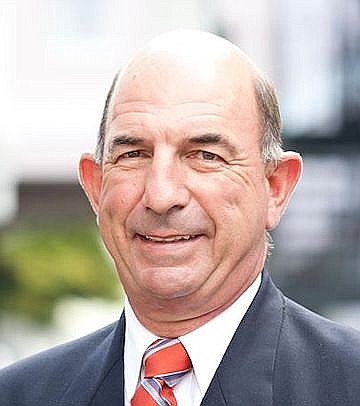
‘Why pay somebody to eat?’: Chamber blasts PLP lunch plan
As the Bahamas’ Progressive Liberal Party (PLP) rolls out a sweeping slate of new labor protections in its pre-election \”Blueprint for Progress\”, a top business leader has launched sharp criticism of several key provisions, drawing attention to the ongoing tension between worker welfare and private sector operational costs. The opposition party unveiled the full package of labor pledges during a public event Wednesday evening, which includes a range of policy changes aimed at improving working conditions across the country: a mandatory one-hour paid lunch break for any shift 8 hours or longer, a legal requirement of 8 hours of rest between consecutive shifts, capped probation periods for new hires, three annual paid mental wellness days that do not require a doctor’s note, expanded paid parental leave for new parents, and legal mandates for workplaces to provide dedicated private space for breastfeeding employees.\n\nPeter Goudie, the Bahamas Chamber of Commerce’s top labor committee official, made his opposition clear to the most high-profile proposal on the list. In blunt remarks, he argued that forcing businesses to compensate workers for meal time is an unnecessary overreach of government power. \”I don’t agree with that at all. Why I gotta pay somebody to eat food?\” Goudie stated, noting that while many businesses already choose to offer paid breaks voluntarily, that does not mean the policy needs to be codified into law. \”I’m a strong believer that you get paid for what you work. That’s my personal belief, and paying me to eat food, I got a problem with that.\”\n\nGoudie also targeted the PLP’s 8-hour rest period mandate between shifts, arguing that the rule would actually harm workers who want to pick up extra hours to earn overtime pay. He specifically called out how the restriction would disproportionately impact younger workers who are often more willing to work extra shifts to boost their income. \”Especially if I’m a young man… and I want to work overtime, and I have an opportunity, and you’re telling me I can’t work overtime? Not sure I agree with that,\” he explained, adding that the rule would remove worker choice instead of protecting employee welfare.\n\nThe third policy the chamber official raised concerns about was the proposed three annual mental wellness days without mandatory doctor verification. Goudie argued that the lack of formal medical check requirements would leave the policy open to abuse by workers, saying that employers would have no way to confirm whether the leave is being used for a legitimate mental health need. \”People just say, oh I am going to take a day off today, it’s a mental health day, I’m having a mental health day, and who decides that? I have a problem with that,\” he noted, adding that all medical-related leave should require an official diagnosis to prevent misuse.\n\nNot all of the PLP’s labor proposals faced pushback from Goudie. He expressed broad support for the party’s family-focused leave changes, including the plan to increase paid maternity leave from 12 weeks to 14 weeks and introduce two weeks of paid paternity leave for new fathers. On the maternity leave expansion, he noted, \”We don’t have a big problem with that because the more time the mother spends with the child, the better the child is going to be at the end of the day.\” He called the new paternity leave requirement \”no big deal\” and acknowledged that the breastfeeding accommodation mandate is already proven to work in other Caribbean nations including Barbados, calling it a feasible policy that would only require minor adjustments for local businesses.\n\nEven for these broadly supported policies, however, Goudie raised a critical caveat: small businesses with fewer than 10 employees would face disproportionate strain from expanded mandatory leave. \”If you only got two to ten employees, and you keep increasing time off from work, it gets rough on a small business,\” he explained. \”They just don’t have the personnel, so they’ve got to go out and find somebody else to hire while these people are out, and that’s a tough one.\”
-

Jamaica and UK strengthen partnership on digital records, information management
In Kingston, Jamaica, a landmark two-day professional development initiative focused on modern records and digital preservation has concluded successfully, brought to life through a cross-border partnership between the UK Government, Jamaica’s Archives and Records Department (JARD) – a division of the country’s Ministry of Education, Skills, Youth and Information – and the United Kingdom’s National Archives (TNA).
The gathering drew a diverse cohort of archival and public sector stakeholders from across Jamaica, alongside a group of archival professionals from multiple neighboring Caribbean island nations. Over the two-day program, experts from TNA led interactive training sessions covering critical modern archival topics: cutting-edge best practices for digital asset preservation, robust cybersecurity protocols for archival collections, specialized strategies for conserving audiovisual heritage, and robust frameworks for protecting national records amid the growing complexity of a globally connected digital landscape.
This collaborative project represents a meaningful milestone in advancing Jamaica’s ongoing work to build a more secure, transparent, and resilient national information management system. By upgrading archival infrastructure and expertise, the initiative ensures that Jamaica’s invaluable institutional memory – the collective documentation of the nation’s governance, history, and identity – will be safeguarded for both current communities and future generations.
A core objective of the workshop was to strengthen public sector governance by upgrading standards for records and information management. Program leaders emphasized that protecting national archival collections is a shared responsibility across government institutions, one that must balance rigorous protection of document integrity with equitable public access to historical and official information. Through structured knowledge sharing between UK and Jamaican archival experts, participants worked through hands-on exercises to test practical tools and develop targeted strategies to address the rapidly evolving challenges that digital transformation has created for the archival sector.
The training program was delivered during a working visit to Jamaica by a team of TNA specialists including Juliette Desplat, Alexander Forbes, and Stephen Daly, who joined Alicia Herbert, the British High Commissioner to Jamaica, for the official opening of the seminar.
In her opening remarks, High Commissioner Herbert stressed the foundational value of this bilateral partnership and the critical importance of responsible information stewardship in the 21st century. “This partnership reflects the very spirit of what we are here to discuss: connection, cooperation, and the responsible stewardship of information in an increasingly digital age,” Herbert explained. “The way we manage, protect, and use records speaks directly to the integrity of our institutions, the trust of our citizens, and the resilience of our societies. Records management is no longer a back-office function – it is central to governance, security, and accountability.”
Meanwhile, Dr. Dana Morris Dixon, Jamaica’s Minister of Education, Skills, Youth and Information, framed the work of archival preservation as a matter of urgent national importance, particularly in light of the increasing frequency of climate-fueled natural disasters that threaten physical and digital documentary collections across the Caribbean. “The preservation of our records is, in a very real sense, about preserving our history. Without our history, we cannot tell our story. This work is not administrative busy work – it is important national work. Strengthening how we preserve our records ensures that Jamaica’s story, identity, and institutional memory are protected for generations to come,” Dr. Dixon noted.
Juliette Desplat, a senior expert from TNA, drew attention to a little-discussed but growing threat facing archival institutions worldwide: the accelerating erosion of digital heritage. “We are faced with a silent crisis – the fragility of our digital heritage,” Desplat explained. “Without deliberate preservation, vital information risks being lost to time. Greater collaboration allows us to respond to these challenges and ensure that archives remain essential resources for democracy and future generations.”
By the close of the seminar, participants and organizers reaffirmed that the program has reinforced the long-standing value of UK-Jamaica bilateral cooperation. The partnership advances shared goals of stronger governance, greater climate and digital resilience for national institutions, and the permanent preservation of both shared Caribbean-British and individual national histories for future generations.
-

PNPYO calls out double standards in ethics committee actions, demands equal scrutiny for JLP MPs
KINGSTON, Jamaica — A leading youth wing of one of Jamaica’s major political parties has sounded the alarm over what it calls a growing pattern of unequal enforcement by the country’s parliamentary Ethics Committee, after revelations that a sitting lawmaker will be called to answer for an alleged violation that the full House of Representatives already closed years prior.
The People’s National Party Youth Organisation (PNPYO) has issued a formal statement decrying the committee’s latest move, with the organization’s General Secretary Peta-Gay Ferguson arguing the decision exposes a deeply troubling bias in how the body pursues ethical violations.
Ferguson emphasized that the case in question has already gone through the full procedural process: it was investigated, a full report was submitted to the entire House, and the matter was formally closed via a legislative motion. She stressed that reviving the closed case without clear, compelling new evidence is not legitimate oversight — it is an unacceptable overreach of the committee’s authority that erodes the integrity of parliamentary procedure.
Beyond attacking the decision to reopen the settled matter, Ferguson challenged the committee to expand its scope of investigations if it is truly committed to upholding accountability across parliament. She pointed to a list of high-profile current government officials, including Prime Minister Dr Andrew Holness, Dr Christopher Tufton, Donovan Williams, Robert Montague, and Daryl Vaz, all of whom have been tied to ongoing public allegations of misuse of public and charitable funds. Ferguson said the fact that the Ethics Committee has not moved to summon any of these officials, while moving to reopen a closed case against another, makes the committee’s priorities impossible to ignore for Jamaican voters. “Jamaicans are not blind to the disparity,” she added.
Ferguson warned that this inconsistent, selective approach to ethics enforcement carries severe long-term costs, particularly by eroding public trust in the state institutions designed to uphold integrity in public office. She specifically noted that young Jamaicans, who represent the future of the country’s democracy, are paying close attention to which cases are aggressively pursued and which are quietly swept under the rug. “That kind of inconsistency erodes confidence in the very systems meant to ensure fairness and accountability,” she said.
The PNPYO secretary maintained that ethical accountability cannot be tailored to fit political goals, targeting political opponents while shielding allies. For the Ethics Committee to retain any remaining public credibility, Ferguson argued, it must prove that parliamentary rules apply equally to every representative, regardless of party affiliation or position. “There must be no sacred cows, no protected names and no double standard,” she asserted.
In closing, the PNPYO issued a formal call for the Ethics Committee to adopt a fair, fully transparent, and even-handed approach to all ethical complaints brought before parliament, noting that accountability should never be a political weapon used to attack opponents while protecting allies. For the body to carry out its core mission, it must operate on consistent, unwavering principle that is above political reproach. “Jamaica deserves nothing less,” Ferguson concluded.
-

Justice system buckling under poor infrastructure, says Court of Appeal president
Jamaica’s most senior judicial officials have issued a blunt, public call for comprehensive modernization of the country’s crumbling courthouses, warning that outdated infrastructure is crippling the delivery of justice and holding back a new generation of legal professionals.
Appeals Court President Marva McDonald-Bishop laid out the case for reform during a swearing-in ceremony for eight newly elevated senior judicial officers at King’s House on Thursday, using a well-known biblical metaphor to frame the crisis. Drawing from Matthew 9:17 — the passage that states new wine cannot be poured into old, inflexible wineskins without both being ruined — she argued the metaphor perfectly describes Jamaica’s current justice system.
“New transformative ideas cannot survive in rigid, outdated structures without intentional renewal,” McDonald-Bishop told the assembled crowd. “These newly appointed judges are that new wine, full of fresh energy and perspective — but the question remains: are they being placed into new, fit-for-purpose wineskins, or crumbling old ones?”
She went on to detail a long list of critical deficiencies across Jamaican courthouses that are stifling the productivity of the country’s legal professionals, from outdated architectural and operational designs ill-suited to modern justice delivery to inadequate, unsafe spaces for crime victims and witnesses. Even basic accommodations for jurors are lacking, she noted, with no dedicated, comfortable facilities for jurors to deliberate on cases, on top of longstanding issues with unpaid juror stipends. Most notably, the country’s push to expand virtual court hearings to increase access to justice has been held back by a near-total lack of upgraded digital and technological infrastructure across courthouses.
McDonald-Bishop specifically called out the downtown Kingston Court of Appeal building, which may appear renovated and well-maintained from the street, but hides serious internal flaws that create daily disruptions and safety risks. “It looks new on the outside, but it’s crumbling from within,” she said. “Sewage is actively seeping into the building, affecting our work every single day. Homeless individuals camping near the entrance create major security concerns, as do unregulated taxi operators who park directly on the court steps and street vendors who set up stalls along the perimeter.”
She stressed that as the world becomes increasingly digital and globalized, Jamaica’s legal community must be given functional, modern workspaces to evolve with changing global norms. Echoing the biblical metaphor, she added that inflexible, outdated structures cannot adapt to new pressures and will ultimately block systemic change. McDonald-Bishop joined Chief Justice Bryan Sykes in formally calling on national government leaders to prioritize the justice system’s infrastructure needs.
Sykes, who also addressed the swearing-in ceremony, backed up McDonald-Bishop’s concerns with a firsthand account of government inaction following last year’s Hurricane Melissa. The Category 5 storm made landfall in Jamaica in October 2024, causing widespread damage to multiple courthouses across the island, including the main court facility in Savanna-la-Mar, Westmoreland.
Sykes explained that shortly after the storm, judicial leadership met with Ministry of Justice officials to request either major renovations or full reconstruction of the damaged Savanna-la-Mar court. Five months on, however, he said the government has not issued any formal response or indication that it plans to move forward with the work.
“Can you believe that five months after a Category 5 hurricane, nothing has been done to restore or replace the main court in Savanna-la-Mar? If a storm of that scale can’t spur urgent action, what reason is there to believe anything will ever get done?” Sykes asked.
To address the gap left by government inaction, Sykes announced that the judiciary has reallocated funds from its own existing budget to carry out critical repairs at multiple court facilities across western Jamaica. The judiciary has already completed upgrades to the circuit court in Westmoreland and the family court in Trelawny, ensuring local judicial officers have safe, functional workspaces.
Sykes used the stalled Savanna-la-Mar project to make the case for broader institutional reform, arguing that the judiciary should be given greater direct control over infrastructure resources. “This is a simple division of labor: let the government build the facilities, then hand them over to the judiciary to maintain. As Hurricane Melissa has made clear, government ministries have proven to be unreliable partners in this critical work,” he said.
-

Illegal signs come down as KSAMC launches enforcement drive
The Kingston and St Andrew Municipal Corporation (KSAMC) has formally launched its long-announced enforcement campaign, initiating the removal of unapproved outdoor signage and billboards across the municipality, following a three-month compliance grace period that drew low levels of participation from regulated entities.\n\nMayor of Kingston Andrew Swaby confirmed that the operation is not a temporary, one-off initiative, and crews have already begun taking down non-compliant signage across multiple districts of Kingston’s Corporate Area starting Thursday. Swaby emphasized that the enforcement drive will continue systematically until all unauthorised displays are addressed.\n\nPublic outreach on signage compliance requirements has been underway since the start of the calendar year, Swaby explained. Municipal authorities distributed formal notification letters, held one-on-one consultations with signage owners, engaged industry umbrella groups, and ran public awareness announcements on local radio. The public education and compliance window was originally scheduled to close on March 31, and enforcement was only slightly delayed to allow teams to complete final verification of permit and payment records.\n\nUnder the rules, any publicly displayed signage — regardless of whether it is placed on private property, commercial plazas, or public road right-of-ways — is required to obtain formal approval from the KSAMC. Any display that has not gone through the application and approval process will be removed as part of the ongoing campaign, Swaby added.\n\nThe three-month grace period launched in January included an incentive for non-compliant entities: a 20% discount on all outstanding signage regulatory fees. The incentive was specifically designed to ease the burden on businesses and public agencies that faced financial hardship after Hurricane Melissa made landfall in Jamaica on October 28, 2024. The storm caused widespread operational disruptions, unexpected recovery costs, and shifted operational priorities for many entities, leaving them unable to meet regulatory obligations including signage fee payments.\n\nDespite the accommodative terms, compliance rates remained far below municipal expectations. Of the 3,421 signs audited by KSAMC officials, only 463 owners completed required payments and brought their signage into full compliance during the grace period. Swaby previously voiced frustration over the low turnout at the KSAMC’s monthly meeting on March 12, 2025, noting that while some entities took advantage of the discount, dozens of public and private entities still held outstanding obligations ahead of the grace period deadline.\n\nAt that March meeting, Swaby gave multiple public warnings that enforcement would follow immediately after the grace period closed. He noted that the entire initiative was structured to give entities a fair, low-cost path to regularize their signage status without facing penalties, and the enforcement phase was unavoidable for those that failed to act.\n\nTo carry out the campaign, the KSAMC has assembled a dedicated enforcement team tasked with coordinating all removal actions. The municipality has also reached out to senior leadership of the Area 4 and Area 5 police divisions, as well as local divisional commanders across Kingston and St Andrew, to request police support for the structured enforcement drive where necessary.\n\nWith removal operations now officially underway, Swaby reiterated his call for all property owners and businesses that still hold unapproved signage to complete the permitting and payment process promptly to avoid having their displays removed.
-

Haitian leader: We pay more for healthcare
As the Bahamas approaches its election, a leading voice in the country’s Haitian-Bahamian community is challenging widespread public rhetoric that frames irregular and regular migrants as an unfair drain on the nation’s public healthcare system. Michael Telarin, president of the United Haitian and Bahamas Association, is pushing for a fundamental shift in how policymakers and the public discuss migrants’ contributions to the healthcare sector, arguing that the group actually contributes more to public coffers and pays more out of pocket for medical services than the average Bahamian citizen.
Telarin’s comments come in direct response to a recent campaign policy announcement from the incumbent Progressive Liberal Party (PLP), which pledged Wednesday that if reelected, it will implement a new mandate requiring all migrants to either hold private health insurance or enroll in a new government-run coverage plan. The policy, framed as a way to reduce strain on public medical institutions, has gained traction among voters frustrated by perceived strains on public services. Telarin acknowledged that the PLP’s proposal is an attempt to address voter concerns, but he says the conversation around migrants and healthcare needs to be reframed to reflect on-the-ground realities.
A key point of contention for Telarin is the relationship between migrant workers and the National Insurance Board (NIB), the country’s social security system. He points out that most migrant workers contribute to NIB on a regular basis, either through automatic payroll deductions arranged by their employers or via direct individual payments. Despite these contributions, Telarin explains, migrants are still required to pay full out-of-pocket costs immediately when they access hospital and clinical services, and most are able to cover these costs despite the financial burden. Even for native-born Bahamians, however, NIB does not function as a comprehensive health insurance scheme: it only provides targeted benefits for sickness, maternity leave, and workplace injuries, and does not cover routine or emergency medical care costs for any group, regardless of immigration status.
Telarin says that while he supports the PLP’s broader goal of strengthening and enforcing the country’s immigration policies, the party’s campaign platform overlooks a far more pressing, long-running problem that has left thousands of migrants in limbo: crippling delays in processing applications for legal residency and citizenship. For migrants who have completed all required vetting, submitted all necessary documentation, and followed every rule of the legal application process, there remains no clear timeline for when their applications will be resolved. Telarin argues that the government owes these law-abiding applicants clear transparency around expected wait times, which currently stretch on for months or even years without resolution.
On the topic of immigration enforcement, the PLP has campaigned on a series of aggressive new measures, including rolling out a comprehensive National Biometric Immigration System, installing biometric electronic entry gates at border crossings, and imposing harsher fines and criminal penalties for employers and corrupt public officials who facilitate immigration violations. Telarin, however, argues that the success of any new enforcement framework will depend on consistent implementation and closing existing loopholes that have undermined past immigration policies. Too often, he says, enforcement is inconsistent, gaps in regulation allow bad actors to exploit migrants and flout the law, and tough new policies amount to nothing more than empty campaign rhetoric. He is calling on the government to take a holistic, systemic approach to reform that addresses underlying structural flaws rather than just announcing new, unimplemented policies ahead of an election.