分类: politics

  • African charity sues Prince Harry for defamation

    African charity sues Prince Harry for defamation

    LONDON — A UK-based HIV/AIDS charity with deep royal roots has launched high-profile legal action against its own co-founder, Prince Harry, Duke of Sussex, alleging he orchestrated a coordinated negative media campaign that caused severe reputational and operational damage amid a months-long public governance feud. The organization, Sentebale, which the prince launched in 2006 alongside Lesotho’s Prince Seeiso to honor his late mother Princess Diana, filed its defamation claim on March 24, 2026, with the High Court of England and Wales.

    Court documents name Prince Harry — the younger son of King Charles III — and former Sentebale trustee Mark Dyer as co-defendants, identifying the pair as the masterminds behind the damaging media push that began in late March 2025. In an official statement provided to AFP, Sentebale said the viral campaign has not only disrupted its day-to-day work supporting youth living with HIV and AIDS across southern Africa, but also sparked a wave of targeted cyberbullying against the charity’s current leadership and key strategic partners. The organization is seeking court intervention, injunctive protection and financial restitution for the harm inflicted.

    The public conflict stems from a 2025 leadership standoff that ultimately pushed Prince Harry and Prince Seeiso to resign from the charity they founded nearly 20 years prior. The dispute erupted after Sentebale chair Sophie Chandauka, appointed to the voluntary role in 2023, refused a demand from the sitting board of trustees to step down, prompting the entire trustee body to resign. Chandauka later publicly accused Prince Harry of orchestrating a campaign to force her out, and levelled additional claims of institutional bullying at the organization in March 2025.

    By August 2025, the UK’s Charity Commission concluded a formal inquiry into the allegations. While regulators found no evidence of widespread or systemic bullying, harassment, misogyny or misogynoir that Chandauka had alleged, they did confirm significant governance failures at the charity: the investigation confirmed unclear delegation of responsibilities had led to tangible administrative mismanagement, and the watchdog criticized all parties for airing their private conflict in public, noting the open feud had already done severe damage to Sentebale’s standing. The commission issued a mandatory action plan requiring the charity to address its structural governance weaknesses. Chandauka said she welcomed the inquiry’s findings, arguing they validated the governance concerns she first raised privately in early 2025.

    Beyond the leadership deadlock, public records show additional friction between Chandauka and Prince Harry over a 2024 fundraising event. The chair publicly criticized the duke for bringing a Netflix documentary camera crew to the event, and objected to an unplanned guest appearance by his wife, Meghan, Duchess of Sussex, at the function.

    For Prince Harry, the lawsuit marks the latest chapter in his string of high-profile legal battles with UK institutions and media outlets, coming less than two weeks after his third case against a major tabloid publisher wrapped up in the same High Court. The duke, who stepped back from official senior royal duties and relocated to North America with his family in 2020, has only retained a small number of personal charitable patronages, with Sentebale long counted among the most meaningful — the organization’s name, Sentebale, means “forget me not” in the Sesotho language, chosen as a permanent tribute to Diana, who died in a 1997 car crash when Prince Harry was just 12 years old. Sentebale originally launched to support vulnerable young people living with HIV and AIDS in Lesotho, later expanding its work to neighboring Botswana.

    In the recently concluded tabloid case, Prince Harry and six other co-claimants accuse Associated Newspapers, publisher of the *Daily Mail* and *Mail on Sunday*, of carrying out unlawful surveillance against the claimants, including planting listening devices in private homes and vehicles. The publisher has vehemently denied all allegations of wrongdoing.


  • TAJ moves to enforcement phase in property tax operations in Portmore and Spanish Town

    TAJ moves to enforcement phase in property tax operations in Portmore and Spanish Town

    A collaborative initiative between Tax Administration Jamaica (TAJ) and two regional municipal bodies has entered its active enforcement stage, targeting property owners with unpaid tax liabilities across six communities in southern Jamaica. The joint special operation, which first conducted on-the-ground outreach between June 6-8 and June 27-29 of 2025, focuses on delinquent accounts in Phoenix Park Village and Caribbean Estate (located in Portmore) and Green Acres, Frenchman Heights, Angel Estates, and Angel Grove (based in Spanish Town).

    This enforcement push is the result of a years-long strategic effort to boost overall property tax compliance across the country and clear a backlog of long-outstanding tax arrears in the high-delinquency target zones. Originally, the formal enforcement phase was set to launch earlier than its current timeline, but preparations were disrupted when Hurricane Melissa swept through the region, forcing a temporary delay to operational schedules.

    As of the latest update from TAJ, the authority has already issued more than 200 garnishment notices to financial institutions and employers of delinquent property owners who failed to either settle their outstanding balances or negotiate a formal payment arrangement by February 2026. With enforcement efforts ramping up, TAJ projects that a further 150 garnishment notices will be delivered by the close of April 2026.

    Beyond wage and bank account garnishment, TAJ is expanding its enforcement toolkit to include additional punitive measures. The authority is currently evaluating the seizure of moveable assets owned by non-compliant taxpayers, the placement of legal liens on underperforming properties, and formal court proceedings against the most persistent defaulters. Officials confirmed that more than 50 delinquent property owners are currently on track to be summoned before the courts for their unpaid arrears.

    In a public advisory, TAJ has issued a final call to action for residents in the targeted communities who still hold outstanding property tax obligations and have not yet reached a resolution with the authority. The agency urges all non-compliant owners to visit their nearest local tax office at the earliest opportunity to either settle their full outstanding balance or set up a structured, manageable payment plan.

    TAJ warned that any property owners who fail to take proactive steps to regularize their unpaid tax accounts will face immediate enforcement action with no additional advance notice. The agency emphasized that the operation is critical to securing revenue that funds local public services and infrastructure across the Portmore and Spanish Town regions.

  • Russia’s Oil Revenues Expected to Double as US/Israeli War on Iran Drives Prices Up

    Russia’s Oil Revenues Expected to Double as US/Israeli War on Iran Drives Prices Up

    Tensions stemming from U.S. and Israeli strikes on Iran have triggered a cascading series of disruptions to global energy markets, delivering an unexpected windfall to Russian oil exports while creating new momentum for challenges to the U.S. dollar’s dominance in global energy trade, according to industry and policy sources cited by Reuters.

    The crisis began with coordinated strikes targeting Iranian assets on February 28, and in the months since, global crude prices have climbed nearly 50% following Iran’s decision to severely restrict traffic through the Strait of Hormuz, the world’s most critical chokepoint for seaborne oil shipments. In a typical 24-hour period, the narrow Persian Gulf passage accommodates roughly 140 vessels carrying nearly 20% of the world’s daily oil supply. But as of mid-April 2026, just six ships made the transit through the strait’s main lanes in one day, after Iran’s Revolutionary Guard redirected most vessels to an alternate route near Larak Island and warned of naval mines deployed in primary shipping lanes.

    Even after a two-week ceasefire was implemented to ease tensions, more than 180 oil tankers remain stranded in the Persian Gulf. Major shipping firms have refused to resume full regular operations until they receive binding, long-term safety guarantees for crews and vessels. Mitsui O.S.K. Lines, one of Japan’s largest shipping conglomerates, confirmed Thursday that it had successfully moved three tankers through the passage during the ceasefire window, but the company remains on pause for full operations pending official guidance from the Japanese government.

    As global buyers that rely on Gulf oil exports are left scrambling for alternative supplies, Russia – the world’s second-largest oil exporter – has seen a dramatic surge in demand for its crude, translating to a near doubling of monthly oil tax revenues for the Kremlin. Independent calculations from Reuters show that Russia’s core oil extraction tax revenue is projected to hit roughly $9 billion in April 2026, up from just $4.7 billion in March of the same year. The average price of Russia’s flagship Urals crude has also jumped to $77 per barrel, a peak not seen since October 2023 and far higher than the $59 per barrel benchmark the Russian government used to draft its 2026 national budget.

    Beyond energy market volatility, the crisis has accelerated long-simmering efforts by Iran and China to reduce global reliance on the U.S. dollar for energy transactions. For decades, the vast majority of international oil deals have been settled in U.S. dollars, a pillar of Washington’s global financial influence. But with control of the Hormuz passage, Iran has begun requiring some shipping firms to settle oil trade payments in Chinese yuan instead of U.S. dollars. China’s Ministry of Commerce has publicly confirmed the yuan-based transactions, while Iran’s embassy in Zimbabwe framed the shift as a long-overdue addition of the “petroyuan” to the global oil trading system.

    Harvard economist Kenneth Rogoff, a leading expert on global currency dynamics, explained the dual motivation behind Iran’s policy shift in comments to Al Jazeera. “At one level, Iran is aiming to poke its thumb in the United States’s eye, adding insult to injury,” Rogoff said. “At another level, Iran is dead serious about preferring yuan to avoid US sanctions and to cultivate its ally, China.”

  • Overheid kampt met personeelstekort: vraag loopt op tot honderden functies

    Overheid kampt met personeelstekort: vraag loopt op tot honderden functies

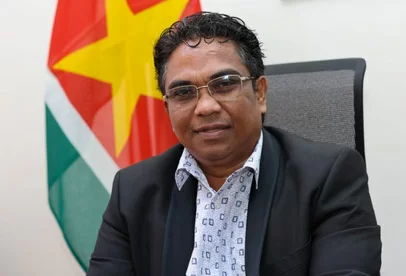
    Across Suriname’s public administration, a growing staff crisis has reached critical levels, with hundreds of vacant positions currently unfilled across multiple government departments. A long-standing public sector hiring freeze has blocked agencies from recruiting external candidates, forcing ministries to scramble to reallocate existing staff from within the government system to cover pressing gaps.

    Mike Noersalim, Minister of Agriculture, Livestock and Fisheries (LVV), confirmed the sector’s staffing challenges in an interview with local outlet Starnieuws, clarifying that his department is restricted from bringing in new hires from outside the public service. “We first conducted an internal search across our four directorates, then sent lists of our open roles to other ministries to see if we can pull available staff from elsewhere,” Noersalim explained. The minister added that LVV has itself received requests from other understaffed departments seeking to borrow its employees, but the agency cannot spare any workers: “We have critical unmet needs of our own, so we have no excess personnel to offer.

    Noersalim attributes the deepening public sector staffing shortage to a combination of overlapping factors that create persistent gaps across roles. When existing employees leave public service or earn promotions to higher positions, their departure creates new openings that must be filled, triggering a chain of shifting personnel that leaves lower-priority and entry-level roles empty. The minister highlighted one common example: cleaning staff who have moved up to administrative roles and have no interest in returning to their former positions, leaving vacant cleaning slots across agencies.

    Within LVV alone, the demand for new staff is both large and broad. Just within the Directorate of Agricultural Research, Marketing and Processing, dozens of roles remain unfilled, spanning a wide range of positions from administrative staff and policy advisors to drivers, lab technicians and agricultural inspectors.

    Beyond general vacancies, the ministry faces critical gaps in high-priority roles that directly impact public food supply. LVV urgently needs roughly 25 additional meat inspectors to conduct mandatory safety checks, a need that is expected to grow as the country’s oil and gas sector expands. A growing energy sector will bring more workers to the country and drive up overall demand for meat, making these inspection roles even more critical to protecting public health. The ministry is currently developing a targeted training program to certify new meat inspectors from existing internal candidate pools.

    Staffing pressures are also acutely felt at the district level, where there is a significant shortage of agricultural extension officers. This gap has direct, real-world impacts: it reduces the quality of support available to smallholder and commercial farmers, slowing the growth and development of the entire agricultural sector, which remains a core part of Suriname’s economy. The ministry notes that it does offer additional targeted training to internal candidates who express interest in filling open extension roles to get them up to speed for the position.

    The national public sector hiring freeze has drastically complicated efforts to fill open vacancies across all departments. Only senior leadership positions qualify for rare exemptions that allow external hiring, and all other roles must be filled through internal reallocation. Despite outreach to multiple other ministries for available staff, Noersalim says response has been extremely limited so far, leaving the vast majority of LVV’s vacancies still unfilled.

  • WEHNER REPORTS: 16 Beach Access Defenders Acquitted in Laurys Bay Case

    WEHNER REPORTS: 16 Beach Access Defenders Acquitted in Laurys Bay Case

    In a landmark decision that reaffirms public access to coastline in Antigua and Barbuda, the St. John’s Magistrate’s Court has dismissed all trespassing charges against 16 activists who fought restricted entry to Laurys Bay. The case collapsed entirely after prosecutors failed to produce a single witness to testify against the defendants.

    The proceedings, which dragged on for nearly 12 months, stemmed from accusations that the group had crossed private property to reach the well-established traditional access path to Laurys Bay. The defendants, who have widely become known as ‘beach rights patriots’, have maintained from the start that all Caribbean nation’s beaches are legally public, and that citizens hold an inherent right to access them even when that requires crossing privately held parcels of land.

    Speaking after the ruling lead defense attorney Mr. Boy framed the verdict as an unqualified win for his clients. ‘The magistrate had scheduled today for the full trial, and all prosecution witnesses were ordered to appear, not one showed up. With no evidence to support the claims and no case to answer, the court had no choice but to enter a full not guilty verdict for all 16 defendants,’ he explained.

    Mr. Boy further emphasized that the outcome aligns with the letter of Antigua and Barbuda’s Physical Planning Act, which enshrines public access to all national beaches. ‘When a private landowner blocks a long-standing traditional access route and then sues visitors for trespassing, that landowner is the one breaking the law,’ he added.

    With the charges formally cleared, the defendants now have the legal standing to move forward with additional action, including a potential lawsuit for malicious prosecution and claims to recover the significant legal costs they incurred over the year-long proceedings. Boy noted that the group is actively pursuing compensation, pointing to the substantial personal inconvenience and financial strain the protracted case has placed on all 16 defendants.

    Legal and community advocates have already hailed the ruling as a critical milestone for public rights in Antigua and Barbuda. The decision reinforces long-standing legal protections for traditional community access points that have served local populations for generations, setting a clear precedent for future disputes over beach access across the country.

  • CARICOM Condemns UK Party Proposal to Block Visas Over Reparations

    CARICOM Condemns UK Party Proposal to Block Visas Over Reparations

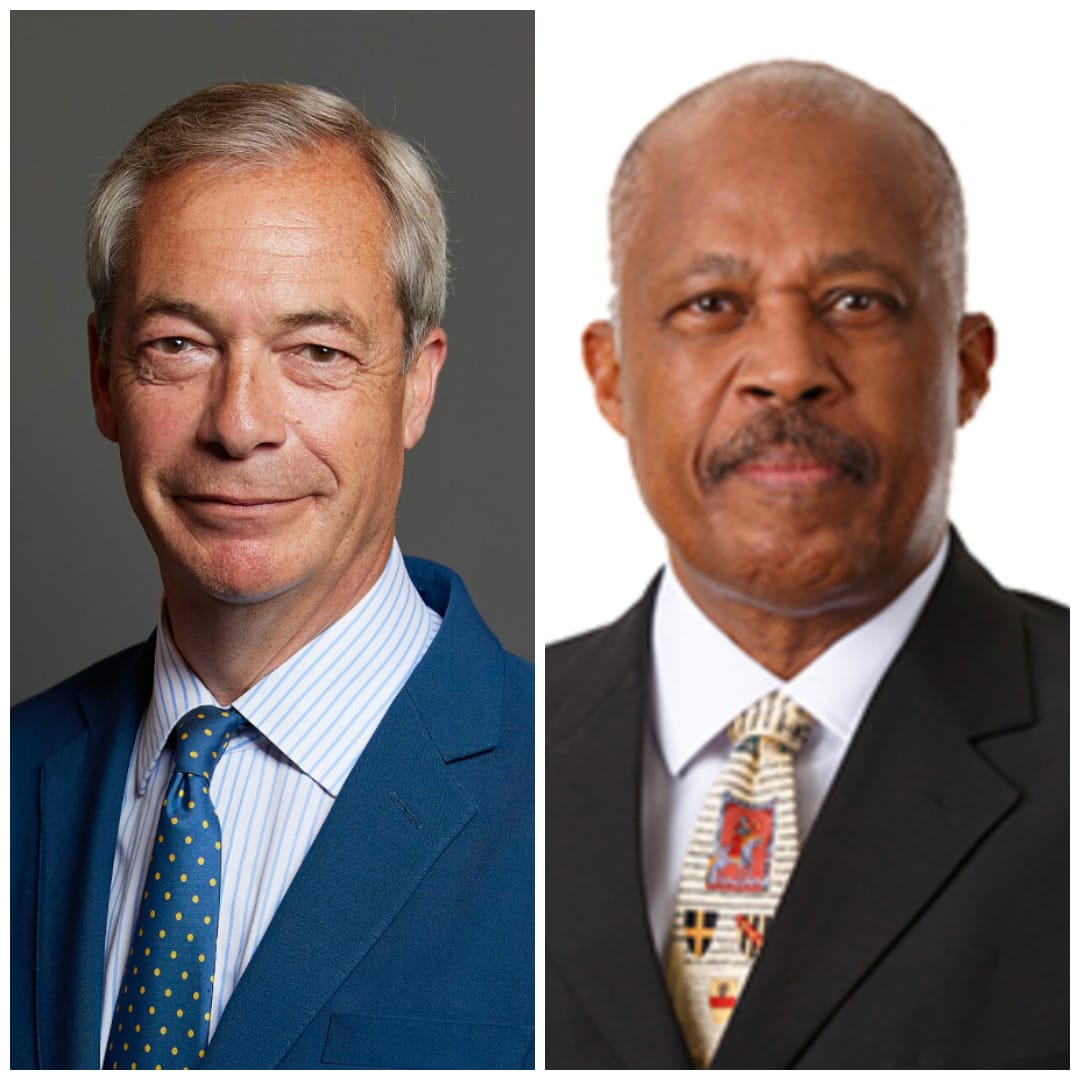
    A fierce diplomatic and racial controversy has erupted after Britain’s right-wing Reform UK party unveiled a punitive proposal dubbed the ‘Reparations Lock’, which would block all new visa approvals for nationals from 19 Caribbean nations—including Antigua and Barbuda—that are actively pursuing legal and diplomatic claims for slavery reparations. The policy would apply to every category of entry, from work and study permits to family reunification visas and tourist visitor visas. In justifying the restrictive measure, Reform UK spokesperson Zia Yusuf labeled Caribbean reparations demands as fundamentally insulting to the United Kingdom, and claimed Britain deserves global praise rather than rebuke for its role in abolishing the transatlantic slave trade in the 19th century. The proposal has drawn swift and scathing condemnation from the CARICOM Reparations Commission (CRC), the leading regional body coordinating reparations claims on behalf of Caribbean communities. CRC chair Professor Sir Hilary Beckles blasted the visa plan as a modern extension of the ‘toxic racism’ that underpinned the entire system of chattel slavery. Beckles warned that targeting and punishing Black communities seeking redress for historical crimes directly mirrors the racist rhetoric used by opponents of full emancipation back in 1833. He also renewed scrutiny of a little-discussed but critical detail of the 1833 Slavery Abolition Act: when Britain formally ended slavery, it allocated massive public compensation exclusively to white slave owners for the loss of their ‘property’, while providing no restitution whatsoever to the millions of enslaved people who had been exploited and abused. Instead, freed people were forced into four additional years of unpaid ‘apprenticeship’ labor to generate the capital that funded the compensation payouts to their former enslavers. Other senior CRC leaders have echoed Beckles’ condemnation, pushing back hard against Reform UK’s narrative of British benevolence. Senior official Dobrene O’Marde and leading gender and slavery studies scholar Professor Verene Shepherd both emphasized the enormous collective and individual sacrifices that Caribbean communities made over generations to secure their own emancipation, rejecting any claim that Britain acted out of moral goodwill to end slavery. The CRC has reaffirmed its longstanding commitment to pursuing reparatory justice through peaceful, structured government-to-government dialogue, and has called on European political leaders to abandon defensive posturing and engage in good-faith negotiations on the issue. The reparations debate is set to take center stage at the upcoming Commonwealth Heads of Government Meeting, scheduled to be held later this year in Antigua and Barbuda, where the CRC is planning a high-profile public event to advance its campaign for restitution and racial justice.

  • MP Maria Browne Pledges Growth and Renewal in St. John’s Rural East

    MP Maria Browne Pledges Growth and Renewal in St. John’s Rural East

    As candidates gear up for upcoming electoral contests in St. John’s Rural East, sitting Member of Parliament Maria Bird Browne has anchored her re-election campaign around two pressing local priorities: targeted community development and long-overdue infrastructure upgrades.

    Over her two years in office, Browne has pointed to tangible progress already delivered to constituents, from major resurfacing and repair work on local roads to upgrades to public facilities that serve daily neighborhood needs. Looking ahead, the MP says resolving chronic drainage failures and recurrent flooding that plagues two local districts, the Gardens and Sutherland, will top her policy agenda if she is returned to office. She emphasized that any intervention will be rooted in data-driven technical analysis from independent hydrology specialists, rather than rushed, short-term fixes that fail to address the root of the problem.

    Beyond flood mitigation, Browne has unveiled a new ambitious housing renewal scheme designed to breathe new life into aging, stagnant residential areas across the constituency. Under the plan, vacant parcels of land and underused plots that have sat neglected for years will be repurposed to build new residential developments, creating much-needed housing stock while reversing decades of decline in older neighborhoods.

  • Lamin Newton targets upset in All Saints East and St Luke

    Lamin Newton targets upset in All Saints East and St Luke

    For more than three decades, the All Saints East and St Luke constituency has stood as one of the most reliable strongholds for the United Progressive Party (UPP), a seat political analysts have long marked as a safe win for the opposition ahead of Antigua and Barbuda’s upcoming general election. But this cycle, that long-held political certainty is breaking down, with the race now shaping up to be one of the most closely watched competitive contests on the ballot.

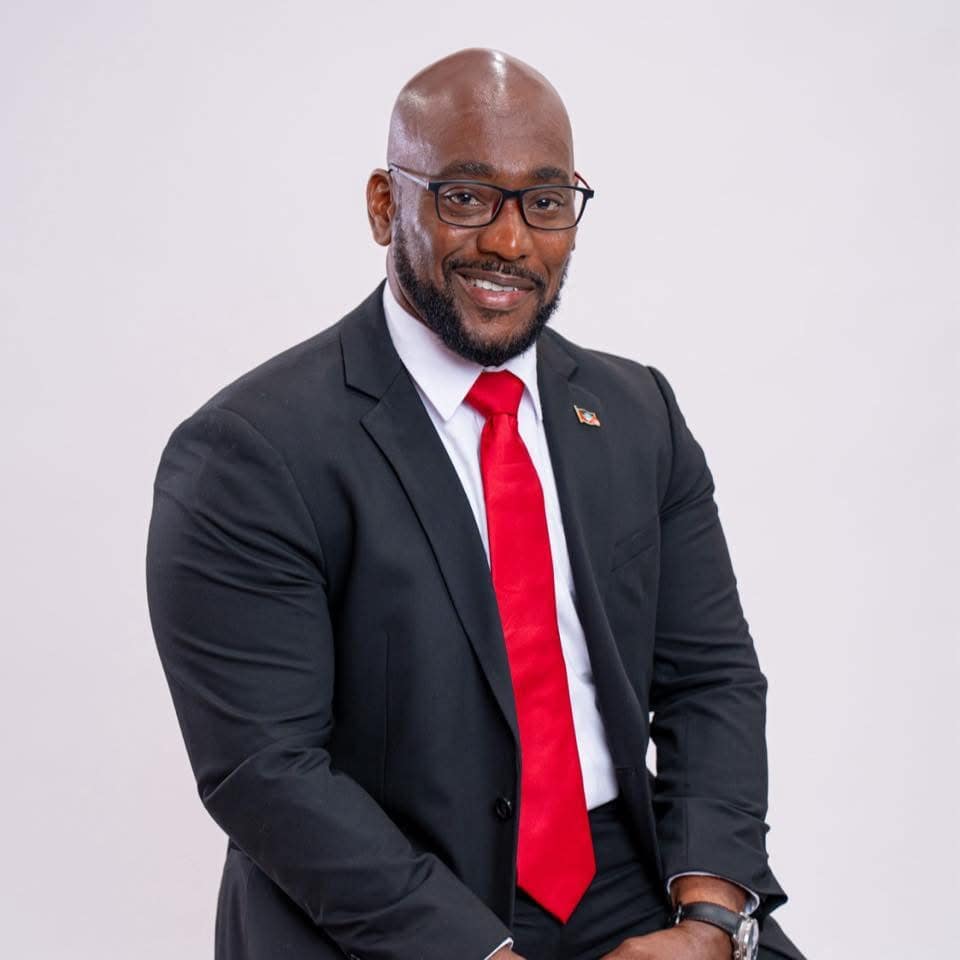
    At the center of the challenge is Lamin Newton, the candidate put forward by the ruling Antigua and Barbuda Labour Party (ABLP). Newton is going head-to-head with Jamale Pringle, the UPP’s Opposition Leader and the incumbent representative for the constituency. For generations of local voters, the seat has consistently returned UPP candidates to office, a streak that has held for over 30 years, but Newton argues that shifting grassroots sentiment is upending that historic trend.

    Speaking to reporters just after ABLP officially launched its island-wide campaign schedule on Tuesday, Newton struck a confident tone about his chances. He told reporters that on-the-ground outreach and conversations with voters have revealed growing discontent with the incumbent, and that electoral momentum is steadily building in his favour ahead of polling day. Political observers across the country are now keeping close watch on the constituency, as an upset here would not only shake up UPP’s electoral map but also reshape the balance of power in Antigua and Barbuda’s next parliament.

  • Acting Venezuelan President to visit Grenada

    Acting Venezuelan President to visit Grenada

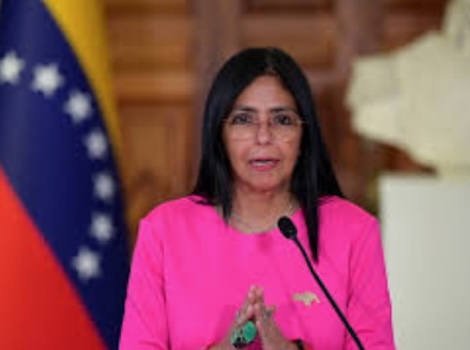
    In a landmark diplomatic move marking her first official state visit since the January 2026 U.S. invasion of Venezuela removed longtime leader Nicolás Maduro from power, acting Venezuelan President Delcy Rodríguez is set to arrive in Grenada on Thursday.

    Rodríguez’s ascent to the nation’s top office came just two days after U.S. forces detained Maduro on January 3, 2026. As Venezuela’s former executive vice president, she was sworn in as acting head of state on January 5, taking office with a public pledge to prioritize domestic stability and hint at a potential reorientation of Venezuela’s long-fractious relationship with Washington.

    During her one-day engagement in Grenada, Rodríguez will follow a structured official itinerary laid out in a statement released by the Grenadian government. She will first attend a formal courtesy meeting with Governor-General Dame Cécile Ellen Fleurette La Grenade, before moving on to high-level talks with Prime Minister Dickon Mitchell and his full cabinet. At the conclusion of these bilateral discussions, the two sides will release a joint communiqué to outline the outcomes of their negotiations, the statement confirmed.

    The visit comes against a charged regional backdrop that has already put Grenada’s relationship with both the U.S. and Venezuela under scrutiny. Before the U.S. launched its invasion of Venezuela, the Grenadian government had approved a U.S. request to deploy a military radar system at Maurice Bishop International Airport. Grenadian authorities justified the approval by referencing ongoing technical evaluations, public safety claims, and alleged sovereignty violations from Venezuelan activities in the region.

    The decision sparked immediate public pushback across Grenada, with thousands of citizens gathering for a peaceful mass protest organized by the Grenada Coalition Zone of Peace and Concerned Citizens. Protesters took to the streets to demand their government reject the U.S. proposal and preserve the Caribbean as a demilitarized zone of peace. Speaking at the demonstration, former Grenadian foreign affairs minister Peter David reinforced the crowd’s core demand, emphasizing the region’s longstanding commitment to avoiding great power conflict.

    This visit marks Rodríguez’s first step onto the international diplomatic stage since taking office, and it is being closely watched by regional powers for signs of how Venezuela’s new leadership will navigate its relationships with Caribbean neighbors and the United States moving forward.

  • Iran presenteert 10-puntenplan voor beëindiging oorlog met VS en Israël

    Iran presenteert 10-puntenplan voor beëindiging oorlog met VS en Israël

    On April 8, 2026, just hours after the United States and Iran reached a two-week temporary ceasefire to pause their open conflict—mere moments before the expiration of a US ultimatum targeting Iran’s military infrastructure—Iran formally presented a 10-point proposal Wednesday to end months of escalating tensions and full-scale hostilities involving both the US and Israel. The breakthrough ceasefire comes after more than a month of open conflict that sent global financial markets into volatility and pushed international crude oil prices sharply upward. The ceasefire agreement includes a provision for Iran to temporarily reopen the strategically critical Strait of Hormuz, the chokepoint through which roughly 20% of the world’s daily oil supplies pass.

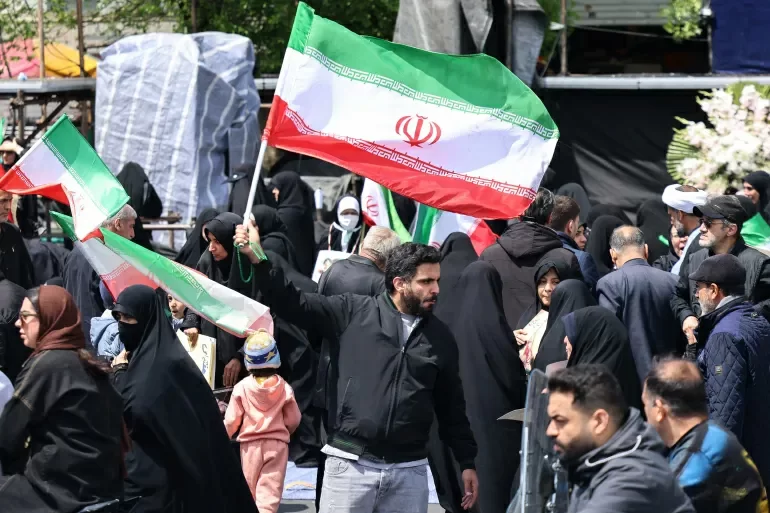
    Both sides have moved quickly to claim victory in the conflict that reshaped Middle Eastern security. US President Donald Trump has labeled the ceasefire framework a “total and complete victory” for American interests, while Iranian officials described the outcome as an “unmistakable, historic and crushing defeat of the enemy” and a defining national win for the Islamic Republic. On the streets of Tehran’s Revolution Square, crowds gathered to celebrate the breakthrough, with many waving Iranian national flags.

    Breaking down the core of Iran’s 10-point peace framework, the proposal outlines key demands that include the full lifting of all primary and secondary international sanctions imposed on Iran, permanent Iranian full control over the Strait of Hormuz, a complete withdrawal of all United States military forces from the broader Middle East region, an end to all targeted attacks on Iran and its regional allied militias, the immediate unfreezing of all Iranian sovereign assets held overseas, and a binding United Nations Security Council resolution to formally codify any final peace agreement into international law.

    Notably, the original Farsi version of the proposal includes an explicit clause calling for international recognition of Iran’s right to enrich uranium as part of its civilian nuclear program. This key line was omitted from English-language versions of the plan distributed by Iranian diplomats to international journalists, with no official explanation provided for the change.

    While President Trump has publicly called the Iranian proposal “feasible”, the plan has already sparked sharp criticism within US political and national security circles. Multiple core provisions, including permanent Iranian control of the Strait of Hormuz and recognition of uranium enrichment, have been repeatedly labeled unacceptable by senior US administration officials in past months. The demand for a full US military withdrawal from the Middle East has also faced stiff pushback from factions within both the US Congress and defense establishment.

    Regional security analysts note that while the 10-point plan offers a tangible starting point for formal negotiations, the deeply contentious nature of Iran’s core demands makes meaningful progress far from guaranteed. It remains unclear how much flexibility both Washington and Tehran are willing to show to compromise on their core red lines to reach a lasting, sustainable peace deal.

    Pakistan, which played a central mediation role to broker the ceasefire, has confirmed that the temporary truce entered into force immediately. Pakistani Prime Minister Shehbaz Sharif announced that Islamabad will host formal face-to-face peace negotiations between US and Iranian delegations, set to kick off this Friday. The stated goal of the two-week negotiating window is to reach a definitive final peace agreement before the current ceasefire is set to expire. A White House spokesperson confirmed that the US is open to holding talks in Pakistan, but noted that final logistics for the negotiations have not yet been formally finalized.