分类: politics

  • Staatsraad presenteert eerste schriftelijke jaarverslag aan president

    Staatsraad presenteert eerste schriftelijke jaarverslag aan president

    In an unprecedented move signaling governmental transparency, Suriname’s Council of State presented its inaugural written accountability report to President Jennifer Simons during Thursday’s year-end assembly. The comprehensive document chronicles the Council’s operational transformation from August through December 2025, marking a significant departure from traditional practices within this highest advisory body.

    The report meticulously details the Council’s initial operational challenges upon assumption of duties, implemented corrective measures, and current operational status. Vice Chairman Amzad Abdoel revealed to StarNews that a preliminary assessment exposed critical staffing deficiencies that hampered the Council’s ability to fulfill presidential mandates. The institution lacked essential financial management personnel, operated with an understaffed secretariat, and had inadequate cleaning facilities.

    Within existing budgetary constraints, the Council initiated strategic personnel reinforcement without burdening public finances. Operational workflows underwent significant optimization, resulting in enhanced efficiency. Financial management systems underwent comprehensive restructuring, with all monthly financial reports from January through September completed and submitted to the presidency. Budget utilization is now systematically monitored, outstanding payments have been reconciled, and resource allocation strategies have been optimized.

    Administrative procedures have been rigorously streamlined, with correspondence to the Council now addressed within three working days. The advisory body has processed one draft law, five draft state decrees, and one legislative proposal within the four-month period, with seven new initiative proposals currently under consideration.

    The Council is actively developing enhanced public accountability mechanisms, including plans for citizens to monitor proceedings online through collaboration with the E-Government Directorate. For 2026, the institution has formulated an ambitious operational plan focusing on procedural documentation, facility renovation, legislative revision, and the potential establishment of an internal audit department to further strengthen transparency frameworks.

    Abdoel emphasized the report’s significance in demonstrating the Council’s transformation journey: “As a High College of State, we aim to exemplify transparency and accountability. With presidential support, we’re making substantial progress toward this objective.”

  • President Abinader inaugurates final phase of Avenida Ecológica in Santo Domingo

    President Abinader inaugurates final phase of Avenida Ecológica in Santo Domingo

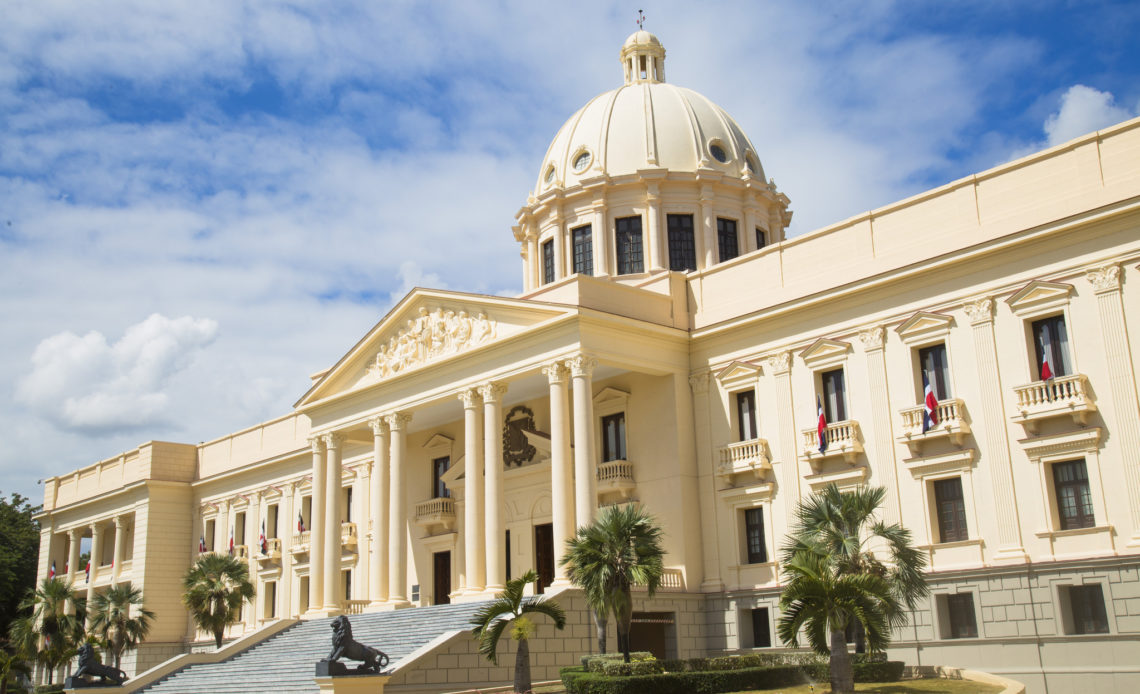
    SANTO DOMINGO – President Luis Abinader officially inaugurated the completed Avenida Ecológica on Friday, marking a transformative milestone in the Dominican Republic’s infrastructure landscape. The newly opened 12-kilometer thoroughfare, constructed under Abinader’s administration, is designed to function without a single traffic light, ensuring seamless vehicular movement across key zones including Santo Domingo East, Boca Chica, La Caleta, and major national highways.

    The president underscored the avenue’s role as a critical economic artery, significantly enhancing the nation’s logistical framework and foreign trade capabilities. By bridging the country’s primary ports in Greater Santo Domingo, the project substantially reduces travel duration and freight expenses, directly benefiting an estimated 850,000 residents. Abinader framed the avenue as more than a road—it is a cornerstone of a comprehensive strategy integrating mass transit, water management, and energy systems to foster sustainable urban development.

    Complementing this initiative are ongoing expansions of the Santo Domingo Metro and Cable Car systems, upgrades to aqueducts, and bolstered energy production, collectively forming a holistic model for growth. Minister of Public Works Eduardo Estrella detailed the avenue’s sophisticated engineering, including a new toll plaza and an overpass that alleviates congestion from the Port of Caucedo and improves traffic flow to Las Américas International Airport—a vital upgrade expected to stimulate tourism and job creation.

    Dio Astacio, Mayor of Santo Domingo East, applauded the national government’s sustained investment in infrastructure, citing observable improvements in daily commute times and overall quality of life for constituents. The Avenida Ecológica now stands as one of the Caribbean nation’s most advanced logistics corridors, reinforcing the Dominican Republic’s position as a competitive player in regional trade and economic resilience.

  • Na druk: EU stelt Mercosur-deal uit

    Na druk: EU stelt Mercosur-deal uit

    The European Union has postponed the signing of a landmark free trade agreement with South American nations following intense farmer protests and last-minute opposition from France and Italy. The EU-Mercosur pact, which would create one of the world’s largest free trade zones covering 780 million people and a quarter of global GDP, now faces uncertain prospects after 26 years of negotiations.

    EU officials had anticipated finalizing the agreement this weekend in Brazil, but Commission spokeswoman Paula Pinho confirmed the delay until January. The decision emerged during emergency talks between European Commission President Ursula von der Leyen, European Council President Antonio Costa, and Italian Prime Minister Giorga Meloni, with Italy’s conditional support secured for January’s vote.

    The postponement came hours after dramatic scenes unfolded in Brussels where hundreds of farmers from across Europe staged violent protests. Agricultural workers blocked streets with tractors, launched fireworks, and burned tires along with a symbolic coffin labeled “Agriculture.” Police responded with tear gas and water cannons as protesters threw potatoes and eggs, leading to the evacuation of European Parliament staff.

    French President Emmanuel Macron emerged as the agreement’s most prominent critic, citing concerns about unfair competition for European farmers already struggling with high production costs and animal disease outbreaks. Macron’s centrist government, wary of growing far-right opposition, demands stronger safeguards including rigorous import inspections, pesticide restrictions in Mercosur countries, and mechanisms to prevent economic disruption.

    Italian Premier Meloni called any immediate signing “premature,” insisting on adequate mutual guarantees for Italy’s agricultural sector. This opposition potentially gives France sufficient votes to veto the agreement, which requires support from two-thirds of EU members.

    Proponents argue the pact represents a crucial geopolitical move that would counter Chinese influence in Latin America and provide alternatives to U.S. trade restrictions. German Chancellor Friedrich Merz warned that further delays would damage EU credibility in global trade policy. Agathe Demarais of the European Council on Foreign Relations noted the agreement’s strategic importance in preventing Latin American economies from moving closer to Beijing.

    In South America, Brazilian President Luiz Inácio Lula da Silva expressed frustration over the delay, which undermines what he hoped would be a major diplomatic achievement ahead of next year’s elections. Both Lula and Argentina’s libertarian President Javier Milei remain committed to the agreement despite their political differences, viewing Mercosur as a spear rather than a shield in global trade relations.

  • Díaz Canel: “We are making history every day, right now”

    Díaz Canel: “We are making history every day, right now”

    In a comprehensive address concluding the Sixth Ordinary Session of Cuba’s National Assembly, President Miguel Díaz-Canel presented a stark assessment of the nation’s challenges while outlining a path forward through economic reforms and strengthened national unity. The President characterized Cuba’s current situation as an accumulation of structural distortions exacerbated by what he described as an “extremely aggressive external siege” from the United States.

    Díaz-Canel condemned U.S. foreign policy approaches, particularly what he termed the doctrine of “peace through strength,” which he argued represents imperialist ambitions threatening international law and regional stability. He specifically highlighted concerns about U.S. military presence in the Caribbean and threats against Venezuela, while reaffirming Cuba’s solidarity with the Bolivarian Republic.

    The address detailed several approved measures including the Economic Plan, National Budget, and a Government Program designed to correct economic distortions. The President emphasized that these initiatives are interconnected and essential for addressing both domestic challenges and regional threats. A significant focus was placed on the newly approved Science, Technology and Innovation Law, which aims to bridge the gap between research and production while fostering technological sovereignty.

    Economic reforms will prioritize food production through guaranteed inputs and incentives, accelerate investments in the national electricity system combining thermal plant repairs with renewable energy expansion, and regulate foreign currency allocation to favor import substitution sectors. The President called for drastic reduction in unproductive spending and greater territorial responsibility in revenue collection and resource management.

    Díaz-Canel acknowledged the postponement of the 9th Party Congress as a strategic decision to allow focus on economic recovery and implementation of necessary structural adjustments. He proposed designating 2026 as the “Year of the Centennial of Commander-in-Chief Fidel Castro Ruz” to inspire national unity and revolutionary commitment.

    The President concluded by emphasizing that solutions would require “concrete work, systematic control, and active popular participation,” asserting that “the task is complex, but the will of this people is invincible.”

  • Today’s complexity demands deeper, faster, and more responsible responses

    Today’s complexity demands deeper, faster, and more responsible responses

    Cuba’s National Assembly has officially declared 2026 as the “Year of the Centennial of Commander-in-Chief Fidel Castro Ruz” during its fifth regular session, attended by Revolutionary leader Army General Raúl Castro Ruz. The designation, proposed by President Miguel Díaz-Canel Bermúdez, comes as the Caribbean nation confronts severe economic challenges while maintaining its revolutionary legacy.

    President Díaz-Canel delivered a critical assessment of Cuba’s economic situation, describing it as “an accumulation of distortions, adversities, difficulties, and mistakes of our own, exacerbated by an extremely aggressive external blockade.” Despite these challenges, the President emphasized that resigned crisis management was unacceptable, calling instead for “greater creativity, greater discipline, greater control, and a relentless fight against bureaucracy, indolence, and corruption.”

    The parliamentary session resulted in significant legislative advancements, including approval of the 2026 Economic Plan and State Budget Law. Díaz-Canel characterized the economic strategy as “a plan of offensive and readjustment” rather than mere technical adjustments, describing it as “a revolutionary necessity to perfect socialism under construction, to make it more prosperous, sustainable, and fair.”

    A landmark achievement of the session was the passage of the General Law on Science, Technology, and Innovation. This comprehensive legislation introduces modern concepts to stimulate economic innovation through Technology-Based Companies (TBCs), High-Tech Companies (HTCs), science parks, and interface organizations. The law establishes tax incentives, financial benefits, and incubation systems for new enterprises, while creating a Science and Innovation Financial Fund supported by a 10% contribution from TBC profits.

    The assembly also witnessed significant leadership changes, including the election of José Luis Toledo Santander as secretary of the National Assembly, the appointment of Rosabel Gamón Verde as Minister of Justice, and the selection of Oscar Manuel Silvera Martínez as president of the People’s Supreme Court. Eight new deputies joined the assembly, expanding popular representation in Cuba’s highest state authority.

    President Díaz-Canel reiterated concerns about U.S. government hostility, highlighting “relentless economic aggression against Cuba” and similar pressures on Venezuela. He framed these actions as part of a broader regional doctrine seeking “to impose arbitrary will and domination through threats, coercion, and even direct aggression.”

    The session demonstrated Cuba’s dual commitment to honoring its revolutionary heritage while implementing structural reforms to address contemporary economic challenges, setting the stage for a transformative period leading to Fidel Castro’s centennial celebrations.

  • Pg en hofpresident kritisch over ingrijpende wijzigingen rechterlijke macht

    Pg en hofpresident kritisch over ingrijpende wijzigingen rechterlijke macht

    Suriname’s National Assembly witnessed a dramatic clash of perspectives on Thursday as Attorney General Garcia Paragsingh delivered stern criticism of proposed judicial reforms while Court President Iwan Rasoelbaks advocated for cautious implementation with clear preconditions.

    The contentious legislation, aimed at fundamentally restructuring the judicial system, faced its most vigorous opposition from Paragsingh during hearings before the parliamentary committee preparing the bills for public debate. The Attorney General expressed particular concern about proposals to establish a college of attorneys general, questioning whether the initiative adequately identified specific problems it intended to solve.

    Paragsingh emphasized that any comprehensive restructuring must first clearly define deficiencies within the current prosecution framework. She argued that the existing system has proven its practical value, with no compelling evidence demonstrating the necessity for its replacement by a college of two to four attorneys general. The prosecutor further warned that such a model raises serious questions about appointment procedures, internal relationships, and most critically, the potential compromise of the Public Prosecutor’s Office independence.

    Drawing comparative analysis, Paragsingh referenced the Netherlands’ college system but emphasized fundamental contextual differences. While the Netherlands operates multiple prosecutor’s offices, courts, and appellate courts on a much larger scale, Suriname maintains only one prosecutor’s office with relatively limited organizational capacity, making direct implementation of the Dutch model impractical.

    The Attorney General also addressed case delay concerns, asserting that prosecution apparatus cannot be held responsible for courtroom delays once cases reach trial stages. She identified capacity constraints and expertise shortages within investigative services, coupled with practical resource limitations, as primary causes for pretrial delays. Paragsingh advocated for strengthening the entire judicial chain, particularly police capabilities, rather than creating multiple attorney general positions.

    In contrasting testimony, Court President Rasoelbaks expressed support for introducing cassation (supreme judicial review) as a third legal instance but emphasized its exclusive purpose should be reviewing proper legal application rather than reassessing facts. The judiciary leader highlighted Suriname’s regional落后 in implementing cassation while acknowledging the need for additional citizen legal protections.

    Rasoelbaks cautioned about experienced judge shortages, warning that establishing a cassation body could trigger expertise drainage from the Court itself. He proposed utilizing specialized ad-hoc judges for specific legal domains such as environmental, administrative, or tax law, potentially requiring constitutional revisions regarding nationality and residency requirements.

    Initiatiefnemer Ebu Jones defended the proposed reforms as measures to enhance judicial effectiveness and efficiency. He argued that an attorneys general college could improve priority coordination within prosecution services and establish internal guidelines, including public prosecution policy rules that would promote uniformity in sentencing recommendations for similar cases.

    Committee Chairman Rabin Parmessar stated the proposed laws aim to establish improved checks and balances. Both officials suggested Paragsingh had prematurely expressed public criticism before formal parliamentary procedures, noting that initiative laws typically undergo committee review and stakeholder consultation before media discussion.

    The comprehensive dialogue also addressed general prosecution policy frameworks residing with the government, with participants emphasizing the necessity for clear policy guidelines to promote uniformity. Paragsingh noted the Public Prosecutor’s Office has already developed publicly accessible guidelines regarding containment policy and sentencing recommendations.

  • Column: 51 stemmen voor schrappen muilkorfartikelen…

    Column: 51 stemmen voor schrappen muilkorfartikelen…

    A coalition-led legislative initiative in Suriname has reignited the decades-long debate over the nation’s controversial ‘gag laws’ – articles within the Criminal Code that critics argue systematically suppress freedom of expression. The proposed bill, aimed at abolishing these provisions, has received formal endorsement from the Surinamese Association of Journalists, an organization that has petitioned successive governments for reform since the 1990s.

    Despite surface-level political consensus, deep-seated skepticism permeates civil society. The fundamental issue transcends mere legal technicalities: Suriname’s constitutional framework and international commitments already provide robust protections for free speech. The nation has voluntarily bound itself to the International Covenant on Civil and Political Rights (ICCPR), the American Convention on Human Rights, and OAS human rights treaties. Yet implementation remains persistently inadequate.

    The administration of President Chan Santokhi—who once positioned himself as a champion of rule of law—has paradoxically intensified the application of these restrictive articles. Documented cases reveal citizens facing arrest for critical remarks, detained without preliminary judicial review, and released days later without formal charges. This pattern creates a chilling effect that normalizes self-censorship, precisely the laws’ intended function.

    These gag provisions demonstrate selective enforcement: while citizen disputes rarely trigger legal action, criticism targeting politicians, authorities, or foreign dignitaries promptly activates police intervention. This dichotomy reveals the laws’ true purpose—not societal protection, but power preservation.

    The current legislative effort demands measured scrutiny. Surinamese society has witnessed numerous failed reform attempts where political promises evaporated when confronted with practical implementation. Meaningful reform requires complete elimination without loopholes or replacement clauses that maintain the status quo.

    The core challenge remains political will rather than legal awareness. As the bill moves toward parliamentary consideration—requiring 51 votes for passage—civil society maintains vigilant skepticism. True progress will be measured not by rhetorical support but by concrete legislative action that transforms constitutional principles into lived reality for every Surinamese citizen.

  • Government Looks to Ease Concerns on Motorcycle Law

    Government Looks to Ease Concerns on Motorcycle Law

    The Belizean government has moved to clarify its position on proposed motorcycle legislation following public concern over mandatory training requirements. Prime Minister John Briceño previously indicated that Cabinet was revisiting the controversial legislation, prompting speculation about a potential policy reversal.

    Chester Williams, Chief Executive Officer of the Ministry of Transport, provided official clarification regarding the Prime Minister’s remarks. Contrary to interpretations suggesting a complete withdrawal of the policy, Williams emphasized that the government is examining amendments to address public apprehensions while maintaining the legislation’s core objectives.

    The proposed adjustments would establish a tiered system for training requirements based on driving history. Under the revised framework, licensed drivers with at least two years of incident-free operation would be exempt from mandatory training. However, drivers with less than two years of experience or those with traffic infractions would still be required to complete the course. New applicants would also remain subject to the training mandate.

    Williams expressed frustration with what he characterized as misinterpretations of the Prime Minister’s statements, urging the public to engage more carefully with official communications. The government’s approach appears focused on balancing road safety objectives with practical considerations for experienced riders, representing a compromise position following significant public feedback.

  • Greg Soberanis to be Named Coast Guard Commandant in January

    Greg Soberanis to be Named Coast Guard Commandant in January

    The Belizean government has initiated a significant leadership transition within its maritime defense forces. Captain Gregory Soberanis has been designated as Acting Commandant of the Belize Coast Guard, following the reassignment of Rear Admiral Elton Bennett to the position of Chief Executive Officer in the Ministry of Home Affairs and Enterprise.

    Prime Minister John Briceño confirmed the developmental appointment, indicating that while the official announcement remains pending, the administration anticipates formalizing Soberanis’s position as permanent Commandant in January 2026. The leadership change represents a strategic continuity plan rather than an abrupt shift in defense policy.

    “Captain Soberanis has consistently served as second-in-command and has demonstrated exceptional leadership capabilities as Acting Commandant,” stated Prime Minister Briceño. “His promotion constitutes a natural progression that will ensure continuity in the Coast Guard’s operational objectives. We maintain full confidence in his ability to successfully advance the initiatives previously established under Admiral Bennett’s command.”

    The transition timeline accounts for necessary administrative procedures, with Bennett requiring immediate assumption of his new responsibilities within the Home Affairs ministry. This carefully orchestrated changeover reflects the government’s methodical approach to national security personnel management amid broader cabinet-level adjustments.

  • Captain Greg Soberanis is Ready to Lead Belize Coast Guard

    Captain Greg Soberanis is Ready to Lead Belize Coast Guard

    In a significant military leadership transition, Prime Minister John Briceño has selected Captain Gregory Soberanis as the incoming Commandant of the Belize Coast Guard. While the formal appointment will be officially declared in January 2025, Captain Soberanis has already assumed responsibilities as Acting Commandant. This change follows Rear Admiral Elton Bennett’s move to become Chief Executive Officer of the Ministry of Home Affairs and Enterprise.

    Captain Soberanis expressed profound humility and honor at his selection, emphasizing his extensive preparation through the Coast Guard’s strategic development framework. “I am humbled and grateful, appreciative, really, that I have been given the opportunity to train and prepare for this position, for this moment, and for this time,” stated Soberanis.

    With service dating back to 2007, Captain Soberanis brings nearly two decades of operational experience to his new role. He highlighted the organization’s ongoing implementation of its 2020-2030 strategic plan, noting that the Coast Guard is currently conducting a mid-term review of this comprehensive roadmap. The incoming Commandant emphasized continuity in executing the established strategic vision focused on maritime security and national defense operations.

    This leadership transition occurs amid broader governmental changes, including recent cabinet reshuffles that have prompted questions about administrative stability within the Belizean government.