分类: politics

  • Senate Approves Lucrative Pension Plan for Judiciary

    Senate Approves Lucrative Pension Plan for Judiciary

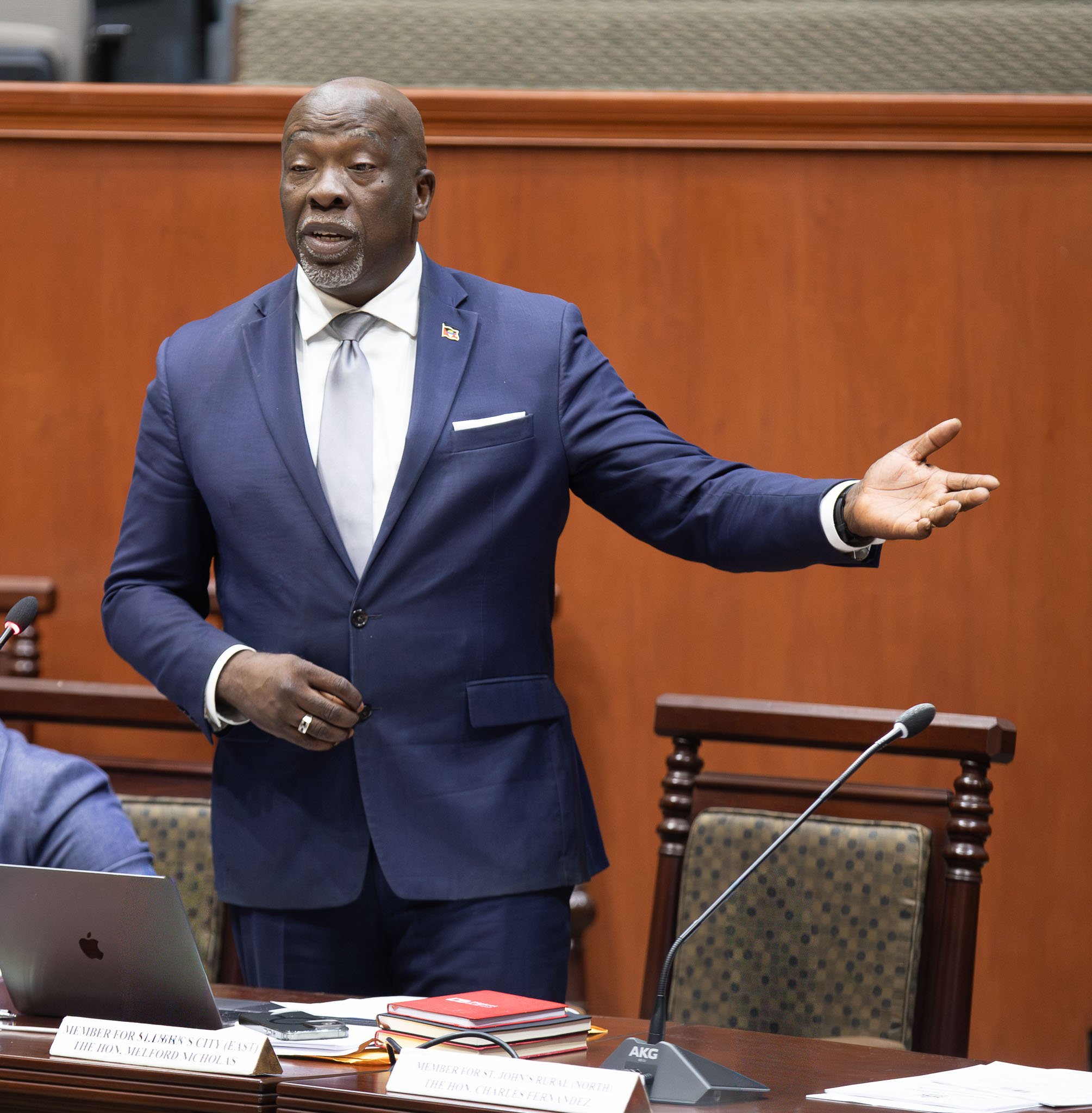
    In a contentious legislative session held on April 28, 2026, the Senate of Belize passed the Judges’ Salaries and Pensions Bill, a piece of legislation that establishes a standardized benefits and pension scheme for senior judiciary members, sparking debate over accessibility, taxpayer burden, and equity across the country’s judicial branch.

    Previously, the High Court and Court of Appeal stood out as the only segments of Belize’s public service without a statutorily defined pension framework. Instead, each senior judge was forced to negotiate individual salary and benefits packages directly with the executive branch, resulting in inconsistent terms that left some judges with robust security coverage and other peers with no formal security arrangements at all. The new legislation replaces this opaque, ad-hoc system with a uniform package that regulates salaries, work benefits, security provisions, and introduces the first legally mandated pension for full-time High Court and Court of Appeal judges.

    Government Senator Eamon Courtenay, a key supporter of the bill, emphasized that the legislation addresses a long-standing gap in public service regulation. “The Judiciary is, as I understand it from the High Court and the Court of Appeal, the only area in the government service or the public service where there is no provision in law for a pension and so this bill seeks to fill that gap,” Courtenay explained. He noted that the unequal individual negotiation process created arbitrary disparities between judges of equal seniority, and clarified that the new plan is a contributory scheme, requiring judges to make personal contributions to their pensions before becoming eligible after a five-year qualifying service period. Once eligible, judges will receive a pension equal to 85% of their final annual salary.

    Proponents argue that the standardized framework will do more than eliminate inequities between senior judges. They contend that formalized benefits will strengthen judicial independence by removing judges’ reliance on executive branch negotiations for their compensation, and will help the country attract top-tier legal talent to senior judicial roles.

    Despite these arguments, the bill faced significant pushback from opposition lawmakers and critical senators, who raised three core objections. First, they questioned the fiscal logic of expanding benefits for senior judges, who already earn relatively high salaries in the public sector. Second, they argued that the legislation unjustly excludes lower-court magistrates, who perform daily judicial work across the country but are left without access to the same pension benefits. Third, critics challenged the decision to have taxpayers fund the new scheme alongside judicial contributions, especially given the unusually short five-year qualifying period for full benefits.

    Opposition Senator Patrick Faber articulated the exclusion complaint as a core reason for opposing the bill. “Every single one of them, they go to work every day. They sit on the bench in their courthouses or their courtrooms across this country and they dispense justice just as those judges in the senior courts do and they deserve to be compensated,” Faber stated. “The package needs to include them as well. It is in fact one of the main points why we cannot support this bill because we insist Madam President that the magistracy be included.”

    The final approval of the bill comes amid ongoing debate over judicial compensation and equity in Belize’s public service, with opposition lawmakers vowing to continue pushing for amendments to include magistrates in the pension scheme in future legislative sessions.

  • Should Municipal Leaders Have Post-Service Benefits?

    Should Municipal Leaders Have Post-Service Benefits?

    For elected mayors across Belize, serving a community is a relentless, full-time commitment that bleeds into weekends and personal time, but once their terms end, all official benefits vanish immediately. Now, the Belize Mayors Association (BMA) is pushing to correct what it calls a longstanding unfair gap in policy, launching a renewed push for formal pensions, severance packages and other post-service benefits for municipal leaders who dedicate years of their lives to public office.

    The campaign comes as current and former mayors highlight the unending demands of the role. Corozal Mayor Rigoberto Vellos, who also serves as president of the BMA, has spent nearly a decade in office and says the daily workload leaves little room for outside employment or private retirement savings. “I’m here every day,” Vellos explained in an interview with local outlet News Five. “In the morning I’m out inspecting public works, and in the afternoon I’m back here meeting residents and processing administrative work, five days a week without exception.” Vellos, who is running for re-election in March 2027, noted that dozens of mayors across the country have served multiple terms, and all will leave office with no financial safety net when their tenures end. “We just want a framework in place that compensates these leaders for the years of hard work they put in for their communities,” he said. “This is an issue we’re prioritizing, and we’re working to get legislation approved by the national government to make it a reality.”

    Even mayors not running for re-election are throwing their weight behind the campaign, arguing that the reform is about principle, not personal gain. Belize City Mayor Bernard Wagner, who will step down at the end of his current term, has emerged as one of the most vocal advocates for the change. Wagner points out that rank-and-file public servants across Belize already receive post-service retirement benefits, and municipal leaders who bear greater responsibility deserve the same security. “Some mayors serve 10 years or more across three terms, and many former mayors have faced real financial hardship after leaving office,” Wagner said. “If ordinary public servants get to enjoy retirement benefits, why shouldn’t our mayors, who take on far heavier and more visible demands?”

    Longest-serving mayor Earl Trapp, who oversees the municipalities of San Ignacio and Santa Elena, says the fight for benefits dates back decades. Trapp, who has served in public office for more than 20 years, confirmed that he will also leave office with no severance or pension when his tenure ends, because no provision for mayoral benefits exists in Belize’s current Town Council Act. “This is a fight that started back when Darell Bradley was mayor,” Trapp said. “Successive national governments have refused to amend the Act to create a pension framework for municipal leaders, even though it’s only fair: if you work for years serving your community, you deserve compensation when you leave.”

    As the BMA advances its proposal, it has reignited a broader public debate: should municipal leaders get long-term financial security after leaving office, or is the lack of benefits just an accepted sacrifice of elected office? Critics argue that adding new pension benefits would place an unnecessary financial burden on Belize’s taxpayers, but proponents counter that denying benefits to long-serving mayors that all other public employees receive is fundamentally unfair. For now, the BMA continues to lobby the Ministry of Finance and national government leaders to move the reform forward. Shane Williams contributed reporting for News Five.

  • OSH Bill Shelved Once Again, Three Days Before Labour Day

    OSH Bill Shelved Once Again, Three Days Before Labour Day

    Three days before the 2026 Labour Day celebrations, a landmark piece of worker protection legislation that Belize’s labour movement had spent decades campaigning for was unexpectedly pulled from the Senate’s approval agenda, leaving organized labour groups stunned and derailing planned celebratory moments at this year’s national workers’ rallies.

    The Occupational Safety and Health (OSH) Bill, which had been years in the making, was designed to bring sweeping updates to Belize’s outdated workplace safety rules. If enacted, it would formalize legal liability for employers who fail to meet safety standards, introduce mandatory reporting requirements for workplace accidents, and establish a dedicated team of safety inspectors to enforce regulations across every industry operating in the country. For Belize’s unions, the final Senate approval of the bill three days before Labour Day was set to be a landmark victory — one that organizers planned to center during rallies held across the country to mark the annual workers’ holiday.

    Prior to the surprise adjournment, both government and opposition legislators signaled broad support for the long-overdue legislation. Eamon Courtenay, Leader of Government Business in the Senate, opened debate by framing the bill as a carefully negotiated compromise that balanced the rights of workers, business owners, and employers while delivering critical safety protections for all working people.

    “We believe that it represents the best balance that is achievable, that respects the working conditions, the place of work, the rights of workers, the rights of businesses, the rights of owners of businesses and it provides for safety,” Courtenay told the chamber. “I have no doubt that all senators will support the bill. It is our hope and expectation that we can do so hopefully on this occasion with not many amendments and that we will be able to move the bill forward and pass it so that it can be brought into force. It is long overdue. We know that the unions have been advocating for it forever. We are hoping that the day is near where we can see it as a part of our law.”

    Opposition Senator Patrick Faber also echoed the long-overdue nature of the bill, saying his caucus was thrilled to see the legislation reach the final voting stage. Even as he praised the core goal of the bill, Faber noted that the opposition had identified specific flaws that could be easily addressed to strengthen the legislation for both workers and employers across Belize.

    “We absolutely, absolutely are ecstatic that this bill is before us. We think it is long overdue. We think it is time but we feel that it is our obligation to point out these flaws,” Faber said. “These things that can be readily addressed in the manner in which we have suggested to make this bill the best bill for occupation in this country, for workers in this country, for employers in this country, for the safety of our entire nation.”

    After this opening debate, Courtenay made a sudden request for a 10-minute recess to hold internal consultations on the bill. The request was granted, and the Senate suspended proceedings. When the chamber reconvened, Senate President Carolyn Trench-Sandiford announced that the OSH Bill 2025 would remain stuck at the second reading legislative stage, effectively shelving the legislation indefinitely with no further public explanation for the last-minute change of plans.

    The abrupt shelving of the bill marks the latest in a long string of setbacks for the labour movement, which has pushed for national occupational safety and health reform for more than 10 years. What was poised to be a celebratory centerpiece for this year’s Labour Day marches has now shifted into a new flashpoint for worker advocacy, with union leaders preparing to turn Friday’s rallies into platforms demanding urgent action to advance the long-blocked legislation.

  • Mayor Wagner Backs His Deputy as City Hall Transition Looms

    Mayor Wagner Backs His Deputy as City Hall Transition Looms

    As Belize City prepares for a shift in municipal leadership ahead of incumbent Mayor Bernard Wagner’s 2027 departure from office, the sitting mayor has publicly thrown his support behind his second-in-command, Deputy Mayor Eluide Miller, to carry forward the ruling People’s United Party (PUP)’s work at City Hall.

    Wagner, whose final term concludes in February 2027, confirmed he will serve out the full remainder of his tenure before stepping down. While he emphasized that the ultimate nomination for the mayoral post will be determined by the PUP executive committee, and final approval rests with Belize City voters at the polls, he made his preference clear in an exclusive interview with local outlet News Five.

    Wagner highlighted Miller’s decades-long, step-by-step career within the Belize City Council as key proof of his readiness to lead. Starting as an entry-level intern, Miller rose through the organization’s ranks to hold roles in the finance department, then won a seat as a city councilor, before ultimately being elevated to deputy mayor. This steady upward trajectory, Wagner argued, has given Miller an intimate, working understanding of how City Hall operates, letting him hit the ground running if he takes the top post.

    “Eluide has earned every promotion he has received, and he is perfectly positioned to deliver consistent, uninterrupted progress for Belize City during this period of transition,” Wagner emphasized.

    The outgoing mayor also used the opportunity to tout the PUP administration’s track record over the past nine years in office, pointing to a long list of tangible accomplishments the party hopes to carry forward under new leadership. Among the most notable achievements are the construction and resurfacing of more than 300 city streets using a range of durable paving materials including concrete, chip seal, and hot mix asphalt. Beyond physical infrastructure, Wagner highlighted the administration’s heavy investment in social programs and building long-term operational capacity within the city council itself.

    Wagner also noted that the council has maintained a stable, functional working environment throughout his tenure: it has never missed a payroll for city employees, and has consistently fostered positive collaborative relations with municipal labor unions.

    Asked whether other potential candidates within the council had the skills to serve as mayor, Wagner acknowledged that multiple local leaders hold the necessary competence to fill the role. But he reiterated that his clear personal endorsement goes to Miller, while stressing that the final decision on the party’s nominee remains in the hands of PUP leadership.

    This report is adapted from a transcript of a televised evening news broadcast from Belize.

  • Feinstein Fails to Reopen Stake Bank Appeal Case with New Report

    Feinstein Fails to Reopen Stake Bank Appeal Case with New Report

    A key legal battle over Belize’s high-profile Stake Bank Extension cruise port project took a decisive turn last week, when the Court of Appeal ruled against local businessman Michael Feinstein’s bid to reopen his appeal case with newly submitted evidence.

    Feinstein has been challenging the compulsory acquisition of his land for the infrastructure development, arguing that the government’s justification for seizing the property was legally flawed. To bolster his appeal, he sought court permission to introduce a fresh analysis from an independent tourism consultant that compares competing cruise port development options across Belize. He claimed the report would provide new context to prove the government’s original reasoning for the land acquisition was unfounded.

    However, the appellate judges delivered a clear rejection of both his request to submit the new evidence and his separate demand for additional internal document disclosure from the government. In their written ruling, the court outlined that Feinstein could have secured and submitted the consultant’s report during the original trial if he had exercised reasonable professional diligence. Judges further emphasized that even if the report had been considered, it would not have altered the final outcome of the initial case.

    The ruling also reinforced a core principle of appellate procedure: appeals are not intended to give litigants a second opportunity to construct an entirely new case using evidence that was omitted from the original trial proceedings. On the matter of document disclosure, the court labeled Feinstein’s request for additional government records as unnecessary at this late procedural stage, noting that granting the order would not serve the public interest of justice.

    The outcome of this procedural hearing clears a major path for the government, removing a key barrier that threatened to delay the ongoing appeal process. As a consequence of the ruling, Feinstein was also ordered to cover the legal costs incurred by the government and all other parties involved in responding to his application. Moving forward, the substantive appeal will proceed to a full hearing based solely on the evidence that was already entered into the court record during the original trial, with the core question remaining whether the initial judgment upholding the compulsory land acquisition was legally valid.

    Legal and development observers note that this ruling sets a clear precedent for procedural conduct in appellate land dispute cases in Belize, while the final outcome of the substantive appeal will have long-lasting implications for the future of the Stake Bank cruise port project, a major development initiative expected to boost the country’s tourism sector. News outlets will continue to cover the case as it moves toward its full substantive hearing.

  • Abinader to represent Dominican Republic at Madrid Ibero-American Summit

    Abinader to represent Dominican Republic at Madrid Ibero-American Summit

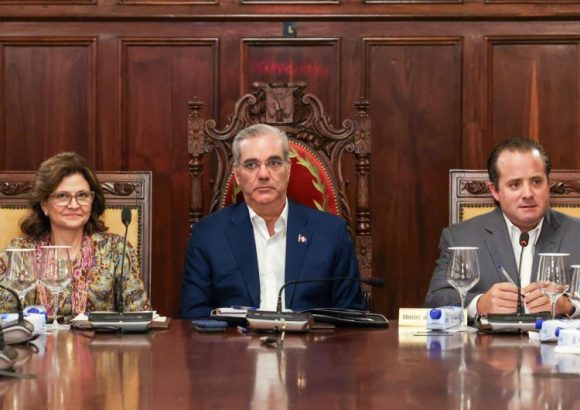
    During an official diplomatic visit to the Dominican Republic’s capital of Santo Domingo, Spanish Foreign Minister José Manuel Albares has formally confirmed that Dominican President Luis Abinader will join the upcoming Ibero-American Summit, set to take place in Madrid on November 4 and 5. The confirmation was delivered following a closed working meeting between Albares and his Dominican counterpart, Roberto Álvarez, where the two top diplomats also walked through detailed preparations for the high-profile regional gathering of leaders.

    Albares clarified that he carried the official invitation to the summit on behalf of the Spanish monarchy, and received direct confirmation from Dominican leadership that Abinader intends to participate in the two-day event. This year’s summit, which will draw heads of state and government from every corner of the Ibero-American community, centers on a unifying theme: “Ibero-America. Together we build our community. Together we project it toward the future and the world.”

    The stop in the Dominican Republic marks one segment of a broader Latin American diplomatic tour that Albares is undertaking, which also includes scheduled stops in Puerto Rico and Mexico. The core objectives of this tour are twofold: to strengthen long-standing bilateral diplomatic ties between Spain and its regional partners, and to secure broad participation from eligible nations for the Madrid-hosted summit. Albares emphasized that Spain is adhering to long-established diplomatic protocols as it extends formal invitations to all countries eligible to participate in the annual gathering.

  • Spain reaffirms support for Haiti stabilization during visit to Dominican Republic

    Spain reaffirms support for Haiti stabilization during visit to Dominican Republic

    In a high-stakes bilateral gathering held in Santo Domingo, top diplomatic leaders from the Dominican Republic and Spain have converged to address a range of pressing regional and bilateral issues, anchored by discussions on the ongoing instability in neighboring Haiti. Dominican Foreign Minister Roberto Álvarez and his Spanish counterpart José Manuel Albares used the official meeting to align on international strategy for Haiti, while deepening long-standing cooperative ties between their two nations. During the session, Albavers reiterated Spain’s unwavering commitment to contributing to multilateral international efforts working toward long-term stabilization in Haiti, emphasizing that sustained coordinated global support is non-negotiable to reverse the country’s deteriorating security and humanitarian situation. The Spanish minister’s remarks underscored the European nation’s role as a engaged partner in Caribbean regional security. Moving past the urgent crisis in Haiti, the two diplomats turned their attention to the robust bilateral relationship that has evolved between the Dominican Republic and Spain. Both leaders highlighted the steady progress of ongoing collaboration across key sectors, including cross-border trade, foreign direct investment, and joint sustainable development projects that have delivered mutual benefits to both populations. Álvarez took the opportunity to draw attention to the critical role of the Dominican diaspora in Spain, noting that the community, which numbers more than 200,000 people, stands as the second-largest Dominican expatriate population in any country worldwide. For his part, Albares praised the successful social and economic integration of Dominican residents into Spanish society, and revealed that new regularization programs led by the Spanish government could open pathways to legal status for additional Dominican migrants moving forward. These programs are structured to ensure that all participating migrants receive full legal rights and state protections while residing and working in Spain. To cap off the official bilateral meeting, Albares formally extended an invitation on behalf of the Spanish government to Dominican President Luis Abinader to attend the XXX Ibero-American Summit, which is scheduled to be hosted in Madrid this coming November. The upcoming summit will bring together heads of state from across the Ibero-American community to discuss shared political, economic, and social priorities for the region.

  • OPEN LETTER: To The Labour Commissioner

    OPEN LETTER: To The Labour Commissioner

    As polling day approaches, a formal open letter has been addressed to the local Labour Commissioner, raising urgent alarms over proposed scheduling changes by Jumby Bay Island Company that allegedly violate statutory employee voting rights protections.

    According to the complaint laid out in the letter, the resort company has imposed a rigid, work-prioritized schedule that strips employees of their legally guaranteed time to cast a ballot. For employees scheduled to clock in for a 9:00 a.m. shift, management has ordered them to vote as early as 6:00 a.m. before catching a 10:45 a.m. ferry to reach the work site on time. Meanwhile, workers whose shifts end at 5:30 p.m. are barred from leaving the workplace earlier than 2:00 p.m. to make time for voting.

    Under local labor and electoral law, the letter notes, all employees are explicitly entitled to four consecutive hours of paid, uninterrupted time off during work hours to exercise their right to vote, with no permitted pay deductions, penalties or employer interference. The proposed arrangement from Jumby Bay Island Company directly contradicts this legal requirement, the author argues, by prioritizing the company’s daily operational needs over workers’ fundamental democratic rights.

    Three key harms are highlighted in the complaint. First, the forced timing denies workers the flexibility to vote at a time that works for their own schedule, forcing them to rush through the process. Second, the top-down scheduling creates indirect pressure on employees to prioritize work demands over their voting rights out of fear of disciplinary action. Third, workers who cannot meet the company’s strict timing requirements face tangible risks: lost pay and negative workplace consequences for falling outside the imposed schedule.

    The letter argues that these practices raise clear red flags for two potential violations: unlawful pay deductions and improper employer interference with workers’ electoral rights. Given the proximity of polling day, the matter carries significant urgency. The author formally calls on the Labour Commissioner’s office to launch an immediate investigation into the company’s proposed arrangements, clarify and enforce existing employer obligations around voting time off, and take proactive intervention to stop any violation of worker rights before polling day arrives. The letter concludes with an expression of confidence that the commission will prioritize the matter and take all necessary steps to ensure full legal compliance.

  • Electoral Commission must resign to restore trust in Dominica’s voter system, says businessman Gregor Nassief

    Electoral Commission must resign to restore trust in Dominica’s voter system, says businessman Gregor Nassief

    As Dominica prepares for an upcoming general election that has not yet been scheduled, a prominent Dominican business leader is calling for a complete overhaul of the country’s top electoral body to rescue crumbling public trust in its democratic process. In an open letter published by Dominica News Online on April 8, 2026, Gregor Nassief – chairman and chief executive officer of GEMS Holdings Ltd., a well-known hospitality executive, and a longtime public critic of the current administration – has outlined a cascade of systemic failures plaguing the island’s electoral commission and demanded the immediate resignation of all five commission members.

    Nassief’s grievances center on the botched rollout of 2025 electoral reforms, which were originally passed by parliament in March of that year with the stated goal of modernizing voter registration and introducing a new universal voter ID system. Contrary to the reform’s intended purpose, Nassief documents that voter registration was fully halted the exact day the legislation was signed into law, and the suspension remained in place for a full 355 days. During this year-long pause, multiple local elections were held across the country, a fact that leads Nassief to question whether tens of thousands of eligible voters were effectively barred from exercising their democratic right to participate.

    After registration finally resumed on March 9, 2026, Chief Elections Officer Anthea Joseph released an official audio statement framing the restart as an encouraging success, claiming that a large number of new and returning voters had visited registration stations. Joseph also defended the year-long pause, arguing it was a necessary measure to strengthen confidence in electoral processes and guarantee equal access for all eligible voters.

    But Nassief’s open letter directly contradicts these official claims. He cites on-the-ground data showing that, as of April 8, only a tiny fraction of the roughly 13,000 applicants seeking to confirm their existing voter details and 350 newly registered voters have had their applications fully processed. He also raises major red flags about the integrity of the current voter roll, pointing to a stark discrepancy that calls the commission’s competence into question: the official list includes 75,000 registered voters, while the International Institute for Democracy and Electoral Assistance (International IDEA) estimates Dominica’s total voting-age population is just 55,000. Nassief attributes this 20,000-voter gap to thousands of outdated, unremoved entries – including people who have died and citizens who have permanently emigrated from the island.

    A second critical failure highlighted by Nassief is the persistent, months-long delay in issuing the new voter ID cards that were the centerpiece of the 2025 reforms. Even though the voter confirmation process launched in October 2025, not a single applicant has received their new ID card as of the date of his letter. Applicants who registered after the March 2026 restart have also waited weeks without any approval or issuance, Nassief says, noting that these delays completely defeat the purpose of the reform package and fuel growing public skepticism that the commission can run a free and fair election.

    Notably, Nassief’s criticisms echo public admissions from Prime Minister Roosevelt Skerrit himself, who called the year-long registration suspension a serious administrative lapse during parliamentary remarks in February 2026. While the Electoral Commission has argued that the pause was necessary to install a new computerized registration system and update eligibility rules, Skerrit rejected this justification. He pointed out that the commission was legally required to continue registration via manual or legacy systems even if new technology was not ready, a step the body never chose to take. The prime minister added that the result of this inaction was a year-long interruption of a statutory parliamentary process that was explicitly meant to remain continuous.
    Against this backdrop of cross-party criticism, Nassief is calling for nothing less than a full reset of the country’s electoral leadership. Under Dominica’s constitution, the five-member Electoral Commission is structured to be an independent body: its chair is appointed by the president acting on independent judgment, while four additional members are appointed by the president on the advice of the prime minister and the leader of the opposition. The commission works alongside a chief elections officer, also appointed by the president, and holds formal responsibility for all aspects of voter registration and election conduct for the island’s parliamentary seats.

    In recent months, electoral officials have attempted to address growing public discontent by rolling out mobile registration stations across island communities and adjusting ID requirements, urging citizens to take advantage of the new systems to secure their voting rights. As early as February 2026, the Dominica Bar Association also issued a public call for procedural reviews to expand voter participation, joining a growing chorus of institutional critics.

    But Nassief argues incremental adjustments are no longer sufficient. The only path to restoring public trust, he says, is for the entire current commission to step down, and for a newly reconstituted commission with the competence and public credibility needed to fix years of operational failures to be appointed in their place. He also stressed that any new commission must be given sufficient time to address the outstanding backlog of applications, clean up the bloated voter roll, and issue all pending ID cards before a general election date is announced. A second key priority he outlines is a comprehensive public education campaign to ensure all Dominican citizens understand the new registration and confirmation procedures, without which even well-designed reforms will fail in practice.

    Framing his proposals as a defense of Dominican democracy, Nassief emphasized that public confidence in electoral processes cannot be rebuilt through empty official assurances alone. It can only be earned through consistent, transparent, and efficient administration of the voting system, he argued. Until those basic standards are met, widespread public doubt about the fairness of upcoming elections will persist.

    As of the publication of Nassief’s open letter, Dominica News Online reported that it had received no response to requests for comment from the Electoral Commission.

  • He Claimed Police Broke Him, The Video Told A Different Story

    He Claimed Police Broke Him, The Video Told A Different Story

    In a landmark pre-trial ruling delivered on April 28, 2026, a High Court judge has cleared the way for murder suspect Bevan Alford’s trial to move forward, upholding the admissibility of key self-incriminating statements and messages collected by law enforcement. The decision rejects a full-throated defense challenge that claimed the evidence was obtained through improper, coercive police tactics that violated Alford’s legal rights.

    Alford stands accused of the 2023 murder of Freddy Chicas, and has formally entered a not guilty plea to the charge. His legal team launched a multi-pronged attack to suppress all prosecution evidence centered on two collections of admissions: first, a combined written and video-recorded police interview where Alford acknowledged he had told third parties he killed Chicas, while still maintaining he only moved the victim’s body and did not commit the killing; and second, a series of private electronic messages recovered from Alford’s personal phone that allegedly contain a direct confession to the murder.

    Before the substantive murder trial could get underway, the court was required to hold a voir dire, a specialized evidentiary hearing, to evaluate the defense’s challenges to the admissibility of the materials. Over the course of several weeks of hearings, Alford’s legal team laid out a series of serious allegations against the investigating officers. Under oath, Alford testified that officers approached him at his workplace before the interview, where Corporal Alphonso Chuc allegedly promised he would be allowed to leave if he disclosed all details of the incident. He further claimed a second unnamed officer from the gang intelligence unit, referred to only as “Dennis,” repeated the promise of release in exchange for cooperation. Alford added that he had consumed cocaine, alcohol, and marijuana the night before the interview, arrived at the police station in an impaired, unwell state, and was denied access to food and water during questioning. Finally, he cited his long-documented history of severe mental illness, including substance-induced psychosis, past suicide attempts, and repeated self-harm, arguing his vulnerability made the interview inherently unreliable.

    Presiding Justice Nigel Pilgrim rejected every single one of the defense’s arguments, grounding his final decision in the unedited video recording of the entire interview that told a far different story than the one Alford presented. In his written ruling, Justice Pilgrim noted the footage clearly showed investigating officers treated Alford’s rights with scrupulous care, with no visible evidence of coercion or improper pressure. The video captured Alford leaning back in his interview chair with his hands clasped behind his head, a posture the judge described as consistent with casual, relaxed conversation rather than a pressured interrogation. Alford shared a laugh with the investigating officer at one point, refused to provide his mother’s name when asked — a clear demonstration he understood he had the right to decline to answer questions — caught and corrected a typographical error about his age in the interview notes, and explicitly nodded to confirm he understood the Miranda caution that any statement he made could be used against him in court. “The body language between the defendant and the investigator demonstrated no fear,” Justice Pilgrim wrote. “The strength of the evidence [from the video recording], by itself, would cause the Court to reject the defendant’s evidence on this issue.”

    The judge dismissed Alford’s claim about the unnamed officer “Dennis” entirely, noting testimony from a senior police official confirmed no staff member by that name is assigned to the department’s gang intelligence unit. He also found Alford provided contradictory accounts of where the alleged encounter with “Dennis” took place, and when confronted with the inconsistency, refused to acknowledge the discrepancy — a finding Alford was untruthful on this point.

    On the allegations of intoxication and denial of food, Justice Pilgrim highlighted compelling contradictory evidence: Alford had ridden his bicycle for an hour and a half to reach his workplace on the morning of the interview, and his supervisor had cleared him to work, both facts that are inconsistent with a claim of severe impairment. The video and officer testimony also confirmed that a full welfare check was completed before the interview began, Alford voluntarily stated he was fit to be questioned, and when he later requested a break, officers immediately provided him with food and water.

    The most legally impactful portion of the ruling addressed Alford’s mental health history. Under existing Commissioner of Police Rules, if a detainee appears to be experiencing active symptoms of mental illness, officers must arrange for an “appropriate adult” — a family member, mental health professional, or trained specialist — to be present during any questioning. No appropriate adult was present during Alford’s interview, a point the defense argued required automatic suppression of all evidence. However, Justice Pilgrim ruled the critical legal question was not whether Alford had a documented history of mental illness, but whether he displayed observable signs of active impairment to officers at the time of the interview. He accepted the prosecution’s evidence that no such signs were visible to the investigating team, clearing the way for the evidence to be admitted.

    With this pre-trial issue resolved, Alford’s murder trial will proceed as scheduled, with the contested statements and messages now part of the Crown prosecution’s formal case against the defendant.