
As Trinidad and Tobago moves forward with a landmark national security plan to confront rising violent and gang-related crime, Prime Minister Kamla Persad-Bissessar has moved to reassure compliant residents that the sweeping new seven-district security framework poses no threat to ordinary citizens. The new framework, formalized under the proposed Special Operations Bill 2026, will deploy specialized dedicated police units across the country authorized to carry out targeted crackdowns against organized gangs, armed suspects and violent criminal networks, and parliamentary debate on the legislation is scheduled to kick off at 10:30 a.m. local time today ahead of a final vote.\n\nThe Prime Minister confirmed that all outstanding questions about the new legislation will be addressed during floor debates in both the lower and upper houses of parliament, emphasizing that the bill is expected to pass successfully, with daily life across the country continuing largely uninterrupted for law-abiding residents. Drawing on past policy success, Persad-Bissessar pointed to the previously implemented state of emergency, which she described as highly effective at curbing crime, and expressed confidence that the new Special Operations strategy will deliver equally strong results. When asked about the bill’s provision for establishing restricted “closed areas” in high-crime hotspots, the Prime Minister noted that policymakers will rely on empirical data to guide any such designations, adding that it remains too early in the process to determine how long any potential closed area would remain in effect.\n\nA review of the legislation by local outlet *Trinidad Express* confirms that the bill will remain in force for a full two years starting from the date it is officially proclaimed by the President. Structurally, the new bill draws heavily from the earlier Zones of Special Operations (ZOSO) Bill, which failed to gain enough parliamentary support to pass earlier this year. Unlike the previous proposal, however, the current iteration does not require a special supermajority to pass, meaning it can be approved with a simple majority of sitting lawmakers.\n\nThe legislation divides the entire country into seven distinct special policing districts, covering every populated region of both Trinidad and Tobago. District 1 includes Port of Spain, Diego Martin and San Juan/Laventille; District 2 covers Arima and Tunapuna-Piarco; District 3 encompasses Sangre Grande and Mayaro-Rio Claro; District 4 includes Chaguanas and Couva-Tabaquite-Talparo; District 5 covers San Fernando and Princes Town; District 6 includes Point Fortin, Siparia and Penal-Debe; and the entire island of Tobago makes up the seventh district.\n\nEach of the seven districts will be led by a dedicated Head of Special Operations, selected by the Commissioner of Police from officers holding at least the rank of Superintendent. Before formalizing the appointment, the Commissioner is required to consult with the Prime Minister, who retains the power to reject a candidate after consulting with relevant cabinet ministers and the Chief of Defence Staff. All personnel selected for special operations duties, including both police officers and participating military personnel, must complete mandatory training in human rights protocols, rules governing the use of force, community engagement practices and conflict de-escalation strategies.\n\nThe legislation also allows for the Trinidad and Tobago Defence Force to support police operations, though any military deployment must be formally requested by the Commissioner of Police. Each district receiving military support will have a Head of Military Assistance, appointed by the Chief of Defence Staff from officers holding at least the rank of Major. Similar to the police appointment process, the Chief of Defence Staff must consult the Prime Minister before making the appointment, and the Prime Minister can reject the nomination after consulting relevant ministers and the Commissioner of Police.\n\nTo ensure accountability and coordinated action, the Commissioner of Police and Chief of Defence Staff are required to develop joint formal protocols governing police-military collaboration, including clear systems for verifying the identity of all participating personnel. Separate standard operating procedures (SOPs) must also be created for both police special operations and military assistance, with any personnel found violating SOPs facing disciplinary action.\n\nClocked in at 26 clauses plus a formal schedule, the bill authorizes targeted special operations that can be carried out by police alone or with military backup, and grants authority to declare areas facing extreme criminal activity as closed areas. Within these designated zones, police receive expanded powers to conduct warrantless searches, seize evidence, and make arrests and detentions. Authorities are also permitted to implement cordons and curfews, and require any person entering or exiting the area to hold a valid entry/exit permit.\n\nThe President holds the sole authority to declare a zone within a special operations district a closed area, and can only do so if presented with reasonable evidence that escalating violent crime – including homicides, shootings, kidnappings and gang activity – or the widespread possession of illegal firearms, ammunition, explosives or other weapons poses a direct threat to public safety and peace. The power can also be invoked if gangs have seized control of, or are actively intimidating, a local community, and only after ordinary law enforcement measures have proven unable to restore public safety and order.\n\nAny closed area declaration is issued as an executive Order that is subject to negative resolution by the House of Representatives, meaning lawmakers can vote to annul the order if they choose. Within seven days of issuing the declaration, the President must provide the Speaker of the House with a formal statement outlining the specific justifications for the order. While the House can annul the declaration at any time, no annulment motion can be introduced more than once every three months.\n\nOnce a closed area is declared, the district’s Head of Special Operations can implement physical access restrictions via barriers, roadblocks and other containment measures. With the exception of a small group of explicitly exempted officials, no person may enter or exit a closed area without a valid permit. Exempted individuals include the President, Prime Minister, cabinet ministers, members of parliament, Tobago House of Assembly members, municipal councillors, the Chief Justice and sitting Supreme Court judges, the Commissioner of Police, Chief of Defence Staff, district special operations commanders, and on-duty police and military personnel traveling to or from their assignments.\n\nViolating the permit requirement, or failing to comply with permit conditions without a reasonable excuse, carries a maximum penalty of a TT $50,000 fine and one year of imprisonment. Police may also establish internal and perimeter cordons around specific sites within closed areas using roadblocks and barriers; the Head of Special Operations is required to issue immediate public notice of any cordon, clearly marking its boundaries and outlining requirements for people inside and those seeking entry, with formal notice published in the official government Gazette within three days.\n\nThe President also holds authority to impose a curfew within a closed area, requiring all residents to remain inside their properties during specified hours unless they qualify for an exemption or hold a valid curfew permit. Breaching a curfew order carries the same maximum penalties as violating permit rules: a TT $50,000 fine and one year of imprisonment.
分类: politics
-
State may face legal action over SoE detentions
As Trinidad and Tobago’s recently concluded state of emergency (SoE) moves into the rearview mirror, senior political and academic figures are sounding alarms over two major unresolved issues: potential hundreds of millions in state liability for unlawful detentions, and systemic human rights risks stemming from the government’s use of preventive detention orders (PDOs).
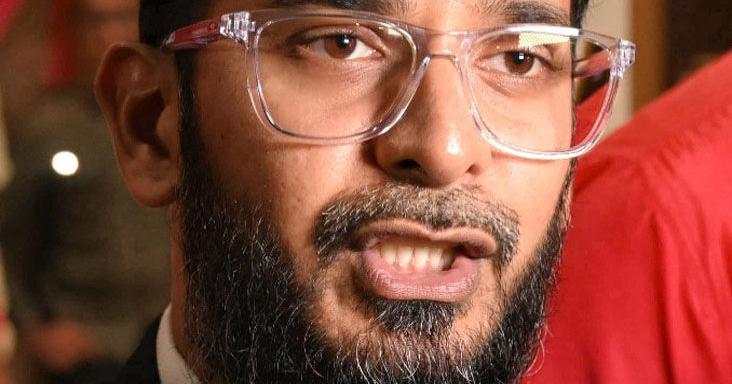
People’s National Movement (PNM) Senator Sanjiv Boodhu is the latest to flag the long-term fiscal danger of the emergency measures, which ended Tuesday. In a telephone interview marking the end of the SoE, Boodhu laid out a clear warning: hundreds of individuals detained without criminal charges under PDOs are poised to file compensation claims against the state, a financial burden that will not fall on the current administration alone, but on future governments and coming generations.
“ You cannot detain 600 people under these orders, release them without any charges, and expect them to walk away without seeking damages for violated rights,” Boodhu argued. He drew direct parallels to the 2011 state of emergency, when the PNM inherited pending litigation after taking office and ultimately paid out millions of dollars in compensation to wrongfully detained individuals. Boodhu stressed that history is set to repeat itself without proactive accountability from the current government.
Beyond fiscal risk, Boodhu is calling for full independent auditing of the government’s official data on PDO detentions. Currently, public numbers fail to distinguish between detainees who were issued PDOs before criminal charges were filed, and those who were already facing charges when the preventive orders were implemented. He said the public deserves clear, verified data on how many detainees still have active court cases pending against them, a level of transparency the current administration has not provided. Boodhu also questioned the government’s claims that the SoE successfully reduced crime, calling for the release of granular, community-level crime statistics so citizens can independently evaluate whether the emergency measures delivered tangible public safety benefits. The debate comes as the government weighs advancing the Special Operations Bill (SOB), legislation that would create new targeted security powers for communities grappling with violent crime.
Joining the criticism, leading criminologist Dr. Randy Seepersad has raised fundamental human rights alarms over the confirmed detention numbers. Official data shows 574 people were detained under active PDOs during the SoE, with only 240 facing criminal charges and 334 released without ever being formally accused of a crime. Speaking during an appearance on CCN TV6’s *Morning Edition* on the day the SoE expired, Seepersad said the large share of uncharged detentions cannot be reconciled with basic human rights protections.
“If people are held in lengthy detention without ever being charged, that is a clear signal that the state did not have sufficient evidence to justify depriving them of their freedom in the first place,” Seepersad explained. He went on to outline the long-term, life-altering harm of unnecessary detention, especially for low-income workers who are primary caregivers for their families. Many detainees will lose their jobs as a result of their time in custody, he noted, pushing them deeper into social and economic disadvantage that extends far past their release.
“Deprivation of liberty changes a person’s life in permanent, fundamental ways. Any time the state chooses to exercise these extreme emergency powers, we have to ask what safeguards are in place to prevent abuse,” Seepersad said. He proposed mandatory judicial review as a critical check on preventive detention powers, noting that while the process can cause procedural delays, it sets a high legal bar that forces the state to justify detentions before a neutral third party. That standard protects innocent people from arbitrary deprivation of freedom, he argued.
Seepersad did offer a measured take on the proposed Special Operations Bill, noting that draft legislation includes core judicial safeguards, including independent oversight of security actions, and provisions for targeted social interventions that address the root causes of crime. He backed that approach, saying any long-term crime reduction strategy must invest in wrap-around support including psychologists, social workers, and educators, particularly for vulnerable young people at risk of gang involvement. He also confirmed that his independent analysis of crime data does show an overall drop in both serious and non-serious offending during the duration of the SoE, a rare point of agreement with the government’s public assessment.
-
COP GETS $343,000
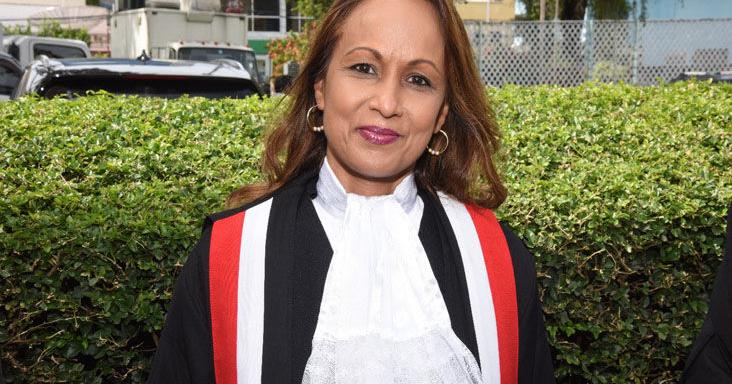
A years-long case of unlawful administrative action against a police officer has concluded with a landmark High Court ruling that vindicates the rights of public employees and reinforces constitutional safeguards against punitive action without due process. After more than four years of unpaid suspension that never resulted in criminal charges or formal disciplinary proceedings, Police Constable Miguel Jaikaran Singh has been granted more than $343,800 in compensatory damages by Justice Margaret Mohammed, who ruled that his extended suspension was illegal, unconstitutional, and had devolved into an unapproved penalty.
Singh was attached to the now-disbanded Special Operations Response Team (SORT) when he was placed on suspension effective January 13, 2022. The suspension was tied to an investigation into the 2021 in-custody deaths of Andrew Morris and Joel Balcon, two men arrested in connection with the high-profile kidnapping and murder of Andrea Bharatt. Court records show that Singh and other SORT officers were taken into custody and questioned over the deaths in April 2021, but Singh was released shortly after and never faced any criminal charges or formal disciplinary action connected to the case.
In her sweeping ruling, Justice Mohammed outlined multiple failures on the part of the Police Commissioner that rendered the suspension invalid from the start. First, the official suspension notice failed to meet the mandatory requirements of Regulation 152, as it provided Singh no clear details of the allegations against him. The judge noted that the evidence presented to the court contained no specification of the offense Singh was accused of committing, no rationale for the commissioner’s suspicion, and no justification for the suspension on grounds of public interest or protecting the reputation of the Police Service. “The claimant was suspended without being provided with any clear reasons for his suspension, which is unlawful,” Mohammed wrote in her judgment.
Beyond the flawed initial notice, the court found that the commissioner never conducted any regular review of Singh’s suspension over the entire four-year period. Legal frameworks for police suspensions outline that such a measure is only intended to be a temporary, interim step ahead of planned criminal or disciplinary proceedings, not a permanent status. The commissioner’s argument that an open investigation justified holding Singh on suspension indefinitely was rejected outright by the court.
Most critically, Justice Mohammed ruled that the extraordinary length of Singh’s suspension transformed a temporary administrative measure into a de facto punishment, which directly violates section 129(4) of the national Constitution. That constitutional provision explicitly states that no penalty may be imposed on a public servant outside of formal disciplinary proceedings. “The effect of the claimant’s suspension without the instituting of any disciplinary proceedings or the institution of any criminal charge for over four years has made the claimant’s suspension indefinite which has the effect of making it into a penalty,” the judgment explained.
While Singh continued to receive his base salary during the suspension, he was stripped of multiple work-related allowances. The court awarded him $263,802.56 to compensate for the lost allowances, which included commuted overtime, plain clothing, and meal benefits. An additional $80,000 was granted to cover non-pecuniary harm: Singh documented significant mental distress, public embarrassment, and professional humiliation stemming from the four-year limbo of his unproven suspension.
Justice Mohammed ultimately quashed the Police Commissioner’s December 29, 2021 suspension decision, declaring the entire measure illegal, null, void, and without legal effect. She also ordered the commissioner to cover all of Singh’s legal costs incurred throughout the case. Singh was represented by attorneys Gerald Ramdeen and Dayadai Harripaul, while the commissioner was represented by a legal team including Jinai Chong Sing, Janique Mitchell, Rachel Wright, and Justay Guerra.
-
Díaz-Canel inspects Ariguanabo water supply system
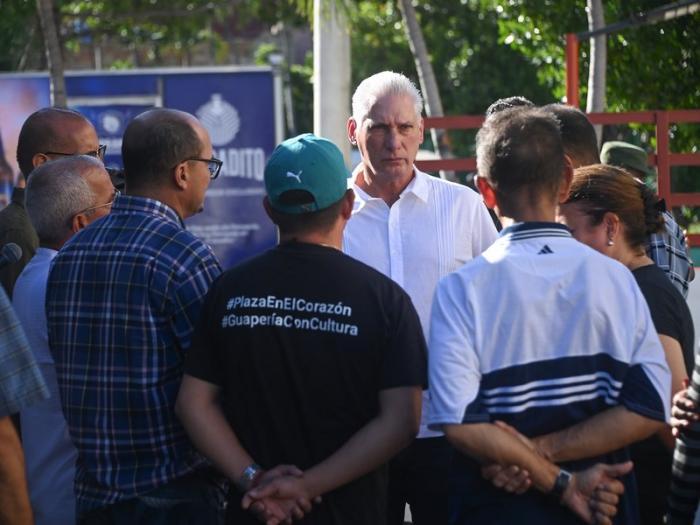
On Thursday, September 18, 2026, Cuba’s top leader Miguel Díaz-Canel Bermúdez — who holds the dual positions of First Secretary of the Central Committee of the Communist Party of Cuba and President of the Republic — embarked on a day-long inspection tour of high-priority public works, sports and sustainable infrastructure projects across Artemisa province and the capital city of Havana.
The first stop on the president’s itinerary was the Ariguanabo water supply facility, located in Bauta municipality of Artemisa. This site is a critical component of western Havana’s water distribution network, providing clean drinking water to more than 23 percent of the capital’s total population, covering the densely populated municipalities of La Lisa, Playa, and Marianao. The visit was part of ongoing oversight for the national Comprehensive Program to Guarantee Stable Water Access for Havana’s residents. During the inspection, Díaz-Canel received a full briefing on the facility’s current operations and upcoming upgrades from senior government officials, including Minister of Energy and Mines Vicente de la O Levy, National Institute of Hydraulic Resources President Antonio Rodríguez Rodríguez, Havana Provincial Communist Party Committee First Secretary Liván Izquierdo Alonso, and Havana Governor Yanet Hernández Pérez.
Briefers updated the president on progress across the full water program, noting that new generator sets are already being deployed at key pumping stations across the system to improve reliability. Teams are also advancing site preparation for new photovoltaic solar farms and grid-scale energy storage facilities, designed to cut the system’s carbon footprint and reduce vulnerability to power disruptions. Discussions during the briefing also touched on water security efforts across the country, including ongoing work to stabilize supplies for communities in Santiago de Cuba province, covering the provincial capital and the municipalities of Guamá, San Luis, Contramaestre, and Songo-La Maya.
Following the inspection of the Ariguanabo facility, the president traveled back to Havana for his second stop: La Polar Stadium, Cuba’s first sports venue to install synthetic playing turf back in 2017. The stadium already leverages photovoltaic solar panels to power lighting for evening matches, fitting into Cuba’s broader push for renewable energy adoption across public infrastructure. During the visit, Díaz-Canel was briefed on plans for the venue’s third phase of modernization, which includes expanding spectator seating and upgrading on-site facilities with cutting-edge sports technology.
The president used the visit to emphasize the central role of grassroots sports in Cuban communities, calling for expanded access to neighborhood athletic activities and stronger collaboration between local schools and community groups to grow popular sports including soccer. He noted that competitive sports do more than develop athletic talent and boost personal self-esteem; they also serve as a unifying force that brings together players’ families and entire local neighborhoods.
The third and final stop on Thursday’s itinerary was a newly developed solar-powered charging station located at the intersection of 23rd and J Streets in Havana’s historic Vedado district. The facility boasts 18 individual charging points, purpose-built to power the fleet of electric tricycles that now handle solid waste collection for the surrounding Rampa neighborhood. After touring the station, Pedro Lizardo Garcés Escalona, president of the Rampa People’s Council, shared details of the new waste collection model with the Cuban presidency’s press team.
Lizardo explained that 15 solar-powered tricycles now serve the 15 electoral districts that make up the Rampa People’s Council. The project has introduced coordinated collection schedules: residents are asked to place their waste bags outside their buildings by 7 a.m. and 7 p.m. daily, with some areas adjusted to a 6 p.m. evening collection to improve efficiency. He reported that the community-focused initiative has already delivered dramatic, positive results for local residents, with more than 20 large illegal open dump sites completely eliminated across the district.
The initiative also includes restoration work for street corners that were damaged by heavy waste collection equipment used in previous collection models, improving the overall quality of public space in the neighborhood. Lizardo acknowledged that organizational and cultural challenges remain, noting that low civic compliance in some areas continues to slow progress toward the clean, vibrant neighborhood residents expect. Even so, the successful pilot in Rampa is already being scaled to other People’s Councils across the Plaza de la Revolución municipality.
Looking forward, the project aligns with Cuba’s long-term goals to transition toward a circular economy that prioritizes raw material recovery and waste reduction. The ultimate aim, Lizardo explained, is to fully revitalize sidewalks, community gardens, and public parks, creating a cleaner, more attractive environment for both local residents and visitors who pass through the iconic Vedado district.
-
$250 Million Compact, But When Will Belizeans Benefit?
In a major policy address on September 17, 2026, Prime Minister John Briceño of Belize has laid out a sweeping, multi-billion-dollar national development agenda designed to cut household costs, upgrade critical infrastructure, expand energy independence and boost economic growth. However, even as the prime minister touts the transformative potential of his administration’s plans, Belizean citizens are left waiting for answers about accountability, implementation timelines and when they will see tangible improvements to their daily lives.
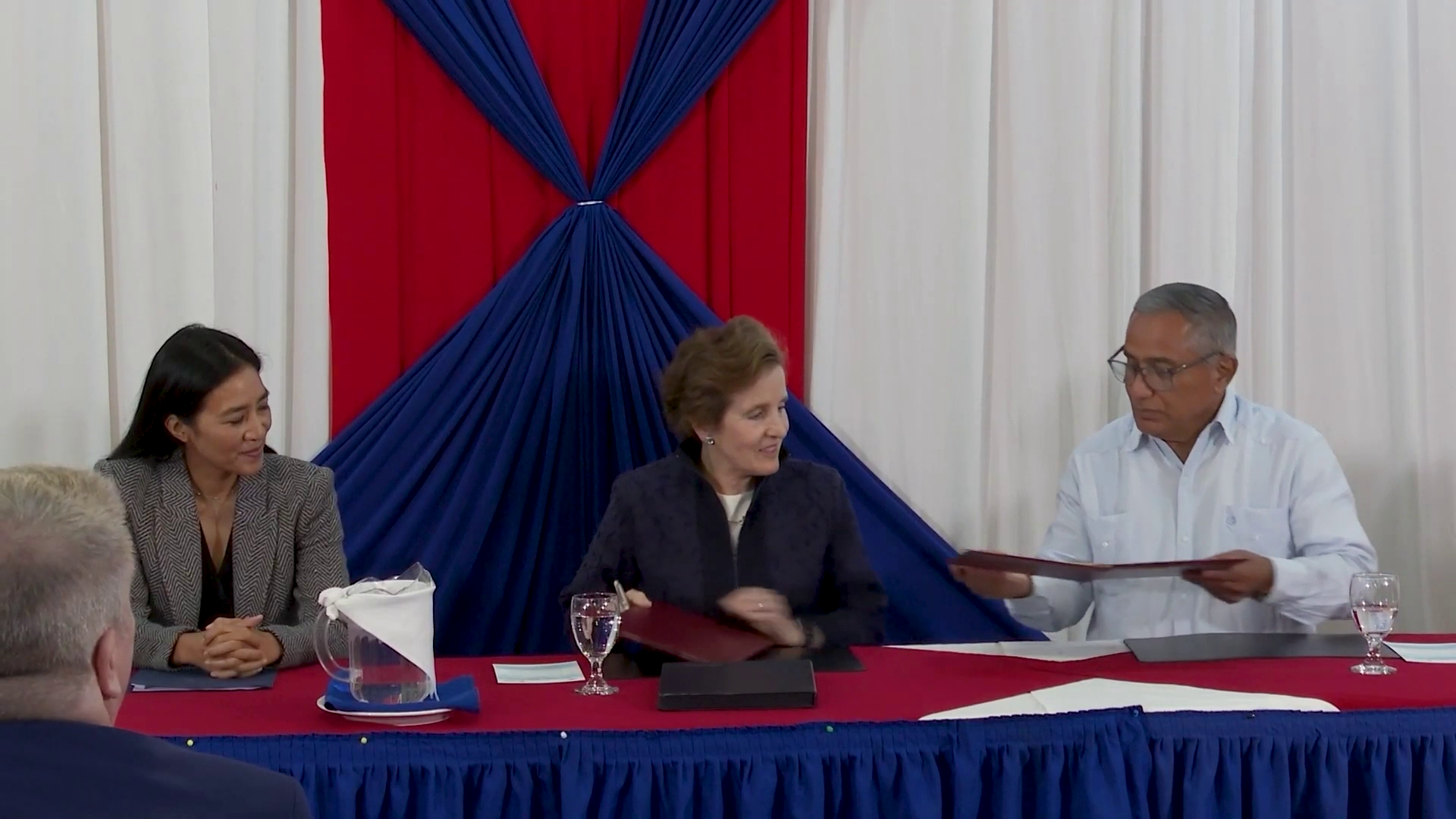
At the center of the government’s announced investment package is a $250 million grant-based Millennium Challenge Corporation (MCC) Compact, a partnership with the United States government that will direct funding specifically to two key sectors: energy expansion and public education. Briceño emphasized that this historic grant represents one of the largest targeted foreign investments in Belize’s recent development, separate from the administration’s existing national capital budget allocations. As negotiations and preliminary planning move forward, many local communities are already asking when these resources will translate to improved school resources, lower energy bills and new local jobs.
The single largest infrastructure project outlined in the agenda is a full redevelopment of the Port of Belize in Belize City, a project Briceño calls the largest infrastructure initiative in the nation’s history, with a projected total investment of more than $800 million. Construction is scheduled to break ground next year, and the planned upgrades include widening and deepening the marine access channel to Belize City, constructing modern, expanded cargo handling facilities, and building a new state-of-the-art gateway for cruise tourism vessels. According to the prime minister, the most immediate benefit for ordinary households will come from lower shipping costs for imported goods, which he says will translate directly to lower retail prices and put extra disposable income back into the budgets of working families across the country.
Beyond large-scale infrastructure and foreign-backed investment, the Briceño administration has already implemented one immediate policy change to ease cost-of-living pressures: an increase to the Pay-As-You-Earn (PAYE) income tax threshold. The new policy raises the tax-exempt income cap to $29,000 per year for resident employed workers, meaning any Belizean earning $29,000 or less annually now pays no income tax on that portion of their earnings. Official data shows the change has benefited 2,851 workers, putting a total of $2.6 million back into annual take-home pay – an average increase of more than $900 per worker per year. Still, many workers question whether this relief is enough to offset ongoing inflation and rising living costs across the country.
Completing the administration’s energy agenda is a new 160-megawatt domestic power generation project focused on expanding renewable energy capacity and moving Belize toward greater energy independence. The initiative will add 120 megawatts of utility-scale solar power generation paired with 40 megawatts of grid-scale battery storage, and construction is set to begin in the coming months. Briceño noted that six years ago, his predecessor had no national plan to expand independent domestic power generation, but his administration has already secured $127 million in fully committed financing from the Saudi Fund for Development and the World Bank to move the project forward.
Briceño’s administration has framed the full suite of initiatives as a generational opportunity to reshape Belize’s economic future, but public attention now turns to implementation. For most Belizeans, the success of these plans will not be measured by the size of the announced investment totals, but by whether the projects deliver on their promises: lower consumer costs, increased job opportunities, and tangible improvements to the quality of life for communities across the nation. As planning moves forward, residents continue to press for transparency around how funds will be managed, who will bear any outstanding costs not covered by grants and financing, and how the government will keep to its announced timelines. This reporting, by Paul Lopez for News Five, is a transcript of the outlet’s evening television broadcast.
-
PM Briceño on ICJ: “Confident All Doubts Will Be Removed!”
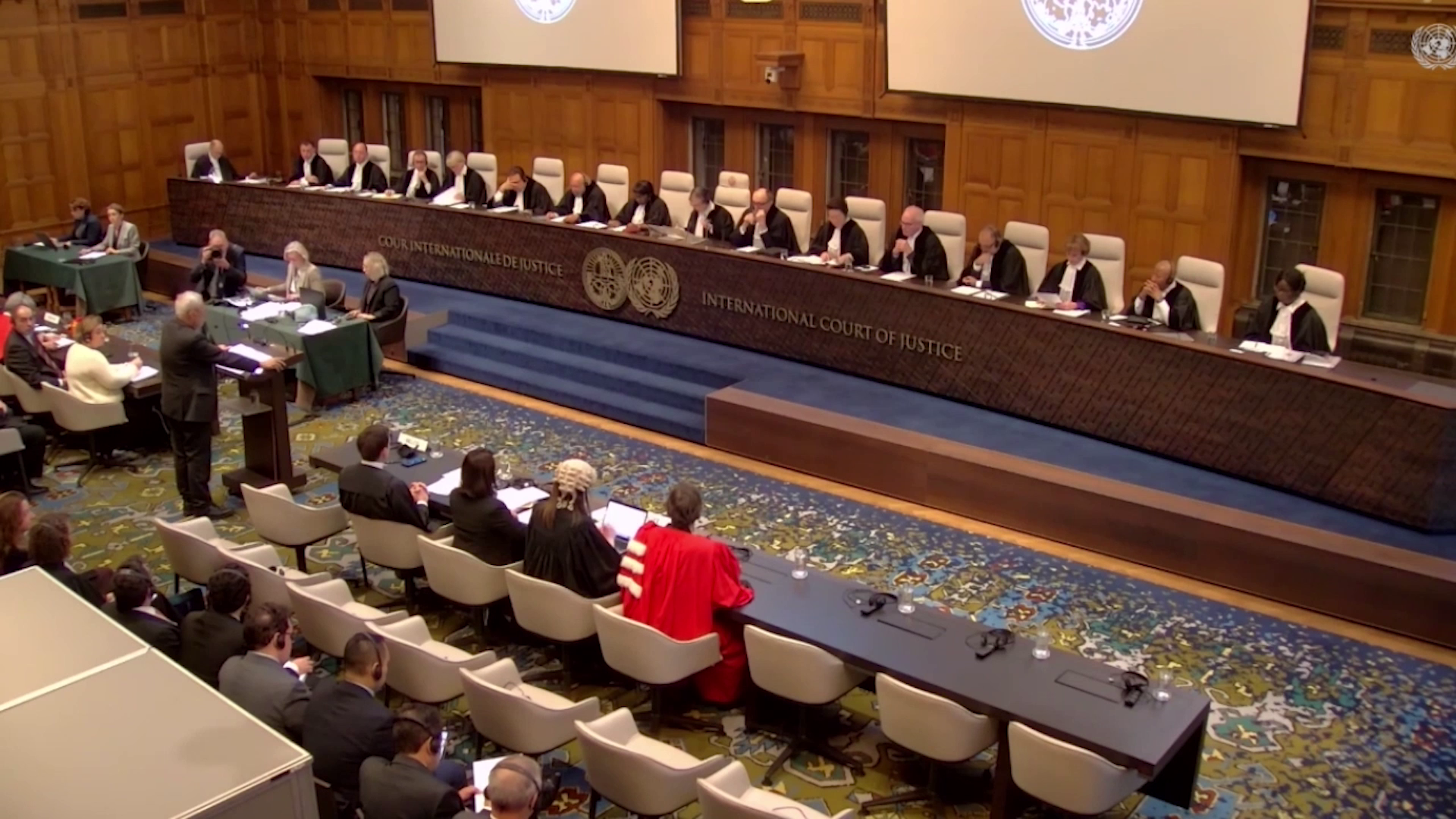
The Caribbean nation of Belize is preparing for a landmark legal moment at the world’s highest judicial body, as two critical territorial and maritime disputes with neighboring countries are set to be heard in back-to-back hearings at the International Court of Justice (ICJ) in The Hague this coming February and March 2027. The date of the sessions, announced to the Belizean government on September 17, 2026 by the ICJ registrar, has arrived earlier than local officials initially projected, accelerating the timeline for what will be a decisive moment for the country’s national sovereignty.
Belize’s first hearing, scheduled for February 22 to 26 2027, addresses a decades-long border disagreement with neighboring Guatemala. Just one week later, from March 1 to 5, the ICJ will open arguments on a separate sovereignty dispute with Honduras over control of the Sapodilla Cayes, a chain of uninhabited coral islands located in the Caribbean Sea off Belize’s southern coast. Two back-to-back cases against its two immediate neighbors make this a pivotal fortnight that will shape Belize’s long-term territorial and maritime future.
In a national address delivered the same day the ICJ released the hearing schedule, Prime Minister John Briceño sought to reassure the Belizean public, expressing unwavering confidence that the court process will resolve all outstanding claims to Belize’s territory. “For too long our borders have been disputed by our neighbors,” Briceño said in his address. “In keeping with our commitment to the peaceful settlement of disputes and respect for the rule of law, we have had recourse to the court. We are confident that all doubts will be removed by these two court cases. Belize will be vindicated.”
To mount the strongest possible legal argument, Belize has assembled a high-powered team of prominent international lawyers and territorial dispute experts, working alongside local legal representatives and government co-agents to the ICJ, Ambassador Assad Shoman and Ambassador Alexis Rosado. The team has already completed work on all written legal pleadings, alongside Senator Eamon Courtney and Michael Peyrefitte, and has now shifted its full focus to preparing oral arguments for the 2027 hearings.
Briceño emphasized that Belize’s core legal claim is clear: the nation has held full and continuous sovereignty over all its claimed land, island and maritime territory since the day it gained independence, and the country is seeking formal legal confirmation of this status from the ICJ. “I am confident that Team Belize will be fully prepared to present the strongest case as we seek legal confirmation that from the moment of our independence, we have been and remain sovereign over all our territory, land, islands, and sea,” the Prime Minister added.
As the process enters its final phase, the Belizean government has issued a call for continued support from the international community for its peaceful approach to dispute resolution. Briceño also stated that he expects Guatemala and Honduras to adhere to the principles of the United Nations Charter, and to proceed with the proceedings in a spirit of peace and mutual respect. Most notably, he reaffirmed Belize’s commitment to abiding by whatever final ruling the ICJ issues, and to working collaboratively with both neighboring countries to implement the court’s decision.
Framing the dispute as a unifying national issue that transcends political divides, Briceño called for unity across the ruling party, opposition, and all national stakeholders ahead of the hearings. “Independence and our sovereignty and territorial integrity are supremely national issues,” he said. “Together with the opposition and all stakeholders, let us look confidently to the future. We will spare no resource. We will scale up our efforts. It’s Team Belize, one people, one nation with all our territory intact. May God continue to bless Belize.”
While the government frames the scheduling of hearings as a welcome step toward final resolution of long-running disputes, the announcement has stirred a mix of anticipation and quiet anxiety across Belize, as residents await the outcome of two rulings that will have permanent implications for the country’s borders and national identity.
-

Belize’s Historic Coin Change Begins September Eighteenth
For decades, every transaction across Belize carried a subtle reminder of the nation’s colonial past: coins minted with the portrait of Queen Elizabeth II. That long-standing chapter is set to close Thursday, as the Central Bank of Belize introduces a groundbreaking new series of circulating coins that center the small Central American nation’s own unique identity, heritage and natural beauty.
Marking the first full overhaul of Belize’s coinage since the Central Bank was founded in 1982, the new collection — branded under the theme “Belize in Every Coin” — replaces the former royal imagery with iconic national symbols that tell the story of the country. The rollout comes exactly one year after the bank launched a new series of banknotes featuring Belize’s national heroes, completing the transition to a fully indigenous currency design.
Emmanuel Pech, assistant manager of the Central Bank’s Office of Strategy Management, explained that the new series turns every everyday exchange into a small celebration of national pride. “Once it enters into circulation tomorrow, people once they start transacting with these coins, they will literally have a piece of Belize, a piece of our history and heritage in every coin they use,” Pech shared in an on-the-ground report for local outlet News Five.
Each denomination in the new series features a distinct emblem of Belize: the national map, the official coat of arms, the mahogany tree (a historic symbol of the country’s logging industry), the national bird the keel-billed toucan, the national mammal the Baird’s tapir, and the national flower the black orchid. Beyond the symbolic shift, the new coinage also brings practical and economic improvements, Delroy Rhaburn, assistant manager of currency management at the Central Bank, noted.
The mint has switched from the old metal composition to nickel-plated steel and bronze-plated steel, materials widely used by mints across the region that match the durability of older coins while cutting production costs. “We wanted something that would have complemented the notes we put out last year, something that would be more Belizean. So we decided to go with the National symbols and that is one of the reason that we chose the theme, “Belize in Every Coin”, because these are the national symbols of Belize and you now see them in every denomination,” Rhaburn explained.
A common question from Belizean residents ahead of the rollout has been what will happen to the existing Queen Elizabeth II-bearing coins already in circulation. Rhaburn moved to clear up any uncertainty, confirming that the older coinage will remain legal tender indefinitely. “When people see us doing changes like this, they feel like the old money will go away. That is not the case. The old money is still legal tender. You don’t see them as often as you use to. But if you have them you can still spend them. You don’t need to turn them in,” he said.
Beyond circulating currency, the launch has been designed to appeal to coin collectors around the world. To commemorate the historic rollout, the Central Bank is issuing a limited-edition painted 50-cent collector’s coin highlighting the mahogany tree. Capped at a total mintage of just 100,000 pieces, the special commemorative is only available for purchase directly through the Central Bank, either as an individual piece or as part of a complete full-set collection. Unlike circulating coins, the commemorative edition is not intended for everyday transactions and is produced solely for collecting.
Starting September 18, the new National Symbols Coin Series will begin distribution to commercial banks, credit unions and businesses across Belize, gradually entering the hands of residents through regular daily transactions, reporter Paul Lopez noted in his report for News Five.
-
Unions Reject PM’s Response to Eleven Demands
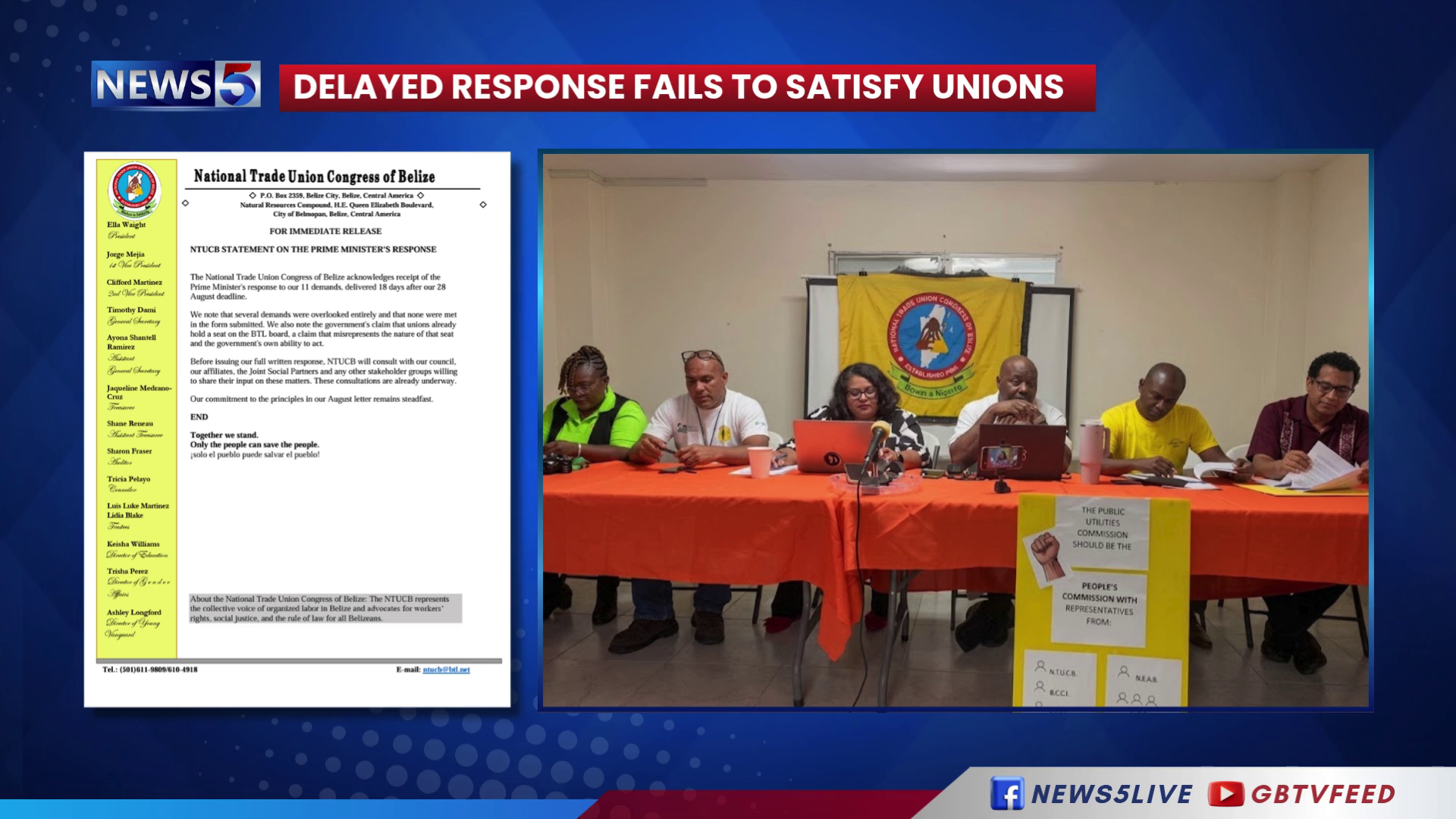
Nearly three weeks after organized labor in Belize issued a formal deadline for action on 11 core worker demands, the country’s prime minister has finally delivered a government response — and it has been flatly rejected as insufficient by the nation’s largest labor umbrella organization.
The National Trade Union Congress of Belize (NTUCB) confirmed that Prime Minister John Briceño’s official reply arrived 18 days after the union body’s August 28 deadline for addressing worker priorities. While the delay itself is a point of frustration, union leaders say the far more critical issue is the substance of the response: the government sidelined multiple of the 11 submitted demands, and failed to fully satisfy any of the proposals exactly as they were put forward.
One key point of contention is a claim from the Briceño administration that labor already holds a representative seat on the board of Belize Telecommunications Limited (BTL). The NTUCB pushed back against this assertion, arguing that the government’s statement misrepresents both the actual scope of the existing seat and the government’s own authority to resolve the union’s demand for formal, meaningful labor representation on the board.
In the coming days, the NTUCB will enter a period of consultation to build consensus on its next steps. The organization is currently holding discussions with its governing council, all affiliated local unions, the Joint Social Partners collaborative body, and other relevant stakeholder groups. Following these consultations, the NTUCB plans to release a full, detailed written response outlining its position and potential next actions.
For the moment, the union body has made its stance clear: it remains unwaveringly committed to the core principles laid out in its original August letter of demands. The outright rejection of the prime minister’s response signals that the ongoing standoff between Belize’s organized labor movement and the Briceño administration is far from reaching a resolution.
This report is adapted from a transcript of a televised evening news broadcast, with Kriol language quotes rendered using a standardized spelling system where applicable.
-
The State of Which Belize? Briceño and Panton Offer Competing Portraits
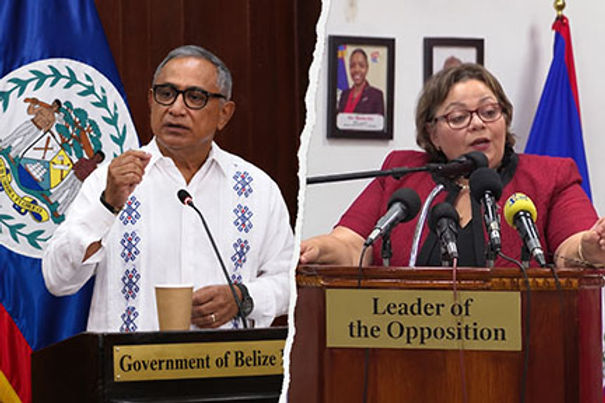
As Belize marks 45 years as an independent nation, its two top political figures have laid out starkly contrasting assessments of the country’s current trajectory, revealing a deeper debate over how national progress should be measured. Prime Minister John Briceño used his 2026 State of the Nation Address to frame Belize as a growing, forward-moving country laying the groundwork for long-term energy independence and broad-based prosperity, while Opposition Leader Tracy Panton countered that top-line economic gains have failed to deliver tangible relief for ordinary households grappling with soaring living costs and unreliable public services.
Briceño built his optimistic assessment around hard macroeconomic data and planned capital investments. He pointed to a 5.1 percent quarterly economic growth rate from the Statistical Institute of Belize, an official 98 percent employment rate, and $324 million allocated for capital spending in the current fiscal year. Ratings agency Standard & Poor’s recently reaffirmed Belize’s B-/B sovereign credit rating with a stable outlook, a milestone Briceño highlighted as proof of the country’s improving economic standing. On the investment front, he reported that the Belize Investment Development Authority (BELTRAIDE)’s investment promotion unit has secured approval for 13 projects worth more than $255 million this fiscal year, which are projected to create over 900 local jobs. An additional seven large-scale projects valued at more than $900 million are awaiting final approval, with another 11 smaller projects worth $67 million in the pre-approval pipeline.
Panton did not directly refute Briceño’s headline statistics, but she challenged the idea that these macroeconomic indicators tell the full story of life for ordinary Belizeans. Instead of measuring progress from the national balance sheet down, she argued that the true test of national performance is whether growth translates to tangible relief at the kitchen table, with lower prices for groceries, fuel, rent and electricity. She noted that the country’s B- credit rating still falls into speculative territory, and that favorable topline numbers cannot make up for eroded household purchasing power.
On the ongoing cost of living crisis, both leaders acknowledged that pressure on household budgets remains a major challenge, but they disagreed sharply on whether the government’s interventions have been sufficient. Briceño framed most cost pressures as the result of global market volatility and Belize’s heavy reliance on imported goods, factors outside the government’s direct control. He outlined a series of policy interventions designed to soften the blow: a fuel subsidy for private bus operators, $20 million in funding for a new fleet of electric buses, the elimination of goods and services tax (GST) on residential electricity bills, an expansion of the country’s social electricity tariff, periodic GST-free shopping periods, a planned minimum wage increase from $5 to $6 per hour, and an 8 percent salary adjustment for 16,000 public sector workers that will cost $112 million annually. Panton credited the government for removing GST from residential power bills, but argued that this half-measure does not address the root problem of rising base energy costs. She stressed that persistent strain on household budgets proves economic gains have not trickled down to ordinary people.
The divide between the two leaders is even more stark when it comes to energy policy, where their perspectives are separated by different time horizons. Briceño acknowledged recent widespread rolling blackouts that have disrupted daily life across the country, and identified long-term energy independence as a top national priority. He outlined immediate and long-term solutions: a temporary six-month contract for 20 megawatts of additional mobile diesel generation capacity, 30 megawatts of new solar power paired with five-hour battery storage set to come online by June 2027, and a broader planned buildout of 120 megawatts of solar and 40 megawatts of battery storage by 2030, supported by financing from the World Bank and Saudi Fund for Development. Briceño emphasized that this buildout will reduce Belize’s exposure to volatile imported energy prices and cross-border supply disruptions. Panton, by contrast, focused on the immediate crisis facing Belizeans, arguing that the government’s long-term plans do little to address the unreliable power service that residents struggle with today. She questioned the reliance on temporary diesel capacity while the country waits for renewable energy projects to be completed, noting that both sides share the goal of greater energy security — they disagree on whether the government’s response is fast enough and sufficient for current needs.
On the recent sovereignty incident in the Sarstoon River region, the two leaders shared broad agreement on Belize’s territorial claim but diverged on the government’s responsibility to protect citizens. Both praised the Belizean civilians and security personnel who participated in the September 10 incident, and both reaffirmed that Sarstoon Island is sovereign Belizean territory with the border running along the river’s mid-channel, in line with the International Court of Justice dispute resolution process. Panton shifted her focus, however, to security resourcing: she argued that civilians should never be placed on the front line of a sovereignty dispute, and called for the Belize Defence Force to receive adequate funding, equipment and political backing to fully protect the country’s territorial integrity and citizens.
Briceño also highlighted major investments in public education and citizen security in his address. He reported that 101,506 students are enrolled across 646 educational institutions, with more than 19,000 secondary students receiving full or partial tuition assistance. Over 20,000 students now receive daily hot meals at 140 schools, and internet access has been expanded to 283 schools, with an additional $46.8 million in education funding coming through the Millennium Challenge Corporation Compact. On security, Briceño noted that 15 new police vehicles have been acquired, new surveillance cameras have been deployed across high-traffic areas, and the national police conviction rate has reached 80 percent. Law enforcement has also seized 1,372 kilograms of cannabis and 582 kilograms of cocaine so far this year, alongside other illegal narcotics. Panton countered by highlighting gaps the Prime Minister failed to address, including widespread school transportation access issues, low morale and under-resourcing among rank-and-file police officers, and ongoing challenges in the healthcare system, including poor working conditions for nurses and widespread shortages of critical medications for patients.
The sharpest divide between the two addresses came over the issue of accountability, which Panton centered in her response that was entirely absent from Briceño’s speech. She called out Briceño for failing to address ongoing allegations of unexplained wealth and misconduct among senior public officials, and pushed for transparent contracting and public procurement processes, as well as full independent investigations into corruption allegations with meaningful consequences for any proven wrongdoing.
By the end of the two addresses, it was clear that Belize’s 45th anniversary political debate is not just about whether the country has progressed — it is about where progress should be measured. Briceño’s vision frames Belize as a young democracy that has weathered external shocks, built strong macroeconomic foundations, attracted billions in planned investment, and laid the groundwork for future improvements in energy, education and public services. Panton’s vision, by contrast, centers the everyday lived experience of ordinary Belizean households, arguing that economic growth only matters if its benefits are felt in lower grocery bills, dependable electricity, well-resourced public services and accountable government. The contrast between the two approaches reveals a fundamental question at the heart of modern Belizean politics: is national progress measured by what the country builds, or by how that building improves daily life for all citizens?
-
NTUCB to GOB: None of Our Demands Met
A major standoff has emerged between Belize’s largest umbrella labor organization and the national government after the body of unions confirmed that none of its 11 core policy demands were addressed in full by the Cabinet, setting the stage for further negotiations as consultations are ongoing with industry affiliates and social partners.
The National Trade Union Congress of Belize (NTUCB) issued a preliminary public statement this week reacting to a three-page formal letter from Prime Minister John Briceño, which outlined the Cabinet’s official position on a slate of proposals the union body submitted to the government in August. According to the NTUCB, a number of its demands were entirely omitted from the government’s response, and no proposal was accepted in the exact form it was presented. The union also noted that the Prime Minister’s reply arrived 18 days after the August 28 deadline the organization had set for a government response.
Rather than releasing a full point-by-point rebuttal immediately, the NTUCB announced it is currently holding internal consultations with its governing council, affiliated trade unions, the Joint Social Partners coalition and other key stakeholders. A comprehensive official written response will be published once these consultations are completed.
For its part, the September 15 letter from the government breaks down the Cabinet’s position across all proposed demands, marking some as outright rejected, while leaving space for further talks on others, alongside proposed timelines and alternative policy approaches. Prime Minister Briceño emphasized in the correspondence that while the government cannot agree to every demand put forward by the unions, it remains committed to collaborative engagement through ongoing consultation.
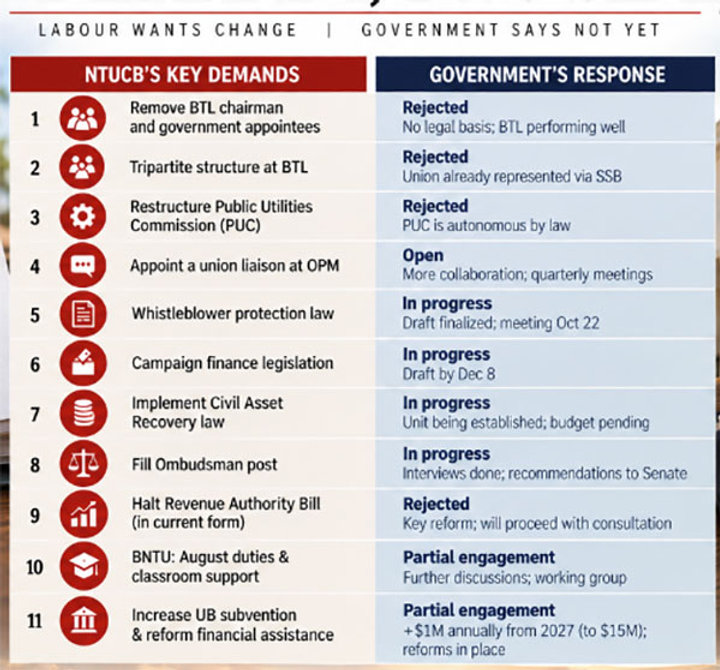
One of the clearest points of contention centers on governance of Belize Telemedia Limited (BTL), the country’s leading telecommunications provider. The NTUCB had formally called for the removal of BTL’s Chairman and all government-appointed board members, a request the Cabinet rejected outright. Government officials argued that there is no legal standing under Belize’s existing company law to force the removal of the board leadership. They also pointed to BTL’s record-breaking profit performance in the most recent financial year, noting that the collapsed attempt to acquire rival provider Speednet Communications did not constitute sufficient justification to dismiss the entire board.
The Cabinet also rejected the NTUCB’s proposal to implement a tripartite governance structure for BTL, arguing that union representation is already secured on the board through the Belize Social Security Board, making further restructuring unnecessary. This reasoning was directly challenged by the NTUCB, which accused the government of misrepresenting both the nature of the existing union-aligned seat and the government’s own authority to restructure the board. The current disagreement follows weeks of rising tension over BTL’s proposed Speednet acquisition, which the Cabinet announced it would not support back in August, prompting the NTUCB’s original demand for board leadership changes.
A second major rejection came on the NTUCB’s call to restructure the Public Utilities Commission (PUC). In his letter, the Prime Minister cited the PUC’s statutory status as an autonomous regulatory body, whose core functions and decision-making powers are designed to operate free from inappropriate external political influence. He added that PUC commissioners are already appointed through a bipartisan process: the Governor General makes appointments on the Prime Minister’s advice, following formal consultation with the Leader of the Opposition. On this basis, the government concluded it could not support the proposed restructuring.
On the demand for a dedicated union liaison position within the Office of the Prime Minister, the government expressed more openness but stopped short of creating a new role. Instead, Briceño proposed deepening collaboration through the existing Joint Unions Negotiating Team and scheduled quarterly formal meetings between union leadership and the government.
On several good governance-focused demands put forward by the NTUCB, the Cabinet did not reject the underlying policy goals, instead outlining that reform work was already in progress with clear timelines for completion. For the Protected Disclosures Bill, the government confirmed it has reviewed feedback from both the NTUCB and the Belize Chamber of Commerce and Industry, and a Cabinet-approved final draft has been sent back to both organizations for a final review. The Minister of Governance has scheduled a stakeholder meeting on the legislation for October 22.
Campaign finance reform legislation is also currently being drafted, with the government confirming that the Minister of Governance plans to submit the finalized bill to Cabinet for approval by December 8. Once approved, the draft will be shared with social partners and other relevant stakeholders for input. For the implementation of the Civil Asset Recovery and Unexplained Wealth Act, the government reported that work is underway to establish a dedicated Civil Recovery Authority Unit within the existing Financial Intelligence Unit (FIU). The FIU and partner agencies are currently assessing infrastructure needs and reviewing Belize’s legislative and operational frameworks to support the new unit, while a final operational budget is being put together.
The government also reaffirmed its commitment to upholding the independence of the Office of the Ombudsman, confirming that the process to fill the long-vacant ombudsman post is moving forward. Interviews for the position have already been completed, and the bipartisan Ombudsman Reports Committee is expected to submit its nomination recommendations before an appointment resolution is tabled for a vote in the Senate.
Another high-stakes disagreement revolves around the proposed Revenue Authority Bill 2026. The NTUCB has called for the legislation to be scrapped in its current form, but the Cabinet refused to halt the process, arguing that the creation of a Semi-Autonomous Revenue Authority is a critical step to improve the effectiveness and transparency of national revenue collection. The Prime Minister’s letter cited a recent sovereign credit rating review from Standard & Poor’s, which criticized Belize for failing to make progress on long-delayed revenue reforms. Cabinet argued that pulling the legislation would be economically counterproductive and could harm Belize’s sovereign credit outlook. That said, the government pledged to work alongside the Public Service Union and Tax Department employees to manage the transition process and address legitimate employee concerns through administrative adjustments.
Cabinet also issued separate responses to demands raised specifically by the Belize National Teachers’ Union (BNTU). On the issue of mandatory August professional development duties, the Ministry of Education said it is open to negotiating the timing and structure of continuing professional development requirements. The Ministry noted that teachers can already apply for up to 10 days of exemption from August duties, and proposed establishing a joint working group with the BNTU to review the policy further. On the BNTU’s demand for a dedicated classroom resource allowance, the Ministry expressed willingness to hold talks but did not commit to a cash payment. It pointed out that the government has rolled out phased classroom material packages to schools over the past three years, and future discussions will determine whether additional support should be delivered in cash or in-kind, as well as the scope of coverage and sustainable financing.
For demands related to the University of Belize (UB), the government confirmed that the institution’s annual government subvention has grown from $7.6 million in 2020 to $10 million in 2026. When student financial assistance is included, the government’s total annual investment in UB currently sits at approximately $14 million, with cumulative investment since 2020 topping $73 million. The administration has also committed to increasing the annual subvention by $1 million per year starting in 2027, until it reaches a total of $15 million annually.
As things stand, the NTUCB has made clear that it does not view the Cabinet’s response as adequate to meet its original demands. The organization’s latest statement reaffirms that multiple proposals were entirely unaddressed, and no demand was approved in the form the unions submitted. In the coming weeks, the NTUCB will continue consultations with its affiliates and social partners before releasing its full, formal response to the government’s position.