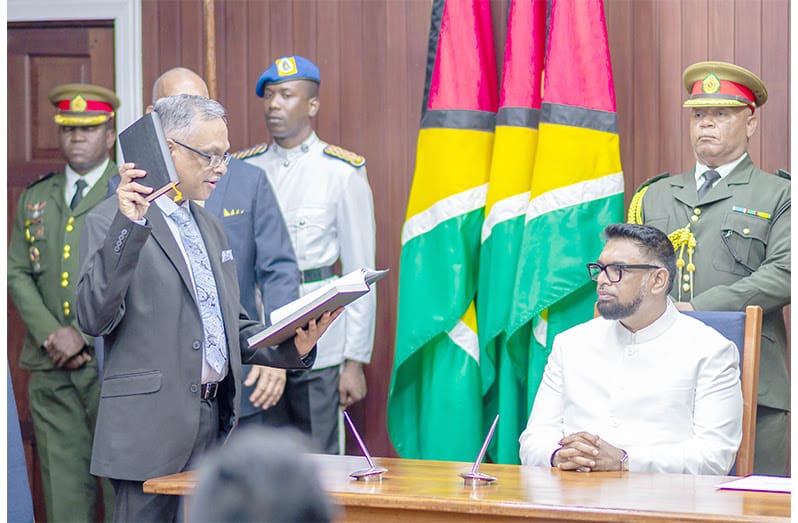
In a historic ceremony held on October 16, 2025, at the Office of the President of Guyana, the Honourable Mr Justice Arif Bulkan was officially sworn in as a Judge of the Caribbean Court of Justice (CCJ). The event, presided over by His Excellency Dr. Mohamed Irfaan Ali, underscored the significance of the CCJ as a symbol of Caribbean sovereignty and justice. President Ali lauded Justice Bulkan’s appointment, emphasizing that the CCJ represents justice rooted in Caribbean values rather than distant colonial influences. He described Justice Bulkan as a ‘man of intellect’ and expressed confidence in his ability to bring clarity, depth, and balance to the Court. President Ali also urged CARICOM member states to fully embrace the CCJ, calling it a crucial step toward realizing the region’s independence. The CCJ President, Justice Winston Anderson, welcomed Justice Bulkan, highlighting his distinguished career in human rights advocacy, particularly for indigenous and marginalized communities. Justice Roxane George, Chancellor of the Judiciary, reflected on Justice Bulkan’s academic brilliance and his consistent excellence throughout his career. In his response, Justice Bulkan expressed his deep honor in joining the CCJ, acknowledging its role in decolonization and regional integration. With a career spanning academia, activism, and international law, Justice Bulkan’s appointment marks a significant milestone for the CCJ and the Caribbean region.
分类: politics
-
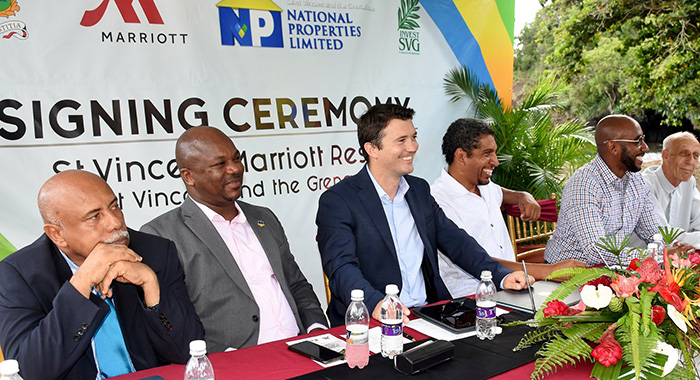
ULP promises more hotels even as previous ones not built — Huggins
Conroy Huggins, the New Democratic Party (NDP) candidate for Central Leeward, has launched a scathing critique of the government’s failure to deliver on long-promised hotel projects in Mt Wynne and Peter’s Hope. Speaking at a campaign event in Layou on Saturday, Huggins highlighted the lack of progress on the Black Sands Resort, which was initiated eight years ago, and the state-owned Marriott Hotel at Peter’s Hope, which remains untouched six years after its groundbreaking ceremony.
-
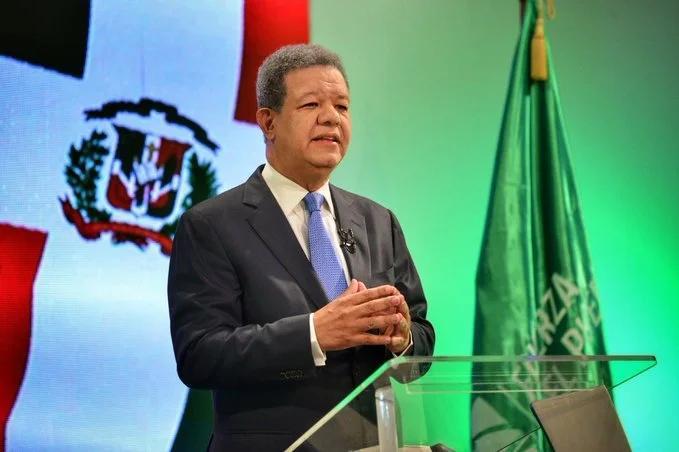
Leonel Fernández accuses PRM government of losing control over public safety
San Cristóbal, Dominican Republic – In a scathing critique of the ruling Partido Revolucionario Moderno (PRM) government, former President Leonel Fernández, leader of the opposition Fuerza del Pueblo (FP) party, accused the administration of failing to maintain public safety and address critical issues in essential services. Speaking at a swearing-in ceremony for new FP members at the Nigua Gremio Club on Sunday, Fernández asserted that the country has become a breeding ground for criminal activity, leaving citizens living in constant fear of robbery or violence. He attributed the surge in crime to inadequate planning and the absence of coherent public policies, claiming that the government has reneged on its promise to ensure national security.
Fernández also condemned the government’s inability to provide basic public services, particularly the widespread lack of access to clean drinking water in numerous communities. ‘We are lacking drinking water,’ he emphasized, calling on the administration to address long-standing demands for the construction of new aqueducts.
Highlighting the growing momentum behind FP, Fernández noted that the influx of new party members reflects widespread disillusionment with the current government. ‘People are realizing that this government hasn’t met the country’s challenges,’ he declared. Following the event, Fernández attended the Expo Constitución 2025 Multisector Fair, organized by the San Cristóbal Chamber of Commerce and Production, further engaging with local stakeholders.
-
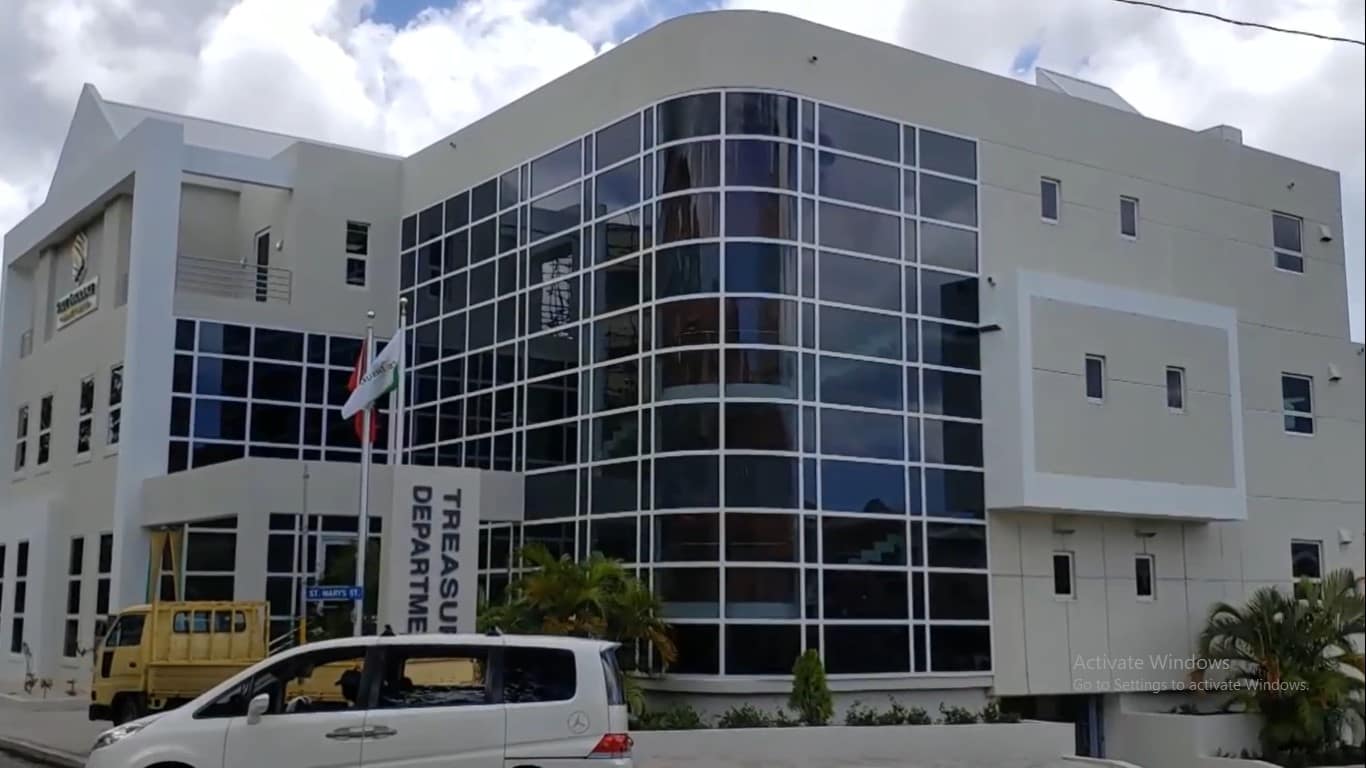
VIDEO: PM Says Some Treasury Staff Paid by Big Business to Fast-Track Large Payments, While Poor People Wait Years
In a startling revelation during his weekly radio address, Prime Minister Gaston Browne of Antigua and Barbuda has accused certain Treasury employees of accepting bribes from influential business figures to expedite large government payments. This alleged corruption has reportedly left smaller local suppliers and contractors waiting for years to receive their dues, while larger entities enjoy swift disbursements. Browne emphasized the inequity of this practice, which disproportionately affects small businesses that rely on timely payments to sustain their operations. To combat this issue, the Prime Minister has instructed the Accountant General to halt the issuance of significant payments or check exchanges without prior Cabinet approval. This directive aims to restore fairness and transparency in the government’s financial operations. Browne’s announcement has sparked widespread debate, with many calling for a thorough investigation into the allegations. The Prime Minister’s commitment to addressing these systemic issues highlights his administration’s focus on combating corruption and supporting local enterprises.
-
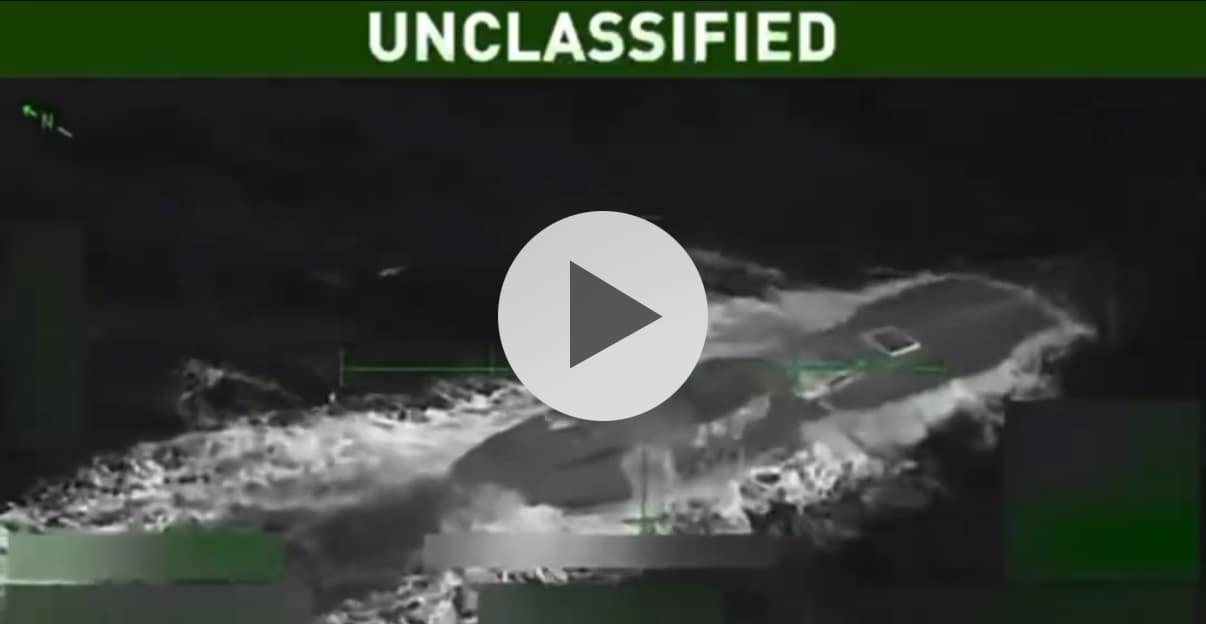
VIDEO: Department of War releases footage of drug-carrying submarine being destroyed by U.S forces
In a significant move against international drug trafficking, the United States Department of War has unveiled footage capturing the destruction of a submarine laden with illegal narcotics. The vessel, intercepted on a notorious narcotrafficking route, was reportedly transporting a substantial quantity of fentanyl and other dangerous drugs. President Donald Trump revealed that four individuals, described as ‘narcoterrorists,’ were aboard the submarine. Two were killed during the operation, while the remaining two were handed over to authorities in Ecuador and Colombia for prosecution. Trump emphasized the gravity of the situation, stating that the intercepted drugs could have claimed the lives of at least 25,000 Americans had they reached US shores. He also confirmed that no US military personnel were harmed during the mission. This operation is part of the Trump administration’s broader strategy to combat drug trafficking by land and sea, targeting the networks that fuel the opioid crisis in the United States. The release of the footage underscores the administration’s commitment to transparency and its aggressive stance against narcoterrorism.
-

Grenada government pressed for response to alleged US refugee ultimatum
The Government of Grenada is under increasing scrutiny following reports that the United States has issued an ultimatum demanding the island nation accept refugees being deported from the US. The civil society group, Coalition for a Zone of Peace, revealed in a Sunday statement that it had received credible information about Washington’s approach to Grenada regarding the resettlement of third-country nationals. While Grenada’s government had previously denied a similar proposal in February, the coalition’s latest statement suggests renewed efforts by the US. The group is now calling for transparency, urging authorities to confirm the reports and inform the public. The coalition has taken a firm stance, asserting that Grenada, as a sovereign nation, will not support what it describes as an inhumane US immigration policy. It emphasized that the country will not accept non-Grenadian refugees, some of whom could pose security risks. The coalition framed the issue as a matter of national dignity and sovereignty, declaring that Grenada is not for sale. The statement was released on October 19, coinciding with the anniversary of the death of former Prime Minister Maurice Bishop and others in 1983, a period marked by US-led intervention in Grenada. The controversy also unfolds amid reports of a US request to install radar equipment in Grenada, part of a broader military buildup in the region. In response, the coalition has organized a series of public activities, including a mass demonstration on October 22 and candlelight vigils on October 25. A petition opposing the alleged US request has also been circulated, urging citizens to voice their opposition. Notably, several countries, including South Sudan and Eswatini, have already accepted refugees under the Trump administration’s third-country deportation program.
-

OPINION: Nuts and bolts of Caricom ‘free movement’ for Saint Lucia in the future
In a significant move towards regional integration, four CARICOM nations—Barbados, Belize, Dominica, and St. Vincent and the Grenadines—recently implemented full freedom of movement for their citizens. This decision, made during Saint Lucia’s political campaigning period, fulfills a commitment made at CARICOM’s 50th anniversary. However, Saint Lucia’s silence on the matter raises critical questions about its position in this evolving regional landscape. Historically, Saint Lucia has been a champion of regionalism, from the efforts of Nobel laureate William Arthur Lewis to the aspirations of the failed federation. Yet, the current lack of action calls for practical, forward-thinking discussions to prepare for potential future steps towards freedom of movement. This phase presents an opportunity for public education and engagement on the implications of regional obligations. The four pioneering countries have rejected the outdated requirement under Article 45 of the Revised Treaty of Chaguaramas (RTC), which limited CARICOM nationals to a six-month stay as tourists. Instead, they invoked the Protocol on Enhanced Cooperation, allowing nationals to enter, reside, work, and remain indefinitely without permits, while also granting access to healthcare and education. For Saint Lucia, joining this movement requires careful planning. Policymakers must address key questions: What benefits will CARICOM nationals receive? How will healthcare and education access be defined? What systems will integrate migrants? Will social security benefits be transferable? These issues demand national dialogue to ensure transparency and fairness. The legacy of regional integration, championed by figures like Elma Gene Isaac, must inspire deliberate and thoughtful action. As Saint Lucia contemplates its next steps, clarity and inclusivity must guide the process, ensuring that regional integration moves from rhetoric to reality.
-

DNA-leden getraind in genderanalyse van Staatsbegroting 2026
In a significant step toward fostering inclusive governance, 23 members of various factions in De Nationale Assemblée participated in an interactive training session on analyzing the National Budget through a gender lens. The session, titled ‘A Fair Budget: The National Budget Through a Gender Lens,’ was organized by Stichting Projekta in collaboration with the Ministry of Home Affairs. Held on Friday, the training underscored the importance of recognizing that budgetary policies are not neutral and can disproportionately impact different societal groups. Sharda Ganga, Director of Projekta, led the session, which was funded by the Equality Fund. Participants were equipped with practical tools to assess the 2026 budget’s effects on women, men, boys, and girls, with applications extending to indigenous communities, people with disabilities, and vulnerable youth. During the opening remarks, Director Nasier Eskak, representing Minister Bee, emphasized the necessity of collaboration in crafting policies that reflect societal diversity. The training highlighted the potential of budgetary measures to either reinforce inequality or promote equal opportunities and social justice. One experienced parliamentarian noted, ‘The gender lens reveals who benefits and who is left out, making it clear that the National Budget is not neutral.’ Practical examples and a checklist provided insights into unintended consequences of policies. Participants stressed that the gender lens encompasses all societal groups, not just women. Shiefania Jahangier, Head of the Bureau for Gender Affairs, urged attendees to integrate gender equality into economic, political, and institutional policies. This training is part of a broader initiative by Projekta to strengthen gender-responsive policymaking within the government and De Nationale Assemblée, aligning with its mission to build a human rights-based, inclusive society.
-
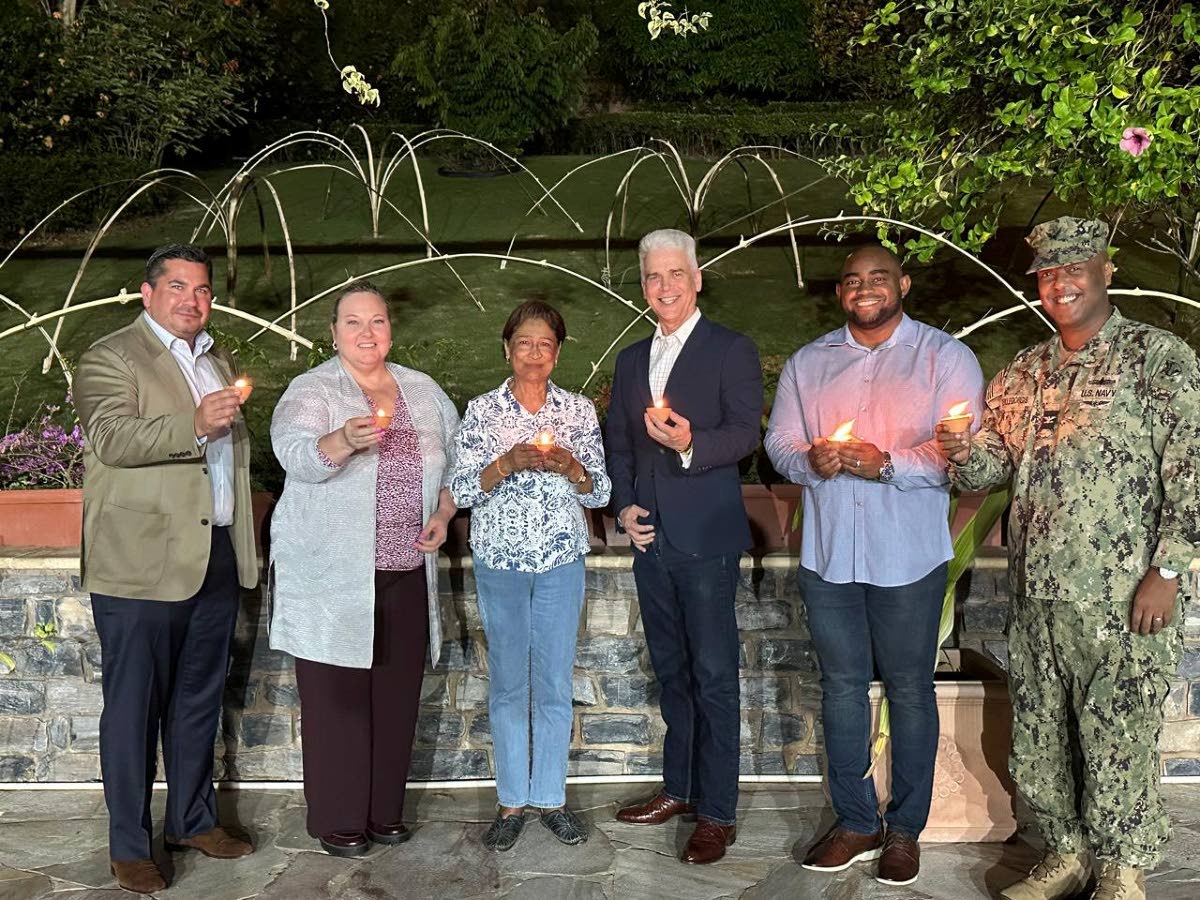
Trinidad and Tobago stands firm with US on regional security
The government of Trinidad and Tobago (TT) has publicly diverged from Caricom’s collective stance on maintaining the Caribbean as a zone of peace, opting instead to support the United States’ military intervention in the region. This decision, announced on October 19, follows Caricom’s October 18 statement reaffirming the principle of regional peace, which noted TT’s reservation on the matter. The Caricom statement emphasized dialogue and international cooperation to combat narco-trafficking and illegal arms trade, while TT’s government expressed unwavering support for US-led operations aimed at curbing transnational crime. Prime Minister Kamla Persad-Bissessar has consistently endorsed US military presence in the southern Caribbean, citing the threat posed by criminal organizations. International relations experts have criticized TT’s stance, with some describing it as a setback for Caricom’s integration efforts. Meanwhile, the US has intensified its anti-narcotics operations, recently targeting a vessel allegedly linked to Colombia’s National Liberation Army (ELN), a group classified as a terrorist organization. The incident has raised concerns about regional stability and the potential for collateral damage in the ongoing US-Venezuela tensions.
-
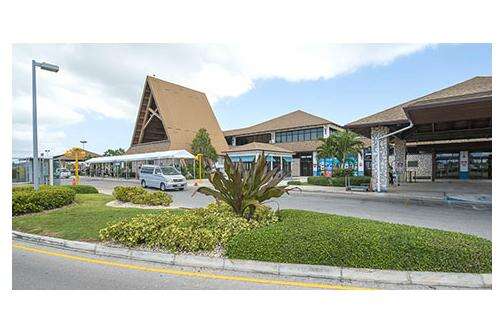
Cayman Islands releases sweeping immigration reform bill
The Cayman Islands Government has unveiled a comprehensive set of proposed amendments to its immigration laws, marking a pivotal moment in the nation’s policy framework. The reforms, now open for public consultation until mid-November, aim to realign the immigration system with the priorities of Caymanians while maintaining the islands’ competitiveness and social cohesion. Among the key changes is the extension of the residency requirement for spouses or civil partners of Caymanians or permanent residents from 15 to 20 years before they can apply for naturalization or permanent residency. Additionally, the amendments introduce stricter measures for work-permit holders, including a two-year restriction on changing employers and a mandatory one-year departure from the islands before reapplying for a permit. The bill also imposes annual declaration requirements for individuals granted Caymanian status, with non-compliance potentially leading to revocation. Other notable changes include age limits for specialist caregiver certificates and financial standing requirements for surviving spouses or civil partners with dependents. Minister for Caymanian Employment and Immigration Michael Myles emphasized the importance of public consultation in crafting a fair and transparent immigration system that reflects the needs and aspirations of the Caymanian people.