分类: politics

  • Trump Says ‘Cuba is going to fall pretty soon’

    Trump Says ‘Cuba is going to fall pretty soon’

    In a striking declaration during a CNN interview on Friday, United States President Donald Trump asserted that Cuba’s communist government is on the verge of collapse. Trump indicated that Cuban leadership is demonstrating unprecedented eagerness to engage in diplomatic negotiations with Washington.

    “Cuba is going to fall pretty soon,” the president stated emphatically. “They want to make a deal so badly.”

    Trump revealed his consideration of assigning Secretary of State Marco Rubio to manage potential talks with Havana, marking a significant development in U.S.-Cuba relations. “They want to make a deal, and so I’m going to put Marco over there, and we’ll see how that works out,” Trump commented during the exchange.

    This represents the second instance in forty-eight hours that Trump has addressed Cuba’s political future. Speaking before a White House audience just a day earlier, he suggested Americans might soon regain travel access to the Caribbean nation, stating it could be “a question of time.”

    The administration’s current foreign policy priorities, however, remain centered on resolving tensions with Iran before pivoting to other international matters. “We want to finish this one [Iran] first,” Trump clarified, indicating a sequential approach to diplomatic engagements.

    These statements emerge amid growing economic instability in Cuba, including a massive recent blackout that affected approximately two-thirds of the island. The widespread power outage, which encompassed the capital city of Havana, represents the latest manifestation of an escalating energy crisis confronting the nation.
  • Alex Browne Challenges Randy Baltimore’s Nomination in St. Philip’s North By-Election

    Alex Browne Challenges Randy Baltimore’s Nomination in St. Philip’s North By-Election

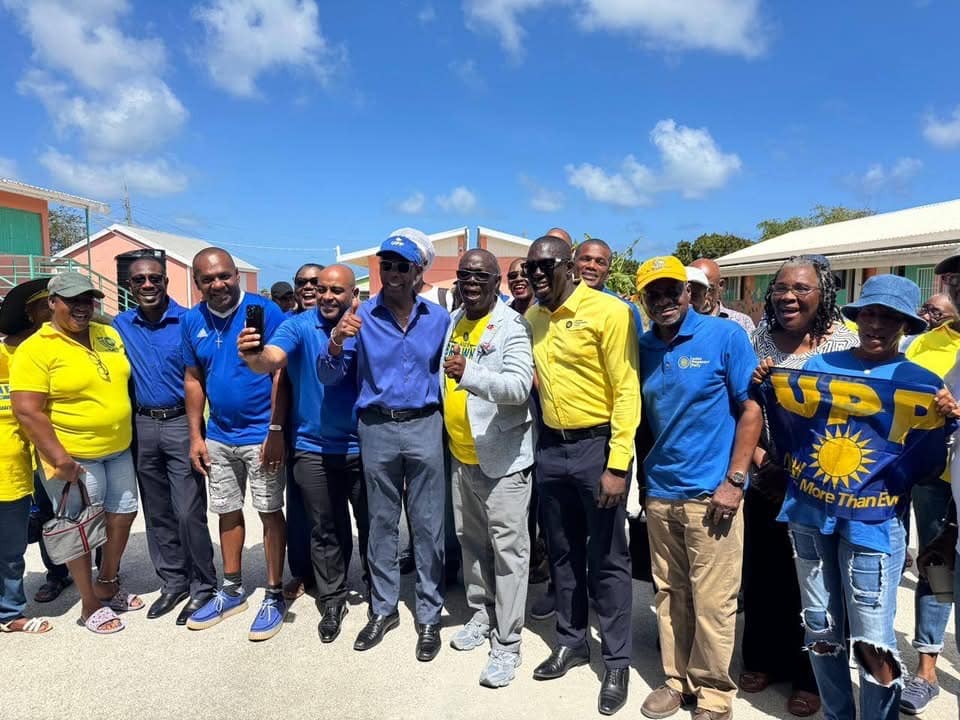
    A significant legal challenge has emerged in Antigua and Barbuda’s upcoming by-election, casting uncertainty over the candidacy of Randy Baltimore for the St. Philip’s North constituency. Alex Browne has formally contested Baltimore’s nomination, citing constitutional violations regarding his civil service status.

    The controversy centers on Section 39(g) of the nation’s Constitution, which explicitly prohibits public office holders from being elected to the House of Representatives. Baltimore, who served as Principal Inspector of Customs, announced his resignation effective February 20 through a press release dated February 19, just days before his nomination on February 25.

    However, Browne’s challenge references Section 28(1) of the Civil Service Regulations, which mandates that permanent officers must provide at least three months’ notice before resigning. According to this interpretation, Baltimore should have initiated his resignation process by November 2025 to qualify for the March 16 election.

    The electoral dispute presents a complex constitutional interpretation regarding the transition from civil service to political candidacy. Browne’s notice, dated March 5, 2026, directly advises voters that Baltimore is constitutionally disqualified from parliamentary election, creating potential voter confusion ahead of the scheduled by-election.

    This development introduces unexpected legal dimensions to the electoral process, potentially affecting campaign strategies and voter decisions. The challenge highlights the intricate balance between civil service regulations and political participation rights within Antigua and Barbuda’s democratic framework.

  • St. Vincent and the Grenadines Prime Minister and Foreign Minister face election petition over dual citizenship

    St. Vincent and the Grenadines Prime Minister and Foreign Minister face election petition over dual citizenship

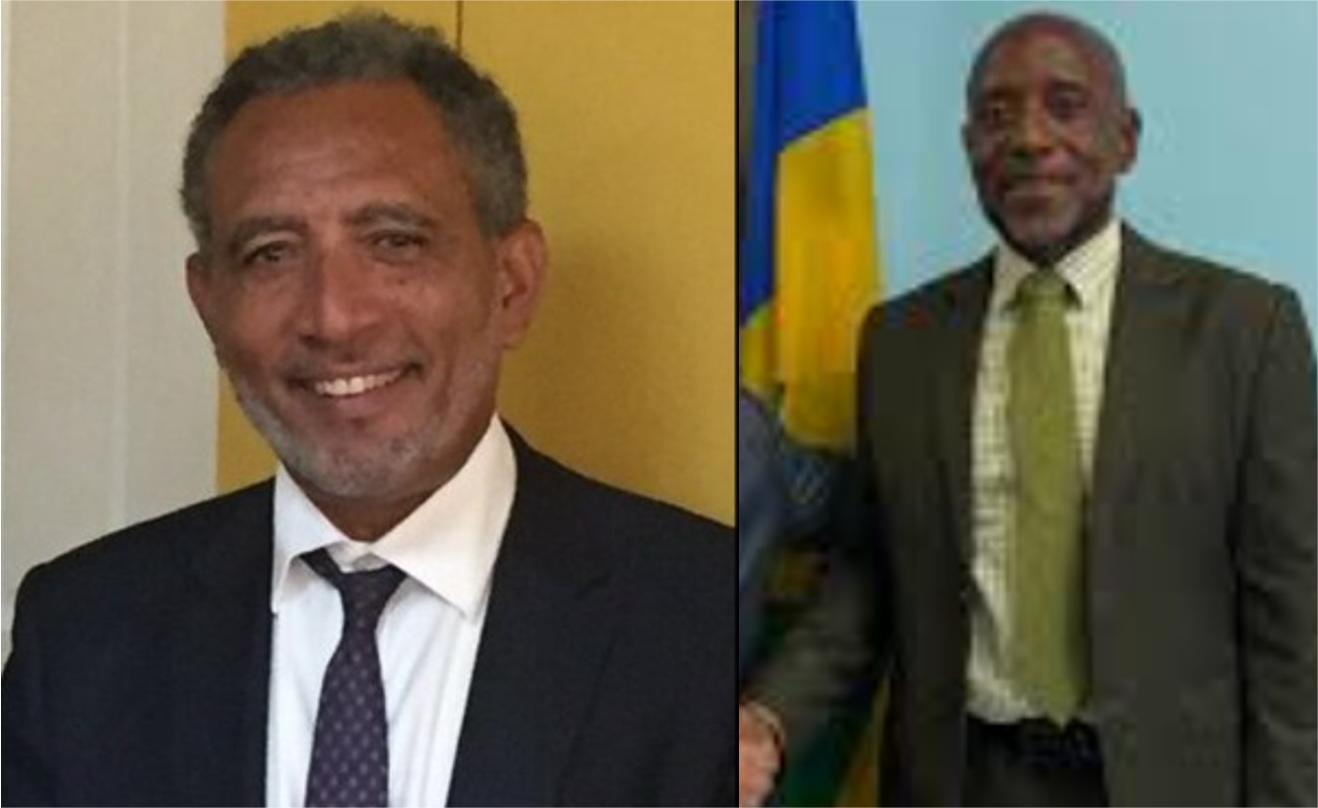
    The High Court of Kingstown has commenced proceedings in a pivotal constitutional case that challenges the parliamentary eligibility of Prime Minister Dr. Godwin Friday and Foreign Affairs Minister Dwight Fitzgerald Bramble. The litigation, initiated by Unity Labour Party (ULP) representatives Carlos Williams and Luke Browne, centers on whether the officials’ dual Vincentian-Canadian citizenship violates constitutional mandates prohibiting allegiance to foreign powers.

    Legal arguments presented before Justice Gertel Thom focus on Section 26 of the Constitution of St. Vincent and the Grenadines, which bars individuals acknowledging foreign allegiance from holding elected office. Both officials secured their parliamentary positions in the November 2025 general elections—Friday representing East Kingstown and Bramble the Northern Grenadines—before these citizenship revelations emerged.

    Following Thursday’s case management hearing, Prime Minister Friday offered an optimistic but non-committal assessment, noting the ‘wonderful day’ while deferring legal inquiries to his counsel. The government’s lead attorney, Anand Ramlogan S.C. of Trinidad and Tobago, characterized the proceedings as ‘an interesting, if not amusing experience,’ expressing confidence in their defense based on the elected officials’ ‘overwhelming mandate’ from voters.

    The legal teams represent an international collaboration, with petitioners represented by Stewart Richard Young S.C., Al Elliott, and Carlos James, while the respondents’ defense includes counsel from Trinidad and Tobago and England.

    The court has established an extensive litigation timeline requiring respondent disclosure of election declarations by March 12, 2026, followed by petitioner evidence submission by March 27. Respondents must file replies by May 11, with another management hearing scheduled for May 19. The substantive trial will occur over three consecutive days from July 28-30, 2026.

    This judicial review carries significant constitutional implications, potentially validating the election outcomes or establishing precedent regarding dual citizenship as disqualifying allegiance under Vincentian law.

  • Trump offers LatAm leaders US missile strikes to hit drug cartels

    Trump offers LatAm leaders US missile strikes to hit drug cartels

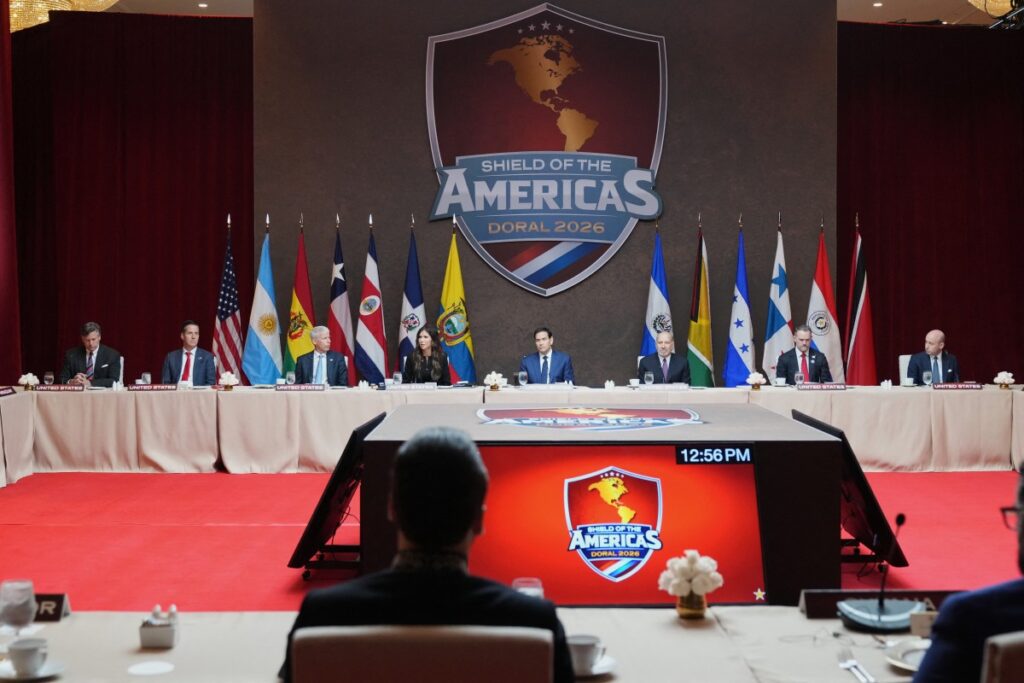
    DORAL, United States — In a significant policy address, U.S. President Donald Trump called upon Latin American nations to deploy military force against drug cartels, which he characterized as a spreading ‘cancer.’ Speaking at his Doral golf club near Miami on Saturday, Trump proposed that the U.S. could provide missile strikes to target narcotics leaders, emphasizing the precision of such operations.

    The president, who is concurrently managing heightened tensions with Iran, articulated a robust strategy for advancing U.S. interests in the Western Hemisphere. He asserted that communist-led Cuba was in its ‘last moments of life’ and advocated for stringent measures by regional allies to combat organized crime. The White House formally inaugurated a 17-nation ‘counter cartel’ coalition, described as a collective commitment by governments to employ ‘hard power’ against security threats.

    ‘We’re working with you to do whatever we have to do. We’ll use missiles. You want us to use a missile? They’re extremely accurate,’ Trump told right-wing leaders from Latin America and the Caribbean. He audibly mimicked the sound of a missile strike to illustrate his point, stating, ‘That’s the end of that cartel person.’

    This initiative builds upon Trump’s previous engagements in the region, including efforts to oust Venezuela’s authoritarian leader Nicolas Maduro and collaborate with his replacement, Delcy Rodriguez, to secure Venezuelan oil reserves for American interests.

    Attendees at the ‘Shield of the Americas’ summit included Argentina’s libertarian President Javier Milei, Ecuador’s Daniel Noboa, and El Salvador’s Nayib Bukele, known for his extensive crackdown on gangs. Noboa declared on social media that the era of impunity for organized crime was over, emphasizing that criminal networks could no longer operate across borders without consequences.

    Irene Mia, a Latin America expert at the International Institute for Strategic Studies, noted that escalating cartel violence has affected previously stable countries like Ecuador and Chile. This deteriorating security landscape has contributed to recent right-wing electoral victories in the region and reduced opposition to U.S. intervention, Mia explained.

    Trump urged regional leaders to utilize military capabilities to eradicate criminal organizations, warning that failure to act would allow the threat to metastasize. ‘The only way to defeat these enemies is by unleashing the power of our militaries,’ he stated.

  • Quality over quantity

    Quality over quantity

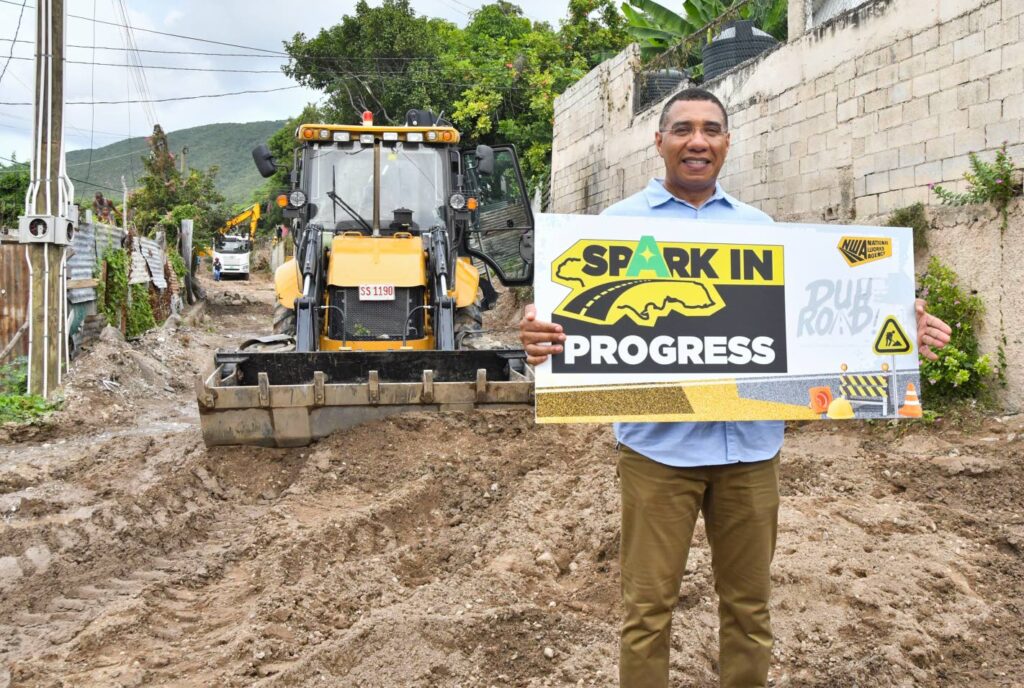
    Facing parliamentary scrutiny, the Jamaican Government has staunchly defended the deliberate pace of its flagship Shared Prosperity through Accelerated Improvement to our Road Network (SPARK) initiative, framing it as a necessary commitment to infrastructure durability over rapid completion metrics.

    Minister Robert Morgan, overseeing road and works, presented before Parliament’s Standing Finance Committee that unanticipated engineering complexities and subsurface waterline conflicts have necessitated extensive preparatory work, diverting focus from immediate paving activities. He articulated that the program’s initial phase has been fundamentally investigative, dedicated to uncovering and addressing hidden infrastructural flaws rather than merely applying asphalt.

    Morgan illustrated this approach with the example of Everest Drive in East Kingston, where excavation revealed an antiquated pipeline potentially containing asbestos, mandating its replacement—a critical safety measure not accounted for in initial assessments. This, he argued, exemplifies the program’s structured design to identify and rectify latent risks through meticulous soil testing, hydrological analysis, and geological surveys before construction.

    Despite opposition criticism from spokespersons Richard Azan and Dwayne Vaz, who implied the delays indicated deficient preliminary planning and questioned potential timeline extensions into 2030, Morgan remained resolute. He emphasized that the observed ‘quiet periods’ of low visible activity are integral to rigorous technical evaluations now established as a new national standard. He clarified that while 163 roads have commenced under SPARK, 80 have been paved, and approximately 60 are fully completed, the disparity stems from these comprehensive engineering requirements, not inefficiency.

    Concluding with a firm stance on principle, Morgan delineated the government’s prioritization: ‘We need to make a decision. I am not here to play a numbers game. I am here to play a road quality game… Are we going to do quality or are we going to do quantity? And we have decided to do quality.’ He assured that financial projections extending beyond the program’s contractual end date are adaptable and subject to reallocation as execution intensifies, reaffirming the Ministry of Finance’s commitment to fully funding the quality-driven endeavor.

  • Sheryl Lee Ralph queries whether US will help Jamaica as Cuban medical programme discontinued

    Sheryl Lee Ralph queries whether US will help Jamaica as Cuban medical programme discontinued

    KINGSTON, Jamaica – A significant diplomatic development has emerged as Jamaica discontinues its longstanding Cuban Medical Brigade program, prompting strong reactions from public figures and foreign governments. The termination decision, announced by Minister of Foreign Affairs and Foreign Trade Kamina Johnson Smith, will result in the departure of over 270 Cuban medical professionals from Jamaica’s healthcare system.

    The controversial move has drawn attention from Jamaican-American actress Sheryl Lee Ralph, goddaughter of former Prime Minister PJ Patterson, who publicly questioned via social media platform X: “Will America now send the doctors so badly needed in Jamaica?” Her query referenced ongoing concerns about Jamaica’s healthcare capacity following the program’s dissolution.

    Minister Johnson Smith maintained that the decision was not influenced by mounting pressure from the United States, which has consistently criticized the program’s financial structure wherein participating countries pay the Cuban government directly, which then compensates medical professionals with stipends. The Foreign Minister indicated openness to negotiating directly with Cuban medical personnel should they wish to remain in Jamaica independently.

    Contradicting Jamaica’s position, the Cuban government issued an official statement alleging that the Jamaican administration had capitulated to US pressure. Cuba has consequently initiated procedures to withdraw its medical staff from the Caribbean nation. This development highlights ongoing geopolitical tensions in the region and raises questions about the future of Jamaica’s healthcare infrastructure amid the significant reduction in medical personnel.

  • PNP’s Vaz says public left in the dark as SPARK road promises shift

    PNP’s Vaz says public left in the dark as SPARK road promises shift

    KINGSTON, Jamaica — Significant concerns regarding the Jamaican government’s SPARK road rehabilitation initiative have been formally raised by opposition officials, citing substantial inconsistencies in program details. Dwayne Vaz, Deputy Opposition Spokesperson on Road and Works and Member of Parliament for Westmoreland Central, has publicly challenged the administration’s transparency and accountability concerning the project’s execution.

    In an official communication released Saturday, Vaz highlighted contradictory statements from Robert Morgan, the Minister with responsibility for Works. These statements, according to Vaz, appear to directly conflict with previously established budget allocations and public commitments made by the government.

    The core issues identified encompass three major areas of discrepancy. Firstly, the program’s timeline has reportedly been extended without clear public justification. Initially presented as a short-term project scheduled from January 2025 to March 2028, expenditure estimates now suggest activities will continue until 2030.

    Secondly, confusion surrounds the geographical scale of the project. While Minister Morgan recently indicated that SPARK would address approximately 1,200 kilometers of the island’s 26,000-kilometer road network, Vaz contends this figure is inconsistent with earlier documentation that suggested a more limited scope.

    Thirdly, and perhaps most critically, a drastic reduction in the number of beneficiary roads has been flagged. Initial government estimates promised improvements for approximately 693 roads, ensuring a minimum of 10 infrastructure upgrades per constituency. Recent statements, however, suggest this figure may have been slashed to just 400 roads, raising serious questions about equitable distribution across electoral districts.

    Financial allocation discrepancies further compound these concerns. Previous budget estimates designated $20 billion for the current financial year and $14 billion for the subsequent period to fully fund SPARK. The currently approved budget, however, allocates a mere $4.5 billion, potentially leaving numerous planned projects incomplete and undermining the program’s overall efficacy.

    Emphasizing that road rehabilitation is vital for local communities, agricultural transport, and broader economic activity, Vaz maintained that the public deserves accurate and verifiable information regarding project deliverables, timelines, and financial stewardship. He has formally demanded that the government provide Parliament and the Jamaican public with consistent, verified updates on the confirmed number of roads, a realistic completion schedule, and a transparent breakdown of constituency-level project distribution.

  • Grenada at a crossroads: Governance, reform, and the path forward

    Grenada at a crossroads: Governance, reform, and the path forward

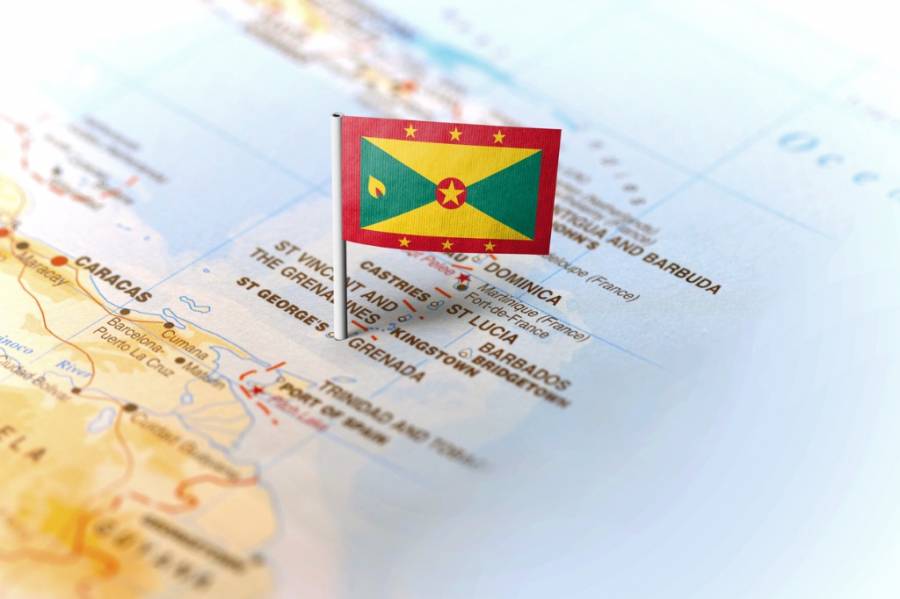
    Four years after Grenada’s landmark 2022 general election that brought Prime Minister Dickon Mitchell’s National Democratic Congress (NDC) to power, the nation stands at a critical juncture in its development trajectory. The political transition from Keith Mitchell’s New National Party (NNP) represented a profound public mandate for renewal and fresh governance approaches in the Caribbean nation.

    The previous administration’s legacy includes significant fiscal reforms implemented following Grenada’s early 2010s debt crisis. Through comprehensive debt restructuring, fiscal responsibility legislation, and economic stabilization measures, the country restored investor confidence and established a sustainable economic framework that continues to guide current policy.

    While maintaining these fiscal safeguards, the Mitchell administration has benefited from robust tourism recovery and sustained revenues from the citizenship-by-investment program. However, this economic model reveals Grenada’s persistent vulnerability to global shocks and natural disasters due to its heavy reliance on tourism and external conditions.

    Among the current government’s notable achievements has been the resolution of long-standing pension entitlements for public servants, addressing a contentious issue that had lingered through multiple administrations. This move represents significant progress in institutional confidence-building.

    The administration’s frequently articulated “Transformation Agenda” faces its true test in implementation. Beyond visionary rhetoric, meaningful progress requires concrete timelines, institutional capacity, and measurable outcomes in job creation, economic diversification, infrastructure development, and public service delivery.

    Youth opportunity emerges as the most pressing contemporary challenge. Despite periodic economic growth, many young Grenadians struggle to find stable employment or viable economic pathways. Tourism expansion alone cannot accommodate the aspirations of an increasingly educated and globally connected generation.

    The diaspora represents another crucial development dimension. Grenadians abroad contribute significantly through remittances, investments, and professional expertise—a substantial economic and social capital reservoir that could be further leveraged through deliberate institutional connections.

    Economic diversification remains Grenada’s fundamental long-term imperative. While tourism will continue as an economic pillar, sustainable development necessitates expansion into digital services, agricultural innovation, education services, and creative industries. This transition requires sustained investment in human capital, infrastructure, and institutional capacity.

    Ultimately, Grenada’s progress transcends partisan politics. The nation’s future resilience and shared prosperity depend on collective efforts across generations—a continuing national project shaped by citizens, institutions, and leaders committed to long-term development rather than short-term political gains.

  • St. Kitts and Nevis citizens get visa-free travel to Ghana after landmark agreement  – WIC News

    St. Kitts and Nevis citizens get visa-free travel to Ghana after landmark agreement  – WIC News

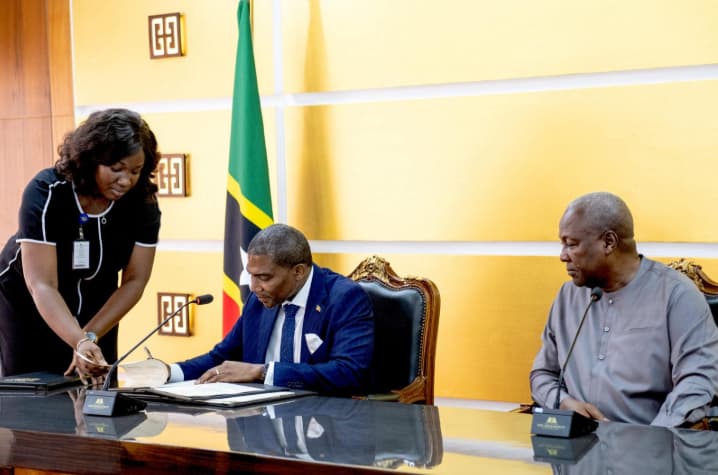
    In a significant diplomatic advancement, the Federation of St. Kitts and Nevis has established a landmark visa waiver agreement with Ghana, eliminating visa requirements for ordinary passport holders traveling between the two nations. This transformative agreement was formalized during Prime Minister Dr. Terrance Drew’s official state visit to Ghana from March 4, 2026, marking a new chapter in transatlantic relations.

    The agreement represents a substantial expansion of previous arrangements that only covered diplomatic and service passport holders. Ghanaian President John Dramani Mahama characterized the development as both ‘practical and transformative,’ emphasizing its potential to strengthen bilateral ties while fostering deeper people-to-people connections across the Atlantic divide.

    Prime Minister Drew articulated the agreement’s broader implications, stating: ‘This landmark arrangement will facilitate seamless travel between our nations, creating pathways for enhanced cultural exchange, educational cooperation, and expanded business and tourism opportunities.’ The Prime Minister further expressed optimism about the emerging opportunities to bridge African and Caribbean communities.

    Beyond the visa waiver, both nations signed a complementary agreement addressing healthcare workforce mobility. This arrangement will facilitate the transfer of qualified Ghanaian nurses to St. Kitts and Nevis, addressing staffing needs while providing professional development opportunities. President Mahama additionally highlighted Ghana’s commitment to supporting human resource development in St. Kitts and Nevis through structured labor mobility programs across key sectors.

    The bilateral discussions, described as highly productive by both administrations, focused on strengthening diplomatic coordination, expanding trade and investment frameworks, and deepening cultural cooperation. This agreement positions both nations as pioneers in South-South cooperation, potentially establishing a model for future Africa-Caribbean partnerships.

  • Solidarity in Accra: Saint Kitts and Nevis Prime Minister honoured as a Special Guest at Ghana’s 69th Independence Anniversary

    Solidarity in Accra: Saint Kitts and Nevis Prime Minister honoured as a Special Guest at Ghana’s 69th Independence Anniversary

    ACCRA, GHANA – March 6, 2026 marked a significant moment in Afro-Caribbean relations as Saint Kitts and Nevis Prime Minister Honourable Dr. Terrance Drew received special recognition during Ghana’s 69th Independence Anniversary celebrations. The event, held at the historic Jubilee House in Accra, served as the culminating engagement of Dr. Drew’s official state visit to the West African nation.

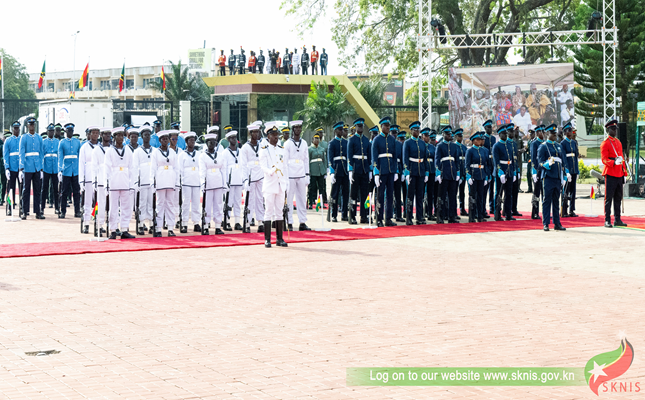
    The national ceremony assembled government dignitaries, diplomatic corps representatives, military officials, students, and citizens to commemorate Ghana’s liberation from colonial rule in 1957. Prime Minister Drew and his wife Diani Prince-Drew joined Ghanaian President His Excellency John Dramani Mahama and Vice President H.E. Professor Jane Naana Opoku-Agyemang for the ceremonial parade and official programming.

    The celebration featured vibrant cultural displays including interfaith prayers from traditional, Muslim, and Christian leaders, alongside musical performances, poetry recitations, and cultural presentations by school children. The official proceedings included a military parade inspection and the lighting of the perpetual flame preceding President Mahama’s national address.

    A particularly symbolic moment occurred as the national flag of Saint Kitts and Nevis flew prominently at Jubilee House—the very grounds where Ghana first celebrated its independence. Prime Minister Drew characterized the experience as profoundly meaningful for both nations, emphasizing the enduring historical connections between the Caribbean and Africa.

    “Witnessing Ghana’s 69th independence celebration carries deep personal and symbolic significance,” stated Dr. Drew. “Our presence here reinforces that the Caribbean narrative remains incomplete without acknowledging African roots. The resilience, culture, and spirit of our ancestors crossed the Atlantic and continue thriving within our people.”

    The prime minister’s participation concluded a series of bilateral engagements aimed at strengthening cooperation in education, diplomacy, and cultural exchange. Both governments reaffirmed their commitment to enhancing ties rooted in shared heritage and mutual respect, signaling a new chapter in South-South cooperation and diasporic reconnection.