A major infrastructure oversight has emerged at Tobago’s newly constructed ANR Robinson International Airport terminal, with the National Petroleum Company Ltd (NP) confirming that connecting fuel lines from the existing airport site to the new terminal will carry a price tag of $50 million. THA Chief Secretary Farley Augustine recently verified the cost estimate, shedding light on a critical gap in the terminal’s construction: the new building was completed without any on-site fuelling infrastructure at all. In an interview with local media outlet Express, Augustine detailed that discussions with NP several months ago yielded the $50 million projection, adding that the national energy firm is currently debating whether it will absorb the full cost of the project. For Augustine and the Tobago House of Assembly, the project is far more than a basic construction fix: the regional body wants the new terminal to meet modern, efficient, and competitive standards that match or exceed peer airports across the Caribbean and broader global aviation network. The oversight, Augustine explained, is not an unforeseen mistake. He recalled that former THA Infrastructure Secretary Trevor James first flagged the need for integrated fuelling infrastructure back in 2022, when the ruling PNM Cabinet held a gathering in Tobago at the prime minister’s official residence. Despite the early warning, Augustine said, the THA’s input was sidelined, and construction proceeded without including this critical utility. “But of course, as usual, in 2022 the THA was ignored, our thoughts were not considered at the time and the terminal was built without that critical infrastructure there,” Augustine stated. Even with the past disregard for local input, Augustine emphasized that the THA remains committed to collaborating with Trinidad and Tobago’s central government to get the terminal fully and efficiently operational. He framed the airport as a key economic asset for Tobago, rather than just a transit hub for passengers. “Airports in of themselves are potentials for generating income; we have to see the airport as such and not just as a hub for planes to land and pick up people, but as an income-generating facility,” he said. The issue has now gained traction at the national level: Minister of Works and Infrastructure Jearlean John acknowledged the problem in a Monday interview with Express, confirming that the project will require design adjustments to address the fuelling gap. John shared that she shares concerns over the terminal’s current lack of fuelling capacity, and has scheduled a meeting with relevant officials later this week to map out a path forward. The full proposal to resolve the issue will be presented to the national Cabinet for consideration next week.
分类: politics
-
Trump: Tijdelijke pauze voor Amerikaanse operatie in Straat van Hormuz
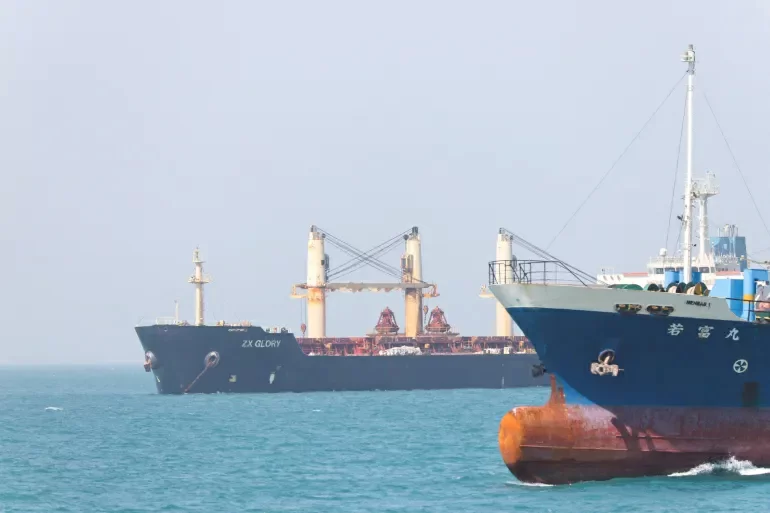
In a significant shift in US policy amid escalating tensions in the Persian Gulf, former President Donald Trump announced Tuesday that Washington is temporarily halting its military operation to escort stranded commercial vessels through the Strait of Hormuz. The pause, he says, is intended to create diplomatic space for finalizing a comprehensive peace agreement between the United States and Iran.
Trump made the announcement via his social media platform Truth Social, noting that the temporary suspension was agreed to “at the request of Pakistan and other nations” following what he called “major progress” in negotiations with Iranian representatives. He clarified that while the existing US blockade on Iranian ports remains fully in effect, the escort mission codenamed Project Freedom will be put on hold to allow negotiators to finalize and sign a formal agreement. As of Wednesday, Tehran has not issued an official public response to Trump’s announcement.
The announcement comes at a moment of rapidly intensifying friction across the Gulf region. In recent days, the US military confirmed it has destroyed multiple Iranian fast attack boats, cruise missiles, and drones. The United Arab Emirates also reported that its air defense systems have intercepted missile and drone attacks launched from Iran for the second consecutive day, while a commercial transiting vessel said it was struck by an unidentified projectile in the strait.
In parallel to the military escalations, Iran has rolled out new shipping regulations for vessels seeking passage through the strait. Under the new framework, ships receive updated transit rules via email from the newly established Persian Gulf Strait Authority. The Islamic Revolutionary Guard Corps (IRGC) also released a revised map expanding Iran’s declared maritime control area, issuing a warning that vessels must only use Iran-designated shipping corridors or face a “decisive response” if they deviate.
In Washington, Secretary of State Marco Rubio confirmed that the US has concluded its offensive military campaign against Iran, codenamed Operation Epic Fury. “We will not open fire unless we are attacked first,” Rubio stated, though he stressed that Iran will still face consequences for its attempts to assert exclusive control over the strategic waterway. “The Strait of Hormuz does not belong to Iran. They have no right to close passage, blow up ships, or lay mines,” he said, adding that allowing Iran to collect tolls for transit would set a dangerous precedent that could be replicated by other countries around the globe.
The Strait of Hormuz is one of the world’s most critical maritime chokepoints, carrying roughly one-fifth of global energy supplies. The waterway has been effectively closed to most commercial traffic since large-scale military operations between the US, Israel, and Iran began on February 28. After a ceasefire took effect in early April, the US imposed its own unilateral blockade to prevent vessels from entering or exiting Iranian ports.
The closure of the strait has already rippled through global markets, disrupting supply chains, pushing up crude oil and fertilizer prices, and stoking widespread fears of a looming global recession and expanded food insecurity.
Speaking to reporters earlier Tuesday, Trump argued that the combination of US military pressure and economic sanctions has forced Tehran to the negotiating table, despite its public rejection of talks with his administration. “Iran wants to make a deal,” Trump said. “What I don’t like is they talk to me with a lot of respect privately, then go on television and say they won’t talk to the president. They’re playing games. But let me be clear: they want a deal. Who wouldn’t? Their military capability has been destroyed, we can do whatever we want.”
Trump, who faces growing political pressure from rising consumer prices ahead of November midterm elections, dismissed Iran’s remaining military capacity as nothing more than the firing of “firecrackers.” When asked what actions from Iran would count as a ceasefire violation, he simply said, “They know what they shouldn’t do.”
Defense Secretary Pete Hegseth, speaking from the Pentagon, added that the recent outbreaks of violence in the strait do not constitute a breach of the four-week-old ceasefire. “US forces do not need to enter Iranian territorial waters. We are not seeking a fight, but Iran cannot block innocent nations and their cargo in international waters,” Hegseth said. “The ceasefire is holding for the moment, but we are monitoring it very closely.”
-
New 14-Member Cabinet Sworn In as Government Begins Fresh Term
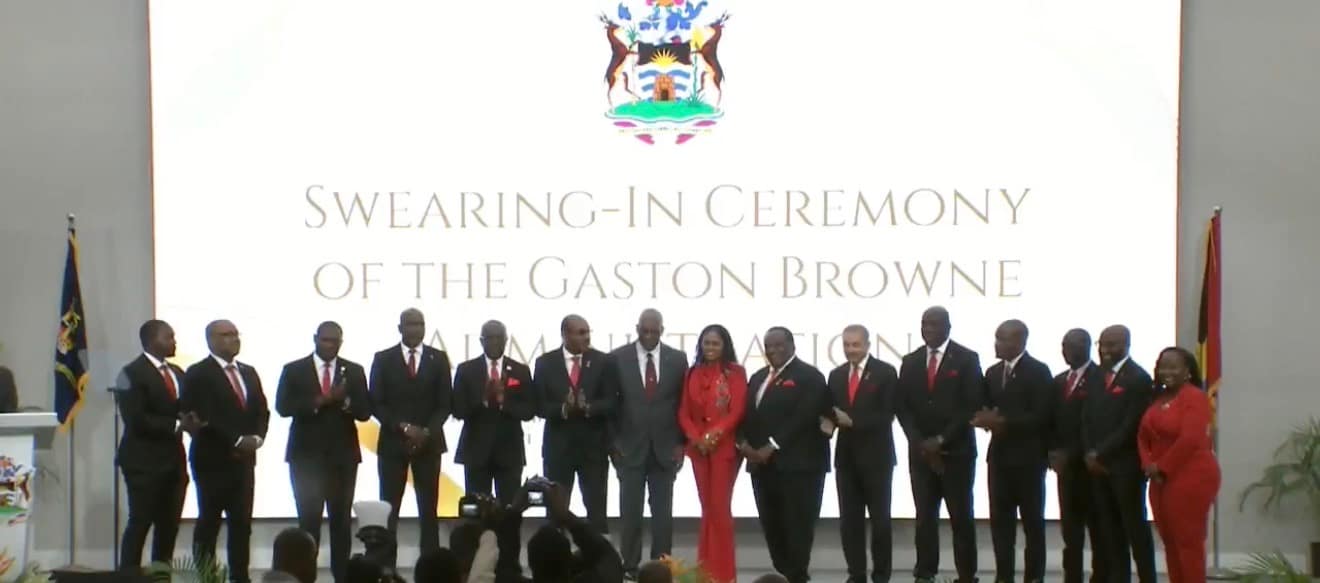
Following a decisive landslide win in the April 30 general election that gave the ruling party 15 out of 17 parliamentary seats, Antigua and Barbuda has formally completed the formation of its new government, with 14 cabinet ministers — including Prime Minister Gaston Browne and Attorney General Sir Steadroy “Cutie” Benjamin — receiving their official instruments of office during a ceremony held Tuesday.
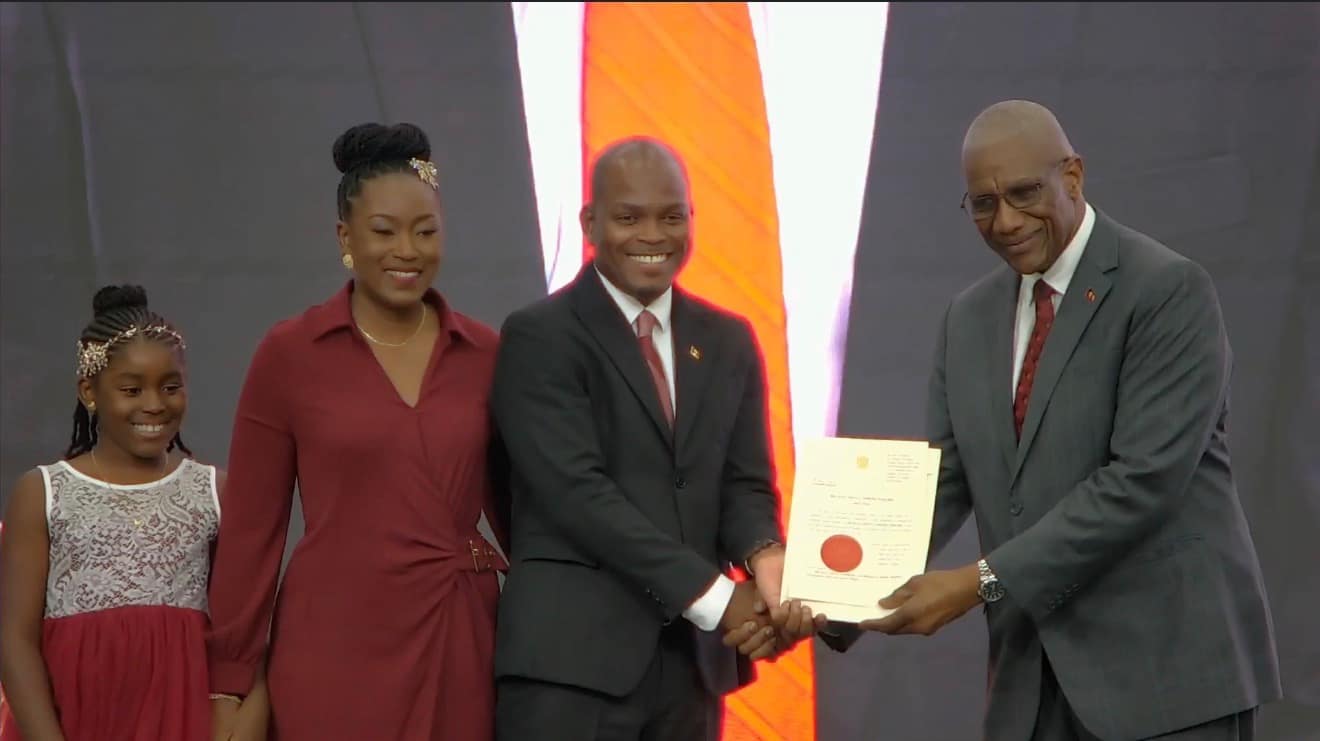
Prime Minister Browne and Attorney General Benjamin, who completed their initial swearing-in over the weekend, formally accepted their portfolio assignments at the event hosted at the American University of Antigua. The remaining 12 ministerial appointees took the required oaths of allegiance, office, and secrecy directly before Governor General Sir Rodney Williams, bringing the full constitutional formation process to a successful close. This ceremony also marked the first official use of newly updated oaths that were approved by legislative bodies earlier this year, aligning the process with modernized governance guidelines.
Under the country’s constitutional framework, the Prime Minister holds full authority to allocate ministerial portfolios and oversee the distribution of government responsibilities. Each newly appointed ministry has been assigned broad, clearly defined oversight of critical national institutions and priority development programs. For example, the Information, Communication Technologies, Utilities and Energy portfolio will supervise the Antigua Public Utilities Authority and lead the country’s ongoing digital transformation agenda. The Ministry of Housing and Works takes charge of national infrastructure development, public housing initiatives, and road maintenance projects, while the Education, Science and Technology ministry oversees the nationwide education system, including the regional University of the West Indies Five Islands Campus.
The Ministry of Health, Wellness, Environment and Civil Service Affairs, one of the public-facing portfolios highlighted during the formation process, will govern the Sir Lester Bird Medical Centre, all national public health services, national environmental management, and civil service administrative operations. The newly structured Ministry of Sports and the Creative Industries holds responsibility for national sports infrastructure, cultural programming, the annual Antigua Carnival, and growth support for the broader creative economy, a fast-growing sector for the island nation.
Two key appointments that will shape core public services and national growth drew particular focus: Michael Joseph takes the helm of the health, environment, and civil service portfolio, while Dwayne George assumes leadership of the sports and creative industries ministry. Other full cabinet appointments include E.P. Chet Greene as Minister for Foreign Affairs, Trade and Immigration; Charles “Max” Fernandez leading Tourism, Civil Aviation, Transportation and Investment; Melford Nicholas heading Information, Communication Technologies, Utilities and Energy; Maria Vanessa Browne taking responsibility for Housing and Works; Daryll Matthew leading Education, Science and Technology; Anthony Smith Jr. overseeing Agriculture, Lands and the Blue Economy; and Rawdon Turner heading Social and Urban Transformation.
To bolster operational capacity across high-priority departments, three additional Ministers of State were appointed to assist senior cabinet ministers: Randy St. Clair Baltimore will support the agriculture portfolio, Michael Freeland will back the tourism team, and Kiz Johnson will assist with social and urban transformation initiatives.
As the country finalizes its full parliamentary structure, one key position remains unfilled: a Deputy Speaker for the new parliament has not yet been appointed, though Dr. Philmore Benjamin, the newly elected Member of Parliament for St. Mary’s North, is widely expected to be nominated for the role. Upcoming parliamentary proceedings will also see all appointed Senators officially sworn in at 10 a.m. Friday at Government House, marking the final step in establishing the new legislative term.
In closing remarks at Tuesday’s cabinet ceremony, Governor General Sir Rodney Williams delivered a charge to the newly appointed ministers, urging them to carry out their public duties with unwavering integrity and collective unity. He reminded appointees that holding public office is not a privilege, but a core duty that must be discharged exclusively for the benefit of all citizens of Antigua and Barbuda.
-
Health Ministry Welcomes Michael Joseph as New Minister
A new chapter of leadership is set to begin at one of the Caribbean’s most crucial government departments, as the Ministry of Health, Wellness, Environment and Civil Service Affairs has formally announced its warm welcome to incoming Minister Michael Joseph. Joseph’s appointment is scheduled to take official effect on May 5, 2026, marking a fresh term of leadership for the sprawling public agency that oversees three core pillars of national development.
In an official public statement released by the ministry, leadership and staff extended formal congratulations to the Honorable Michael Joseph, who will step into the top role guiding the institution’s work. The statement emphasized the outsize importance of the ministerial portfolio Joseph is set to lead, noting that it touches nearly every aspect of daily life for citizens across the country.
Beyond overseeing the delivery of clinical and public health services that keep communities healthy, the ministry is tasked with driving national wellness initiatives, advancing urgent environmental sustainability action, and continually strengthening the country’s entire civil service system. These interconnected responsibilities make the role a central one in the national cabinet, touching everything from public health infrastructure to climate protection to the efficiency of government services for all residents.
The full ministry team, from frontline public servants to senior leadership, expressed collective eagerness to collaborate with Joseph as he takes on his new responsibilities. “We look forward to working under his guidance and vision to continue delivering high-quality healthcare, promoting national wellness, protecting our environment, and enhancing service delivery across the civil service,” the statement read.
To close out the official announcement, the entire ministry extended sincere well wishes for Joseph’s tenure, saying: “We wish you every success in this new chapter of service to our country.”
-
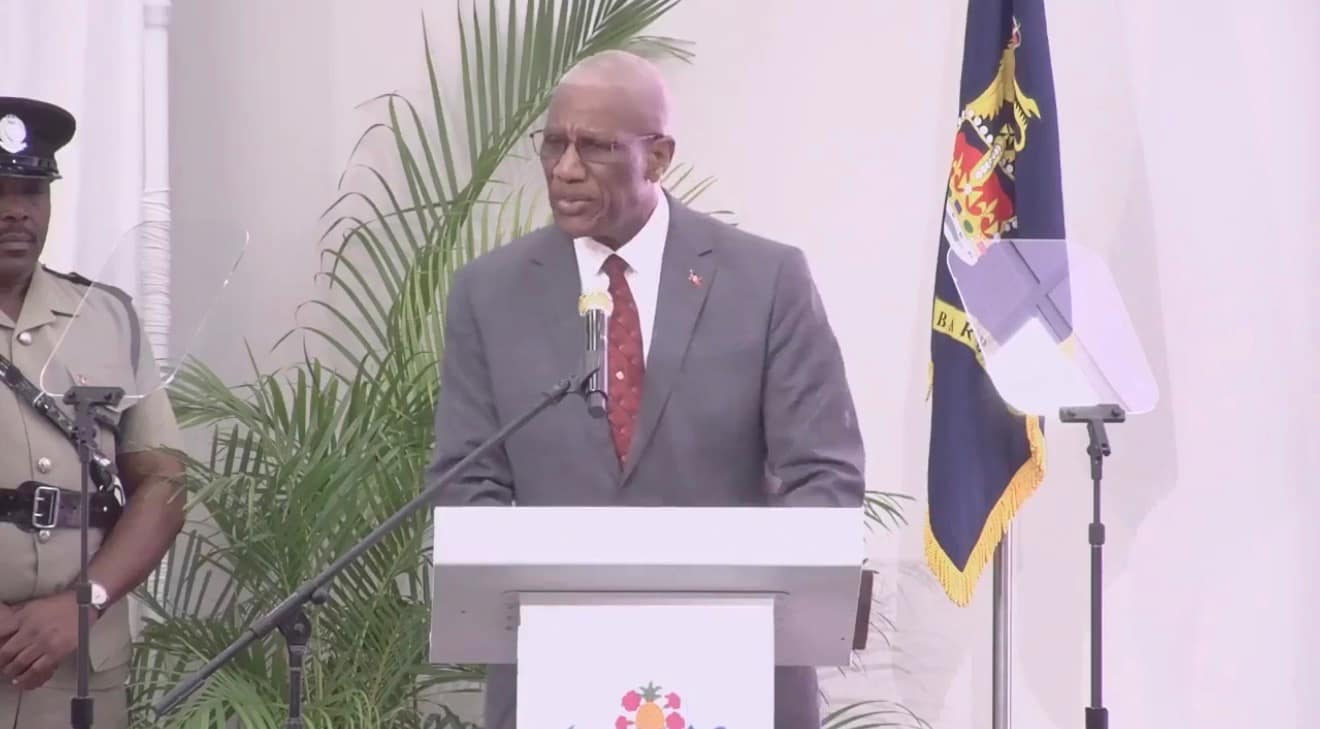
Governor General Says Nation Must Move Forward Together After Election
Fresh off the conclusion of Antigua and Barbuda’s April 30 general election, the nation’s top constitutional figure has delivered a stark and unifying message to both newly elected leaders and the public: political divisions must not tear the country apart, and all sectors must work together to advance the shared national interest.
Governor General Sir Rodney Williams made his call for national healing and collective action during Tuesday’s formal swearing-in ceremony for the incoming cabinet, an event that followed a lopsided election result where the incumbent governing party claimed 15 of the 17 available parliamentary seats.
In his address to the new ministers and assembled guests, Sir Rodney emphasized that democratic competition, by its nature, produces divergent preferences among voters, but those differences should never fracture the bonds that hold the national community together. “At moments such as this, we are reminded that while elections may divide us in choice, they must never divide us as a people,” he stated. “Once the ballots are counted, we are called to come together—not as supporters of different parties, but as one nation, united in purpose and shared destiny.”
Beyond his appeal to national unity, Sir Rodney used the occasion to remind incoming cabinet members that public office is a solemn responsibility rather than a trophy for political victory. “Public office is not a prize to be claimed, but a duty to be discharged with humility, discipline, and unwavering integrity,” he argued.
He stressed that the new government owes representation to every resident of Antigua and Barbuda, not just those who cast ballots for the governing party. “You are now called upon to serve not only those who supported you, but every citizen and resident of this nation,” Sir Rodney said. “In this regard, you are ministers not of a party alone, but of Antigua and Barbuda as a whole.”
The Governor General also pushed back against the idea that ministerial oaths are empty procedural formalities, noting that the promises carry profound legal and moral weight. “The oaths which you are about to take are not mere formalities. They represent a binding commitment to the Constitution of Antigua and Barbuda, to the rule of law, and to the faithful execution of your duties,” he explained.
Effective governance, Sir Rodney added, depends on collaborative work rather than individual achievement, urging the new cabinet to prioritize collective purpose. “These are times that demand not only competence, but courage—not only vision, but collaboration,” he said. “The strength of your administration will depend not solely on individual effort, but on collective purpose and shared responsibility.”
His closing remarks turned to the wider public, reaching out both to supporters of the winning party and to voters who left the election disappointed by the outcome. Sir Rodney encouraged all residents to maintain active, constructive engagement with public life to support the nation’s long-term progress. “I therefore encourage all citizens—those who celebrate today and those who may feel disappointed—to remain engaged, to remain constructive and committed to the advancement of our nation,” he added.
-
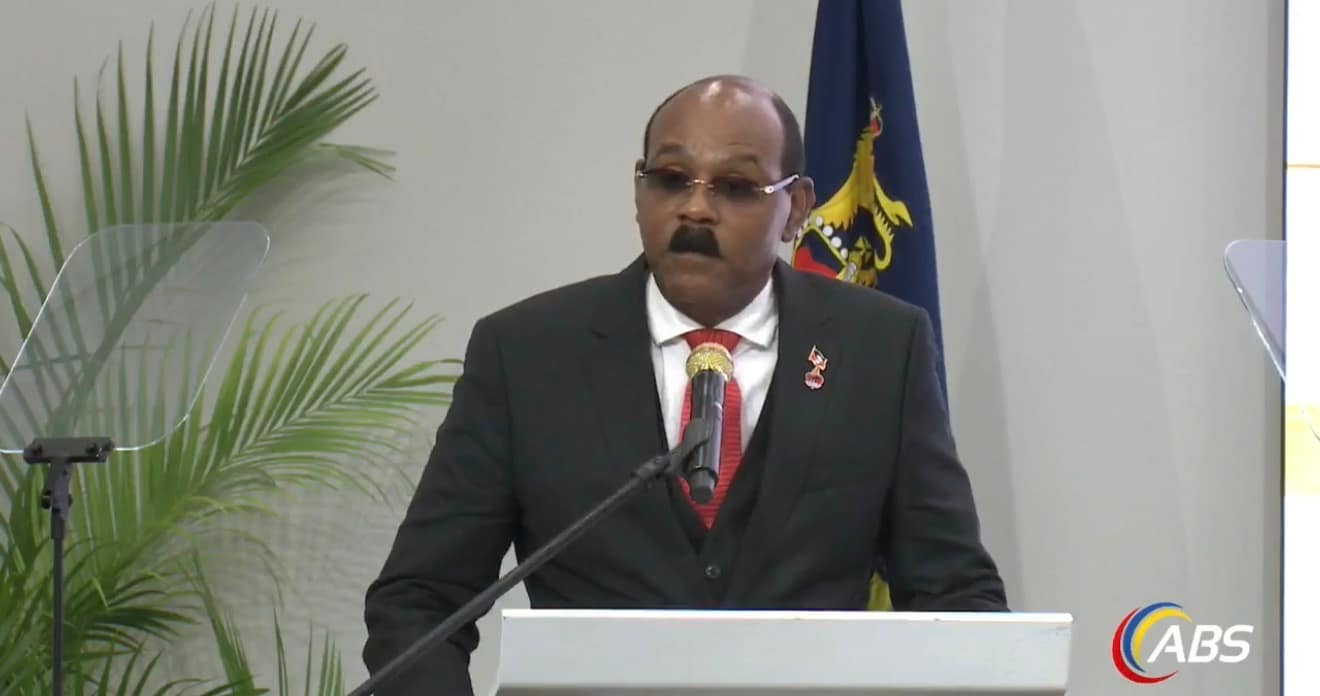
PM Browne Warns Cabinet: ‘No Room for Mediocrity’
Fresh off a decisive landslide win in the April 30 general election, Antigua and Barbuda Prime Minister Gaston Browne has laid out strict expectations for his newly inaugurated Cabinet, drawing a clear line in the sand against underperformance and complacency as the administration kicks off its fourth term.
Speaking at Tuesday’s official swearing-in ceremony for the new Council of Ministers, Browne tied his administration’s overwhelming electoral mandate—securing 15 out of 17 available parliamentary seats—to a dramatically elevated standard of accountability to the voting public. The Prime Minister stressed that the unprecedented trust voters placed in his party cannot be treated as a given, and all appointed ministers must hold themselves to the highest possible standards of service.
“You have been entrusted with a tremendous responsibility by the people of this nation,” Browne told the assembled ministers. He went on to urge every Cabinet member to honor the electorate’s confidence and avoid betraying the support that carried the party to a resounding victory at the polls.
In firm, uncompromising language, Browne made clear that underperformance and mediocre work will not be tolerated in his new administration. He emphasized that his government must be defined by consistent excellence and tangible, on-the-ground delivery for citizens, repeating: “There must be no mediocrity.” All ministers, he insisted, are required to carry out their official duties at the peak of their capabilities.
Browne also pushed back against the common framing of public office as a privilege, reframing it as a solemn duty to the Antiguan and Barbudan public. He called on all Cabinet members to approach their roles with unwavering discipline, unassailable integrity, and an unrelenting focus on delivering measurable results. “You are here to serve the people of this country,” he said, warning that any failure to uphold this core mission would erode the trust voters have extended to the new administration.
Beyond individual accountability, the Prime Minister also emphasized the critical need for cross-ministerial unity. Collective collaborative effort, he noted, is the only foundation for hitting the country’s ambitious long-term development targets. “We must work together in unity,” Browne said, encouraging ongoing coordination and partnership between government departments to move forward with the administration’s top development priorities.
Framing this new fourth term as a period of transformative national progress, Browne highlighted a pipeline of current and upcoming initiatives focused on three core goals: upgrading the country’s core infrastructure, raising overall living standards for all citizens, and positioning Antigua and Barbuda for long-term, sustainable economic growth.
He also doubled down on the importance of widespread national productivity, noting that meaningful national progress will rely not just on government action, but on buy-in and effort across all sectors of Antiguan and Barbudan society. Repeating his core message—“You cannot accept mediocrity”—Browne reinforced his commitment to delivering tangible, visible outcomes that match the overwhelming mandate the party received from voters.
Browne’s opening remarks to the new Cabinet have set a clear, results-first tone for the administration’s incoming term, signaling an uncompromising zero-tolerance approach to complacency as the newly sworn-in ministers prepare to begin their official work.
-
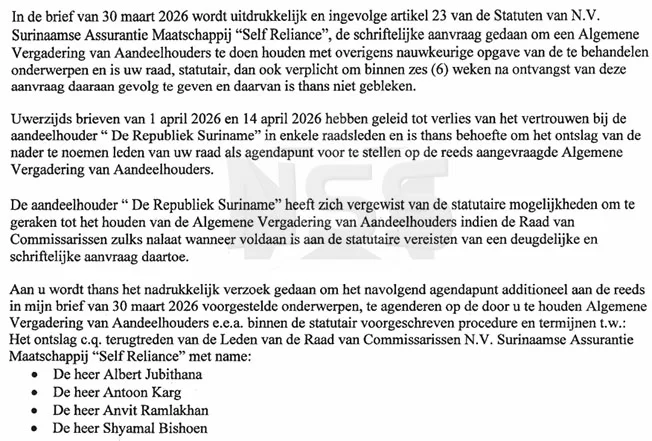
Pawiroredjo en Gajadien uiten scherpe kritiek op ingreep president bij Self Reliance
On Tuesday, two leading parliamentary faction leaders from Suriname — Jerrel Pawiroredjo of the National Party of Suriname (NPS) and Asis Gajadien of the Progressive People’s Party (VHP) — delivered pointed, urgent questions to the national government during a sitting of the National Assembly. The inquiry centers on claims of inappropriate political meddling in the operations of state-linked enterprises and the broader domestic financial sector, triggered by recent actions taken by the Surinamese president targeting the Board of Commissioners of the national insurance firm Self Reliance.
Lawmakers have characterized the president’s move as a deeply troubling development that threatens long-standing principles of good governance and transparent corporate oversight. “Shareholding carries responsibility, not unchecked absolute control,” the parliamentarians emphasized in their questioning. According to unconfirmed reporting from local outlet Starnieuws, the controversial intervention is expected to be reversed in the near term, with all formal correspondence related to the plan also withdrawn.
A leaked letter from the president to Albert Jubitana, president-commissioner of Self Reliance, reveals that acting on behalf of the Surinamese state, which holds shares in the company, the head of state pushed for an emergency general meeting of shareholders to be convened. A key item added to the proposed meeting agenda is the dismissal of multiple sitting members of the Board of Commissioners. The request specifically calls for a full review of the performance of board members, with an eye toward potentially removing several from their posts.
In the correspondence, the president cites Article 23 of Self Reliance’s corporate bylaws, which formally grants shareholders the right to request an extraordinary general meeting. The letter also demands the board turn over internal records on ongoing deliberations and disclose the legal basis for recent decisions the board has made.
Critics of the president’s action have raised serious questions about the appropriate boundaries of shareholder influence, particularly in this case: the Surinamese state does not hold a controlling majority stake in the insurer, instead owning only approximately 40 percent of outstanding shares.
Beyond the insurer itself, concerns have also been raised about potential political pressure on the Central Bank of Suriname. Observers warn that unchecked political influence could erode the central bank’s regulatory independence, creating significant unneeded risks to the overall stability of Suriname’s financial sector. In their inquiry, the parliamentary leaders have demanded the national government provide full transparency around the intervention, as well as a clear, legally sound justification for the president’s actions.
-
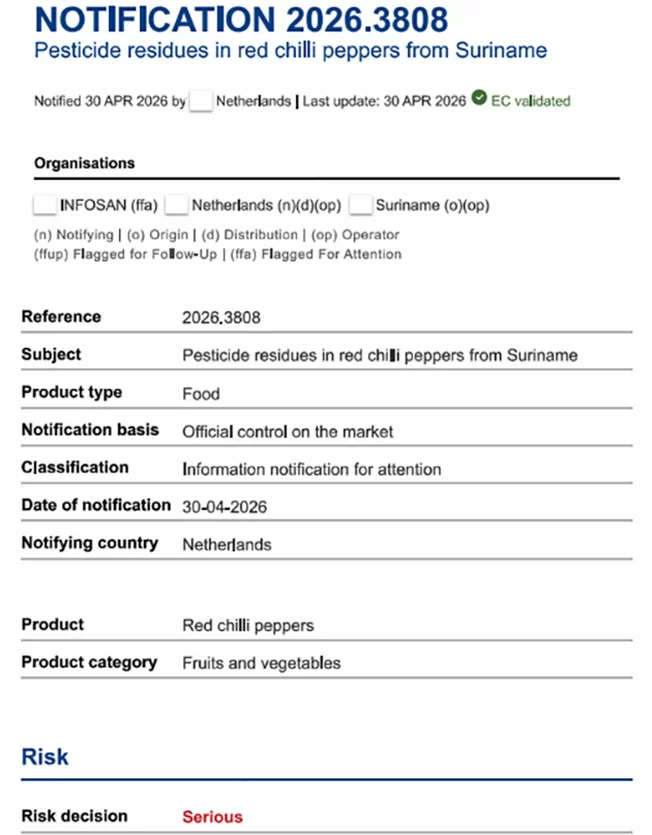
Pesticidenschandaal: DNA hekelt falend toezicht en risico voor volksgezondheid
A major political controversy has erupted in Suriname after the European Union rejected two of the country’s key agricultural export shipments in just four days, triggering fierce criticism of the government’s failed food safety regulation from lawmakers in the National Assembly (DNA).
The rejected products, red pepper and yardlong bean, failed EU entry checks due to containing pesticide residues that exceeded the bloc’s strict safety limits. Lawmakers from across the political spectrum have warned that this failure is not just an international trade issue, but an immediate threat to domestic public health, with one senior parliamentarian saying the current broken system is actively poisoning the Surinamese population.
During Wednesday’s public parliamentary session, legislators drew a direct line between the EU rejections and deep, structural flaws in Suriname’s domestic food safety monitoring regime. NDP parliamentarian Jennifer Vreedzaam led the criticism, leveling sharp blame at Agriculture, Livestock and Fisheries (LVV) Minister Mike Noersalim for the government’s inaction on this long-recognized problem.
VHP lawmaker Cherryl Dijksteel emphasized that the incident confirms a fundamental breakdown in the country’s food control infrastructure. “If we cannot stop banned substances from entering the supply chain, detect residue limit breaches, or inspect products before they reach markets, we have to ask: does our current system work at all?” Dijksteel said. She pressed the government to answer a series of urgent, detailed questions about the incident, including whether the responsible exporters have been identified, whether products from the same farms are being retested for domestic sale, and how the country can improve product traceability. “You cannot run effective control if you do not know where a product comes from,” she stressed.
A core unresolved question at the heart of the debate is whether agricultural products are actually tested before they are distributed domestically or exported. If pre-market testing does occur, lawmakers say, the failure to catch the excessive pesticide residues points to major gaps in inspection quality and process. If testing does not occur at all, that indicates a complete failure to deliver the most basic level of consumer protection.
Vreedzaam and VHP colleague Dew Sharman argued that Minister Noersalim and the broader government cannot be allowed to avoid accountability for this failure. Vreedzaam called for immediate corrective action, noting that no recalls have been issued for potentially contaminated products sold domestically. “Nothing has been done. We haven’t seen any products pulled from store shelves, which means contaminated goods are still sitting there for consumers to buy. That can only mean one thing: we are poisoning our own people,” Vreedzaam said.
Dijksteel added that the crisis is entirely avoidable: the problem of unsafe pesticide residues has been recognized as a top priority for years in the strategic plan of the National Institute for Food Safety Suriname (NIVS), and global development programs including the STDF project have already mapped out clear solutions. “We know what the problems are, we already have the solutions worked out, but nothing is being implemented,” she said.
The consequences of this inaction stretch far beyond the two rejected shipments, lawmakers warned. Beyond the immediate damage to Suriname’s reputation as a reliable agricultural exporter, unregulated pesticide residues pose a long-term threat to the health of the domestic population. Dijksteel called the fact that EU inspectors, not local regulators, detected the breaches particularly alarming. “This means our system is failing at its most basic core function: protecting the consumer,” she explained.
Criticism has centered almost entirely on the LVV ministry, which holds formal responsibility for food safety oversight and enforcement. The demand for immediate government intervention has grown louder, with Dijksteel noting the issue has long outgrown the stage of being a simple technical problem. “This is a governance failure. The question is no longer whether there is a problem, it is why nothing has been done to fix it,” she said.
Suriname’s government is now facing widespread pressure to deliver concrete, immediate policy changes: strengthening pesticide use monitoring, closing gaps in food safety inspection, protecting public health, and rebuilding trust with both domestic consumers and international trade partners.
-
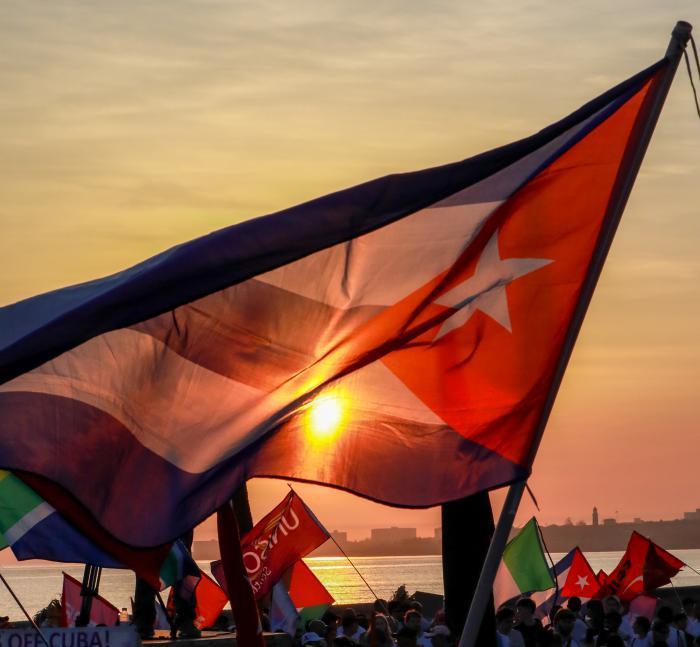
Sanctions and threats of war: The last stand
On May 1, 2026, hundreds of thousands of Cuban citizens gathered in massive, organized demonstrations across the island to voice their unified support for the country’s revolutionary government, a display of popular solidarity that directly pushes back against a years-long campaign of pressure from the United States government. According to analysis from Cuban outlet *Granma*, this open show of national unity poses a unprecedented challenge to a sitting U.S. administration that has long positioned itself as the unchallenged hegemonic power across the Western Hemisphere.
The reporting, published May 6, notes that the current U.S. policy toward Cuba is heavily shaped by hardline right-wing political interests based in Florida, with key influence exerted by high-profile figures including Senator Marco Rubio and former Inter-American Development Bank president Mauricio Claver-Carone. Cuba’s decision to openly celebrate Labor Day with a public display of grassroots backing for its sovereign system comes as Washington has spent years leveraging harsh economic sanctions to force Havana into political surrender and demobilization.
Framed by Cuban commentators as a modern David versus Goliath struggle, the Cuban people have refused to be silenced even as the U.S. has used economic pressure to create widespread hunger and hardship to force political change. In a pre-planned escalation following the demonstration, the U.S. president signed a new package of punitive sanctions designed to further subjugate Cuba, while once again openly hinting at potential military intervention to force the country into compliance.
The new U.S. policy framework relies heavily on falsehood and strategic misinformation to justify tightening the decades-long economic blockade on Cuba. The core goal of this escalating pressure, the report argues, is to force the Cuban people to abandon their hard-won independence and sovereignty, bending to the political demands of extreme opposition factions.
The entire U.S. approach to supposed talks with Cuba is described as a cynical exercise in coercion: dialogue masked as pressure, mixed with leaks, political blackmail, and non-negotiable ultimatums. What Washington frames as negotiation is in reality a trap, the analysis says: a carefully constructed plan crafted behind closed doors at the U.S. State Department by allies of anti-Castro factions based in Miami, acting on direct orders from top White House national security and diplomatic leaders. These officials take their direction from Florida’s vengeful far-right, which remains committed to restoring a corrupt, annexationist order in Havana.
The stark contrast between the two nations’ positioning on this year’s Labor Day could not be clearer: While Cuba used the occasion to reaffirm its call for peace and an end to the decades-long U.S. blockade, the U.S. responded with threats of military power and new punitive measures. The massive May 1 demonstration, which drew the equivalent of more than 6 million participants across the country, stands as a collective rebuke to what Cuba describes as a genocidal threat of foreign aggression.
-
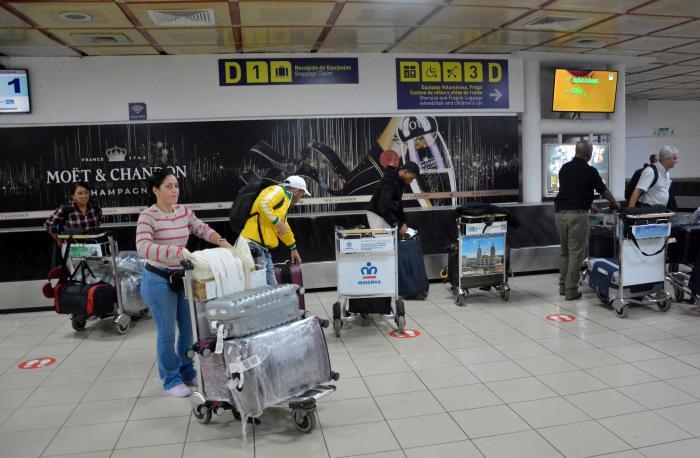
New immigration, foreigners, and citizenship laws transform Cuba’s migration system
On May 6, 2026, Cuban officials announced the publication and phased implementation of three landmark pieces of legislation that fundamentally reshape the country’s decades-old immigration framework. Laws 171, 172 and 173, which update rules governing immigration, foreign national residency and Cuban citizenship, introduce a series of user-centric changes designed to align the country’s migration policies with modern global trends and address longstanding concerns of Cubans both at home and abroad.
Colonel Mario Méndez Mayedo, head of the Ministry of the Interior’s Directorate of Identification, Immigration, and Foreigners Affairs, outlined the scope of the reform at an official press conference. The overhaul represents a massive expansion and update of outdated legal language: the core Immigration Act has grown from just 25 articles to 170, the Aliens Act from 25 articles to 91, and the new Citizenship Act marks the first time Cuba has codified citizenship rules into a standalone law. Supporting regulatory frameworks have also expanded dramatically, with the Immigration Regulations now containing 362 articles and Aliens Regulations 200 articles. This expansion reflects the complexity of modern migration issues and the broad inter-agency consensus built over years of drafting, which included input from 37 government bodies.
Méndez Mayedo noted that the legislative process was “lengthy and very complex,” with continuous consultation with the Ministry of Foreign Affairs and Cuban consulates worldwide to collect feedback and concerns from the country’s large diaspora community. After being approved by the Cuban National Assembly in July 2024, the laws are now set to enter into force after a 180-day transition period for most provisions. However, one high-priority section — the new immigration status for foreign investors and business actors — took effect immediately upon publication via a separate decree-law, tied to ongoing updates to Cuba’s economic model.
The most transformative change for Cuban citizens living overseas is the elimination of the controversial 24-month limit on continuous stays outside the country, replaced by a new legal concept of “effective migratory residence.” Under the new rules, Cubans may remain abroad for any length of time they choose, with no automatic loss of residency status. To retain effective migratory residence, individuals only need to have spent a cumulative 180 days in Cuba over the previous 12-month period. Those who do not meet this threshold can still retain their status by proving ongoing formal ties to the country, including immediate family relationships to Cuban residents, active paid employment, registered investments, property ownership, domestic bank accounts, compliance with tax obligations, or other holdings of movable or immovable assets in Cuba. Cubans residing in the country who must stay abroad for extended periods for work, medical treatment, study or other approved reasons also qualify to retain their effective residence status with proper documentation.
“There is no time limit for being outside Cuba. Cubans can remain abroad for as long as they need, as long as they require, as long as they want,” Méndez Mayedo emphasized. This change will phase out the existing category of “emigrant,” which will gradually shrink as most Cubans living overseas are reclassified to the more flexible and beneficial status of “resident abroad.” Beyond benefiting individuals, the new effective residency framework will also produce more accurate data on Cuba’s actual resident population, supporting more informed public policy and government decision-making.
Another major reform addresses widespread concerns over property rights for Cuban citizens living overseas, a top issue during preliminary public and parliamentary debates. Article 31 of the new Immigration Law explicitly enshrines that all Cuban citizens residing abroad hold the constitutional right to own, use, and freely dispose of property located in Cuba, in alignment with Article 58 of the Cuban constitution. Méndez Mayedo confirmed that this explicit protection was included to directly resolve longstanding anxieties among the diaspora over their domestic assets.
For foreign nationals seeking to live in Cuba, the new laws introduce far more flexible residency pathways and expand eligibility for both temporary and permanent status. Previously, permanent residency was largely limited to spouses of Cuban citizens; now, multiple additional categories qualify, including parents of Cuban-born citizens who reside in Cuba, foreign nationals who have lived in Cuba for more than five years with proven deep social and economic ties, skilled professionals with advanced degrees, international recognition or expertise in science, sports, culture or the arts endorsed by Cuban state agencies, foreign individuals holding significant assets or domestic bank accounts in Cuba, and foreign families with established employment, economic or long-term survival ties to the country. The laws also create a formal regulatory framework for humanitarian protection for vulnerable groups that previously lacked clear immigration status, including victims of armed conflicts, people in crisis situations, and insolvent tourists. “This has been happening, but without a regulatory framework; now we are including it in the Law,” Méndez Mayedo explained.
In closing, the senior official framed the reform as the culmination of extensive public and parliamentary debate, designed to balance the interests of all relevant stakeholders while prioritizing the most beneficial outcomes for Cuban citizens. “Today we are implementing a new immigration system in the Republic of Cuba. This is the greatest demonstration of the fulfillment of the political decision to keep immigration regulations up to date,” he said. The full text of the three laws, along with the immediate decree-law for investors and accompanying financial regulations, are published in Ordinary Official Gazette No. 39 and Extraordinary Official Gazette No. 60 respectively.