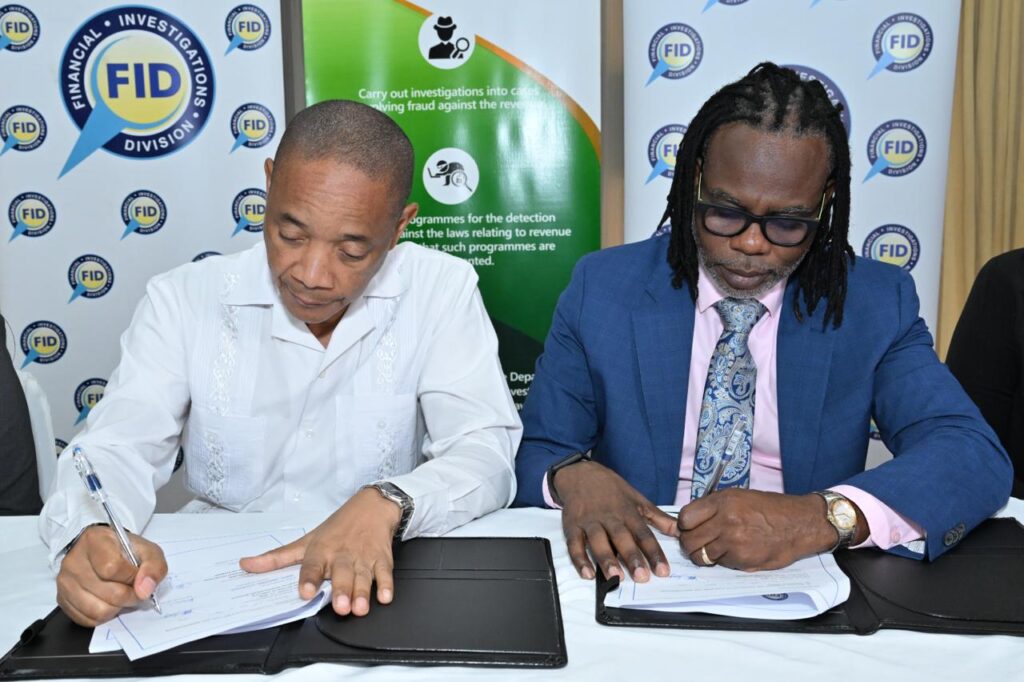
KINGSTON, Jamaica — Two of Jamaica’s leading financial regulatory and law enforcement agencies have cemented a new strategic alliance to tackle pervasive illicit financial activity across the island. The Financial Investigations Division (FID) and the Revenue Protection Department (RPD) have officially signed a Memorandum of Understanding (MoU) that establishes a formal structure for deepened collaboration against a range of threats, including money laundering, terrorist financing, revenue fraud, and other systemic financial crimes.
Dennis Chung, Chief Technical Director of the FID, emphasized that the agreement builds on a already productive working relationship between the two agencies, while formalizing critical processes that will amplify their collective impact. Under the new framework, clear protocols for cross-agency information sharing, case referrals, and coordinated enforcement actions are now in place. These structured arrangements, Chung explained, will drastically boost both bodies’ capacity to identify, probe, and disrupt illegal financial activities that erode government revenue and undermine the stability and integrity of Jamaica’s entire financial system. He noted that this kind of targeted strategic partnership is a foundational requirement for effective national regulatory enforcement and crime mitigation.
Cranston Morgan, who serves as both Chief Technical Director of the RPD and Commissioner of Revenue Protection, echoed Chung’s optimism, highlighting that the alliance will strengthen both agencies’ ability to rapidly respond to financial misconduct and guard the broader public interest.
Morgan framed the MoU as another measurable milestone in the ongoing effort to tighten inter-agency cooperation. It creates a reliable foundation for timely information exchanges, more cohesive operational coordination, and more strategic utilization of each agency’s unique institutional expertise when addressing revenue offenses and linked financial crimes. He emphasized that the partnership delivers mutual benefits for both bodies, while also advancing the Jamaican government’s wider national goals: protecting public funds and bolstering domestic and international confidence in Jamaica’s financial regulatory ecosystem.
At its core, the MoU outlines a formal legal framework for consultation, collaborative action, and lawful information sharing that aligns with both agencies’ statutory mandates. Beyond information sharing, the agreement is designed to strengthen intelligence gathering, streamline cross-agency coordination, and enable more effective criminal and civil investigations as well as enforcement outcomes.
The agreement details clear reciprocal obligations for both agencies. The FID will supply the RPD with raw data and supporting materials required for intelligence development and ongoing investigations, alongside advance notification of any upcoming criminal probes that involve individuals or entities of interest to the RPD. It will also share requested statistical data to support RPD work.
In exchange, the RPD will provide the FID with its own relevant data and materials to aid the FID’s intelligence and investigation activities. This includes alerts of suspected revenue crimes and other financial offenses involving parties the FID is tracking, plus relevant statistical data, specialized technical assistance, and compliance data that can support the FID’s investigation and prosecution of financial crimes.
Additional provisions of the MoU cover expanded collaborative activities: case referrals between agencies, joint enforcement operations, parallel criminal investigations, cross-training for personnel from both bodies, and coordinated public outreach initiatives. These outreach efforts are designed to educate key stakeholders on the full range of risks linked to corruption, violations of revenue law, money laundering, and terrorist financing. The agreement also formalizes governance protocols to ensure all shared information is handled securely, protected from unauthorized access, and used only for appropriate, legally permitted purposes.