分类: politics

  • Rafael Correa: Outrage against Venezuela seeks to save oil deals

    Rafael Correa: Outrage against Venezuela seeks to save oil deals

    In a comprehensive social media analysis, former Ecuadorian President Rafael Correa has delivered a scathing critique of United States foreign policy toward Venezuela, characterizing recent actions as both economically unsustainable and strategically flawed. The former head of state asserted that the Trump administration had reached a critical realization about the ineffectiveness of its Venezuelan blockade strategy, recognizing that the approach was proving prohibitively expensive while failing to achieve its intended objectives.

    Correa detailed the multifaceted costs burdening American interests, highlighting how maintaining naval assets along Venezuela’s coastline generated substantial operational expenditures. More significantly, he emphasized that major US petroleum corporations—key financial supporters of the administration—were simultaneously missing out on highly profitable business opportunities within the South American nation’s energy sector.

    The former Ecuadorian leader suggested that facing this strategic impasse, the White House required a face-saving measure and consequently resorted to what he termed the ‘kidnapping’ of Venezuelan President Nicolás Maduro as a supposed ‘final solution.’ Correa referenced the January 3rd military incursion into Venezuelan territory, noting that contrary to US expectations, this intervention produced neither regime change nor any substantial political transformation within the Bolivarian Republic.

    According to Correa’s analysis, Washington’s genuine objective revolves around securing favorable terms for American oil conglomerates, despite Venezuela’s historical openness to foreign investment. He contended that the very sanctions imposed by the United States have paradoxically prevented such economic engagement from occurring.

    The former president further speculated about additional motivations behind US actions, suggesting Washington aims to manipulate global oil prices ahead of critical midterm elections while simultaneously demonstrating unilateral power to the international community. This combination of economic and geopolitical objectives, Correa concluded, reflects an assertion that the United States can operate without meaningful constraints in pursuing its interests.

  • Cuba updates Government Program after public consultation

    Cuba updates Government Program after public consultation

    In a significant governmental session presided over by President Miguel Diaz-Canel, Cuban Prime Minister Manuel Marrero Cruz detailed substantial enhancements to the nation’s governance framework. The high-level meeting marked a pivotal development in Cuba’s ongoing administrative restructuring efforts, incorporating extensive feedback from multiple national institutions and public consultations.

    The revised Government Program represents a synthesis of diverse inputs, including outcomes from nationwide public consultations, resolutions from the 11th Plenum of the Central Committee of the Communist Party, and substantive conclusions derived from the sixth ordinary session of the National Assembly of People’s Power. Further contributions emerged from specialized deliberations within the Commission on Economic Affairs, creating a comprehensive policy roadmap.

    First-quarter implementation priorities include the formal publication of the updated program document, consolidation of previously approved measures, and systematic identification of territorial potential to reinforce the national Economic Plan. A key focus remains on enhancing budget revenues through optimized regional resource allocation.

    Prime Minister Marrero emphasized the critical role of extraordinary sessions of Provincial Councils of People’s Power, describing them as mechanisms for evaluating implementation efficiency at local levels. These sessions enable assessment of additional capacity for achieving program objectives through decentralized governance structures.

    Concurrently, the Council of State conducted rigorous evaluation of compliance with Law No. 158 concerning the Comptroller General of the Republic. This audit incorporated recommendations from the accountability report presented to the National Assembly in December 2022, reflecting ongoing efforts to strengthen institutional transparency.

    The Council recommended intensified oversight in several strategic sectors including deficit reduction, external revenue generation, agricultural production enhancement, and reinforcement of state-owned socialist enterprises. These measures aim to address economic challenges while maintaining Cuba’s socialist development model.

  • Venezuelan teachers demand freedom for Maduro and Cilia in the street

    Venezuelan teachers demand freedom for Maduro and Cilia in the street

    In a powerful display of political solidarity, educators from across Venezuela converged for a militant Teachers’ Day march, demonstrating unwavering support for interim President Delcy Rodríguez and the current administration. The gathering transformed from a traditional celebration into a robust political rally, with participants voicing their absolute commitment to the ruling government.

    From the main platform, one teacher delivered a passionate declaration: ‘We stand resolute in our defense of the Constitution, our homeland, President Nicolás Maduro, and First Lady Cilia Flores.’ The educator further emphasized their dedication to ‘protecting free, quality education for all Venezuelans.’

    Another representative issued a call for unity among Bolivarian teachers, urging collective efforts to strengthen the nation’s educational system. ‘We will raise the banner of peace and political determination,’ the spokesperson stated, adding that they were prepared to ‘defend the Revolution with our lives if necessary.’

    A teacher from Aragua state made an emotional appeal: ‘We educators demand the release of Maduro and Cilia; we want them back with us,’ though the exact nature of their absence remained unspecified in the proceedings.

    Education Minister Héctor Rodríguez provided grave context, revealing that on January 3rd, educational and scientific institutions including the National Experimental Polytechnic University of the Bolivarian Armed Forces had suffered bombings, resulting in more than 108 fatalities to date.

    Despite Venezuela’s ongoing challenges, Minister Rodriguez emphasized that millions of children and youth maintain fully guaranteed access to education at all academic levels, completely free of charge, demonstrating the government’s commitment to educational accessibility during turbulent times.

  • Peruvian Party condemns US threats against Cuba

    Peruvian Party condemns US threats against Cuba

    A prominent political faction in Peru, led by former Supreme Court President Duberli Rodríguez, has issued a formal declaration vehemently condemning recent statements from the United States administration targeting Cuba. The document characterizes the U.S. President’s approach as a form of ‘hegemonic tyranny’ that has unjustly placed Cuba in its crosshairs.

    The statement further accuses the U.S. of perpetrating an ‘assault and kidnapping in Venezuela,’ actions it deems to be in direct violation of established international norms. It posits that the current U.S. strategy, marked by what it calls ‘extortionate threats,’ is a deliberate attempt to subdue the Cuban Revolution by force—a revolution the document celebrates as heroic for its resilience over more than six decades against numerous attempts to destabilize it.

    Crucially, the Peruvian party’s communique serves as a stark warning, asserting that threats directed at Cuba resonate profoundly across Latin America. This identification, it notes, transcends mere solidarity and represents a deep-seated connection felt by the people of the region. The statement concludes with an urgent appeal for the restoration of reason and peaceful dialogue, while staunchly advocating for the fundamental principles of national sovereignty and the unequivocal right to self-determination for all nations.

  • Here’s What PM Briceño Thinks of Panton’s Meeting with Ashcroft

    Here’s What PM Briceño Thinks of Panton’s Meeting with Ashcroft

    BELIZE CITY – Prime Minister John Briceño has offered measured commentary regarding Opposition Leader Tracy Panton’s controversial meeting with British billionaire Lord Michael Ashcroft, majority owner of telecommunications provider SpeedNet. While acknowledging the legitimate need for political leaders to engage with investors, Briceño specifically questioned the judgment behind selecting a yacht as the venue for such discussions.

    In statements to the press, the Prime Minister articulated that while dialogue with business leaders remains an essential component of political leadership, the optics of such engagements carry significant weight. “Every leader has a responsibility to meet with anybody, especially within the business community,” Briceño stated. “However, convening on a yacht inevitably raises questions about judgment. Alternative venues would have been more appropriate.”

    Despite his reservations about the setting, Briceño clarified that the substance of the meeting itself did not constitute improper conduct. He explicitly noted that opposition figures engaging with major investors like Ashcroft—whose Waterloo Group Charitable Trust controls 77% of SpeedNet—falls within正常的 political parameters.

    In response to growing criticism, Panton issued a comprehensive defense through social media channels, characterizing the scrutiny as “selective and absurd.” She emphasized that historical engagement with Ashcroft has been standard practice across both major political parties for decades. “Dialogue does not equate to endorsement,” Panton asserted. “A meeting should not be misconstrued as surrender, and conversation certainly does not imply compliance.” The opposition leader maintained that fostering relationships with key economic stakeholders remains crucial for national development.

  • Cuban institutions honor fallen combatants in Venezuela

    Cuban institutions honor fallen combatants in Venezuela

    Cuba has united in a profound display of national mourning and digital solidarity for 32 combatants who lost their lives during recent hostilities involving Venezuela. The solemn funeral proceedings, broadcast live across national television, were amplified through coordinated digital tributes from the nation’s leading cultural and academic institutions.

    At the core of the national response was a deeply symbolic ceremony where Cuban citizens and government officials gathered since dawn at the Ministry of the Revolutionary Armed Forces headquarters to honor the remains of the deceased. The Cuban Fund for Cultural Assets captured the national sentiment through social media, stating: ‘The images of our leaders at the airport, paying this well-deserved tribute, reflect the pain of an entire nation and the firm resolve that their sacrifice will not be in vain.’

    The digital commemorations extended across Cuba’s cultural landscape with organizations including the Cuban Book Institute, National Council of Performing Arts, and Cuban Institute of Cinematographic Art and Industry sharing excerpts and imagery from the national broadcast. Prominent cultural figures like Abel Prieto, president of Havana’s Casa de las Américas, and Yasel Toledo, head of the Hermanos Saíz Association, reinforced this collective support through virtual platforms.

    The fallen were celebrated for their internationalist values and courage, with memorial messages emphasizing that ‘their example lives forever in our memory and in our struggle.’ This coordinated response across governmental, cultural, and digital spheres demonstrates how Cuba is blending traditional mourning practices with modern digital dissemination to reinforce national unity and political resolve in the face of external pressures.

  • Immigrant visa appointments will continue despite visa pause

    Immigrant visa appointments will continue despite visa pause

    In a significant shift in immigration policy, the United States Department of State will suspend the issuance of all immigrant visas to applicants from 75 designated countries, effective January 21, 2026. The policy, which targets nations classified by the World Bank as low-income, middle-income, or upper-middle-income, encompasses several Caribbean nations, with Grenada notably among those affected.

    The suspension applies exclusively to immigrant visas, which are intended for those seeking permanent residency. The State Department has explicitly clarified that non-immigrant visas, including those for tourism, business, or temporary work, remain entirely unaffected by this mandate. Applicants from the listed countries may continue to submit documentation and attend scheduled interviews at U.S. embassies; however, final visa issuance will be halted for the duration of the pause. The department’s official communication emphasized that no previously issued immigrant visas have been revoked.

    A key stipulation provides an exemption for dual nationals who choose to apply using a valid passport from a country not included on the list. The policy rationale, as stated on the State Department’s website, aligns with the Trump administration’s doctrine that immigrants must achieve financial self-sufficiency and avoid becoming a public burden. This directive has prompted a comprehensive internal review of all relevant policies and regulations to prevent the utilization of U.S. welfare systems by immigrants from these ‘high-risk’ countries.

    For Grenada, this development marks the third consequential U.S. policy action within the first two weeks of 2026, following a ban on fish product imports effective January 1 and the issuance of a Level 2 travel advisory on January 5. The government of Grenada has not yet released an official public statement regarding the visa suspension. The extensive list of impacted nations spans multiple continents, including countries such as Brazil, Nigeria, Pakistan, Russia, and Jamaica.

  • Caribbean Court of Justice president visits Barbados to strengthen regional ties

    Caribbean Court of Justice president visits Barbados to strengthen regional ties

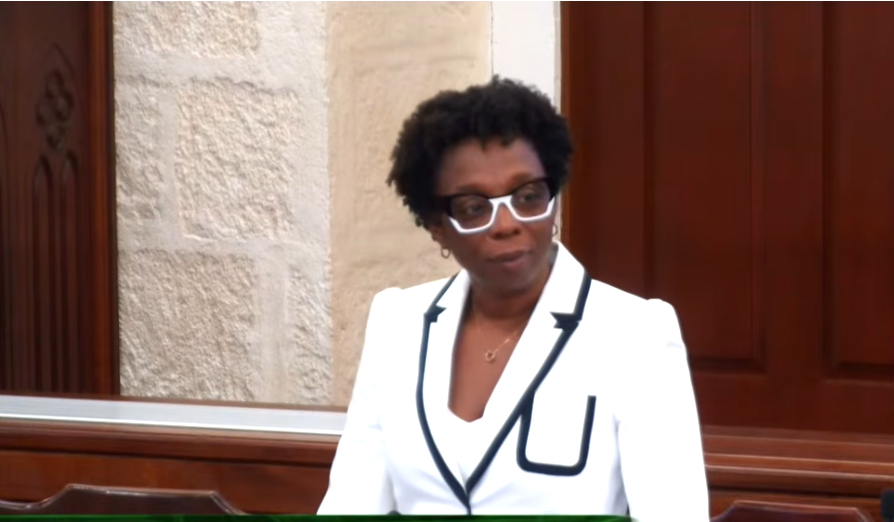
    Barbados is preparing to host a significant judicial delegation from the Caribbean Court of Justice (CCJ) from January 15-20, 2026. The high-level visit will be led by CCJ President Honourable Mr. Justice Winston Anderson and includes Mrs. Gabrielle Figaro-Jones, the Court’s Registrar and Chief Marshal.

    The centerpiece of the diplomatic mission will be President Anderson’s keynote address at the Caribbean Natural Resources Institute’s (CANARI) Partners Forum, where he will address critical climate justice concerns impacting Caribbean nations. This emphasis on environmental jurisprudence comes at a crucial time for the region facing increasing climate-related challenges.

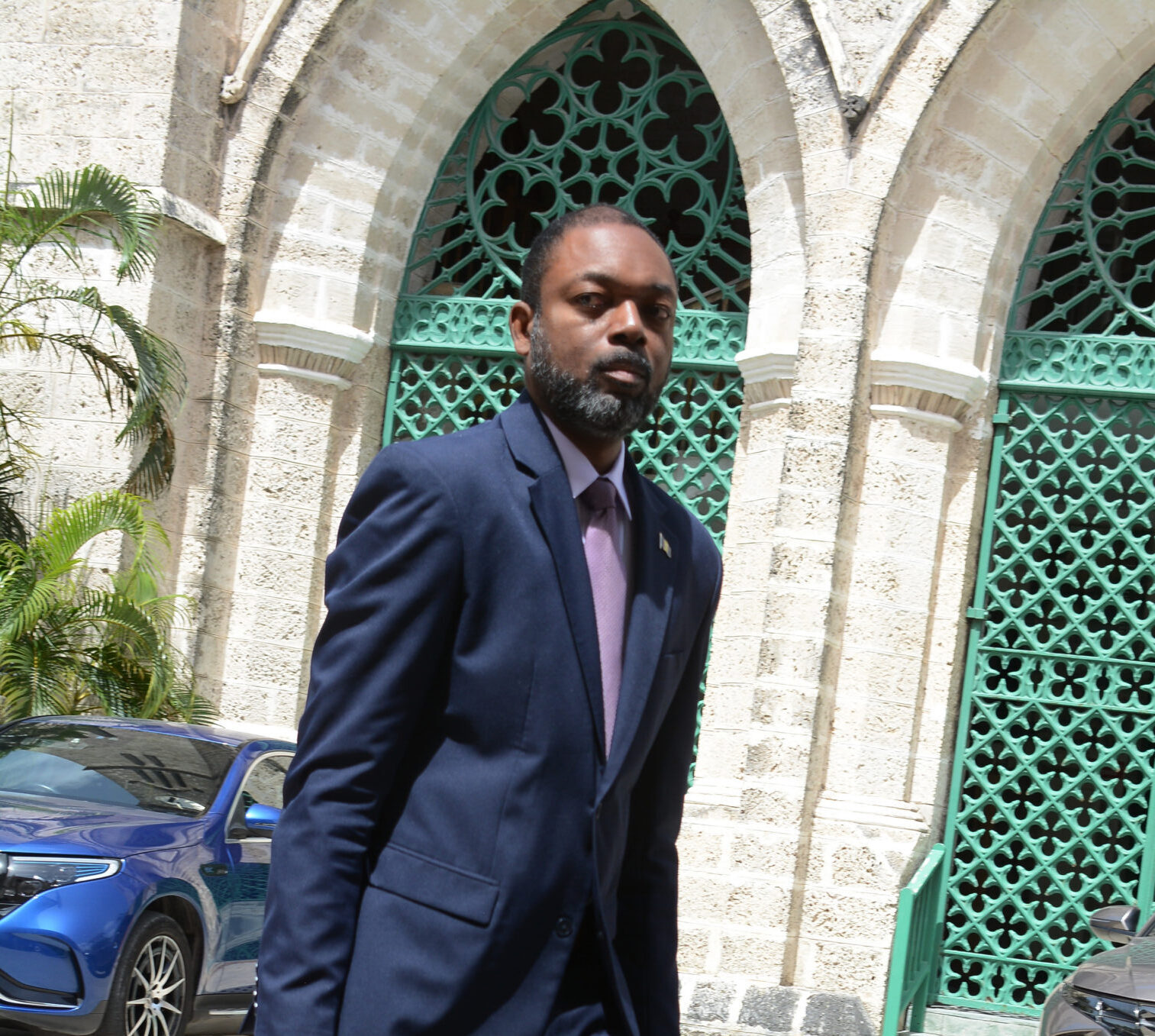
    Beyond the environmental focus, the delegation has arranged courtesy meetings with Barbados’s highest government officials, including Prime Minister Mia Mottley, SC, MP; Chief Justice Leslie Haynes; and Opposition Leader Ralph Thornes, KC, MO. These strategic engagements form part of the CCJ’s institutional outreach initiative to strengthen relationships with national authorities across member states.

    This Barbados visit represents a continuation of President Anderson’s regional diplomatic efforts since assuming leadership in July 2025. His previous official travels included October 2025 courtesy calls in Guyana, where he met with President Irfaan Ali, acting Chancellor of the Judiciary Yonette Cummings-Edwards, Attorney General Anil Nandlall, and CARICOM Secretary-General Dr. Carla Barnett.

    The current mission operationalizes objectives outlined in the CCJ’s Strategic Plan 2025-2032, specifically focusing on enhancing judicial accessibility, developing regional legal partnerships, and promoting institutional transparency. Through these high-level exchanges, the CCJ aims to reinforce its role as a pivotal institution in Caribbean governance and legal integration.

  • Turkiye urge for diplomatic solution to Iran crisis

    Turkiye urge for diplomatic solution to Iran crisis

    Turkish Foreign Minister Hakan Fidan has articulated a nuanced perspective on Iran’s internal challenges, emphasizing their significant international ramifications. Speaking on the interconnected nature of domestic and foreign policy, Fidan highlighted how economic sanctions tied to Iran’s specific policies have created a ripple effect beyond its borders.

    In a detailed assessment, Fidan revealed that Ankara has formally counseled Iranian officials to pursue diplomatic resolutions to their regional disagreements. He specifically urged Tehran to engage without delay in constructive dialogue concerning its nuclear program through established diplomatic channels. The Minister asserted that such diplomatic engagement could potentially dismantle structural problems that have precipitated severe economic hardships for the Iranian population.

    Fidan issued a crucial warning about the social consequences of economic decline, noting that mounting frustrations stemming from diminished opportunities and financial instability are frequently mischaracterized as ideological opposition to the political establishment. He provided a more granular analysis, suggesting that these tensions originate not from political dissent but from complex socioeconomic conditions shaped by current economic policies and the practical challenges in reforming them.

    Emphatically rejecting any form of external interference in Iranian affairs, Fidan simultaneously addressed U.S. military posturing. While referencing policies during Donald Trump’s presidency, he observed no substantive indications suggesting Washington’s readiness to deploy ground forces in the region, presenting this assessment as part of Turkey’s broader strategic evaluation.

  • Cuba recieves the remains of 32 combatants killed in Venezuela

    Cuba recieves the remains of 32 combatants killed in Venezuela

    Cuba has commenced solemn nationwide ceremonies to honor combatants who perished in what authorities describe as an act of aggression and state terrorism. The commemorations began in Havana with a funeral procession from José Martí International Airport, where family members, government officials, and citizens accompanied the remains along Rancho Boyeros Avenue to the Ministry of the Revolutionary Armed Forces (MINFAR) headquarters.

    The Caribbean nation announced posthumous military promotions for the fallen combatants, recognizing their exceptional heroism and service. Additional tributes are scheduled nationwide on Friday, with Havana residents gathering at the Anti-Imperialist Tribune for a March of the Combatant People.

    Simultaneous ceremonies will occur across all provincial capitals, where the honored combatants will be laid to rest in local Pantheons of the Fallen in Defense. Every municipality throughout Cuba will conduct posthumous tributes, underscoring the national significance of these commemorations and the government’s characterization of the deaths as resulting from criminal aggression against the nation.