分类: politics

  • They died as they lived, with their heads held high

    They died as they lived, with their heads held high

    In a solemn ceremony marked by revolutionary fervor, Cuba welcomed home the remains of 32 military personnel who perished during duty in Venezuela. Army Corps General Lázaro Alberto Álvarez Casas, Political Bureau member and Minister of the Interior, delivered an emotionally charged address honoring the fallen combatants while delivering a stark message against imperialism.

    The ceremony, attended by grieving family members and government officials, transformed mourning into a powerful display of nationalist pride. General Álvarez Casas framed the soldiers’ deaths not as tragedy but as heroic sacrifice, emphasizing that they “fell fighting and ascended forever into history” while defending Cuba’s internationalist principles.

    Drawing direct parallels to historical struggles, the Minister connected the fallen soldiers to Cuba’s revolutionary legacy—from the mambises independence fighters to the barbudos of the Sierra Maestra and internationalist combatants across Latin America. He explicitly characterized the January 3 incident in Venezuela as “aggression and treacherous attacks,” though specific operational details remained undisclosed.

    The address contained significant political messaging, asserting that Venezuela represents “a natural extension of the homeland” and invoking the symbolic unity of revolutionary figures Simón Bolívar, José Martí, Hugo Chávez, and Fidel Castro. General Álvarez Casas made clear that Cuba maintains unwavering commitment to its overseas missions despite losses, stating emphatically: “Cuba does not abandon its children. Cuba does not renounce its principles.

    In direct confrontation with geopolitical adversaries, the Minister contrasted enemy claims of “high-precision operations and elite troops” with Cuba’s narrative of human sacrifice and familial loss. The speech culminated with a reaffirmation of revolutionary values over material wealth, declaring that imperialism “will never be able to buy the dignity of the Cuban people.”

    The ceremony established the fallen soldiers as permanent national symbols, with General Álvarez Casas promising they would “continue to march at the forefront of every battle” and inspire future generations of revolutionaries.

  • March of the Fighting People

    March of the Fighting People

    Cuban President Miguel Díaz-Canel Bermúdez has declared a nationwide day of remembrance and patriotic demonstration through his official social media account. The First Secretary of the Central Committee of the Communist Party articulated a threefold commitment: “We are going to sing our anthem to the heroes. We are going to thank them for their courage. We are going to march so that those who do not yet understand us can get to know us better.”

    The commemorative activities include a formal ceremony at Havana’s Anti-Imperialist Tribune, followed by a March of the Fighting People designed to demonstrate national unity and reaffirm commitment to the Cuban homeland. Simultaneously, across all municipalities nationwide, ceremonies will be conducted to pay posthumous tribute to martyrs whose remains will be interred in local pantheons dedicated to those who fell in defense of their communities.

    This coordinated national event represents both a memorialization of historical sacrifices and a contemporary political demonstration aimed at reinforcing national identity and revolutionary values. The activities appear designed to strengthen domestic solidarity while communicating Cuba’s perspective to international observers.

  • Politic : The decree on freedom of expression is «a tool of political repression» says FJKL

    Politic : The decree on freedom of expression is «a tool of political repression» says FJKL

    In a striking development for civil liberties in the Caribbean nation, the Haitian human rights organization Fondation Je Klere (FJKL) has issued a forceful condemnation of newly enacted legislation governing freedom of expression. The presidential decree, formally adopted by Haiti’s Transitional Presidential Council (CPT) on December 18, 2025, and officially gazetted on December 31, has sparked immediate concerns about democratic backsliding.

    The FJKL’s comprehensive analysis, published January 15, 2026, characterizes the measure as fundamentally repressive and incompatible with constitutional governance. The organization asserts that the CPT has overstepped its authority by legislating in domains constitutionally reserved for Parliament, thereby violating both domestic law and international human rights commitments.

    Legal experts examining the decree identify particularly problematic provisions in Articles 4 and 5, where nebulous terminology regarding ‘public order’ and ‘national security’ creates significant potential for arbitrary enforcement. These vaguely defined concepts could enable authorities to suppress legitimate political opposition under the guise of maintaining stability.

    While ostensibly designed to protect journalists, the legislation instead establishes mechanisms that facilitate their detention based on either flagrancy allegations or simple complaints, with inadequate procedural safeguards. The definition of defamation has been expanded to such an extent that it effectively criminalizes standard journalistic criticism, while simultaneously removing truth as a valid defense against charges.

    The penal provisions introduce severe sentencing guidelines, including prison terms of up to three years for defamation and forced labor sentences extending to two decades for insulting national symbols. Additionally, the statute of limitations for these offenses has been extended to five years.

    Perhaps most alarmingly, Article 18 mandates that digital platforms retain and surrender identifying information of users accused of publishing ‘illegal content,’ directly contravening constitutional protections for source confidentiality. The FJKL concludes that these measures collectively represent a return to the most oppressive periods in Haiti’s political history, constituting a deliberate instrument of political repression rather than good-faith regulation.

  • Cuba embraces its heroes

    Cuba embraces its heroes

    HAVANA, January 15, 2026 – Cuba conducted a solemn state ceremony at José Martí International Airport to honor 32 combatants who perished during recent military engagements in Venezuela. The ceremony marked the repatriation of remains and was attended by the nation’s highest leadership, including Army General Raúl Castro Ruz and President Miguel Díaz-Canel Bermúdez.

    The emotional ceremony witnessed the arrival of flag-draped coffins containing the remains of the fallen soldiers, each covered with Cuba’s single-star flag. Military honors included a three-volley rifle salute and the performance of the national anthem as the nation mourned its lost defenders.

    In his address, Minister of the Interior Lázaro Alberto Álvarez Casas emphasized the symbolic significance of the soldiers’ sacrifice, stating, ‘We do not welcome them with resignation, but with deep pride and eternal commitment. Death does not defeat those who fall defending a just cause.’ The minister explicitly connected the casualties to what Cuban authorities characterized as ‘US aggression against Venezuela,’ framing the combatants’ deaths as both a defense of Venezuela and Cuba’s national sovereignty.

    The ceremony highlighted the strong bilateral relations between Cuba and Venezuela, with Venezuelan Ambassador Orlando Maneiro Gaspar in attendance. Minister Álvarez Casas invoked the historical legacy of Simón Bolívar, José Martí, Hugo Chávez, and Fidel Castro, portraying the current conflict as part of a broader anti-imperialist struggle.

    Throughout the day, thousands of Cuban citizens gathered despite inclement weather to pay respects to the fallen soldiers. The ceremony concluded with Raúl Castro and President Díaz-Canel leading an honor guard at the Ministry of the Revolutionary Armed Forces headquarters, where they paid individual tribute to each of the 32 coffins.

    The government’s characterization of events emphasized national unity and resilience in the face of external threats, with official statements repeatedly condemning US foreign policy while celebrating the soldiers’ sacrifice as heroic and ideologically consistent with Cuba’s revolutionary principles.

  • BLP names Tyra Trotman as St Michael Central candidate

    BLP names Tyra Trotman as St Michael Central candidate

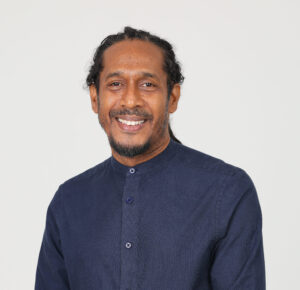
    In a significant political development, attorney Tyra Trotman has been officially confirmed as the Barbados Labour Party’s parliamentary candidate for the St Michael Central constituency. The nomination proceedings, conducted at Combermere School, mark a strategic transition for the party as it prepares for upcoming electoral contests.

    Trotman’s candidacy follows the announced departure of current House Speaker Arthur Holder, who has declared he will not seek reelection in the next general election. Holder, who has represented the constituency, publicly endorsed Trotman prior to the formal nomination process, signaling party unity and continuity.

    The selection establishes the foundation for the BLPs campaign strategy in this key constituency. Trotman’s legal background and professional expertise are expected to feature prominently in her campaign platform. Political analysts anticipate her nomination will bring fresh perspective to the constituency while maintaining the party’s established presence.

    This transition occurs amid broader political preparations across Barbados, with parties finalizing their slates of candidates ahead of the next national election. The St Michael Central constituency has historically been a competitive electoral district, making this nomination particularly significant for the ruling party’s electoral strategy.

  • Politic : Inauguration of the new premises of the Chancellery

    Politic : Inauguration of the new premises of the Chancellery

    Haiti’s Ministry of Foreign Affairs has officially relocated to a modern 12-story facility in Pétion-Ville, marking a significant upgrade in the nation’s diplomatic infrastructure. The newly acquired Gala Tower at 15 Rue Mangonès, previously owned by a senior ministry official, now serves as the central hub for Haiti’s international relations operations.

    The inauguration ceremony on January 15, 2026, gathered Haiti’s highest-ranking officials including Prime Minister Alix Didier Fils-Aimé, Chancellor Jean-Victor Harvel Jean-Baptiste, and members of the Presidential Transitional Council. The event also drew former ministers, senior civil servants, and representatives from the diplomatic corps, creating a solemn atmosphere befitting the occasion.

    Laurent Saint-Cyr, President pro tempore and Coordinator of the Transitional Council, delivered a keynote address emphasizing the institutional significance of the new chancellery. He articulated a vision for transforming the space into a strategic decision-making center operating on principles of ethics, performance, and national interest. Saint-Cyr called for a revitalized Haitian diplomacy characterized by proactive engagement, inclusivity, and sharper focus on national priorities. He further advocated for strengthened international partnerships and greater inclusion of women and young professionals in diplomatic service.

    The property acquisition, whose financial details remain undisclosed, provides the ministry with facilities that meet international embassy standards. This upgrade enables Haiti to host foreign dignitaries and government officials in appropriate settings while offering improved service delivery to citizens requiring consular assistance.

  • Vicepresident naar Zwitserland voor World Tourism Forum

    Vicepresident naar Zwitserland voor World Tourism Forum

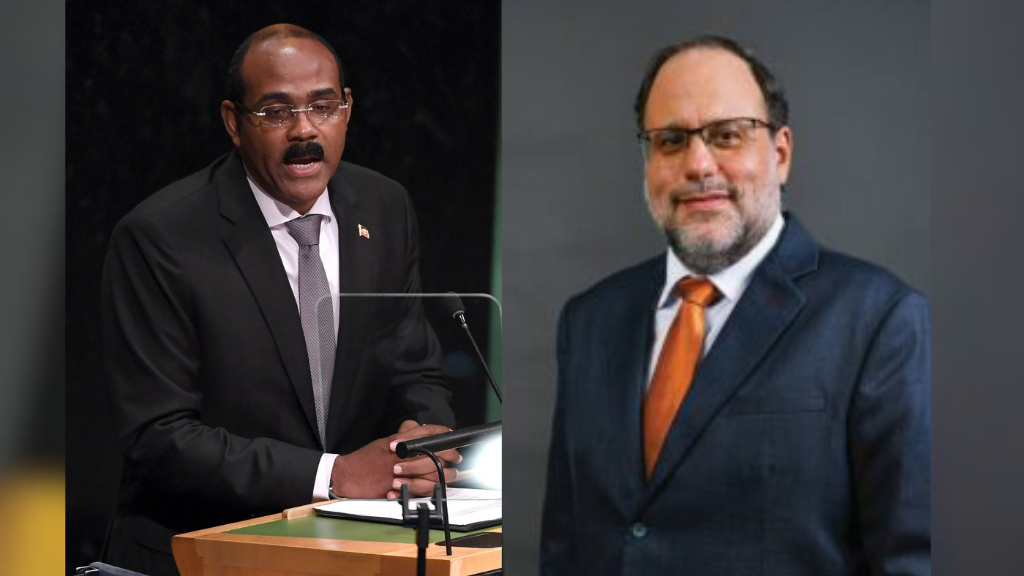
    Surinamese Vice President Gregory Rusland is set to embark on an official visit to Switzerland this Saturday to participate in the prestigious World Tourism Forum, convened during the influential World Economic Forum week. Accompanied by a delegation of three senior officials, the Vice President will engage in high-level discussions before returning the following week.

    Mr. Rusland received a specific invitation to join an exclusive assembly of forty international decision-makers, comprising heads of state, chief executive officers, and government ministers. This selective gathering represents some of the most influential figures in global governance and business leadership.

    The central theme of his participation will focus on translating commitments into actionable strategies under the forum’s agenda: “From Pledges to Implementation: Scaling Sustainable Tourism and Hospitality.” This dialogue aims to bridge the gap between theoretical frameworks and practical execution in sustainable tourism development.

    Unlike conventional tourism conferences, the World Tourism Forum operates as a high-level decision-making platform that reconceptualizes tourism not as an isolated industry but as a strategic pillar for global economic resilience. The forum emphasizes peer-to-peer interaction and strategic alignment among participants, moving beyond traditional presentation formats to foster genuine collaboration and policy development.

    The participation of Suriname’s Vice President signals the growing recognition of small nations in shaping global tourism policies and highlights the increasing importance of sustainable tourism in national economic strategies.

  • George Price Day 2026: “Que viva George Price”

    George Price Day 2026: “Que viva George Price”

    Belize City witnessed a profound gathering of national reverence on January 15, 2026, as citizens across the spectrum united to commemorate George Price Day. The ceremony honored George Cadle Price, the architect of Belizean independence, with this year’s observance carrying dual significance: marking six years since the holiday’s establishment and coinciding with the 75th anniversary of the People’s United Party (PUP) which Price founded.

    Belize City Mayor Bernard Wagner inaugurated the proceedings by emphasizing the enduring nature of Price’s legacy. He reminded attendees that the nation inherited not just the freedoms Price secured but also the ongoing responsibility to ensure independence remains meaningful for successive generations.

    Prime Minister John Briceño delivered a heartfelt tribute, characterizing Price as a leader profoundly guided by faith and service. He recounted Price’s pivotal role in steering the peaceful Belizean revolution that ultimately achieved sovereignty in 1981. Briceño concluded his address with both a national blessing and the celebratory cry that echoed throughout the event: “Que viva George Price!”

    The program featured recitations from Price’s seminal 1950 Battlefield Park address, where he first challenged colonial authority and economic disparities, declaring that Belizeans had “awakened from the sleep of false hopes and empty promises.”

    Parallel celebrations included the traveling PUP at 75 exhibition, which chronicles the party’s central role in Belize’s political evolution. Culture Minister Francis Fonseca reported thousands have visited the exhibition nationwide, describing it as crucial for preserving political history. The exhibition, launched in Orange Walk in September 2025, will conclude in San Pedro next month.

    In personal reflections shared with media, Briceño revealed how Price’s guidance shaped his own path, recalling the founding leader’s belief that “public service is the highest call for any Belizean.”

    The commemorations extended beyond formal ceremonies with nationwide social media tributes and physical installations, including a commemorative billboard unveiled by Immigration Minister Kareem Musa at a major intersection. The day’s events culminated with a student assembly at Nazarene High School and a spectacular fireworks display, symbolizing the nation’s enduring gratitude.

  • Opposition senator renews criticism of govt housing programme amid audit concerns

    Opposition senator renews criticism of govt housing programme amid audit concerns

    A scathing audit of Barbados’ HOPE Inc. housing initiative has sparked intense political debate, with Opposition Senator Ryan Walters accusing the government of systemic mismanagement of public funds. The controversy emerged during Wednesday’s Senate session addressing legislative corrections needed for 20 low-income homes in Christ Church, delayed due to a 2022 resolution error that omitted the National Housing Corporation as vesting authority.

    Senator Walters seized on the Auditor General’s April 2025 special audit to highlight broader failures in the flagship housing program. The report revealed that HOPE Inc. operated without clear objectives, milestones, or performance indicators despite $64.5 million in committed public funding. According to Walters, this lack of framework created legal vulnerabilities, with the state potentially facing compensation claims due to transactions undertaken without proper authority and unclear property titles.

    The audit identified significant financial mismanagement, including a $37.8 million cost overrun attributed to the decision to use precast construction instead of traditional methods. Walters further criticized the program’s renewable energy component, noting that only two of the promised solar-equipped homes actually received such installations.

    Most alarming was the revelation regarding an international housing arrangement with Guyana, where $3.5 million was transferred for approximately 60 hardwood homes without performance bonds or proper vendor vetting. When the homes arrived in Barbados, missing components rendered them uninhabitable, requiring an estimated additional $125,000 per unit to complete—potentially totaling $43.7 million if the project continues.

    Walters concluded that these findings have ‘cast a grey cloud’ over the government’s housing credibility, asserting that taxpayers deserve answers for what he characterized as a record ‘nothing to be proud of.’

  • OP-ED: Beyond passports & visa pauses – Why the Caribbean must reclaim the narrative power in Washington

    OP-ED: Beyond passports & visa pauses – Why the Caribbean must reclaim the narrative power in Washington

    The Caribbean’s ongoing Citizenship by Investment (CBI) program crisis reveals a fundamental power imbalance in international relations that extends far beyond superficial discussions about due diligence and security compliance. At its core, this confrontation represents the region’s systemic loss of narrative control within Washington’s policy ecosystem, where Caribbean nations are being defined through standards they didn’t create and judged in forums where they lack representation.

    This pattern of economic reclassification—where once-viable activities are progressively recast as risky or non-compliant—has historical precedents from banana exports to banking services. The outcome consistently demonstrates economic disqualification through regulatory means rather than market failure, with CBI representing merely the latest manifestation.

    The traditional diplomatic approach—relying on ambassadors, foreign ministries, and multilateral appeals—has become inadequate in today’s policy landscape. Contemporary legitimacy frameworks are increasingly shaped outside formal diplomatic channels within Congressional offices, regulatory agencies, think tanks, and policy advocacy networks where narratives are established long before Caribbean representatives are consulted.

    The region’s critical deficit lies in its absence from Washington’s idea economy. While the United States benefits from established idea engines like the Heritage Foundation, Brookings Institution, and CSIS that systematically cultivate and normalize policy concepts, the Caribbean lacks equivalent institutional presence. This idea infrastructure gap leaves the region perpetually defensive, explaining itself against narratives it didn’t author.

    The convergence of heightened U.S. and EU CBI scrutiny, visa bond regimes, immigrant visa pauses, and disproportionately applied public-charge doctrines signals how Caribbean economies are being systematically ranked within the global system. Simultaneously, CARICOM faces internal strains as geopolitical pressures test regional unity.

    A strategic pivot requires expanding engagement beyond traditional diplomacy into narrative formation—engaging Congressional committees alongside executive desks, addressing regulatory agencies that shape outcomes, investing in idea production rather than mere negotiation, and repositioning the Caribbean as a strategic region rather than a compliance problem.

    The fundamental question isn’t whether CBI survives in its current form, but whether the Caribbean will continue allowing external actors to define legitimacy parameters for small states’ economic survival. Without claiming space in Washington’s idea economy, every sector—from finance and mobility to education and digital services—remains vulnerable to similar reclassification and exclusion cycles.

    The Caribbean possesses its most valuable export not in passports or commodities but in intellectual talent—thinkers, diplomats, technocrats, and policy professionals who understand global systems and Caribbean realities. The existing diaspora represents an untapped resource that requires institutional harnessing through establishments like the Institute for Caribbean Studies in Washington, D.C.

    This transformation demands a fundamental shift in how CARICOM, OECS, and individual governments engage with diaspora expertise—moving beyond transactional relationships toward trust-based, sustained collaborations. Modern sovereignty defense requires not just borders and diplomacy but ideas and the capability to shape them, presenting the region with an opportunity to build idea infrastructure worthy of its talent and adequate to contemporary challenges.