分类: politics

  • PMs Skerrit and Browne not to be blamed for CBI and U.S. restrictions, says Astaphan

    PMs Skerrit and Browne not to be blamed for CBI and U.S. restrictions, says Astaphan

    Senior Counsel Anthony Astaphan has vigorously defended the governments of Dominica and Antigua & Barbuda against criticism regarding recent U.S. visa restrictions, asserting both nations implemented comprehensive reforms to their Citizenship by Investment (CBI) programs well before the American policy announcement.

    In an exclusive interview with Antigua.News, Astaphan dismissed opposition claims blaming Prime Ministers Gaston Browne and Roosevelt Skerrit as “ill-informed and misleading.” He revealed that since 2023, the five Eastern Caribbean CBI nations have maintained sustained collaboration with international partners including the United States and European Union.

    A pivotal development occurred in October when U.S. officials specializing in anti-money laundering and counter-narcotics met with regional representatives, culminating in an 81-page agreement establishing a regional CBI Regulatory Authority. This comprehensive framework introduced far-reaching reforms covering enhanced due diligence, residency requirements, and prohibitions on name changes—all subsequently enacted into law.

    “Antigua and Barbuda was the first country to pass and implement the required legislative changes,” Astaphan emphasized, highlighting the government’s proactive stance in addressing international concerns. He noted that despite the U.S. proclamation referencing residency issues, Antigua and Barbuda had already made necessary legal adjustments before the announcement.

    The attorney expressed frustration with critics, stating: “Anyone who continues to criticise the CIP is either completely ignorant of the history of collaboration with the United States, or simply missed the parliamentary sittings and was unaware that the legislation had already been passed.”

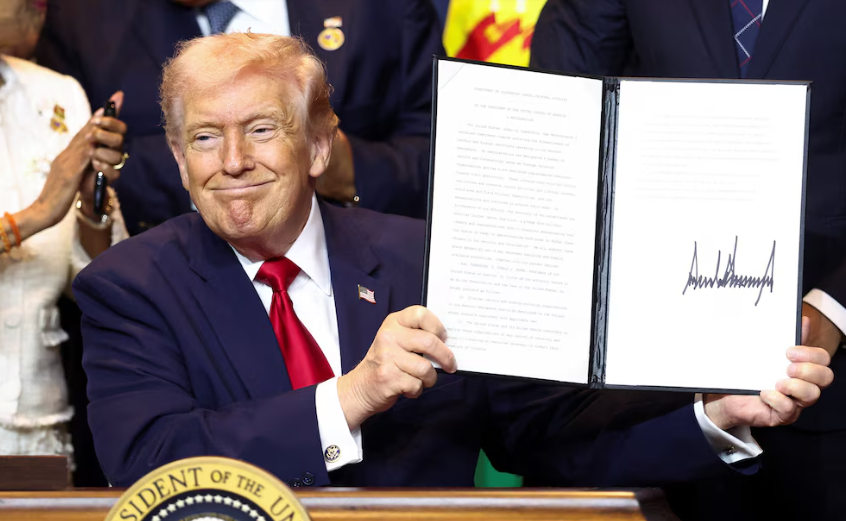
    The U.S. action, initiated through a December 16, 2025 proclamation signed by President Donald Trump, cited national security and public safety concerns. The policy aims to protect American citizens from terrorist attacks and other threats, citing weaknesses in foreign identity-management systems that limit proper vetting of travelers.

    Dominica and Antigua & Barbuda are among several nations affected by these restrictions, which have generated significant international media coverage and social media discussion throughout the Caribbean region and beyond.

  • Belize, Guatemala Foreign Ministers Meet at OAS Border Office

    Belize, Guatemala Foreign Ministers Meet at OAS Border Office

    In a significant diplomatic development, the Foreign Ministers of Belize and Guatemala convened on January 22, 2026, at the Organization of American States (OAS) Adjacency Zone Office along their western border. The high-level meeting brought together Belize’s Foreign Affairs Minister Francis Fonseca and Guatemalan Foreign Minister Carlos Ramiro Martínez under the mediation of Antonia Urrejola, Special Representative of OAS Secretary-General Sebastian Kraljevich for the bilateral relationship.

    The strategic dialogue featured comprehensive presentations detailing the OAS office’s operational activities throughout 2025, specifically designed to foster stronger bilateral cooperation between the neighboring nations. Both ministerial delegations engaged in substantive discussions regarding ongoing confidence-building measures and diplomatic channels.

    This meeting represents another critical step in the protracted peace process between Belize and Guatemala, who have been working through international mechanisms to resolve their long-standing territorial differences. The involvement of the OAS continues to provide essential institutional support for these diplomatic efforts, maintaining the momentum toward a judicial settlement at the International Court of Justice where both nations have agreed to pursue a legal resolution to their dispute.

  • New land lease gov’t initiative receives kudos from agriculture minister

    New land lease gov’t initiative receives kudos from agriculture minister

    The Government of Dominica has unveiled a groundbreaking agricultural initiative designed to transform the nation’s farming landscape and economic prospects. Minister of Agriculture Roland Royer announced the Cabinet-approved Agricultural Land Lease Facility, a strategic program specifically targeting young farmers and agro-entrepreneurs.

    During a recent press conference, Minister Royer emphasized the program’s significance as both an economic catalyst and food security measure. The initiative, approved on January 14, 2026, will make state-owned lands available at the symbolic rate of EC$1.00 per acre annually for an initial five-year term. Lease renewals will be contingent upon demonstrated agricultural activity.

    This policy directly addresses one of the most persistent barriers to agricultural development: land accessibility. Royer explained that the structured, transparent leasing agreements will enable a new generation of farmers to plan, invest, and scale production with unprecedented confidence. The program forms part of the government’s commitment in the 2025-2026 budget to allocate at least 300 acres of state-owned land across multiple regions specifically for agricultural development.

    The designated sites encompass strategically chosen locations throughout Dominica, including Newfoundland Estate, Londonderry Estate, Woodford Hill-Mango Gutter, Wesley-Joe Burton, Morne Prosper, Charlotte Valley, Savanne York, Williams Settlement, Wotten Waven, Blenheim Estate, Pointe Mulatre Estate-Fond Thomas, Hertford Estate-Warner, and Richmond Estate in Castle Bruce.

    Minister Royer projected that the initiative would stimulate private investment, accelerate adoption of advanced technologies, and promote climate-resilient production systems. The program represents a cornerstone of the government’s comprehensive strategy to expand agricultural output while working toward the ambitious national target of having the sector contribute $700 million to GDP by 2030.

  • Diplomats meet House Speaker

    Diplomats meet House Speaker

    In a significant diplomatic engagement, numerous high-ranking foreign envoys stationed in Guyana convened with House Speaker Manzoor Nadir at the Parliament Building in Stabroek. This gathering occurred in anticipation of Monday’s pivotal National Assembly session, which will feature both the presentation of the 2026 National Budget and the election of Guyana’s next Opposition Leader.

    United States Ambassador Nicole Theriot characterized the encounter as an informal exchange, noting that the initiative originated from within the diplomatic community. “The Speaker generously accommodated our request for dialogue,” Ambassador Theriot explained to journalists, despite repeated attempts by her security detail to limit media interaction. She emphasized that the discussion centered on parliamentary procedures, budgetary considerations, and the impending opposition leadership selection.

    The diplomatic contingent included representatives from the United States, United Kingdom, Canada, Venezuela, and several other nations. When questioned about Speaker Nadir’s recent criticisms of American and Canadian political systems—made in response to diplomatic calls for electing an Opposition Leader to strengthen Guyana’s democratic institutions—Ambassador Theriot declined to disclose specifics. “It would be inappropriate for me to characterize his remarks. That conversation remains with him,” she stated, adding that she did not perceive Nadir’s comments as targeted criticism but rather as legitimate expression of personal perspective.

    The upcoming parliamentary meeting is expected to result in the appointment of Azruddin Mohamed, leader of the We Invest in Nationhood party, as Opposition Leader. This anticipated outcome faces resistance from both the ruling People’s Progressive Party and Speaker Nadir, citing Mohamed’s ongoing legal challenges. The United States has sanctioned and indicted Mohamed for alleged financial crimes, and he currently contests extradition proceedings alongside his father.

  • LETTER: An Embarrassment Too Deep to Ignore: The UPP’s Leadership Has Failed… Again!

    LETTER: An Embarrassment Too Deep to Ignore: The UPP’s Leadership Has Failed… Again!

    The United Progressive Party (UPP) faces an existential crisis following the startling revelations from its St. George primary election, where Kelton Dalson secured victory with a mere nine votes while opponents Kem Riley and Buffy Kentish garnered just two votes each. This electoral farce—conducted with only 16 eligible voters from over 260 registered Plus members—exposes catastrophic organizational failures that transcend mere administrative oversight.

    Political analysts are characterizing this event as symptomatic of systemic institutional decay rather than an isolated incident. The primary underscores the complete erosion of internal democratic processes and highlights a leadership structure plagued by incompetence and disengagement. Under Giselle Isaac’s stewardship, the UPP has deteriorated from a formidable political force to a hollow entity marked by confusion, exclusion, and unaccountability.

    The crisis demands immediate reckoning at the highest levels. Harold Lovell faces mounting pressure to either challenge current leader Jamal Pringle for party leadership or withdraw entirely from political influence. Meanwhile, Pringle’s tenure has been defined by an absence of results, credibility, and momentum—raising serious questions about his capacity to reverse the party’s decline.

    This electoral debacle demonstrates the UPP’s inability to mobilize its base, maintain membership integrity, or conduct credible internal processes. The most poignant revelation emerges: the greatest threat to the party’s survival stems not from external opposition but from its own leadership failures. Supporters now confront the painful reality that without radical organizational reform and leadership accountability, the UPP’s viability as a political institution remains in grave jeopardy.

  • House debates private motion on socio-economic concerns

    House debates private motion on socio-economic concerns

    The Trinidad and Tobago House of Representatives convened a critical session on January 23rd to examine a pressing private motion filed by Laventille West MP Kareem Marcelle, addressing what he characterizes as a deepening socio-economic emergency. The motion demands governmental recognition of severe unemployment impacts and implementation of substantial social relief measures.

    Marcelle’s proposition emphasizes the state’s fundamental obligation to ensure citizen welfare and foster conditions conducive to dignified living standards. The parliamentarian cited widespread terminations and non-renewals of contracts across public institutions, state agencies, and local government bodies as primary drivers of the crisis. These developments have particularly devastated vulnerable demographics including single mothers, female-headed households, youth, elderly citizens, and persons with disabilities.

    The motion further outlines severe consequences stemming from employment instability: intensified food insecurity, rising school absenteeism, deteriorating mental health conditions, and increased risks of exploitation and social marginalization. Marcelle cautioned that diminished employment opportunities coupled with reduced community engagement directly threaten public safety and social stability while undermining local commerce and micro-enterprise sustainability.

    The political context reveals sharp contrasts between governing and opposition parties. Following the April general election that resulted in a 26-13-2 victory for the UNC, the opposition PNM has consistently criticized the new administration for terminating thousands of positions through closures of Cepep, the Unemployment Relief Programme (URP), and other social initiatives established during the PNM’s 2015-2026 governance period.

    Opposition Leader Pennelope Beckles reinforced these criticisms during a January 21st press conference, accusing Prime Minister Persad-Bissessar of misleading voters into believing job security would continue post-election. Beckles characterized the current government as indifferent to citizen welfare and urged public awareness regarding employment protections.

    Simultaneously, the Senate convened to advance debate on the Law Reform (Zones of Special Operations) Bill 2026, previously approved by the House on January 16th. This legislation empowers the National Security Council chair, in consultation with police and defense force leadership, to designate special security zones for maximum 180-day periods.

    Preceding both parliamentary sessions, the Finance and Legal Affairs joint select committee conducted a public inquiry into credit union supervisory frameworks, chaired by Independent Senator Dr. Marlene Attzs with participation from Justice Minister Devesh Maharaj and San Fernando East MP Brian Manning.

  • THA secretaries to be sworn in Jan 26

    THA secretaries to be sworn in Jan 26

    The Tobago House of Assembly is poised for a significant political transition as Chief Secretary Farley Augustine announces tentative plans to swear in the newly appointed secretaries on January 26. This development follows the Tobago People’s Party’s unprecedented electoral sweep on January 12, where they secured every legislative seat for a four-year governing term.

    Augustine revealed during the Tobago Updates morning program that his administration has been coordinating with the Office of the President to finalize logistics for the ceremony, which is expected to be broadcast live from Tobago. The swearing-in comes after the Senate’s passage of the THA (Amendment) Bill 2026 on January 20, which formally expanded the number of secretarial positions within the assembly structure.

    The Chief Secretary outlined his strategic approach to governance, indicating his intention to maintain a streamlined team of one chief secretary, one deputy chief secretary, and no more than eleven additional secretaries. Significant structural reorganization will include establishing a standalone Division for Planning and Development alongside the existing Division for Legal and Inter-Governmental Affairs.

    Addressing speculation about specific appointments, Augustine emphasized that “no one owns a division” and highlighted the rigorous screening process that identified capable candidates from among the 15 assembly members. He stressed that effective management skills rather than subject-matter expertise would be the primary qualification for secretarial roles, noting that competent resource management would ensure success across all divisions.

    The administration has already appointed three councillors—Petal-Ann Roberts, Adanna Joseph-Wallace, and Ackel Franklyn—with deliberate attention to geographical representation across Tobago’s constituencies. Augustine affirmed that his appointment authority remains exclusive and requires no external consultation.

  • Fred’s last dance

    Fred’s last dance

    Veteran Bahamian politician Fred Mitchell, chairman of the Progressive Liberal Party (PLP) and Member of Parliament for Fox Hill, has announced he likely will not seek reelection for the party’s chairmanship, signaling what may be the final chapter of his extensive political career. Mitchell revealed to The Tribune that he anticipates having “one campaign left” focused solely on securing reelection in his Fox Hill constituency.

    The declaration comes amid intensified pre-election preparations by both major political parties. The PLP faces internal deliberations about whether to conduct a full-scale convention ahead of the upcoming general election, while the opposition Free National Movement (FNM) is organizing a non-voting convention to solidify its campaign strategy.

    Mitchell, who faced a contested chairmanship race in 2023 with backing from Prime Minister Philip Davis, characterized that bid as potentially the “penultimate” campaign of his career. When questioned about definitive plans, Mitchell maintained characteristic political pragmatism: “The only reason I’m not saying it definitively is because you never say never in politics.”

    Within PLP ranks, deputy national election coordinator Valentine Grimes expressed reservations about holding a divisive internal convention immediately before a general election. “The internal fight is sometimes more vicious than the external fight,” Grimes noted, emphasizing concerns that such contests could prove counterproductive despite recognizing the value of unifying party members.

    Meanwhile, FNM leader Michael Pintard confirmed plans for a business-focused convention without internal elections. Chairman Duane Sands indicated this gathering would address constitutional adjustments and recognize party contributors while maintaining election readiness. Sands issued a challenge to the governing party: “Let him ring the bell. Let him fool around and find out,” referencing uncertainty about when Prime Minister Davis might call the election.

    Both parties acknowledge the competitive landscape ahead, with Grimes conceding victory wouldn’t be guaranteed despite confidence in the Davis administration’s performance. The political environment remains dynamic as Bahamian parties position themselves for an election whose timing remains uncertain.

  • Browne appeals to government: Roll back traffic fines

    Browne appeals to government: Roll back traffic fines

    A heated debate unfolded in Trinidad and Tobago’s Senate regarding The Motor Vehicles and Road Traffic (Amendment) Bill, 2026, with Opposition Senator Dr. Amery Browne demanding the government revert traffic fines to previous levels. The January 20 session at the Red House in Port of Spain saw Browne characterize the increased penalties as “brutal punishment” that has left citizens feeling “betrayed and deceived” by the UNC government’s unfulfilled campaign promises.

    The legislation, piloted by Transport and Civil Aviation Minister Eli Zakour, establishes 18 traffic violations eligible for fixed penalty notices with compliance periods of three days for minor infractions and seven days for severe violations. Minister Zakour defended the bill as a “structured, traceable and enforceable warning system” designed to enhance road safety while promoting efficiency and fairness in justice administration. He emphasized the system’s corrective approach, allowing drivers opportunity to address defects before facing penalties.

    Senator Browne countered by highlighting widespread public outrage following the Christmas Day announcement, citing expressions of discontent through social media, editorial letters, and radio call-in programs. He reminded the government of pre-election promises to reduce traffic fines and contrasted previous empathy toward police “bullying” with current enforcement measures. Browne particularly criticized the impractical three-day compliance window, warning it would leave citizens “at the mercy of an unsupported and unregulated mechanic industry” where unscrupulous operators prey on vulnerable populations.

    Independent Senator Dr. Desiree Murray echoed concerns about unreasonable timeframes while acknowledging the necessity of addressing vehicle safety issues. She advocated for extended compliance periods—21 days for minor violations and 42 days for severe cases—to accommodate financial constraints and personal circumstances of vulnerable groups including people with disabilities, single parents, and caregivers. Murray proposed flexible compliance proof submission methods to demonstrate the legislation’s genuine focus on road safety rather than revenue generation.

  • Venezuelan embassy launches campaign demanding return of ousted president and his wife

    Venezuelan embassy launches campaign demanding return of ousted president and his wife

    ST JOHN’S, Antigua – The Venezuelan government has initiated an international pressure campaign seeking the repatriation of President Nicholas Maduro and First Lady Cilia Flores, who remain in United States custody following their controversial detention during a military intervention on January 3rd. The diplomatic effort, branded with the hashtag #BringThemBack, was formally launched at an emotionally charged gathering hosted by Venezuela’s embassy in Antigua.

    Ambassador Carmen Velasquez characterized the U.S. military action as a catastrophic event in Venezuela’s historical narrative, addressing an audience that included diplomatic representatives from Cuba and China, alongside local supporters. Both Maduro and Flores have entered not guilty pleas against charges related to narcotics and weapons trafficking, with their next court appearance scheduled for March 17 in a New York federal court.

    President Maduro maintains that his capture constituted an unlawful kidnapping, while U.S. leadership has indicated intentions to maintain administrative control over Venezuela for the foreseeable future. Ambassador Velasquez, who was present in Caracas during the military operation, provided a firsthand account of hearing explosions and helicopter activity initially mistaken for celebratory fireworks, followed by observations of drone-launched rocket attacks.

    The event evolved into a vigil with attendees participating in candlelight ceremonies led by Pastor James Warner of the All Saints Fellowship of Believers, who offered prayers for national peace and the safe return of Venezuela’s leadership. Cuban Ambassador Sergio Martinez applauded the gathering as a tribute to those who perished defending Venezuelan sovereignty, condemning the American intervention as a brutal assault that would not be forgotten historically.

    The Venezuelan embassy has established a condolence registry for public signatures to demonstrate global solidarity with the Venezuelan populace amidst ongoing political tensions.