分类: politics

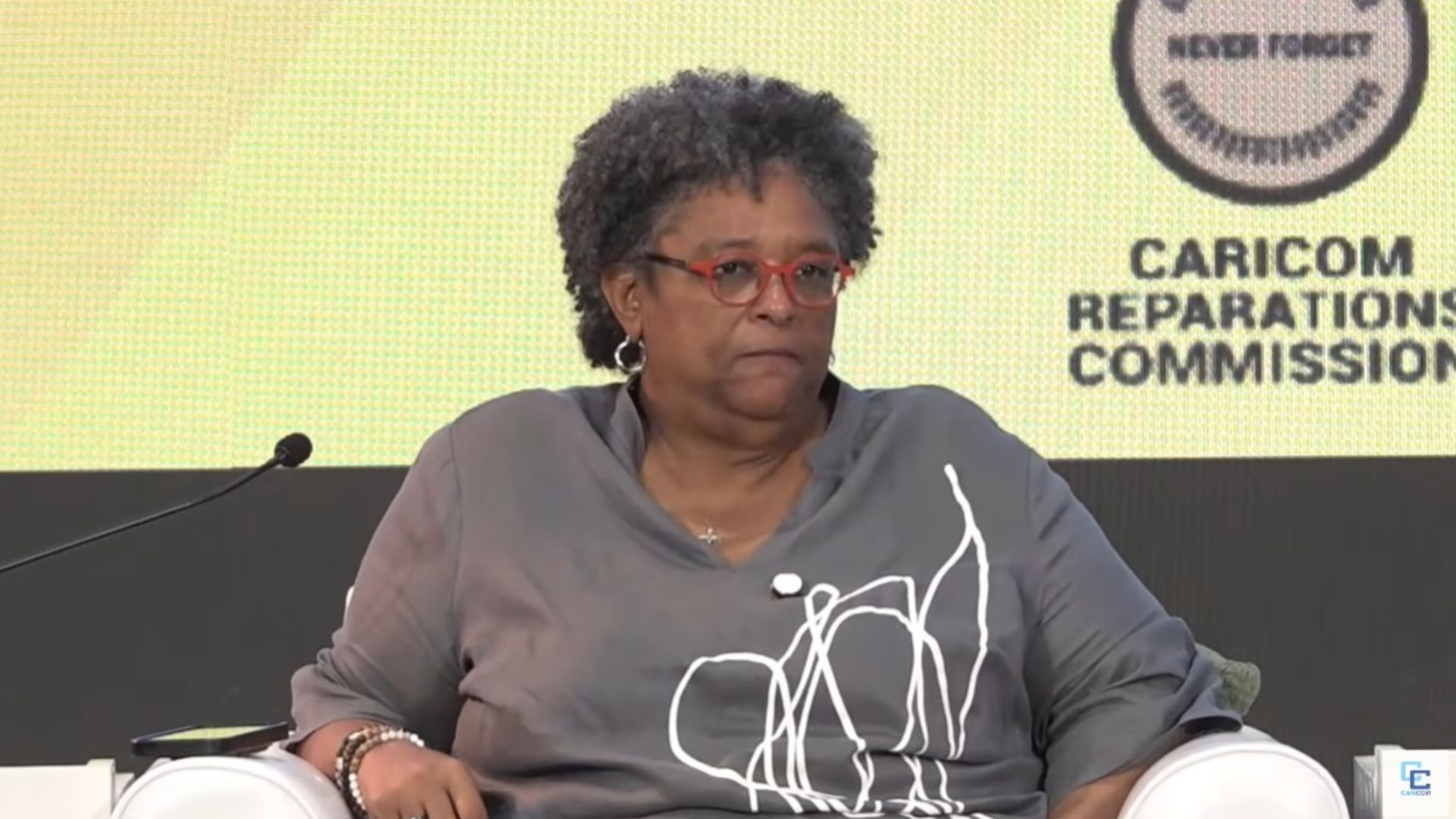
  • PM Browne and Maria Browne cast their ballots

    PM Browne and Maria Browne cast their ballots

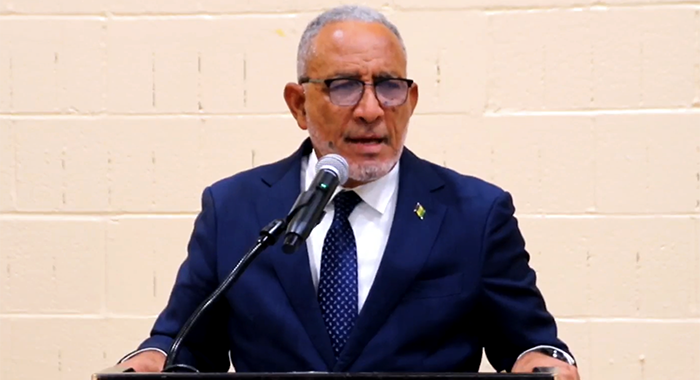
    On a busy polling day that marked a key milestone in the country’s democratic process, Prime Minister [Name] Browne and his wife Maria Browne joined thousands of eligible voters across the nation to cast their official ballots. The couple arrived at their assigned local polling station in the early morning, where they were greeted by election officials before moving through the standard voting procedures established by the country’s electoral commission.

    As sitting head of government, Prime Minister Browne’s participation in the vote underscores the foundational role of democratic participation in the nation’s political system. Speaking briefly to reporters after casting his ballot, Browne urged all registered citizens to make their voices heard by participating in the election, emphasizing that every vote carries equal weight in shaping the country’s next chapter of governance. The election, which is being contested by multiple political parties vying for control of parliament and the executive branch, has drawn widespread attention from both domestic observers and international monitoring groups focused on ensuring a free and fair electoral process.

    Maria Browne echoed her husband’s call for voter turnout, noting that civic participation is a shared responsibility for all eligible citizens that helps sustain the country’s democratic institutions. The couple’s appearance at the polls follows a weeks-long campaign season that saw candidates travel across the country debating policy priorities ranging from economic recovery and healthcare reform to climate action and education investment. With polling stations set to close later in the evening, vote counting is scheduled to begin immediately after, with preliminary results expected to start trickling in by midnight local time.

  • Unite, unions urged, as CTUSAB warns of weakened labour voice

    Unite, unions urged, as CTUSAB warns of weakened labour voice

    As Barbados grapples with escalating economic headwinds that put worker livelihoods at growing risk, the island nation’s peak labor coordinating body has issued an urgent appeal for greater unity across the country’s trade union movement, warning that ongoing fragmentation threatens both worker bargaining power and long-term national development.

    Speaking at a Wednesday press conference held at CTUSAB (Congress of Trade Unions and Staff Associations of Barbados) headquarters in the Garrison, St. Michael, CTUSAB president Ryan Phillips emphasized that cross-union cohesion is non-negotiable in today’s climate of mounting economic and industrial uncertainty. “If we are to properly represent labor as a collective, we must speak with one voice,” Phillips told reporters. “We have repeatedly called on all union groups to come to the table. Even with existing differences between organizations, there are pressing national-interest issues that demand collaborative conversation to advance the wellbeing of every worker.”

    Phillips warned that internal division within the broader labor movement erodes its collective influence, most acutely on high-stakes issues including wage negotiations and national economic policy formation. “We must gather around the table to speak with a unified voice to guarantee that no worker is disadvantaged in any process, especially salary reviews. That is just one of the critical issues at stake here,” he said.

    CTUSAB publicly acknowledged that three of Barbados’ largest and most influential worker organizations — the Barbados Workers Union, the Barbados Secondary Teachers’ Union, and the Association of Principals of Public Primary Schools — are currently not part of its membership, a gap that directly undermines the goal of a single, representative national labor voice. “CTUSAB laments the fact that these groups, which were once part of the national trade union center, currently remain outside our membership fold,” the organization said in a statement during the conference.

    Despite this rift, the peak body made clear it remains fully open to repairing divisions and rebuilding broad-based unity. “The congress welcomes these organizations, as well as any other recognized trade unions and staff associations, to join our membership, provided they meet the established criteria for membership,” CTUSAB stated.

    Phillips added that the push for a unified umbrella labor body aligns with global best practices and international labor standards set by the International Labour Organisation (ILO), and it is an especially critical priority for small island states navigating complex, shifting global economic conditions. “Creating an umbrella body that brings all worker representatives together in solidarity to speak with one voice makes clear strategic sense,” Phillips noted. “This structure is explicitly recognized within the ILO’s framework. As a small country, it makes good sense to pursue approaches that help us grow and develop with all stakeholders aligned behind a common voice.”

    The CTUSAB president acknowledged that minor disagreements between independent unions are inevitable, but argued such differences do not need to escalate into permanent, damaging division. “Differences will emerge in any organization, but that does not mean we have to be divided,” he said. “It does not mean we have to undermine one another’s rights to achieve our goals.”

    Beyond strengthening worker representation and bargaining power, CTUSAB argues that a unified labor movement improves national governance overall, by creating a clear, reliable channel for worker input into national policy discussions. The organization stressed that workers do not only advocate for their own rights and benefits — they also have a direct, vested stake in inclusive, sustainable national development that benefits all Barbadians.

    With Barbados’ annual Labor Day celebrations approaching, CTUSAB says its call for unity is rooted in both historical lessons from the global labor movement and current on-the-ground realities, as Barbadian workers adapt to persistent economic pressures and ongoing structural shifts in the local labor market.

  • Reminder: No Sale of Alcohol Permitted During Polling Hours

    Reminder: No Sale of Alcohol Permitted During Polling Hours

    As Antigua and Barbuda prepares for its upcoming national election, the country’s independent Electoral Commission has issued a formal public reminder of a long-standing legal restriction that will be strictly enforced on polling day: no alcohol can be sold, offered, or distributed to any person while voting stations are open.

    This prohibition is not an emergency ad-hoc measure; it is rooted in the island nation’s Representation of the People Act, which codifies rules to safeguard the integrity of electoral processes. The ban applies uniformly to all alcohol-licensed business establishments located within every voting constituency across the country, and it remains in effect for the full 12 hours that polls are open, from 6 a.m. when voting begins to 6 p.m. when stations close.

    The Electoral Commission has underlined that violations of this electoral law carry serious legal consequences. Any individual or business found to be breaking the ban may be prosecuted, with penalties including fines reaching as high as $3,000 or a custodial sentence of up to 12 months, or both, depending on the circumstances of the violation.

    Officials note that this alcohol restriction is one of a suite of proactive regulations designed to foster a calm, orderly, and fully lawful voting environment for all eligible citizens across Antigua and Barbuda. By limiting alcohol access during polling hours, authorities aim to prevent disorderly conduct, intimidation of voters, and other disruptions that could undermine the fairness of the electoral process. As election day approaches, the Commission is calling on all licensed alcohol vendors, business owners, and members of the general public to adhere fully to this regulation to support a smooth, credible election.

  • Inside the Polling Booth: ABEC Reminds Voters of the Rules

    Inside the Polling Booth: ABEC Reminds Voters of the Rules

    As general voting gets underway across the twin-island nation of Antigua and Barbuda, the country’s independent Electoral Commission has released a formal set of protocols outlining the key rules that all voters must follow, with the core goal of keeping the election process orderly, efficient, and free from interference.

    Polling sites across the country opened their doors to electors promptly at 6 a.m. local time, and are scheduled to conclude voting operations at 6 p.m. the same day. Election officials have stressed that voters should come prepared to participate by having their official voter identification cards readily accessible before approaching the entrance to their assigned polling station, and that all electors must comply with directions issued by presiding officers on site.

    Beyond basic entry procedures, the Commission has shared key guidance to help voters cast valid ballots correctly. Electors are encouraged to take time to review their ballot paper thoroughly, cross-reference candidate selections with official party symbols to avoid confusion, and mark their choice for only one candidate per contest. Any voter who experiences confusion about any step of the voting process is invited to ask on-site election staff for clarification and assistance at any time.

    To safeguard the neutrality and calm of polling environments, the Commission has also implemented a series of restrictions. All personal electronic devices including mobile phones and smartwatches are prohibited inside voting areas. Voters are required to leave these devices with site staff for safekeeping when they enter the polling location, and will retrieve them after casting their ballot.

    Authorities have additionally issued clear warnings about prohibited conduct, noting that any disruptive, aggressive, or disrespectful behavior towards staff or other voters will not be tolerated. Another key regulation bars electors from wearing clothing in the official colors of any political party while voting, and bans all political materials or signage from being brought or displayed within a 100-yard radius of any polling station.

    A spokesperson for the Electoral Commission emphasized that full compliance with these published guidelines is critical to upholding the transparency and integrity of the entire electoral process as thousands of voters turn out across Antigua and Barbuda to cast their ballots throughout election day.

  • US to issue passports featuring Trump’s picture to commemorate America’s 250th anniversary

    US to issue passports featuring Trump’s picture to commemorate America’s 250th anniversary

    A senior official from the U.S. State Department confirmed Tuesday that the federal government will begin issuing specially designed American passports bearing a portrait of former President Donald Trump on their inner pages this summer, marking the highest-profile addition of the 45th president’s likeness to a series of official commemorations marking the 250th anniversary of U.S. independence.

    The specially modified documents will automatically be issued to any applicant who renews their passport in person at the Washington Passport Agency, once the new design is available to the agency. All other passport application channels, including online submissions and in-person renewals at other agency locations across the country, will continue to use the existing standard passport design, the official clarified.

    Based on published design mockups first shared by Fox News, Trump’s portrait and a gold-printed copy of his signature will appear on the inside cover of the new commemorative passport. The back cover of the document will feature John Trumbull’s iconic painting depicting the signing of the Declaration of Independence, a choice that ties the design directly to the nation’s founding anniversary. By comparison, the current standard U.S. passport displays Percy Moran’s artwork of Francis Scott Key at Fort McHenry, paired with lyrics from the national anthem Key wrote, on its inside front cover.

    In an official statement Tuesday, State Department spokesperson Tommy Pigott framed the new passport as a fitting tribute to the national milestone. “As the United States celebrates America’s 250th anniversary in July, the State Department is preparing to release a limited number of specially designed U.S. Passports to commemorate this historic occasion. These passports will feature customized artwork and enhanced imagery while maintaining the same security features that make the U.S. Passport the most secure documents in the world,” Pigott said.

    What sets the Trump-themed passport apart from other semiquincentennial commemorative items is the widespread, long-term use of passports as official identity documents. Unlike limited-run commemorative coins or seasonal national park passes, a U.S. passport is a globally recognized identity credential with a 10-year validity period, meaning the design could be seen by border officials and other entities around the world for decades to come.

    This announcement is the latest in a string of official commemorations for the 250th anniversary that have included Trump’s image. Last year, the U.S. Department of the Interior, which manages the national park system, rolled out new 250th anniversary designs for its America the Beautiful national park passes, one of which places Trump alongside George Washington, the nation’s first president. Interior Secretary Doug Burgum called the new pass “an honor to showcase” the anniversary and the legacy of land conservation in a public statement announcing the change.

    Just last month, the Commission of Fine Arts, an advisory body filled with appointees hand-selected by Trump, gave formal approval to a 250th anniversary commemorative coin that will also bear the former president’s portrait. In the past year, Trump’s name has also been added to official signage at the Kennedy Center for the Performing Arts and the U.S. Institute of Peace, adding to the series of changes to federal official landmarks and items under the current administration.

    The State Department has not yet confirmed how many of the special Trump-designed passports will be issued, with the rollout set to begin sometime this summer. The story was first broken by online news outlet The Bulwark, with Fox News becoming the first outlet to publish the leaked design mockup of the new document.

  • Voting Off to Strong Start Across Antigua and Barbuda with Early Rush at Polls

    Voting Off to Strong Start Across Antigua and Barbuda with Early Rush at Polls

    Antigua and Barbuda’s nationwide general election got off to an energetic start on polling day, with thousands of citizens rushing to cast their ballots from the moment polling stations opened their doors at 6 a.m. local time. Voters across multiple constituencies lined up before dawn to beat the midday heat, resulting in long but efficiently managed queues outside polling locations from the opening minutes of voting.

    Initial official and observer reports confirm that the electoral process has proceeded smoothly and without major disruption. Election officials, trained ahead of the vote as part of pre-election preparations, alongside deployed security personnel and accredited party agents, have coordinated effectively to keep voter flow steady. Voters have universally complied with mandatory identification checks and established electoral rules, keeping incidents to a minimum.

    A common sight across all polling divisions has been the iconic image of voters leaving stations proudly displaying their indelibly inked fingers, a visible marker of their participation in the country’s democratic process. The Antigua and Barbuda Electoral Commission has credited the seamless opening of voting to extensive advance preparations, including the training of all on-site staff and the implementation of tested administrative systems designed to streamline the voting experience.

    Uniformed security personnel remain stationed at every polling location nationwide to uphold public order, while electoral staff continue to assist voters, from first-time participants to elderly citizens, navigate the casting process. Local authorities have urged registered electors who have not yet voted to continue turning out throughout the day, reminding the public that polling stations will remain open to accept ballots until 6 p.m.

    Today’s general election will shape the composition of Antigua and Barbuda’s next national government. Once polls close this evening, official vote counting will begin immediately, and is expected to continue through the night and into the early hours of tomorrow as results are tabulated and finalized.

  • Voting underway in Barbuda

    Voting underway in Barbuda

    Polling stations opened their doors across the Caribbean island of Barbuda early Wednesday as voters head to the polls to cast their ballots in what is being framed as a critical electoral contest for the small island nation. Long queues formed outside multiple voting locations in communities from Codrington to the island’s more remote coastal settlements, with many residents arriving before dawn to secure their chance to participate in the democratic process. Election officials have reported that all voting materials are in place, and more than 50 trained poll workers have been deployed to staff the island’s 10 polling precincts to ensure the process proceeds smoothly.

    Barbuda, which has a total registered voter base of just over 1,600 people, is holding the election to select representatives for the Barbuda Council, the local governing body that manages issues ranging from infrastructure development to environmental protection and land use on the island. This year’s contest comes as the island continues long-term recovery efforts following the devastating damage caused by Hurricane Irma in 2017, and candidates have centered their campaigns on key priorities including improving healthcare access, expanding affordable housing, boosting tourism revenue, and strengthening climate resilience to protect against future extreme weather events.

    Political observers note that this election carries broader implications for national politics in Antigua and Barbuda, as control of the Barbuda Council has long been a bellwether for support ahead of general elections scheduled to be held in the country by 2025. Several major national political parties have fielded candidates for the seven open council seats, and party leaders have been campaigning heavily across the island in recent weeks to mobilize their base. Voting is scheduled to conclude at 6 p.m. local time, with preliminary results expected to start trickling in from counting centers later Wednesday evening. Election monitors from independent regional organizations are on the island to observe the process and confirm that it meets international democratic standards. Voters spoken to by reporters expressed a wide range of priorities, with many emphasizing that economic opportunity and climate action are their top deciding factors when casting their ballots.

  • WATCH: ABEC Chairman Urges Voters to Turn Out To Vote On Election Day Today

    WATCH: ABEC Chairman Urges Voters to Turn Out To Vote On Election Day Today

    As polling locations open across the twin-island nation of Antigua and Barbuda for a national election to select the country’s next government, the top official of the independent electoral body has issued a urgent, unifying call to all eligible citizens to participate in the democratic process and uphold the core values of fair voting.

    Arthur G.B. Thomas, Chairman of the Antigua and Barbuda Electoral Commission (ABEC), delivered his official appeal in a public statement released early Thursday morning, framing the election as a defining moment for collective national direction. “Today is the day that you exercise your voice… through democratic choice,” Thomas stated, emphasizing that every eligible voter holds the power to influence the trajectory of the country through their ballot.

    Thomas laid out key logistical details to guide voters on election day, noting that all polling stations kicked off operations at 6 a.m. local time and will wrap up voting promptly at 6 p.m. He urged residents not to wait until the last minute to cast their ballots, reminding those who have not yet voted to make their way to their assigned locations before the closing deadline. “Come out and play your part in shaping the future of your country,” he added.

    A critical procedural reminder was also front and center in Thomas’ statement: all voters must present a valid, government-issued voter identification card to receive a ballot. No eligible voter will be permitted to cast a vote without this required documentation, he confirmed.

    The ABEC chairman highlighted the extensive work his commission has completed ahead of voting day to guarantee broad, equitable access to the election. According to Thomas, the commission implemented targeted measures to eliminate barriers that could prevent eligible citizens from casting their ballots, working proactively to avoid disenfranchisement of any registered voter.

    Beyond participation and procedural rules, Thomas centered his appeal on maintaining order and mutual respect throughout the day. He called on all citizens, regardless of political affiliation, to keep the process calm and orderly, and to honor the democratic traditions that underpin the nation’s governance. “Let us make this a day defined by peace, respect and unity,” he said, asking voters to follow all official guidelines, treat polling workers with courtesy, and respect the work of election officials on the ground.

    Thomas closed his statement with a core reminder of democratic accountability: once the official results are announced, all members of the public must accept the outcome of the vote. Accepting the will of the electorate, he argued, is a non-negotiable fundamental pillar of any functioning democratic system. “Let us also respect the outcome… that is the true strength of a democratic [process],” he said.

    Thomas’ remarks come as the entire nation is engaged in voting to select its next government. National authorities have echoed his message, noting that peaceful, widespread participation is the most critical factor in ensuring the election is viewed as credible and legitimate by the public and international observers.

  • Voter ID Replacements Surge Day Before Polls

    Voter ID Replacements Surge Day Before Polls

    As Antigua and Barbuda’s general election drew near, a last-minute rush to secure replacement voter identification cards unfolded across the nation, new official data has confirmed. Thousands of eligible voters rushed to electoral offices in the final days of pre-election preparations, pushing transaction volumes sharply higher in multiple constituencies ahead of polling day.

    Figures published by the Antigua and Barbuda Electoral Commission show that more than 32,700 total voter ID transactions were processed across the month of April alone. This sustained high volume of activity underlines consistent, growing demand for corrected or replacement identification that continued without interruption right up to the opening of polling stations.

    The pace of applications peaked in the final full week of pre-election preparations, with daily replacement requests hitting a high of 289 on April 27. The trend stayed strong through the following days, with 253 applications logged on April 28 and 224 more submitted on April 29, before activity gradually slowed as the country entered official election day.

    Electoral data breaks down completion rates by constituency, revealing stark regional variations in voter readiness. Several constituencies posted particularly high overall rates of completed ID transactions, led by St. Peter at 93%, Barbuda at 81%, and St. Philip North at 77%. These high rates signal that voters in these areas have completed the necessary bureaucratic steps to cast their ballots, pointing to widespread preparedness among local electorates.

    In contrast, more densely populated urban constituencies recorded comparatively lower completion figures. St. John’s City West logged a 63% completion rate, while neighboring St. John’s Rural South stood at 62%. Even with these lower readings, officials note that the numbers still reflect consistent and steady participation from voters in these districts in the ID verification process.

    The commission’s cumulative pre-election report adds that more than 18,000 ID applications were processed in earlier stages of the electoral cycle. These earlier submissions factor into the final April total, further highlighting the massive scale of voter verification and ID updating efforts that have taken place in the lead-up to the national vote.

    As preparations entered their final phase early Thursday morning, senior election officials reiterated repeated calls for all voters to double-check that their identification documentation is valid and in order before they arrive at their assigned polling station. The outreach aims to reduce wait times at polling locations and prevent avoidable disruptions to voting on election day.

  • WATCH: Behind the scenes as election officials ready polling stations before sunrise

    WATCH: Behind the scenes as election officials ready polling stations before sunrise

    As dawn broke over the twin-island nation of Antigua and Barbuda on Thursday, a coordinated team of election administrators, security officials, and political delegates had already begun their work, putting the final touches on polling stations ahead of the nation’s highly anticipated 2026 general election.

    The Antigua and Barbuda Electoral Commission (ABEC) confirmed Wednesday evening that all returning officers and their on-ground support teams had reached their assigned locations well in advance of the official 6 a.m. poll opening time. In an upbeat public statement shared across social media and official communication channels ahead of voting day, the commission urged registered voters to prepare to participate, writing: “Today is the day! General Elections 2026! Returning Officers and their teams are in place for the opening of the polls at 6 am. Are you ready?!”

    True to the commission’s timeline, every polling station across both islands opened exactly on schedule. On-site officials and accredited party representatives worked through opening protocols to verify that all voting systems, from paper ballots to voter check-in processes, were fully operational, laying the groundwork for an orderly start to the day’s voting.

    To address any potential disruptions and ensure the safety of both voters and election staff, uniformed security personnel have been deployed to every polling division across the country. These officers will remain on site throughout all voting hours to maintain public order and respond quickly to any issues that arise as electors arrive to cast their ballots.

    ABEC has also released a behind-the-scenes video documenting the final pre-voting preparation efforts, available for public viewing on the commission’s official digital platforms.