分类: politics

  • Manickchand orders Mayor, councillors to report City cleansing plan today; Mentore fires back on PPPC govt

    Manickchand orders Mayor, councillors to report City cleansing plan today; Mentore fires back on PPPC govt

    Georgetown, Guyana’s capital, faces a severe sanitation emergency with overflowing garbage bins clogging drains and creating public health hazards. The crisis has triggered a political confrontation between Local Government Minister Priya Manickchand and Georgetown Mayor Alfred Mentore.

    Minister Manickchand issued a strict 11 AM Monday deadline for Mayor Mentore and city councillors to present a comprehensive cleansing plan following an emergency meeting Sunday. Expressing outright disgust at the capital’s condition, Manickchand described the situation as ‘wholly unacceptable,’ emphasizing that sanitation services must become ‘reliable, predictable and effective.’ Her inspection revealed critical infrastructure failures—drains and trenches choked with everything from refrigerators to food containers, rendering many streets impassable and forcing pedestrians onto dangerous roadways.

    The visual evidence supports her concerns: recently donated blue garbage receptacles overflow into drains, while vendors have obstructed drainage systems with wooden pallets. Even areas surrounding official government residences show neglected waste management.

    Mayor Mentore responded with counter-accusations, suggesting the crisis might be politically engineered. He implied garbage collection companies aligned with the ruling People’s Progressive Party Civic (PPPC) government could be deliberately underperforming to embarrass his administration. The Mayor’s council is majority-backed by the opposition People’s National Congress Reform (PNCR)/A Partnership for National Unity (APNU).

    Mentore detailed systemic obstacles, claiming central government interference prevents effective tax collection, litter law enforcement, and fine levying—crucial revenue streams for city maintenance. He called for President Irfaan Ali’s direct intervention to resolve what he characterizes as politically motivated administrative barriers.

    Despite the conflict, both officials expressed commitment to restoring Georgetown’s former reputation as the ‘Garden City,’ though they fundamentally disagree on responsibility and solutions.

  • EU bereidt tegenmaatregelen voor tegen VS na Trump-heffingen over Groenland

    EU bereidt tegenmaatregelen voor tegen VS na Trump-heffingen over Groenland

    The European Union is mobilizing a comprehensive package of countermeasures in response to President Donald Trump’s announced import tariffs targeting several European nations. The dispute centers on European resistance to American attempts to bring Greenland—a Danish autonomous territory—under increased U.S. economic and geopolitical influence.

    Last week, Trump revealed plans to impose additional 10% import duties effective February 1st on goods originating from Denmark, Norway, Sweden, France, Germany, Netherlands, Finland, and the United Kingdom. The administration warned these tariffs could escalate to 25% if no agreement is reached regarding Greenland’s status.

    European leaders have issued strong condemnations of Trump’s threats, characterizing the measures as unacceptable and counterproductive in a joint statement. They emphasized that such actions strain transatlantic relations and jeopardize the crucial trade partnership between the EU and United States.

    In retaliation, EU member states are considering activating previously drafted counter-tariffs targeting American products worth approximately €93 billion. These measures, initially suspended during trade negotiations with Washington, now serve as potential political leverage. Additionally, European diplomats are evaluating deployment of the Anti-Coercion Instrument—a legal framework enabling economic responses to excessive pressure from third countries, including restrictions on U.S. corporations and market access limitations.

    Brussels has expressed concern that escalating trade measures could damage both transatlantic cooperation and the multilateral trading system. However, the EU remains prepared to defend its economic interests should the U.S. proceed with its tariff implementation.

    The Greenland controversy has triggered unprecedented diplomatic tensions between Europe and the United States. European officials consistently emphasize that Greenland’s future must be determined by its inhabitants, asserting that unilateral pressure through tariffs or other means violates contemporary international norms.

  • Antigua and Barbuda’s Zeina Hechme appointed vice consul in Canada

    Antigua and Barbuda’s Zeina Hechme appointed vice consul in Canada

    The Ministry of Foreign Affairs has announced the diplomatic reassignment of Senior Foreign Service Officer Zeina Hechme, who will assume the position of Vice Consul at the Antigua and Barbuda Consulate in Toronto, Canada. This strategic appointment places Hechme alongside newly installed Consul General Gail Christian as part of the nation’s strengthened diplomatic presence in North America.

    The transition was formally recognized during a farewell ceremony held at the Ministry headquarters, where senior officials offered both commendations and counsel. High Commissioner to the United Kingdom Karen-Mae Hill emphasized the significance of Hechme’s continued contribution to national interests abroad, urging her to ensure her work ‘continues to add value to Antigua and Barbuda and its people.’

    Director General for Foreign Affairs Ann-Marie Layne, drawing from her previous tenure as Deputy Consul General in Toronto, provided strategic guidance focused on maintaining a people-oriented approach and resilience in diplomatic service. Layne particularly highlighted the critical importance of serving the Antiguan and Barbudan diaspora community in Canada.

    The send-off ceremony included warm congratulations and professional best wishes from colleagues, reflecting broad institutional support for Hechme’s new assignment. This appointment represents both a personal career advancement and the government’s ongoing commitment to enhancing its consular services and international representation.

  • Astaphan says the opposition has resorted to “Mal Parle” because they cannot win on the issues

    Astaphan says the opposition has resorted to “Mal Parle” because they cannot win on the issues

    In a striking political commentary, a prominent figure has publicly accused opposition factions in Saint Lucia of employing defamatory strategies, termed locally as ‘Mal Parle,’ as a primary campaign tactic. The allegation suggests that these groups have shifted focus from substantive policy debates to personal attacks, indicating an inability to compete effectively on the core issues facing the nation.

    The term ‘Mal Parle,’ deeply rooted in the local Creole lexicon, translates to ‘bad talk’ or malicious speech, representing a form of character assassination aimed at undermining opponents’ credibility. This development points to a significant escalation in the intensity of political discourse within the Caribbean nation’s democratic process.

    Political analysts interpret this statement as reflecting growing tensions between governing and opposition parties, potentially signaling a critical juncture in Saint Lucia’s political landscape. The shift toward personal attacks rather than policy-focused debate raises concerns about the health of democratic dialogue and the quality of political engagement in the country.

    The emergence of such tactics suggests opposition forces may be struggling to gain traction with conventional political messaging, potentially reflecting broader challenges in formulating compelling alternatives to current government policies. This development comes amid ongoing economic and social challenges facing the Caribbean region, where political stability often hinges on constructive opposition dialogue.

  • St. Kitts-Nevis and Taiwan strengthen long-standing diplomatic ties

    St. Kitts-Nevis and Taiwan strengthen long-standing diplomatic ties

    In a significant demonstration of enduring diplomatic partnership, the Federation of St. Kitts and Nevis and the Republic of China (Taiwan) have reaffirmed their strategic alliance amid growing geopolitical competition in the Caribbean region. The strengthening of bilateral ties was emphasized by Taiwan’s newly appointed Resident Ambassador Edward Ling-Wen Tao during exclusive discussions with SKNVibes News.

    Ambassador Tao, who assumed his post several months ago, confirmed that the 42-year diplomatic relationship continues to flourish through substantial cooperation programs spanning multiple sectors. The partnership has yielded tangible benefits for national development through sustained investments in education, infrastructure, and human capacity building initiatives.

    Key collaborative projects currently underway include the chicken layer hatchery facility, a desalination plant addressing water security concerns, comprehensive education scholarship programs, environmental recycling initiatives, and digital identification systems. Ambassador Tao revealed that both nations are exploring new cooperative frontiers in ecotourism and sustainable development for future implementation.

    Addressing concerns about China’s expanding influence throughout the Caribbean basin, Ambassador Tao provided unequivocal assurance of Taiwan’s continued commitment. “I can confirm that Taiwan will remain a loyal friend of St. Kitts and Nevis for many years to come,” he stated. “Our assistance represents genuine support essential for your nation’s future development.”

    The educational exchange program stands as a cornerstone of this partnership, with over 175 students recently receiving scholarships to pursue advanced studies in Taiwan. Ambassador Tao highlighted the program’s success, noting that numerous graduates have returned to contribute their expertise across government institutions, educational establishments, and private sector organizations.

    In reciprocal support, St. Kitts and Nevis has consistently advocated for Taiwan’s inclusion in United Nations agencies, including the World Health Assembly, International Civil Aviation Organization, and climate change conventions. These efforts face persistent opposition from China, which claims sovereignty over Taiwan.

    Ambassador Tao expressed profound gratitude for this international support, emphasizing that Taiwan’s exclusion from global organizations prevents the sharing of valuable expertise with Caribbean nations and represents an injustice to both the Taiwanese people and the international community.

  • Rechtsstatelijke toetsing onder internationale aandacht

    Rechtsstatelijke toetsing onder internationale aandacht

    Suriname’s judicial system has become the focal point of intense international observation as the nation handles sensitive legal cases with significant political implications. According to National Assembly member Jennifer Vreedzaam, the global community is closely monitoring how Suriname’s legal institutions navigate the complex intersection of law, policy, and power in high-profile proceedings.

    In today’s interconnected legal landscape, cases with clear administrative and political dimensions rarely remain purely domestic matters. Foreign governments, multilateral institutions, human rights organizations, and international media are tracking Suriname’s judicial processes not to interfere with national jurisprudence, but to assess how a constitutional state functions when legal principles intersect with political power.

    International observers primarily evaluate procedural quality rather than case outcomes, focusing on fundamental rule-of-law principles: judicial independence, strict separation between policy and criminal law, individualization of liability, and proportionality in prosecution. The Court of Justice serves as the central institutional reference point for foreign observers, expected to maintain legal purity and demonstrate clear distance from political interpretations.

    Global law enforcement collaborations, including Interpol, explicitly distinguish between regular criminal prosecution and cases with potential political characteristics. This approach serves a preventive function—protecting the integrity of criminal justice instruments rather than passing judgment on guilt or innocence.

    Suriname’s international reputation as a rule-of-law state depends not on official statements or public positions, but on judicially consistent, transparent, and independently reasoned court decisions. A ruling that clearly distinguishes administrative responsibility from criminal liability, and visibly bases its reasoning on legal principles rather than contextual pressure, strengthens confidence in Suriname’s judicial system regardless of case outcomes.

    This scrutiny represents an institutional test rather than a personal one, with foreign observers seeking to understand how justice functions when stakes are high. When the legal system distinguishes itself from political framing and speaks exclusively through legal precision, it communicates in a language recognized and respected beyond Suriname’s borders.

  • Cuba: a beacon of hope and inspiration

    Cuba: a beacon of hope and inspiration

    Communist and socialist organizations worldwide are amplifying their support for Cuba and Venezuela amidst escalating tensions with the United States government. The movement gained momentum during recent international gatherings, where leaders denounced American foreign policy as imperialist aggression.

    At a mass rally in Telangana, India, marking the centenary of the Communist Party of India (CPI), General Secretary D. Raja publicly reiterated solidarity with Cuba, Venezuela, and Palestine. The event, attended by Cuban Ambassador Juan Carlos Marsán and Telangana Prime Minister Revanth Reddy, served as a platform for condemning U.S. economic sanctions and political threats.

    Simultaneously, India’s Communist Party (Marxist-Leninist) of Liberation issued a formal statement through General Secretary Dipankar Bhattacharya, characterizing the U.S. embargo against Cuba as ‘illegal, inhumane, and genocidal.’ The communique paid special tribute to 32 Cuban internationalists who died in Venezuela, honoring them as martyrs in the anti-imperialist struggle.

    European political forces joined the chorus of support, with Italy’s Communist Party observing a minute of silence for Cuban combatants during celebrations of Fidel Castro’s centenary. Secretary General Angelo Lombardo extolled Cuba as ‘the greatest example of dignity and the most heroic force’ in contemporary geopolitics.

    French solidarity organization Cuba Linda echoed these sentiments, emphasizing that fallen Cuban heroes died ‘in fulfillment of their internationalist duty.’ The group called for expanded mobilization efforts and urged Latin American leaders to defend international law and national sovereignty against U.S. pressure.

    The coordinated international responses highlight growing ideological divisions as organizations frame Cuba’s resistance to U.S. sanctions as a beacon for global anti-imperialist movements.

  • FLASH : Trump forces 7 Caribbean countries to welcome expelled asylum seekers

    FLASH : Trump forces 7 Caribbean countries to welcome expelled asylum seekers

    The United States has finalized contentious migration agreements with seven Caribbean Community (CARICOM) member states, compelling them to accept asylum seekers facing deportation from American territory. The negotiated arrangements with Guyana, Dominica, Saint Lucia, Antigua and Barbuda, Belize, Saint Kitts and Nevis, and Barbados have sparked diplomatic tensions and revealed internal divisions within the regional bloc.

    According to Terrence Drew, Prime Minister of Saint Kitts and Nevis, nations resisting cooperation faced implicit threats of retaliatory measures from Washington, including visa restrictions and complications in international banking transactions. The negotiations exposed the challenging balance smaller island economies must strike between economic pragmatism and political sovereignty when engaging with global superpowers.

    The settlement includes specific provisions requiring candidates to possess clean criminal records, full financial coverage from the United States for transportation, accommodation, and sustenance, and prioritization of CARICOM nationals caught in migratory deadlock.

    Barbados’ Foreign Minister Kerrie Symmonds openly characterized the agreement as ‘unwilling,’ acknowledging the disproportionate pressure applied by Washington that small economies could not reasonably disregard. Antigua and Barbuda negotiated stringent conditions including an annual cap of ten asylum seekers, English fluency requirements, professional training mandates, and limited 24-month residency rights with a 90-day termination clause.

    Notably, Saint Kitts and Nevis—despite its leadership role in CARICOM—declared it would not accept Haitian refugees, citing security apprehensions that highlight internal regional tensions regarding Haitian immigration patterns.

    Guyana adopted an alternative approach, viewing the situation as an opportunity to address its substantial workforce deficit amid rapid economic expansion. The South American nation aims to attract approximately 80,000 skilled workers through this initiative, though opposition groups criticize the policy as accepting ‘unwanted populations’ from other nations.

    The Organization of Eastern Caribbean States has established a technical committee to monitor implementation, while the United States has set an annual ceiling of 7,500 refugees for the 2026 relocation program.

  • ABLP Marks Third-Term Anniversary, Pledges Continued Service to Nation

    ABLP Marks Third-Term Anniversary, Pledges Continued Service to Nation

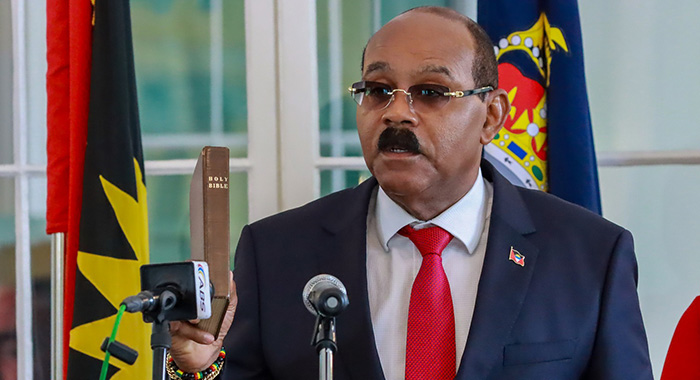
    The Antigua and Barbuda Labour Party (ABLP) commemorated its third anniversary in government with a formal statement from Party Chairman Hon. E.P. Chet Greene expressing profound appreciation to the nation’s citizens. The message highlighted that public support, prayers, and collective effort have been fundamental drivers behind the country’s developmental trajectory over this period.

    Chairman Greene specifically acknowledged the continued public trust placed in both the party organization and Prime Minister Gaston Browne’s administration. The statement emphasized that significant accomplishments across multiple sectors—including education modernization, healthcare improvements, infrastructure development, and economic empowerment initiatives—represent collective national achievements rather than purely governmental successes.

    Government officials including the Prime Minister, Cabinet Ministers, and broader ABLP membership joined in conveying sincere gratitude for the public’s partnership. The anniversary statement framed these three years as evidence of effective national unity and shared purpose.

    Looking forward, the party leadership reaffirmed its governance commitment through dedicated service, ethical conduct, and persistent focus on enhancing living standards for all families. The vision articulated promotes building a nation where prosperity becomes both broadly accessible and sustainably elevated.

    Concluding with a forward-looking perspective, the statement combined elements of faith and purpose to assure citizens that continued diligence and committed service would yield even greater national advancements in the future.

  • Barbados goes to the polls for another snap election on February 11

    Barbados goes to the polls for another snap election on February 11

    Barbados Prime Minister Mia Amor Mottley has officially declared February 11, 2026, as the date for the nation’s next general election, marking her second consecutive early electoral call. The announcement came during a significant political gathering at Westbury Primary School, where the Barbados Labour Party (BLP) finalized its candidate nomination process for the City of Bridgetown constituency.

    The event witnessed attorney Michael Lashley securing his nomination as the BLP’s candidate, completing the party’s full slate of 30 contenders. Lashley, who transitioned from the Democratic Labour Party to join the BLP just last year, faced no opposition during the nomination process.

    Prime Minister Mottley disclosed that she had formally consulted with President The Most Honourable Jeffrey Bostic at State House earlier in the day, initiating the constitutional process for dissolution. She subsequently directed Attorney General Dale Marshall, present at the gathering, to commence immediate preparations for the election writs.

    According to the established timeline, Barbados’ Parliament will undergo formal dissolution on January 19, with Nomination Day scheduled for January 27, creating a three-week campaign period leading to the February 11 election. Mottley, who secured overwhelming victories for the BLP in both the 2018 and 2022 elections, now seeks an unprecedented third consecutive term as the nation’s leader, testing her party’s continued dominance against the opposition Democratic Labour Party.