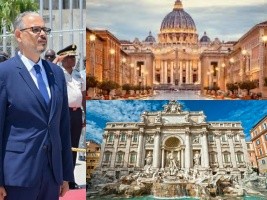
Haiti’s Prime Minister Alix Didier Fils-Aimé is set to lead a high-ranking government delegation on an official working visit to Rome and the Holy See from May 8 to 11, 2026, the Prime Minister’s Office has officially announced. This four-day mission marks a key step in Haiti’s ongoing push to deepen diplomatic ties with the Vatican and expand collaboration with its global network of international partners. It also underscores the Haitian government’s public commitment to strengthening joint work across humanitarian action, social progress, and long-term sustainable development initiatives for the country. The Vatican has formally confirmed that it will host the Haitian prime minister on May 9, 2026, as part of the scheduled itinerary. A core component of the visit’s Vatican program is an invitation extended by Cardinal Pietro Parolin for Fils-Aimé to take part in a special “spiritual mobilization” gathering and a Mass dedicated to peace in Haiti, both set to be held at St. Peter’s Basilica. While strengthening bilateral diplomatic relations is a central goal of the trip, the official government statement does not explicitly confirm whether Fils-Aimé will hold a private audience with Pope Francis. It does, however, confirm that the prime minister will hold discussions with the highest levels of the Vatican’s governing hierarchy. Beyond his engagements in the Vatican, Fils-Aimé will also hold a series of high-level diplomatic meetings with leadership representatives of major international organizations based in Rome during his stay in the Italian capital. These closed-door and public discussions are expected to center on Haiti’s most pressing national priorities, the Haitian government’s ongoing work to restore political and social stability across the country, and new opportunities for international solidarity and partnership that deliver tangible benefits to the Haitian people. In its official announcement, the Haitian government emphasized that the mission reaffirms its commitment to pursuing an proactive, dialogue-centered diplomatic agenda that prioritizes cooperation and delivers concrete solutions to the complex challenges currently facing the Caribbean nation.
分类: politics
-
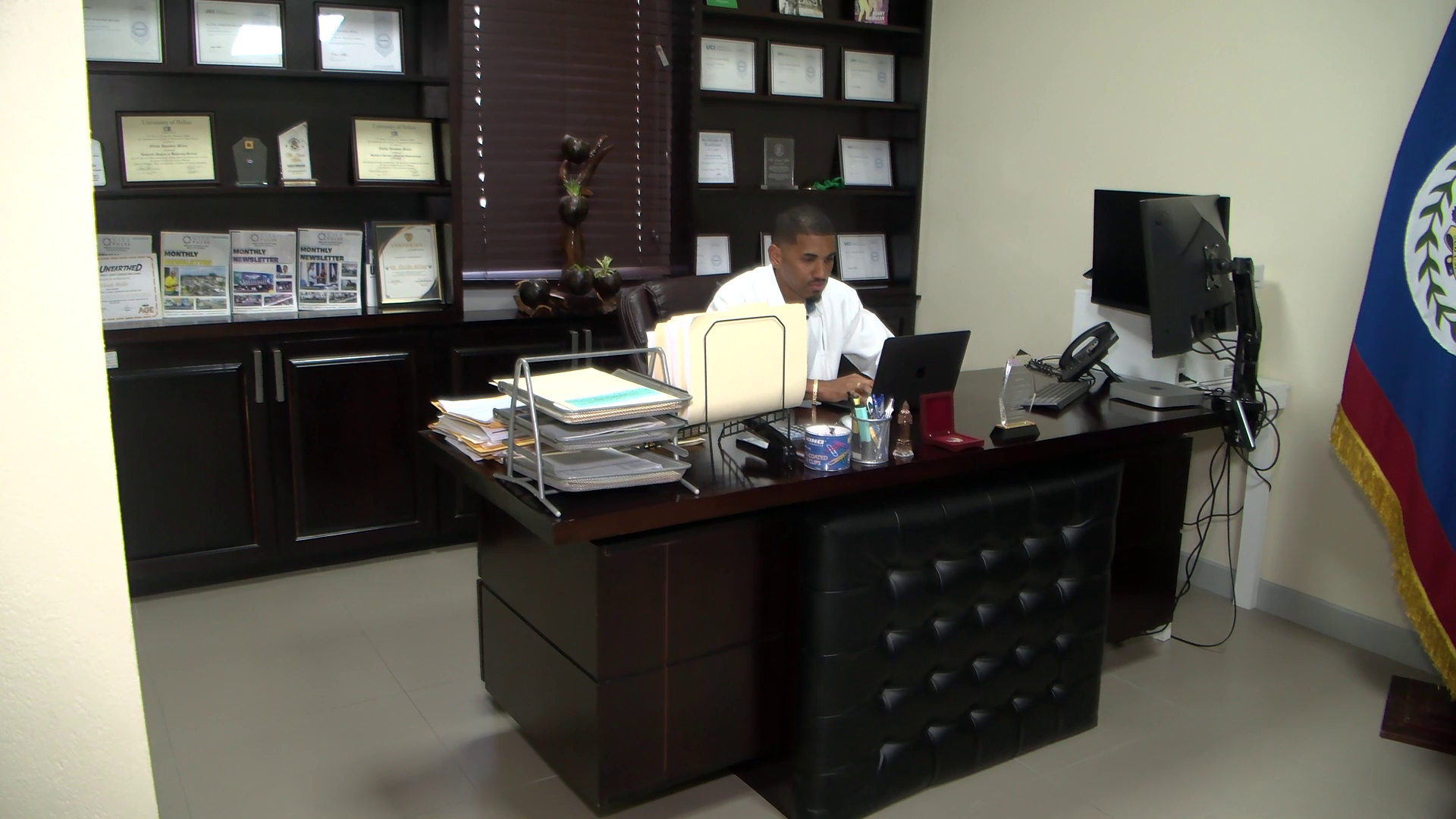
Beyond Politics: Eluide Miller’s Full-circle Journey to City Hall
BELIZE CITY – May 6, 2026 – In a municipality often dominated by divisive, difficult headlines, rising Belize City political leader Eluide Miller is crafting a different narrative of public service, one rooted in purpose rather than political opportunism. At just 29 years old, the newly installed Deputy Mayor has gone from being a young student in Port Loyola’s neighborhood classrooms to sitting in the leadership wing of City Hall, working to lift up the same community that gave him his start. For Miller, this role is far more than a political title: it is the completion of a lifelong full-circle journey.
During a recent reflective visit to the sites that shaped his early years, Miller stepped back through the doors of Port Loyola Preschool – the very learning space where his educational journey began. Accompanied by his brother Kris, the 29-year-old leader said the return reminded him of the humble origins that continue to guide his policy and leadership choices today. “I wanted to do a stop in today to leave some treats for the other students who will pass through,” Miller explained of the visit.
He also made a quick stop at Saint John’s Vianney Catholic School, the primary school where he completed most of his elementary education. Recounting his uneven school path, Miller noted: “I did infant two, standard one, here. Went to PG, do standard two and three, came back here, did four and went to Corozal and did five and six.” These scattered days in Port Loyola’s neighborhood schools built the foundational values that drive his public service today.
Now, as Belize City’s second-highest ranking municipal official, Miller has grown both personally and professionally, building on the academic foundation he earned at the University of Belize (UB). Dr. Vincent Palacio, UB’s current president and Miller’s former academic advisor, offered high praise for the young leader’s early track record of service. “He became the president of our student government association not only for our Belize City Campus but from all the other campuses. And by virtue of this he became a trustee on the board of trustees. This is the highest authority for the University of Belize. So he looked out for the people he served and himself. And not only that, he was a sports man,” Palacio shared.
Even with the demanding full-time schedule that comes with serving as Deputy Mayor, Miller prioritizes staying connected to colleagues and maintaining personal wellness. Daily cycling is his go-to routine, a habit he shares with Belize City Councilor Kaya Cattouse, who has worked alongside Miller for multiple terms. Cattouse credits Miller with building unprecedented cohesion among the city’s council members. “Over the years I have been working with him, I have seen him to take the team of councilors we have to another level. This is my second term at the Belize City Council and this is the most cohesive we have been as a group and I would attribute that to Eluide becoming the deputy mayor and being the glue that holds us today,” Cattouse said.
Walking the halls of City Hall, Miller pauses to honor the leaders who held office before him, stopping to point out a portrait wall of past mayors that includes Belizean political icon George Price, who served as mayor from 1956 to 1962. Beyond the titles, the policy debates, and the daily work of municipal governance, Miller says his most important role is being a father to his soon-to-be two-year-old daughter. That relationship, he says, keeps him grounded in the long-term impact of his work. “It is a daily reminder of the importance of the work that I do, because the work that we do here at the council as a team really shapes the city, but also a Belize that my family, your family, and all the residents will have to live in for generations to come,” Miller explained.
Miller’s rise through the municipal ranks was not overnight. He cut his teeth as a City Hall intern before earning a council seat in 2024, and he has already shared that he aspires to one day hold the position of Belize City Mayor. For the young leader, his entire journey is meant to serve as an inspiration for other young Belizeans growing up in Port Loyola and across the city: that staying rooted in community can lead to meaningful change, even in the messy world of politics. This report was compiled from original on-the-ground reporting by Paul Lopez for News Five.
-

Independent candidates begin Positioning ahead of possible election call
BASSETERRE, St. Kitts – As speculation mounts that St. Kitts and Nevis will call a general election before the end of 2026, two would-be independent candidates have stepped out of political obscurity to launch their campaigns, challenging well-established incumbent representatives from major parties.
Media reports circulating this week confirm that Henry Marsham and Kurtisse Caines have publicly announced their plans to contest parliamentary seats in the upcoming vote. While SKNVibes.com has not independently verified an unconfirmed flyer shared widely across social media platforms, the document indicates Caines will aim to unseat former Prime Minister Dr. Timothy Harris in Constituency Seven.
For his part, Marsham, an overseas-based health professional, is set to face off against incumbent Agriculture Minister Samal Duggins, the sitting St. Kitts-Nevis Labour Party representative for Constituency Four. In a recent interview on WINN FM’s current affairs program *Inside the News*, Marsham laid out his motivation for entering the race: a widespread sense of neglect among constituents, who he says are abandoned by elected officials immediately after polling day.
“Once they get elected, we don’t see them, and this cycle has to stop,” Marsham stated. “There is a great deal of unaddressed need in Constituency Number Four, and that is one of the core reasons I made the decision to run.” He added that his years of leadership experience and professional background in health care uniquely equip him to deliver tangible results for his constituency, noting that empty political promises from major party candidates have left voters disillusioned. “Too much empty promises,” he emphasized. “I’m putting my hat in the ring to win this seat, work for the people of Constituency Four, and serve all the people of St. Kitts and Nevis broadly.”
A key draw of running as an independent candidate, Marsham explained, is the ideological flexibility it affords. “I chose to run independently because I want the flexibility to work across political lines and focus on context-specific solutions rather than rigid party priorities,” he said. He has also confirmed that he will relocate back to the Federation full time to serve his constituency if he wins the vote.
Not all political observers are optimistic about the independents’ chances, however. Veteran regional political analyst Peter Wickham argues that independent candidates face a steep uphill climb in the Federation’s established two-party political system. When asked if he believed the candidates could pull off an electoral win, Wickham responded bluntly: “I don’t think they will.”
Wickham noted that while a small number of independent candidates have won legislative seats across the Caribbean region, these victories are extremely uncommon, and almost always tied to one-of-a-kind local political circumstances. In St. Kitts and Nevis specifically, dozens of independent hopefuls have launched campaigns over the decades, but very few have managed to meaningfully disrupt the dominance of the country’s major established political parties. Despite this expert analysis, Marsham remains undeterred in his bid to upend the status quo for Constituency Four voters.
-

Opposition senator criticises ‘vague drafting’ in new Older Persons Bill
A heated legislative debate has unfolded in the Barbadian Senate over the proposed Protection of Older Persons Bill, with opposition Senator Karina Goodridge launching a detailed critique of what she describes as dangerously vague drafting and overconcentration of power in the hands of government ministers.
While Goodridge openly praised the administration for responding to public calls to protect vulnerable adults aged 65 and over, she emphasized that the current iteration of the legislation is too open to subjective interpretation, a flaw that could lead to legal chaos and wrongful targeting of ordinary citizens. Her criticism focused heavily on Section 2, the bill’s clause defining elder abuse. According to Goodridge, the existing wording casts an overly broad “net” that fails to include a clear, objective legal standard, specifically the widely accepted reasonable person’s test that would guide consistent application of the law.
Beyond the definition of abuse, Goodridge raised pointed questions about the bill’s framework for approving caregivers for older adults. The legislation grants the responsible minister sole authority to designate “fit persons” to provide care, but it does not outline explicit qualification criteria for either the caregivers or the standards the minister must use to make these decisions. She argued that leaving this determination open to subjective judgment rather than clear, written rules creates unnecessary risk of future disputes and unfair outcomes. “Why is this power given to the minister, and what qualifies the minister now to make that decision?” Goodridge asked, noting that clear guidelines would avoid preventable problems down the line.
Goodridge also turned scrutiny to Section 10, which sets harsh penalties for violations: a fine of up to $100,000 and a five-year prison sentence. She warned that without explicit definitions of specific offenses, the bill could inadvertently criminalize accidental or unintentional actions that cause no harm to older people. “If the punishments are to become onerous, then the crime must be explicitly defined with no room for misinterpretation,” Goodridge said. “We really don’t want to set that kind of precedent as a country.”
One of the most controversial points of her critique targeted Section 34, which imposes legal liability on publication distributors for content they distribute that relates to elder care and protection. Goodridge questioned why third-party distributors, who do not edit or curate the content they deliver, should be held legally responsible for material they carry, arguing the provision effectively forces distributors to take on the role of editorial oversight that does not align with their job function. “If I’m distributing a paper, then I could be liable. That didn’t make no sense to me in Bajan terms. It is asking the distributor to also have editor responsibilities,” she said.
Goodridge’s line-by-line analysis drew immediate pushback from government lawmakers. Leader of Government Business Senator Lisa Cummins rejected Goodridge’s concerns about excessive ministerial power, noting that references to the “minister” in Barbadian legislation conventionally refer to the office and its team of professional technical staff, not unilateral decision-making by a single individual. Senate Deputy President Liz Thompson joined Cummins in pushing back, reminding Goodridge that clause-by-clause review is reserved for the committee stage of legislative debate, not the first reading of the bill.
Critics also questioned Goodridge’s experience with legislative drafting, but the opposition senator stood firmly by her analysis. She argued that all senators have a duty to flag drafting flaws regardless of procedural conventions, noting that legal opinions often vary among attorneys and that the body has a responsibility to pass clear, well-crafted law. “I will give my opinion on the sections fairly in accordance with the knowledge that I have,” Goodridge responded. “Many times attorneys will say one thing and the next attorney will say the other… we have to ensure any bill we are passing is properly drafted for us senators to accept.”
Closing her remarks, Goodridge urged the full Senate to revise the bill to clarify ambiguous language before advancing it, warning that failing to fix the issues now would force the country’s judicial system to resolve costly and time-consuming legal disputes over ambiguities later. “We care about the elderly,” she emphasized. “But we have to ensure the legislation is properly defined and every section is clear so that we can avoid misinterpretation.”
-

Belize Draws Up Rules for Drone Operators
As unmanned aerial vehicles, more commonly known as drones, become increasingly integrated into daily life across Belize — appearing at major public events, agricultural operations, and even residential neighborhoods — the lack of formal oversight for the fast-growing industry has emerged as a pressing policy challenge. By far the most critical unaddressed issue is the overwhelming number of drone operators currently flying without mandatory registration, creating gaps in accountability that put public safety and personal privacy at risk.
To close this regulatory gap, Belize’s Civil Aviation Department has launched a public consultation process for a comprehensive new set of drone rules, unveiled this week in a 55-page draft regulatory proposal. The opening of the public comment period drew a diverse crowd of stakeholders, including recreational drone hobbyists, commercial service providers, and industry representatives, all eager to weigh in on the framework that will shape the future of the country’s drone sector.
The high turnout for the initial consultation underscores a reality many observers have noted: Belize’s drone industry has expanded far faster than the government’s ability to update governing policies. Civil Aviation Department Director Nigel Carter emphasized that the new rules are a proactive step to prevent crises before they occur, rather than reacting to tragedies after the fact. “We don’t want to wait for there to be accidents involving manned aircraft,” Carter explained. “We also don’t want to continue receiving growing numbers of complaints from members of the public whose privacy has been violated, with reports of drones peeking through residential windows.”
The proposal has received a generally warm reception from commercial operators that have long operated in a regulatory gray area, though many have called for key adjustments to ensure long-term stability. Carlin Strite, a drone operator with Agrobotics — a firm that has used agricultural drones for crop spraying across Belize for four years — noted that the push for formal, clear rules is a long-awaited win for the industry. At the same time, he stressed that consistent, stable regulation is critical for businesses planning long-term investments. “The biggest problem we have had with informal rules to date is that they’re constantly shifting, and officials have never published a definitive, fixed set of requirements we need to follow,” Strite explained. “That constant uncertainty makes planning very confusing for commercial operators.”
Under the current draft proposal, both registration and licensing for drone operators are set at roughly $30 per credential. Following the opening of public comment this week, members of the public and interested stakeholders have an additional two weeks to submit written feedback before the Civil Aviation Department moves forward with revising and finalizing the regulations.
-
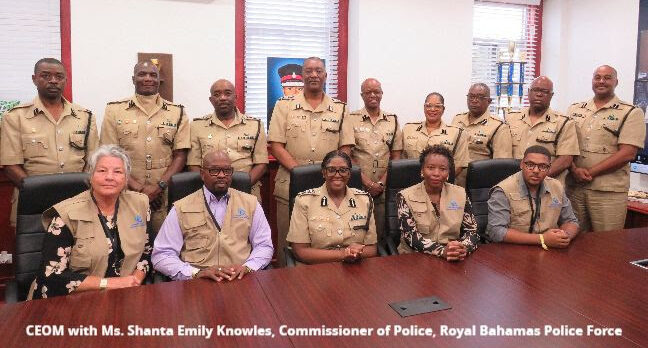
STATEMENT: CARICOM Election Observation Mission (CEOM) to the Commonwealth of The Bahamas
The Caribbean Community (CARICOM) Secretariat has answered an official invitation from The Bahamas’ top representative to the Commonwealth, moving forward with plans to deploy a 12-person international election observation mission ahead of the country’s upcoming general election on 12 May 2026. The invitation, delivered in a formal letter dated 10 April 2026, came from Dame Cynthia A. Pratt, O.N., GCMG, Governor-General of the Commonwealth of The Bahamas, opening the door for independent regional monitoring of the democratic process.
Leading the CARICOM Election Observer Mission (CEOM) is Herman St. Helen, Chief Elections Officer of the Saint Lucia Electoral Department, with Debra Hughes, Chairperson of Barbados’ Electoral Commission, stepping in as Deputy Chief of Mission. The 10 additional mission members drawn from independent electoral bodies across the Caribbean region include Alrick Daniel (Electoral Commission Member, Antigua and Barbuda), Ambassador Felix Gregoire (Chairman of Dominica’s Public Service Commission), Therona Lashington (Assistant Supervisor of Elections, Grenada), Peterson Pierre-Louis (Secretary-General of Haiti’s Provisional Electoral Council), Denese Coley-Hines (Regional Field Manager, Jamaica Electoral Commission), Kadean Williams (Systems Supervisor, Electoral Commission of St. Vincent and the Grenadines), and Cecil Valies (Member of Suriname’s Independent Electoral Council). Three CARICOM Secretariat staff members – Shae Alicia Lewis, Programme Manager for Community Relations; Cameron Clarke, Project Officer for Foreign and Community Relations; and Denise Morgan, Administrative Assistant for Foreign and Community Relations – provide administrative and logistical support to the observer team.
To lay the groundwork for their assessment, the mission’s core leadership group, consisting of the Chief of Mission, Deputy Chief of Mission, and CARICOM Secretariat support personnel, arrived in Nassau on Tuesday, 5 May 2026. The rest of the observer delegation will join them between 7 and 8 May 2026, and the full mission is scheduled to depart The Bahamas between 14 and 15 May 2026, after all post-election preliminary activities are completed.
Throughout their deployment, the CEOM will carry out a neutral, comprehensive evaluation of every stage of the electoral process, covering pre-election preparations, election day voting operations, and the post-election political climate. The assessment will examine key details ranging from the conduct of political parties and candidates to public and institutional response to the final election results.
In the lead-up to voting day, the mission has already held introductory meetings with a broad range of national stakeholders, including Commissioner of Police Shanta Emily Knowles, youth organization representatives, and local media outlets. In the coming days, the team is set to hold additional consultations with The Bahamas’ sitting Prime Minister, Leader of the Opposition, leaders of all contesting political parties, and independent candidates. It will also meet with officials from the Parliamentary Registration Department, as well as representatives from civil society organizations and both private and public sector groups to gather diverse perspectives on the electoral process.
On 12 May, election day, observers will be deployed across polling locations to monitor every step of voting operations, from pre-opening preparations and the opening of polling stations, through the casting of ballots, the closure of polls, the counting of votes, and the compilation of official Statements of Poll for each constituency.
After the conclusion of voting, the CEOM will first release a public Preliminary Statement outlining its initial findings on the integrity of the electoral process. A full Final Report will then be compiled for the Secretary-General of the Caribbean Community, which will subsequently be shared with the Prime Minister of The Bahamas, Leader of the Opposition, Parliamentary Registration Department, and published in full on the CARICOM official website for public access.
In a statement following the mission’s arrival, the CEOM expressed gratitude for the warm welcome and cooperative reception it has received from Bahamian stakeholders, and emphasized its commitment to supporting the strengthening of democratic governance across the Caribbean region through independent, transparent election observation.
-
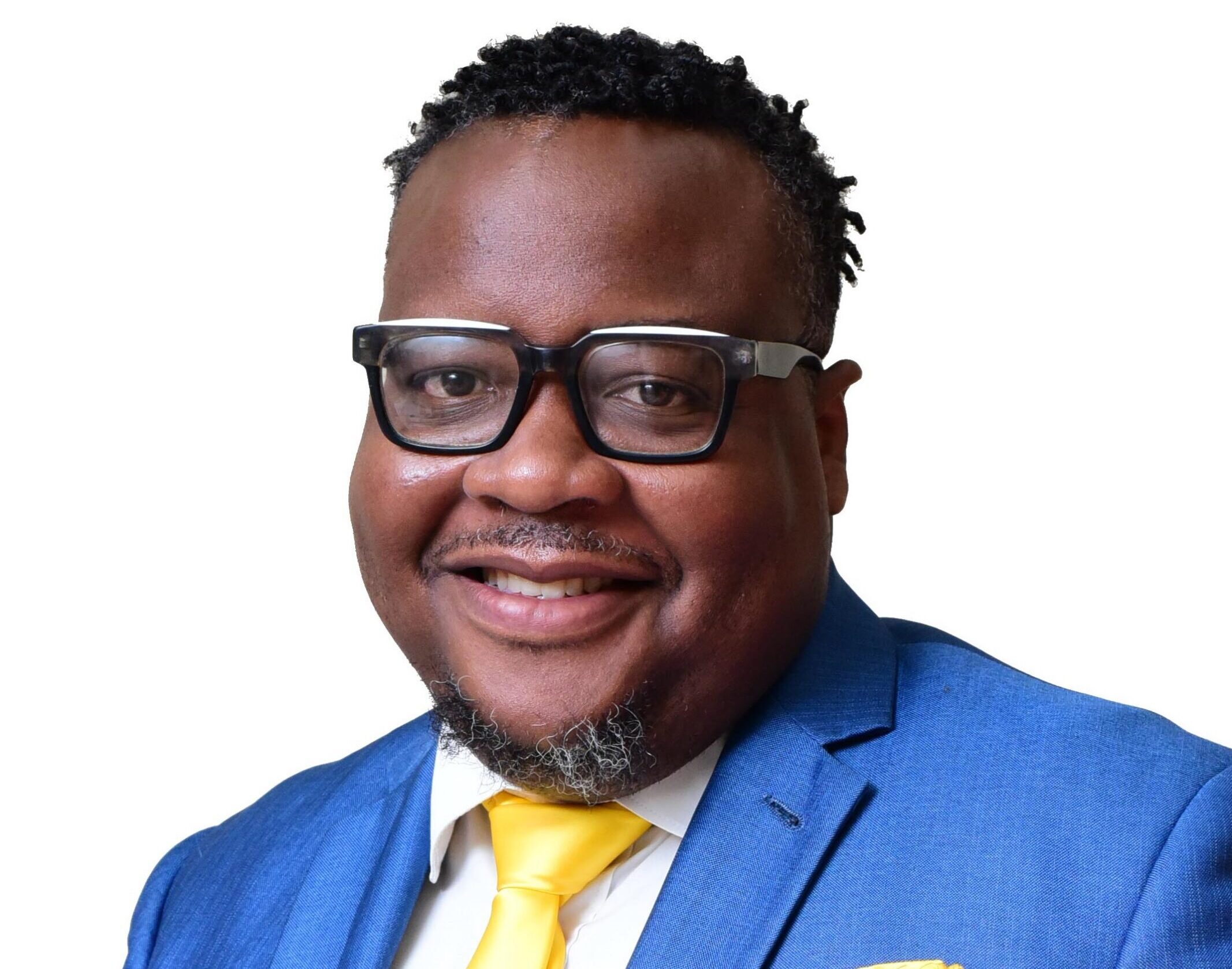
DLP calls on Government to address 11-Plus issues
A political dispute has erupted in Barbados over the administration of the 2024 Barbados Secondary Schools Entrance Examination (BSSEE), better known locally as the 11-Plus, after the main opposition Democratic Labour Party (DLP) rejected the governing administration’s claims that the high-stakes national test ran smoothly on Tuesday.
Over 2,700 students across the island sat the exam, which determines secondary school placement for young learners. But in an official statement released Wednesday, DLP’s education spokesperson Quincy Jones pushed back hard against claims from Education Transformation Minister Chad Blackman, who dismissed Tuesday’s disruptions as nothing more than minor administrative hiccups. Jones argued the documented issues on exam day reveal far deeper, systemic failures in the Ministry of Education’s planning and execution that cannot be brushed aside.
“What Barbados is witnessing is not a slight delay or inconvenience; it is a clear and troubling breakdown in the Ministry’s systems,” Jones emphasized in the statement.
Jones pointed specifically to verified reports that test packets arrived hours late to one of the island’s key exam hubs, St Michael School, a disruption that impacted hundreds of students drawn from multiple local primary schools. Beyond the late papers, he raised urgent red flags about chaotic, last-minute arrangements for students requiring special testing accommodations, a group that has grown steadily in recent years as education authorities expand accessibility provisions. He also questioned whether exam centers had robust, well-rehearsed emergency protocols in place to respond to on-site medical events involving student test-takers.
Jones stressed that these failures are not trivial administrative missteps. “[These] are not administrative ‘hiccups.’ They are signs of poor planning, weak execution, and a failure to manage the basic responsibilities of the office,” he said.
Jones’ criticism came one day after Blackman publicly defended the government’s management of the exam, telling reporters that the 2024 BSSEE was overwhelmingly successful, with only one isolated delay reported at a single center. “There was some delay earlier at the St Michael School, but we’re going to ensure that we look into it,” Blackman told reporters Tuesday, adding that the overall examination process “ran smoothly.”
But Jones rejected the government’s attempts to downplay the disruptions, noting that the 11-Plus is a high-stakes test that shapes the academic trajectory of every participating student. He added that Barbados has a long track record of successfully administering large-scale national exams, including the regional Caribbean Secondary Education Certificate (CSEC) and Caribbean Advanced Proficiency Examination (CAPE), without the level of chaos and confusion seen during Tuesday’s 11-Plus. The root of the problem, Jones argued, is not flaws in the long-standing exam framework itself, but ineffective political leadership overseeing the process.
“The Minister cannot hide behind soft language and public relations spin while students sit in uncertainty, teachers scramble for solutions, and parents are left concerned about both fairness and safety,” Jones said.
The DLP is now formally calling on the Ministry of Education to deliver public, transparent answers to three core questions: what caused the late delivery of examination papers, how prepared are exam centers to accommodate the rising number of students with special needs, and what concrete measures are in place to protect vulnerable candidates during on-site emergencies.
Jones argued that even individual failures add up to a broken system: “If examination papers are arriving late, if centres are stretched beyond capacity, and if there is no clear communication on how medical emergencies like seizures or diabetic episodes are handled, then the system is failing.”
He repeated the opposition’s demands for full transparency, asking: “The country deserves clear answers: why were examination papers late? Why was there inadequate preparation for the growing number of students requiring special accommodations? What emergency systems are in place to protect vulnerable students during examinations?”
Jones closed by noting that Barbadians expect competent governance from their elected leaders, not excuses for mismanagement. He insisted that Minister Blackman must take full personal and political responsibility for the confirmed failures on exam day.
-
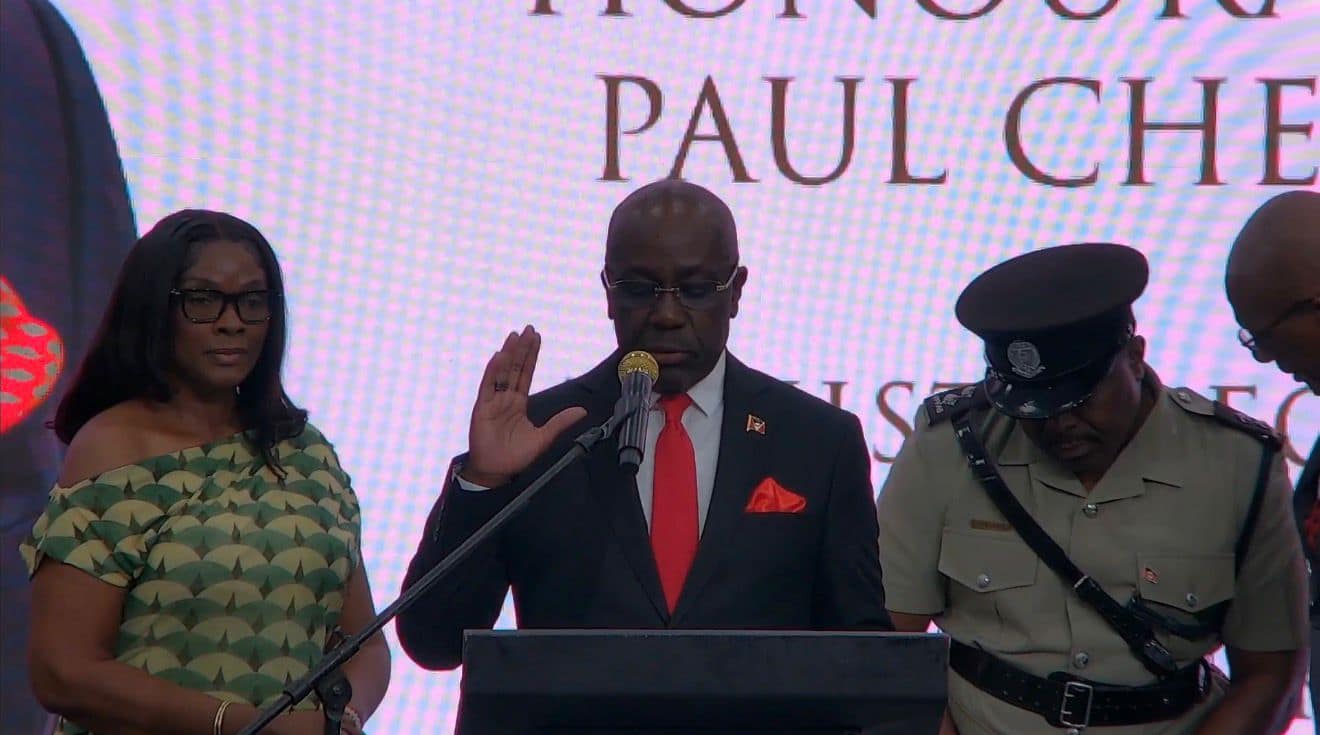
Antigua and Barbuda swears in a new Cabinet, dropping a 40-year oath to the British monarch
The twin-island Caribbean nation of Antigua and Barbuda has entered a new political era this week, with its newly elected Cabinet officially sworn into office on Tuesday. The inauguration comes just days after incumbent Prime Minister Gaston Browne led the Antigua and Barbuda Labor Party (ABLP) to a groundbreaking electoral milestone: an unprecedented fourth consecutive term in power, a victory no political party in the nation’s modern history has achieved.
In a break from centuries of colonial legacy, this swearing-in ceremony marked a historic first for the country: all elected officials took an oath of allegiance directly to Antigua and Barbuda, abandoning a 40-year-old tradition of pledging loyalty to the British monarch, a holdover from its time as a British colony. The constitutional change that enabled this shift was approved by Parliament back in December 2023, which formally removed language requiring loyalty to King Charles III, his heirs and successors from the official oath. The updated oath now requires elected representatives to pledge allegiance to the state of Antigua and Barbuda, its constitution, and its body of national laws.
Addressing attendees at the inauguration, Prime Minister Browne emphasized the weight of the popular mandate his administration has received. “Whereas your success at the polls has earned you the confidence and trust of the people; that confidence and trust collectively, is not a gift to be enjoyed, or trust to be betrayed. It is a burden to be carried, a duty to be performed, a trust to be honored every single day,” Browne told the newly sworn-in Cabinet and gathered onlookers.
The scale of the ABLP’s electoral victory reshaped the country’s parliamentary landscape dramatically. The ruling party secured 15 out of the 17 available seats in the national legislature, leaving the main opposition United Progressive Party (UPP) with just a single seat. UPP leader Jamale Pringle was the only member of his party to retain his position, after the party’s seat count collapsed from five in the previous parliament to one. The only other opposition member will be Trevor Walker, a long-serving legislator who won election under the Barbuda People’s Movement banner. Walker has claimed victory in every general election held since 2004, with the sole exception of the 2014 vote.
The snap general election that led to this outcome was called two full years ahead of the constitutionally mandated deadline. The entire campaign cycle was dominated by two key voter priorities: the persistent rise in the cost of living across the country, and large-scale infrastructure development plans proposed by competing parties.
-
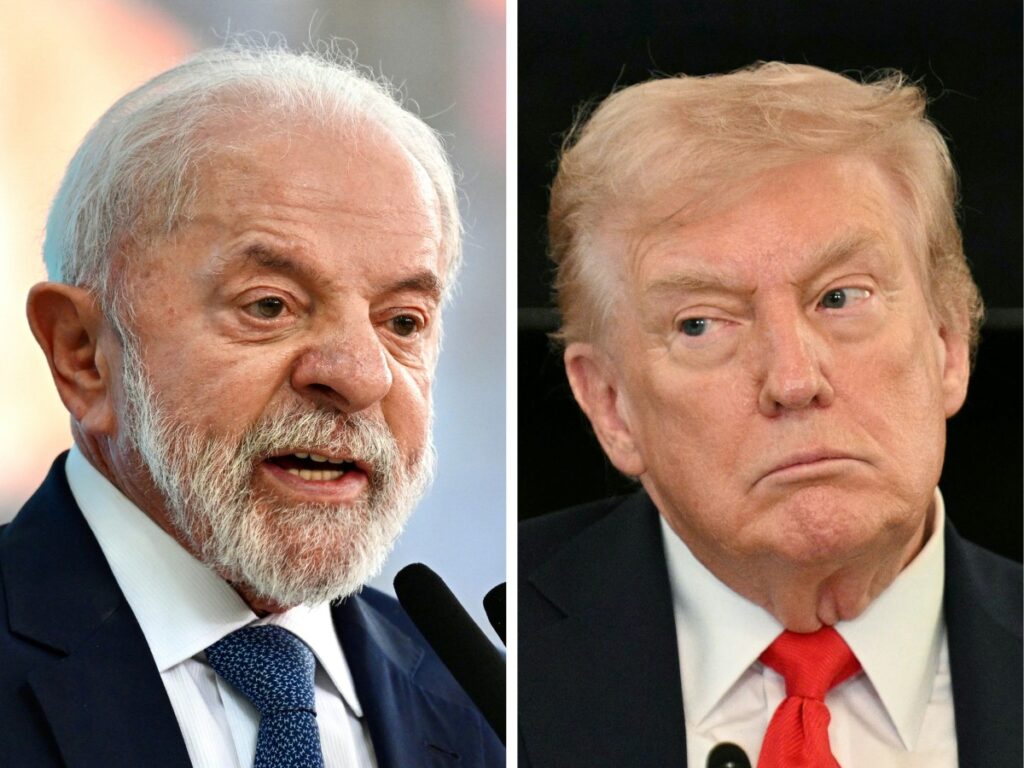
Brazil’s Lula and Trump hail positive talks after rocky relations
In a surprising turn of diplomatic events that bridges deep ideological divides, former U.S. President Donald Trump and Brazilian President Luiz Inacio Lula da Silva celebrated a unexpectedly constructive three-hour working meeting in Washington on Thursday, where the two ideological foes moved to ease long-running bilateral tensions.
At 79 and 80 years old respectively, the two leaders carry wildly different personal and political backstories: Lula, a leftist who rose from extreme poverty to lead Latin America’s largest economy, and Trump, a right-wing billionaire who has long pushed for aggressive U.S. dominance across the Americas. The pair have a history of public clashes on issues ranging from trade tariffs to regional geopolitics, but their meeting stretched well past its originally scheduled end time, with both leaders appearing upbeat and smiling in post-meeting photographs as they worked to identify shared ground on divisive issues impacting the hemisphere’s two largest economies.
Taking to his Truth Social platform immediately after the talks, Trump offered a positive assessment of the dialogue, writing: “Just concluded my meeting with Luiz Inacio Lula da Silva, the very dynamic President of Brazil. We discussed many topics, including Trade and, specifically, Tariffs. The meeting went very well.” Despite historically rocky diplomatic relations between the leaders’ aligned political blocs, Trump has repeatedly spoken favorably of Lula’s charismatic political style in past comments.
For his part, Lula echoed the positive tone, telling reporters he was “very, very satisfied” with the outcome of the meeting. He even leaned into the power of visual symbolism, joking: “I always feel that a photograph is worth a great deal. And you surely noticed that President Trump smiling is better than him looking grumpy.”
The high-profile, extended meeting comes at a critical political juncture for Lula, who is gearing up for a tight October presidential election contest against Flavio Bolsonaro, son of former Brazilian far-right president Jair Bolsonaro—one of Trump’s closest ideological allies in the region. Lula, a veteran leftist leader, is currently running for a fourth non-consecutive term as Brazil’s head of state.
Relations between the two leaders hit a low point earlier this year, when Trump imposed steep sweeping tariffs on all Brazilian exports in July, framing the move as retaliation for what he labeled a political “witch hunt” against Jair Bolsonaro, who is currently serving a 27-year prison sentence for his role in an attempted coup against Lula’s government. Those penalties were partially rolled back after the pair held an initial diplomatic meeting in Malaysia earlier this year, opening the door for Thursday’s full talks.
When asked if he believed Trump’s overtures would impact the upcoming Brazilian election, Lula pushed back on that suggestion. “I do not believe that Trump will “have any influence on the Brazilian elections,” he said, adding, “I think he will conduct himself like a president of the United States, allowing the Brazilian people to decide their own destiny.”
The meeting did not paper over the deep geopolitical differences that separate the two leaders. Lula has previously derided Trump’s global ambitions, once saying Trump sought to be “emperor of the world,” and has openly criticized Trump’s policy of pushing for regime change in Venezuela and his backing of Israel’s military campaign against Iran. Lula acknowledged to reporters that a single three-hour meeting would not erase those long-held divides. “He isn’t going to change his personality just because of a three-hour meeting with me. What I made a point of telling him was my perspective on things I believe far more in dialogue than in war,” Lula explained.
Notable disagreements remained on the table after the talks: Lula noted that “He thinks the war (in Iran) is already over. That’s not the reality. But that’s what he thinks and, you know, I’m not going to sit there arguing with him over his view of the war. He thinks everything in Venezuela is all sorted out.” The conversation did include moments of levity, however: Lula recalled joking with Trump that he should not revoke visas for the Brazilian men’s national football team ahead of the upcoming World Cup, quipping “because we’re coming here to win.” Lula confirmed that Trump laughed off the joke.
Beyond trade and geopolitics, the pair held extensive discussions on two pressing issues: reform of the United Nations Security Council and transnational organized crime. With public security ranking as the top policy concern for Brazilian voters ahead of the October election, Lula and Trump deepened talks on cooperative efforts to crack down on criminal networks and strengthen customs information sharing. In April, the two governments already signed an agreement to share data—including X-ray scans of shipping containers moving from the U.S. to Brazil—to combat cross-border arms and drug trafficking. Lula outlined an ambitious new plan emerging from the talks, saying Brazil is “prepared to form a working group comprising all the countries of Latin America and, perhaps, all the countries of the world, in order to create a powerful coalition to combat organized crime.”
The talks also touched on Brazil’s enormous untapped reserves of rare earth minerals—critical inputs for manufacturing a wide range of high-tech and clean energy products, which the U.S. has been racing to secure alternative supplies for outside of China. Brazil holds the world’s second-largest reserve of these strategic minerals, trailing only China. Just one day before the meeting, Brazilian lawmakers advanced a new bill that would offer incentives for private investment in rare earth exploration, with the legislation next heading to the Brazilian Senate for debate. When asked about Brazil’s approach to foreign investment in the sector, Lula emphasized an open-door policy, saying: “We have no particular preferences. Our objective is to forge partnerships — to collaborate with American, Chinese, German, Japanese, French, or any other companies — that wish to join forces with us to facilitate mining operations, process these materials, and generate the wealth that these rare earth elements offer us.”
-
US sanctions target Cuba’s military, elites
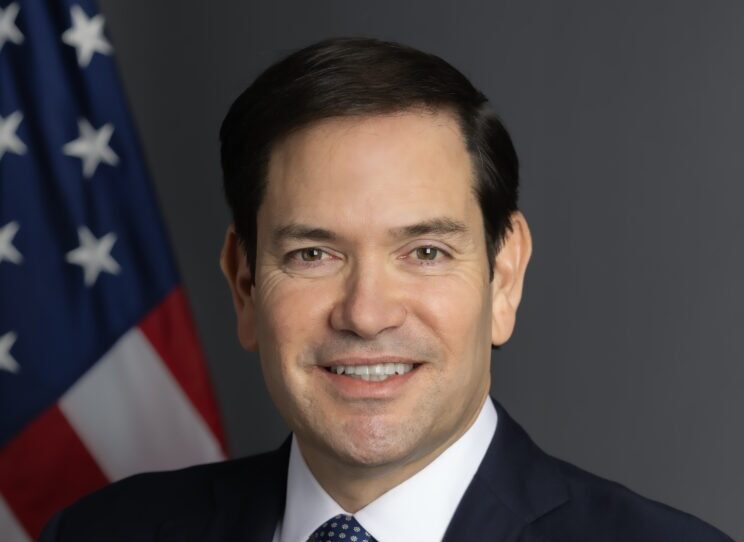
In a new step to escalate pressure on the Cuban government, the second Donald Trump administration has announced sweeping sanctions targeting three major Cuban entities and a senior executive, framing the move as decisive action to safeguard United States national security. U.S. Secretary of State Marco Rubio, who is the child of Cuban immigrants, outlined the penalties during a formal announcement Thursday, saying the measures are designed to cut off access to what Washington calls illicit assets held by Cuba’s ruling government and military establishment.
The sanctions are issued under the authority of Executive Order 14404, signed by President Trump on May 1, 2026, which grants the administration power to penalize actors deemed responsible for political repression in Cuba and threats to U.S. national security and foreign policy interests. Under the order, Rubio formally designated three entities for sanctions: Grupo de Administración Empresarial S.A. (GAESA), a sprawling military-controlled holding conglomerate; Moa Nickel SA (MNSA), a major nickel mining joint venture; and Ania Guillermina Lastres Morera, GAESA’s top executive.
GAESA was targeted for its operations within Cuba’s financial services sector, while MNSA was sanctioned for its activities in the country’s metals and mining industry. Lastres, who serves as executive president of GAESA, was designated for her role as a senior leader of the conglomerate. Rubio described the sanctions as a core component of the administration’s broader campaign to counter what it calls growing national security risks from Cuba’s communist government, and to hold the regime and its backers accountable for their actions.
In his remarks, Rubio doubled down on the administration’s sharp criticism of the Cuban government, claiming that just 90 miles off the U.S. coast, Cuban leaders have reduced the island to economic ruin while opening it up to foreign intelligence, military, and terrorist activities that threaten U.S. interests. He added that additional sanctions designations will be rolled out in the coming days and weeks, warning that the campaign is only in its early stages.
The secretary of state positioned GAESA as the central node of what he called Cuba’s kleptocratic communist system, noting that the conglomerate controls an estimated 40 percent or more of the island’s entire national economy. Rubio alleged that GAESA operates across multiple key economic sectors not to generate broad-based prosperity for the Cuban people, but solely to enrich a small circle of corrupt ruling elites. He claimed that as ordinary Cubans grapple with widespread food insecurity, inadequate healthcare, and crumbling critical infrastructure including the national power grid, most of GAESA’s profits are siphoned off into hidden offshore bank accounts held by elite figures. Citing recent independent public estimates, Rubio said GAESA’s annual revenues likely exceed three times the Cuban state’s official public budget, and that the conglomerate controls as much as $20 billion in undeclared illicit assets globally. Lastres, he added, directly oversees the management of these hidden international assets.
Turning to MNSA, Rubio said the joint venture between Canadian firm Sherritt International Corporation and Cuban state-owned enterprise La Compania General de Niquel exploits the island’s natural resource wealth to line the pockets of regime leaders, at the direct expense of ordinary Cuban citizens. He also noted that the company operates assets that were originally seized by the Cuban government from U.S. citizens and corporations decades ago, a longstanding point of contention between the two nations.
As part of the sanctions announcement, Rubio confirmed that all property and financial interests held by the designated actors that are located within the U.S. or controlled by any U.S. person are immediately frozen, and must be reported to the U.S. Treasury Department’s Office of Foreign Assets Control (OFAC), the agency responsible for enforcing U.S. sanctions programs. Any entity that is 50 percent or more owned, directly or indirectly, by one or more of the sanctioned individuals or groups is also subject to the same blocking measures.
All transactions involving the sanctioned parties carried out by U.S. persons or conducted within or transiting through U.S. jurisdiction are prohibited, unless explicitly authorized via a general or specific license issued by OFAC. These prohibitions extend to any contributions of funds, goods, or services to or for the benefit of a blocked party, as well as the receipt of any such contributions from sanctioned actors.
Rubio also issued a stark warning to third-country actors, saying that any foreign individual or entity that conducts transactions with the newly designated parties, or operates in any of the Cuban sectors identified as high-risk in Executive Order 14404 — including energy, defense, metals and mining, financial services, and security — faces significant risk of being added to U.S. sanctions lists themselves. “Non-U.S. persons, including foreign financial institutions, should proceed with caution in any dealings with a party sanctioned under this authority,” Rubio said. “Actions to return assets to a sanctioned party or transfer them to another jurisdiction for potential use by the target could expose non-U.S. persons to significant sanctions risk.”
The sanctions align with longstanding U.S. trade restrictions on Cuba enforced under the Cuban Assets Control Regulations (CACR), the foundational regulatory framework for the decades-long U.S. embargo on Cuba managed by OFAC. The CACR prohibits any person subject to U.S. jurisdiction from engaging in transactions involving property in which Cuba or a Cuban national holds an interest, unless a specific exemption or authorization is granted. All existing blocked property under the CACR remains frozen following the new designations, Rubio confirmed.
Rubio emphasized that the new sanctions advance multiple core policy objectives of the second Trump administration, not only fulfilling the authority granted by Executive Order 14404, but also advancing the goals of Executive Order 14380 — which addresses perceived threats to the U.S. from the Cuban government — and National Security Presidential Memorandum 5. That memorandum directs the executive branch to prioritize efforts to improve human rights, establish rule of law, build free market systems, and advance democratic governance in Cuba.