分类: politics

  • Caribbean customs officials meet in Santo Domingo

    Caribbean customs officials meet in Santo Domingo

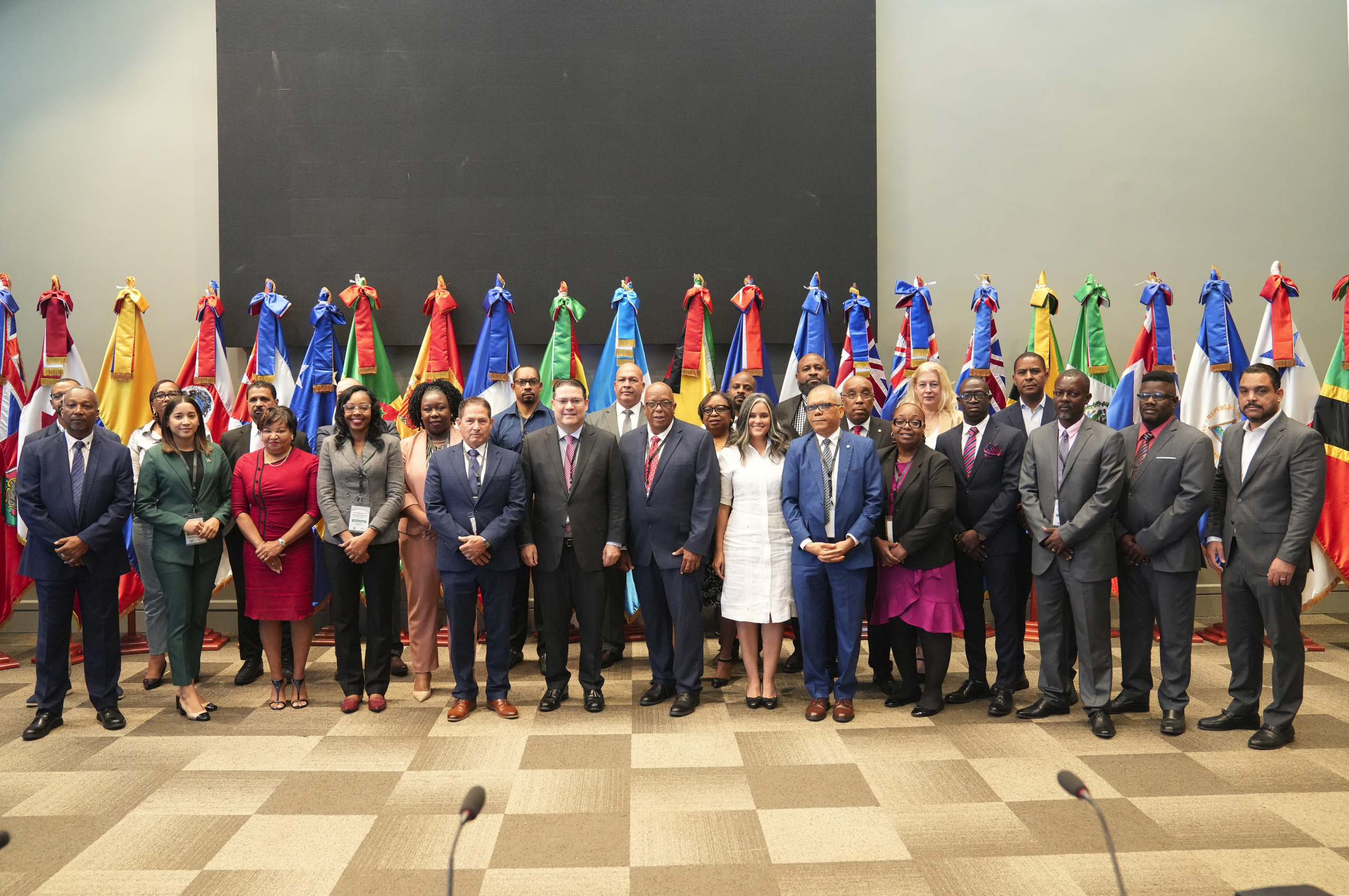
    In a significant move to bolster regional security and economic stability, customs representatives from twelve Caribbean nations convened in the Dominican Republic. The meeting, organized under the Caribbean Council for the Application of Customs Laws (CCALA/CCLEC), aimed to enhance institutional capacity, develop human resources, improve border security, and expand the exchange of customs information. The event brought together English-, French-, and Dutch-speaking customs administrations, alongside representatives from the Dominican Republic and Cuba.

    Eduardo “Yayo” Sanz Lovatón, Director of Dominican Customs, highlighted the government’s commitment to ratifying the 2019 agreement signed in Cuba. This agreement, which requires approval from at least ten member states, seeks to transform CCLEC into the Caribbean Customs Organization, a more robust and unified entity.

    During the discussions, participants reviewed past initiatives and outlined future strategies in areas such as regional intelligence, cybersecurity, capacity building, and information sharing. These measures are critical in combating smuggling and other transnational crimes that threaten the region. The meeting was led by CCLEC President Roderick Lionel Croes and Permanent Secretary Claude Paul, who emphasized the importance of coordinated customs efforts for safeguarding regional security and fostering economic growth.

    The gathering included officials from Aruba, Antigua and Barbuda, Barbados, Bermuda, the British Virgin Islands, Cayman Islands, the Netherlands, Haiti, Jamaica, Montserrat, Saint Lucia, and the Dominican Republic. This collaborative effort underscores the Caribbean nations’ shared commitment to addressing common challenges through enhanced cooperation and strategic planning.
  • El Toque is a tool of manipulation designed to undermine the Cuban economy

    El Toque is a tool of manipulation designed to undermine the Cuban economy

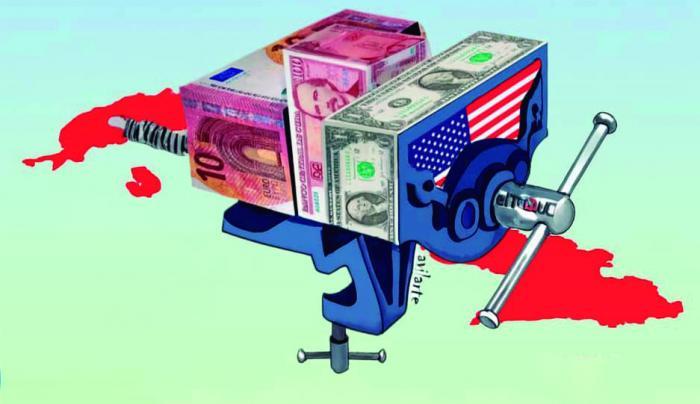
    Cuba’s economy has long been plagued by structural imbalances, impacting critical sectors such as production, energy supply, logistics, and access to foreign currency. Compounding these challenges are internal missteps and the enduring effects of the U.S. blockade, which stifles foreign income, escalates financial burdens, and restricts international trade. Amid this adversity, the El Toque platform has emerged as a destabilizing force, exacerbating economic disruptions and fostering reliance on informal markets, ultimately harming the Cuban populace.

  • Cuba and Vietnam: mutual support even in difficult times

    Cuba and Vietnam: mutual support even in difficult times

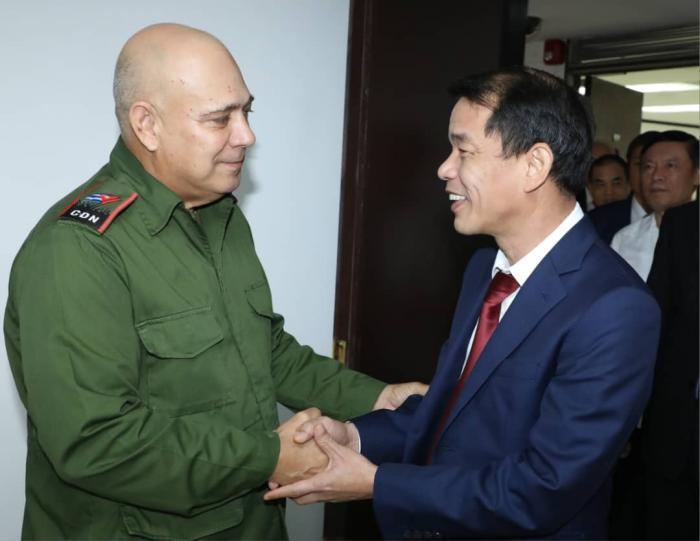
    In a significant meeting that underscores the enduring friendship between Cuba and Vietnam, Roberto Morales Ojeda, a key member of Cuba’s Political Bureau and head of the Political-Ideological Work and Party Organ of the National Defense Council, welcomed a high-level delegation from the Communist Party of Vietnam (CPV). The delegation, led by Vu Thanh Mai, deputy head of the CPV’s Propaganda, Education, and Mass Mobilization Commission, visited Cuba as part of preparations to commemorate the 65th anniversary of diplomatic relations between the two nations on December 2nd. The meeting highlighted the deep-rooted bond forged by historic leaders Fidel Castro and Ho Chi Minh. Morales Ojeda expressed solidarity with Vietnam following recent devastating floods in its central region, while also thanking Vietnam for its support in the aftermath of Hurricane Melissa in eastern Cuba. This exchange of mutual aid underscores the resilience of their bilateral relationship. The discussions also revisited agreements made during recent high-level visits, including the September 2024 trip by CPV General Secretary To Lam to Cuba and Cuban President Miguel Díaz-Canel’s visit to Vietnam in September 2025. Both sides emphasized the importance of continuing the dialogue initiated at the 6th Theoretical Seminar held in Havana earlier this year, with plans to convene the next seminar after their respective party congresses. Morales Ojeda praised Vietnam’s preparations for its 14th Congress in January, drawing parallels to Cuba’s preparations for its 9th Congress in April. He also thanked Vietnam for its steadfast support in Cuba’s fight against the U.S. blockade and its opposition to Cuba’s inclusion on the list of state sponsors of terrorism. Vu Thanh Mai conveyed warm greetings from Vietnam’s top leaders, and the delegation held productive meetings with Cuban economic and social sector departments, as well as the Ñico López Party University.

  • President Ali brushes aside use of cash grant recipients’ personal data for electioneering

    President Ali brushes aside use of cash grant recipients’ personal data for electioneering

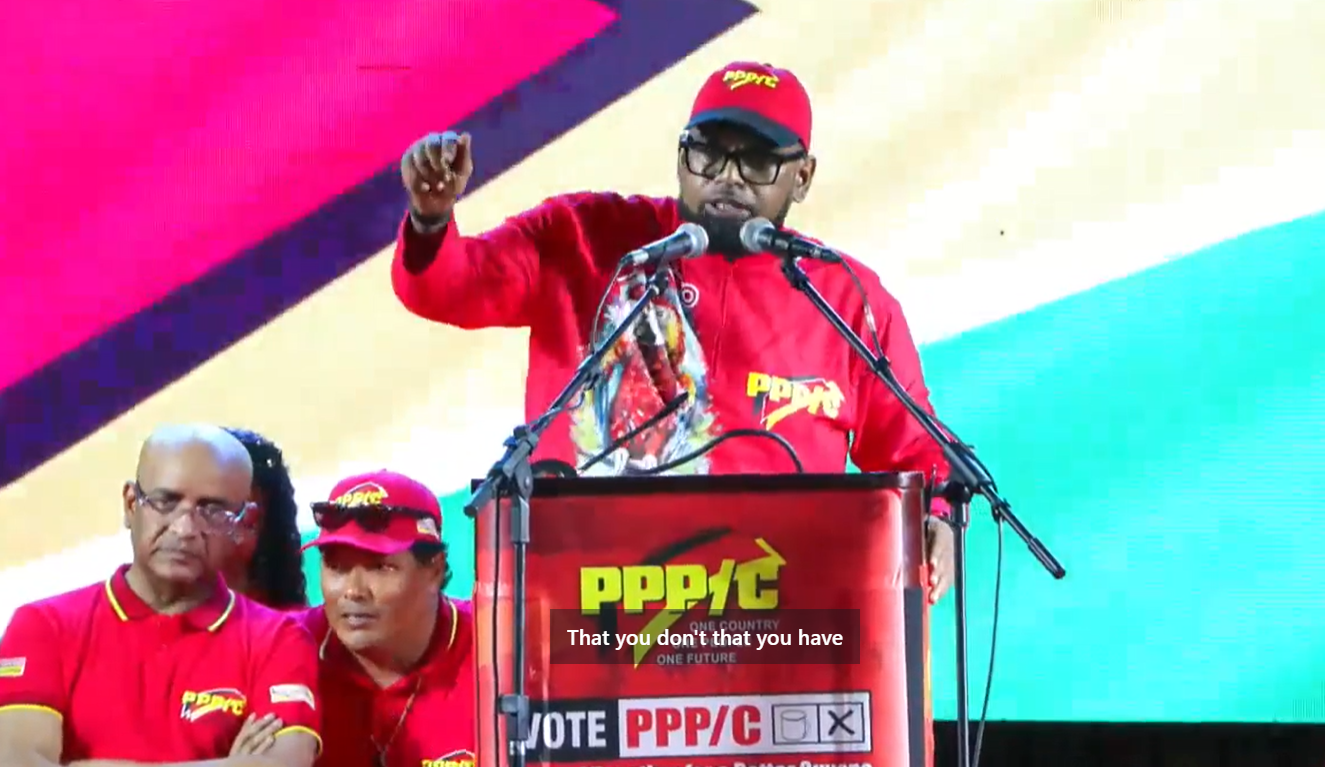
    President Irfaan Ali has firmly rejected claims that his People’s Progressive Party Civic (PPPC) exploited personal data from cash grant recipients for election campaigning. The allegations stem from a report by the European Union Election Observation Mission (EUEOM), which highlighted concerns over the misuse of government-held data during the September 1 general and regional elections. In a Facebook Live commentary, President Ali acknowledged that all political parties, not just the incumbent, had made personalized calls to beneficiaries. However, he neither confirmed nor denied his party’s involvement in using the data for soliciting votes. The EUEOM report emphasized the need to operationalize the 2023 Data Protection Act to prevent such practices in the future, citing politically motivated doxing and misuse of personal data for electoral gains. President Ali also criticized the report for its perceived bias and lack of analysis, arguing that it primarily reflected complaints from opposition parties. He defended his government’s campaign focus on delivering past promises, such as infrastructure projects and subsidies, and called for a fair evaluation of the report’s narratives. Additionally, he mentioned that election campaign financing reforms would be addressed through the Constitutional Reform process, which the EUEOM report allegedly overlooked.

  • Security : Bahamian military visit to Haiti

    Security : Bahamian military visit to Haiti

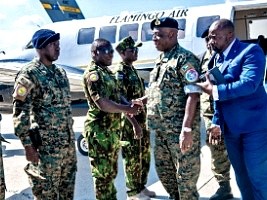
    In a significant move to bolster regional security, Commodore Floyd Moxey, Commander of the Royal Bahamas Defence Force (RBDF), led a high-level delegation to Haiti last week. The delegation included Jerusa Ali, Ambassador and Director General of the Ministry of Foreign Affairs, and Commander Julian Smith, the Chargé d’Affaires of the Bahamas Embassy in Haiti. Accompanied by additional Bahamian military personnel, the group joined the Gang Repression Force (FRG) operations, aiming to combat organized crime and restore stability in Haiti. They were warmly received by Godfrey Otunge, Force Commander, and Vladimir Paraison, Director General of the Haitian National Police (PNH).

    Commodore Moxey reiterated the Bahamas’ unwavering commitment to the FRG mission, highlighting the deployment of a third Bahamian contingent. While the exact size of the contingent remains undisclosed, Moxey praised the FRG officers for their professionalism and resilience in the face of challenging operational conditions. He emphasized that Haiti’s security is intrinsically linked to the stability of the entire Caribbean region, citing risks such as human displacement, illicit arms trafficking, and transnational crime. ‘Haiti’s instability poses a threat to us all,’ Moxey stated.

    Jerusa Ali expressed deep gratitude to the Haitian National Police and international partners from Kenya, Jamaica, El Salvador, Guatemala, and the Bahamas for their courage and teamwork. She underscored the Bahamas’ commitment to supporting Haiti through security, political engagement, and diplomacy. Ali also announced plans to open a new Chancery in Port-au-Prince, signaling the Bahamas’ long-term dedication to Haiti’s recovery. She highlighted the transition from the MMSS to the FRG under UN Security Council Resolution 2793 as a pivotal moment for regional collaboration.

    In a joint address, Vladimir Paraison and Commander Otunge reaffirmed the FRG’s determination to dismantle gang networks, restore security, and protect the rights of the Haitian people. They vowed to prevent criminal groups from regaining influence and emphasized the importance of cooperation between Haitian authorities, local communities, and international partners. ‘Impunity is over,’ they declared, asserting that all resources are now aligned under a unified strategy to combat crime on land, sea, and air.

    The Bahamian delegation concluded their visit by interacting with deployed troops at LSA1 before departing Haiti, leaving a strong message of solidarity and resolve.

  • Former Senator Malaka Parker Rejoins the United Progressive Party

    Former Senator Malaka Parker Rejoins the United Progressive Party

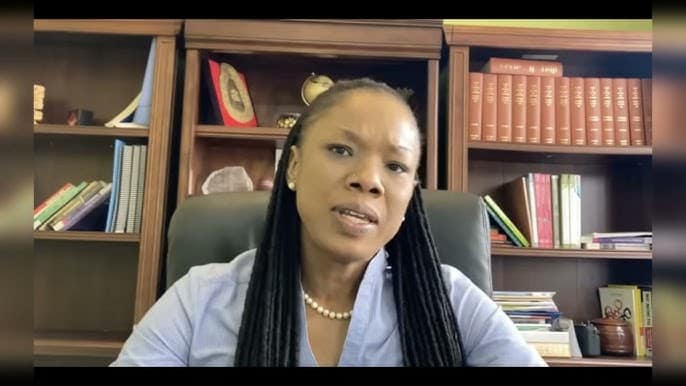
    In a significant political development, former senator and prominent community activist Malaka Parker has announced her return to the United Progressive Party (UPP) after a two-year hiatus from active politics. Parker, who left the UPP following a contentious leadership dispute in 2016, emphasized her decision as a response to the urgent need for political renewal and accountability in Antigua and Barbuda. She criticized the current administration, the Antigua and Barbuda Labour Party (ABLP), for fostering what she described as a ‘decaying political culture’ marked by corruption, economic mismanagement, and public disillusionment. Parker highlighted the ABLP’s failure to deliver on its promises of economic prosperity, pointing to rising inequality, escalating living costs, and a bloated public sector as evidence of systemic failures. She called for a collective effort to rebuild the opposition, restore public trust, and champion inclusive, people-centered governance. Parker’s return to the UPP underscores her belief in the party’s potential to lead national renewal and address the pressing challenges facing the country. She urged citizens to join her in rejecting the current administration’s perceived disregard for public welfare and to work towards a brighter future for Antigua and Barbuda.

  • Security : «The time of gangs is over» says Commander Otunge

    Security : «The time of gangs is over» says Commander Otunge

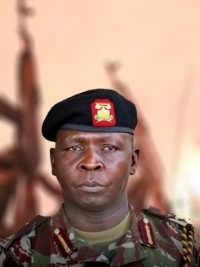
    In a bold declaration, Commander Godfrey Otunge of Haiti’s Gang Suppression Force (GSF) announced a significant shift in the nation’s security landscape. Otunge emphasized that the transformation from the MSSM to the GSF represents more than a mere rebranding—it is a comprehensive overhaul of Haiti’s security apparatus. This reorganization integrates the resources, personnel, and intelligence of all national forces under a unified mission: the eradication of gangs that have long plagued the country. Collaborating closely with the Haitian National Police (PNH) and the Armed Forces of Haiti (FAd’H), the GSF has implemented a robust, sustained security strategy. This includes targeted, intelligence-driven operations and persistent patrols in critical areas, aimed at dismantling gang networks and restoring public safety. Otunge underscored the mobilization of all operational assets—land, sea, and air—to achieve the clear objective of restoring peace and ensuring Haitians can live without fear. He dismissed recent gang threats as acts of desperation, signaling their decline. The joint forces are advancing relentlessly, disrupting networks, seizing weapons, and neutralizing armed elements. Otunge assured the Haitian people of the security forces’ unwavering commitment to dismantling terrorist networks and upholding the rule of law. He called for public cooperation, emphasizing that together, they are closing a dark chapter in Haiti’s history and paving the way for stability and peace.

  • Dr Mitchell: Gift of vehicles to MPs is abuse of privileges

    Dr Mitchell: Gift of vehicles to MPs is abuse of privileges

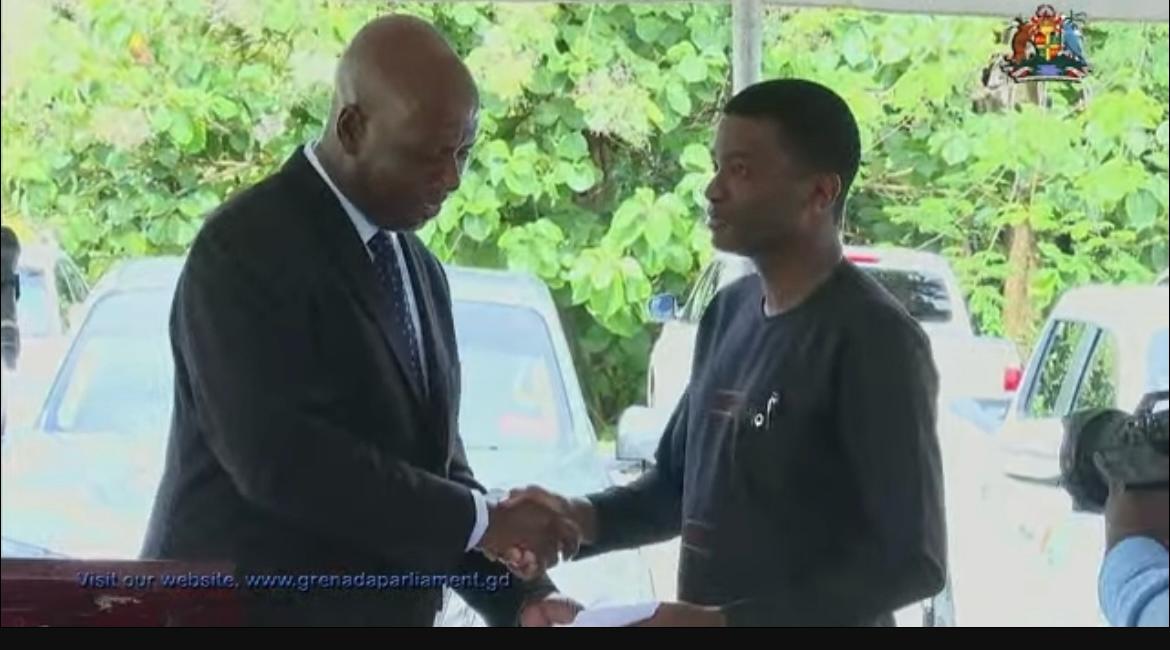
    In a heated session of the Lower House on November 19, 2025, former Prime Minister and Opposition Leader Dr. Keith Mitchell criticized the Government’s decision to purchase and distribute vehicles to Members of Parliament (MPs), labeling it as an abuse of parliamentary privileges. Dr. Mitchell, a seasoned legislator since 1984, argued that MPs already benefit from a 100% concession on vehicles, making the additional provision unnecessary. He emphasized the dire economic conditions faced by constituents and suggested that the funds allocated for these vehicles could be better utilized to address pressing community needs. ‘I will not accept any vehicle from the taxpayers of this country,’ Dr. Mitchell declared, urging the Government to sell the vehicles and redirect the funds to support the North-West constituency. His stance was echoed by other Opposition MPs, who questioned the necessity of the initiative. However, Joseph Andall, MP for St. Patrick West, defended the decision, stating that the House Committee, comprising members from both the Government and Opposition, had unanimously agreed in 2024 to provide vehicles to each constituency. Andall clarified that the vehicles were intended to facilitate MPs’ duties rather than for personal use. Following the adjournment of the session, Government MPs were presented with the keys to their constituency vehicles by Speaker Leo Cato. The debate underscores the ongoing tension between the Government and Opposition over resource allocation and parliamentary privileges.

  • Grenadian Diaspora Meet & Greet in Montreal, Québec, Canada

    Grenadian Diaspora Meet & Greet in Montreal, Québec, Canada

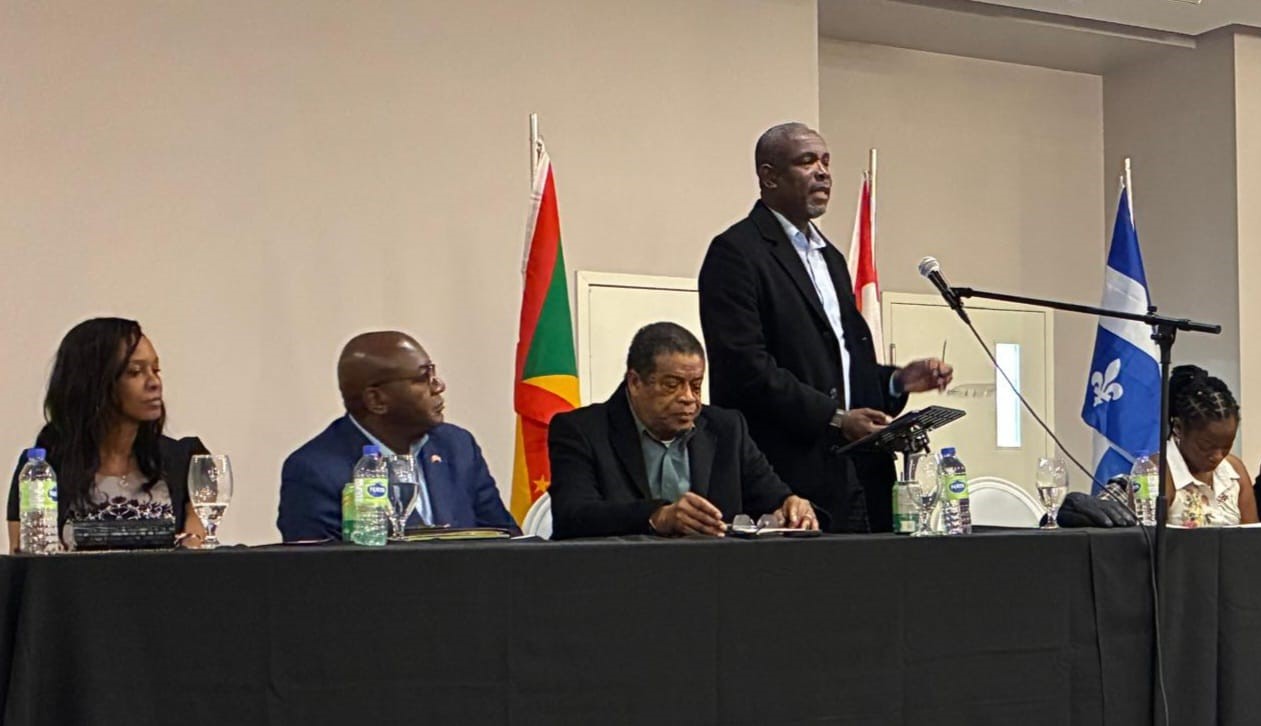
    The High Commission for Grenada to Canada held its inaugural Diaspora Meet & Greet Engagement in Montreal on November 15, 2025, marking a significant step in fostering connections with the Grenadian community abroad. The event was attended by Honourable Joseph Andall, Minister for Foreign Affairs, Trade and Export Development, His Excellency Sylvester Quarless, High Commissioner for Grenada to Canada, and Gerry Hopkin, Consul General for Grenada in Toronto. Minister Andall emphasized the role of Grenadians as ambassadors for their homeland, urging them to take pride in their identity and contribute to Grenada’s development. He praised the diaspora for their resilience and dedication, particularly in the face of Canada’s challenging winters. High Commissioner Quarless called for increased engagement from younger generations of Grenadians, highlighting the High Commission’s commitment to fostering dialogue and creating civic groups to strengthen ties. The event concluded Minister Andall’s Canadian tour, which included meetings with the diaspora in Toronto and the official reopening of the Grenada High Commission in Ottawa. The re-established High Commission is poised to serve as a vital platform for political dialogue between Grenada and Canada, ensuring the interests of Grenadian citizens are well-represented.

  • Government advances fisheries legislation

    Government advances fisheries legislation

    The Government of Grenada has taken decisive steps to bolster the sustainability and regulatory framework of its fisheries sector through critical legislative reforms. On November 19, 2025, the House of Representatives unanimously passed the Fisheries (Amendment) Bill 2025, which introduces comprehensive measures to enhance marine conservation and regulatory oversight. This legislative move is part of Grenada’s broader strategy to address compliance issues with the U.S. Marine Mammal Protection Act and avert a potential ban on fish imports to the United States set to take effect on January 1, 2026. The amendment includes updated provisions to align with the National Oceanic and Atmospheric Administration (NOAA) standards, aiming to reverse the U.S. decision announced on August 26, 2025. The bill comprises four key clauses: redefining terms such as ‘observer’ and ‘marine mammal,’ establishing an Observer and Monitoring Programme, empowering the Minister to enact marine mammal protection regulations, and imposing penalties of up to EC$100,000 or 12 months imprisonment for violations. To ensure stakeholder engagement, the Ministry of the Blue Economy and Marine Affairs conducted nationwide consultations, including a pivotal meeting on November 14, 2025, at the St George’s Fisheries Complex Conference Room. The discussions focused on export restrictions to the U.S. and the forthcoming Fisheries (Marine Mammals) Regulations, 2025, which aim to prohibit intentional harm to marine mammals, mandate reporting of incidental catches, restrict harmful fishing gear, and implement a Marine Mammals Management Plan. Additionally, Grenada is collaborating with Compete Caribbean Plus and the Inter-American Development Bank on a pilot initiative to introduce digital vessel monitoring and a fisheries data platform. This initiative includes installing 20 Remora Electronic Monitoring/Vessel Monitoring System (EMS/VMS) devices on longline vessels and providing training to stakeholders. Permanent Secretary Javan Williams emphasized the importance of balancing economic opportunities with environmental stewardship, ensuring the sustainability of Grenada’s fisheries for future generations.