分类: politics

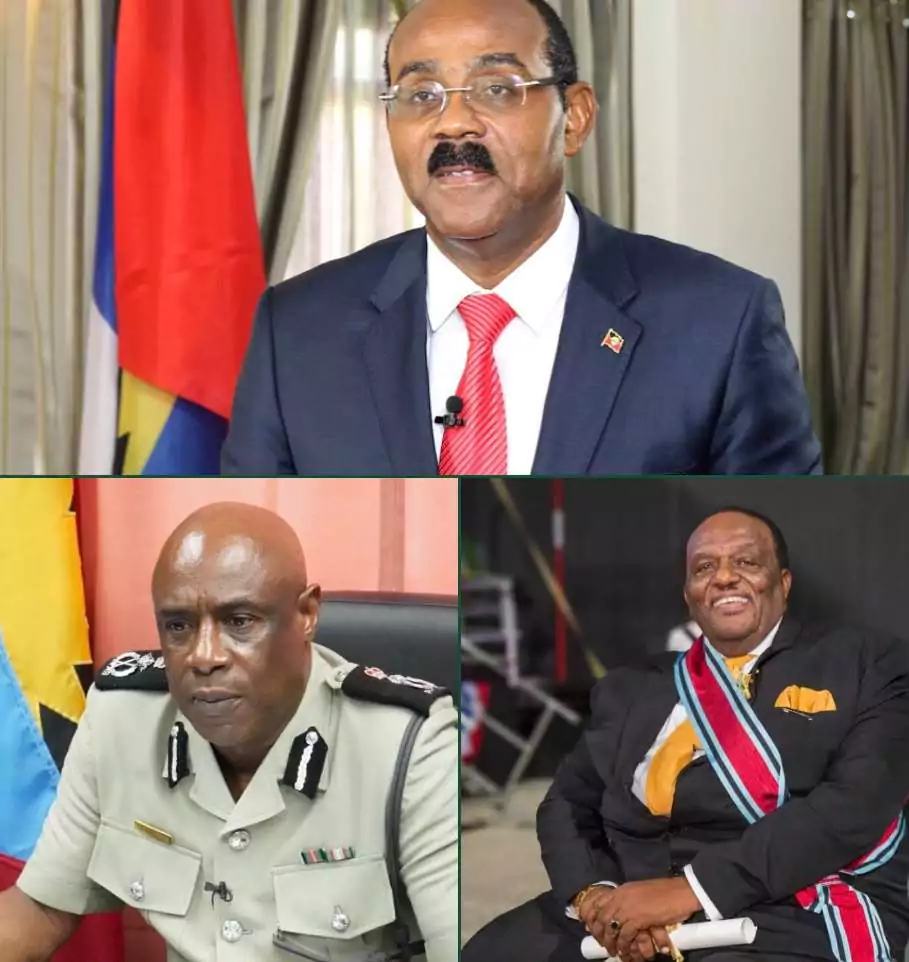
  • Gaston Browne wins City West Seat

    Gaston Browne wins City West Seat

    In a closely watched electoral contest that has drawn significant political attention across the region, Gaston Browne has emerged victorious in the race for the City West parliamentary seat, confirming his continued hold on one of the area’s key legislative positions.

    The City West constituency, a densely populated urban district that serves as a critical hub for local commerce and community activity, has long been considered a bellwether for broader political trends in the nation. Voter turnout for the contest reached respectable levels, with constituents turning out at polling stations across the district from early morning to cast their ballots on a range of key local and national issues, including infrastructure investment, affordable housing, and job creation for young residents.

    Political analysts note that Browne’s win reinforces his standing within his party and solidifies the governing bloc’s position in the legislature ahead of upcoming national policy debates. Speaking to supporters shortly after the final vote count was confirmed, Browne emphasized his commitment to delivering on campaign pledges, highlighting plans to expand public transportation access, upgrade local schools, and attract new small business investment to the City West area. He also extended gratitude to voters for their trust and pledged to serve as a responsive advocate for all constituents, regardless of their political affiliation.

    Opposition candidates, who mounted a vigorous campaign challenging Browne on issues of cost of living and public service delivery, have acknowledged the result. Most have congratulated the victor and reaffirmed their own commitment to holding the administration accountable on behalf of City West residents during the upcoming legislative term.

  • Village Leaders Demand Answers After Indian Creek Incident

    Village Leaders Demand Answers After Indian Creek Incident

    Weeks have passed since the alarming disappearance and abduction of Indian Creek’s top local alcalde in southern Belize’s Toledo District, and investigators have yet to release any new updates on what unfolded that night, leaving a cloud of uncertainty hanging over the entire region. The unsettling incident has reignited widespread anxiety about local security and long-running structural flaws in Toledo’s village governance system, prompting the Toledo District Association of Village Councils (DAVCO) to publicly push for urgent action from national authorities.

    In an official public statement, DAVCO strongly condemned the targeted attack on the elected alcalde, emphasizing that the abduction was not an isolated event, but the outcome of unresolved systemic issues that have been building for more than a decade. Beyond calls for a swift transparent investigation to identify the perpetrators, the association has highlighted that the crisis has brought long-simmering friction between two local leadership roles — village chairpersons and alcaldes — to a boiling point. Confusion over overlapping jurisdictions, unclear divisions of power and authority between the two positions has not only created bureaucratic gridlock for rural communities, DAVCO argues, it has now evolved into a direct threat to on-the-ground community stability.

    Gregory Choco, president of DAVCO, laid out the organization’s demands in remarks recorded for a local evening news broadcast. “Right now, we have gotten no official statement, no press update on what happened to our missing alcalde, or who may be connected to this incident. The case is entirely in police hands, and we just want answers,” Choco explained. He added that community members are eager to clear the name of Indian Creek’s village chairperson, who, along with other village council members, was questioned by investigators in connection with the case before being released without charge.

    Choco traced the root of the current tension back to a 2015 regulatory ruling from Belize’s Supreme Court (CCG) that reshaped local governance structures. “Since that ruling went into effect, we have seen growing tension, misunderstanding and open conflict over the specific roles and responsibilities of alcaldes versus village chairpersons,” he said. “This dissatisfaction is not limited to Indian Creek — communities across the entire Toledo District are dealing with the exact same dangerous friction.”

    To address this escalating crisis, DAVCO is formally calling on Belize’s Attorney General to travel directly to Toledo to hold face-to-face negotiations with representatives of both leadership groups, and work out a clear, lasting resolution to the role confusion that sparked much of the underlying tension. Choco emphasized that the national government, as the ultimate governing authority for local institutions, is the only body that can meaningfully resolve the long-running dispute and prevent similar violent incidents from occurring in other affected communities.

  • Chloé Martinez Named UK High Commissioner for a Day

    Chloé Martinez Named UK High Commissioner for a Day

    On April 30, 2026, a Belizean undergraduate named Chloé Martinez achieved a once-in-a-lifetime milestone: she traded the lecture hall for the diplomatic briefing room to serve as the UK High Commissioner to Belize for 24 hours, emerging as the latest winner of the annual High Commissioner for a Day program.

    The competitive selection initiative, run by the British High Commission in Belize, was created specifically to elevate underrepresented young women’s voices and cultivate their emerging leadership capacity. Across a pool of ambitious applicants, selection judges highlighted that Martinez rose to the top not only for her clear professional drive, but for her deeply rooted commitment to community service, unwavering sense of purpose, and nuanced, forward-thinking approach to inclusive governance – qualities that set her application apart from the competition.

    During her day in office, Martinez gained unprecedented, front-row access to the inner workings of modern diplomacy. She shadowed senior United Kingdom diplomatic officials, attended closed-door policy meetings, and observed directly how diplomatic strategy and decision-making processes unfold, a rare hands-on learning opportunity for any student, particularly one still in the early stages of building her public service career.

    The program concluded with a dedicated Women’s Networking Event, which assembled women leaders from across multiple sectors: national government, private business, civil society organizations, and the international diplomatic community. The gathering centered on open, practical, and personal dialogue, with conversations ranging from the critical role of mentorship for emerging women leaders to the importance of equal representation in senior roles, and strategies for intergenerational women to lift one another up in professional spaces.

    Outgoing UK High Commissioner Alistair White emphasized that programs like High Commissioner for a Day play a critical role in empowering the next generation. By giving young women direct exposure to senior decision-making roles, the initiative helps them build the confidence and experience needed to pursue leadership positions in their future careers. The British High Commission officially congratulated Martinez on her selection and extended gratitude to all partner organizations that supported the 2026 iteration of the program, reaffirming the UK’s long-term commitment to nurturing emerging women leaders across Belize.

    While Martinez’s time in the top diplomatic role lasted just one day, participants and organizers alike agreed that the experience delivered far more than a temporary title. For the young Belizean student, it provided a transformative, tangible look at what leadership looks like in action – and what she can achieve as she continues her journey in public life.

  • WATCH: Vote Counting Begins in Barbuda, Walker takes early lead

    WATCH: Vote Counting Begins in Barbuda, Walker takes early lead

    Vote counting is progressing across polling stations in Barbuda following the closure of polls earlier this evening, with early partial results showing the sitting candidate holding a clear lead in the race for the constituency seat. The first official partial tally from Box 1, one of the local polling locations, puts incumbent Trevor Walker, the candidate for the Barbuda People’s Movement (BPM), at 128 votes. His challenger, Kendra Beazer of the Antigua and Barbuda Labour Party (ABLP), has secured 78 votes in the same box in this first count. This early result puts Walker ahead as election officials continue counting the remaining ballots from across the constituency. Walker has served as the elected representative for Barbuda for multiple terms, and he is currently working to defend his seat against a strong renewed challenge from the ABLP, which has focused its campaign on flipping the long-held BPM constituency. As of the latest update, counting operations remain ongoing, and electoral authorities have not yet announced any final official results for the race, with final numbers expected to be released once all ballots have been processed and verified.

  • Polls Close Across Antigua and Barbuda; Counting Set to Begin

    Polls Close Across Antigua and Barbuda; Counting Set to Begin

    After a full day of orderly, widely praised balloting, polls have officially closed across Antigua and Barbuda in one of the Caribbean nation’s most closely watched general elections in recent history. The outcome of the vote will decide whether incumbent Prime Minister Gaston Browne makes history by securing an unprecedented fourth consecutive term leading the country.

    Voting operations kicked off precisely at 6 a.m. local time and wrapped up at 6 p.m., with election authorities confirming that any voter already waiting in queue before the closing deadline would still be permitted to cast their ballot. Now, all cast ballots are being secured ahead of transport to centralized counting centers, where official tabulation will get underway. Preliminary results are expected to trickle in overnight, with a final official projection likely by Friday morning.

    Across the nation’s 17 electoral constituencies, voters faced a diverse field of candidates. The main contest pits Browne’s ruling Antigua and Barbuda Labour Party (ABLP) against the opposition United Progressive Party (UPP) led by Jamale Pringle, alongside one candidate from the Barbuda People’s Movement (BPM) and three independent hopefuls.

    Election day unfolded without major incident, with organizers and voters alike describing the process as exceptionally smooth and efficient. Early morning saw strong voter turnout across multiple districts, while lines remained short for most of the day — an intentional improvement driven by the addition of new polling stations to streamline voter flow and reduce wait times.

    Independent election observer missions from leading regional and global bodies, including the Commonwealth, the Caribbean Community (CARICOM), and the Organization of American States (OAS), have issued initial positive assessments, confirming that the election was conducted in a free, fair and transparent manner, with no significant disruptive events reported.

    Throughout the weeks-long campaign season, the election was framed as a clear national choice between continuity and change. Browne, who is vying to break modern political records for the longest consecutive premiership in Antigua and Barbuda, centered his campaign on his administration’s track record of strong economic growth, large-scale infrastructure development, and what he termed a national “renaissance.” He argued that retaining his leadership is critical to sustaining the nation’s upward trajectory and raising living standards for all residents.

    In contrast, opposition leader Pringle cast the 2024 election as a critical opportunity for change after more than 10 years of ABLP incumbency. He centered his platform on addressing voter concerns over skyrocketing cost of living, unaddressed infrastructure gaps, alleged governance shortcomings, and widespread public dissatisfaction among key demographic groups of the electorate.

    Key policy issues that dominated campaign discourse included rising household living costs, persistent national water supply challenges, poor road conditions, growing crime rates, overall economic management, and international relations. The two major parties also put forward competing plans on public sector wages, tax policy, and expanded social support programs for vulnerable communities.

    On election day, both major parties publicly expressed confidence in their prospects, with candidates and party operatives reporting steady turnout in their traditional political strongholds. Election officials, backed by uniformed security personnel and accredited party agents at every polling location, maintained consistent order across all sites. The Antigua and Barbuda Electoral Commission also rolled out expanded access measures, including the additional polling stations and on-site voter ID support, to remove barriers to citizen participation.

    As counting teams prepare to work through the night to tabulate results, all national and regional attention now shifts to the incoming outcome. The final results will not only determine the makeup of the nation’s next parliament, but also set the policy direction of Antigua and Barbuda for the coming five-year term.

  • VS schenkt uitrusting aan KPS voor versterking criminaliteitsbestrijding

    VS schenkt uitrusting aan KPS voor versterking criminaliteitsbestrijding

    In a formal ceremony held at the Suriname Police Corps (Korps Politie Suriname, KPS) headquarters on Duisburglaan on April 30, the United States formally handed over a shipment of security equipment to Suriname’s law enforcement agency, in a move designed to strengthen local security services and expand the country’s capacity to combat organized and common crime.

    The handover was led by U.S. Chargé d’Affaires Paul Watzlavick, who officially presented the donated goods to Suriname’s Minister of Justice and Police Harish Monorath. Following the diplomatic handover, Monorath symbolically transferred the equipment to KPS Chief Commissioner Melvin Pinas, the top leader of Suriname’s national police force. Earlier in the same week, Watzlavick had already delivered a separate batch of specialized equipment to Commissioner Eshita Hunte, head of the KPS’s Serious Crime Division, for use by the agency’s elite Arrestation Team.

    During remarks delivered at the main ceremony, all three key stakeholders — Pinas, Watzlavick, and Monorath — emphasized the longstanding, productive bilateral security partnership between the United States and Suriname. All speakers reaffirmed that collaborative cross-border action is critical to tackling evolving criminal threats in all forms, from transnational drug trafficking to local violent crime. The event also highlighted the ongoing breadth of U.S.-Suriname security cooperation, which extends beyond one-time equipment donations to include sustained capacity building, specialized professional training, and targeted operational support for multiple agencies across Suriname’s security sector, with the KPS as a core priority partner.

    This latest donation is widely viewed as a meaningful contribution to ongoing efforts to modernize and strengthen Suriname’s national police force and reinforce the country’s overall national security architecture. The support aligns with years of bilateral cooperation focused on improving public safety and expanding law enforcement capacity across the South American nation.

  • Caribbean Women in Leadership Congratulates Five Women Contesting Antigua and Barbuda General Election

    Caribbean Women in Leadership Congratulates Five Women Contesting Antigua and Barbuda General Election

    As Antigua and Barbuda prepares for its 2026 general election, a regional gender equity advocacy organization Caribbean Women in Leadership (CIWiL) Antigua and Barbuda is celebrating a key milestone for gender representation in the country’s political space: five women have stepped forward to contest parliamentary seats in the upcoming vote, a development the group says marks meaningful progress for inclusive democracy.

    CIWiL Antigua and Barbuda has publicly named each of the trailblazing candidates, who span independent and major party lines, reflecting growing gender diversity across the country’s political spectrum. The five candidates are Gail S. Pero, an independent contender running for the St. George constituency; Malaka Parker, who is representing the United Progressive Party (UPP) in St. John’s Rural North; Kiz Johnson of the Antigua and Barbuda Labour Party (ABLP), contesting the St. Philip South seat; Maria Bird-Browne, also of the ABLP, who is running in St. John’s Rural East; and sitting UPP Senator Pearl Quinn-Williams, who is seeking election in St. John’s City East.

    In a formal statement released recently, the organization emphasized that increased women’s participation in electoral politics delivers far-reaching benefits that strengthen Antigua and Barbuda’s democratic foundation. CIWiL pointed out that women in elected office bring unique, lived perspectives to legislative debates that are often overlooked when political spaces remain male-dominated. These diverse outlooks, the group noted, drive meaningful progress on a range of high-priority issues that directly impact families and communities across the country, including accessible public healthcare, affordable and reliable childcare, and more transparent, accountable governance. By bringing more diverse voices to the table, CIWiL argued, political institutions become more responsive to the needs of all citizens, ultimately reinforcing public trust in democracy.

    Beyond celebrating the candidates, CIWiL also issued a call to action for all eligible voters across Antigua and Barbuda to engage actively in the upcoming electoral process. The organization reminded citizens that every single vote carries weight, and collective participation is what shapes the long-term trajectory of the nation’s future. CIWiL’s announcement comes amid a broader regional push across the Caribbean to break down longstanding barriers that have kept women underrepresented in political leadership, with groups like CIWiL working to normalize female candidacy and encourage more women to pursue public office.

  • Unlmtd Stages Solo Protest on BelCan Bridge

    Unlmtd Stages Solo Protest on BelCan Bridge

    In a bold shift from digital activism to on-the-ground public demonstration, prominent Belizean artist Bernard Cayetano, who performs and organizes under the pseudonym “Unlmtd”, has brought his calls for systemic change to one of the country’s heavily trafficked crossings. On Wednesday, April 30, 2026, Cayetano launched a one-person protest on Belize’s BelCan Bridge, aiming to force nationwide attention to what he frames as ongoing systemic oppression that marginalizes ordinary Belizean citizens.

    Cayetano stood alone on the bridge for hours, holding a hand-painted placard emblazoned with the rallying cry “Enough is Enough.” The demonstration caused only minor delays for motorists passing through the area, but its unusual nature immediately captured attention from both on-site bystanders and online audiences, with many drivers slowing down to acknowledge the artist’s message before continuing their commute.

    Speaking to reporters covering the protest, Cayetano framed Belizean ordinary people as being held hostage by unfair governing systems in their own homeland. He pointed specifically to recent policy changes in the country’s transport sector as a clear example of top-down decision-making that excludes input from everyday citizens who are most impacted by the rules. The artist argued that while a large share of the Belizean public shares his frustration with the country’s current political and social trajectory, widespread fear and complacency have kept most people from taking public action.

    “Everybody sees what is going on, but we would rather wait out the five-year election term than speak up now,” Cayetano explained. He emphasized that all Belizeans deserve a more fair, inclusive governing system, and urged his fellow citizens to raise their voices in protest sooner rather than waiting for electoral cycles to bring incremental change. Even as he carried out his demonstration without additional supporters on the bridge, Cayetano remains unshaken in his commitment to his cause. He noted that every large, meaningful shift in social and political systems begins with a single, brave voice willing to stand up and be heard.

  • Marabella tenants win appeal in $3m flooding damage case

    Marabella tenants win appeal in $3m flooding damage case

    In a landmark split decision that reshapes landlord-tenant liability rules across Trinidad, the Court of Appeal has handed down a pivotal ruling that reverses a prior High Court judgment, opening the door for two affected commercial tenants to secure millions in compensation for property damage caused by an unforeseen plumbing failure.

    The legal dispute traces back to a 2018 flooding event at Marabella’s Allum’s Shopping Centre. A PVC angle valve connected to an upper-level unit’s kitchen sink, leased by local firm O.T.I. Trinidad Ltd, unexpectedly failed. The resulting leak seeped downward into five ground-floor commercial suites, two of which are operated by Western Industrial Solutions Ltd and entrepreneur Debera Rampersad, who runs the retail outlet Debera Fashion Step Up and Save. The damaged inventory and forced business interruptions pushed the two affected tenants to claim more than TT$3 million in total losses.

    When the case first went to trial, High Court Justice Avason Quinlan-Williams dismissed the claims against the property owner, J.T. Allum and Company Ltd. The trial judge ruled that commercial landlords cannot be held responsible for sudden plumbing failures that occur within spaces exclusively controlled and occupied by their tenants, clearing the company of any legal obligation to compensate the businesses for their losses.

    But the appellate court, a three-judge panel led by Chief Justice Ronnie Boodoosingh alongside Justices of Appeal Nolan Bereaux and James Aboud, rejected this lower-court interpretation of property law. In a 2-1 majority decision delivered Wednesday, the panel found that even though the landlord was not found to be negligent in causing the pipe failure, it still bears legal responsibility for the resulting damage under the law of private nuisance.

    Writing the lead judgment for the majority, Justice Bereaux — whose reasoning was backed by Chief Justice Boodoosingh — explained that the critical factor establishing liability is the landlord’s reserved right under all commercial leases for the property to enter tenant-occupied spaces to conduct inspections and complete necessary repairs. This retained right, the justice argued, is sufficient to uphold a nuisance claim against the property owner. He further noted that the landlord had previously argued in separate legal proceedings against the upper-floor tenant that the site’s plumbing was already in a state of disrepair, meaning the company cannot now claim the hidden defect was unidentifiable through reasonable inspection.

    Justice Bereaux also clarified a longstanding point of nuisance law: when a landlord explicitly retains the right to conduct repairs on a property, they can be held liable for damage caused to third parties even if they had no direct, actual knowledge of the hazardous defect before the incident occurred.

    Justice Aboud issued a dissent, arguing the appeal should have been thrown out. He characterized the pipe failure as an isolated, entirely unforeseeable event: the 10-year-old pipe joint had failed suddenly with no warning signs, and this does not meet the legal standard for a private nuisance. He also cautioned that the majority’s legal reasoning could impose an unfair and unreasonable burden on commercial landlords across the country, forcing them to conduct exhaustive searches for hidden defects in spaces fully occupied and controlled by their tenants.

    On the separate claim of negligence brought by the tenants, the appellate court was unanimous. The full panel agreed to dismiss the negligence claim, as no evidence presented during the trial linked the landlord’s actions or inactions to the pipe failure itself. The court also upheld the trial judge’s ruling to exclude proposed testimony from former landlord employee Vedesh Gopaul, finding his statements about the original plumbing installation were not relevant to the core legal questions in the case.

    The matter will now return to the High Court, where a Master will assess and determine the final amount of damages to be awarded to the two successful appellants. The appellate court also left in place an earlier unrelated order requiring Rampersad to settle all outstanding back rent owed to the property owner, which has no connection to the 2018 flooding incident. Attorneys Chanka Persadsingh and Anand Rampersad represented the two affected tenants, while Shankar Bidaisee, instructed by Rachael Jaggernauth, appeared on behalf of the landlord.

  • Student Named UK High Commissioner for a Day

    Student Named UK High Commissioner for a Day

    In a unique opportunity that bridges youth leadership development and international diplomacy, a young Belizean student has gained unprecedented hands-on experience in diplomatic operations after being selected for a signature outreach programme run by the British High Commission based in Belize.

    Nineteen-year-old Chloé Martinez earned the title of High Commissioner for a Day 2026, beating dozens of other applicants in a rigorous competitive selection process. Judges ultimately selected Martinez for her clear, forward-thinking policy vision, long-standing track record of local community engagement, and unwavering dedication to building inclusive, accessible leadership structures that lift up marginalized groups.

    During her one-day appointment, Martinez shadowed incumbent UK High Commissioner to Belize Alistair White, taking a seat at closed-door official meetings, sitting in on bilateral coordination discussions, and gaining first-hand insight into the quiet, behind-the-scenes work that drives successful diplomatic relations between the United Kingdom and Belize. The experience let Martinez move beyond the textbook understandings of diplomacy she had learned in the classroom, and see how negotiation, relationship-building, and cultural awareness shape daily diplomatic work.

    The programme wrapped up with a public Women’s Networking Event, which drew cross-sector attendees from Belize’s national government, private business sector, local civil society organizations, and the wider diplomatic corps based in the country. The interactive gathering centered on three core goals: expanding access to mentorship opportunities for emerging women leaders, growing female representation in senior decision-making roles, and strengthening intergenerational support networks that connect established women leaders with young people just starting their careers.

    In comments following the event, High Commissioner White emphasized that immersive programmes like High Commissioner for a Day fill a critical gap in youth development. He noted that the initiative is intentionally designed to give young women the practical, on-the-ground experience and built confidence they need to pursue senior leadership and decision-making roles across all sectors, both within Belize and internationally.

    Following Martinez’s selection, the British High Commission issued an official statement congratulating her on the achievement, and extended gratitude to all local and institutional partners that made the 2026 iteration of the programme possible. The statement reaffirmed the British government’s long-term commitment to supporting and empowering the next generation of women leaders across Belize, through targeted development initiatives and leadership programming.