分类: politics

  • Melford Nicholas Wins City East Seat

    Melford Nicholas Wins City East Seat

    In a closely watched electoral contest that has drawn significant local political attention, Melford Nicholas has emerged as the clear winner of the hotly contested City East parliamentary seat. The electoral contest for the City East constituency, which represents a key urban population center with diverse socioeconomic and policy interests, saw Nicholas outpace his competitors to claim the legislative position.

    Nicholas, a candidate with an established record of public engagement and policy advocacy focused on local infrastructure improvement, small business support, and expanded access to social services, built his campaign around addressing the pressing needs of City East residents. Exit polls and final vote tabulations released by the local electoral commission confirmed his victory, with a comfortable margin of victory that separates him from the nearest opposing candidate.

    Local political analysts note that the outcome of the City East race will carry meaningful implications for the balance of representation in the national legislature, as well as for the advancement of policy priorities that resonate with urban constituents. Supporters of Nicholas have celebrated the win, framing it as a mandate for the changes he proposed on the campaign trail, while opposition candidates have acknowledged the result and reaffirmed their commitment to serving their respective political bases moving forward.

    In the wake of his victory, Nicholas has released an initial statement thanking his supporters, volunteers, and all City East voters who participated in the democratic process. He has pledged to prioritize delivering on his campaign promises, working across party lines when possible to advance initiatives that improve quality of life for all residents of the constituency, and serve as a responsive voice for the community in legislative proceedings.

  • ‘Barbados first’: Immigration reform sparks debate over labour shortages, home protections

    ‘Barbados first’: Immigration reform sparks debate over labour shortages, home protections

    Facing a pressing demographic crisis defined by a shrinking national population and a rapidly aging workforce, the Mia Mottley administration has tabled sweeping amendments to Barbados’ Immigration Act, a legislative move that has split public opinion along the lines of economic pragmatism and protectionist concern. The proposed bill is designed to overhaul and modernize the country’s existing citizenship and residency rules, with the explicit goal of securing Barbados’ long-term economic stability against shifting demographic headwinds.

    Home Affairs Minister Gregory Nicholls has outlined three core demographic pressures driving the policy change: persistently declining national fertility rates, ongoing outward migration of working-age Barbadians, and the steady aging of the domestic workforce. These intertwined challenges have created a growing gap in the labor market that the government argues cannot be addressed through domestic pools alone, hence the push for updated immigration rules to attract skilled workers from overseas.

    Yet the proposed changes have ignited fierce public discussion around how to strike the right balance between pressing economic needs and protecting priority access to jobs, housing and opportunities for native-born Barbadians. Among supporters of the reforms, local resident Mark Boyce said he accepts the need for foreign labor, pointing to a widespread, well-documented shortage of skilled workers across the island’s booming construction and service sectors. “With the volume of development and work currently underway across Barbados, we simply do not have enough trained local workers to fill every open role,” Boyce explained. “There’s no shame in looking abroad to fill those gaps to keep our economy growing.”

    Not all residents share that pragmatic acceptance, however. Small business proprietor Michelle, who advocated for a strict “locals first” mandate to be written into the legislation, argued that no foreign worker should be granted access to a role until the government verifies that no qualified, available Barbadian is willing to take the position. “Born and raised Barbadians should get first dibs on every opening, as well as priority access to housing and other public resources,” Michelle stressed. “There has to be a regulated system that proves no local can or will do the job before we start bringing people in from overseas.”

    For other critics like Noel, a security guard based in Bridgetown, the risks of unregulated foreign labor influx extend far beyond priority access to roles. He warned that an inflow of migrant workers willing to accept lower wages and poor working conditions could open the door to widespread exploitation of migrant labor, while also pushing native Barbadian job seekers out of the market entirely. “Some employers will jump at the chance to hire people who will work any hours for any pay, and that leaves local people out in the cold,” Noel said. “The government’s first responsibility has to be to the people who already call this country home.”

    The debate has also shone a light on a lingering “incentive gap” that some observers argue is already contributing to unfilled domestic vacancies. One long-time resident noted that many industries across Barbados already rely heavily on non-local workers, and argued that the new legislation should pair relaxed immigration rules with greater incentives to encourage native workers to take hard-to-fill roles, rather than simply opening the door to foreign workers to plug gaps immediately. “The fact that we have so many open roles that locals aren’t filling tells us there’s a deeper problem in Barbadian society that we need to address alongside immigration reform,” the resident said.

    As the bill moves through the parliamentary process, the Mottley administration finds itself walking a very fine line. It must address the undeniable demographic reality of population decline that threatens to erode the island’s tax base and slow economic growth, while also reassuring a nervous public that native Barbadians will not be sidelined in their own national economy. The ultimate success of the reforms will hinge on whether the government can attract the skilled “new blood” needed to expand the labor force and grow state revenue, without undermining the social and economic standing of the country’s existing population.

  • Baltimore keeps SPN in the Labour Camp

    Baltimore keeps SPN in the Labour Camp

    In the aftermath of Thursday’s general election in Antigua and Barbuda, the incumbent Antigua and Barbuda Labour Party has successfully defended its hold on the St Philip’s North constituency, with early vote projections confirming candidate Randy Baltimore as the winner.

    Baltimore jumped out to a comfortable lead over challenger Alex Browne, who represented the opposition United Progressive Party, in the early stages of vote counting. That advantage held through the final tabulation of ballots, allowing the governing party to keep the seat under its control in the country’s national legislature.

    The outcome of the St Philip’s North race offers one of the first clear indicators of the election’s direction, highlighting the incumbent party’s continued support in one constituency as votes across the nation continue to be fully counted and verified.

  • Why Press Freedom Is the Foundation of All Other Freedoms

    Why Press Freedom Is the Foundation of All Other Freedoms

    The well-worn adage holds that truth is the first casualty of war. But what is rarely discussed with the urgency it deserves is that truth is often silenced permanently when the journalists who chase it lose their lives or their ability to report. Across every region of the globe, media professionals put their personal safety on the line every single day just to fulfill their core mission of delivering factual information to the public.

  • BREAKING: Trevor Walker Wins Barbuda Seat

    BREAKING: Trevor Walker Wins Barbuda Seat

    After all votes were cast and counted in the tightly contested Barbuda constituency election, long-serving incumbent Trevor Walker has successfully held onto his parliamentary seat for the Barbuda People’s Movement (BPM).

    Preliminary official vote tallies confirm that Walker outperformed his main challenger, Kendra Beazer, who ran for the Antigua and Barbuda Labour Party (ABLP), locking in another five-year term as the island’s representative in national parliament. The final preliminary count puts Walker at 616 votes, with Beazer trailing behind at 391 votes, a clear margin that solidifies the BPM’s hold on the Barbuda constituency.

    A well-established, prominent political figure across Barbuda, Walker faced a robust competitive challenge from the ABLP this election cycle. However, early vote counting throughout election night consistently placed the incumbent ahead, a trend that held through the final tally.

    While the final national results across Antigua and Barbuda are still being finalized to determine which party will form the next national government, the outcome of the Barbuda race guarantees that the BPM will retain its representation for the island in the upcoming legislative session.

  • Gaston Browne wins City West Seat

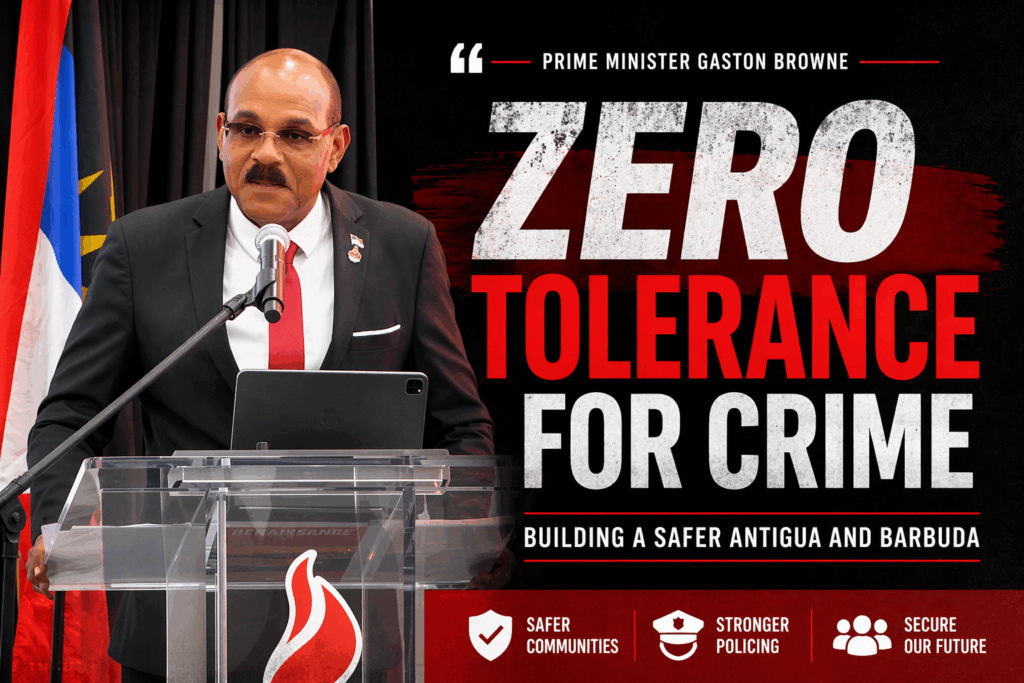
    Gaston Browne wins City West Seat

    In a closely watched electoral contest that has drawn significant political attention across the region, Gaston Browne has emerged victorious in the race for the City West parliamentary seat, confirming his continued hold on one of the area’s key legislative positions.

    The City West constituency, a densely populated urban district that serves as a critical hub for local commerce and community activity, has long been considered a bellwether for broader political trends in the nation. Voter turnout for the contest reached respectable levels, with constituents turning out at polling stations across the district from early morning to cast their ballots on a range of key local and national issues, including infrastructure investment, affordable housing, and job creation for young residents.

    Political analysts note that Browne’s win reinforces his standing within his party and solidifies the governing bloc’s position in the legislature ahead of upcoming national policy debates. Speaking to supporters shortly after the final vote count was confirmed, Browne emphasized his commitment to delivering on campaign pledges, highlighting plans to expand public transportation access, upgrade local schools, and attract new small business investment to the City West area. He also extended gratitude to voters for their trust and pledged to serve as a responsive advocate for all constituents, regardless of their political affiliation.

    Opposition candidates, who mounted a vigorous campaign challenging Browne on issues of cost of living and public service delivery, have acknowledged the result. Most have congratulated the victor and reaffirmed their own commitment to holding the administration accountable on behalf of City West residents during the upcoming legislative term.

  • Village Leaders Demand Answers After Indian Creek Incident

    Village Leaders Demand Answers After Indian Creek Incident

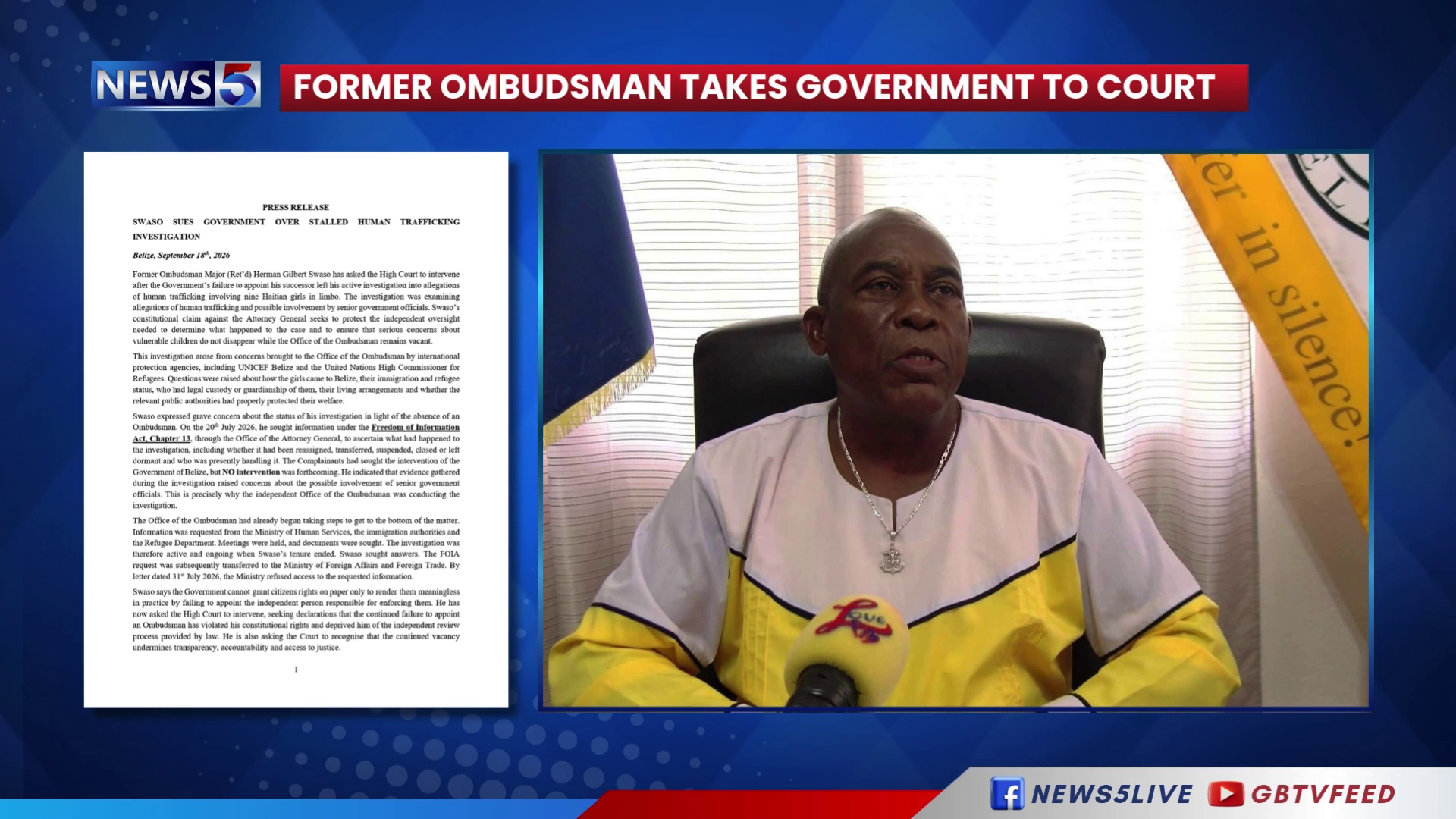
    Weeks have passed since the alarming disappearance and abduction of Indian Creek’s top local alcalde in southern Belize’s Toledo District, and investigators have yet to release any new updates on what unfolded that night, leaving a cloud of uncertainty hanging over the entire region. The unsettling incident has reignited widespread anxiety about local security and long-running structural flaws in Toledo’s village governance system, prompting the Toledo District Association of Village Councils (DAVCO) to publicly push for urgent action from national authorities.

    In an official public statement, DAVCO strongly condemned the targeted attack on the elected alcalde, emphasizing that the abduction was not an isolated event, but the outcome of unresolved systemic issues that have been building for more than a decade. Beyond calls for a swift transparent investigation to identify the perpetrators, the association has highlighted that the crisis has brought long-simmering friction between two local leadership roles — village chairpersons and alcaldes — to a boiling point. Confusion over overlapping jurisdictions, unclear divisions of power and authority between the two positions has not only created bureaucratic gridlock for rural communities, DAVCO argues, it has now evolved into a direct threat to on-the-ground community stability.

    Gregory Choco, president of DAVCO, laid out the organization’s demands in remarks recorded for a local evening news broadcast. “Right now, we have gotten no official statement, no press update on what happened to our missing alcalde, or who may be connected to this incident. The case is entirely in police hands, and we just want answers,” Choco explained. He added that community members are eager to clear the name of Indian Creek’s village chairperson, who, along with other village council members, was questioned by investigators in connection with the case before being released without charge.

    Choco traced the root of the current tension back to a 2015 regulatory ruling from Belize’s Supreme Court (CCG) that reshaped local governance structures. “Since that ruling went into effect, we have seen growing tension, misunderstanding and open conflict over the specific roles and responsibilities of alcaldes versus village chairpersons,” he said. “This dissatisfaction is not limited to Indian Creek — communities across the entire Toledo District are dealing with the exact same dangerous friction.”

    To address this escalating crisis, DAVCO is formally calling on Belize’s Attorney General to travel directly to Toledo to hold face-to-face negotiations with representatives of both leadership groups, and work out a clear, lasting resolution to the role confusion that sparked much of the underlying tension. Choco emphasized that the national government, as the ultimate governing authority for local institutions, is the only body that can meaningfully resolve the long-running dispute and prevent similar violent incidents from occurring in other affected communities.

  • Chloé Martinez Named UK High Commissioner for a Day

    Chloé Martinez Named UK High Commissioner for a Day

    On April 30, 2026, a Belizean undergraduate named Chloé Martinez achieved a once-in-a-lifetime milestone: she traded the lecture hall for the diplomatic briefing room to serve as the UK High Commissioner to Belize for 24 hours, emerging as the latest winner of the annual High Commissioner for a Day program.

    The competitive selection initiative, run by the British High Commission in Belize, was created specifically to elevate underrepresented young women’s voices and cultivate their emerging leadership capacity. Across a pool of ambitious applicants, selection judges highlighted that Martinez rose to the top not only for her clear professional drive, but for her deeply rooted commitment to community service, unwavering sense of purpose, and nuanced, forward-thinking approach to inclusive governance – qualities that set her application apart from the competition.

    During her day in office, Martinez gained unprecedented, front-row access to the inner workings of modern diplomacy. She shadowed senior United Kingdom diplomatic officials, attended closed-door policy meetings, and observed directly how diplomatic strategy and decision-making processes unfold, a rare hands-on learning opportunity for any student, particularly one still in the early stages of building her public service career.

    The program concluded with a dedicated Women’s Networking Event, which assembled women leaders from across multiple sectors: national government, private business, civil society organizations, and the international diplomatic community. The gathering centered on open, practical, and personal dialogue, with conversations ranging from the critical role of mentorship for emerging women leaders to the importance of equal representation in senior roles, and strategies for intergenerational women to lift one another up in professional spaces.

    Outgoing UK High Commissioner Alistair White emphasized that programs like High Commissioner for a Day play a critical role in empowering the next generation. By giving young women direct exposure to senior decision-making roles, the initiative helps them build the confidence and experience needed to pursue leadership positions in their future careers. The British High Commission officially congratulated Martinez on her selection and extended gratitude to all partner organizations that supported the 2026 iteration of the program, reaffirming the UK’s long-term commitment to nurturing emerging women leaders across Belize.

    While Martinez’s time in the top diplomatic role lasted just one day, participants and organizers alike agreed that the experience delivered far more than a temporary title. For the young Belizean student, it provided a transformative, tangible look at what leadership looks like in action – and what she can achieve as she continues her journey in public life.

  • WATCH: Vote Counting Begins in Barbuda, Walker takes early lead

    WATCH: Vote Counting Begins in Barbuda, Walker takes early lead

    Vote counting is progressing across polling stations in Barbuda following the closure of polls earlier this evening, with early partial results showing the sitting candidate holding a clear lead in the race for the constituency seat. The first official partial tally from Box 1, one of the local polling locations, puts incumbent Trevor Walker, the candidate for the Barbuda People’s Movement (BPM), at 128 votes. His challenger, Kendra Beazer of the Antigua and Barbuda Labour Party (ABLP), has secured 78 votes in the same box in this first count. This early result puts Walker ahead as election officials continue counting the remaining ballots from across the constituency. Walker has served as the elected representative for Barbuda for multiple terms, and he is currently working to defend his seat against a strong renewed challenge from the ABLP, which has focused its campaign on flipping the long-held BPM constituency. As of the latest update, counting operations remain ongoing, and electoral authorities have not yet announced any final official results for the race, with final numbers expected to be released once all ballots have been processed and verified.

  • Polls Close Across Antigua and Barbuda; Counting Set to Begin

    Polls Close Across Antigua and Barbuda; Counting Set to Begin

    After a full day of orderly, widely praised balloting, polls have officially closed across Antigua and Barbuda in one of the Caribbean nation’s most closely watched general elections in recent history. The outcome of the vote will decide whether incumbent Prime Minister Gaston Browne makes history by securing an unprecedented fourth consecutive term leading the country.

    Voting operations kicked off precisely at 6 a.m. local time and wrapped up at 6 p.m., with election authorities confirming that any voter already waiting in queue before the closing deadline would still be permitted to cast their ballot. Now, all cast ballots are being secured ahead of transport to centralized counting centers, where official tabulation will get underway. Preliminary results are expected to trickle in overnight, with a final official projection likely by Friday morning.

    Across the nation’s 17 electoral constituencies, voters faced a diverse field of candidates. The main contest pits Browne’s ruling Antigua and Barbuda Labour Party (ABLP) against the opposition United Progressive Party (UPP) led by Jamale Pringle, alongside one candidate from the Barbuda People’s Movement (BPM) and three independent hopefuls.

    Election day unfolded without major incident, with organizers and voters alike describing the process as exceptionally smooth and efficient. Early morning saw strong voter turnout across multiple districts, while lines remained short for most of the day — an intentional improvement driven by the addition of new polling stations to streamline voter flow and reduce wait times.

    Independent election observer missions from leading regional and global bodies, including the Commonwealth, the Caribbean Community (CARICOM), and the Organization of American States (OAS), have issued initial positive assessments, confirming that the election was conducted in a free, fair and transparent manner, with no significant disruptive events reported.

    Throughout the weeks-long campaign season, the election was framed as a clear national choice between continuity and change. Browne, who is vying to break modern political records for the longest consecutive premiership in Antigua and Barbuda, centered his campaign on his administration’s track record of strong economic growth, large-scale infrastructure development, and what he termed a national “renaissance.” He argued that retaining his leadership is critical to sustaining the nation’s upward trajectory and raising living standards for all residents.

    In contrast, opposition leader Pringle cast the 2024 election as a critical opportunity for change after more than 10 years of ABLP incumbency. He centered his platform on addressing voter concerns over skyrocketing cost of living, unaddressed infrastructure gaps, alleged governance shortcomings, and widespread public dissatisfaction among key demographic groups of the electorate.

    Key policy issues that dominated campaign discourse included rising household living costs, persistent national water supply challenges, poor road conditions, growing crime rates, overall economic management, and international relations. The two major parties also put forward competing plans on public sector wages, tax policy, and expanded social support programs for vulnerable communities.

    On election day, both major parties publicly expressed confidence in their prospects, with candidates and party operatives reporting steady turnout in their traditional political strongholds. Election officials, backed by uniformed security personnel and accredited party agents at every polling location, maintained consistent order across all sites. The Antigua and Barbuda Electoral Commission also rolled out expanded access measures, including the additional polling stations and on-site voter ID support, to remove barriers to citizen participation.

    As counting teams prepare to work through the night to tabulate results, all national and regional attention now shifts to the incoming outcome. The final results will not only determine the makeup of the nation’s next parliament, but also set the policy direction of Antigua and Barbuda for the coming five-year term.