分类: politics

  • Caricom stuurt waarnemersmissie voor parlementsverkiezingen in Barbados

    Caricom stuurt waarnemersmissie voor parlementsverkiezingen in Barbados

    The Caribbean Community (CARICOM) has initiated a comprehensive electoral monitoring initiative in Barbados ahead of the nation’s pivotal parliamentary elections scheduled for February 11, 2026. At the formal invitation of the Barbadian government, a specialized three-member observer delegation arrived on February 5th and will maintain presence through February 13th to ensure electoral integrity.

    This CARICOM Election Observation Mission (CEOM) comprises distinguished senior electoral officials from three member states: Antigua and Barbuda, Belize, and Jamaica. The mission is spearheaded by Ian S. Hughes, Supervisor of Elections from the Antigua and Barbuda Electoral Commission, with Josephine Tamai of Belize serving as deputy chief and Andrew Smith of Jamaica completing the core assessment team. Administrative and logistical support is being provided by staff from the CARICOM Secretariat.

    Since their arrival, the observers have engaged in substantive dialogues with senior police officials, the Barbados Christian Council, and media representatives. The mission’s agenda includes forthcoming high-level meetings with Prime Minister Mia Amor Mottley of the ruling Barbados Labour Party (BLP), opposition leader Ralph Thorne of the Democratic Labour Party (DLP), the Electoral and Boundaries Commission, and various civil society organizations.

    These consultations aim to evaluate the pre-electoral environment and assess the nation’s preparedness for the democratic process. On election day, the mission will conduct comprehensive monitoring of all procedural phases—from polling station operations and voting procedures to ballot counting and results declaration. The assessment will extend to post-election developments as well.

    Following the conclusion of voting but prior to departure, the mission will issue a preliminary statement containing initial observations about the electoral process. A detailed final report with comprehensive findings and recommendations will subsequently be presented to CARICOM Secretary-General Carla Barnett before public dissemination.

    Barbados, an island nation of approximately 287,000 inhabitants, has maintained parliamentary democracy since gaining independence in 1966. The 2026 elections represent a significant examination of the country’s democratic institutions under Prime Minister Mottley’s BLP administration. Mottley, who has governed since 2018, enjoys substantial popularity due to her policies promoting economic stability, climate action, and social development. Her international stature was enhanced during Barbados’ transition to a republic in 2021.

    Nevertheless, opposition leader Ralph Thorne remains determined to challenge the incumbent government, highlighting economic concerns and advocating for political alternation. The electoral process is being closely monitored by regional and international stakeholders given its implications for democratic governance in the Caribbean.

    CARICOM, established in 1973, continues to reinforce its commitment to regional cooperation and democratic strengthening through such observation missions, underscoring the organization’s dedication to electoral transparency and institutional confidence-building across member states.

  • DLP’s last-minute manifesto launch sparks debate on election strategy

    DLP’s last-minute manifesto launch sparks debate on election strategy

    With Barbados’ snap general election approaching this Wednesday, a strategic divergence has emerged among political experts regarding the Democratic Labour Party’s (DLP) controversial decision to publish its manifesto merely days before voting commences. The move has ignited a vigorous debate on whether this constitutes a tactical misstep or a shrewd political maneuver.

    Dr. George Belle, a prominent political scientist, has expressed significant reservations about the timing. He contends that the abbreviated period between the manifesto’s release and election day severely limits voters’ capacity to thoroughly evaluate the party’s proposals. “The window for public dissemination and analysis is exceedingly narrow—effectively just Sunday through Tuesday before Wednesday’s voting,” Dr. Belle noted in his comments to Barbados TODAY. He further warned that this delay could foster negative public perceptions about the DLP’s platform and intentions.

    While acknowledging that parties sometimes withhold manifestos to prevent idea appropriation by rivals, Dr. Belle maintained that such tactical considerations should not supersede the electorate’s right to adequate information. He characterized the strategy as particularly puzzling given that this election is not perceived as marginal, where last-minute moves might sway outcomes. “This appears to be a miscalculation that may ultimately disadvantage rather than benefit the party,” he concluded.

    Conversely, regional pollster Peter Wickham offered a contrasting perspective, arguing that late manifesto launches are entrenched within Barbados’ political traditions, especially for opposition parties. He dismissed assertions that the timing necessarily indicates poor preparation, explaining that opposition parties often finalize their documents after reviewing the governing party’s proposals to enable competitive policy adjustments.

    Wickham cited historical precedent from the 1986 general election, where the DLP, under Erskine Sandiford’s leadership, secured a landslide victory with 24 seats after launching its manifesto subsequent to the Barbados Labour Party. This allowed them to strategically enhance their offerings, such as proposing a higher tax-free allowance. “This historical ‘back race’ dynamic likely informs the DLP’s current calculation,” Wickham suggested.

    He added that as an opposition party, the DLP operates with greater tactical flexibility and lower public expectations than a governing party, allowing them to assume more risk. However, Wickham conceded that the delayed release has intensified public scrutiny and suspicion regarding the party’s intentions, even while maintaining that such timing remains consistent with established political practices in Barbados.

  • NOTICE: The ABLP SJRS Youth Arm is now open for registration

    NOTICE: The ABLP SJRS Youth Arm is now open for registration

    The Antigua Barbuda Labour Party (ABLP) has initiated a significant youth mobilization effort within the St. John’s Rural South constituency. The party’s youth division officially announced the commencement of its registration campaign, actively seeking young constituents to join their political movement.

    The recruitment drive emphasizes community engagement and youth representation in political processes, using the compelling tagline: ‘Your community. Your voice. Your future.’ The initiative aims to empower young citizens by providing them with a platform to influence local political discourse and policy development.

    Prospective members can access registration through a dedicated Google Forms portal specifically created for this purpose. The party has also established multiple digital touchpoints for ongoing communication, including social media channels and QR code accessibility to ensure broad reach among tech-savvy youth demographics.

    This strategic move represents the ABLP’s commitment to intergenerational political participation and suggests a focused approach to developing future leadership within the party’s organizational structure. The registration campaign marks a deliberate investment in cultivating political awareness and activism among younger constituents who will shape the region’s political landscape in coming years.

  • Former top GECOM official now Data Commissioner

    Former top GECOM official now Data Commissioner

    In a significant governmental development, Guyana has named Aneal Giddings, former Deputy Chief Elections Officer of the Guyana Elections Commission (GECOM), as the nation’s first Data Protection Commissioner. Prime Minister Mark Phillips formally announced the appointment on Friday evening, confirming to Demerara Waves Online News that Giddings assumed the pivotal role on January 2, 2026.

    Giddings, an established Information Technology specialist, resigned from his electoral position in December 2025 to assume this groundbreaking role under the recently enacted Data Protection Act. The appointment signals Guyana’s commitment to implementing robust data governance frameworks as the country advances its digital transformation initiatives.

    Prime Minister Phillips emphasized the critical nature of this appointment, particularly in relation to the ongoing collection of personal information for electronic identification cards. “We have established the independent oversight necessary to ensure that every byte of data collected meets the highest international standards of privacy and security,” Phillips declared during a National Assembly address.

    The Prime Minister further revealed that the government would shortly issue an order to fully activate the 2023 Data Protection Act, moving beyond the current voluntary registration phase for electronic identification. While acknowledging the present pilot program remains optional, Phillips indicated that registration would eventually become compulsory, though the existing legislation does not specify penalties for non-compliance.

    Addressing privacy concerns, Phillips clarified that the data being collected already exists across multiple government registries including the Guyana Revenue Authority, General Register’s Office, and the Immigration Department. He characterized the new system as “simply a consolidation of existing legal records into a more secure format,” emphasizing the enhanced protection mechanisms now under Giddings’ supervision.

  • WIN’s Mohamed says played major role in gold, foreign exchange markets

    WIN’s Mohamed says played major role in gold, foreign exchange markets

    In a contentious parliamentary session during Guyana’s 2026 National Budget debate, Opposition Leader Azruddin Mohamed asserted his former enterprises played a vital role in stabilizing the nation’s gold and foreign exchange markets prior to U.S. sanctions imposed in 2024. Mohamed, who leads the We Invest in Nationhood (WIN) party, claimed his operations previously supplied commercial banks with millions of U.S. dollars nightly, contrasting sharply with current shortages causing extended wire transfer delays and a depreciating Guyana dollar.

    The opposition leader faced frequent interruptions from ruling party officials, including Public Affairs Minister Kwame McCoy who labeled him an ‘alleged transnational criminal.’ Mohamed maintained his innocence regarding U.S. charges of wire fraud, mail fraud, and money laundering linked to gold trading, suggesting the sanctions resulted from his refusal to abstain from the 2025 elections.

    Mohamed presented data indicating a 21.5% decline in licensed gold declarations to 121,000 ounces since his exit from the market, questioning Natural Resources Minister Vickram Bharrat about the whereabouts of unaccounted gold. He simultaneously advocated for improved security measures for small-scale miners and increased access to viable mining lands.

    The WIN leader outlined alternative economic policies including temporary subsidies for utilities, established food banks, VAT reductions, and community agricultural projects. Finance Minister Dr. Ashni Singh challenged Mohamed to prove his innocence in court rather than ‘ensnare innocent Guyanese,’ while Attorney General officials pressed for answers regarding ongoing financial crime investigations.

  • Ebu Jones: wetsvoorstellen noodzakelijk voor herstel vertrouwen in rechtsstaat

    Ebu Jones: wetsvoorstellen noodzakelijk voor herstel vertrouwen in rechtsstaat

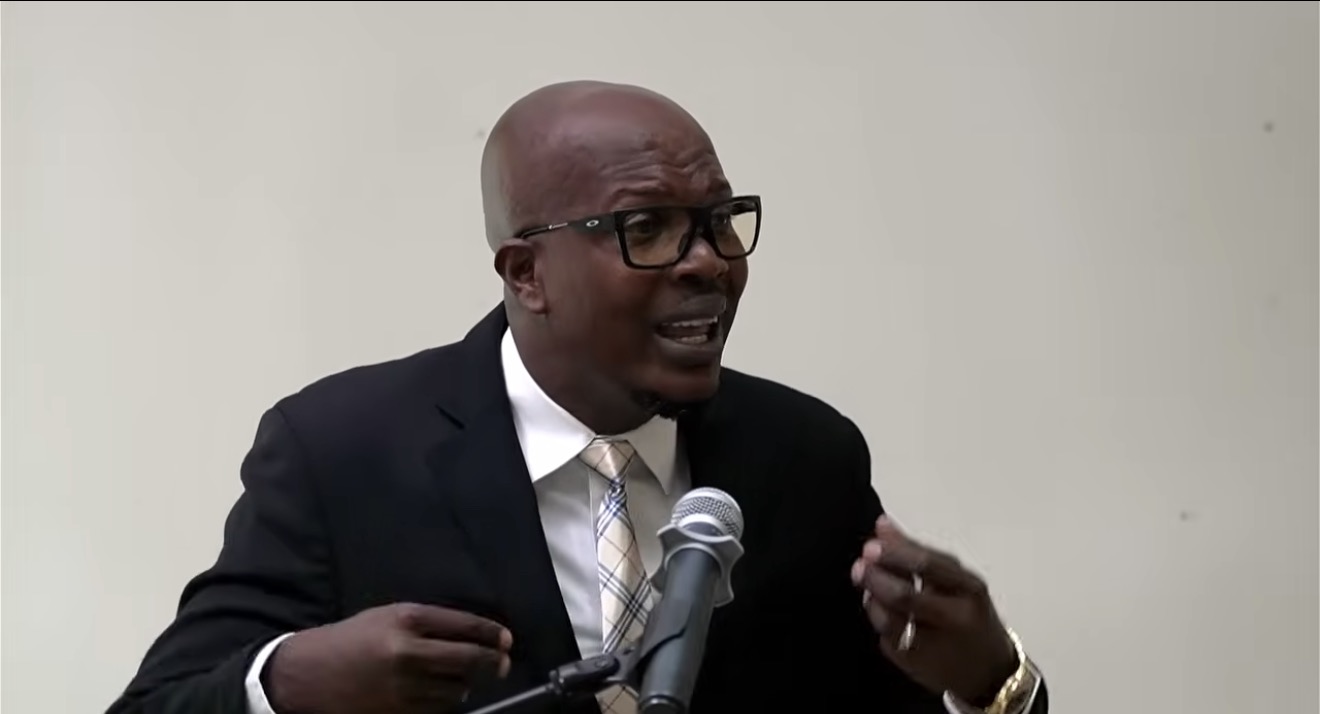
    In a comprehensive address to the National Assembly on Friday, Surinamese lawmaker Ebu Jones of the National Democratic Party (NDP) presented a compelling case for fundamental judicial reform, arguing that the current system’s structural vulnerabilities demand immediate institutional reinforcement rather than representing any political whim or power struggle.

    Jones emphasized that the debate surrounding proposed legislative changes must transcend emotional reactions, isolated incidents, or personal considerations, focusing instead on institutional principles and legal protections. “Laws are not crafted for today’s officeholders,” he asserted, “but for the system that must function tomorrow, regardless of who holds positions of authority.”

    The parliamentarian identified several critical areas requiring transformation, beginning with the concept that the right to a fair trial commences well before courtroom proceedings—during investigation and prosecution phases where the Public Prosecutor’s Office (OM) wields concentrated power. Jones highlighted the OM’s extensive authority in deciding whom to prosecute, detain, keep incarcerated, or whose cases to dismiss, noting this power demands clearer legal safeguards, transparency, and checks and balances.

    A central pillar of Jones’ argument focused on Suriname’s exceptional regional position as lacking a third judicial instance. Following appeals, legal pathways in criminal and civil cases become essentially exhausted, creating compliance concerns with international treaties like the International Covenant on Civil and Political Rights (ICCPR). Jones clarified that a third instance wouldn’t constitute relitigating facts but would ensure proper review of legal rules, procedural diligence, and reasoning—thereby enhancing legal certainty, jurisprudence development, and judicial uniformity.

    Regarding proposed structural changes within the OM, Jones advocated for either multiple attorneys-general or a collegiate model, framing this not as an attack on current leadership but as institutional strengthening against arbitrariness, political pressure, and excessive individual burden. Such models, already commonplace in other legal systems according to Jones, would create more balanced decision-making, enhance internal controls, and prevent excessive power concentration.

    Jones addressed societal complaints about slow procedures, unequal treatment, and prolonged pretrial detention as symptoms of systemic strain rather than isolated incidents. He referenced previous administration practices where individuals were detained without judicial review under so-called ‘gag laws,’ only released after offering apologies days later.

    The reform advocate called for an integrated approach encompassing judicial strengthening, OM modernization, capacity expansion, improved training, and clearer legislation. Jones emphasized that proposed constitutional amendments aim primarily to create constitutional space for reform, with specific implementation details—whether establishing a domestic cassation instance, joining the Caribbean Court of Justice, or developing a hybrid model—to be carefully elaborated subsequently.

    “This debate isn’t about today,” Jones concluded, “but about the rule of law we wish to leave as our legacy.” He positioned judicial reform as essential for restoring public trust, deepening legal protections, and better preparing Suriname for future societal and economic developments.

  • Border deaths Pelegrín attributes chaos to Haitian gangs

    Border deaths Pelegrín attributes chaos to Haitian gangs

    Pelegrín Castillo, President of the National Progressive Force party, has characterized the recent discovery of decapitated female bodies in the Elías Piña province as a deliberate component of a “organized disorder” strategy engineered by Haitian criminal factions. This statement was issued yesterday in response to the grisly incident near the volatile border region.

    Castillo posits that this violent crime transcends an isolated atrocity, representing instead a calculated geopolitical maneuver. He asserts the primary objective is to fabricate a pretext for an international crime of aggression, masquerading under the narrative of a humanitarian emergency. According to his analysis, this orchestrated chaos is designed to compel the reopening of the Dominican-Haitian border, thereby establishing formal refugee camps on Dominican soil.

    “This act was perpetrated with a clear strategic aim: to reinforce the argument that deportations to Haiti cannot proceed under the premise of imminent danger,” Castillo articulated. He further elaborated that the murders serve a dual purpose: intensifying migratory pressure on the Dominican Republic while simultaneously exposing alleged human trafficking corridors. This development coincides with the United States government implementing stricter security protocols in the region.

    The political leader also contends that such incidents are leveraged to bolster claims by international organizations, including Amnesty International, advocating against the deportation of Haitians under the Temporary Protected Status (TPS) program. The underlying assertion is that these actions validate claims that returnees face life-threatening conditions.

    In light of these events, Castillo issued an urgent appeal for governmental responsibility. He advocated for decisive measures, specifically proposing the declaration of a State of Emergency for Defense. He concluded with a stark warning, stating that the nation risks profound loss if it prioritizes tourism protection above all other security and sovereignty concerns.

  • Regionale  veiligheid centraal bij ontmoeting president Simons en CARICOM IMPACS

    Regionale veiligheid centraal bij ontmoeting president Simons en CARICOM IMPACS

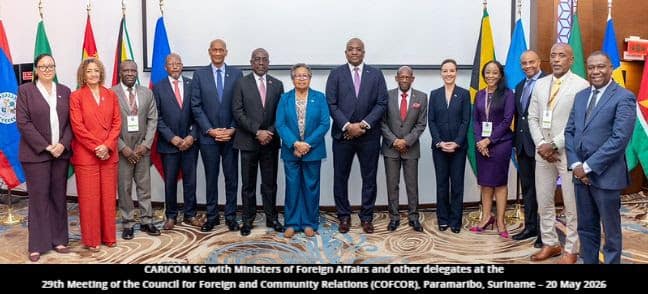
    Suriname has positioned itself at the forefront of regional security coordination following a high-level consultation between President Jennifer Simons and CARICOM IMPACS Executive Director Lieutenant Colonel Michael Jones. The meeting, held on Friday, established Suriname’s strategic role in addressing transnational security challenges during its upcoming presidency of the Council for National Security and Law Enforcement (CONSLE) in 2026.

    The discussions, attended by Carmen van Dijk, Deputy Director of Security Policy at Suriname’s Directorate of National Security, focused on developing comprehensive responses to organized crime, illegal migration, and firearms trafficking. Lieutenant Colonel Jones emphasized the necessity of collaborative approaches, stating: ‘The security challenges confronting our region demand joint solutions and efficient utilization of limited resources.’

    Technical cooperation formed a significant component of the dialogue, with commitments to enhance Suriname’s capabilities through specialized training programs and material support from CARICOM IMPACS. Particular attention was given to the Advanced Passenger Information System, which Jones identified as critical for improving border security through strengthened legislation and expanded data collection mechanisms.

    A landmark achievement discussed was the recent implementation of a digital firearms and ammunition management system, enabling comprehensive tracking from registration to destruction. This technological advancement is expected to significantly improve monitoring of illegal weapon flows throughout the Caribbean community.

    The meeting concluded with preparations for CARICOM IMPACS’ 20th anniversary celebrations, including the announcement that Suriname will host a physical convening of the CONSLE in November 2026. This gathering will assess progress on regional security initiatives and establish future priorities for collective action.

  • PM Briceño Orders Reset, Brings PUC In

    PM Briceño Orders Reset, Brings PUC In

    In a significant regulatory intervention, Belize Prime Minister John Briceño has mandated a comprehensive pause in telecommunications discussions, emphasizing the necessity for proper oversight and transparency. The decision effectively resets ongoing negotiations between telecommunications entities and brings the Public Utilities Commission (PUC) into a central regulatory role.

    Prime Minister Briceño characterized previous approaches as putting “the cart ahead of the horse,” highlighting that the PUC should have been involved from the outset to provide essential legal and regulatory scrutiny. Drawing parallels to established procedures for Belize Electricity Limited (BEL), where the PUC examines multi-million dollar equipment purchases and rate increase proposals, the Prime Minister emphasized that telecommunications require identical oversight mechanisms.

    The suspension aims to address what government officials describe as widespread misinformation from multiple stakeholders. Minister responsible for Public Utilities, Michel Chebat, initiated the halt to enable the PUC to thoroughly evaluate proposals from Belize Telemedia Limited (BTL) and determine whether they align with national interests. The commission is expected to provide recommendations for a structured way forward once its assessment is complete.

    This intervention also addresses longstanding regulatory gaps in the telecommunications sector. PM Briceño referenced previous litigation where Smart successfully argued that BTL operates as a dominant provider, a case that resulted in court recognition of market imbalance. However, the previous administration failed to implement necessary legislation or regulations to create equitable conditions between industry players, creating the current regulatory vacuum that now requires resolution.

  • PM Responds After Northern Caucus Backs Deal

    PM Responds After Northern Caucus Backs Deal

    Prime Minister John Briceño of Belize finds himself at the intersection of political leadership and governmental authority as internal party dynamics complicate the controversial BTL-Speednet acquisition proposal. While his administration maintains an official stance of procedural caution, the ruling People’s United Party’s Northern Caucus has independently endorsed the telecommunications merger, creating a visible rift between party politics and executive governance.

    The political landscape intensified this week when PUP’s northern faction publicly declared support for the acquisition, directly contrasting with the Cabinet’s more reserved position of allowing regulatory processes to unfold. This divergence prompted journalists to question Briceño about his seemingly contradictory roles as both party leader and head of government.

    In response to media inquiries, Briceño articulated a clear distinction between his governmental and political capacities. “There are two things, one is the Cabinet and one is the party,” he stated, explaining that while the Cabinet seeks thorough consultation processes, the party’s executive felt compelled to respond to political pressure from opposition groups. The Prime Minister emphasized that the Northern Caucus’s endorsement represents a political position separate from the government’s official procedural approach.

    The situation highlights the complex balance required of democratic leaders who must simultaneously navigate party politics and national governance. Briceño’s response suggests an attempt to maintain both his party’s cohesion and his government’s regulatory integrity amid growing public and business community scrutiny of the proposed telecommunications merger.