分类: politics

  • Fox: This election will be my first time voting

    Fox: This election will be my first time voting

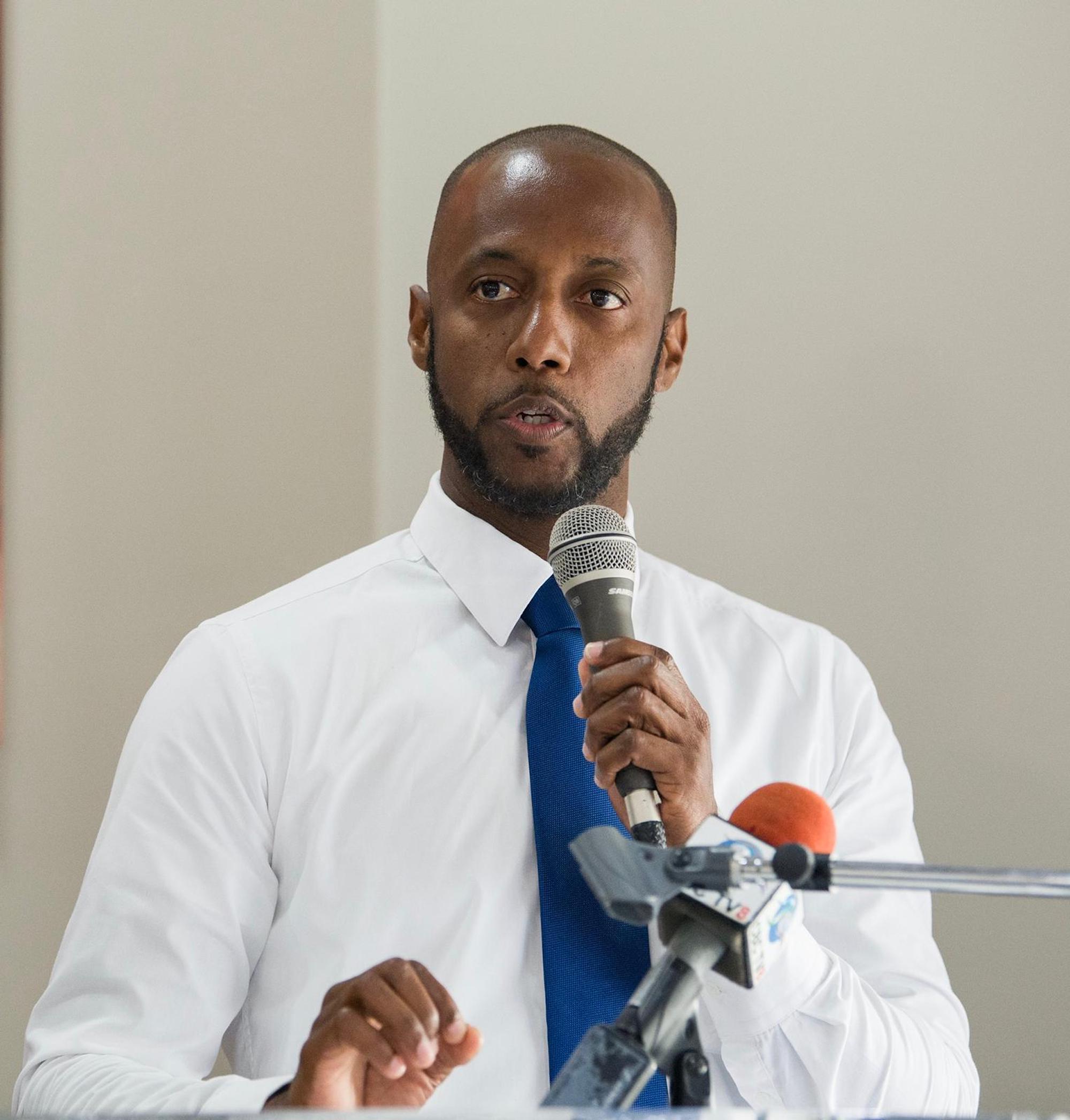
    In a remarkable political development, former NBA champion Rick Fox has revealed that the upcoming general election will mark his first-ever vote cast in The Bahamas. The Free National Movement’s candidate for Garden Hills disclosed this significant personal milestone during a recent appearance on Our TV’s ‘On the Record’ with host Jerome Sawyer.

    Fox explained that he obtained his voter registration card approximately five years ago while anticipating his permanent return to The Bahamas following his daughter’s college graduation. ‘No, this is going to be the first time,’ Fox responded when questioned about his voting history. ‘Yes, and I can’t wait. So it’s the first time for a lot of people, for me, and for a lot of people that need to get out and register to vote—that’s how we protect our sovereignty.’

    His candidacy has generated considerable attention within political circles, particularly as his ratification surprised some party supporters who had expected longtime aspirant D’Angelo Ferguson to secure the nomination after months of campaigning. Fox described a Thursday morning meeting at IHOP with both Ferguson and the party leader, emphasizing their discussions focused on unity and constituency development plans. He praised Ferguson’s professional accomplishments and suggested he has ‘a bright political future if he chooses.’

    Addressing his basketball career, Fox clarified his international representation, denying that he played for Canada’s Olympic basketball team despite FIBA records indicating his participation in the 1990 and 1994 World Championships. He stated that he declined Olympic opportunities and instead led The Bahamas’ national basketball program while maintaining his NBA career.

    Regardless of the election outcome, Fox affirmed his commitment to remain in The Bahamas, signaling a permanent dedication to his home nation’s development.

  • US backs Haitian prime minister

    US backs Haitian prime minister

    The United States has formally expressed its support for Haitian Prime Minister Alix Didier Fils-Aimè as he assumes interim leadership following the conclusion of the Provisional Transitional Council’s (CPT) mandate. Washington’s endorsement came through an official statement released by the U.S. Embassy in Haiti, acknowledging the peaceful transfer of authority from CPT coordinator Laurent Saint-Cyr to Prime Minister Fils-Aimé and his ministerial council.

    The American government emphasized its readiness to collaborate with Haiti’s interim administration to address the nation’s pressing stabilization needs. The statement highlighted Washington’s recognition of the profound responsibility facing Haitian authorities during this critical juncture, while underscoring the essential role of domestic efforts in restoring security and advancing the aspirations of the Haitian population.

    Citing Secretary Rubio’s previous remarks, the communication stressed that sustainable progress in Haiti hinges upon responsible governance, enhanced security conditions, and robust international partnerships that respect Haitian sovereignty. The United States reaffirmed its commitment to working alongside Haitian leadership and regional allies to support stabilization initiatives.

    The CPT, established in April 2024 following Prime Minister Ariel Henry’s resignation, was tasked with restoring political stability, addressing severe security challenges posed by armed gangs, and facilitating a democratic transition. The nine-member council was specifically mandated to appoint new governmental leadership and oversee preparations for national elections scheduled for early 2026—marking the first electoral processes since April 2024.

    However, the council’s tenure concluded last Saturday amid internal conflicts, governance deficiencies, operational paralysis, and widespread allegations of corruption, influence peddling, and alleged collusion with armed factions. While Haitian civil and political leaders broadly agreed on the CPT’s dissolution, consensus regarding its replacement structure remains elusive.

    In his departure statement, Saint-Cyr urged stakeholders to prioritize national security over personal interests, confirming that ministerial leadership under Prime Minister Fils-Aimé would assume control. Meanwhile, Fils-Aimé addressed the nation over the weekend, invoking Haiti’s historical commitment to republican values and popular sovereignty while emphasizing the necessity of national unity and state authority. He acknowledged the CPT’s efforts during nearly two years of extreme complexity while recognizing that the transition process remains incomplete due to persistent insecurity and electoral timeline adjustments.

  • Chang resumes duties after surgery, says recovery going well

    Chang resumes duties after surgery, says recovery going well

    KINGSTON, Jamaica — Jamaica’s Deputy Prime Minister and National Security Minister Horace Chang has resumed his official duties after a period of medical absence. The senior government official returned to his ministerial office and participated in Cabinet proceedings on Monday, marking his formal reintegration into the nation’s security leadership.

    Minister Chang disclosed that his complete rehabilitation following an elective surgical procedure is projected to conclude by late February 2026. “While I am officially back in the ministry, my field operations will remain limited until March,” Chang stated. “The coming weeks will be dedicated to comprehensively updating myself on all pertinent security matters.”

    The National Security Minister extended particular recognition to Jamaica’s security forces for their performance, noting that the new year has commenced positively following their commendable achievements throughout the previous year. “The results are undoubtedly encouraging, though substantial work remains ahead,” Chang observed. “We remain steadfast in our commitment to transforming Jamaica into a more peaceful and securely governed society.”

    Chang additionally expressed profound gratitude toward governmental colleagues and citizens who offered support during his health-related absence. “I deeply appreciate the kindness and solidarity extended following news of my health challenges,” he remarked. “While it presented difficulties, my recovery continues positively, and I am genuinely thankful for the overwhelming support.”

  • Venezuela opposition figure freed, then rearrested after calling for elections

    Venezuela opposition figure freed, then rearrested after calling for elections

    CARACAS, Venezuela — A prominent Venezuelan opposition leader found his fleeting freedom abruptly terminated Monday when state security forces detained Juan Pablo Guanipa, a key ally of Nobel peace laureate Maria Corina Machado. The incident occurred mere hours after Guanipa’s release from prison as part of a broader political prisoner amnesty initiative.

    According to Machado, a contingent of heavily armed plainclothes operatives intercepted Guanipa in Caracas’ Los Chorros district in what she characterized as a ‘kidnapping.’ The Venezuelan Public Prosecutor’s Office subsequently confirmed the detention, alleging Guanipa had violated terms of his conditional release and would be transferred to house arrest, though specific details of the alleged violations remained undisclosed.

    The development delivered a sobering message to pro-democracy advocates anticipating political transformation following the ouster of former president Nicolas Maduro. Guanipa’s son, Ramon Guanipa, publicly demanded verification of his father’s safety and whereabouts, asserting no release conditions had been breached.

    The political confrontation intensified as Interior Minister Diosdado Cabello—a remaining figure from Maduro’s administration—attributed Guanipa’s predicament to opposition ‘stupidity,’ claiming the politician had provoked unrest. This contradicted Machado’s assessment that the detention undermined governmental commitments to end systematic repression.

    Despite the setback, Machado reaffirmed her determination to return to Venezuela from U.S. exile, stating the incident reinforced rather than diminished her resolve.

    Guanipa’s brief interlude of liberty Sunday included meetings with families of political detainees and bold challenges to authorities regarding electoral integrity. He had urged recognition of the disputed 2024 presidential election results or initiation of new democratic processes.

    Initially arrested in May 2025 on charges widely condemned as politically motivated—including terrorism and money laundering—Guanipa’s renewed detention coincided with postponed parliamentary deliberations on the ‘Amnesty Law for Democratic Coexistence.’ This legislation, championed by interim president Delcy Rodriguez, promised broader prisoner releases and political reconciliation.

    While Rodriguez’s administration has facilitated nearly 400 prisoner releases and engaged in tentative cooperation with Washington—including offers of oil concessions—reforms have progressed incrementally. Significant elements of the military-backed establishment persist, with Rodriguez herself having served as Maduro’s vice president.

    Human rights organizations estimate approximately 700 political prisoners remain incarcerated. The situation attracted immediate international attention, with U.S. Congresswoman Maria Elvira Salazar warning of ‘grave consequences’ should Guanipa be harmed, emphasizing continued American scrutiny of Venezuelan developments.

    The contrasting narratives of progress and repression were embodied in weekend celebrations surrounding prisoner releases, including emotional reunions at Tocuyito prison where freed detainee Albany Colmenares proclaimed hopeful expectations for Venezuela’s future amid ongoing struggles for democratic normalization.

  • Epstein accomplice Maxwell seeks Trump clemency before testimony

    Epstein accomplice Maxwell seeks Trump clemency before testimony

    In a highly anticipated congressional deposition that yielded no new information, convicted sex trafficker Ghislaine Maxwell invoked her Fifth Amendment right against self-incrimination on Monday. The hearing, conducted virtually from her federal prison in Texas where she is serving a 20-year sentence, was orchestrated by the House Oversight Committee seeking information about her crimes with Jeffrey Epstein and potential co-conspirators.

    Committee Chairman James Comer expressed significant disappointment following the deposition, stating they had ‘many questions about the crimes she and Epstein committed as well as questions about potential co-conspirators.’

    The development took a dramatic turn when Maxwell’s attorney, David Markus, presented an extraordinary proposition: Maxwell would provide complete and honest testimony if granted clemency by former President Donald Trump. ‘If this Committee and the American public truly want to hear the unfiltered truth about what happened, there is a straightforward path,’ Markus declared in an official statement. ‘Ms. Maxwell is prepared to speak fully and honestly if granted clemency by President Trump.’

    Markus notably asserted that both Trump and former President Bill Clinton – who had documented associations with Epstein – are ‘innocent of any wrongdoing,’ while simultaneously positioning Maxwell as the sole individual capable of providing explanations about their interactions with Epstein.

    The deposition occurs against the backdrop of the recent Justice Department release of millions of documents, photographs, and videos from the Epstein investigation. While prosecutors indicate no new criminal cases are expected, the revelations have already triggered resignations and reputational damage for numerous business and political figures identified in the files.

    Democratic Representative Suhas Subramanyam, who attended the closed-door session, characterized Maxwell as ‘unrepentant’ and ‘robotic,’ suggesting her refusal to testify constituted a strategic maneuver to secure a presidential pardon.

    The committee has additionally summoned Bill and Hillary Clinton to testify about their Epstein connections, with the Clintons requesting public hearings to avoid political manipulation of their testimony. Notably, Trump – despite his documented friendship with Epstein – has not been called to testify before the Republican-led committee.

    The unfolding situation reflects intense political pressure to address widespread public suspicion of a coordinated cover-up to protect powerful individuals within Epstein’s network, a sentiment that ultimately compelled Trump to authorize the release of Epstein-related documents despite initial resistance.

  • US lawmakers reviewing unredacted Epstein files

    US lawmakers reviewing unredacted Epstein files

    WASHINGTON—U.S. lawmakers from both parties expressed serious concerns Monday after reviewing unredacted files related to convicted sex offender Jeffrey Epstein, noting that numerous names had been inexplicably removed from publicly released documents despite congressional mandates for full transparency.

    The examination occurred at a secure Justice Department facility following the implementation of the Epstein Files Transparency Act (EFTA), which Congress passed overwhelmingly in November. This legislation compelled the Justice Department to disclose all Epstein-related records in its possession, explicitly prohibiting redactions based on embarrassment, reputational harm, or political sensitivity—including for government officials, public figures, or foreign dignitaries. The law only permitted redactions to protect the identities of Epstein’s victims, who number over 1,000 according to FBI estimates.

    Representative Jamie Raskin (D-Md.) reported observing ‘lots of names blanked out for mysterious or baffling reasons,’ suggesting many redactions appeared to cover ‘enablers and cooperators’ with Epstein without legitimate justification. His concerns were echoed by Representatives Thomas Massie (R-Ky.) and Ro Khanna (D-Calif.), who discovered at least six redacted names of individuals ‘likely incriminated by their inclusion in these files.’

    The lawmakers declined to identify these individuals publicly but revealed that one is ‘pretty high up in a foreign government’ and another is ‘a pretty prominent individual.’ They also noted that many redactions predated the Justice Department’s receipt of the documents, potentially originating from the FBI or prosecutors.

    The document release comes amid ongoing fallout from the Epstein scandal. Epstein, who maintained connections with business executives, politicians, and celebrities, died in his New York jail cell in 2019 while awaiting trial for sex trafficking minors. His associate, Ghislaine Maxwell, was convicted in 2021 for trafficking underage girls to Epstein and is currently serving a 20-year prison sentence.

    In a related development, Maxwell testified from prison to Congress on Monday but refused to answer questions, stating she would only cooperate if granted clemency by former President Donald Trump. Trump himself had initially resisted the document release concerning his former acquaintance, but ultimately signed the EFTA into law following pressure from within his own party, reflecting widespread public suspicion of a cover-up to protect powerful figures in Epstein’s orbit.

  • Portugal stemt in eerste presidentiële eindronde in 40 jaar; Japan start telling

    Portugal stemt in eerste presidentiële eindronde in 40 jaar; Japan start telling

    Portugal witnessed a historic presidential runoff election on Sunday, marking the country’s first such electoral showdown in four decades. Approximately 11 million eligible voters faced a decisive choice between socialist candidate Antonio Jose Seguro and right-wing nationalist Andre Ventura, leader of the Chega party.

    The electoral process unfolded against the backdrop of devastating storms that have battered Portugal with severe flooding, causing billions of euros in damage. Despite official requests for postponement due to the extreme weather conditions, authorities urged citizens to fulfill their democratic duty and cast their ballots. Results are anticipated later in the evening.

    While the Portuguese presidency is primarily ceremonial, political analysts are closely monitoring the performance of Ventura, whose rising influence represents a significant shift in the nation’s political landscape. His potential strong showing could signal growing support for nationalist policies in Portugal.

    Simultaneously, Japan concluded its parliamentary elections Sunday evening as polling stations closed and vote counting commenced. Prime Minister Sanae Takaichi, Japan’s first female premier, is projected to secure a substantial victory according to exit polls and preliminary results.

    The election occurred during unusually heavy snowfall across many regions, potentially affecting voter turnout patterns. Takaichi’s conservative coalition appears poised to maintain a strong majority in the Lower House, enabling the continuation of her policy agenda featuring tax reductions and enhanced defense capabilities. Final results are expected overnight into Monday morning.

  • WATCH: Browne and Browne Show Makes Television Debut on Point TV

    WATCH: Browne and Browne Show Makes Television Debut on Point TV

    In a significant evolution for political media, the long-standing ‘Browne and Browne’ programme has transitioned from its exclusive radio format to a simultaneous television broadcast, launching its inaugural visual transmission on Point TV this past Saturday. The announcement marked a pivotal moment for the talk show, which now originates from a state-of-the-art television studio specifically designed for this expansion at the Point Broadcasting Network headquarters.

    Program hosts articulated that this strategic shift represents a deliberate effort to amplify the show’s audience reach and enhance the quality of public discourse through the integration of visual elements with traditional radio broadcasting. The simulcast approach enables the programme to maintain its established radio listenership on Point FM while simultaneously engaging television viewers via cable networks, creating a multi-platform experience that reflects contemporary media consumption patterns.

    The production upgrade signifies more than technical enhancement—it embodies a commitment to elevating political conversation through improved presentation standards. The television format provides panelists with expanded opportunities to communicate policy discussions and development initiatives through visual storytelling and non-verbal communication cues previously absent from the radio-only broadcasts.

    Prime Minister Gaston Browne, whose regular participation lends the programme its distinctive character, joined hosts in-studio for the historic television premiere. The episode continued the show’s established focus on critical national issues including governance frameworks, economic policies, and developmental objectives, now enhanced by visual components that add depth to the dialogue.

    According to the hosting team, this media expansion aims to enrich public engagement both within domestic viewership and across the diaspora community, fostering more comprehensive national conversations as the programme adapts to evolving digital media landscapes.

  • OECS celebrates 52 years of Independence with Grenada

    OECS celebrates 52 years of Independence with Grenada

    The Organisation of Eastern Caribbean States (OECS) Commission has extended heartfelt congratulations to Grenada on its 52nd anniversary of independence, recognizing the nation’s remarkable journey under the theme ‘Grenada at 52: Anchored in Faith, Guided by Purpose.’ This milestone celebration highlights Grenada’s enduring commitment to navigating complex climatic, political, economic, and diplomatic challenges with characteristic resilience and dignity.

    Dr. Didacus Jules, Director General of the OECS, delivered a poignant message applauding Grenada’s developmental trajectory over five decades. He emphasized that independence represents an ongoing process of renewal rather than a static historical event. ‘Grenada has demonstrated that small size does not equate to small ambition,’ Jules noted, ‘and that sovereignty is strengthened, not weakened, when exercised responsibly and collectively.’

    The independence theme resonates profoundly across the Eastern Caribbean region, serving as both inspiration and strategic guidance for member states confronting similar challenges. Dr. Jules elaborated on the philosophical depth of Grenada’s chosen theme: ‘To be anchored in faith is to refuse fatalism—to insist that history is not only something that happens to us, but something we actively shape. To be guided by purpose is to engage the world with openness but also discernment.’

    Jules further highlighted Grenada’s regional leadership role, stating that unity among small states constitutes their ‘strongest currency in a world of unequal power.’ He called for renewed resolve in strengthening institutions, investing in human capital, expanding regional cooperation, and engaging global partners through frameworks that acknowledge both vulnerabilities and value.

    The OECS Commission encourages regional participation in celebrating Grenada’s achievements in unity, innovation, and shared prosperity as the nation enters its 53rd year of sovereign development.

  • Verkiezingen in Thailand en Japan: risico op politieke onzekerheid en versterking conservatieve leiders

    Verkiezingen in Thailand en Japan: risico op politieke onzekerheid en versterking conservatieve leiders

    Two of Asia’s major democracies embarked on critical electoral journeys Sunday, with Thailand and Japan conducting nationwide votes that signal contrasting political trajectories for the region. While Japan appears headed toward stable conservative leadership under Prime Minister Sanae Takaichi, Thailand faces a fragmented political landscape with no clear majority in sight.

    In Thailand, voters confronted a complex three-way contest between Prime Minister Anutin Charnvirakul’s conservative Bhumjaithai party, the progressive People’s Party, and the populist Pheu Thai faction backed by former premier Thaksin Shinawatra. Political analysts project that none of these competing forces will secure an outright parliamentary majority, potentially prolonging the nation’s political instability.

    The election timing itself carries strategic significance, called by Charnvirakul amid escalating border tensions with neighboring Cambodia. Experts suggest this move aimed to capitalize on nationalist sentiments among the electorate. The progressive People’s Party, advocating for structural reforms, currently leads opinion polls but may fall short of the seats needed to form a government independently.

    Adding another layer of complexity, Thai voters simultaneously considered a constitutional referendum that could replace the current military-drafted charter from 2017. This decision carries profound implications, as Thailand has experienced twenty different constitutions since the end of absolute monarchy in 1932, typically following military interventions.

    Meanwhile, Japan’s Lower House elections presented a different scenario, with Prime Minister Takaichi positioned to secure a substantial victory. The nation’s first female prime minister leads a conservative coalition expected to maintain its parliamentary dominance, enabling continued pursuit of her policy agenda including tax reductions and enhanced defense capabilities particularly directed toward countering China’s influence.

    Takaichi’s campaign received a significant boost from former U.S. President Donald Trump’s endorsement, potentially strengthening her conservative base while possibly alienating moderate voters. However, severe winter weather conditions across parts of Japan threatened to suppress voter turnout, adding uncertainty to the electoral process.

    These parallel elections underscore the political divergence within Asia’s democratic systems. Japan moves toward consolidated conservative governance while Thailand grapples with political fragmentation, with both outcomes carrying significant implications for regional stability, economic policies, and democratic development in the coming years.