分类: politics

  • UDP Parliamentarians Boycott House Sitting in Protest

    UDP Parliamentarians Boycott House Sitting in Protest

    In a dramatic display of political dissent, opposition parliamentarians from the United Democratic Party (UDP) staged a coordinated walkout during Friday’s parliamentary session, intensifying their protest against the government’s controversial acquisition of BTL-SMART assets. This marks the third such boycott initiated by the UDP, representing an escalating confrontation between governing and opposition forces.

    The UDP leadership has characterized the acquisition arrangement as financially reckless and potentially corrupt, asserting that the administration has effectively transformed the legislative body into a mere rubber stamp for a transaction that could burden Belizean citizens with tens of millions in public debt. Opposition spokespersons emphasize that their protest stems from fundamental principles of fiscal responsibility rather than partisan politics.

    Several critical concerns remain unaddressed according to the UDP, including the absence of an independent valuation assessment, unavailable audited financial statements, undefined liability structures, and inadequate protections for workers facing potential employment termination. The party contends that these substantive issues warrant thorough parliamentary scrutiny before any approval.

    Beyond the political arena, the opposition notes growing societal resistance to the acquisition, referencing demonstrations organized by labor unions, business associations, and civil society organizations. The UDP argues that when dissenting perspectives are systematically excluded from legislative debate, Parliament forfeits its essential function of governmental accountability.

    The opposition party has pledged to sustain its resistance campaign, framing the confrontation as a crucial defense of public funds and Belize’s long-term economic stability. Political analysts suggest the ongoing boycott strategy reflects deepening institutional tensions between executive and legislative branches regarding oversight of major financial decisions.

  • Compol Rosado Warns of Consequences for UDP Protest

    Compol Rosado Warns of Consequences for UDP Protest

    Police Commissioner Dr. Richard Rosado has issued a formal warning to the United Democratic Party (UDP) following Wednesday’s protest that resulted in the unauthorized blockade of Belcan Bridge. The demonstration, which was governed by specific permit conditions and a financial bond agreement, escalated when supporters violated the agreed-upon terms by obstructing the critical transportation artery.

    Commissioner Rosado emphasized that while law enforcement exercised deliberate restraint to prevent further escalation and ensure a peaceful outcome, the breach of established protest conditions could not be overlooked. The violation represents a serious disregard for the negotiated parameters that both parties had previously agreed upon.

    “The violation of the agreed upon bond condition for the protests is unfortunate and there may be legal consequences for the organizers,” stated Commissioner Rosado during a press briefing. He clarified that the permit explicitly stipulated bond terms that were mutually accepted by both the UDP and police authorities prior to the demonstration.

    When questioned about the potential forfeiture of the $10,000 bond, Rosado declined to specify exact penalties but reiterated that the breach of conditions could trigger legal proceedings against protest organizers. The Commissioner defended the police’s measured response during the event, characterizing it as a professional decision aimed at avoiding catastrophic use of force while maintaining public order.

    The development signals a potentially significant legal confrontation between law enforcement authorities and political organizers, highlighting the ongoing tensions between protest rights and public safety regulations.

  • PUP Responds to Protest with National Assembly Rally

    PUP Responds to Protest with National Assembly Rally

    In a dramatic reversal of expectations, the political atmosphere outside Belize’s National Assembly transformed from anticipated confrontation to celebratory gathering on February 6, 2026. What was initially projected as another opposition-led demonstration instead evolved into a rally-like assembly of ruling People’s United Party (PUP) supporters.

    The shift began minutes before the scheduled House sitting when the United Democratic Party (UDP) issued a late announcement declaring their complete boycott of parliamentary proceedings. The UDP characterized their absence as “round three” of an ongoing protest strategy, asserting they refused to participate in a Parliament they claim has become a “rubber stamp” for deals allegedly enriching the Briceno family while burdening Belizeans with substantial debt.

    Simultaneously, Commissioner of Police Richard Rosado confirmed that the National Trade Union Congress of Belize (NTUCB) had withdrawn their protest application, while no application had been received from the opposition UDP.

    The subsequent scene featured drums, dancing, and dozens of enthusiastic PUP supporters creating a festival-like environment. Party officials provided varying explanations for the gathering: Secretary General Collet Montejo described it as organic support from area representatives’ constituents, Party Chairman Henry Charles Usher emphasized support for the Occupational Health and Safety Bill, and Toledo West Area Representative Oscar Requena characterized it as public engagement with the newly renovated parliament building.

    However, Pickstock Street Captain Shaheed Hauze provided the most explicit rationale, stating his division alone brought approximately 110 supporters specifically to endorse BTL’s acquisition of Speednet—the very issue the UDP protest had targeted. Despite mixed messaging, the gathering remained peaceful, with Hauze emphasizing their civilized approach and support for government decisions.

    With both opposition and union protests postponed to next week, the day concluded with political theater rather than confrontation, highlighting Belize’s ongoing political divisions regarding telecommunications acquisition and governance accountability.

  • Government Delivers Long‑Awaited Worker Safety Law

    Government Delivers Long‑Awaited Worker Safety Law

    After nearly two decades of persistent advocacy from labor organizations, Belize’s House of Representatives has officially passed the comprehensive Occupational Safety and Health Bill. This landmark legislation represents a significant advancement in workplace protections, particularly for employees operating in high-risk environments.

    Prime Minister John Briceño presided over the historic parliamentary session, reflecting on the bill’s extensive seventeen-year journey through multiple administrations. He acknowledged the initial impracticalities of earlier versions that required substantial revisions to ensure both functionality and acceptability among stakeholders.

    “We had to ensure it was a bill that can work, that both the private sector and labor can work with,” stated Briceño, expressing satisfaction at finally overcoming this legislative hurdle. The Prime Minister noted the bill successfully passed its second and third readings despite the notable absence of opposition members during the critical vote.

    The United Democratic Party Parliamentary Caucus subsequently issued an evening statement clarifying their position. While expressing general support for the worker protection legislation, which they characterized as “a step in the right direction,” the opposition raised substantive concerns regarding enforcement mechanisms. The UDP specifically highlighted issues with inspector authority structures, insufficient penalty provisions, and inadequate protections for workers who sustain injuries. Their parliamentary boycott, according to the statement, represented not opposition to the bill itself but rather a demand for further improvements before implementation.

    The newly passed legislation establishes strengthened safety protocols across various industries and introduces enhanced regulatory oversight for workplace conditions throughout Belize.

  • Ian Hughes Issues Statement on Arrival in Barbados as head of CARICOM Observer Mission

    Ian Hughes Issues Statement on Arrival in Barbados as head of CARICOM Observer Mission

    The Caribbean Community (CARICOM) has officially deployed a specialized Election Observation Mission to monitor Barbados’ upcoming General Election scheduled for February 11, 2026. This three-member expert team arrived in Barbados on February 5th following a formal invitation from the Barbadian government dated January 27, 2026.

    The mission comprises senior electoral officials from across the Caribbean region, led by Chief of Mission Mr. Ian S. Hughes, Supervisor of Elections from Antigua and Barbuda Electoral Commission. The delegation includes Deputy Chief of Mission Ms. Josephine Tamai, Chief Elections Officer of Belize, and Mr. Andrew Smith, Regional Manager from Jamaica’s Electoral Commission. Administrative support is provided by three CARICOM Secretariat staff members specializing in community relations and logistics.

    Since their arrival, the observation team has initiated critical meetings with key stakeholders including Barbados Commissioner of Police, religious representatives from the Barbados Christian Council, and media organizations. The mission plans further consultations with Prime Minister Mia Amor Motley, Opposition Leader Ralph Thorne, Electoral Commission Chair Ramon Alleyne, and Chief Electoral Officer Sherland Turton in the coming days.

    The comprehensive observation strategy will include monitoring all phases of the electoral process. On election day, the team will assess polling station operations from opening to closing procedures, vote casting mechanisms, ballot counting processes, and results declaration protocols. The mission will also evaluate the overall electoral environment before, during, and after voting.

    Following the election, the CARICOM mission will issue a Preliminary Statement containing initial assessments before departing on February 13th. A comprehensive Final Report detailing findings and recommendations will subsequently be prepared for CARICOM Secretary-General Dr. Carla Barnett and eventually made publicly available. The mission expressed gratitude for the warm reception and emphasized its commitment to supporting democratic processes in Barbados.

  • FOD rolls out policy-heavy proposals at campaign meeting

    FOD rolls out policy-heavy proposals at campaign meeting

    In a significant pre-election gathering, the Friends of Democracy (FOD) party presented a comprehensive policy platform addressing economic, social, and governance reforms during a Thursday night rally in St. Michael. Party leader Karina Goodridge, who is contesting the St Philip West seat, positioned her party as essential for national progress, emphasizing the critical need for a robust parliamentary opposition as Barbados approaches its next budget cycle.

    Goodridge articulated that the party’s mission transcends mere seat acquisition, focusing instead on instituting rigorous legislative scrutiny to achieve balanced national decision-making. She introduced a distinctive policy proposal requiring the government to pay citizens interest on owed funds, framing it as a matter of fiscal fairness. “When the government owes you, the people, money, they should pay you back with interest. The current asymmetry in accountability is unacceptable,” she declared.

    Economic strategy featured prominently in the address, with Goodridge advocating for aggressive pursuit of foreign investment and revenue stream diversification. She identified health services as a pivotal growth sector, proposing the establishment of a state-of-the-art hospital to simultaneously advance medical tourism, generate employment, and enhance domestic healthcare capacity.

    The FOD leader emphasized democratic engagement through strengthened public consultation mechanisms in policy formulation. “Any good government should know that they should be consulting with you,” she told supporters, stressing that citizen participation must be integral to governance.

    Crime reduction and youth engagement emerged as urgent priorities, with Goodridge linking criminal activity to potential economic damage, particularly to the tourism sector. She proposed legislative reforms, including stricter laws, and social interventions such as reviving boot camps and mentorship programs. A novel micro-enterprise proposal involved creating organized ‘coconut water vendor villages’ to formalize roadside vending, simultaneously boosting tourism and improving sanitation.

    Addressing youth employment, Goodridge highlighted the disconnect between tertiary education and workforce integration. She recommended government-brokered partnerships with international firms to expand remote work opportunities, ensuring practical application of academic qualifications.

    The rally also featured policy contributions from other FOD candidates. Dominique Yorke (Christ Church East Central) introduced the Small Enterprise Empowerment Department (SEED) program, targeting youth entrepreneurship through a structured $1.5 million annual fund providing $15,000 loans with built-in National Insurance Scheme protections.

    General Secretary Steve Blackett detailed Value Added Tax (VAT) reform proposals, suggesting replacing current VAT on food with a flat 16% reduction tax to decrease consumer costs by approximately 19%. He pledged vigorous parliamentary advocacy for this measure if elected.

    In perhaps the most controversial policy position, St Michael North candidate Bertnul Harrison advocated reinstating capital punishment for severe crimes, referencing hanging, electric chair, or gas chamber as potential methods.

    Concluding the event, Goodridge framed the upcoming February 11 election as a decisive moment for parliamentary balance and policy direction, urging voters to support change: “We deserve better.”

  • PM Instructs Pause on BTL-Smart Acquisition

    PM Instructs Pause on BTL-Smart Acquisition

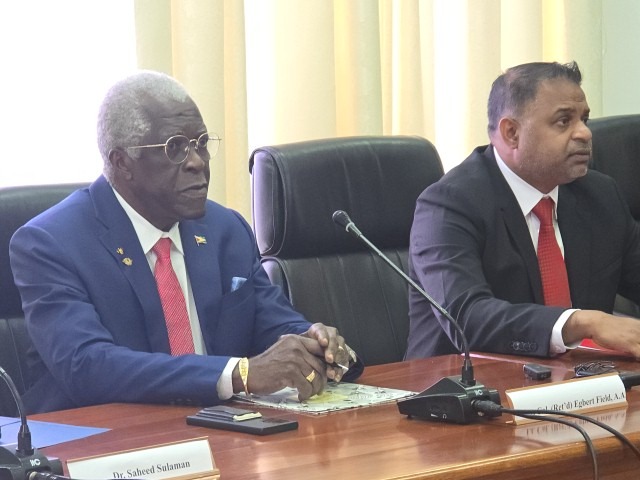
    Belize’s Prime Minister John Briceño has mandated an immediate suspension of negotiations concerning Belize Telemedia Limited’s proposed takeover of SpeedNet (SMART). The directive was formally announced in the House of Representatives by Michel Chebat, Minister of Public Utilities, emphasizing the need for enhanced public involvement and strict adherence to legal protocols.

    Minister Chebat clarified that this interim suspension aims to create space for transparent and constructive dialogue between stakeholders and the general public. Additionally, it ensures that all regulatory procedures are meticulously observed before any potential transaction advances.

    The proposed acquisition must undergo rigorous scrutiny by the Public Utilities Commission (PUC), the autonomous entity overseeing the utilities sector. A formal evaluation by the PUC will commence only if the Boards of both the Social Security Board and BTL greenlight the acquisition. This assessment will involve comprehensive analysis of competitive impacts, consumer options, service standards, pricing structures, and long-term industry viability.

    Concurrently, the PUC has initiated an independent investigation into BTL’s market dominance. The regulator stands ready to implement new protective measures for consumers if deemed necessary, irrespective of the acquisition’s outcome.

    Minister Chebat reinforced the government’s commitment to preserving the regulatory framework’s integrity, stating that the primary objective remains securing tangible benefits for the citizens of Belize.

  • Cabinet Talks Islands, Roads, and Rights

    Cabinet Talks Islands, Roads, and Rights

    In a significant session on Tuesday, the Belizean Cabinet greenlit multiple strategic initiatives spanning tourism development, human rights advancement, and transportation safety. The meeting produced concrete policy directives addressing both immediate concerns and long-term national development goals.

    Tourism infrastructure on the key island destinations of Ambergris Caye, Caye Caulker, and San Pedro received prioritized attention. Cabinet members reviewed a comprehensive assessment identifying critical challenges impacting visitor experiences. Concluding that strategic intervention is essential for sustaining the islands’ tourism viability, ministers authorized the creation of a detailed action plan with dedicated budgetary allocations for what officials termed ‘priority improvements’.

    International cooperation efforts featured prominently in the deliberations, with Cabinet receiving briefings from Belize’s International Cooperation Council. The discussions centered on outcomes from the recent Partners’ Conference, where primary focus was placed on transforming Belize’s green transition framework into bankable investment projects attractive to international partners.

    On the human rights front, Cabinet acknowledged progress by the Ministry of Foreign Affairs and Foreign Trade toward establishing Belize’s first National Human Rights Institution. An upcoming project titled ‘Advancing Human Rights in Belize: Establishing a National Human Rights Institution’ received official endorsement and will launch imminently.

    Addressing public safety concerns, Cabinet confirmed new legislative measures would be introduced during the current House sitting to empower traffic officers with enhanced enforcement capabilities. These proposed bills specifically target reckless driving behaviors and aim to significantly improve road safety nationwide through strengthened regulatory mechanisms.

  • Mohameds allowed to establish political motivation behind processing US extradition request

    Mohameds allowed to establish political motivation behind processing US extradition request

    In a significant development within Guyana’s legal landscape, Principal Magistrate Judy Latchman has authorized defense attorneys for billionaire gold dealers Azruddin Mohamed and his father Nazar “Shell” Mohamed to question a senior government official regarding alleged political motivations behind their US extradition proceedings.

    Defense counsel Siand Dhurjon presented claims that the Guyanese government engaged a US lobbying firm at a cost exceeding US$700,000 specifically to advocate for the “vilification” of the Mohameds and their subsequent extradition. The defendants face US charges including wire fraud, mail fraud, and money laundering related to their gold trading operations.

    Dhurjon asserted in court that “the US government has acted as agent of the Guyana government towards an improper political motive,” a claim that Magistrate Latchman allowed to be formally recorded despite objections from US Prosecutor Herbert McKenzie regarding relevance.

    The defense’s questioning focused on Permanent Secretary of the Ministry of Foreign Affairs Sharon Roopchand-Edwards, seeking to establish connections between her governmental appointments, her relationship with President Irfaan Ali, and the handling of extradition documents. Dhurjon argued these inquiries were relevant to demonstrate “collaboration between the American and Guyanese governments as part of a plot to go after the Mohameds for political reasons.”

    Under oath, Roopchand-Edwards acknowledged knowing President Ali for several years and holding multiple government positions, including membership on the Guyana Gold Board where she participated in approving the Mohameds’ gold export licenses between 2020-2025. However, she claimed inability to recall specific negative statements made by government officials about the defendants prior to October 2025.

    The case has gained political significance since Azruddin Mohamed formed the We Invest in Nationhood (WIN) party, which secured 16 opposition seats, resulting in his appointment as Guyana’s Opposition Leader.

  • Trump shares racist video depicting Obamas as apes, then removes it after bipartisan outrage

    Trump shares racist video depicting Obamas as apes, then removes it after bipartisan outrage

    The White House entered crisis management mode Thursday after a video containing racially offensive imagery of Barack and Michelle Obama circulated on President Trump’s Truth Social account for nearly 12 hours. The controversial post, which superimposed the former first couple’s faces onto ape-like bodies while playing a snippet of “The Lion Sleeps Tonight,” drew immediate condemnation from both sides of the political aisle.

    Initially defending the content as “fake outrage,” the administration reversed course around noon when a White House official informed CNN that “a staffer erroneously made the post” and confirmed its removal. This explanation marked a stark contrast to the earlier stance taken by press secretary Karoline Leavitt, who had characterized the video as an innocent internet meme depicting Trump as “King of the Jungle.”

    The response from Republican leadership proved particularly significant. Senator Tim Scott (R-SC), the chamber’s sole Black Republican, labeled the content “the most racist thing I’ve seen out of this White House” and publicly urged its deletion. His sentiment was echoed by vulnerable House Republicans including Representatives Mike Lawler and Nick LaLota of New York, who called for an immediate apology from the president.

    As criticism snowballed, prominent Senate allies including Armed Services Committee Chair Roger Wicker (R-MS) and Nebraska Senator Pete Ricketts joined the chorus of disapproval, describing the post as “totally unacceptable.” Behind the scenes, sources revealed that Republican lawmakers had directly contacted Trump to discuss the incident, while White House advisers and allies engaged in frantic outreach to distance the president from the controversy.

    This incident represents the latest in a series of racially charged controversies surrounding Trump’s social media activity. The administration has yet to issue any formal apology, maintaining that the president was unaware of the video’s posting and was “very let down” by the responsible staffer.