分类: politics

  • CCJ dismisses Chastanet’s appeal in Hilaire customs case

    CCJ dismisses Chastanet’s appeal in Hilaire customs case

    The Caribbean Court of Justice (CCJ) has definitively dismissed an appeal by Opposition Leader Allen Chastanet, marking the end of a protracted legal battle involving customs charges against Deputy Prime Minister Dr. Ernest Hilaire. The ruling, issued on October 15, 2025, reaffirms prior decisions by Saint Lucia’s High Court and Court of Appeal, both of which had rejected Chastanet’s challenge to the withdrawal of the charges.

    The case originated in 2020 when the Comptroller of Customs filed charges against Hilaire under the Customs (Control and Management) Act. The allegations centered on the purported illegal importation of a Land Rover Discovery vehicle following Hilaire’s tenure as Saint Lucia’s High Commissioner in London. In 2021, the newly appointed Comptroller of Customs, Sharman Emmanuel, sought and obtained permission from the Magistrates’ Court to withdraw the case, effectively terminating the proceedings.

    Chastanet contested this decision, arguing that the Director of Public Prosecutions (DPP) had assumed control of the case by the time it was withdrawn, thereby stripping the Comptroller of the authority to end it. However, the CCJ rejected this argument, stating that there was no concrete evidence to support the claim that the DPP had formally taken over the prosecution. The court emphasized that merely forwarding the case file to the DPP and the involvement of DPP counsel in the proceedings did not constitute a formal takeover.

    Furthermore, the CCJ clarified that the magistrate’s decision to grant the withdrawal superseded the Comptroller’s administrative action. As such, any legal challenge should have been directed at the magistrate’s ruling rather than the Comptroller’s initial request. The court concluded that Chastanet’s judicial review of the Comptroller’s decision was legally flawed, bringing the case to a final and irrevocable close. This ruling underscores the lawful execution of the charges’ withdrawal and affirms the integrity of the judicial process.

  • CCJ dismisses former St Lucia PM Allen Chastanet’s appeal in case against sitting Deputy PM, Dr Ernest Hilaire

    CCJ dismisses former St Lucia PM Allen Chastanet’s appeal in case against sitting Deputy PM, Dr Ernest Hilaire

    In a landmark ruling on October 15, 2025, the Caribbean Court of Justice (CCJ) dismissed an appeal filed by former Saint Lucian Prime Minister Allen Chastanet, marking the culmination of a contentious legal battle. The appeal sought to challenge the discontinuation of criminal proceedings against Saint Lucia’s current Deputy Prime Minister, Dr. Ernest Hilaire, over allegations dating back to 2020. The case centered on claims that Dr. Hilaire failed to present a commercial invoice for a vehicle imported during his tenure as High Commissioner in London. Following a change in government and mediation efforts, the Saint Lucian Customs Comptroller opted to halt the prosecution, a decision later approved by a Magistrate. Chastanet contested this move, arguing that the Director of Public Prosecutions (DPP) had assumed control of the case by January 2021 and that only the DPP had the constitutional authority to discontinue proceedings. He further alleged that the decision was politically motivated and an abuse of power. However, both the High Court and the Court of Appeal rejected his judicial review application, a stance upheld by the CCJ. The CCJ, led by Mr. Justice Eboe-Osuji and supported by President Anderson and Justices Rajnauth-Lee, Barrow, and Ononaiwu, ruled that there was insufficient evidence to prove the DPP had taken over the case. The Court emphasized that the DPP had never claimed responsibility, and the Magistrate’s approval of the withdrawal rendered it a judicial act, immune to challenge. Justice Barrow highlighted inconsistencies in Chastanet’s arguments, noting the illogicality of seeking to reinstate a case he claimed the Comptroller had no authority to withdraw. The appeal was dismissed without costs, with Chastanet represented by a team including Mr. Garth Patterson KC and the respondents by Mr. Anthony Astaphan KC and Mr. Seryozha Cenac.

  • State Department Revokes Visas for Foreign Nationals Who Celebrated Charlie Kirk’s Assassination

    State Department Revokes Visas for Foreign Nationals Who Celebrated Charlie Kirk’s Assassination

    In a decisive move, the U.S. State Department has revoked the visas of several foreign nationals who publicly celebrated the assassination of conservative figure Charlie Kirk. The announcement, made via a series of posts on X (formerly Twitter), underscores the administration’s commitment to protecting American values and citizens from those who glorify violence and hatred. Secretary of State Marco Rubio and President Donald Trump have both emphasized that the U.S. will not tolerate individuals who exploit its hospitality to spread divisive rhetoric or celebrate the death of Americans. Among those affected are individuals from Argentina, South Africa, Mexico, Brazil, Germany, and Paraguay, whose inflammatory comments about Kirk’s death were deemed unacceptable. Deputy Secretary of State Chris Landau had earlier expressed his disgust at the gleeful reactions to Kirk’s assassination, directing consular officials to take swift action. The visa revocations, which began immediately after the incident, signal a broader effort to enforce immigration laws and safeguard national integrity. This development follows a high-profile meeting between President Trump, Secretary Rubio, and Argentine President Javier Milei at the White House, highlighting the administration’s focus on both domestic and international security concerns.

  • Bouva en Todd bespreken versterking van Suriname–Guyana-corridor

    Bouva en Todd bespreken versterking van Suriname–Guyana-corridor

    Suriname and Guyana have reaffirmed their commitment to enhancing bilateral cooperation across political, economic, and infrastructural domains. This pledge was solidified during a high-level meeting between Suriname’s Minister of Foreign Affairs, International Business, and Cooperation (BIS), Melvin Bouva, and his Guyanese counterpart, Hugh Todd, on Tuesday in Georgetown. The discussions took place on the sidelines of the International Business Conference, held in Guyana from October 14 to 16. The meeting built upon the recent visit of Guyanese President Irfaan Ali to Suriname’s President Jennifer Simons in September. Both ministers focused on actionable steps to implement the Strategic Dialogue and Cooperation Platform (SDCP), which serves as the framework for collaboration between the two nations. Key areas of discussion included regional integration, trade, energy, agriculture, and tourism. The ministers highlighted the strategic significance of the Suriname-Guyana corridor, which is increasingly recognized as a vital economic zone linking the Caribbean with Latin America. They pledged to actively support this development in partnership with the private sector and multilateral organizations. Specific projects addressed during the meeting included the Corantijn Bridge initiative, the revitalization of the Canawaima Ferry Service, energy cooperation with a focus on sustainable alternatives, the reactivation of the Border Commission, and the operational resumption of SDCP committees by November 1. These committees will focus on agriculture, fisheries, tourism, and energy. Both ministers agreed to hold regular consultations to monitor progress and evaluate the implementation of SDCP agreements. In a joint statement, they described the meeting as “constructive and forward-looking,” emphasizing stability, mutual benefit, and sustainable growth in the region. Minister Bouva was accompanied by Minister Andrew Baasaron of Economic Affairs, Entrepreneurship, and Technological Innovation, Ambassador Liselle Blankendal, Deputy Director Shailesh Ramsingh, and Second Secretary Lucille Starke-Esajas.

  • UPP Affirms Strong Support for CARICOM’S Position as a Zone of Peace

    UPP Affirms Strong Support for CARICOM’S Position as a Zone of Peace

    The United Progressive Party (UPP) has unequivocally endorsed the Caribbean Community’s (CARICOM) declaration designating the region as a Zone of Peace. In a formal statement released on Tuesday, the party emphasized its unwavering support for maintaining regional stability through peace and mutual respect. The UPP underscored its opposition to any actions that could jeopardize this vision, reaffirming its dedication to fostering harmony within the Caribbean and beyond. The statement highlighted the longstanding diplomatic ties between Antigua and Barbuda and the United States, as well as the cordial relations with Venezuela. The UPP also recalled the collaborative initiatives established during its previous administration, showcasing its commitment to international cooperation. The release concluded with a resounding call for peace, signed by key party leaders including Political Leader Hon. Jamale Pringle, Chairman Dame D. Gisele Isaac, General Secretary Sen. Shawn Nicholas, and Treasurer Leon George.

  • McIntyre to public: Take advantage of voter confirmation today

    McIntyre to public: Take advantage of voter confirmation today

    Dominica has embarked on a landmark voter confirmation process, a pivotal step in the nation’s electoral reform agenda. The initiative, which commenced on October 15, 2025, aims to transition eligible voters from the existing electoral register to a new one under the Electors Act of 2025. Finance Minister Dr. Irving McIntyre has called on Dominicans, both at home and abroad, to actively participate in this historic process, emphasizing its significance in modernizing the voting system and enhancing democratic participation. The confirmation process, conducted across 48 centers in Dominica, is exclusively for individuals listed on the May 2025 voters’ register. Overseas confirmation is not permitted. Applicants must present original identification documents, such as a valid Dominican passport, driver’s license, or social security card, along with a witness registered in the same polling district. The process involves multiple steps, including document verification, data entry, and issuance of a confirmation receipt. Enrollment officers, appointed by the Chief Registering Officer, oversee the process, with a hotline available to address discrepancies. The initiative, which has been years in the making, reflects Dominica’s commitment to electoral integrity. Despite delays and public scrutiny, the government has prioritized meeting the October 15 deadline, marking a significant milestone in the nation’s democratic journey.

  • PM Browne: Antigua and Barbuda Will Not Host Foreign Military Assets

    PM Browne: Antigua and Barbuda Will Not Host Foreign Military Assets

    In a definitive statement, Prime Minister Gaston Browne of Antigua and Barbuda has declared that the twin-island nation has no intention of hosting foreign military installations or engaging in any form of military action. This announcement came ahead of a scheduled visit by U.S. Southern Command (SOUTHCOM) Commander Admiral Alvin Holsey, who is set to meet with regional leaders to discuss security cooperation. Browne emphasized that Antigua and Barbuda is committed to maintaining its current stance of not hosting military bases, a position he described as aligned with the nation’s interests and values. The U.S. Embassy in Bridgetown highlighted that Holsey’s visit underscores Washington’s dedication to enhancing regional security and stability in collaboration with Eastern Caribbean partners. Meanwhile, Grenada has confirmed it is reviewing a U.S. request to establish a radar system at the Maurice Bishop International Airport, signaling a nuanced approach to military cooperation in the region. Browne’s remarks reflect a broader Caribbean perspective on balancing sovereignty with international partnerships.

  • 30-Day Residency, Mandatory Interviews and Biometrics Among Features of New CIP Bill

    30-Day Residency, Mandatory Interviews and Biometrics Among Features of New CIP Bill

    In a significant move to enhance the integrity of its Citizenship by Investment Programme (CIP), Antigua and Barbuda has introduced sweeping reforms. The changes, reviewed by a parliamentary select committee on Tuesday, include stricter residency requirements, mandatory biometric data collection, and enhanced due diligence measures. Prime Minister Gaston Browne, who chaired the session, emphasized that these reforms aim to align the nation’s CIP with global standards set by major jurisdictions such as the United States, Canada, the United Kingdom, and the European Union.

    One of the most notable updates is the extension of the residency requirement for new citizens from five days to 30 days over a five-year period. While some critics argue for even longer stays, Browne acknowledged the challenges faced by busy businesspeople who may not have the flexibility for extended stays. Additionally, all new applicants will now be required to submit biometric data, necessitating the establishment of biometric centers across North America, Europe, Asia, and Africa. Existing CIP citizens will also need to provide biometric details during passport renewals.

    Further measures include mandatory applicant interviews and strengthened background checks through the Joint Regional Communications Centre (JRCC). Browne also urged member states of the Organisation of Eastern Caribbean States (OECS) to harmonize their CIP implementation timelines to prevent arbitrage opportunities. He proposed a unified deadline of November 1 for all participating countries—Antigua and Barbuda, St. Kitts and Nevis, St. Lucia, Dominica, and Grenada—to pass and enforce the new legislation.

    The bill, already endorsed by regional heads of government, is expected to undergo its second and third readings in Parliament later this week, with Senate consideration to follow. These reforms reflect Antigua and Barbuda’s commitment to bolstering international confidence in its CIP while ensuring transparency and compliance with global best practices.

  • U.S. SOUTHCOM Commander Meets Antigua’s Prime Minister and Defence Chief

    U.S. SOUTHCOM Commander Meets Antigua’s Prime Minister and Defence Chief

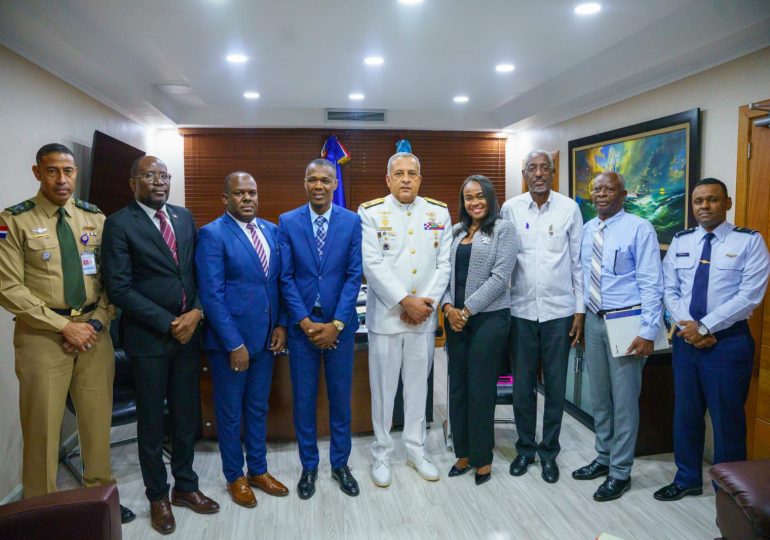
    In a significant move to enhance regional security, Admiral Alvin Holsey, Commander of the U.S. Southern Command (SOUTHCOM), held high-level discussions this week with Antigua and Barbuda’s Prime Minister Gaston Browne and Chief of Defence Staff Brigadier Telbert Benjamin. The meetings, held in Antigua, focused on deepening bilateral defense cooperation between the United States and the Caribbean nation. Key areas of discussion included combating transnational organized crime, curbing illicit trafficking, and bolstering border security across the region. Admiral Holsey underscored the importance of the partnership, describing it as vital to maintaining stability and security in the Caribbean. SOUTHCOM reiterated its commitment to collaborating with Caribbean nations to disrupt criminal networks that pose threats to both regional and U.S. interests. This visit is part of SOUTHCOM’s broader strategy to strengthen defense alliances in the Caribbean through initiatives such as joint training, maritime domain awareness, and humanitarian assistance programs, facilitated by the U.S. Embassy in Bridgetown. The discussions mark a continued effort to address shared security challenges and foster long-term cooperation in the region.

  • Rick Fox ‘would renounce Canadian citizenship’ for local political stage

    Rick Fox ‘would renounce Canadian citizenship’ for local political stage

    Former NBA star Rick Fox has expressed his willingness to fully commit to Bahamian politics, even if it means relinquishing his Canadian citizenship. Born in Canada to a Bahamian father and an Italian mother, Fox has recently sparked public curiosity about his political eligibility after hinting at a potential run for office on Facebook. In an interview with The Tribune, Fox clarified his stance, stating that while he does not need to renounce his dual citizenship to vote, he would adhere to Bahamian laws if he entered frontline politics. He emphasized his pride in being a Bahamian, holding only a Bahamian passport. Fox also addressed criticisms about his national identity, asserting that he would never apologize for being born abroad, a result of his parents’ love and marriage. He recounted his family’s journey, from his mother’s Italian-Canadian roots to his father’s early struggles in Massachusetts before returning to The Bahamas to establish a successful business. Fox shared personal memories of growing up in The Bahamas, including his participation in the 1973 Independence celebrations. Since returning to his homeland in 2021, Fox has registered to vote and encourages all Bahamians to view voting as a civic duty. Beyond his basketball fame, Fox has taken on roles as a sports ambassador and CEO of Partanna, a climate technology company, focusing on national development and addressing challenges while identifying opportunities for growth.