分类: politics

  • Security : Graduation ceremony for 877 new police officers

    Security : Graduation ceremony for 877 new police officers

    In a significant stride toward reclaiming national stability, Haiti celebrated the graduation of 877 new police officers on January 23, 2026. The ceremony at the National Police Academy (ENP) marked the completion of training for the 35th promotion of the Haitian National Police (PNH) and the inaugural class of the ambitious P4000 program.

    The event drew high-level attendance from Haiti’s political and security leadership, including Prime Minister Alix Didier Fils-Aimé and Laurent Saint Cyr, President pro tempore and Coordinator of the Transitional Council (CPT). The ‘Aurore’ class graduation symbolized rigor and steadfast commitment to national service, witnessed by presidential advisors, the Justice Minister, military commanders, and international diplomats.

    Prime Minister Fils-Aimé, who also chairs the Superior Council of the National Police, emphasized the strategic importance of Project P4000, which aims to train 4,000 new officers between 2026 and early 2027. He characterized this initiative as a decisive response to the national security emergency, reaffirming the government’s determination to restore state authority and reclaim territories currently controlled by criminal organizations.

    ‘The State is no longer backing down. It is fully assuming its mission,’ declared Fils-Aimé, describing the program as a comprehensive strategy for ‘regaining, stabilizing, and consolidating State authority.’

    The Prime Minister extended gratitude to international partners including the United States, Canada, and the European Union for their sustained support in security restoration, economic revitalization, and election organization.

    Laurent Saint Cyr addressed the security forces, urging unwavering focus on restoring security despite destabilization attempts. ‘I pledge that decisions made at the highest levels of government will always be aligned with the fundamental aspiration of the people: the restoration of security,’ he stated, emphasizing that security remains prerequisite for national stability, credible elections, and normalcy.

    Justice Minister Patrick Pélissier charged the new officers with serving their country honorably, protecting the population diligently, and operating within legal boundaries and respect for fundamental rights.

    U.S. Chargé d’Affaires Henry Wooster affirmed that Haiti’s security remains America’s top priority, noting that ‘Haitians have suffered enough from gang violence.’ He characterized the 40% personnel increase over 16 months as not merely a numerical target but a strategic response to the country’s security realities.

  • Friends of Democracy enters election race with 12 candidates, pledging to restore political balance

    Friends of Democracy enters election race with 12 candidates, pledging to restore political balance

    The Friends of Democracy (FOD) party officially launched its campaign for Barbados’ 2026 general elections on Friday, presenting twelve candidates in a strategic bid to establish parliamentary opposition and prevent another unilateral government. The party’s leadership submitted election deposits at the Treasury, marking their formal entry into the political arena.

    FOD President Karina Goodridge, who will contest the St Philip West constituency, articulated the party’s social democratic orientation with emphasis on restoring public confidence in governance. “Barbadians have manifestly lost trust in their parliamentary representatives,” Goodridge stated, identifying infrastructure deterioration, crime escalation, and housing shortages as critical voter concerns requiring immediate address.

    The party’s electoral strategy consciously acknowledges political realities, focusing on securing sufficient seats to constitute official opposition rather than outright victory. General Secretary Steve Blackett, formerly of the Democratic Labour Party, outlined a targeted campaign involving twelve constituency-specific meetings, four major rallies, and eight national gatherings. “Our fundamental objective is to ensure a robust, dynamic opposition exists following the election,” Blackett explained, while acknowledging potential for expanded influence should voter sentiment unexpectedly favor the new party.

    Candidates emphasized constituency-level priorities alongside national issues. St Philip North candidate Anya Lorde, leveraging her legal background in family and domestic violence cases, pledged to implement community support initiatives and youth development programs utilizing underused public spaces. Omar Smith, St Philip South candidate and agricultural spokesperson, highlighted cost-of-living reduction through improved farming practices as central to his platform, connecting agricultural reform to public health improvement and reduced import dependency.

    The party’s emergence responds to growing public dissatisfaction with infrastructure quality, public safety, and housing accessibility, positioning itself as an alternative for voters seeking diversified representation in Barbados’ parliamentary system.

  • Cabinet approves lifting of visa restrictions on Dominican Republic

    Cabinet approves lifting of visa restrictions on Dominican Republic

    In a landmark decision aimed at fostering regional integration and economic growth, the Commonwealth of Dominica’s Cabinet has approved the removal of visa requirements for citizens of the Dominican Republic. The policy change, ratified during the January 20, 2026 session, will enable visa-free stays of up to 180 days and take effect February 1, 2026.

    The government will formally amend the Visa (Exemptions) Regulations to enact this diplomatic shift into law. This initiative originates from Prime Minister Roosevelt Skerrit’s announced intentions during his New Year dialogue with journalists, where he emphasized revisiting visa policies to stimulate population growth, boost economic activity, and enhance regional cooperation while maintaining national security standards.

    Prime Minister Skerrit expressed strong personal commitment to the policy reversal, stating, ‘I have consistently opposed these visa restrictions. We will dramatically ease entry conditions for Dominican Republic citizens—this unlocks significant potential for bilateral engagement.’ He further advocated for broader visa liberalization, remarking, ‘If it were solely my decision, I would eliminate visa requirements for all nationals visiting Dominica.’

    The Prime Minister also addressed broader geopolitical considerations, noting the inconsistency of requesting visa-free access for Dominica nationals abroad while imposing strict visa rules on visitors. He specifically called for equal treatment of Haitian nationals, condemning current stigmatization and drawing historical parallels to the outdated isolation of people with leprosy. Skerrit emphasized Haiti’s symbolic significance as the first nation to emancipate itself from slavery, acknowledging its inspirational role in Caribbean history.

    The Office of the Prime Minister confirmed ongoing evaluations of visa requirements for additional countries, with further announcements expected as reviews progress.

  • UDP Says Parliamentary Bill Gives Executive Too Much Control

    UDP Says Parliamentary Bill Gives Executive Too Much Control

    A significant constitutional confrontation has emerged in the National Assembly, with UDP senators joining forces with civil society advocates to voice profound objections against the proposed National Assembly Powers, Privileges, and Immunities Bill of 2025. The legislation, currently under legislative review, has sparked intense debate regarding its potential to undermine parliamentary oversight mechanisms.

    The core contention centers on Section 15(2) of the bill, which mandates that public officials must obtain explicit authorization from the Governor General before presenting evidence or documentation related to ‘state affairs’ during parliamentary proceedings. Critics argue this provision effectively grants the Executive branch unilateral control over information flow to legislative bodies, as the Governor General traditionally acts upon ministerial advice.

    The opposition party contends this legislative framework would severely hamper parliamentary committee investigations, creating procedural delays that fundamentally compromise the Senate’s constitutional mandate as an accountability chamber. Beyond operational concerns, legal experts identified within the UDP statement have raised alarms regarding potential violations of fundamental constitutional principles.

    The legislation’s vague terminology has drawn particular scrutiny for possibly infringing upon due process protections, disturbing the delicate separation of powers doctrine, and potentially compromising fair trial rights. Although the bill failed to secure immediate passage, it has been referred to committee for substantial revisions. The UDP has formally requested that government legislative drafters collaborate to comprehensively address the identified constitutional deficiencies before further consideration.

  • How is $6 Million in Constituency Funds Allocated?

    How is $6 Million in Constituency Funds Allocated?

    Newly disclosed financial records obtained through a Freedom of Information Act (FOIA) request have revealed significant irregularities in Belize’s constituency development fund distribution system, raising serious concerns about transparency and equitable allocation of public resources.

    The data indicates a generally consistent voter-based allocation framework: electoral divisions with fewer than 3,500 voters receive $10,000 monthly, those with 3,501-7,000 voters receive $15,000, and constituencies exceeding 7,000 voters are allocated $20,000 monthly. However, two notable exceptions disrupt this pattern entirely.

    Orange Walk Central, represented by Prime Minister John Briceño and containing 6,603 registered voters, receives $25,000 monthly—$10,000 above its expected allocation tier. Similarly, Belize Rural Central, represented by Dolores Balderamos Garcia with 7,834 voters, collects $23,333 monthly instead of the standard $20,000.

    Conversely, constituencies represented by Miguel Guerra and Jose Mai, both exceeding the 7,000-voter threshold, receive only $15,000 monthly rather than the anticipated $20,000.

    Social activist Jerry Enriquez, who obtained the documents through FOIA, emphasized the public’s right to transparency regarding the expenditure of these substantial public funds. The disclosure further reveals dramatic per-voter funding disparities: while Stann Creek West (10,922 voters) receives less than $2 per voter monthly, Mesopotamia (2,346 voters) obtains over $4 per voter.

    With more than $6 million distributed annually through these constituency development funds, the absence of any published framework explaining allocation methodologies or justifying these exceptions has prompted calls for greater accountability and reform in Belize’s political financing system.

  • Dominica signals visa-free entry for Dominican Republic citizens

    Dominica signals visa-free entry for Dominican Republic citizens

    In a significant policy reversal, the Commonwealth of Dominica is moving toward eliminating visa requirements for citizens of the Dominican Republic. Prime Minister Roosevelt Skerrit announced the forthcoming immigration reform during a New Year’s media briefing, framing the decision as both a moral imperative and a strategic alignment with regional solidarity principles.

    Skerrit, who has consistently opposed existing travel restrictions, articulated his vision for a more open immigration framework that reflects Caribbean unity. ‘Our current visa policy contradicts our own advocacy for visa-free access internationally,’ Skerrit stated, emphasizing that fairness must govern regional travel agreements.

    The Prime Minister further indicated that similar considerations might extend to Haitian nationals, condemning what he characterized as persistent prejudice against Haiti’s population. ‘We cannot collectively stigmatize an entire nation based on criminal activities by a minority,’ Skerrit asserted, referencing Haiti’s historic contribution to the abolition of slavery and suggesting Caribbean nations bear moral responsibility toward their neighbor.

    While no implementation timeline has been formally established, Skerrit’s statements signal a comprehensive reevaluation of Dominica’s visa architecture and regional mobility policies. The proposed changes would mark one of the most substantial immigration relaxations in recent Eastern Caribbean diplomatic relations.

  • APNU against vote abstention for Opposition Leader, says can hurt collaboration with WIN

    APNU against vote abstention for Opposition Leader, says can hurt collaboration with WIN

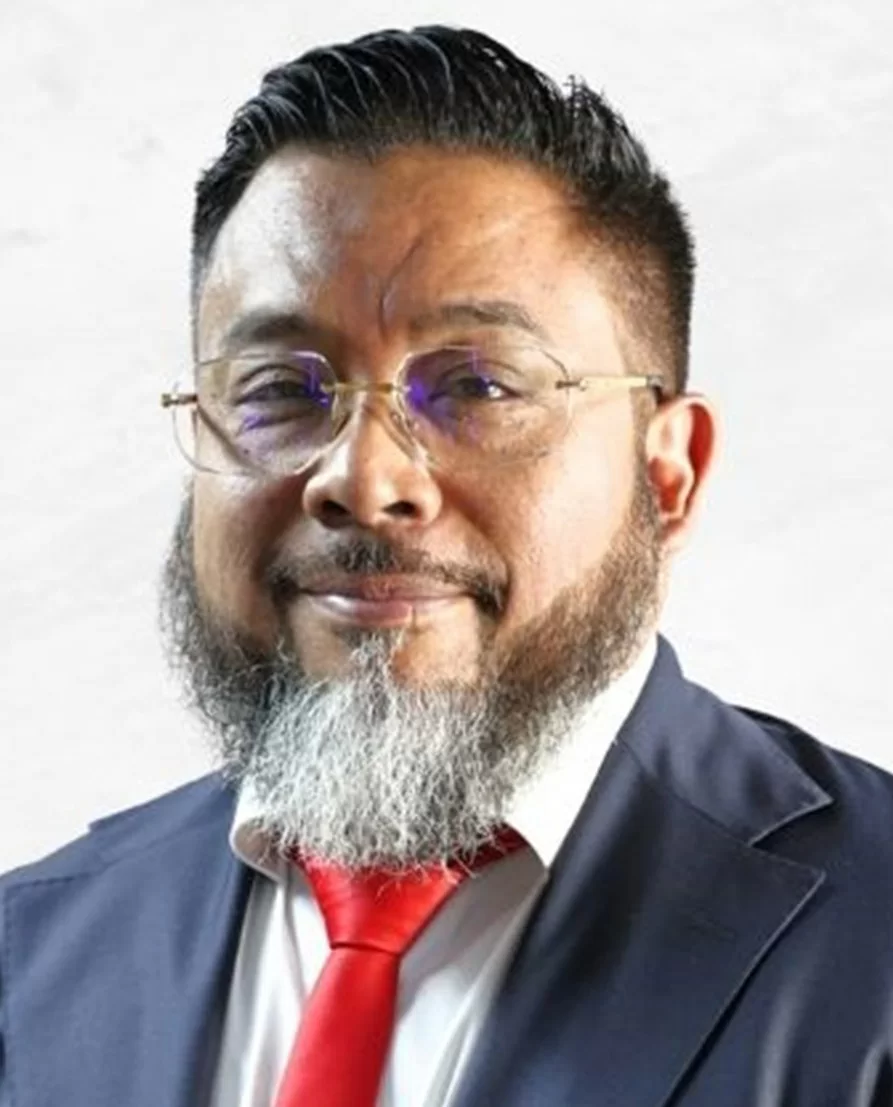
    In a significant political development, the A Partnership for National Unity (APNU) has declared it will not abstain from voting for We Invest in Nationhood (WIN) leader Azruddin Mohamed as Guyana’s next Opposition Leader. The vote is scheduled for Monday among opposition legislators.

    APNU parliamentary leader Dr. Terrence Campbell confirmed the position on Thursday, acknowledging that while WIN holds 16 of the 29 parliamentary seats—ensuring Mr. Mohamed’s election—his party would still cast a vote in favor rather than abstain. This decision comes despite ongoing legal challenges facing Mr. Mohamed and his father, who were sanctioned by the U.S. Treasury Department’s Office of Foreign Assets Control for alleged gold smuggling exceeding 10,000 kilograms, valued at approximately US$50 million. The operation is accused of evading taxes owed to the Guyanese government. A U.S. Grand Jury also indicted them last October on 19 counts including wire fraud, mail fraud, and money laundering.

    Dr. Campbell emphasized the necessity of opposition collaboration, stating that abstention would be counterproductive. He outlined that future cooperation would extend to consultations on key appointments, such as members of Constitutional commissions, nominees for Chancellor and Chief Justice, and input on the selection of the Police Commissioner.

    When questioned about partnering with a figure mired in integrity concerns, Dr. Campbell defended the approach by stressing the importance of addressing national issues over political opposition for its own sake. He cited urgent public needs including poverty alleviation, improving water quality, and flood mitigation as priorities that require unified action. “People need help, people need relief,” he remarked, adding that APNU aims to broaden its influence while working alongside all parties until achieving government power.

    Dr. Campbell also noted that the election outcome, which granted WIN a majority of opposition seats, mandates cooperation in the national interest. This stance was echoed earlier by APNU’s Ganesh Mahipaul, who expressed urgency in fostering dialogue between the parties. Despite public exchanges, both groups have affirmed their openness to discussions.

  • Saldivar Defends Naming Minister Musa in Budna Case

    Saldivar Defends Naming Minister Musa in Budna Case

    A significant constitutional legal battle has intensified in Belize regarding the high-profile kidnapping case of Joseph Budna. Attorney Arthur Saldivar is vigorously defending his legal strategy of personally naming former Police Minister Kareem Musa in a constitutional claim against the Belizean government.

    The controversy escalated during Thursday’s proceedings when Senior Counsel Eamon Courtenay challenged the litigation approach, contending that the constitutional claim should properly target the Attorney General’s office rather than Minister Musa personally. Courtenay formally petitioned the court to dismiss the case against Musa, characterizing it as improperly directed.

    Saldivar presented a robust defense of his legal position in subsequent interviews, emphasizing that Belizean law permits naming ministers personally when allegations involve abuse of authority, negligence, or actions exceeding official governmental responsibilities. “Ministers cannot claim immunity from personal liability when constitutional violations are alleged,” Saldivar asserted.

    The attorney referenced Budna’s sworn affidavit which contains a potentially damaging account: during the alleged abduction, a checkpoint gate was reportedly raised following a phone call to an individual identified as “Kareem,” whom witnesses allegedly referred to as “boss.” Saldivar contended, “The only Kareem with sufficient authority to orchestrate such action would be the minister himself. The burden now falls upon him to demonstrate he wasn’t that person involved in that call.”

    Musa has categorically denied all allegations connecting him to the incident.

    Saldivar further criticized what he characterized as the state’s inadequate response to thoroughly investigate the kidnapping, suggesting that governmental inaction might itself constitute negligence. He dismissed the motion to strike the case as premature, noting that the civil proceeding hasn’t yet reached the evidence disclosure and witness testimony phases.

    Meanwhile, Courtenay maintains that no substantive evidence links his client to the kidnapping allegations and has sought legal costs reimbursement, arguing it would be unjust for Musa to bear expenses from what he considers an improperly filed claim.

    The case has exposed tensions within Belize’s legal and political spheres, with Saldivar accusing the government of engaging in a “cover-up” to protect officials who may have acted with official sanction.

  • China bevestigt steun aan Brazilië en pleit voor versterking VN in turbulente tijden

    China bevestigt steun aan Brazilië en pleit voor versterking VN in turbulente tijden

    In a significant diplomatic development, Chinese President Xi Jinping and Brazilian leader Luiz Inacio Lula da Silva held a comprehensive 45-minute phone conversation on Friday, solidifying their nations’ strategic alignment against perceived American hegemony in Latin America.

    The high-level discussion, confirmed by both governments, centered on strengthening bilateral cooperation and protecting what both leaders termed ‘the collective interests of the Global South.’ This dialogue occurred against the backdrop of escalating regional tensions following the United States’ controversial military operation in Venezuela, which resulted in the capture of President Nicolás Maduro on drug trafficking charges three weeks prior.

    President Xi emphatically reassured Brazil of China’s unwavering support for Latin America’s largest economy, positioning Beijing as a reliable partner in contrast to Washington’s interventionist policies. The Chinese leader emphasized the critical need to uphold the United Nations’ central role in maintaining international stability during what he described as ‘the current turbulent global situation.’

    This show of Sino-Brazilian solidarity comes precisely one week after President Lula published a scathing critique in the New York Times condemning American actions in Venezuela. The Brazilian leader highlighted that South America is experiencing its first direct military assault from the United States in over two centuries, despite historical patterns of indirect intervention.

    The Venezuelan operation has triggered widespread concern throughout Latin America, with many nations fearing it might establish a precedent for future military interventions. UN Secretary-General António Guterres has expressed alarm that the American action jeopardizes fundamental principles of international law, including the sovereign equality of member states.

    In a tangible demonstration of strengthened ties, Brazil announced reciprocal measures regarding visa exemptions for Chinese citizens. The Brazilian government revealed plans to waive short-term visa requirements for certain categories of Chinese travelers, mirroring China’s visa-free policy implemented for Brazilians last year.

    President Xi referenced the 2024 strategic partnership framework that aligns China’s Belt and Road Initiative with Brazil’s development priorities in agriculture, infrastructure, and energy transition. This coordination exemplifies what both leaders characterize as South-South cooperation—a model of collaboration between developing nations outside traditional Western-dominated frameworks.

    The conversation also addressed broader geopolitical concerns, including former President Trump’s threatened forcible acquisition of Greenland, which has created additional tensions with European security partners. Analysts observe that China’s growing influence in Latin America and the Caribbean, manifested through substantial infrastructure investments and credit lines, directly challenges Washington’s historical dominance in the region.

    President Xi concluded by affirming China’s commitment to being ‘a good friend and partner’ to Latin American and Caribbean nations, expressing Beijing’s ambition to construct ‘a community with a shared future’ between China and the region.

  • Haitian social leader demands the government to dismantle gangs

    Haitian social leader demands the government to dismantle gangs

    A prominent Haitian religious authority has issued a damning indictment of government complicity in the nation’s security crisis, alleging high-level official involvement in arms trafficking to criminal gangs. Father Maisonneuve, director of the Karl Lévêque Institute, presented evidence suggesting current administration members are “heavily involved” in cross-border weapon and ammunition smuggling—a primary supply source for violent groups terrorizing the Caribbean nation.

    The allegations, broadcast by Radio Metropole Haiti, reveal a disturbing pattern of collusion between gang leaders and certain officials that explains the limited effectiveness of recent police operations. While acknowledging some government willingness to confront criminal elements, Maisonneuve characterized the lack of more comprehensive action as evidence of systemic corruption.

    This weapons pipeline has been systematically documented since 2016 by the Karl Lévêque Institute, which previously implicated numerous officials and parliamentarians in procurement networks. The religious leader emphasized that dismantling gang infrastructure requires not just police actions but rigorous border control measures, stating that “90 percent of the solution to the security problem depends on strict control of land, sea and air borders.”

    Maisonneuve called for urgent tracing of weapons suppliers to criminal organizations as an essential step toward eradicating gang terrorism, highlighting how governmental corruption perpetuates violence that has plagued Haiti for years.