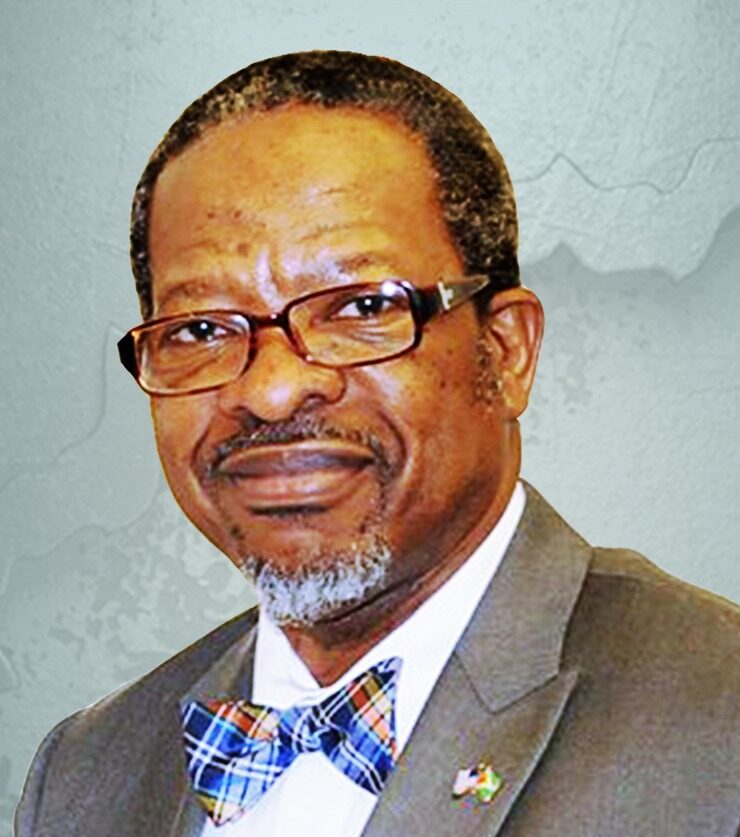
Retired Assistant Commissioner of Police Nuffield Burnett has launched a scathing critique of the Royal Police Force of Antigua and Barbuda, labeling it as ‘non-functional’ and accusing its leadership of lacking courage. Burnett’s remarks were made during a town hall meeting organized by the United Progressive Party, where he joined a panel of former civil servants, attorneys, and political figures to discuss the alleged multimillion-dollar government vehicle scandal. Burnett asserted that the police force is currently at its lowest point in history, citing weak leadership and a severe lack of integrity as primary issues. He acknowledged recent academic achievements by officers but emphasized that these accomplishments have not translated into effective policing. ‘Acquiring degrees—this is the worst we have seen the Royal Police Force. There is the head of the constabulary who doesn’t have anything named courage,’ Burnett stated. He argued that courage and integrity, rather than academic credentials, are essential for effective law enforcement. ‘In these institutions, you must have a measure of courage. It’s not about all these degrees and scholarships. You must have courage and integrity about you,’ he said. Burnett called for the police administration to ‘get its act together’ to fulfill its legal mandate, stressing that every officer has a duty to investigate crimes regardless of the individuals involved. He also highlighted the need for government support in certain investigations, particularly in the vehicle scandal, suggesting that the Director of Public Prosecutions should take the lead. Burnett warned that the failure of the police hierarchy to act decisively erodes public trust and undermines the rule of law. He concluded by urging the force to demonstrate courage and integrity, starting with those entrusted to uphold the law.
分类: politics
-

‘Ralph, leave Mommy out of your duttyness,’ Bramble tells PM
In a heated exchange during the New Democratic Party’s (NDP) campaign event in Belmont, East Kingstown MP Fitz Bramble issued a stern warning to Prime Minister Ralph Gonsalves, urging him to cease bringing his mother into the political discourse. Bramble’s remarks came in response to Gonsalves’ comments at a Unity Labour Party (ULP) rally in Calliaqua, where the Prime Minister criticized Bramble, 64, for allegedly never building a home and residing with his mother.
-

PALU: Nederlandse koning kan voorlopig beter wegblijven
In a bold open letter to President Jennifer Simons, the Progressive Workers’ and Farmers’ Union (PALU) of Suriname has expressed its support for a strong and flourishing relationship with the Netherlands, a sentiment shared by many Surinamese citizens. However, the party emphasizes that such a relationship must be mutual and reciprocal. PALU raises critical questions about the numerous hostile actions taken by the Netherlands against Suriname over the past 50 years, which have significantly hindered the nation’s development. The letter questions whether these actions will persist in the renewed relationship.
PALU highlights that since Suriname’s independence in 1975, the Netherlands has consistently obstructed the country’s efforts to chart its own course on the global stage. This interference, the party argues, has had a profoundly negative impact on Suriname’s progress. The letter warns that welcoming the Dutch king without addressing these issues would absolve the Netherlands of responsibility and place the blame solely on Suriname. PALU asserts that the former colonizer would then position itself as the savior, a dynamic that has historically been detrimental to former colonies.
The party further argues that Suriname’s independence may have been a facade, designed to maintain the country’s dependency on the Netherlands under a new guise. PALU cites several examples of Dutch actions that have impeded Suriname’s development, including the control of development funds post-independence and the Netherlands’ aggressive response to the 1980 military coup. The letter also references a planned invasion in 1982 and a brutal civil war from 1986 to 1992, actions that PALU claims were orchestrated to undermine Suriname’s sovereignty.
PALU concludes that while it supports future cooperation with the Netherlands, the Dutch king’s visit raises significant concerns. The party insists that the Surinamese people deserve clarity on the Netherlands’ role in their country’s struggles and how this relationship will change moving forward. Until such clarity is provided, PALU firmly believes the king should refrain from visiting Suriname.
-

Caricom roept op tot directe verlenging VS HOPE/HELP-wetgeving voor Haïti
Leaders of the Caribbean Community (Caricom) have issued an urgent appeal to the United States to immediately renew the Hemispheric Opportunity through Partnership Encouragement (HOPE) and Haiti Economic Lift Program (HELP) Acts. These programs grant Haiti duty-free access to the U.S. market for textile and apparel exports, which Caricom leaders describe as vital for employment, investment, and stability in the nation. In an official statement, the leaders emphasized that the discontinuation of these preferential trade agreements would severely hinder Haiti’s economic recovery, particularly as the country grapples with escalating social and humanitarian challenges. ‘This is not the time to further weaken Haiti but to demonstrate international solidarity,’ the heads of state declared. The Caricom Conference of Government Leaders reiterated its support for HOPE/HELP, highlighting their dual role in bolstering Haiti’s economy and strengthening trade relations with the United States. The organization has called on the U.S. government and Congress to expedite the renewal of the legislation to ensure the continuation of these programs.
-

Somohardjo: Grondfraudeonderzoek loopt op volle kracht
The District Commissioner (DC) of Commewijne, Rajiv Ramsahai, has issued a public warning to residents following multiple suspicions of double allocation of land parcels. Bronto Somohardjo, Chairman of the Permanent Committee for Land Policy and Forest Management (GBB) in the National Assembly, confirmed to Starnieuws that an official investigation is underway to address potential irregularities. Somohardjo praised the DC’s alertness and revealed that the Ministry of Land Policy and Forest Management (GBB) is already preparing case files for submission to the Public Prosecutor’s Office. According to Somohardjo, the warning is both justified and necessary, given the numerous reports of individuals unknowingly purchasing or being allocated the same plots of land. He confirmed that Minister Stanley Soeropawiro is leading a comprehensive investigation into misconduct during the previous administration. “Some case files are ready for submission to the Public Prosecutor’s Office, with more to follow. We must be honest: during the previous term, actions bordering on criminality occurred. People enriched themselves at the expense of the public. That era is over,” Somohardjo stated. He emphasized that the committee is closely monitoring the process to ensure legitimate landowners remain protected. “Those who knowingly acted unlawfully will face consequences. We will rectify what has gone wrong,” he asserted. Somohardjo urged citizens to verify land ownership through the ministry or district commissioner’s office before purchasing any parcel, stating, “Transparency will be the norm, not the exception.”
-

Parliament Debates Landmark DNA Legislation
In a historic move that could redefine the landscape of criminal investigations, the House of Representatives introduced a groundbreaking DNA Bill on October 17, 2025. Proposed by Home Affairs Minister Kareem Musa, the legislation seeks to empower law enforcement agencies to collect and store forensic DNA samples from individuals suspected of serious crimes. These profiles would be integrated into a national database, alongside those of convicted offenders and crime scene evidence, to enhance the efficiency and accuracy of criminal investigations. Minister Musa emphasized the bill’s alignment with constitutional human rights, ensuring that the collection and use of DNA samples respect individuals’ privacy, dignity, and bodily integrity. The proposed law also aims to address gaps in existing legislation by formalizing the establishment and operation of a national DNA database. This initiative, part of a broader strategy to modernize the criminal justice system, is expected to significantly improve the investigation of serious crimes, missing persons cases, and unidentified human remains. The bill’s introduction marks a pivotal moment in the government’s commitment to leveraging technology and innovation for public safety.
-

Sanae Takaichi Becomes Japan’s First Female Prime Minister
In a historic milestone for Japan, Sanae Takaichi has been sworn in as the nation’s first female prime minister. The leader of the Liberal Democratic Party secured the position by a narrow margin, surpassing the required majority by just four votes. Takaichi’s political journey, spanning decades, has been marked by her conservative nationalist ideology and her admiration for the late British Prime Minister Margaret Thatcher. Former U.S. President Donald Trump recently praised her as ‘a highly respected person of great wisdom and strength.’ Beyond her political persona, Takaichi is a motorcycle enthusiast, a rock music aficionado, and a stepmother to three children. Her ascent to the highest office in Japan was not without challenges; this marked her third attempt after unsuccessful bids in 2021 and 2024. Her victory symbolizes a significant shift in Japan’s political landscape, traditionally dominated by male leaders.
-

Does Japan’s First Female Prime Minister Signal Real Change for Women?
Japan has made history with the appointment of Sanae Takaichi as its first female prime minister, marking a significant milestone in a nation where political leadership has traditionally been male-dominated. While her ascent to power is celebrated by some as a breakthrough for women’s representation, it has also sparked debate over whether her leadership genuinely advances gender equality. Critics highlight Takaichi’s conservative stance on issues such as same-sex marriage, separate surnames for married couples, and female succession in the imperial family, arguing that her policies reinforce traditional norms rather than challenge them. A 21-year-old Japanese citizen remarked, ‘Everyone’s saying this is a great opportunity for women’s empowerment, but I think that’s a very naive interpretation. She perpetuates the patriarchal system.’ Japan’s struggle with gender equality remains evident, as it ranks 118th out of 148 nations in the World Economic Forum’s 2025 Gender Gap Index, with women holding only 15.7% of parliamentary seats. Despite these concerns, some view Takaichi’s appointment as a symbolic victory. Naomi Koshi, Japan’s youngest-ever female mayor, stated, ‘There is great significance in Ms. Takaichi becoming prime minister. It lowers psychological barriers for women and girls to see leadership as normal.’ However, skeptics argue that her policies align closely with those of her male predecessors, raising questions about the depth of change her leadership represents.