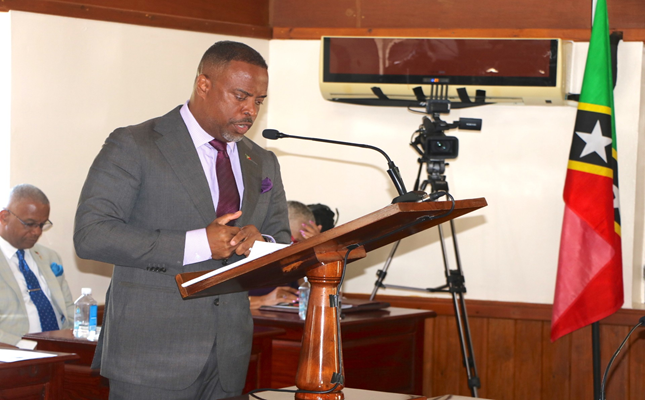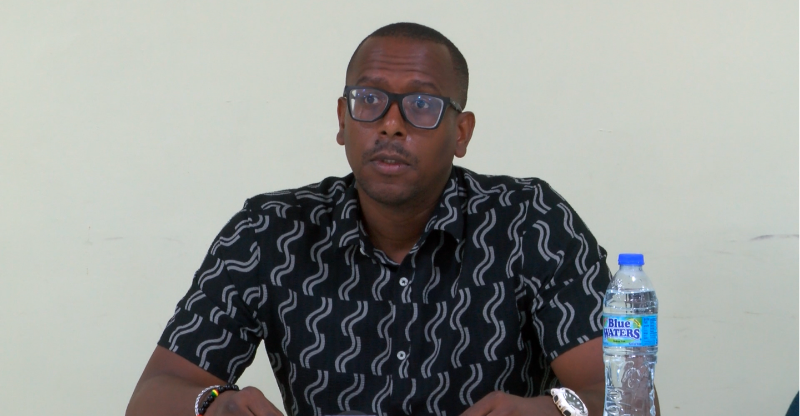
Finance Minister Davendranath Tancoo has dismissed concerns raised by San Fernando East MP Brian Manning regarding the expenditures of the Tobago House of Assembly (THA). The dispute arose during the Standing Finance Committee’s session on October 24, where a budget allocation of $2,943,574,800 for the THA was approved. Manning questioned the insurance costs for vehicles used by the Assembly, suggesting potential irregularities. Tancoo firmly refuted these claims, stating, ‘This is not the PNM. So not everything is about racket.’ He emphasized that the THA provides comprehensive insurance for its vehicles, dismissing Manning’s concerns as unfounded. Tancoo also recalled similar questions raised by Manning earlier in the week, urging clarity to prevent unnecessary debate. Manning, however, persisted, requesting detailed information on state vehicles insured by third parties, including the insurance amounts and agencies involved. Committee Chairman Jagdeo Singh advised Manning that while his inquiry might be legitimate, the committee was not the appropriate forum for such questions. Manning adjusted his request to focus solely on THA vehicles. The committee is set to reconvene on October 25 to finalize the budget, with key government departments, including the Office of the Prime Minister and the Judiciary, among the final areas of expenditure to be reviewed. The Senate is scheduled to begin its budget debate on October 27.
分类: politics
-

Martin Daly: Chief Justice appointment ‘botched’
The recent appointment of Justice Ronnie Boodoosingh as Chief Justice has sparked significant controversy, with concerns raised about the legitimacy and transparency of the process. The Law Association of Trinidad and Tobago (LATT) and former independent senator Martin Daly SC have both criticized the hastened and truncated consultation process.
-

PNM MPs: Opposition doing its job at SFC
The Standing Finance Committee of Trinidad and Tobago’s House of Representatives witnessed intense disagreements during its budget deliberations on October 21 and 22, as opposition and government members clashed over time management and the handling of inquiries. Speaker Jagdeo Singh opened the October 22 session by acknowledging the committee’s poor performance the previous day, particularly in managing time effectively. Singh emphasized the need for a balanced approach, urging both sides to collaborate and streamline the process. He suggested that some questions could be addressed in writing to save time, citing Opposition Leader Pennelope Beckles’s earlier request for written responses as an example. Leader of Government Business Barry Padarath defended the government, placing the blame squarely on the opposition for the delays and inefficiencies. However, Opposition Chief Whip Marvin Gonzales and Port of Spain North/St Ann’s West MP Stuart Young countered, accusing the government of evading questions and failing to provide clear answers. Young described the government’s responses as a ‘boldface refusal’ to address critical issues. Despite the tension, Singh called for a conciliatory spirit moving forward, and Gonzales pledged the opposition’s commitment to completing the budget review within the allotted five days. The committee approved expenditures for several public bodies without incident, but the heated exchanges underscored the deep political divide. The budget deliberations are set to conclude by October 25, with both sides vowing to continue their respective approaches.
-

PNM tells PM: Look within UNC for ‘criminal ties’
Trinidad and Tobago’s political landscape has been thrown into disarray following Prime Minister Kamla Persad-Bissessar’s explosive allegations against the opposition People’s National Movement (PNM). In a statement on October 24, Persad-Bissessar accused the PNM of being financially supported by the local drug mafia, a claim the opposition has vehemently denied, labeling it as “baseless, reckless, and defamatory.” The PNM countered that the Prime Minister’s accusations were a desperate attempt to divert attention from her government’s failures and the growing public discontent with her leadership. The opposition further criticized her for refusing to address the nation during a period of heightened regional tensions with Venezuela, accusing her of adopting an erratic and isolationist foreign policy. The PNM emphasized its commitment to maintaining strong international relations, particularly with the United States, citing long-standing security agreements like the Status of Forces Agreement (SOFA) and the Caribbean Basin Security Initiative. In response, Persad-Bissessar doubled down on her claims, accusing the PNM of protecting drug traffickers and undermining national security. International relations expert Prof. Anthony Bryan weighed in, describing the Prime Minister’s language as “strong and defamatory,” and potentially libelous given the lack of evidence. The ongoing feud has further polarized the nation, with citizens demanding accountability and transparency from their leaders amidst economic instability and rising hardships.
-

Alexander gets balance wrong
During the October 22 session of the Standing Finance Committee, Homeland Security Minister Roger Alexander repeatedly invoked ‘national security interests’ to avoid answering questions, raising concerns about transparency and accountability. This approach, while not unprecedented, reached new heights as Alexander dismissed inquiries on topics ranging from police vehicle leasing to minor equipment purchases, labeling them as state secrets. For instance, when MP Keith Scotland questioned the use of drones detailed in the budget, Alexander accused him of revealing ‘national security information.’ Similarly, a $2.5 million allocation for a new unit was deemed ‘operative and covert,’ with Alexander refusing further discussion. This pattern of deflection drew criticism from opposition MPs, who accused the minister of overusing national security as a shield. The situation highlighted Alexander’s struggle to balance operational security with parliamentary accountability, a challenge exacerbated by his recent additional responsibility for prisons in the Prime Minister’s portfolio reshuffle. Critics argue that Alexander, a former TV host and controversial police officer, appears more adept at the operational aspects of security policy than navigating the complexities of parliamentary scrutiny. The PNM’s criticism of Alexander’s lack of transparency also drew scrutiny, given their own history of invoking secrecy during their tenure. The episode underscores the need for greater clarity and oversight in how national security concerns are addressed in parliamentary proceedings.
-

Kamla: PNM protecting drug mafia, undermining TT safety
Prime Minister Kamla Persad-Bissessar has launched a scathing critique against the opposition People’s National Movement (PNM), accusing them of orchestrating a disinformation campaign to shield their alleged drug mafia financiers. In a statement released on October 24, the Office of the Prime Minister (OPM) condemned the PNM for undermining efforts to combat drug, arms, and human trafficking in Trinidad and Tobago (TT). The Prime Minister highlighted the nation’s vulnerable borders, which have facilitated illegal activities, including the entry of tens of thousands of migrants and the brutal murders of over 10,000 citizens in the past two decades. The OPM further alleged that PNM-controlled constituencies are disproportionately affected by drug-related gang violence, yet the party prioritizes the interests of its financiers over the welfare of its constituents. Amid these accusations, the government welcomed the USS Gravely warship and the 22nd US Marine Expeditionary Unit for joint military training with TT’s defense force from October 26 to 30. This collaboration, part of the renewed Status of Forces Agreement (SOFA) between TT and the US, aims to enhance national security and operational readiness. Prime Minister Persad-Bissessar emphasized the importance of international partnerships in safeguarding the nation, stating, ‘TT must always come first.’