分类: politics

  • Mottley calls for renewed commitment amid global challenges

    Mottley calls for renewed commitment amid global challenges

    On Sunday, during a commemorative Founder’s Day service held at Bethel Methodist Church on Bay Street, Mia Mottley – Prime Minister of Barbados and leader of the Barbados Labour Party – issued a heartfelt call for a renewed collective commitment to national progress, emphasizing that the work of building a stronger nation extends far beyond the responsibilities of elected officeholders.

    Mottley opened her remarks by framing the gathering as both a moment to seek spiritual guidance and a public appeal for widespread recommitment to the country’s development. “The work will not be done by members of parliament or ministers alone,” she told attendees, underlining that every Barbadian has a role to play in driving national growth.

    The Prime Minister highlighted three core pillars that remain critical to advancing the party’s founding mission: political education, grassroots mobilization, and unwavering dedication to public service. She argued that these values are non-negotiable for stabilizing Barbados’ long-term growth trajectory and upholding the original purpose that guided the party’s establishment. “If ever there was a time for this political institution to redouble its efforts in political education, in political mobilisation and in political commitment, in order to stabilise this nation’s growth and to stabilise our commitment to the renewal of the purpose for which we were established,” she stated.

    Acknowledging the widespread fatigue many Barbadians feel amid ongoing global and domestic challenges, Mottley noted that periods of difficulty are the ultimate test of a nation’s collective resolve. “It may seem like some to be a call to those who are already weary, and yes, I acknowledge that the distance sometimes can be long and it can carry but it is when you are tired, more often than not, that we see through history that you are tested the greatest,” she explained.

    Mottley also stressed the importance of cross-community unity, bridging both religious and political divides to pursue shared national goals. She pointed out that the gathering brought together people of all faith backgrounds, united by the understanding that political work does not override individual spiritual missions. Looking ahead to the coming year, she warned that Barbados will likely face continued headwinds, but expressed confidence in the country’s ability to navigate these challenges – a success that she says depends entirely on collective action, not just top-down leadership.

    Drawing a powerful historical parallel, Mottley connected today’s climate of global uncertainty to the era in which the Barbados Labour Party was founded, on the eve of World War II. That period, like today, was defined by widespread instability and systemic inequality: “We were founded at a time when fascism was raising its head. We were founded at a time when people were not seen and people were not heard, and the majority of the people of this country had to do as they were told, not as they wished to do.”

    She emphasized that the party’s founding mission – advancing economic enfranchisement and social justice for all Barbadians – remains just as urgent today as it was nearly a century ago. Amid rising global unpredictability, she warned that vulnerable communities are once again at risk of being left behind: “The transformation needed to resist the winds of change that allow the mighty to dominate is urgent. The least, the last and the lost are once again fighting to be protected.”

    Mottley also referenced recent conversations with progressive political leaders across the globe, where participants shared growing concern that long-held core values of equity and justice are no longer universally upheld. She urged supporters to persevere, reminding them that the fight for social progress has always demanded sacrifice. “We will not be the first to be asked to carry a heavy burden to fight injustice, nor the first to be asked to complete the journey of transformation,” she said.

    Closing her remarks, Mottley paid tribute to a deceased member of the host church before repeating her call for both individual and collective recommitment to national progress. She acknowledged that the Barbados Labour Party and the country as a whole have achieved significant gains over the years, but stressed that sustained, collaborative work remains essential to secure a prosperous future for all Barbadians.

  • Trump places statue of Christopher Columbus near the White House

    Trump places statue of Christopher Columbus near the White House

    Over the weekend, a 13-foot replica statue of Christopher Columbus — cast using fragments recovered from the original monument torn down and thrown into Baltimore’s Inner Harbor during 2020’s national racial justice protests — was installed on the White House campus, outside the historic Eisenhower Executive Office Building. The placement marks the latest step in the Trump administration’s sweeping initiative to restore controversial historical monuments removed across the United States in the wake of widespread demonstrations following George Floyd’s murder.

    The project was completed in partnership with the Conference of Presidents of Major Italian American Organizations, which coordinated the transfer of the replica to Washington to coincide with the United States’ upcoming 250th anniversary of independence and to celebrate Italian American cultural heritage. In a published letter to the organization, President Donald Trump lauded the group for its “incredible generosity” in bringing the monument to the nation’s capital, describing the original Baltimore statue as having been “torn down by anti-American rioters.”

    White House spokesperson Davis Ingle reiterated the administration’s position in a Monday statement to CNN, affirming that “as we celebrate our Nation’s 250th anniversary of independence, the White House is proud to honor Christopher Columbus’s legendary life and legacy with a well-deserved statue on the White House grounds.” Echoing the president’s framing, Ingle added that “in this White House, Christopher Columbus is a hero, and President Trump will ensure he’s honored as such for generations to come.”

    Basil Russo, president of the Conference of Presidents of Major Italian American Organizations, noted that for the more than 18 million Italian Americans living in the U.S., monuments to Columbus have long served as critical symbols of communal pride and cultural identity. “For over a century, Columbus’s legacy helped Italian immigrants navigate prejudice and hardship, serving as a source of unity and belonging as they built new lives in this country,” Russo said in the organization’s official release.

    In his own remarks on the statue, Trump expanded on this framing, calling Columbus “the original American hero, a giant of Western civilization, and one of the most gallant and visionary men to ever walk the face of the earth.” He added that Columbus’ 1492 voyage “carried thousands of years of wisdom, philosophy, reason, and culture across the Atlantic into the Americas.”

    The statue, which stands across from the Smithsonian’s Renwick Gallery and steps from the White House residence, is currently cordoned off by multiple rows of fencing and closed to close public viewing. Its installation comes as part of a broader nationwide reckoning over historical commemoration that unfolded after the 2020 racial justice protests, during which hundreds of controversial monuments — including hundreds of Confederate memorials and dozens of Columbus statues — were removed by local governments or pulled down by protesters.

    Columbus has remained a deeply divisive figure in U.S. historical memory for centuries: while long popularized as the explorer who “discovered America,” a widely repeated myth that overlooks millennia of Indigenous habitation of the continent and earlier transatlantic contact by Norse explorers, he is widely criticized by scholars and activists for his brutal exploitation of Indigenous communities in the Caribbean and his role in opening the era of European colonization that led to the mass displacement and death of Indigenous populations across the Americas.

    This installation is not the first controversial monument restoration carried out by the Trump administration in Washington, D.C. The administration has already reinstalled a statue of Confederate officer Albert Pike in the district, and has announced formal plans to return a Confederate memorial to Arlington National Cemetery in Virginia.

  • NBC Says It Does Not Charge 19 Cents Per Mile

    NBC Says It Does Not Charge 19 Cents Per Mile

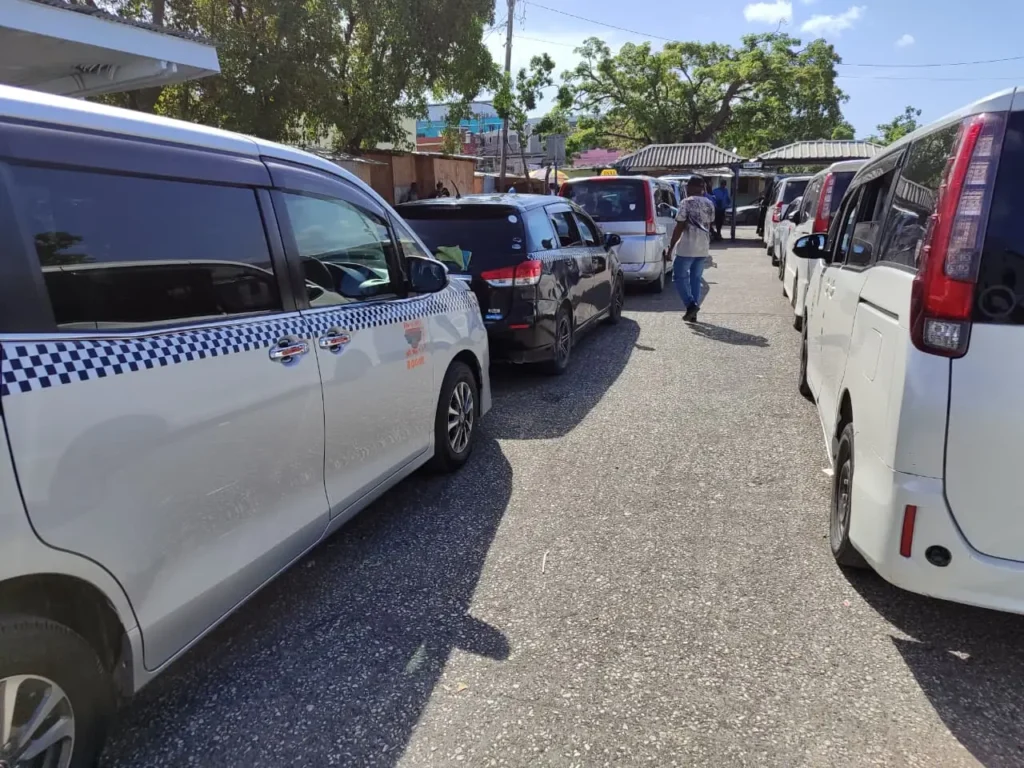
    A public disagreement over bus pricing has erupted between the Belize Bus Association (BBA) and the Belizean government, centered on a widely circulated claim that the state-owned National Bus Company (NBC) charges a uniform 19 cents per mile for all routes. Government officials have pushed back hard against this assertion, labeling the figure entirely inaccurate and misleading, as negotiations over bus operator relief amid soaring fuel costs enter a new phase.

    Speaking at a Saturday press briefing, Minister of Transport Louis Zabaneh clarified that NBC does not operate under a single flat-rate pricing structure. Instead, per-mile fares vary significantly based on the characteristics of each specific route, with actual average rates coming in substantially lower than the 19-cent figure cited by the BBA. On southern routes run by NBC, for example, average per-mile costs fall between 11 and 13 cents, while western route averages range from 16 to 17 cents per mile.

    Chester Williams, Chief Executive Officer of the Ministry of Transport, backed up this clarification with concrete on-the-route examples to illustrate the discrepancy. Williams noted that a full one-way trip from Punta Gorda to Belize City, a journey of roughly 210 miles, carries a total ticket price of approximately $27. When calculated per mile, that works out to just 13 cents per mile. Similarly, a 105-mile trip from Dangriga to Belize City costs around $12, averaging out to 11 cents per mile. “For the BBA to be putting out statements that NBC is charging 19 cents per mile is totally untrue,” Williams emphasized.

    The inaccurate 19-cent claim has served as the core of the BBA’s push for industry-wide fare adjustments. The association has argued that its member operators should be allowed to align their pricing with what they claim NBC charges, to offset soaring operating costs. But government officials explain that this cross-sector comparison is fundamentally misleading, because fare structures are shaped by route-specific conditions that differ sharply between the BBA’s primary service areas and NBC’s operating regions.

    NBC’s core operational footprint is concentrated in Belize’s southern and western regions, where routes are typically longer. Longer routes naturally translate to lower average per-mile costs, even with total ticket prices factored in. By contrast, the majority of BBA-operated routes are located in northern Belize, where shorter route lengths and different operating dynamics lead to higher inherent per-mile costs. Officials added that these variable pricing differences stem from multiple tangible factors: overall route length, the number of scheduled stops along a route, and variable operating costs unique to each area, rather than a one-size-fits-all national pricing scheme for bus services.

    The current dispute comes after weeks of closed-door negotiations between the BBA and the Belizean government, sparked by rising global fuel prices that have driven up operating costs for all domestic bus operators. Initially, the BBA put forward three separate requests for regulatory and financial relief: full tax exemptions on fuel and bus replacement parts, direct government subsidies to offset increased fuel costs, or permission to adjust fares up to a uniform 19 cents per mile across the board.

    In a sudden policy shift following the BBA’s claims about NBC pricing, Zabaneh announced that the government would abandon plans for any fare increase for consumers. “Since the BBA is saying they don’t wish for the rates, and that they reject the rates, then we will remove the rates,” Zabaneh stated. “No increase in rates to our people. Instead, the Prime Minister has agreed we will work on a subsidy for the BBA.”

    All details of the planned subsidy package for BBA member operators are set to be unveiled by Prime Minister John Briceño in an official announcement scheduled for Monday.

  • Suriname en China versterken landbouwsamenwerking met focus op verwerking en training

    Suriname en China versterken landbouwsamenwerking met focus op verwerking en training

    Diplomatic and agricultural cooperation between Suriname and China is set to expand into new phases, with both sides confirming plans to deepen ties in the agriculture sector during a recent high-level meeting between Suriname’s top agricultural official and China’s ambassador to the country.

    The meeting, held between Mike Noersalim, Minister of Agriculture, Livestock and Fisheries (LVV) of Suriname, and Chinese Ambassador Lin Ji, centered on prioritizing three core areas of enhanced partnership: agricultural product processing, technical training, and cross-border knowledge sharing. The two officials opened their discussion by reviewing the outcomes of the first phase of the Tijgerkreek (Tiger Creek) project, an initiative focused on introducing and scaling the cultivation of a range of new crop varieties in Suriname. Both parties confirmed that the initial phase of the project has been completed successfully, and preparations are now underway for the launch of the second phase, which is scheduled to kick off by the end of May this year.

    Beyond the Tiger Creek project, the conversation placed significant emphasis on increasing the added value of Suriname’s agricultural outputs. Minister Noersalim highlighted that local producers currently face significant volatility from price fluctuations when supply outpaces domestic demand, making local processing infrastructure a critical priority. To address this challenge, additional targeted support will be provided to smallholder farmers and local agricultural entrepreneurs, with the goal of building out domestic processing capacity. As part of this effort, the two sides discussed plans to establish a dedicated food processing unit, which is on track to be completed and operational by the end of 2025. Once the facility is established, a series of specialized training programs will be rolled out to boost Suriname’s overall production and processing capabilities across the agricultural sector.

    The meeting also touched on long-standing systemic challenges facing Suriname’s agricultural industry, most notably the declining interest in agricultural careers among young people that has created a gap in the sector’s workforce. Both Suriname and China agreed that there is significant potential to reverse this trend through targeted education and skills training programs that can attract more new entrants to the industry.

    In closing remarks following the meeting, Minister Noersalim emphasized that the bilateral agricultural cooperation between the two countries delivers tangible benefits to Suriname’s long-term development. He noted that the partnership creates clear pathways for sustainable growth of the national agricultural sector while strengthening the country’s overall production capacity to meet domestic demand and expand export opportunities.

  • Accused gunman at correspondents’ dinner was likely targeting Trump and top officials, Blanche says

    Accused gunman at correspondents’ dinner was likely targeting Trump and top officials, Blanche says

    WASHINGTON – A shocking attempt to breach one of Washington D.C.’s most high-profile annual political gatherings has brought new details of a premeditated attack targeting former President Donald Trump and senior members of his administration, acting Attorney General Todd Blanche revealed in public comments Sunday.

    According to Blanche, the suspect accused of carrying weapons to storm the White House Correspondents’ Association (WHCA) dinner ballroom plotted the incident well in advance, traveling across the United States over multiple days to reach the nation’s capital. Investigative accounts show the man journeyed by rail from his home state of California to Chicago, before continuing on to Washington D.C. Once in the city, he checked in as a paying guest at the Washington Hilton – the venue hosting the invite-only, glitzy Saturday night dinner that draws hundreds of top politicians, journalists, and media figures from across the country.

    While law enforcement has not officially released the suspect’s identity to the public, two unnamed law enforcement sources with direct knowledge of the investigation confirmed to the Associated Press that the individual is 31-year-old Cole Tomas Allen, a resident of Torrance, California.

    Preliminary assessments of evidence taken from Allen’s electronic devices and written materials have led investigators to conclude he came to the dinner with clear violent intentions: he planned to attack current and former Trump administration officials in attendance at the event. The chaotic attempt to force entry into the sprawling ballroom unfolded quickly: Allen was taken down by security before he could enter the main event space, but the struggle resulted in stray gunfire, prompting immediate emergency action. Trump, who was speaking at the dinner at the time, was rapidly escorted off stage by security personnel, and hundreds of guests scrambled for safety, taking cover under their dining tables.

    Blanche confirmed the preliminary findings during an interview on NBC News’ weekly public affairs program *Meet the Press*, stating “It does appear that he did in fact set out to target folks who work in the administration, likely including the president.”

    Blanche added that the two firearms recovered from the suspect were purchased by Allen within the past two years. As of Sunday, the suspect has refused to cooperate with investigators, and federal prosecutors are set to file multiple criminal charges against him during a Monday court hearing.

  • King Charles begins four-day US visit despite shooting

    King Charles begins four-day US visit despite shooting

    LONDON and WASHINGTON — Four years after ascending to the British throne, King Charles III kicks off his first official state visit to the United States on Monday, launching a high-stakes diplomatic journey that unfolds against simmering transatlantic rifts over the Iran war and just 48 hours after a shooting at a gala attended by US President Donald Trump.

    The four-day itinerary, planned to celebrate the centuries-long special relationship between the United Kingdom and the United States as America marks its 250th anniversary of independence, brings King Charles and Queen Camilla across three stops across North America. After opening their schedule in Washington D.C., the royal couple will travel to New York City on Wednesday to pay respects at the 9/11 Memorial & Museum, before concluding their trip with a visit to Bermuda — Charles’s first trip to a British Overseas Territory as head of state, scheduled for Thursday.

    This trip makes history too: Charles will become the first reigning British monarch to address a joint meeting of the US Congress since his mother Queen Elizabeth II spoke to the legislative body in 1991. In addition to the congressional address, the itinerary includes a tea reception and formal state dinner hosted by President Trump and First Lady Melania Trump.

    The visit proceeds as planned despite the shooting incident Saturday night at the White House Correspondents’ Association annual gala, the event attended by President Trump. Law enforcement took an alleged lone gunman into custody immediately after the attack, which left one US Secret Service agent wounded. No harm came to President Trump, the first lady or any other attendees.

    Buckingham Palace confirmed Sunday that the state visit would not be delayed or canceled, and noted that King Charles expressed profound relief that all senior figures at the gala escaped uninjured. UK Ambassador to the United States Christian Turner told reporters in Washington Sunday evening that after extensive security reviews between British and US authorities, “we are all very confident that all appropriate security measures are in place” to protect the royal party throughout the trip.

    While logistics are confirmed, the trip has been mired in controversy from the start, driven by a sharp public rift between the Trump administration and Keir Starmer’s UK Labour government over the ongoing conflict with Iran. President Trump has publicly lambasted Prime Minister Starmer for his opposition to the war, and has also criticized London’s policies on immigration and domestic energy production.

    The two leaders spoke by phone on Sunday, where Starmer offered his well-wishes to Trump in the wake of the shooting. Beyond security, their discussion centered on one of the core points of contention: the disruption to global shipping in the Strait of Hormuz. A statement from Starmer’s office noted the pair agreed on “the urgent need to get shipping moving again” amid the severe fallout for the global economy and household cost of living on both sides of the Atlantic.

    Though Starmer has stood by his public criticism of the Iran war, he has defended the decision to move forward with the state visit, even as an early April YouGov poll found 48 percent of British respondents support canceling the trip. Responding to questions from members of parliament, Starmer argued that the British monarchy’s unique longstanding cross-border bonds let it navigate diplomatic rifts that divide elected governments. President Trump echoed that optimism, telling the BBC last week that the visit could “absolutely” help repair frayed bilateral ties, and told Fox News Sunday that “he’s a friend of mine for a long time, so he’s coming, and we’re going to have a great time, and he represents his nation like nobody else can do it.”

    At 77, King Charles has a long track record of deft diplomatic maneuvering, a skill he displayed when hosting Trump during the US president’s 2024 state visit to the UK last September. Craig Prescott, a monarchy studies expert at Royal Holloway University of London, observed that the king is “generally very good” at navigating tense political moments. Even so, Prescott expects Charles will only address the divisive Iran conflict — the widely acknowledged “elephant in the room” for the trip — through coded language during his congressional address Tuesday.

    Another lingering controversy threatens to intrude on the carefully choreographed tour: the ongoing scandal surrounding Prince Andrew, the king’s younger brother, and his longstanding ties to convicted sex offender Jeffrey Epstein. The 76-year-old disgraced royal was arrested in mid-February following new unsealed court documents detailing his connections to Epstein, who died in prison in 2019 while awaiting trial on sex trafficking charges. King Charles stripped Andrew of all his honorary titles and royal patronages back in 2022, and released a rare public statement signed in his own hand after the arrest saying “the law must take its course.” Andrew remains under active investigation, has not been charged with any crime, and has repeatedly denied all allegations of wrongdoing.

    To avoid unscripted, off-the-cuff moments that could draw unwanted attention to the scandal or the current bilateral tensions, the entire trip has been planned with extreme precision. For example, only still photographers will be allowed to cover Tuesday’s Oval Office meeting between King Charles and President Trump, with no press question-and-answer session scheduled.

  • ‘This cannot be right’: Opposition senator says Joint Select Committee needed for NaRRA

    ‘This cannot be right’: Opposition senator says Joint Select Committee needed for NaRRA

    Jamaica’s main opposition political bloc, the People’s National Party (PNP), is pushing for a full parliamentary review of the draft National Reconstruction and Resilience Authority (NaRRA) Bill, calling on ruling legislators to halt all progress on the legislation until a cross-party joint select committee can examine its text thoroughly.

    The bill, designed to establish a new government body tasked with overseeing billions of dollars in disaster recovery and infrastructure investment, is already drawing sharp criticism for major gaps in its governance framework. Opposition Senator Cleveland Tomlinson, deputy spokesperson for the party on issues of productivity, government efficiency and national competitiveness, laid out the opposition’s core concerns in a recent address, noting that the NaRRA will be responsible for managing massive public capital flows while streamlining approval processes for private sector investment in recovery projects.

    Under the current draft of the legislation, Tomlinson argued, far too much unchecked authority is concentrated in the hands of the cabinet minister charged with overseeing the new agency. He pointed out that the bill fails to include critical foundational governance requirements: it does not mandate the creation of a formal governing board for the authority, makes no provision for an independent audit committee, does not require a dedicated internal auditor to monitor spending, and omits any framework for institutional risk management.

    “This cannot be the right way to structure an agency holding this much public responsibility,” Tomlinson stated. “Any authority granted such enormous financial oversight must have basic internal governance structures enshrined in law from its inception. As currently written, this bill is missing the essential pillars of accountability that any public institution must have to operate ethically and effectively.”

    While Tomlinson acknowledged the urgent need to speed up reconstruction and recovery work in the wake of Hurricane Melissa, which caused widespread damage across the country, he emphasized that legislative speed cannot come at the cost of proper oversight and transparency. He proposed that the joint select committee be given a tight, limited timeline to complete its review, suggesting a window between 60 and 90 days to balance the need for urgent reform with the need for robust deliberation.

    Tomlinson added that the drafting process for the bill has so far excluded meaningful input from groups outside of government, and a cross-party parliamentary review would create space for key stakeholders and members of the wider public to contribute to shaping the final legislation. “A joint select committee is the only way to ensure that the final law balances the urgent need for post-hurricane reconstruction with the non-negotiable requirement of good, accountable governance,” he said.

  • Barbados and Venezuela seek to strengthen relations in a wide range of socio-economic sectors

    Barbados and Venezuela seek to strengthen relations in a wide range of socio-economic sectors

    BRIDGETOWN, Barbados – In a landmark diplomatic meeting held this week, the Caribbean island nation of Barbados and the South American country of Venezuela have laid the groundwork for a significantly expanded bilateral partnership, reaching consensus on a sweeping slate of collaborative initiatives spanning energy development, trade expansion, economic integration, and cultural exchange.

    Venezuela’s acting President Delcy Rodriguez, who touched down in Bridgetown Sunday evening for the high-level talks, met face-to-face with Barbadian Prime Minister Mia Mottley to hash out the details of the new cooperation framework. Both leaders emerged from the closed-door deliberations praising the productive discussions and shared commitment to deepening ties between their nations.

    “April 27 will go down in history as the founding date of modern economic and trade cooperation between Venezuela and Barbados,” Rodriguez told reporters following the talks. She added that negotiations opened new investment opportunities for Barbadian firms in Venezuela’s burgeoning hydrocarbons sector, including invitations for joint exploration and development of the country’s untapped oil and natural gas fields.

    Rodriguez emphasized that Barbadian partnership would play a critical role in boosting Venezuela’s domestic hydrocarbon production, while Caracas would in turn deliver long-term, reliable energy security guarantees for Barbados’ population. She also noted that the two sides have identified strong synergies in renewable energy development, outlining a joint plan to manufacture solar panels that would build a fully integrated, diversified regional energy sector. To further catalyze cross-border investment, the leaders agreed to revisit and update existing bilateral agreements covering investment protections and double taxation, creating a more welcoming regulatory environment for businesses from both nations.

    For her part, Prime Minister Mottley highlighted that volatile global energy prices have put unprecedented pressure on small island developing states like Barbados, making expanded bilateral energy cooperation a long-held strategic priority. She noted that Barbados’ state-owned National Energy Company, despite its modest size, is well-positioned to enter into joint investment projects in the energy opportunities Venezuela has put forward. These collaborations, she explained, will help Barbados expand its domestic energy capacity, strengthen its resilience to global market shocks, and maintain affordable access to critical energy products for all Barbadians.

    Mottley recalled Venezuela’s decades-long track record of supporting Caribbean energy security, pointing to the 1970s San Jose Agreement – a joint initiative with Mexico that stabilized energy access for the entire region during a global oil crisis – and the 1990s PetroCaribe initiative launched by former Venezuelan President Hugo Chávez that delivered discounted oil to dozens of Caribbean nations. In recent years, she added, discussions have focused on continuing this legacy by extending discounted energy supplies to other Caribbean partners where possible. “Over the past five decades, Venezuela has stood as a close, reliable friend to the entire Caribbean on issues of energy security and affordable access to energy products,” Mottley said. “At a moment of profound global energy insecurity, we welcome this opportunity to build cooperation that delivers mutual benefit for both our nations.”

    Barbados is pushing to expand energy cooperation beyond fossil fuels to capture the massive potential of renewable energy collaboration, Mottley clarified. From small-scale residential solar water heating systems to utility-scale photovoltaic panels and onshore wind energy development, Mottley said the two sides have identified enormous untapped potential for joint work in the clean energy transition. Mottley accepted an invitation to visit Caracas in the coming months to continue advancing the partnership, noting that the short one-hour flight between the two nations underscores the geographic and strategic proximity that makes cooperation so natural. “We cannot allow historical or language barriers to hold us back from unlocking the full potential of cooperation for our two peoples,” she said. “We aim to build on the strong foundation our predecessors laid, and turn this diplomatic partnership into tangible benefits for ordinary citizens, not just government leaders.”

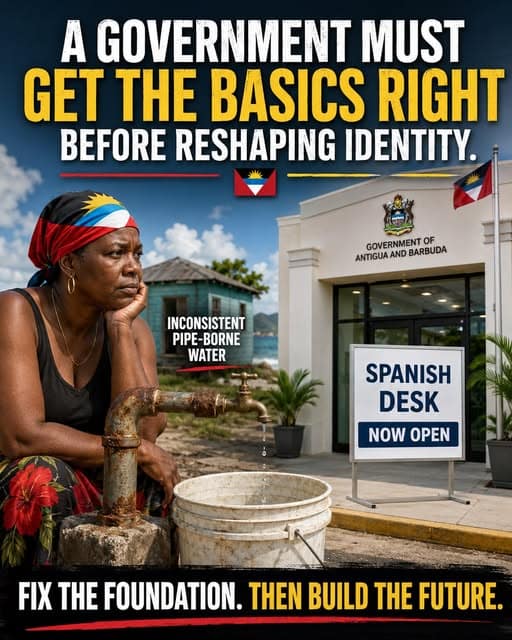
    In addition to energy and trade, the talks yielded a landmark agreement on cultural and linguistic cooperation. Rodriguez confirmed that Mottley has outlined Barbados’ plan to designate Spanish as the country’s second official language, building on the existing work of the bilateral Institute for Cultural Cooperation, which has long offered Spanish language training to Barbadian residents. The two sides have agreed to expand the institute’s capabilities, including integrating new digital learning tools and facilitating exchanges that will bring Venezuelan language instructors to Barbados to provide advanced training for local learners. Rodriguez added that the expanded program will also create opportunities for Venezuelans to learn from Barbadian educators and cultural leaders, creating two-way people-to-people exchange.

    The partnership also includes new commitments to advance regional food security, a pressing priority for small import-dependent Caribbean nations. Mottley said Barbados is working aggressively to build a robust domestic agro-processing industry to expand exports, and the new agreement will create new market access for Barbadian agricultural goods in Venezuela. “We are committed to making sure that planes and ships arriving from Venezuela do not return empty – they will carry back Barbadian produce that supports our farmers and manufacturers,” Mottley explained. The two sides also agreed to explore joint agricultural production projects on Venezuelan soil that will deliver food supplies for Barbados, alongside collaborative research and scientific development initiatives to boost agricultural yields. The partnership will focus on addressing the global challenge of declining soil productivity, working together to develop sustainable practices that increase harvests and deliver benefits for farmers across the Caribbean region.

    Leaving the meeting, Rodriguez emphasized that both delegations left the talks with high levels of enthusiasm for the new roadmap of cooperation, saying “we are departing this visit extremely happy with the progress we have made.”

  • Jess says NaRRA Bill creates ‘free for all with billions of public dollars’

    Jess says NaRRA Bill creates ‘free for all with billions of public dollars’

    In the wake of Hurricane Melissa’s destructive path across Jamaica, a major political clash has erupted over proposed legislation designed to steer the country’s recovery and rebuilding effort. Zuleika Jess, the opposition’s justice spokesperson, has publicly condemned the current draft of the National Reconstruction and Resilience Authority (NaRRA) Bill, warning that its structural gaps pose severe threats to transparent governance and fair handling of billions in public funds.

    While Jess has made clear that the opposition does not question the urgent need for large-scale reconstruction after the storm, she argues that the proposed legislation intentionally removes core accountability safeguards that would prevent mismanagement and abuse of power. In a formal press statement, she characterized the current framework as an open door for unregulated spending of taxpayer money, putting billions at risk of misuse.

    Jess outlined multiple critical vulnerabilities in the bill that demand immediate intervention. Most notably, she pointed to Clause 18 of the legislation, which requires the new authority to design reconstruction programs and share details of involved parties and their roles with Cabinet before implementation. She warned that this vague requirement acts as blanket permission for political retaliation, giving the ruling government explicit power to exclude any individual or group viewed as politically opposed to the administration from working on recovery projects.

    Beyond the risk of political discrimination, Jess flagged another dangerously broad provision that allows the NaRRA to delegate its core functions to literally any person. She explained that this open-ended rule could put major public procurement decisions for multi-million dollar contracts in the hands of private individuals who face no requirement to answer to the public for their choices, eliminating any meaningful oversight.

    The bill’s arrangement for selecting an external auditor also comes under fire. Under the proposed framework, the NaRRA Chief Executive Officer selects the auditor, with only the Cabinet secretary providing formal approval. Jess argued this arrangement puts the oversight watchdog directly under the control of the very body it is meant to monitor, creating an obvious conflict of interest that renders independent auditing meaningless.

    Finally, Jess questioned why the legislation omits mandatory public registration of key reconstruction details, including full project budgets, funding sources, contracted companies, and hired professionals. Without making this information public, she contends, there can be no real public accountability for how recovery money is spent.

    Jess emphasized that the opposition stands firmly behind efforts to rebuild Jamaica after Hurricane Melissa, but refuses to support a bill that sacrifices good governance for speed. “The people of Jamaica deserve a recovery effort that is efficient, honest, fully transparent, and free from political interference,” she said, calling for an urgent joint select committee to conduct a full, comprehensive review of the legislation before it is passed.

  • Accused media gala shooter charged with attempted Trump assassination

    Accused media gala shooter charged with attempted Trump assassination

    WASHINGTON — A 31-year-old California man accused of opening fire near a high-profile media gala attended by sitting U.S. President Donald Trump appeared in federal court Monday to face charges of attempted presidential assassination and two related firearms offenses, marking the third alleged plot on Trump’s life in just two years.

    Cole Allen, the suspect in Saturday’s attack at the annual White House Correspondents Association (WHCA) dinner held at Washington’s Hilton Hotel, entered no plea during his initial arraignment. Dressed in a blue correctional jumpsuit, Allen was ordered to remain in federal custody ahead of his next scheduled court hearing. If convicted on the assassination attempt charge, he faces the possibility of spending the rest of his life behind bars.

    Prosecutors detailed the scope of Allen’s alleged preparations for the attack in court documents and statements: he was armed with a pump-action shotgun, a semi-automatic pistol, and three bladed weapons when he attempted to breach security perimeters surrounding the venue, the site of the WHCA’s flagship annual gala for more than 70 years. Multiple shots were exchanged during a chaotic confrontation at a security checkpoint before law enforcement officers managed to subdue Allen. Critically, officials confirmed Allen never advanced close enough to reach Trump or the hundreds of dinner guests gathered on the hotel’s lower level.

    The incident unfolded rapidly Saturday evening: moments after gunshots rang out, Secret Service agents rushed Trump out of the venue to safety. One law enforcement officer suffered a non-fatal injury when a bullet struck their bulletproof vest, and no other fatalities or serious casualties were reported, a outcome that law enforcement have described as a stroke of luck.

    In an interview with CBS Sunday, the 79-year-old president downplayed any sense of fear as guests scrambled for cover. “I wasn’t worried. I understand life. We live in a crazy world,” Trump told reporters. He added that he initially mistook the sound of gunfire for a dropped serving tray before recognizing the danger, and has called for the WHCA dinner to be rescheduled within 30 days. The incident has sparked renewed scrutiny of presidential safety protocols, with Trump himself noting the Hilton venue was “not a particularly secure” facility — a point that carries extra weight given this was the first time Trump had accepted the WHCA’s standing invitation to attend the gala during his presidency.

    According to reporting from the New York Post, Allen sent a message to his family shortly before launching his attack indicating he planned to target attendees “prioritized from highest-ranking to lowest.” In addition to Trump, Saturday’s event was attended by First Lady Melania Trump, Vice President JD Vance, multiple cabinet secretaries, senior congressional leaders, and hundreds of journalists and media figures.

    This latest alleged plot marks the third time Trump has been targeted for assassination since 2023. The first came during a 2024 campaign rally in Butler, Pennsylvania, where a gunman’s volley killed one audience member and left a minor wound to Trump’s ear. Just months later, a second suspect was arrested after a Secret Service officer spotted a rifle barrel protruding from bushes along the perimeter of a West Palm Beach golf course where Trump was playing.

    In the wake of Saturday’s incident, the White House has pinned blame for the violence on what it calls a “left-wing cult of hatred,” specifically calling out Democratic lawmakers who have repeatedly argued Trump is seeking to consolidate authoritarian power. Critics have countered that Trump himself has broken decades of political precedent with routine, aggressive insults directed at political opponents, the national media, federal judges, foreign heads of state, and the Federal Reserve chair, creating a poisoned political climate.