分类: politics

  • Grenada reaffirms commitment to Commonwealth

    Grenada reaffirms commitment to Commonwealth

    Grenada’s Permanent Secretary for Foreign Affairs and Export Development, Roxie McLeish-Hutchinson, led a high-level delegation through a series of significant Commonwealth engagements in London from March 7-9, 2026. The diplomatic mission reinforced Grenada’s enduring commitment to Commonwealth principles and partnerships while advancing the nation’s foreign policy objectives on the global stage.

    The intensive three-day agenda commenced with the 72nd Commonwealth Ministerial Action Group (CMAG) meeting, where Grenada joined seven other member nations in deliberating critical issues of governance, democracy, and adherence to the Commonwealth Charter. As an active CMAG member, Grenada contributes to the group’s mandate of addressing serious or persistent violations of democratic principles, rule of law, and human rights across the Commonwealth.

    On March 8, attention turned to the Commonwealth Foreign Affairs Ministers Meeting (CFAMM), where discussions focused on enhancing cooperation, tackling global challenges, and strengthening the Commonwealth’s collective voice. Key agenda items included climate change mitigation, sustainable development initiatives, and building economic resilience—particularly vital concerns for vulnerable small island developing states like Grenada. Delegates emphasized the organization’s strategic relevance in countering contemporary threats to multilateralism and bridging global divides.

    The diplomatic activities culminated with Commonwealth Day observances on March 9, featuring solemn ceremonies and celebratory events. The day commenced with a flag-raising ceremony at the House of Commons, followed by a wreath-laying ceremony at Memorial Gates honoring Commonwealth service members from both World Wars. This year’s theme, ‘Women in War,’ paid special tribute to female contributions during conflicts, exemplified by figures like Noor Inayat Khan, a British Indian Special Operations Executive during WWII.

    Permanent Secretary McLeish-Hutchinson laid a wreath on behalf of Grenada’s government and people, honoring fallen service members including Caribbean air service personnel. The commemorations continued with the Commonwealth Day Service at Westminster Abbey, attended by over 2,000 participants including King Charles III, Commonwealth Secretary-General Patricia Scotland, and various dignitaries. Grenada was represented by Chevening Scholar Johnathan Andrew as flagbearer during the parade of flags from all 56 member states.

    The London engagements concluded with a reception at St James’s Palace featuring cricketing legend Sir Vivian Richards of Antigua and Barbuda, who serves as special envoy for the upcoming Commonwealth Heads of Government Meeting.

    For Grenada, these high-level meetings provided crucial platforms to amplify the nation’s voice, build strategic partnerships, and advocate for global action on issues disproportionately affecting small island states. In an increasingly complex geopolitical landscape, the Commonwealth remains an essential forum for dialogue, collaboration, and collective action—offering smaller nations meaningful participation in international decision-making processes.

    Permanent Secretary McLeish-Hutchinson emphasized Grenada’s steadfast support for Commonwealth initiatives, noting the organization’s value in providing capacity building, technical assistance, and policy collaboration that directly benefits small island developing states. Grenada’s active diplomatic engagement underscores its commitment to multilateralism and international cooperation while advancing national interests in sustainable and resilient development.

  • Budget Debate: We don’t support the $18 billion tax package, says Robinson

    Budget Debate: We don’t support the $18 billion tax package, says Robinson

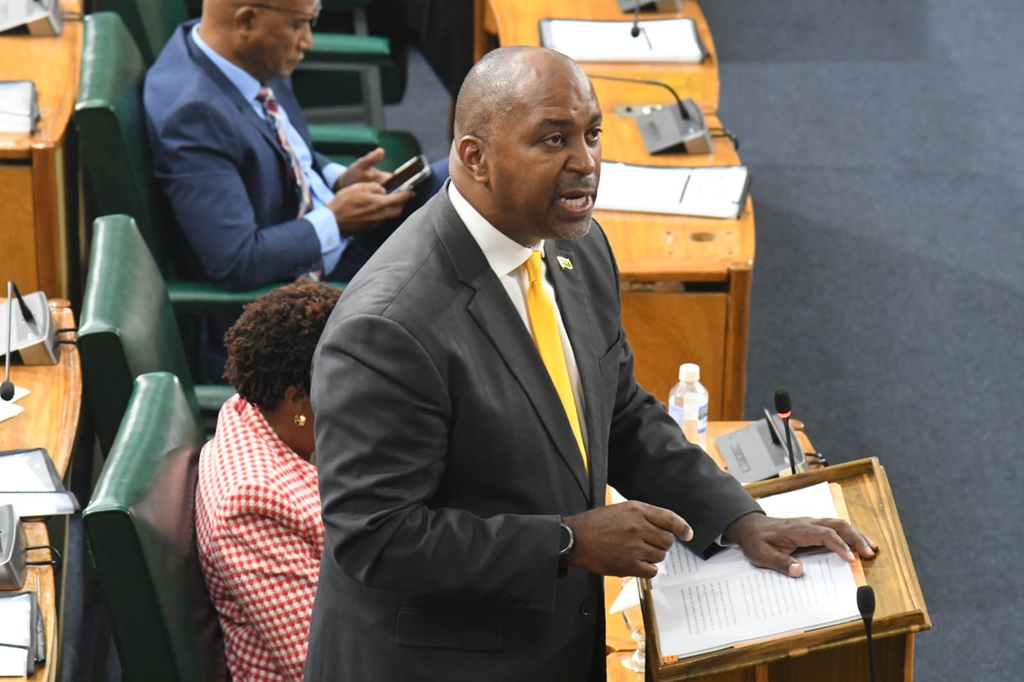
    In a forceful address to Jamaica’s Parliament during the 2026-2027 Budget Debate, Opposition Finance Spokesman Julian Robinson launched a severe critique against the government’s newly announced $18 billion tax package. Robinson characterized the imposition of fresh taxes following the devastation of Hurricane Melissa as fundamentally unconscionable, arguing it places unjustifiable pressure on citizens already grappling with recovery.

    Robinson detailed the direct impact on Jamaican households, noting that consumers will face immediately higher grocery expenses due to the administration’s fiscal decisions. The comprehensive tax measures, which target sweetened beverages, tobacco products, pure alcohol, and tourism-related activities, collectively approach $30 billion in new revenue generation.

    From an economic policy perspective, the opposition spokesman articulated a sophisticated critique, labeling the tax increases as a ‘procyclical response’ to economic contraction. Robinson explained that rather than countering economic slowdown, the government’s approach exacerbates existing challenges by applying pressure in the same direction as the economic decline. He emphasized that Jamaica’s tax base has been substantially weakened by a decade of limited growth under the current administration, further compromised by Hurricane Melissa’s impact.

    Robinson proposed an alternative economic strategy centered on countercyclical measures that would stimulate economic activity and create organic conditions for tax base recovery. He asserted that sustainable revenue generation emerges from economic growth rather than taxation of financially stressed populations.

    The opposition spokesman further highlighted the disproportionate burden falling on lower-income Jamaicans and elderly citizens, who continue to struggle with post-hurricane recovery. Robinson concluded with a cricket metaphor, stating that if his People’s National Party were governing, ‘this is not the shot we would have played,’ signaling fundamental disagreement with the government’s fiscal approach.

  • Manchester councillors fuss over road repairs

    Manchester councillors fuss over road repairs

    A heated political confrontation erupted during a municipal council meeting in Manchester, Jamaica, as councillors demanded improved collaboration with national agencies regarding road rehabilitation projects. The dispute centered on allegations of poor communication and potential political favoritism in infrastructure work allocation.

    Councillor Karl Smith (People’s National Party, Knockpatrick division) raised concerns about five parochial roads being repaired without proper notification to the municipal corporation. ‘Whether it’s even Jesus fixing these roads, the decent thing is to inform the corporation,’ Smith stated, emphasizing what he perceived as institutional disrespect.

    The debate intensified when Councillor Mario Mitchell (PNP, Bellefield division) alleged that Manchester Central MP Rhoda Crawford showed particular interest in road repairs near her personal property, specifically mentioning roads included in the SPARK program. Mitchell claimed this represented wasted municipal funds and improper coordination between governmental levels.

    MP Crawford vehemently denied these allegations, characterizing them as political propaganda. ‘The political season has long passed,’ Crawford responded. ‘They need to settle themselves and do their work instead of spreading propaganda.’ She clarified that all SPARK roads were selected through consultation meetings with councillors present and provided a detailed list of the approved locations.

    The exchange grew increasingly tense as Minority Leader Omar Miller (Jamaica Labour Party, Craighead division) criticized Mitchell for raising matters he deemed inappropriate for the current meeting. The confrontation highlighted ongoing political tensions between representatives from both major parties regarding infrastructure development protocols and intergovernmental communication.

  • Davis and Pintard trade jabs over ‘real jobs’ in arts debate

    Davis and Pintard trade jabs over ‘real jobs’ in arts debate

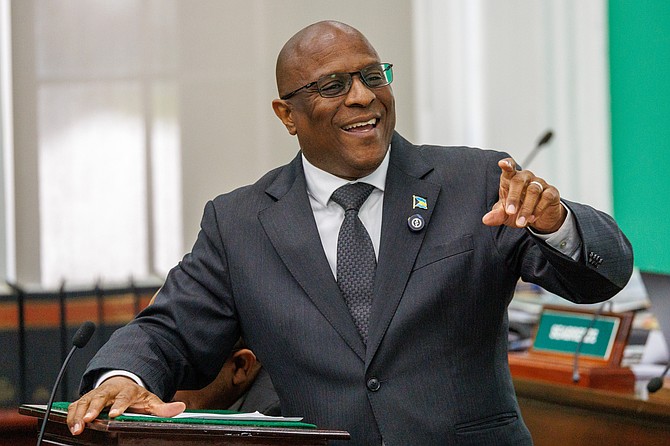
    The Bahamian Parliament witnessed a renewed confrontation between Prime Minister Philip Davis and Opposition Leader Michael Pintard during debates on cultural legislation, reviving their contentious dispute about the definition of legitimate employment. The political adversaries clashed while discussing two significant bills: the Creative and Performing Arts School (CAPAS) Bill, 2026 and the Junkanoo Authority Bill, 2026.

    Opposition Leader Pintard accused the Prime Minister of disparaging creative professionals, asserting that artistic pursuits constitute genuine employment. “I want you to know that being a playwright is a job,” declared Mr. Pintard. “Writing poetry is a job. Performing in theater or public spaces is a job. All these activities you’ve denigrated are, in fact, legitimate occupations.”

    Prime Minister Davis countered these allegations, emphasizing his administration’s demonstrated support for the arts through initiatives like CAPAS and financial assistance to the Dundas Theatre. He refuted claims that he had ever devalued artistic professions or suggested creatives were unqualified for high office. The Prime Minister redirected criticism toward Mr. Pintard’s professional background, highlighting his own distinguished legal career and regional contributions to legal education.

    The debate intensified when National Security Minister Wayne Munroe intervened, questioning the Opposition Leader’s self-identification on his party’s website. Minister Munroe noted the discrepancy between Mr. Pintard’s current defense of creative professions and his official characterization as a human resources consultant rather than a poet or writer.

    Amidst the political sparring, Parliament considered substantial cultural legislation. The CAPAS Bill proposes establishing a statutory body governed by a board and president to oversee artistic training, research, and creative production. Education Minister Glenys Hanna-Martin described the legislation as investing in “permanence, professionalism and prosperity” for Bahamian talent, preventing the institution from suffering the fate of the defunct National Dance School.

    The parallel Junkanoo Authority Bill aims to create a regulatory body for national parades, manage funding, establish commercial subsidiaries, and expand the cultural festival beyond seasonal limitations. Youth, Sports and Culture Minister Mario Bowleg characterized the legislation as “deliberate and forward-looking,” designed to benefit national culture beyond temporary political considerations.

    While supporting the expansion of Junkanoo beyond seasonal festivals, Opposition Leader Pintard expressed concerns about excessive governmental control over cultural decisions. Prime Minister Davis acknowledged that both initiatives had been discussed across multiple administrations but emphasized his government’s commitment to achieving tangible progress where previous efforts had stalled.

  • WATCH: Jackson says gov’t caved to US pressure to end Cuban medical programme

    WATCH: Jackson says gov’t caved to US pressure to end Cuban medical programme

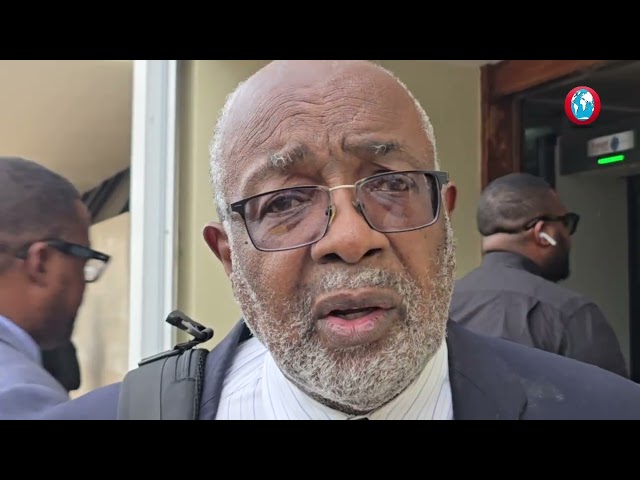
    KINGSTON, Jamaica — A significant diplomatic rift has emerged within Jamaica’s political landscape following the government’s controversial decision to terminate its long-standing medical cooperation program with Cuba. Opposition Spokesperson on National Security Fitz Jackson has launched vehement accusations against the administration, alleging that the discontinuation resulted from external pressure rather than national interest considerations.

    Jackson asserted that the government’s action represents a clear capitulation to directives from foreign governments, particularly the United States. “The Opposition is steadfast. We will stand with the Cuban Government on this matter,” Jackson declared. “It’s evident that the administration is prioritizing external instructions over the healthcare needs of our citizens.”

    The Cuban medical initiative, which has provided Jamaica with essential healthcare professionals for decades, faced termination after both governments failed to reach consensus on renewed terms following the expiration of their previous agreement in February 2023. Jamaica’s Ministry of Foreign Affairs and Foreign Trade formally announced the discontinuation of the current arrangement regarding the deployment of Cuban medical professionals within Jamaica’s public health sector.

    Jackson dismissed the government’s justification for the termination as “frivolous and dishonest,” particularly challenging Foreign Affairs Minister Kamina Johnson Smith’s reasoning. “I find the Cuban government’s perspective more credible than that of our own administration on this matter,” Jackson stated, highlighting the paradoxical continuation of other foreign worker programs while specifically targeting Cuban medical personnel.

    The opposition spokesperson further refuted claims that Cuban healthcare workers constituted forced labor, citing his personal interactions with numerous medical professionals from Cuba. “None of them are forced workers. If the government’s argument held any validity, why aren’t they applying the same standard to Chinese workers?” Jackson questioned, characterizing the administration’s position as fundamentally inconsistent.

    Despite the current political impasse, Jackson expressed optimism about Jamaica’s future, concluding: “Better days will come. We maintain hope for our nation and remain committed to doing what is necessary for our people’s welfare.”

  • RBDF heightens security as Middle East tensions rise

    RBDF heightens security as Middle East tensions rise

    The Royal Bahamas Defence Force (RBDF) has significantly enhanced its security protocols and intensified naval patrols in response to escalating geopolitical tensions between the United States and Middle Eastern nations, Deputy Commodore Carlon Bethel confirmed on Tuesday.

    In a televised interview, Commodore Bethel disclosed that the RBDF has elevated its operational readiness to safeguard Bahamian territorial waters against potential spillover effects from international conflicts. “In light of the heightened tensions in the Middle East, the Defence Force has substantially reinforced our security apparatus,” Bethel stated. “We have augmented our presence in key port facilities and enhanced protective measures for diplomatic partners including the United Kingdom and United States embassies.”

    The military commander emphasized the force’s dual focus on critical infrastructure protection and tourism security, noting: “We maintain vigilant security provisions in high-traffic tourist zones, recognizing the possibility of elevated threat levels during global instability.”

    Bethel further revealed ongoing coordination with international allies to address evolving security challenges through strengthened partnerships.

    This development follows last week’s advisory from Foreign Affairs Minister Fred Mitchell, who addressed the broader implications of Middle Eastern conflicts for Caribbean citizens overseas. In a circulated audio message, Mitchell referenced “wider dislocations caused by the Middle East conflict,” observing that while Bahamians and other CARICOM nationals aren’t direct participants, many work in affected regions and face travel disruptions.

    The minister reiterated existing travel advisories and confirmed receiving assurances from foreign governments regarding protection of Bahamian nationals. “Maintain low profiles and adhere to local authorities’ instructions,” Mitchell advised, directing citizens requiring assistance to contact the Bahamian diplomatic mission in Abu Dhabi.

  • KSAMC to begin talks on overdue by-elections…

    KSAMC to begin talks on overdue by-elections…

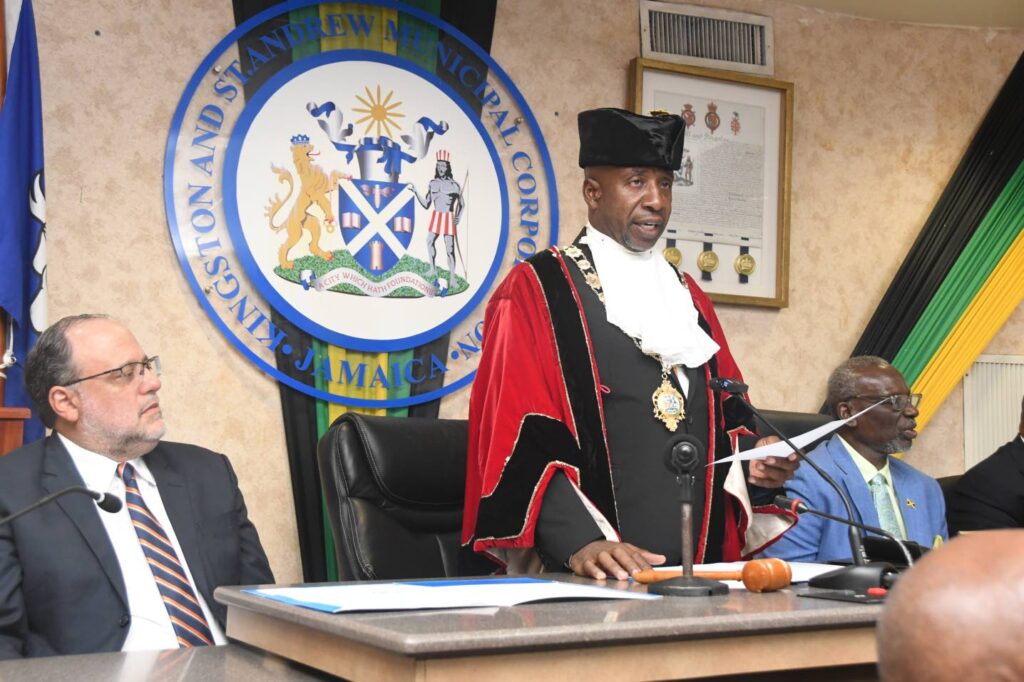
    Kingston Mayor Andrew Swaby has formally announced the commencement of procedures to conduct long-overdue by-elections for the vacant Maxfield Park and Seivwright Gardens divisions within the Kingston and St Andrew Municipal Corporation (KSAMC). This development follows official communication from the Electoral Office of Jamaica received on March 9, 2026, reminding municipal authorities of their legal obligations under the Representation of the People Act.

    The electoral vacancies emerged when incumbent councilors Dennis Gordon (People’s National Party) and Delroy Williams (Jamaica Labour Party) successfully transitioned to parliamentary positions following the 2025 General Election. While the by-elections were originally scheduled for mid-December 2025, Mayor Swaby made the conscious decision to postpone them due to the catastrophic impact of Hurricane Melissa, which struck Jamaica’s southwestern coast as a Category 5 storm on October 28, 2025.

    In his address to the KSAMC monthly meeting, Swaby defended the delay as a necessary measure of sensitivity, stating that conducting political campaigns amidst national recovery efforts would have been inappropriate. Although Kingston and St Andrew experienced comparatively less direct impact, the mayor emphasized that the entire nation was focused on humanitarian assistance and reconstruction.

    The Electoral Commission of Jamaica has concurrently notified mayors in Morant Bay and Savanna-la-Mar about similar electoral responsibilities, underscoring the legal requirement that by-elections must be convened within approximately three months of vacancies being officially recorded.

    Mayor Swaby has already initiated correspondence with Elections Director Glasspole Brown and Local Government Minister Desmond McKenzie to establish a revised timeline for the electoral process. He assured council members that all necessary measures would be implemented to ensure smooth and efficient elections while maintaining focus on the municipality’s developmental priorities and the well-being of its residents.

  • Holness accuses Bunting of bias as PAAC mandate squabble continues

    Holness accuses Bunting of bias as PAAC mandate squabble continues

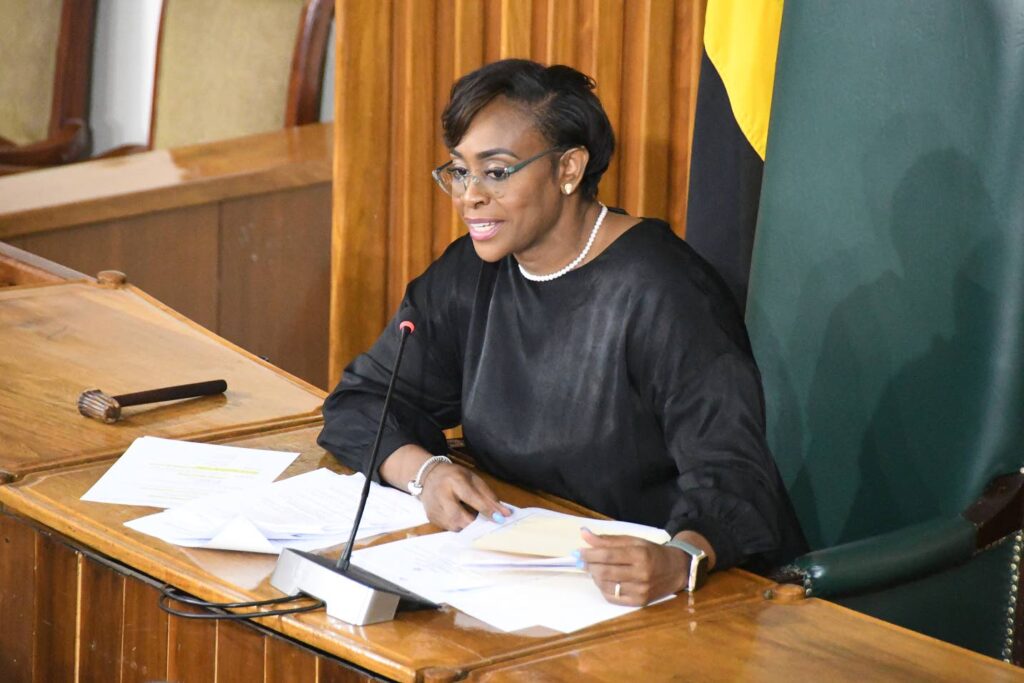
    Jamaica’s parliamentary proceedings descended into renewed acrimony on Wednesday as tensions within the Public Administration and Appropriations Committee (PAAC) reached boiling point. Juliet Holness, Member of Parliament for St Andrew East Rural and Speaker of the House, launched a direct challenge against Committee Chairman Peter Bunting’s leadership, accusing him of systemic bias in managing committee proceedings.

    The confrontation emerged during deliberations about the fundamental scope and authority of the PAAC, with Holness contending the committee has progressively exceeded its mandated jurisdiction. She specifically criticized Bunting’s management approach, asserting his recognition of speakers demonstrated partiality rather than neutral procedural oversight. “I observed, for my first two meetings, I remember asking a question and being rushed while other members were allowed to extend their questioning indefinitely,” Holness stated.

    Beyond procedural concerns, Holness expressed profound frustration with what she characterized as widespread disrespect and inadequate preparation among committee members. She notably suggested some legislators rely on artificial intelligence tools rather than substantive understanding, remarking that “some fast learners continue to be stupid and use chatGPT for their questions.”

    The central constitutional question revolved around whether the PAAC should maintain narrow focus on expenditure review or expand into broader administrative efficiency examinations. Holness maintained the committee should concentrate exclusively on monitoring how approved public funds are utilized, particularly during budget cycles.

    Chairman Bunting vigorously defended his interpretation of the committee’s mandate under Standing Order 73A, arguing for a more expansive view of its responsibilities. He contended that jurisdictional overlap is inevitable when examining large-scale government programs that cross multiple sectors. Using hurricane recovery efforts as an example, Bunting explained such initiatives naturally encompass infrastructure, education, and other domains, making narrow jurisdictional boundaries impractical.

    In response to accusations of partiality, Bunting asserted his leadership maintains careful neutrality. “The fact that from time to time members on both sides may be upset with me suggests to me that I am achieving impartiality,” he countered, drawing parallels to Holness’s own responsibilities as House Speaker.

    The dispute represents an institutional crisis concerning parliamentary oversight mechanisms and the appropriate boundaries between specialized committees in Jamaica’s governance structure.

  • Budget Debate: What’s happening with NaRRA?

    Budget Debate: What’s happening with NaRRA?

    Jamaica’s post-hurricane reconstruction efforts face mounting scrutiny as Opposition Finance Spokesman Julian Robinson raises critical questions about the government’s proposed recovery vehicle. During Thursday’s Budget Debate, Robinson challenged the operational status of the National Reconstruction and Resilience Authority (NaRRA), the central agency Prime Minister Andrew Holness promised would lead rebuilding initiatives.

    The opposition spokesman highlighted concerning delays in establishing NaRRA’s legal framework, noting that no legislation has been presented to Parliament to formally constitute the authority. This absence of legal foundation leaves the public without clarity regarding the agency’s operational mechanisms, specific functions, or implementation timeline.

    Robinson emphasized the urgency of moving beyond announcements to actionable plans, particularly given the widespread devastation across western Jamaica. He acknowledged the importance of the government’s $10 billion ROOF Grant program but declared it “simply insufficient” to address the scale of destruction caused by Hurricane Melissa.

    The Member of Parliament for St Andrew South Eastern detailed the extensive impact across multiple parishes, including severe damage in Westmoreland, St Elizabeth, St James, Hanover, Trelawny, St Ann, Clarendon, and Manchester. Nearly five months after the hurricane, thousands of Jamaicans remain without adequate shelter, raising urgent questions about the government’s comprehensive response strategy for long-term housing solutions.

  • Cuban ‘slave labour’ built Argyle?

    Cuban ‘slave labour’ built Argyle?

    Recent allegations by the United States government regarding the exploitation of Cuban professionals in Caribbean nations have sparked intense debate across the region. The controversy centers on whether countries like St. Vincent and the Grenadines (SVG) have benefited from what some characterize as oppressive labor conditions during major infrastructure developments.

    Parliamentary records from SVG between 2009-2011 reveal startling details about the working conditions of Cuban engineers and technicians during construction of the Argyle International Airport. Prime Minister Ralph Gonsalves acknowledged in multiple legislative sessions that 42 Cuban professionals worked alongside 85 Vincentian workers under markedly different terms.

    The Cuban workers reportedly labored 12 hours daily, seven days weekly, with merely one day off per month. Crucially, they received no overtime compensation for hours exceeding the standard eight-hour workday, while their Vincentian counterparts received overtime pay. Prime Minister Gonsalves described the Cubans as “volunteers with a stipend” who received substantially less compensation than market rates for equivalent expertise.

    Financial disclosures showed Cuban engineers earning less than half the salary of junior Vincentian engineers and approximately one-quarter of what international engineering consultants commanded. The Prime Minister framed this arrangement as “solidarity” and emphasized the value of technical assistance provided “in kind,” estimating the earthworks alone represented an $81 million value achieved for only $22.5 million in actual expenditure.

    The fundamental question remains whether these conditions constitute exploitation under international labor standards. While the arrangement provided economic benefits to SVG, the working conditions—including excessive hours without proper compensation and limited rest days—raise serious ethical concerns about human dignity and workers’ rights.

    The United States government’s pressure on Caribbean nations to end these practices reflects broader geopolitical tensions and differing perspectives on international labor standards. This case exemplifies the complex intersection of economic development needs, South-South cooperation, and fundamental workers’ rights in the global arena.