分类: politics

  • Nicholas Pushes Back on Opposition’s ‘Unlimited Rooftop Solar’ Proposal, Warns of Risks to APUA

    Nicholas Pushes Back on Opposition’s ‘Unlimited Rooftop Solar’ Proposal, Warns of Risks to APUA

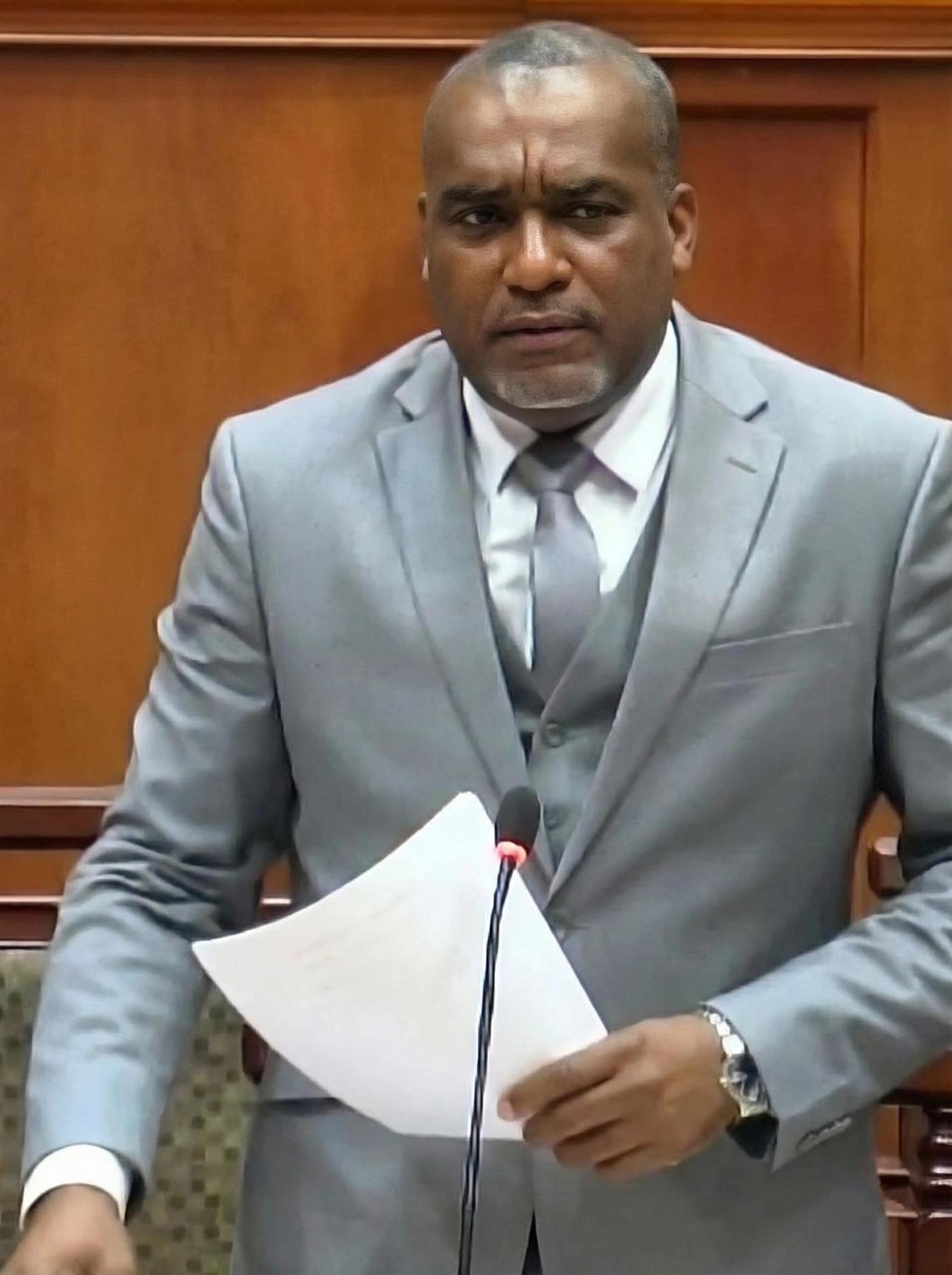
    In a robust defense of the government’s energy strategy during the Budget Debate, Information Technology Minister Melford Nicholas issued a stern warning against adopting the Opposition’s proposal for unlimited rooftop solar installations. Nicholas characterized the policy push as economically dangerous and technically unviable, emphasizing that such unrestricted solar expansion would jeopardize both grid stability and the financial viability of the Antigua Public Utilities Authority (APUA).

    The Minister revealed that the Opposition Leader had advocated for homeowners to install solar systems reaching 25-30 kilowatts without restrictions. Nicholas systematically dismantled this proposition, highlighting APUA’s binding long-term agreement with Antigua Power Company extending through 2031. This contractual obligation, coupled with the utility’s requirement to maintain consistent power availability regardless of weather conditions, makes uncontrolled solar integration fundamentally problematic.

    Nicholas presented compelling financial data, noting that approximately 67% of APUA’s revenue is allocated to fuel purchases for electricity generation. A sudden influx of oversized private solar systems would create unpredictable power flows into the grid, potentially leaving the utility unable to meet its financial commitments. The Minister painted a vivid picture of the technical challenges: abundant daytime solar generation followed by dramatic nighttime drops would force APUA to maintain full conventional generation capacity regardless of solar availability.

    As a responsible alternative, Nicholas detailed the government’s measured approach to renewable energy adoption. APUA has already implemented a program allowing household systems up to 5 kilowatts, including necessary inverter and battery storage components. This cap, far from being arbitrary, was established based on comprehensive technical assessments to ensure grid reliability while enabling consumer access to clean energy.

    The government’s strategy extends beyond residential solar, with Nicholas highlighting ongoing utility-scale green energy initiatives. These include collaboration with the International Solar Alliance and financing discussions through the Green Climate Fund. The Minister emphasized that Antigua’s energy transformation requires addressing the fundamental challenge of its $200 million annual fuel expenditure, noting that meaningful electricity cost reduction demands structural changes in power generation.

    Pointing to Barbuda’s successful renewable integration experience, where fuel savings have already demonstrated tangible benefits, Nicholas expressed confidence in replicating these results across Antigua through controlled expansion. The government’s balanced approach seeks to harmonize household participation in renewable energy with maintaining national grid security, combining regulated rooftop installations with strategic large-scale investments as the most realistic path toward a sustainable energy future.

  • US steps up pressure on Maduro, sanctions relatives and backers

    US steps up pressure on Maduro, sanctions relatives and backers

    The Trump administration has significantly intensified its economic and military pressure on Venezuelan leader Nicolás Maduro’s government, implementing sweeping new sanctions targeting the president’s relatives and key supporters. The coordinated action by the US Treasury Department and State Department represents the latest escalation in Washington’s campaign against what it describes as Maduro’s “corrupt and illegitimate regime.

    The newly announced sanctions specifically target four individuals and six entities, while identifying six vessels as blocked property. Among those designated are three of Maduro’s nephews—Efraín Antonio Campo Flores, Franqui Francisco Flores de Freitas, and Carlos Erik Malpica Flores. Two of these family members are convicted narcotics traffickers who were previously granted clemency in a 2022 prisoner exchange involving seven American nationals. According to US authorities, both have since resumed drug trafficking activities.

    The sanctions package additionally focuses on Venezuela’s crucial oil sector, including a prominent businessman and six shipping companies. This economic pressure coincides with heightened US military activity across Caribbean waters, where American forces have conducted multiple strikes on vessels allegedly transporting drugs to the US mainland.

    The recent seizure of an oil tanker illegally flying Guyana’s flag in the Caribbean Sea occurred just hours before the sanctions announcement. Since September, these intensified interdiction efforts have resulted in more than 80 fatalities, generating growing concern among Caribbean nations.

    Dr. Denzil Douglas, Foreign Affairs Minister of St. Kitts and Nevis and Chair of the Council for Foreign Relations, expressed deep apprehension about the regional militarization, noting that the Caribbean hasn’t witnessed this level of military buildup since World War II. During a Fireside Chat, Douglas emphasized his commitment alongside incoming CARICOM Chair, Prime Minister Dr. Terrance Drew, to maintain the region as a “zone of peace” despite escalating tensions.

    The United States, with support from Trinidad and Tobago, maintains that its operations exclusively target drug traffickers, though it has not publicly presented supporting evidence. Dr. Douglas reiterated that while St. Kitts and Nevis remains dedicated to combating drug and human trafficking, regional stability must be simultaneously protected—a position he asserts is shared across CARICOM leadership.

  • Watts Explains Why His Name Appeared on Duty-Free Document

    Watts Explains Why His Name Appeared on Duty-Free Document

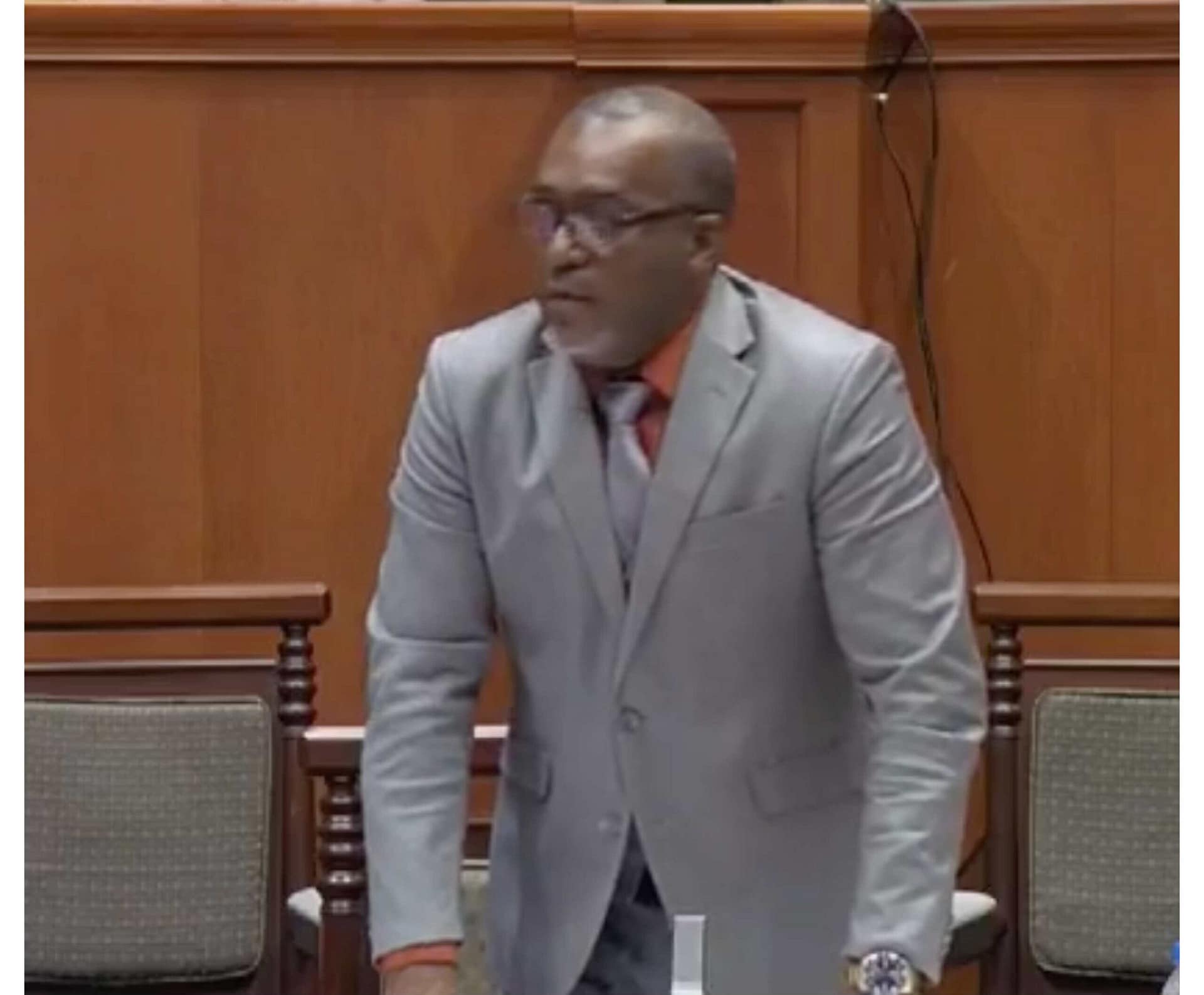
    During his Budget Debate address to Parliament, Opposition MP Algernon “Serpent” Watts presented a detailed defense against allegations surrounding his involvement in a recent duty-free concession controversy. Watts asserted that public accusations stemmed from a fundamental misunderstanding of governmental approval procedures.

    The parliamentarian clarified that his signature appeared on relevant documentation solely as an administrative formality after the concession had already received full approval through established channels. Watts emphasized he possessed no authority to either approve or deny the request at the stage when it reached his desk, characterizing his involvement as a routine procedural step rather than a decision-making one.

    Watts directly challenged narratives suggesting he exercised undue influence or favoritism, maintaining that such claims misrepresented the actual workings of the approval process. He explained that the comprehensive nature of Budget Week provided an ideal platform to address the matter publicly and correct what he termed widespread misconceptions about his role.

    The MP concluded his remarks by firmly stating that he operated entirely within official protocols throughout the process, dismissing suggestions of misconduct as baseless and without evidentiary support.

  • Watts Says Agriculture Budget Is ‘Simply a Payroll Budget’ With Little Left for Programmes

    Watts Says Agriculture Budget Is ‘Simply a Payroll Budget’ With Little Left for Programmes

    In a scathing parliamentary address during the Budget Debate, Opposition Parliamentarian Algernon “Serpent” Watts launched a vehement critique against the 2026 financial allocation for the Ministry of Agriculture. The MP asserted that the approved budgetary provisions fundamentally fail to deliver meaningful support for the nation’s agricultural development initiatives.

    Watts acknowledged the ministry’s $8 million nominal increase compared to previous fiscal year allocations but emphasized that this superficial boost translates to negligible operational funding. Detailed analysis of the Estimates revealed that approximately 90% of the total allocation is designated for personnel-related expenditures—specifically salaries, wages, and allowances—leaving severely limited resources for implementing substantive programs.

    The parliamentarian challenged the government’s narrative positioning agriculture as a cornerstone for reducing national import expenditures, declaring such promises completely unsupported by the financial documentation. “That is just talk,” Watts stated emphatically. “You have shown us nothing… absolutely nothing to demonstrate concrete progress toward these stated objectives.”

    Watts further characterized the allocation pattern as continuing agriculture’s status as one of the most underfunded major ministries, describing the current budget as “simply a payroll budget, not a food security budget.” He questioned the operational capacity to execute announced initiatives given the minimal discretionary spending available, highlighting the contradiction between ambitious policy announcements and inadequate financial backing.

    The opposition legislator concluded that substantial, targeted investment remains imperative if Antigua and Barbuda genuinely intends to achieve measurable advancements in domestic food production and security.

  • Uitbreiding  Alihusains onderzoek toont verschuivende profielen sinds 1949

    Uitbreiding Alihusains onderzoek toont verschuivende profielen sinds 1949

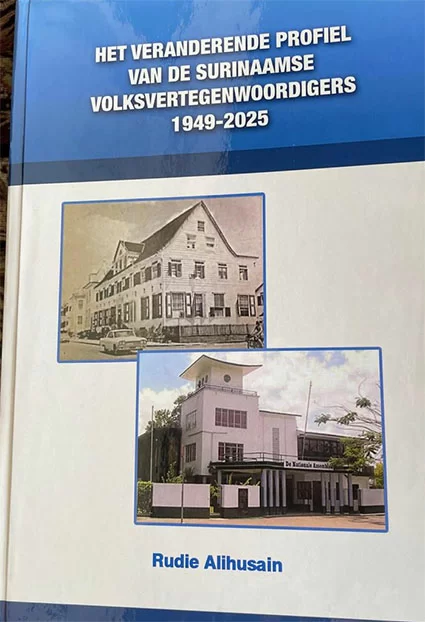
    Political scientist Rudie Alihusain has expanded his seminal 2019 publication with comprehensive data from the 2020 and 2025 election cycles, creating a definitive study of Suriname’s parliamentary representation spanning 76 years. The updated work, released on December 9, 2025, offers unprecedented insights into the demographic and professional evolution of the nation’s lawmakers.

    Since 1949, Suriname has conducted eighteen general elections across urban, rural, and interior regions, resulting in 735 individuals elected to parliamentary positions. The data reveals a significant gender disparity: 633 male representatives compared to 102 female representatives. Women first entered the then-Staten van Suriname in 1963, with their numbers gradually increasing to the current total.

    The research identifies consistent patterns in age distribution, with the 41-50 age cohort forming the largest demographic group throughout the period, followed closely by the 51-60 age bracket. This indicates Surinamese voters’ persistent preference for candidates balancing youthfulness with experience and maturity.

    Academic qualifications among representatives show that while university-educated individuals have consistently served in the National Assembly, they have never constituted a majority. Across the entire period, 236 male and 24 female academics were elected, representing approximately 35% of all parliamentarians.

    Alihusain’s analysis delivers a critical assessment of intellectual engagement in Surinamese politics. Despite highly educated individuals demonstrating willingness to contribute to national development between 1949-2025, the political system has systematically failed to integrate expertise into governance structures. Professional matters frequently succumb to partisan political considerations rather than expert judgment.

    The study draws compelling parallels with historical discussions in former Eastern European countries, where party leadership employed the ‘window metaphor’ – only opening to new ideas when convenient and shutting abruptly when criticism became too pointed. Alihusain identifies similar dynamics in Suriname, resulting in intellectual marginalization and withdrawal from political participation.

    This expanded publication represents a monumental contribution to Suriname’s political historiography, documenting not merely who represented the nation but how political culture, social relationships, and the role of expertise have transformed across decades of democratic development.

  • Opposition Demands Clarity on Heavy-Duty Equipment, Eco-Lodge and Agro-Industrial Park Financing

    Opposition Demands Clarity on Heavy-Duty Equipment, Eco-Lodge and Agro-Industrial Park Financing

    During the recent parliamentary budget deliberations, opposition legislator Algernon “Serpent” Watts launched a vigorous critique of the government’s financial transparency regarding several high-profile agricultural development initiatives. The MP challenged the administration to provide comprehensive funding details for three significant projects: heavy-duty land preparation equipment, the Christian Valley eco-lodge and trail development, and a proposed agro-industrial park.

    Watts asserted that while the government has outlined an ambitious developmental agenda, the corresponding budgetary documentation lacks crucial financial specifics. He emphasized that major public undertakings requiring substantial investment must be accompanied by full disclosure of acquisition costs, operational expenses, and long-term sustainability plans.

    The parliamentarian specifically questioned the funding mechanisms for the ministry’s new equipment fleet—including bulldozers, excavators, loaders, and trucks—and demanded clear financial projections for both the eco-tourism facility and agricultural park. Watts warned that projects involving land use, agro-industrial expansion, and tourism development require particularly rigorous parliamentary oversight due to their significant economic and environmental implications.

    Citing historical precedents where projects were announced without adequate financial backing, the opposition MP stressed that taxpayers deserve complete transparency regarding how the government intends to fund its ambitious plans. He characterized the annual budget debate as his primary opportunity to comprehensively address constituent concerns and fulfill his parliamentary oversight responsibilities.

    Watts concluded that substantial capital investments cannot proceed based on “headlines without numbers,” insisting that proper justification tied to revenue projections and recurrent expenses must be presented for parliamentary and public scrutiny.

  • Seed and Fencing Support Rolled Out Nationwide for Small Farmers

    Seed and Fencing Support Rolled Out Nationwide for Small Farmers

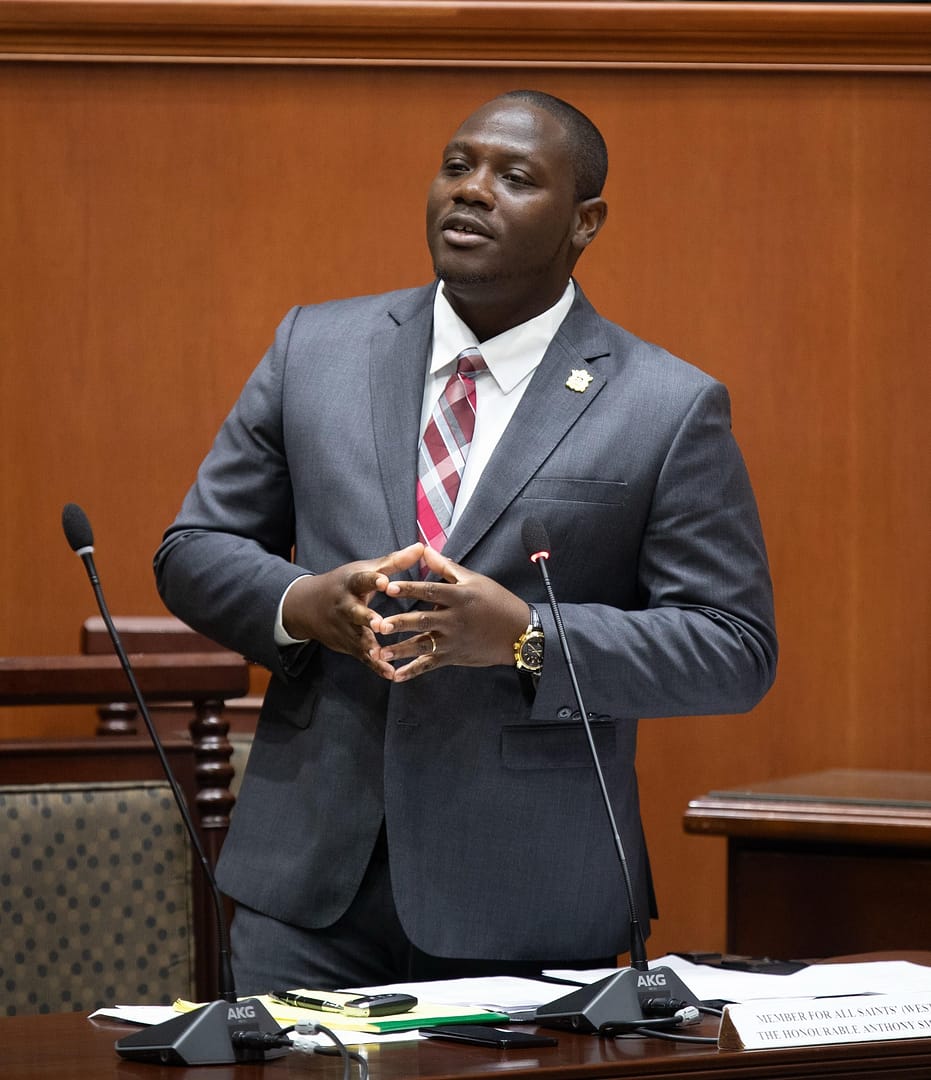
    The Government of Antigua and Barbuda has unveiled a comprehensive agricultural initiative set to launch nationwide in 2026, featuring the distribution of diverse seed varieties and fencing materials to small-scale farmers. Agriculture Minister Anthony Smith announced the program during the recent Budget Debate, positioning it as a strategic intervention to strengthen the nation’s farming infrastructure and food production capabilities.

    Minister Smith emphasized the program’s dual focus on immediate practical support and long-term agricultural development. The initiative will provide farmers with essential resources to protect crops from theft, roaming animals, and weather-related damage while simultaneously working to expand production capacity. Smith characterized the effort as direct response to the daily challenges faced by those who ‘feed our nation.’

    The seed and fencing distribution represents one component of a broader agricultural modernization strategy that includes infrastructure development, expanded land preparation services, and increased mechanization. These coordinated efforts aim to significantly boost sector productivity and establish conditions for sustainable food security.

    Notably, the program specifically addresses demographic challenges within Antigua and Barbuda’s agricultural sector. With an aging farming population, the government is implementing measures to lower barriers for new entrants while supporting experienced farmers. The provision of essential materials serves as both practical assistance and an incentive for younger participants to engage in farming.

    The initiative aligns with the administration’s commitment to ensuring local food producers have adequate resources to deliver affordable, accessible nutrition nationwide. Minister Smith described the program as a concrete step toward reinforcing food systems and sustaining the country’s agricultural foundation for future generations.

  • Opposition party accuses Environment Ministry of “selling” permits amid alarming volume

    Opposition party accuses Environment Ministry of “selling” permits amid alarming volume

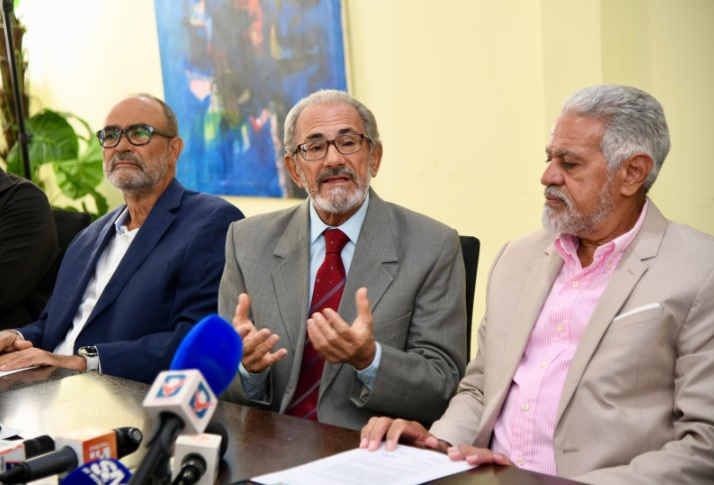
    SANTO DOMINGO – The Dominican Republic’s political opposition has launched a severe indictment against the nation’s environmental authority, alleging systemic corruption and administrative failure within its permitting operations. Fuerza del Pueblo (FP), the primary opposition party, has publicly accused the Ministry of Environment of issuing an ‘astronomical’ and ‘operationally unviable’ total exceeding 6,000 environmental permits within an 11-month timeframe.

    Paino Abreu, the FP Secretary for Environmental Affairs, contends that the ministry possesses neither the technical infrastructure nor the administrative bandwidth to process such an immense volume of applications while simultaneously upholding mandated legal and ecological safeguards. The allegations extend far beyond numerical concerns, pinpointing a purportedly ‘distorted’ management framework. This model is accused of enabling data manipulation, diluting the rigor of environmental impact assessments, and fostering a network of intermediaries who allegedly expedite permits in exchange for illicit financial compensation.

    In a formal escalation, the party has submitted a comprehensive dossier labeled ‘Worrisome Licenses and Permits’ to relevant state bodies. FP is formally petitioning for an immediate forensic audit to be conducted by the Chamber of Accounts, the supreme audit institution. Furthermore, they have called for the urgent intervention of the Office of Ethics and Government Integrity (OEIG) to probe these grave accusations.

    The opposition’s critique also challenges the government’s environmental reporting, casting doubt on the authenticity of official statistics concerning national forest coverage and timber import data, which they claim are significantly inflated or misleading. Abreu additionally highlighted worsening working conditions for park rangers and a concerning pattern of institutional neglect towards protected areas, citing these as evidence of a broader degradation in environmental governance.

    Drawing stark parallels to historical corruption scandals, such as the infamous case involving the National Health Insurance (SeNaSa), Fuerza del Pueblo warned that confirmed irregularities would constitute a severe blow to both environmental sustainability and eroding public trust. The party is urging for swift, transparent, and decisive action from authorities, framing the situation not as a mere procedural failure but as a full-blown crisis in the nation’s environmental stewardship.

  • Finance Ministry earns dual ISO certification for anti-bribery and compliance management

    Finance Ministry earns dual ISO certification for anti-bribery and compliance management

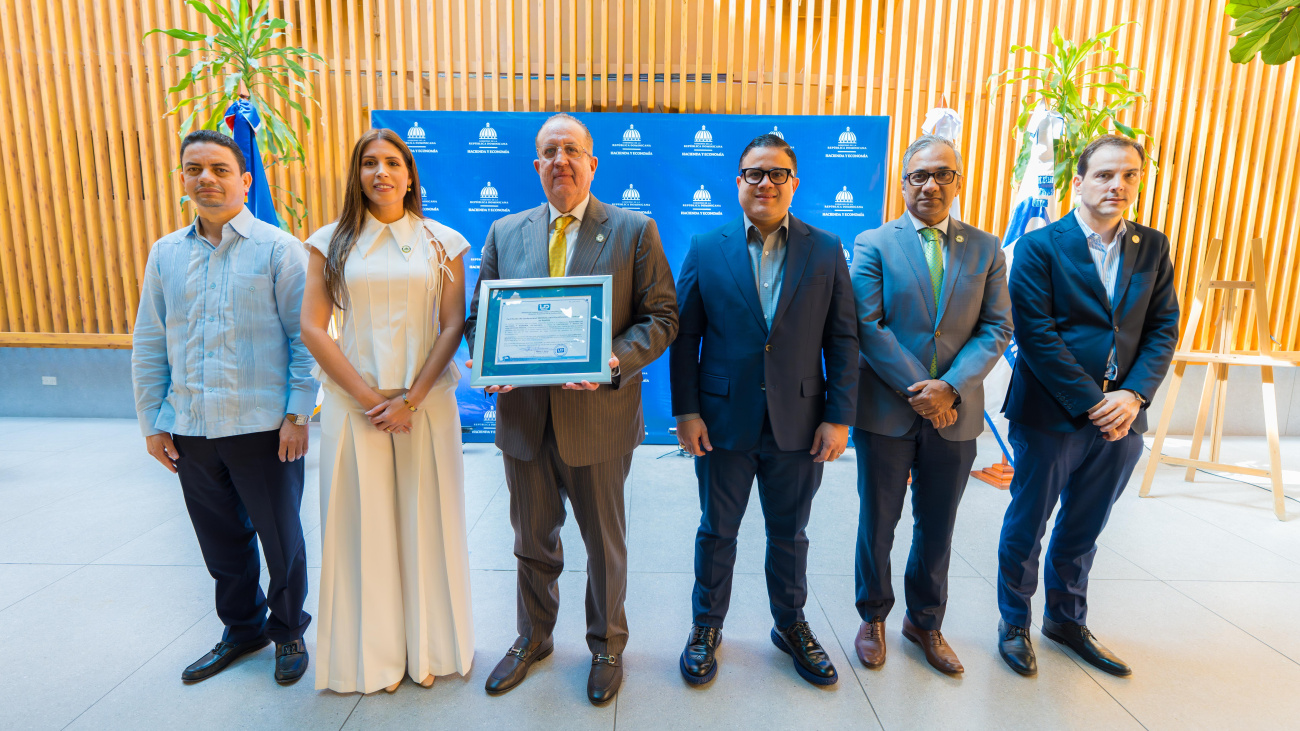
    In a landmark achievement for governmental integrity, the Dominican Republic’s Ministry of Finance and Economy (MHE) has obtained dual ISO certifications validating its anti-bribery and compliance management systems. The certifications, conforming to the rigorous international benchmarks of ISO 37001 (Anti-Bribery Management Systems) and ISO 37301 (Compliance Management Systems), signify a major advancement in the ministry’s institutional governance framework.

    The formal certification ceremony was presided over by Néstor Julio Matos, Director of the Dominican Institute for Quality (Indocal), with Finance Minister Magín Díaz formally accepting the accolades. Minister Díaz characterized this accomplishment as a testament to the ministry’s ‘mature and effective’ internal control mechanisms, underscoring a renewed dedication to ethical administration and public accountability.

    Independent auditors conducting the exhaustive evaluation reported exceptional findings, praising the ministry’s deeply embedded culture of integrity. The assessment commended the cohesive involvement across all departmental units, the clarity and implementation of policy directives, and the robustness of procedural compliance. Specific initiatives that drew acclaim included the comprehensive modernization of internal controls, enhanced safeguards for whistleblowers, and sustained educational programs focused on integrity standards.

    Looking forward, Minister Díaz outlined the ongoing challenge of not only preserving these elevated standards but also further embedding a zero-tolerance philosophy towards corruption within the institution’s ethos. He stated that the certification establishes the MHE as a ‘benchmark within the Dominican state,’ and confirmed the ministry’s unwavering commitment to the perpetual identification of compliance risks and the strengthening of reporting channels for misconduct.

  • Nieuwe initiatiefwet moet criminelen financieel volledig kaalplukken

    Nieuwe initiatiefwet moet criminelen financieel volledig kaalplukken

    In a significant move against organized crime, Surinamese legislators Ebu Jones (NDP) and Ivanildo Plein (NPS) have introduced groundbreaking legislation enabling authorities to fully confiscate illegally obtained assets from convicted criminals. The proposed Confiscation of Illegally Obtained Profits Act—colloquially termed the ‘Bare Plucking Law’—represents a paradigm shift in the nation’s approach to criminal justice by targeting the financial foundations of unlawful activities.

    The initiative specifically addresses Suriname’s escalating challenges with organized crime, corruption, drug trafficking, money laundering, fraud, human trafficking, and financial-economic offenses. Assembly member Jones emphasized that conventional law enforcement methods have proven insufficient when focusing solely on incarceration rather than asset recovery. “The state frequently loses millions while convicted individuals return to society after serving prison sentences with their criminal proceeds intact. This constitutes a double injustice for citizens,” Jones stated during the parliamentary session.

    Current legislation within Suriname’s Penal Code and Code of Criminal Procedure is deemed fragmented and outdated, particularly regarding modern wealth forms including cryptocurrencies, digital wallets, and complex corporate structures. The proposed framework establishes a lex specialis—a specialized legal regime—that operates alongside existing criminal statutes, enabling proportional and effective seizure of both directly and indirectly obtained criminal assets regardless of their location.

    Key objectives of the new legislation include:
    – Disrupting the financial infrastructure supporting criminal enterprises
    – Enhancing the integrity of Suriname’s financial-economic system
    – Increasing transparency in asset flows across jurisdictions
    – Strengthening judicial authorities’ information-gathering capabilities
    – Fostering structured collaboration with financial institutions
    – Restoring public confidence in the rule of law

    Jones concluded that comprehensive asset recovery is essential for reestablishing societal trust: “Retrieving criminal profits is crucial for restoring legal consciousness and demonstrating that crime will never again be profitable.”