The We Invest in Nationhood (WIN) party remains steadfast in its strength and financial stability, even as its leader, Azruddin Mohamed, faces potential extradition to the United States on charges of fraud and money laundering. WIN General Secretary Odessa Primus expressed unwavering confidence in the party’s resilience during a statement on Friday. She emphasized that WIN boasts a roster of capable individuals who have effectively engaged with supporters, ensuring the party’s continued influence. While acknowledging Mohamed’s popularity as the party’s most gravitated figure, Primus dismissed concerns about WIN’s future viability. WIN, which emerged as Guyana’s major opposition party just three months after its formation, secured 16 of 65 parliamentary seats in the recent elections, surpassing the People’s National Congress Reform-led coalition. Primus labeled the U.S. grand jury indictment against Mohamed as politically motivated and assured that the party’s finances would remain unaffected by his potential extradition. She clarified that Mohamed’s legal battles would not impact WIN’s resources, stating, ‘They are going to extradite Azruddin Mohamed, not his money.’ Additionally, Primus ruled out the possibility of the opposition leadership being assumed by other parties, such as the 12-seat APNU or the one-seat Forward Guyana Movement. Meanwhile, APNU Chairman Aubrey Norton refrained from speculating on WIN’s future support base if Mohamed is extradited. Azruddin Mohamed and his father, Nazar ‘Shell’ Mohamed, were arrested on Friday following a U.S. extradition request tied to alleged wire fraud and money laundering linked to gold shipments and luxury car purchases. Both were granted bail and are set to return to court on November 10, 2025, for an extradition hearing.
分类: politics
-

‘I am preparing for government,’ Friday says of talks with Canouan investor
As St. Vincent and the Grenadines gears up for its general election on November 27, 2025, a heated exchange between Prime Minister Ralph Gonsalves and Opposition Leader Godwin Friday has brought the political spotlight to the island of Canouan. The dispute centers on land leases to foreign investors and the government’s handling of development projects in the region.
Prime Minister Gonsalves has publicly questioned Friday about his recent meetings with investors in Canouan, suggesting that the opposition leader is aligning himself with developers who have allegedly failed to fulfill their commitments. Gonsalves criticized the lack of progress in the northern part of the island, where two-thirds of the 1,800-acre land is leased to investors, leaving the indigenous population sandwiched in the middle. He emphasized that his Unity Labour Party (ULP) administration is committed to reclaiming land if developers do not meet their obligations.
In response, Friday defended his actions, stating that he is preparing for governance by engaging with various stakeholders, including businesspeople, farmers, and fishers. He accused Gonsalves of hypocrisy, pointing out that the ULP has leased even more land to investors than the previous New Democratic Party (NDP) government. Friday also criticized the government’s lack of action over the past decade, questioning why Gonsalves waited until now to address the issue.
The debate highlights broader concerns about economic development and land use in Canouan. Gonsalves has expressed frustration over the limited revenue generated from the leased land, particularly in the wake of the COVID-19 pandemic and the 2021 volcanic eruption. He has threatened to reclaim the land if developers do not resume activity.
As the election approaches, the political rhetoric intensifies, with both leaders vying for public support. Friday, who has represented the Northern Grenadines since 2001, is making his second attempt to lead the NDP to victory after a failed bid in 2021. The outcome of the election will determine the future direction of development in Canouan and the broader interests of St. Vincent and the Grenadines.
-

Do not label all immigrants as criminals- Ali
In a powerful address during the 60th anniversary religious service of the Guyana Defence Force (GDF), President Irfaan Ali condemned the recent bombing of a Mobil gas station in Georgetown as an act of terrorism. The attack, carried out by a Venezuelan man on October 26, 2025, was described by the President as an attempt to sow fear and destabilize the nation. However, Ali emphasized the importance of not generalizing all immigrants as criminals, urging Guyanese to resist prejudice and discrimination. ‘Hatred is not the answer to hatred. Fear must not drive our national policy,’ he stated. The President reassured attendees, including military and police officials, that the government is intensifying its monitoring and enforcement measures to ensure compliance with the law while maintaining compassion for those in need. He affirmed Guyana’s commitment to being a vigilant yet compassionate nation. The suspect, allegedly linked to the ‘R’ Sindicato gang in Venezuela, entered Guyana illegally and conducted surveillance before the bombing. Authorities are considering terrorism charges, which carry the death penalty, alongside other serious offenses. President Ali vowed to uncover the motive behind the attack, pledging to support law enforcement in maintaining peace and justice.
-

International relations expert: Trinidad and Tobago, Venezuela relations could get worse
The recent visit of the USS Gravely, an American warship destroyer, to the Port of Spain has sparked significant controversy and heightened tensions between Trinidad and Tobago (TT) and Venezuela. The vessel departed on October 30 after a five-day humanitarian and training mission, but its presence has been interpreted by the Venezuelan government as a military provocation, threatening regional peace. This development comes amid Prime Minister Kamla Persad-Bissessar’s aggressive stance against Venezuelan drug cartels, which has drawn criticism from international relations experts and human rights advocates. Dr. Anthony Gonzales, a prominent international relations expert, has openly disagreed with Persad-Bissessar’s support for US military actions that have resulted in the deaths of 61 suspected narco-traffickers. Gonzales emphasized the importance of due process, echoing concerns raised by the United Nations Commissioner for Human Rights, Volker Türk, who condemned the extrajudicial killings. Persad-Bissessar, who returned to power after the UNC-led coalition’s victory in the April 28 general election, has declared a zero-tolerance policy toward drug traffickers, stating, “I have no sympathy for traffickers, the US military should kill them all, violently.” However, Gonzales criticized her contradictory statements, noting her opposition to a Venezuelan invasion while advocating for lethal measures against traffickers. He also questioned the timing of the USS Gravely’s visit, suggesting it could escalate tensions with Venezuela. The Venezuelan National Assembly’s decision to declare Persad-Bissessar persona non grata and suspend energy cooperation with TT has further strained bilateral relations. Historian Dr. Jerome Teelucksingh warned that these developments could have severe economic repercussions for TT, particularly affecting the tourism and energy sectors. While he supports Persad-Bissessar’s efforts to combat drug cartels, Teelucksingh expressed concern about the long-term impact of severed energy agreements, including the loss of the Dragon Gas deal. Both experts agree that TT must navigate this delicate situation carefully to avoid being drawn into a broader conflict.
-

Civil society to call for end to US military build up in region
Amid escalating tensions in the Caribbean region, several organizations are set to gather at Woodford Square in Port of Spain on November 9 to demand an end to the US military buildup and advocate for regional peace. The announcement was made by David Abdulah, political leader of the Movement for Social Justice (MSJ), in a statement on October 28. Abdulah highlighted the significant increase in US military assets in the region, including destroyers, a nuclear submarine, amphibious landing craft, and over 10,000 military personnel. He also noted the deployment of B52 bombers and F35 jet fighters to Puerto Rico, with the USS Gerald Ford aircraft carrier en route to join the forces. Abdulah expressed concerns about the potential for conflict, particularly between the US and Venezuela, and its impact on Trinidad and Tobago, including increased migration, disrupted trade, and a decline in tourism. The vigil, organized by groups such as the Concerned Muslims of TT and the Emancipation Support Committee, aims to call for an end to hostilities and maintain the Caribbean as a zone of peace. Meanwhile, Prime Minister Kamla Persad-Bissessar has supported the US military deployment, framing it as an anti-narcotics effort, diverging from other Caribbean leaders who advocate for peace.
-

PM appoints new board to TTT
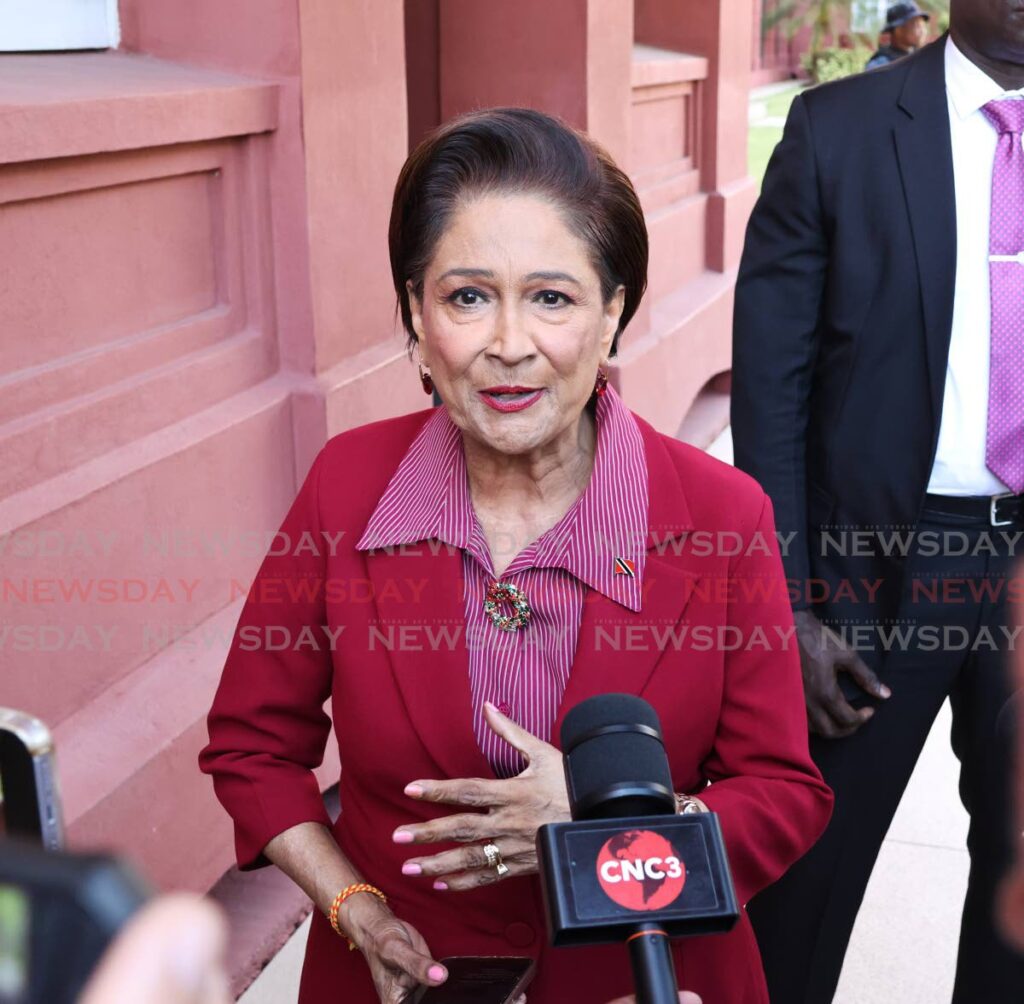
In a significant move to reshape the future of Trinidad and Tobago Television (TTT), Prime Minister Kamla Persad-Bissessar officially appointed a new board of directors on October 31. The ceremony, held at the historic Red House in Port of Spain, marked a pivotal moment for the state-owned broadcaster. Veteran broadcaster Michael T Kerr was named as the new chairman, with Cecile Ablack stepping into the role of deputy chairman. The board also includes Aaron Mahabir, Jamal Shamshuddin Mohammed, Anna R Moonsammy, Marilyn Martin, Steve Oudit, Nikesha Samuel, and Azeem Mandul. Kerr expressed the board’s gratitude and commitment to serving the nation’s best interests, emphasizing their dedication to the people of Trinidad and Tobago. This restructuring follows a recent realignment of cabinet responsibilities, placing TTT under the direct oversight of the Office of the Prime Minister. During the meeting, Prime Minister Persad-Bissessar shared her vision for TTT’s future, urging the new leadership to strive for excellence and innovation in their national service.
-

Alexander warns public: Don’t rely on social media for information
Homeland Security Minister Roger Alexander has issued a stern warning to the public against relying on social media for updates or guidance, particularly in times of heightened regional tensions. Speaking at the opening of Daisy’s Exclusive’s newest branch in Tunapuna on November 2, Alexander emphasized the dangers of misinformation, which he said caused widespread panic and confusion last Friday. He urged citizens to trust official government channels for accurate information and to avoid being swayed by unverified claims circulating online. Alexander also highlighted the role of social media in spreading false rumors, such as the premature closure of schools, which led to chaotic scenes and gridlock traffic in the capital. He called on bloggers and social media users to act responsibly and avoid disseminating panic-inducing content. The Minister’s remarks come amid regional anxieties triggered by international reports suggesting potential U.S. military action in Venezuela. While U.S. President Donald Trump denied these claims, the situation has fueled speculation and unease in Trinidad and Tobago. Prime Minister Kamla Persad-Bissessar echoed Alexander’s call for calm, assuring the public that there is no imminent threat and that the government is closely monitoring the situation. She emphasized the importance of relying on verified information and avoiding unnecessary panic. Alexander also praised the economic revitalization of Tunapuna, noting a significant reduction in crime and encouraging young men to abandon gang lifestyles. He reiterated the government’s commitment to transparency and public safety, urging citizens to remain vigilant and critical of online content.
-

Sobers’ tortured dance
Sean Sobers, Trinidad and Tobago’s Minister of Foreign and Caricom Affairs, has found himself at the center of a series of diplomatic challenges since assuming his role. Tasked with enhancing the nation’s international relations and global standing, Sobers has instead overseen a deterioration in ties with Caricom and neighboring Venezuela. His support for stringent measures against Venezuelan migrants has further strained relations, while his alignment with U.S. interests has sparked domestic debate. Sobers’ tenure began controversially in May when his comments on the disappearance of a young man in Antigua drew sharp criticism from Antiguan Prime Minister Gaston Browne. By July, he was forced to backtrack on claims of resolving the UK’s visa requirements for TT citizens, instead detailing the complexities behind the decision. By August, Sobers appeared to echo Prime Minister Persad-Bissessar’s stance on neutrality in the U.S.-Venezuela conflict, even as she controversially endorsed extrajudicial killings in international waters. The minister’s handling of the evacuation of TT students stranded in Jamaica during a hurricane in October highlighted disorganization and inefficiency, with students receiving flight notifications after the planes had departed. At a post-cabinet briefing on October 30, Sobers adopted a defensive tone with the media, refusing to commit to compassionate treatment of illegal immigrants and deflecting questions about U.S. evidence in at-sea strikes. His recent press release on TT’s “security environment,” which he read during the State of Emergency debate, further blurred the lines between his role and those of the homeland security and defense ministries. Six months into his tenure, Sobers must now embrace the diplomacy central to his role, foster cabinet consensus on foreign policy, and address the significant challenges facing TT.