分类: politics

  • Every day of the Revolution is a victory

    Every day of the Revolution is a victory

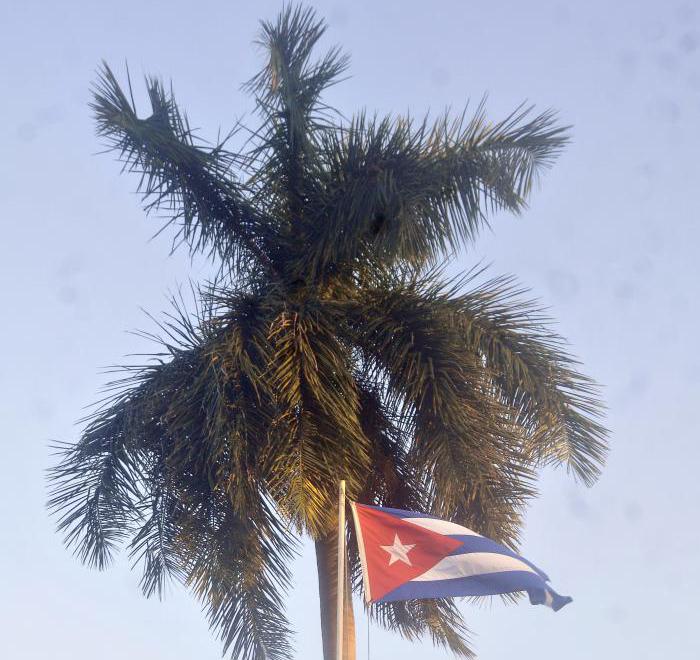
    In a significant political decision, Cuba’s Central Committee has unanimously voted to postpone the 9th Communist Party Congress originally scheduled for April 2026. The 11th Plenary Session, conducted virtually on December 13, concluded that the nation must prioritize addressing its severe economic challenges over political gatherings.

    The postponement proposal originated from Army General Raúl Castro Ruz, revolutionary leader and former president, who emphasized the revolutionary principle of always choosing what best serves Cuba’s interests. His recommendation, presented by current First Secretary and President Miguel Díaz-Canel Bermúdez, argued that all national resources and cadre energy should be directed toward resolving pressing economic problems rather than congress preparations.

    The decision reflects Cuba’s deteriorating economic situation amid what officials describe as an intensified U.S. blockade and ongoing media warfare. The Plenary Session identified several immediate priorities: refining the government’s economic program to correct distortions, implementing approved economic measures, ensuring the 2026 budget addresses popular needs and national defense, and strengthening support for regions devastated by recent natural disasters.

    President Díaz-Canel outlined additional critical objectives, including enhancing youth participation in national development and intensifying ideological and cultural efforts to counter what he characterized as anti-Cuban disinformation campaigns. The leadership called for united action to boost production, generate income, and multiply successful economic experiences while eliminating bureaucratic inertia and pessimistic thinking.

    The postponed congress will now focus on 2026 recovery efforts, coinciding with the centenary celebration of Fidel Castro’s birth, which officials hope to honor through tangible economic improvements. The resolution reaffirmed confidence in Cuba’s capacity for self-emancipation through dedicated effort, citing ongoing recovery work in eastern provinces following Hurricane Melissa as evidence of the population’s resilience.

    The statement concluded with revolutionary rhetoric, describing the Cuban people as heir to José Martí’s tradition and faithful to Fidel and Raúl Castro’s teachings, capable of daily creative resistance against external pressures and economic siege.
  • Politic : 3rd meeting of the OAS Group of Friends of Haiti

    Politic : 3rd meeting of the OAS Group of Friends of Haiti

    Washington D.C. witnessed a significant diplomatic gathering on December 11, 2025, as the Organization of American States convened the third meeting of its Group of Friends of Haiti. The session featured Laurent Saint-Cyr, President pro tempore and Coordinator of Haiti’s Transition Council, as special guest, marking a pivotal moment in international support for the Caribbean nation.

    The assembly conducted a comprehensive review of recent developments following OAS Secretary General Albert Ramdin’s fact-finding mission to Haiti. Delegates examined progress on the established roadmap while strengthening coordination mechanisms between the OAS, United Nations, CARICOM, and Haitian transitional authorities. Participants unanimously emphasized the critical importance of Haitian-led processes encompassing security initiatives, governance frameworks for 2026, and preparations for credible electoral proceedings.

    President Saint-Cyr acknowledged the OAS’s steadfast solidarity while declaring the joint roadmap had entered a decisive implementation phase. He identified security restoration as the nation’s paramount priority, stressing the urgent need to transform international commitments into concrete actions. “The magnitude of needs demands expanded, immediate, and sustained engagement,” Saint-Cyr asserted, calling upon the entire diplomatic group to intensify support measures.

    The transitional leader specifically highlighted the essential deployment of the Gang Repression Force (FRG) as imperative for ensuring successful elections. Both OAS and Inter-American Development Bank representatives reaffirmed their commitment to supporting Haiti’s National Identification Office in modernizing electoral registers and enhancing technical capacities for free, inclusive voting processes. Additional priorities included developing modern prison infrastructure and reintegrating children forcibly recruited by armed groups.

    Secretary General Ramdin pledged continued close collaboration with Haitian authorities and international partners, particularly focusing on security enhancement, governance strengthening, and national identity card issuance—fundamental prerequisites for democratic elections. “Our collective efforts remain dedicated to achieving the peace, stability, and democratic renewal that the Haitian people rightfully deserve,” Ramdin affirmed.

    Concluding the meeting, Saint-Cyr reiterated the Transitional Council’s determination to restore security, execute the roadmap, organize elections, and protect vulnerable populations while acknowledging that “Haiti cannot overcome challenges of this magnitude without international partnership.”

  • Thomson Fontaine re-elected political Leader of United Workers Party

    Thomson Fontaine re-elected political Leader of United Workers Party

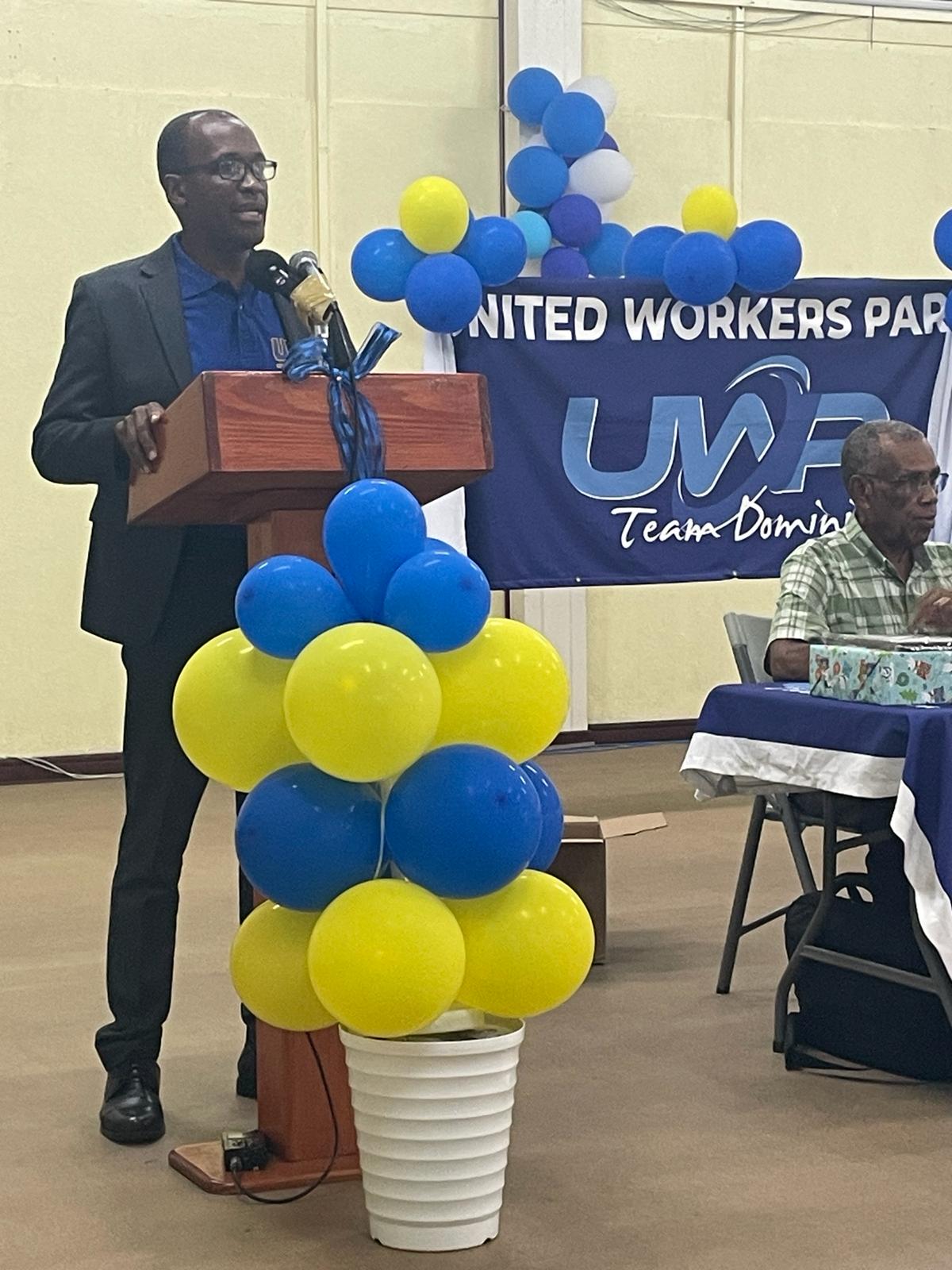
    In a closely contested internal election, Dr. Thomson Fontaine has been reaffirmed as the Political Leader of the United Workers Party (UWP), securing his position with a narrow margin of 83 votes against challenger Pastor Randy Rodney’s 73 votes. The leadership decision emerged from the UWP Delegates Conference convened earlier this evening, marking a critical moment for the party’s future direction.

    The conference also resulted in the election of several other key officials who will comprise the party’s executive leadership. Claudius Sanford ascends to the role of President, with Birney Ryan elected as Vice President. Nicolas George assumes the responsibilities of General Secretary, supported by Walter Greenaway as Assistant General Secretary.

    Financial stewardship will be handled by Ken Joseph as Treasurer, assisted by Erasmus Laurent as Assistant Treasurer. Glenroy Cuffy has been appointed Public Relations Officer, while Dr. MacDonald Thomas takes on the crucial role of International Secretary, indicating the party’s focus on global engagements.

    Additionally, the conference appointed three Trustees to oversee party governance: Norris Prevost, Jno-Finn, and Vincent Dupuis. This newly formed leadership team faces the immediate task of unifying the party following a competitive election and preparing for upcoming national political challenges.

  • Gonsalves declines to explain why voters rejected his 2-for-1 offer

    Gonsalves declines to explain why voters rejected his 2-for-1 offer

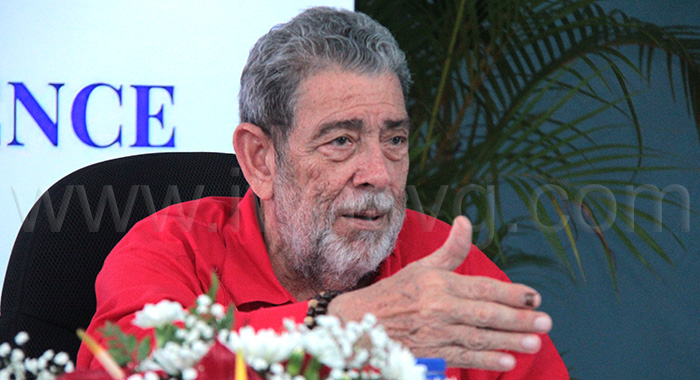
    Following a seismic political shift in St. Vincent and the Grenadines, former Prime Minister Ralph Gonsalves has firmly declined to conduct any public analysis of his Unity Labour Party’s (ULP) catastrophic electoral performance on November 27th. The 79-year-old political veteran, who governed for an uninterrupted quarter-century, now finds himself leading an opposition reduced to a single parliamentary seat after the New Democratic Party (NDP) secured a stunning 14-1 victory.

    At a press conference in Kingstown, Gonsalves outlined his opposition strategy without addressing the underlying causes of his party’s collapse. “The opposition will oppose matters that are not in the interest of the people,” he stated, committing to proposing alternatives, exposing governmental wrongdoing, and seeking constitutional and legal avenues to challenge the administration.

    When pressed by journalists about his failure to anticipate the landslide defeat despite his reputation for political foresight, Gonsalves responded with philosophical detachment. “Sometimes, as the wheels of competitive politics turn, you win some, you lose some,” he remarked, acknowledging only that party officials are “analyzing our loss” privately.

    The former leader pointedly refused to engage in what he termed “academic analysis or any analysis in the science of psephology” publicly, despite his background as a political scientist. Instead, he emphasized focusing on party renewal and strategic repositioning. “The proof of the pudding is in the eating,” Gonsalves asserted, suggesting that the party’s actions in coming years would demonstrate their recovery efforts more effectively than any immediate explanation.

    Gonsalves drew historical parallels to contextualize his defeat, noting that the NDP itself had experienced significant electoral declines in previous decades. He suggested that similar patterns might emerge for the current governing party, stating that if the NDP follows historical trends, they could see their support diminish substantially by the next electoral cycle.

    The veteran politician assured constituents and international observers that he remains fully equipped for his new role as opposition leader. “My head is very clear on all the issues, absolutely clear,” he affirmed, dismissing suggestions that he might become a merely transitional figure. He distinguished between ‘transitioning to a higher plane’ of political engagement and simply ‘marking time,’ asserting that his party intends to actively score political runs rather than merely occupy the parliamentary crease.

  • NDP accused of bonus salary ‘deception’

    NDP accused of bonus salary ‘deception’

    A political controversy has erupted in St. Vincent and the Grenadines as Opposition Leader Ralph Gonsalves has leveled accusations of “deception” against the newly-elected New Democratic Party (NDP) administration regarding its campaign promise to provide public sector workers with a “bonus salary.

    The dispute centers on pre-election commitments made by then-opposition leader Godwin Friday, now Prime Minister, who presented a pledge card on October 1 outlining four key promises his party intended to fulfill within 60 days of taking office. Among these pledges was a commitment to “provide salary bonuses to all public servants” to address the ongoing cost-of-living crisis.

    However, confusion emerged when two distinct versions of the NDP’s pledge card surfaced publicly. One version explicitly promised “A Bonus Salary” with the elaboration “A double payment for all public service salaries” within the first month of taking office. Another version referenced a bonus payment without the “double payment” specification.

    The situation intensified when NDP Public Relations Officer and Junior Education Minister Lavern King attempted to clarify the party’s position on December 10, stating that the promise was always for a “bonus payment” rather than a full double salary. She attributed any suggestions of a double payment to “election exuberance” and emphasized that the 60-day timeline, rather than a December deadline, remained the official framework.

    Gonsalves, speaking at a December 10 press conference, rejected these explanations as linguistic manipulation. He argued that the phrase “bonus salary” clearly indicated an additional month’s pay rather than a smaller bonus amount. The opposition leader contrasted this with the 3% Cost of Living Allowance for three months that his administration had provided to public servants before the election, which the NDP had criticized as insufficient during their campaign.

    The controversy has sparked significant public debate across social media and radio programs, with many public sector workers expressing confusion and disappointment about the apparent backtracking on what they understood to be a commitment to a full additional month’s salary.

  • EDITORIAL: Campaign financing – A new political economy

    EDITORIAL: Campaign financing – A new political economy

    The 2025 electoral cycle across the Caribbean nations of Trinidad and Tobago, Jamaica, St Vincent and the Grenadines, and Saint Lucia has been marked by campaigns of unprecedented scale and extravagance, rivaling major concert events in their production value. This phenomenon has raised critical questions about the sources of funding for these political spectacles, complete with massive quantities of promotional materials and entertainment services.

    Political analysts and transparency advocates warn that these increasingly costly campaigns pose a fundamental threat to democratic integrity, creating pathways for corruption and money laundering while simultaneously fostering an ‘election economy’ that temporarily boosts local businesses through massive spending on performers, production crews, catering services, and various vendors.

    The Organization of American States (OAS), which has consistently monitored elections throughout the CARICOM region, has repeatedly called for comprehensive campaign finance legislation to ensure transparency and accountability. Their recommendations for Saint Lucia specifically include prohibiting anonymous and foreign contributions, establishing regulatory bodies, mandating public disclosure of funding sources, and implementing measures to address gender inequality in political financing.

    UN Women has emphasized the global consensus on creating equitable conditions for female candidates, noting that financial disparities in political campaigns have created significant barriers to women’s participation. Despite these international calls for reform, successive administrations in Saint Lucia have failed to implement meaningful changes, ignoring both OAS recommendations and earlier constitutional reform proposals dating back to 2011.

    The current system allows major political parties to guard their funding sources as closely held secrets, with donors ranging from business interests and expatriates to corporations, overseas financiers, and potentially even criminal networks operating without scrutiny. This absence of regulatory frameworks means parties face no limitations on fundraising or expenditures, creating an environment where policymaking becomes susceptible to influence from major donors and organized crime.

    Transparency advocates argue that genuine anti-corruption efforts must begin with campaign finance reform, implementing greater accountability measures that would rebuild public trust and counter the perception that politicians are effectively for sale. Such reforms should be complemented by strengthened enforcement of existing integrity legislation and extended oversight to include party finance committees.

    The fundamental principle that ‘Saint Lucia is not for sale’ must extend beyond foreign investment concerns to encompass all aspects of democratic processes, ensuring that elections, voters, parties, and candidates remain free from financial coercion and undue influence.

  • Chili staat voor scherpe ruk naar rechts bij presidentsverkiezingen

    Chili staat voor scherpe ruk naar rechts bij presidentsverkiezingen

    Chile stands at a pivotal political juncture as citizens head to the polls today for a decisive presidential runoff election that could mark the most significant rightward shift since the end of military dictatorship in 1990. The contest pits radical right Republican Party leader José Antonio Kast against left-wing governing coalition candidate Jeannette Jara of the Communist Party.

    Approximately 15.6 million eligible voters are participating in Chile’s first mandatory-vote presidential election, introducing additional uncertainty about the final outcome. Polling stations will close at 6:00 PM local time, with preliminary results expected shortly thereafter.

    Despite finishing second in the first round, Kast has gained momentum through consolidated support from eliminated right-wing candidates. Analysts project he may surpass the 50 percent threshold required for victory. Jara, who won the initial round, faces diminishing prospects due to fragmentation among left-wing factions and growing voter dissatisfaction.

    The election campaign has been dominated by crime and security concerns, transforming public discourse despite Chile remaining one of Latin America’s safer nations. Increased organized criminal activity and illegal immigration have propelled these issues to the forefront. Kast has capitalized on these anxieties with a hardline security agenda promising to restore “order and trust.

    These themes have burdened incumbent leftist President Gabriel Boric, who struggles with low approval ratings. His administration’s measures—including additional police resources and military deployment along the northern border—have failed to satisfy many constituents.

    Financial markets have responded favorably to Kast’s potential victory, with investors anticipating market-oriented reforms, deregulation, and pension system adjustments. Following the first round, both the Chilean peso and stock market recorded gains.

    However, critics warn of societal consequences should the radical right candidate prevail. Political analysts interpret his rise as reflecting profound distrust in traditional politics and escalating demands for security. With a substantial portion of voters still undecided or considering blank ballots, the outcome remains uncertain until the final moments. What remains clear is that Chile faces a political crossroads that could determine the nation’s trajectory for years to come.

  • Clash of views over Economic Diversification and Growth Fund Bill

    Clash of views over Economic Diversification and Growth Fund Bill

    A significant political controversy has emerged in Barbados regarding the Economic Diversification and Growth Fund Bill, pitting legal experts against government officials in a heated debate over fiscal management and economic development.

    Former senator and prominent attorney Tricia Watson has launched scathing criticism against the proposed legislation, characterizing it as fundamentally flawed and inadequate for managing public resources. Watson specifically condemned the bill’s vague terminology, particularly the undefined parameters of what constitutes ‘real and substantial economic presence’ and ‘real and substantial economic activity’ for qualifying companies. She emphasized that the legislation’s lack of precise definitions creates substantial loopholes that could enable misuse of public funds.

    The controversial bill, which underwent parliamentary debate last week, proposes allocating $225 million from the Consolidated Fund over a three-year period, with annual disbursements of $75 million. Watson highlighted multiple deficiencies in the proposed framework, including insufficient oversight mechanisms, absence of financial disclosure requirements for applicant companies, and questionable provisions granting ministers authority to enter into funding agreements without standard contractual safeguards.

    In a robust defense of the legislation, Minister of People Empowerment and Elder Affairs Kirk Humphrey presented the bill as essential for Barbados’ economic future. Humphrey outlined specific eligibility criteria, noting that companies must commit to creating at least 100 sustainable jobs for Barbadians maintained for a minimum of seven years. The Minister emphasized that funding would be contingent on measurable outcomes, including foreign exchange generation, tax compliance, and long-term operational commitment to Barbados.

    Humphrey addressed concerns about ministerial authority by explaining that decisions would be guided by a multi-agency committee comprising key economic officials, including the Director of Finance and Economic Affairs, the Central Bank Governor, and CEOs of Invest Barbados and Export Barbados. He characterized the $225 million allocation as a targeted, time-bound investment designed to strengthen economic resilience rather than an open-ended commitment.

    The debate has raised fundamental questions about balancing economic development needs with transparent governance practices, with both sides appealing to public interest while offering contrasting visions of responsible fiscal management.

  • PM Warns Police Will Act if Unrest Erupts in Old Road

    PM Warns Police Will Act if Unrest Erupts in Old Road

    Prime Minister Gaston Browne has delivered a firm directive to residents of Old Road, cautioning that law enforcement will swiftly intervene should any form of civil unrest or unlawful behavior emerge in the community. The Prime Minister emphasized that while peaceful protest remains a protected democratic right, his administration will not tolerate actions that jeopardize public order or critical national infrastructure.

    During his appearance on the Browne and Browne radio program broadcast by Pointe FM, the leader articulated a clear distinction between lawful expression and dangerous incitement. “We cannot allow people to become lawless and to destroy our country,” Browne stated, specifying that acts of obstruction, vandalism, or violence would elicit immediate police response.

    The Prime Minister contextualized his warnings within what he described as an escalating pattern of political provocation. He contended that inflammatory rhetoric creates conditions that embolden criminal behavior, noting that “when you incite people and encourage confrontation, you create an environment in which lawlessness can flourish.” Browne stressed that such instigation places both communities and public assets at significant risk.

    Addressing recent enforcement operations in the Old Road and Morris Bay regions, the Prime Minister dismissed allegations of political motivation behind these actions. He asserted that planning and regulatory statutes apply uniformly to all citizens, regardless of political affiliation. “No one is above the law,” Browne declared, emphasizing that both elected officials and ordinary citizens must adhere to development and public-order regulations.

    These statements arrive amid heightened political tensions following regulatory actions at Morris Bay and the suspicious fire that destroyed fiber-optic materials belonging to the Antigua Public Utilities Authority. While not directly attributing blame for the fire, Browne warned that incitement carries consequential accountability. “People must understand that words matter,” he remarked. “You cannot encourage disorder and then pretend you bear no responsibility for what follows.”

    The government’s foremost priorities, according to Browne, include maintaining public calm, safeguarding national infrastructure, and ensuring that disputes are resolved through lawful democratic channels rather than street confrontations.

  • Public Servants can expect first December Salary by Next Week, Second Before Month-End

    Public Servants can expect first December Salary by Next Week, Second Before Month-End

    In a significant development for Antiguan public sector employees, Prime Minister Gaston Browne has announced an accelerated salary payment schedule that will see government workers receiving their December remuneration ahead of schedule. During his weekly appearance on the Browne and Browne show aired on Pointe FM, the Prime Minister revealed that civil servants would obtain their regular monthly compensation “probably by maybe next weekend.

    Furthermore, in a move addressing long-standing financial obligations, Browne disclosed that public servants will receive an additional payment before December concludes. This secondary disbursement will be specifically allocated toward settling outstanding retroactive payments owed by the administration.

    The Prime Minister quantified the financial magnitude of this initiative, stating, “After that second salary, which would count as back pay, the government would have spent about $100 million paying back pay to civil servants.” This substantial financial injection represents a concerted effort by the administration to resolve accumulated arrears from previous periods while simultaneously maintaining current payroll commitments without interruption.

    Browne emphasized his government’s dual-focused approach of honoring obligations to public sector workers while preserving national fiscal stability. This payment strategy forms part of broader governmental efforts to systematically address financial arrears owed to public-sector employees, demonstrating the administration’s commitment to resolving historical payroll liabilities through structured financial planning.