The upcoming parliamentary session is set to begin on November 20, with Governor-General Sir Rodney Williams delivering the highly anticipated Speech from the Throne. This ceremonial address will outline the government’s legislative priorities for the forthcoming year, setting the tone for a packed parliamentary agenda. Maurice Merchant, the Director General of Communications, confirmed the date during Thursday’s post-Cabinet press briefing, emphasizing that the session will lead up to Budget Day on December 4. The Speech from the Throne is expected to highlight several pivotal initiatives, including legislation aimed at protecting the elderly, reforming mental health services, and regulating the licensing of elderly care homes. These bills are slated for presentation in the first quarter of 2026. The annual address serves as the formal commencement of a new parliamentary session, offering a comprehensive overview of the government’s policy direction and legislative objectives for the year ahead.
分类: politics
-

Saint Lucia, Taiwan finalise US$20 M housing loan agreement
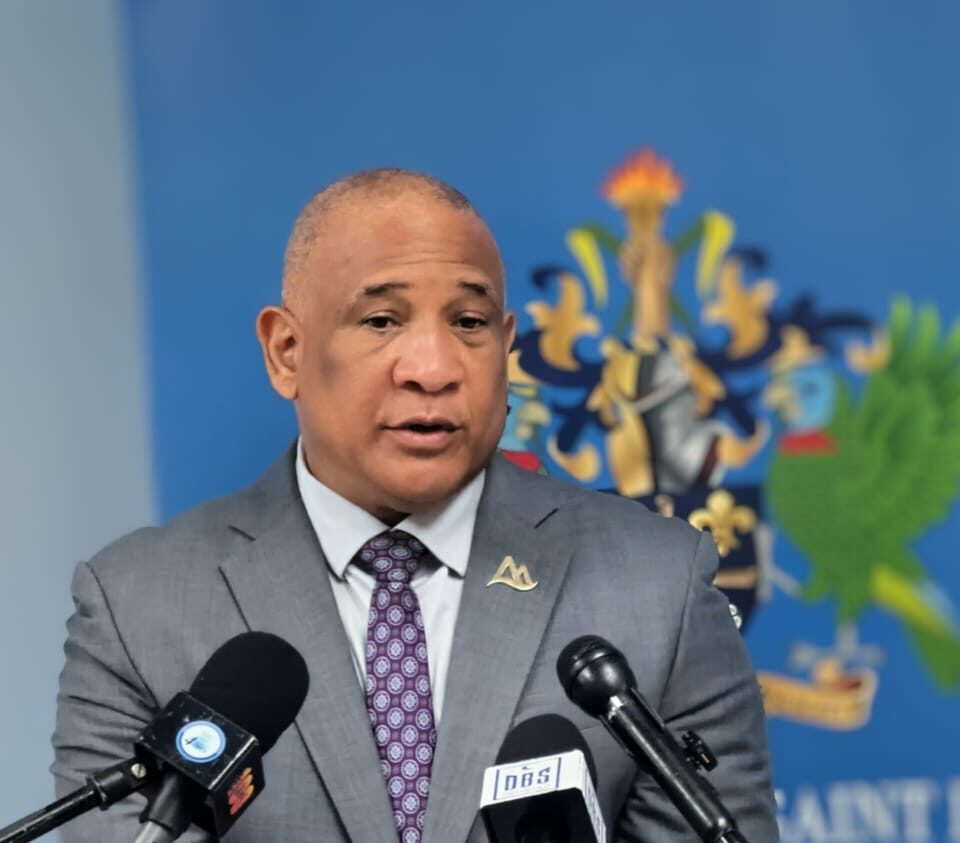
The Government of Saint Lucia has successfully negotiated a US$20 million loan from the Export-Import Bank of the Republic of China (Taiwan) to bolster affordable housing and infrastructure projects. This financial agreement, facilitated through the Saint Lucia Development Bank (SLDB), aims to provide critical support to low- and middle-income families across the nation. Prime Minister Philip J Pierre announced the finalized deal during a pre-cabinet press briefing on November 3, emphasizing that all terms and conditions of the loan have been agreed upon. ‘We’ve completed that arrangement,’ Pierre stated, addressing concerns about the interest rate spread. ‘Very soon, prospective homeowners in Saint Lucia will have access to US$20 million through on-lending from the SLDB.’ The initiative is expected to benefit public sector workers, with the government already implementing measures such as waiving stamp duty on mortgages up to $400,000 and removing VAT on building materials to encourage housing development. However, the government has yet to provide a specific timeline for when the funds will be accessible to borrowers.
-

4 sets of responses to Trump’s request
In a recent development, former U.S. President Donald Trump’s proposal to deploy military assets in Grenada has sparked a heated debate, revealing four distinct perspectives within the region. These ‘camps’ reflect varying degrees of support, skepticism, and outright opposition to the initiative, each rooted in different moral, strategic, and practical considerations. Ian Baptiste, a keen observer of the situation, has categorized these responses to provide a clearer understanding of the ongoing discourse. The first camp, labeled ‘Absolutely Yes,’ comprises individuals who fully endorse Trump’s narrative that Venezuela is a narco-state necessitating military intervention. Trinidad and Tobago’s Prime Minister Kamla Persad-Bissessar is a prominent advocate of this stance. However, critics argue that this position lacks credibility, as there is no concrete evidence to support the claim that Venezuela is a narco-state, nor has it been demonstrated that non-violent alternatives have been exhausted. The second camp, ‘We Don’t Have a Choice,’ reflects a pragmatic approach. Members of this group believe that Grenada, given the overwhelming power of the U.S., has no viable option but to comply. They suggest leveraging the situation to secure economic benefits, such as reduced tariffs or improved visa access. However, this stance is criticized for sidestepping moral concerns, including the betrayal of Venezuela and potential regional security risks. The third camp, ‘We Don’t Have the Infrastructure,’ takes a more nuanced position. While acknowledging the ulterior motives behind Trump’s request, such as control over Venezuela’s resources, they argue that outright refusal is unwise. Instead, they propose citing a lack of technical capability as a diplomatic way to decline. Critics, however, warn that this approach could backfire, as the U.S. might easily provide the necessary infrastructure. The fourth camp, ‘Absolutely No,’ represents a moral stand. Members of this group, including Baptiste himself, view the issue as a matter of principle rather than practicality. They argue that acquiescing to Trump’s request would betray fundamental values such as sovereignty, peacemaking, and loyalty to allies. Despite potential economic repercussions, they advocate for standing firm on these principles. This multifaceted debate underscores the complex interplay of power, morality, and strategy in international relations, as Grenada navigates a challenging geopolitical landscape.
-

Reparatiecomité wil gesprek met koning over herstel slavernijverleden
The Committee for Reparations of Suriname’s Slavery Past has formally submitted a petition to the Surinamese government, urging structured dialogue on recognition, apologies, and reparations. Acting President Gregory Rusland received the petition at the Vice President’s Office on Wednesday. The move comes ahead of the state visit of King Willem-Alexander and Queen Máxima of the Netherlands, scheduled for December 1–3, 2025. The petition, supported by descendants of enslaved Africans and Indigenous communities, calls for immediate action to address the unresolved legacy of Dutch colonialism and slavery. It emphasizes the need for a unified approach to material and immaterial reparations, aligned with the CARICOM Ten-Point Plan and international frameworks such as the 2001 UN Durban Declaration and the 2005 UN Basic Principles on Reparations. The committee stresses that reparations extend beyond financial compensation, encompassing restitution, rehabilitation, truth-seeking, guarantees of non-repetition, and the structural development of affected communities. It criticizes the lack of concrete measures following apologies issued by the Dutch government and monarchy in recent years. The petition requests that descendants and Indigenous representatives be included in the official committee preparing for the royal visit. It also seeks a formal dialogue with the King during the visit, including a public moment where he reiterates his 2023 apology in Suriname and outlines a path toward reparations. Acting President Rusland expressed full understanding of the committee’s efforts, calling the issue ‘of great importance’ and promising to discuss the petition with President Jennifer Simons upon her return. The petition follows meetings on October 11 and November 1, 2025, where the committee drafted a reparations program and agreed to speak ‘with one voice’ to stakeholders. It highlights the inadequacy of apologies without reparations and calls for measurable actions to improve the lives of affected communities. The committee also urges recognition from sectors and institutions that have yet to acknowledge their historical roles, such as shipping companies, insurers, universities, and families. It references international and regional processes, including CARICOM, the African Union, and the UN Decade for People of African Descent, as guiding frameworks for justice and development.
-

Abinader leads parade in San Cristóbal honoring 181 years of the Dominican Constitution
San Cristóbal, the historic birthplace of the Dominican Republic’s first Constitution, hosted a grand ceremony to mark the 181st anniversary of this pivotal document. President Luis Abinader presided over the event, which underscored the nation’s unwavering dedication to sovereignty, democracy, and institutional resilience. The celebration featured a vibrant civic–military–police parade and drew participation from hundreds of students representing over 90 local schools, symbolizing the unity and pride of the Dominican people.
Juan Pablo Uribe, head of the Permanent Commission of Patriotic Anniversaries (CPEP), delivered a poignant address, emphasizing the 1844 Constitution’s foundational role in securing Dominican independence. He traced the evolution of constitutional principles over the decades, affirming that the democratic values established nearly two centuries ago remain robust and relevant today.
The event also saw prominent local figures, including Governor Pura Casilla and Mayor Nelson de la Rosa, highlighting San Cristóbal’s unique historical significance. The gathering was further elevated by the presence of numerous ministers, military leaders, and senators, collectively paying homage to the nation’s enduring democratic heritage and fostering a sense of civic solidarity.
-

Carolina Mejía and Jorge Macri sign cooperation agreement between Santo Domingo and Buenos Aires
In a significant move to bolster institutional collaboration and sustainable urban growth, the mayor of the National District, Carolina Mejía, and the head of government of Buenos Aires, Jorge Macri, inked a comprehensive cooperation agreement. The signing ceremony, held at the Government House in Buenos Aires, marked a renewed commitment to fostering friendship and shared progress between the two capitals, a relationship that dates back to their initial twinning agreement in 1991.
Mayor Mejía highlighted the transformative potential of this four-year pact, which aims to enhance urban safety, drive technological innovation, stimulate local economies, promote tourism, ensure environmental sustainability, and implement inclusive social policies. The agreement outlines a series of initiatives, including technical exchanges, training programs, workshops, and joint projects, alongside coordinated participation in international city forums.
The signing coincided with Mejía’s visit to Buenos Aires for the 21st General Assembly of the Union of Ibero-American Capital Cities (UCCI) and the 56th Executive Committee meeting. This collaboration underscores the importance of cross-border partnerships in addressing contemporary urban challenges and fostering mutual growth.
-

Politic : The OAS presents the 3rd version of the Roadmap on Haiti
On November 4th, 2025, Albert R. Ramdin, Secretary General of the Organization of American States (OAS), presented the third version of the Roadmap for Stability and Peace in Haiti to the Permanent Council. This updated plan, estimated at $2.6 billion, aims to restore stability, foster development, and ensure prosperity in Haiti. The roadmap, which enjoys broad international support, was first introduced in August 2025. Ramdin emphasized the urgency of the situation, calling on member states and partners to transition from intentions to concrete actions that alleviate the suffering of the Haitian people and establish a foundation for stability, democracy, and hope under Haitian leadership with effective international coordination. He highlighted the pressing need to address the freedom with which gangs operate, urging accelerated coordination and deployment processes. The OAS continues to maintain close dialogue with Haitian leadership and coordinates with the UN, CARICOM, and key partners to translate Haitian priorities into operational and verifiable actions. The third version of the roadmap incorporates substantive inputs from member states, aligns with UN Security Council Resolution 2793, and establishes the Gang Suppression Force (GSF) to replace the Multinational Security Mission (MSS). It also creates the United Nations Support Office for Haiti (UNSOH) and assigns logistical responsibilities to the OAS in coordination with the Force’s Base Operational Framework (FRB). The update ensures institutional continuity by addressing potential power vacuums and reflects priorities identified by Haitian authorities, including outcomes from Prime Minister Fils-Aimé’s recent visit to the OAS.
-

Government Battles Ombudsman in Court Over Redistricting Legal Fees
A significant legal confrontation is unfolding between the Government of Belize and the Ombudsman, centering on the issue of transparency regarding legal fees associated with a redistricting case. The dispute began when social activist Jeremy Enriquez filed a Freedom of Information request to uncover the taxpayer-funded costs of the ongoing legal battle. His request was denied, prompting him to seek the intervention of Ombudsman Gilbert Swaso, who ruled that at least some financial details should be disclosed. However, the Attorney General (AG) has contested this decision, filing a motion in court to overturn the Ombudsman’s ruling. Senior Counsel Eamon Courtenay, whose firm is contracted by the AG’s ministry, explained the government’s stance, stating that the AG believes the Ombudsman’s interpretation is flawed and that such disclosures could hinder the hiring of law firms in the future. Courtenay refrained from sharing his personal opinion but acknowledged the AG’s concerns. This legal tug-of-war raises critical questions about accountability, transparency, and the balance of power in Belize’s governance.