分类: politics

  • The price of a passport: CBI and the fate of Labour ideology

    The price of a passport: CBI and the fate of Labour ideology

    The Eastern Caribbean stands at a critical juncture where economic necessity confronts political principle. For over two decades, St. Vincent and the Grenadines maintained a distinctive position by rejecting Citizenship-by-Investment (CBI) programs that neighboring OECS states embraced as fiscal strategy. This resistance stemmed from Prime Minister Ralph Gonsalves’ philosophical conviction that citizenship constitutes a civic relationship grounded in shared obligation rather than a marketable asset.

    Gonsalves, a Labour intellectual who integrated political philosophy into governance, argued that certain attributes of political life lose meaning when assigned monetary value. His vision positioned citizenship as a public trust and condition of democratic participation—a concept rooted in Labour traditions that emerged from British social democracy and Caribbean anti-colonial struggles.

    Now, with changing political leadership and mounting economic pressures, St. Vincent faces a transformative decision. The nation must choose between aligning with regional development models driven by fiscal pragmatism or preserving its distinctive conception of citizenship. This choice transcends mere policy adjustment, touching upon fundamental questions about national identity and the normative foundations of Labour ideology.

    Across the OECS, CBI programs have reshaped economies and governance structures. Nations like Dominica, Grenada, and St. Kitts and Nevis adopted these initiatives responding to climate vulnerabilities, limited economic diversification, and global market instability. The consequences extended beyond revenue generation: agricultural lands transformed into luxury developments, policy planning became tied to application cycles, and institutional priorities shifted toward marketing citizenship rather than community development.

    International attitudes have simultaneously hardened. The European Union’s 2025 ruling against Malta established that citizenship—particularly when granting supranational rights—cannot be reduced to commercial transactions. This external pressure forces small states to recalibrate citizenship regimes to maintain international legitimacy, often emphasizing mobility advantages over cultural heritage in national branding.

    St. Vincent’s deliberation occurs within this complex landscape. Embracing CBI promises fiscal relief and regional alignment but risks gradual ideological erosion. Maintaining resistance preserves civic ideals but demands navigating economic constraints without this revenue stream. The outcome will determine whether citizenship remains a marker of equal standing or becomes stratified by wealth—a decision with enduring implications for Labour ideology and democratic participation.


  • Senator Quinn-Williams Disputes Government’s Claim of Budget Surplus

    Senator Quinn-Williams Disputes Government’s Claim of Budget Surplus

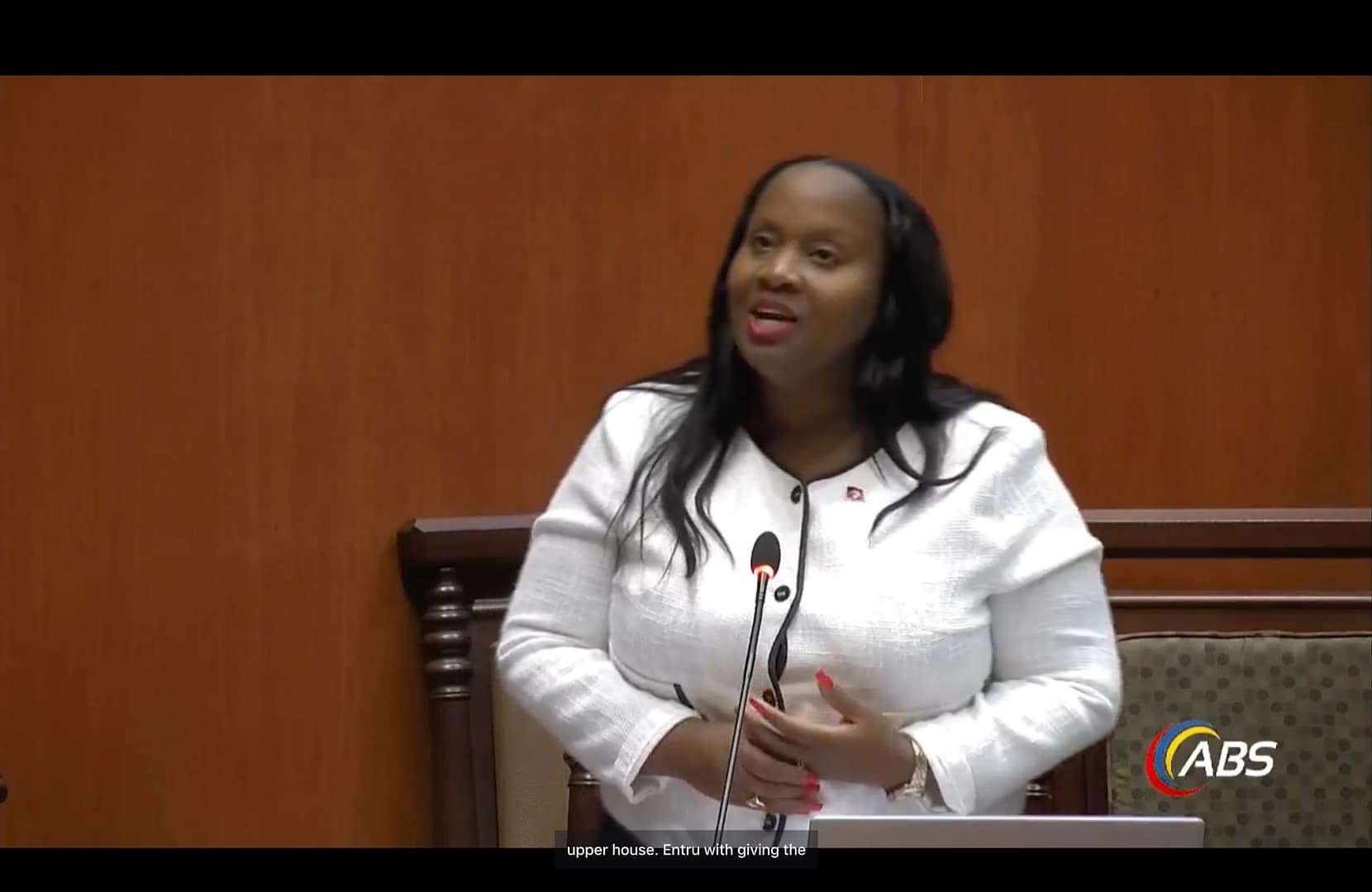
    A significant fiscal transparency debate unfolded in the Upper House on Wednesday as Opposition Senator Pearl Quinn-Williams directly contested the government’s assertion of achieving a budget surplus for 2026. During the heated Appropriations Bill deliberations, the senator presented a detailed counter-analysis suggesting the proclaimed surplus constitutes an accounting illusion rather than genuine fiscal health.

    Quinn-Williams systematically deconstructed the government’s financial narrative, emphasizing that the purported primary and overall surplus deliberately excludes substantial interest payments while simultaneously relying on extensive borrowing exceeding EC$1.6 billion. The senator articulated that authentic surplus conditions would necessitate complete expense coverage through revenue without requiring additional debt accumulation.

    The opposition legislator highlighted multiple inconsistencies between the surplus declaration and unresolved financial obligations, including outstanding public-sector back payments, pending salary upgrades, and deferred maintenance of government infrastructure. Quinn-Williams further reinforced her argument by referencing unpaid suppliers, landlords, and creditors, which she presented as contradictory evidence to the government’s robust fiscal health narrative.

    Government Senator Dwayne Williams interjected during the proceedings, accusing Quinn-Williams of public misinformation and defending the technical competence of Ministry of Finance personnel. The exchange prompted procedural interventions and points of order regarding parliamentary decorum.

    In her rebuttal, Quinn-Williams clarified that her critique targeted budgetary arithmetic and presentation methodologies rather than impugning the integrity of civil servants. She referenced official budget documentation and Hansard records to substantiate her analytical position. The Senate President ultimately ruled that numerical disagreements constituted legitimate parliamentary discourse rather than deliberate misinformation.

    The senator concluded by emphasizing that her interventions aimed to enhance fiscal transparency and ensure public accountability regarding borrowing practices, interest cost disclosures, and authentic revenue-expenditure balances. Legislative deliberations on the 2026 budget continued following this substantive exchange regarding the nation’s true financial standing.

  • Listening, adjusting, explaining Growth Fund Bill

    Listening, adjusting, explaining Growth Fund Bill

    In a significant response to mounting public concerns, Prime Minister Mia Mottley has introduced enhanced transparency measures for Barbados’ controversial Economic Diversification and Growth Fund legislation. The government’s move to incorporate additional oversight mechanisms demonstrates a notable shift toward addressing legitimate criticisms while maintaining the fund’s strategic objectives.

    The central amendment requires ministers to formally justify any deviation from recommendations made by the fund’s Advisory Committee or National Growth Council through parliamentary disclosure. This procedural safeguard directly addresses earlier concerns about ministerial discretion and accountability regarding the allocation of $225 million in public funds over three years.

    Criticism had emerged from multiple credible sources, including consumer advocate Tricia Watson, who initially raised alarms about potential foreign company benefits without adequate transparency. Academic experts Professor Don Marshall, Professor Troy Lorde, and economist Jeremy Stephen further questioned the legislation’s governance framework and developmental justification.

    Prime Minister Mottley firmly rejected characterization of the fund as a foreign corporate giveaway during her parliamentary address. She established clear criteria: beneficiaries must create substantial employment exceeding 100 jobs and generate foreign exchange for Barbados’ economy. Companies receiving support will pay taxes at a standardized 9% rate, addressing equity concerns.

    The administration contextualized the $75 million annual allocation against existing tax concessions totaling $875 million yearly across various sectors. Mottley emphasized this represents less than 10% of current waiver practices while aligning with international trends shifting from tax incentives toward direct investment support, citing OECD nations including the UK, Singapore, and United States.

    This development underscores the importance of robust public debate in policy formation. While the government’s responsive approach deserves recognition, the episode highlights the necessity for proactive consultation on major legislation involving substantial public resources. The iterative process between government explanation, critical challenge, and policy refinement ultimately strengthens economic governance and public trust.

  • Johnson Explains Decision to Leave Independent Senate Seat

    Johnson Explains Decision to Leave Independent Senate Seat

    In a significant political transition, Senator Kiz Johnson has articulated her rationale for abandoning an independent role to join the governing Antigua and Barbuda Labour Party (ABLP), emphasizing a critical shift from advocacy to actionable authority. Addressing the Upper House during the 2026 budget debate on Wednesday, Johnson revealed that her appointment as an independent senator in January 2023, while initially valuable for amplifying non-partisan citizen concerns, ultimately proved insufficient for driving tangible change.

    Johnson’s political evolution was catalyzed by her experiences representing the nation internationally and domestically, which illuminated the structural limitations of an appointed position. She reached a definitive conclusion that speaking on behalf of constituents ‘without the authority to act’ had reached its functional limit. This realization culminated in her formal resignation on October 24, 2024, followed by a successful campaign in the ABLP primary for St. Philip’s South on December 4, 2025.

    The Senator framed her move not as a rejection of her independent tenure but as a necessary response to a clear constituency mandate. Now seated with the government majority, Johnson underscored her commitment to transitioning ‘from influence to impact,’ crediting Prime Minister Gaston Browne for fostering a talent-inclusive and people-centered administration. She asserted that legislative seats are instrumental platforms for delivering measurable outcomes rather than mere honorific titles.

    Her declaration coincided with ongoing deliberations on the 2026 Appropriations Bill, where Johnson identified education and human-capital development as foundational to her legislative agenda, signaling her prioritized focus for substantive governance contributions.

  • Tienduizenden boeren protesteren in Brussel tegen Mercosur-verdrag

    Tienduizenden boeren protesteren in Brussel tegen Mercosur-verdrag

    Thousands of European farmers descended upon Brussels on Thursday, mobilizing agricultural vehicles in a massive demonstration against the proposed EU-Mercosur trade agreement. The protest coincided with a critical summit where European leaders are scheduled to deliberate on the contentious trade pact with the South American bloc.

    Organizers reported approximately 10,000 agricultural producers from 26 EU member states converged on the Belgian capital to voice their opposition. The timing was strategically aligned with high-level discussions concerning the European budget and the future trajectory of agricultural policy beyond 2027.

    At the heart of the protest lies farmers’ profound concerns regarding market competition. They argue the agreement—which would open European markets to agricultural products from Argentina, Brazil, Paraguay, and Uruguay—creates fundamentally unequal conditions. European producers fear being undercut by cheaper South American imports, potentially destabilizing price structures and threatening their economic viability.

    The demonstration featured a convoy of tractors and displayed numerous banners amplifying their message through Brussels’ streets. This mobilization represents the latest in a series of coordinated actions by agricultural organizations across the EU, opposing both the Mercosur agreement and proposed reforms to the Common Agricultural Policy.

    The Mercosur pact, subject to prolonged and intense negotiations, faces renewed scrutiny during current EU deliberations. France and Italy have already expressed reservations about supporting the agreement, influenced significantly by pressure from agricultural constituencies. This opposition casts considerable uncertainty on the ratification process.

    These developments highlight the growing tension between free trade ambitions and the protection of European agricultural interests. The coming days are poised to determine the fate of the Mercosur agreement and its acceptance within the European Union.

  • MIREX: Ministry of Justice will deepen protection of human rights

    MIREX: Ministry of Justice will deepen protection of human rights

    The Dominican Republic has embarked on a significant institutional reform with the establishment of a dedicated Ministry of Justice, a move hailed by government officials as a transformative advancement for human rights protection. During a commemorative panel in Santo Domingo marking International Human Rights Day, the Ministry of Foreign Affairs (MIREX) outlined the structural innovation at the core of this initiative: the creation of a specialized Vice Ministry focused exclusively on human rights.

    This institutional redesign aligns with the third axis of Dominican foreign policy and aims to bridge the gap between national policy implementation and international human rights commitments. Foreign Minister Roberto Álvarez articulated the government’s vision, emphasizing that human rights constitute the foundational principle of state action. He announced MIREX’s intention to forge a strategic partnership with the new ministry, reinforcing the nation’s dedication to democratic values and effective multilateral engagement.

    Panel participants, including representatives from MIREX, the Executive Branch, and the Attorney General’s Office, concurred that the ministry would address a longstanding institutional void in human rights management. The new framework is expected to enhance inter-agency coordination while improving mechanisms for violation prevention, accountability, and citizen access to justice. Minister Álvarez further called for collaborative support from public institutions, academic circles, the private sector, and civil society to build a comprehensive protection system.

    The announcement comes as the Dominican Republic strengthens its international human rights profile, having joined the UN Human Rights Council in 2023. This membership reflects the country’s growing commitment to safeguarding vulnerable populations and advancing human rights advocacy on the global stage.

  • BWU head stresses job security, fair treatment in public service

    BWU head stresses job security, fair treatment in public service

    During a parliamentary session on Tuesday, Barbados government backbencher Toni Moore delivered a critical assessment of the nation’s public service compensation system, acknowledging governmental progress while highlighting persistent administrative failures affecting contracted workers. The St George North MP, who also serves as general secretary of the Barbados Workers Union, characterized these issues as creating widespread discontent within the public sector.

    Moore recognized the current administration’s advancements compared to what she described as “nine years of zero movement” under previous leadership. However, she emphasized that fundamental problems continue to plague the system, particularly regarding delayed payments for acting positions, temporary appointments, and other entitled compensations.

    The parliamentarian illustrated the systemic nature of these failures by recounting specific instances where contractual employees experienced payment disruptions due to inter-ministerial oversights. “These are situations that are not acceptable,” Moore stated, “and they are situations in which the people who are responsible should be held accountable.”

    Moore joined opposition leader Ralph Thorne in criticizing the excessive reliance on contractual arrangements for positions that clearly require permanent staffing. She referenced approximately 720 workers who have remained on service contracts for over five years despite performing essential ongoing functions. This practice, initially justified during Barbados’ IMF program, now requires urgent reconsideration according to the MP.

    The legislator detailed how this contractual instability creates cascading consequences, denying workers job security, access to credit facilities, and proper national insurance coverage. She particularly emphasized how financial institutions hesitate to extend loans to workers without guaranteed income streams, creating additional financial hardships during periods like Christmas.

    Moore further warned that these practices undermine the sustainability of Barbados’ National Insurance system, potentially jeopardizing retirement security for thousands of workers. She questioned how the system could remain viable while excluding contractual workers from proper coverage.

    The MP concluded by expressing hope for prompt resolution of these issues, emphasizing that the current situation fails both workers and the national interest.

  • PM Briceño Eyes Transparency Law After Budna Investigation Fallout

    PM Briceño Eyes Transparency Law After Budna Investigation Fallout

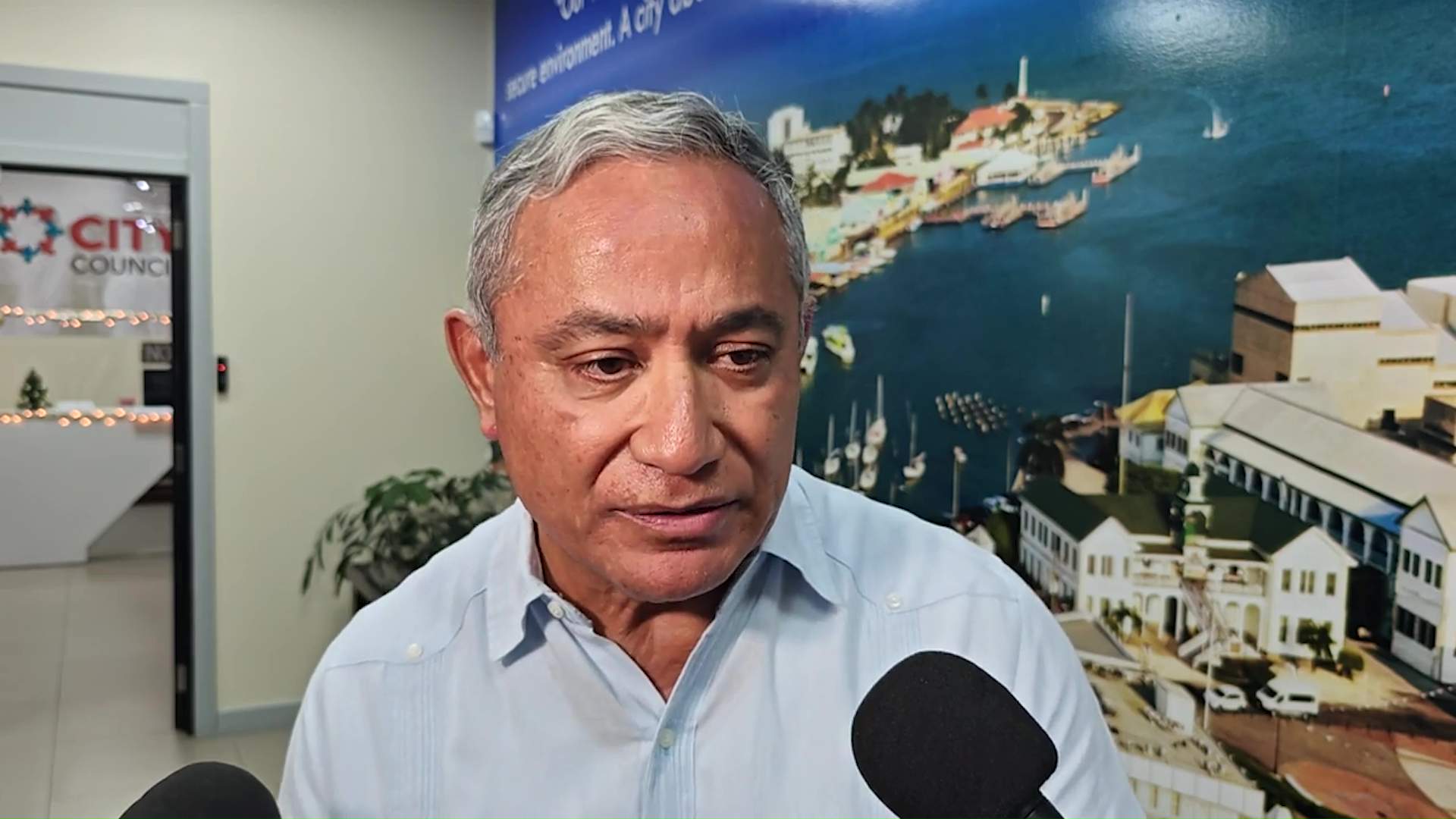
    In response to mounting public criticism over the mishandled investigation into Joseph Budna’s abduction case, the Belizean government under Prime Minister John Briceño is advancing legislative measures to enhance governmental accountability. Cabinet-level deliberations have focused on establishing an independent investigative mechanism, drawing inspiration from successful Caribbean models, with Jamaica’s system receiving particular attention.

    Prime Minister Briceño emphasized the administration’s commitment to developing a transparency framework that avoids political weaponization. “We’ve conducted extensive Cabinet discussions recognizing the need to examine effective Caribbean models rather than exclusively American approaches,” Briceño stated. “While many Belizeans are familiar with American television portrayals of law enforcement, we’re particularly interested in Jamaica’s successful implementation of independent oversight.”

    The proposed legislation aims to create safeguards preventing current and future governments from exploiting the investigative process for political targeting. Briceño reiterated this critical balance, noting that the system must maintain independence while preventing partisan manipulation against political opponents. The initiative represents a direct response to the Budna investigation fallout, which exposed significant deficiencies in current accountability mechanisms.

    This policy shift signals the administration’s attempt to restore public confidence through institutional reforms rather than temporary measures, potentially establishing new standards for governmental transparency in Belize’s political landscape.

  • Captain Soberanis Named Acting Coast Guard Commandant

    Captain Soberanis Named Acting Coast Guard Commandant

    In a significant leadership transition within Belize’s national security apparatus, Captain Gregory Soberanis has been designated as the Acting Commandant of the Belize Coast Guard. This interim appointment follows the reassignment of Rear Admiral Elton Bennett, the former Commandant, who has been elevated to the position of Chief Executive Officer within the Ministry of Home Affairs and Enterprise.

    The Ministry of National Defense and Border Security formally announced the strategic personnel shift this week, emphasizing its commitment to maintaining operational continuity. Captain Soberanis, who previously served as Vice Commandant, will helm the coast guard’s operations pending a formal confirmation process by Prime Minister John Briceño’s administration.

    Government officials expressed unequivocal confidence in Captain Soberanis’s capabilities to ensure both stability and effectiveness during this transitional phase. The ministry’s statement highlighted the critical nature of seamless leadership changes within institutions fundamental to Belize’s maritime security and border protection framework. This development represents the latest in a series of strategic appointments aimed at strengthening national security governance under the current administration.

  • Politic : Towards a strong and forward-looking Haitian diplomacy

    Politic : Towards a strong and forward-looking Haitian diplomacy

    PORT-AU-PRINCE, Haiti – In a landmark gathering at the Kinam Hotel on December 17, 2025, Haiti’s top leadership convened the nation’s entire diplomatic corps for a transformative conference aimed at reshaping the country’s international engagement. Prime Minister Alix Didier Fils-Aimé inaugurated the two-day 4th Conference of Haitian Ambassadors, themed “Haitian Diplomacy Serving National Priorities,” which brought together the highest echelons of Haiti’s transitional government and foreign service.

    The high-level assembly featured Laurent Saint Cyr, President pro tempore and Coordinator of the Transitional Council, alongside Council Advisors Leslie Voltaire, Smith Augustin, and Régine Abraham. Foreign Minister Jean-Victor Harvel Jean-Baptiste joined government officials, state dignitaries, and the complete roster of Haitian ambassadors, chargés d’affaires, and consuls stationed abroad. Representatives from the diplomatic corps accredited to Haiti also participated in the strategic dialogue.

    This conference initiates a comprehensive 25-year strategic roadmap for Haiti’s foreign policy, seeking to enhance coordination between the central administration and overseas missions while modernizing operational standards across diplomatic posts. Prime Minister Fils-Aimé opened proceedings by acknowledging the challenging environment in which diplomats operate, recognizing their efforts to maintain Haiti’s international standing amid severe security, humanitarian, and political crises.

    The Prime Minister delivered a forceful address outlining his administration’s methodical approach to national security, declaring: “My government is acting methodically, courageously, and consistently. Security remains the cornerstone of our actions—the fundamental prerequisite for national survival and dignity. Without security, there can be no functional state, viable economy, genuine democracy, or human dignity. Armed gangs represent not social actors but enemies of the Republic.” He challenged diplomatic personnel to embrace an active, strategic approach centered on mutually beneficial international partnerships.

    Transitional Council Coordinator Laurent Saint-Cyr echoed these sentiments while emphasizing the critical need for collective mobilization. He issued an urgent appeal to ambassadors to vigorously defend national interests through strengthened alliances and sacrificial commitment. Saint-Cyr identified four paramount priorities: security restoration, credible elections, humanitarian response, and economic recovery. He explicitly called for diplomats who demonstrate active engagement rather than passive observance, emphasizing solidarity and mission-focused dedication to restoring Haitian confidence and dignity.

    Foreign Minister Jean-Baptiste reinforced the vision for a coherent, proactive diplomacy aligned with national priorities, highlighting specific objectives including enhanced mission management, improved international perception, and consolidated global presence. The conference agenda addressed additional critical themes such as immigration policy, diaspora integration, diplomatic service reform, youth engagement, and increased women’s leadership within foreign policy decision-making.