分类: politics

  • STATEMENT: UWP on U.S. partial travel ban

    STATEMENT: UWP on U.S. partial travel ban

    The United Workers Party – Team Dominica has expressed profound concern regarding the recent imposition of a partial travel ban by the United States government targeting citizens of the Commonwealth of Dominica. This restrictive measure, affecting both immigrant and non-immigrant visa categories, has generated significant diplomatic unease between the two nations.

    The policy shift carries substantial implications for Dominican nationals pursuing educational opportunities, business engagements, medical treatments, and family reunification in the United States. Historically robust people-to-people connections between Dominica and the U.S. now face unprecedented strain due to these travel constraints.

    While acknowledging America’s sovereign prerogative in determining border security protocols, Team Dominica’s statement raises critical questions regarding governance deficiencies that potentially precipitated this diplomatic development. The opposition party emphasizes the public’s right to comprehensive transparency from the Dominica government concerning circumstances leading to the travel restrictions.

    Key demands presented to the Roosevelt Skerrit administration include:
    – Immediate public clarification regarding the rationale behind the U.S. decision
    – Expedited high-level diplomatic engagement with American authorities
    – Implementation of concrete corrective measures to reinforce confidence in Dominica’s Citizenship by Investment Program
    – Prioritization of national interests over political considerations

    The statement further emphasizes that ordinary Dominican citizens—including students, workers, and diaspora communities—should not shoulder consequences potentially stemming from administrative shortcomings in program oversight. Team Dominica has reaffirmed its commitment to safeguarding the international reputation and rights of Dominican citizens while pledging continued monitoring of the situation and support for legitimate efforts toward restriction removal.
  • PM Gaston Browne and Sir Rodney Williams tour ABDF hydroponics project and CHOGM planning

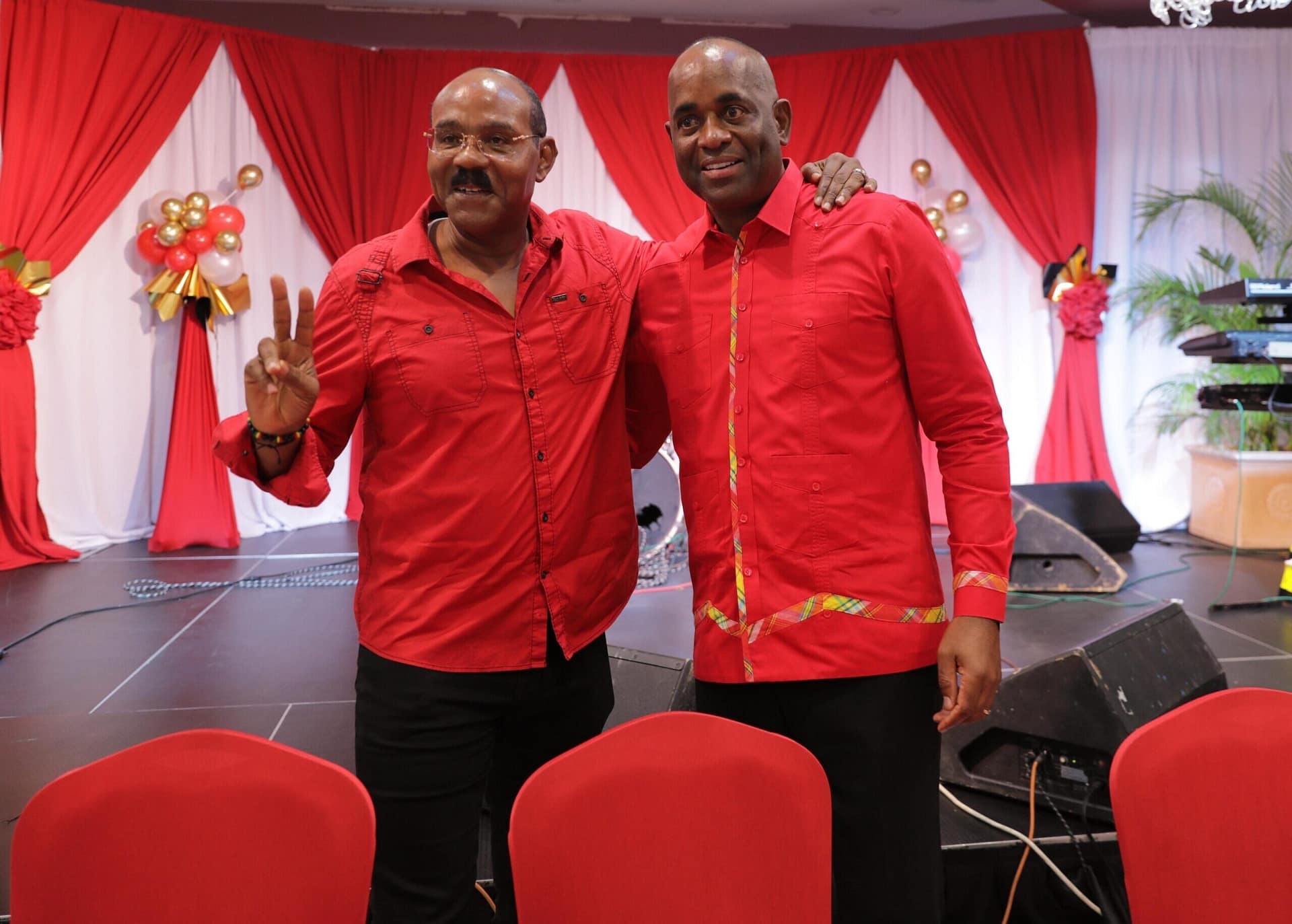
    PM Gaston Browne and Sir Rodney Williams tour ABDF hydroponics project and CHOGM planning

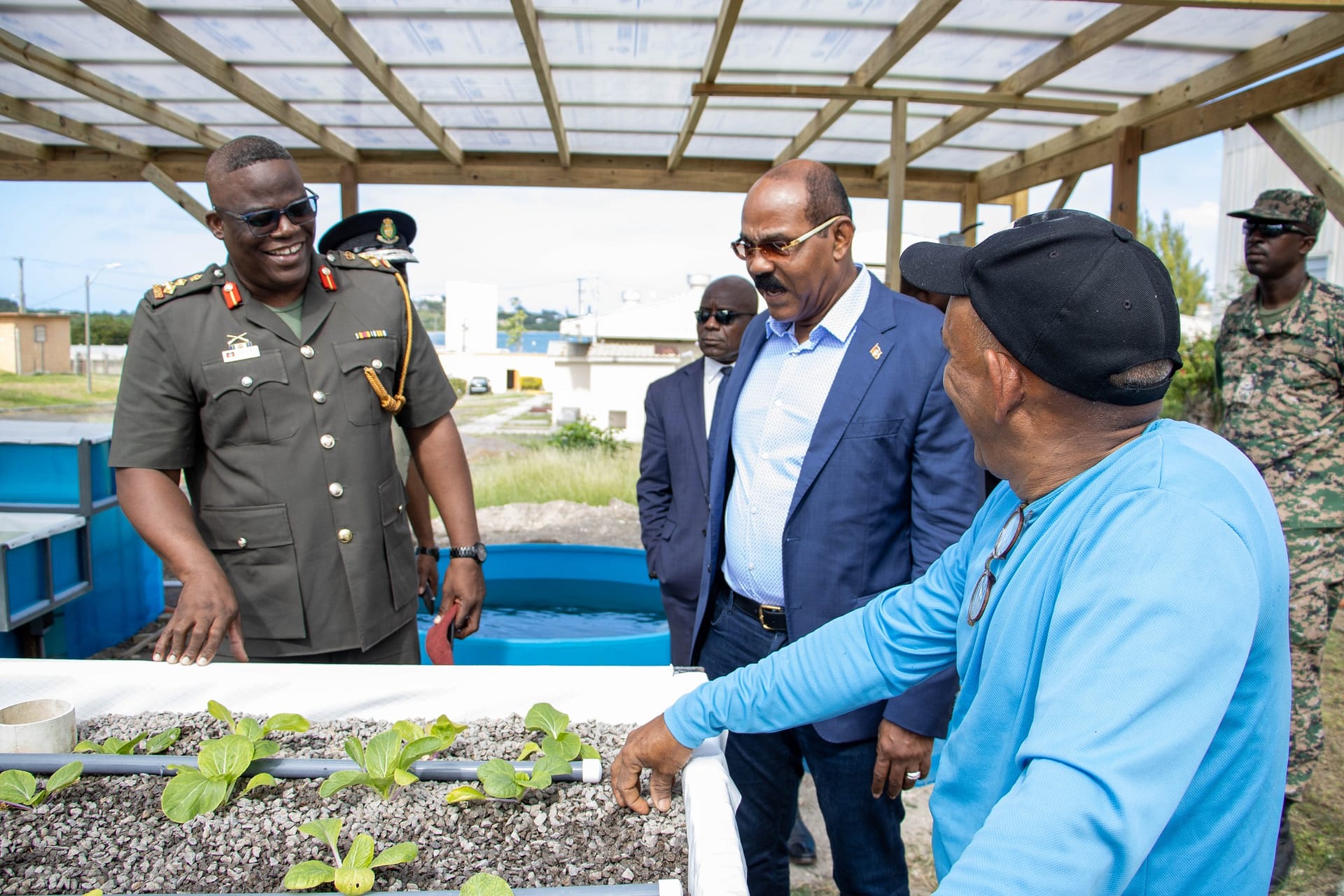
    In a significant demonstration of national priority alignment, Antigua and Barbuda’s highest leadership conducted a comprehensive inspection of the Defence Force’s multifaceted contributions to development. Governor-General Sir Rodney Williams and Prime Minister Gaston Browne personally assessed the military’s innovative hydroponics initiative, signaling strong governmental endorsement of this strategic program.

    Brigadier Telbert Benjamin, Chief of Defence Staff, personally guided the leadership through the advanced agricultural facility, detailing how the hydroponic farming project represents a paradigm shift in the nation’s approach to food sustainability. The project specifically addresses critical vulnerabilities in the regional food supply chain by implementing soil-less cultivation techniques that conserve water and maximize yield in climate-challenged environments.

    Concurrently, Prime Minister Browne examined preparations for the forthcoming Commonwealth Heads of Government Meeting (CHOGM), receiving detailed briefings on the Defence Force’s comprehensive logistical and security planning. The ABDF has assumed central responsibilities in coordinating this major international gathering, which will position Antigua and Barbuda at the forefront of regional diplomacy.

    Officials emphasized that these parallel initiatives reflect the evolving role of the military establishment beyond traditional defense functions. The Defence Force’s engagement in both agricultural innovation and international event management demonstrates institutional adaptability in addressing contemporary national challenges.

    The leadership visit underscored strategic commitments to reducing import dependency through technological agriculture while simultaneously enhancing the nation’s capacity to host significant global forums. This dual focus represents a holistic approach to national development that integrates food resilience with international diplomacy.

  • Antigua and Barbuda Confirms Transition from Cuban to Ghanaian Medical Professionals

    Antigua and Barbuda Confirms Transition from Cuban to Ghanaian Medical Professionals

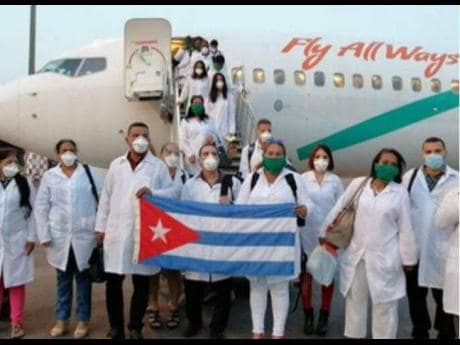
    The Antigua and Barbuda Cabinet has formally approved a strategic transition in international medical collaboration, replacing Cuban healthcare professionals with a newly recruited contingent of approximately 120 medical staff from Ghana. This significant workforce restructuring aims to strengthen the nation’s public health infrastructure while ensuring continuity of care.

    During Wednesday’s Cabinet session chaired by Acting Prime Minister Sir Steadroy Cutie Benjamin, officials confirmed the completion of an extensive recruitment campaign that will deploy Ghanaian doctors and nurses across the country’s healthcare facilities by year’s end. The move represents a carefully orchestrated shift in the nation’s approach to international medical cooperation.

    Communications Director Maurice Merchant emphasized that the government acknowledges with “deep appreciation” the substantial contributions made by Cuban medical professionals, particularly during periods of heightened strain on the national health system. Their service, he noted, has been recognized “with respect and gratitude” for strengthening healthcare delivery throughout the twin-island nation.

    The transition strategy has been designed to maintain uninterrupted essential health services while building a more sustainable, nationally managed healthcare workforce. This diplomatic realignment reflects the government’s commitment to maintaining positive international relations while pursuing long-term healthcare sustainability.

    Health authorities at the Sir Lester Bird Medical Centre are expected to provide additional details regarding the arrival timeline of Ghanaian medical professionals and the specific implementation plans for this carefully managed transition process.

  • Cabinet Confirms OECS Leaders Seeking Joint Clarity on U.S. Visa Restrictions

    Cabinet Confirms OECS Leaders Seeking Joint Clarity on U.S. Visa Restrictions

    Eastern Caribbean leaders have initiated coordinated diplomatic efforts to seek urgent clarification from Washington regarding recently imposed U.S. visa restrictions affecting their citizens. The Antigua and Barbuda Cabinet confirmed that Prime Minister Gaston Browne has personally engaged with fellow leaders from the Organisation of Eastern Caribbean States (OECS) who are similarly impacted by the new American proclamation.

    During Thursday’s post-Cabinet media briefing, Communications Director General Maurice Merchant revealed that high-level discussions are underway between affected nations. ‘The Honourable Prime Minister has held substantive discussions with his OECS counterpart, who is also named in this proclamation,’ Merchant stated. ‘Both leaders are currently focused on obtaining comprehensive clarification regarding the specific contents and implications of these restrictions.’

    The matter received significant attention during Wednesday’s Cabinet meeting, which was chaired by Acting Prime Minister Sir Steadroy Cutie Benjamin during Prime Minister Browne’s absence. The Cabinet received detailed briefings from Foreign Affairs Minister E.P. Chet Greene and Antigua and Barbuda’s Ambassador to the United States, Sir Ronald Sanders, regarding the diplomatic situation.

    Merchant emphasized the unified objective among OECS members: ‘Both leaders are determined to ensure that full visa access to the United States is reinstated for their citizens.’ This collective approach demonstrates regional solidarity in addressing what Caribbean nations perceive as a significant bilateral issue affecting their citizens’ mobility and diplomatic relations.

    The government has indicated that while OECS coordination is prioritized, broader CARICOM-wide consultations have not yet been initiated. Merchant noted, ‘We do not currently know what our CARICOM partners are thinking or doing regarding this matter.’ This suggests a phased diplomatic approach, beginning with regional allies most directly affected before potentially expanding to wider Caribbean coordination.

    Until formal clarification is received from U.S. officials, the Antigua and Barbuda government will maintain its current position as outlined in the Prime Minister’s initial public statement. No revised travel advisories will be issued to nationals pending further diplomatic developments. The Cabinet has committed to maintaining transparent communication with the public as discussions with American authorities progress.

  • Senator Kiz Johnson backs 2026 Budget, citing focus on education and entrepreneurship

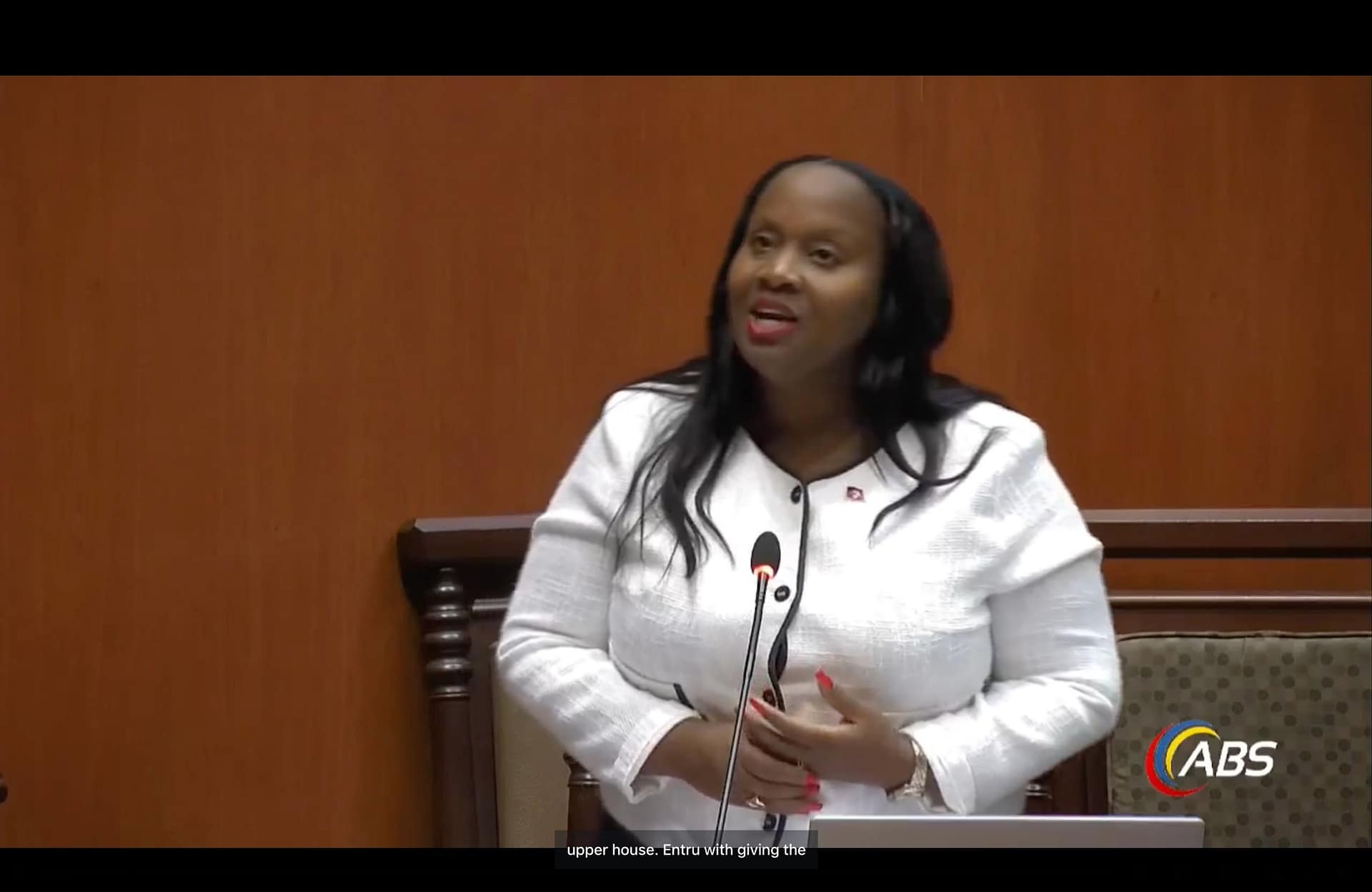
    Senator Kiz Johnson backs 2026 Budget, citing focus on education and entrepreneurship

    In a significant endorsement of national fiscal policy, newly appointed Senator Kiz Johnson has thrown her full support behind the 2026 Budget, characterizing it as a transformative investment in human capital development. During the Senate debate on the Appropriation Bill 2025, Johnson articulated a compelling vision for national progress through educational advancement and entrepreneurial support.

    The legislative debate revealed substantial financial commitments, with Johnson highlighting the landmark $220.1 million allocation for education as evidence of the administration’s dedication to long-term development strategies. The senator detailed several groundbreaking initiatives, including comprehensive coverage of CXC examination fees for both public and private school students, the implementation of tuition-free studies at the Antigua and Barbuda College of Advanced Studies commencing in 2026, and planned tuition-free programs at the University of the West Indies Five Islands Campus for qualifying nationals.

    Johnson particularly emphasized the strategic introduction of Bachelor of Laws degrees at UWI Five Islands through collaboration with the UWI Mona Faculty of Law, noting this development would significantly reduce financial burdens on families while simultaneously enhancing the nation’s professional capabilities.

    The senator provided substantive evidence of existing program success, referencing the Youth Empowerment and Education Programme which has benefited over 8,000 individuals since 2016 while maintaining an exceptional 92% pass rate at CSEC and CAPE examinations. She specifically noted the program’s comprehensive support services, including childcare provisions and counseling services that enable participation.

    Regarding economic development, Johnson reported record-breaking performance in the Entrepreneur Development Programme, which disbursed $1.6 million by October 2025 representing its most successful year to date. Concurrently, the National Student Loan Fund maintained consistent annual disbursements of approximately $1.6 million between 2022 and 2025, with notably strong participation from female applicants.

    In a personal reflection, Johnson explained her transition from independent advocacy to governmental leadership, stating that direct involvement within the government structure would enable more substantial impact and meaningful contribution to national development initiatives.

  • Time to utilise our royal connection against Trump

    Time to utilise our royal connection against Trump

    The Grenada Monarchist League has issued a stark warning regarding recent U.S. travel restrictions imposed on Caribbean neighbors Antigua and Barbuda and Dominica, suggesting Grenada could face similar punitive measures. This development places fellow CARICOM and OECS member states squarely within the crosshairs of Trump administration policies, compounding existing economic pressures including a complete ban on fish imports to the United States.

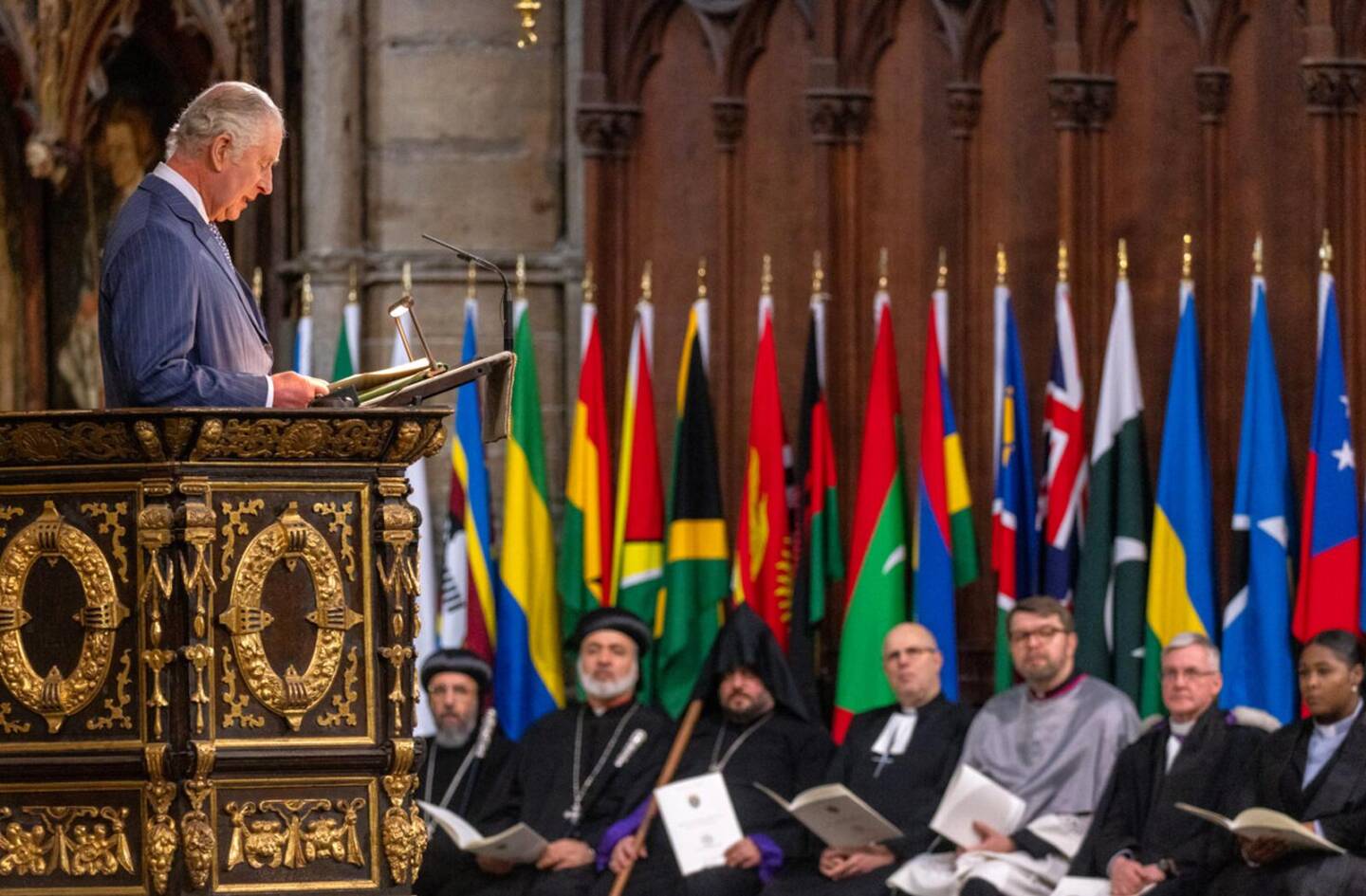
    In response to these geopolitical challenges, the organization proposes leveraging Grenada’s constitutional relationship with King Charles III as a strategic diplomatic tool. The monarch’s influence, they argue, could prove instrumental in navigating the volatile landscape of U.S. foreign policy under President Trump, who has demonstrated particular reverence for the British monarchy.

    The efficacy of royal diplomacy has been demonstrated by other Commonwealth realms. British Prime Minister Keir Starmer reportedly captivated President Trump during their February White House meeting by presenting a signed letter from King Charles. Similarly, Canada under Mark Carney’s government successfully deployed the monarch to counter Trump’s aggressive rhetoric, including threats of annexation, by having Charles open Parliament and deliver the Throne Speech in his capacity as King of Canada.

    The League recommends multiple applications of royal influence: diplomatic correspondence from the monarch to the White House, modeled on Queen Elizabeth II’s communications with Caribbean leaders; presentation of royal letters during potential Prime Minister Dickon Mitchell’s meetings with Trump; and capitalizing on the 2025 Commonwealth Heads of Government Meeting in Antigua by arranging a royal visit to Grenada, potentially including a Throne Speech delivery reminiscent of Queen Elizabeth’s 1985 address.

    This approach, the organization contends, offers Grenada unprecedented diplomatic advantage rarely available to nations navigating relations with the current U.S. administration, potentially safeguarding vital economic and political ties while generating positive international media coverage.

  • Govt broke cash grant “contract”- WIN Leader

    Govt broke cash grant “contract”- WIN Leader

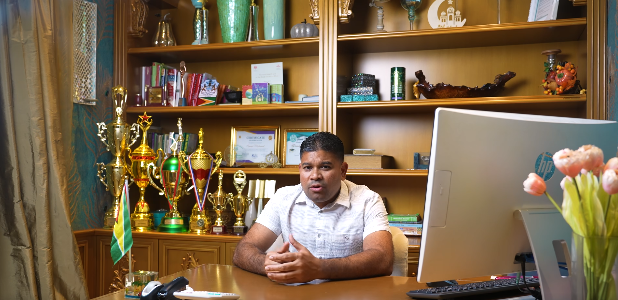
    In a significant political development, Azruddin Mohamed, Leader of the We Invest in Nationhood (WIN) party, has launched a forceful critique against President Irfaan Ali and Vice President Bharrat Jagdeo for allegedly reneging on a key election commitment. The controversy centers on the promised distribution of cash grants to Guyanese citizens during the Christmas season.

    During Wednesday night’s address, Mohamed characterized the government’s pre-election assurances of immediate cash payments as a “broken moral contract” rather than merely unfulfilled policy promises. He emphasized that while both President Ali and Vice President Jagdeo had explicitly signaled the payout would occur, the administration subsequently announced the GY$100,000 grants would only be distributed after the 2026 national budget approval early next year.

    Mohamed, whose party secured 16 seats in the September 1 general and regional elections to become Guyana’s main opposition force, dismissed the planned amount as “meagre” despite the country’s substantial oil revenues. He asserted the cash grant promise functioned primarily as a “campaign tool, not a guaranteed obligation,” directly referencing the President’s August campaign statement in Eccles suggesting payments would be contingent on proper behavior.

    The political confrontation extends beyond the cash grant controversy. Mohamed also criticized President Ali for commencing his address 35 minutes late and for delivering his five-year policy agenda exclusively to diplomats and government officials rather than addressing Parliament and opposition lawmakers.

    Complicating matters further, Mohamed’s potential ascension to Opposition Leader remains pending as National Assembly Speaker Manzoor Nadir has yet to convene opposition parliamentarians for the necessary election. Attorney General Anil Nandlall has publicly opposed Mohamed assuming the role, citing ongoing extradition proceedings initiated by the United States regarding alleged financial crimes connected to Mohamed’s gold trading business and luxury car importation activities.

    The Alliance for National Unity (APNU), holding 12 parliamentary seats, has concurrently demanded a larger GY$150,000 cash grant, citing the Finance Ministry’s mid-year economic report as evidence of sufficient available funds. APNU argues this enhanced amount would better cushion citizens against rising living costs and stimulate business activity during the holiday season.

  • Sir Steadroy voices concern over US travel restrictions on Antiguans

    Sir Steadroy voices concern over US travel restrictions on Antiguans

    The Caribbean nation of Antigua and Barbuda has initiated urgent diplomatic maneuvers following Washington’s unexpected imposition of travel constraints targeting its citizens. These restrictions, scheduled for implementation on January 1, 2026, have triggered significant governmental apprehension and public distress throughout the dual-island state.

    Attorney General Sir Steadroy Benjamin characterized the development as both alarming and disruptive, noting the substantial segment of the population that regularly visits the United States for critical healthcare services, educational pursuits, commercial activities, and tourism. The absence of prior consultation reportedly amplified the surprise element for both governmental representatives and citizens residing domestically and internationally.

    In response, Sir Steadroy confirmed plans for high-level diplomatic engagement with American counterparts, emphasizing the necessity of preserving the historically cordial bilateral relationship while seeking expedited resolution. The Attorney General simultaneously addressed potential connections to the nation’s Citizenship by Investment Program (CIP), asserting full compliance with all US-recommended security enhancements. He highlighted recent legislative amendments, specifically parliamentary approval extending mandatory residency requirements to a 30-day minimum, demonstrating the administration’s commitment to program integrity.

    Prime Minister Gaston Browne has personally committed to leading diplomatic initiatives aimed at safeguarding national interests and protecting the travel rights of Antiguan and Barbudan passport holders. The administration’s strategy combines diplomatic overtures with continued emphasis on regulatory reforms within their economic citizenship framework.

  • Luta, NDP hopefuls and Ms Press Secretary

    Luta, NDP hopefuls and Ms Press Secretary

    A provocative commentary has emerged from Saint Vincent and the Grenadines, delivering sharp critiques of recent political appointments and diplomatic behavior. The author, identifying as a progressive thinker and product of the country’s Education Revolution, positions themselves as an independent voice unaffiliated with either major political party—the New Democratic Party (NDP) or Unity Labour Party (ULP).

    The piece specifically targets a consul general referred to as ‘Luta,’ acknowledging his party loyalty while condemning his actions as ‘reckless and foolish.’ The commentary raises pointed questions about whether individuals who performed political songs received proper compensation and whether appropriate taxes were deducted through National Insurance Services (NIS) and Inland Revenue systems, applying this scrutiny equally to both major parties.

    Further criticism addresses political ambition within the NDP camp, where an individual reportedly seeks to replace Luta. The author cautions against such appointments, emphasizing that political representatives inevitably reflect upon their parties through their conduct, speech, and even social behaviors.

    The commentary expands to question the potential appointment of a family member to the position of governor general, invoking the principle of separation between church and state. Finally, the author addresses the recent appointment of a press secretary, characterizing it as fundamentally political and stressing that such roles demand vocal, unapologetic representation of party and prime minister.

    Throughout the piece, the author maintains that public figures must withstand rigorous scrutiny, emphasizing that political appointments carry significant consequences and should be made with careful consideration of how they reflect upon the parties and the nation.

  • UWI political expert urges focus on substance, not ‘election’ talk

    UWI political expert urges focus on substance, not ‘election’ talk

    Amid growing speculation about a potential snap election in Barbados, University of the West Indies political scientist Professor Don Marshall has rejected theories that Prime Minister Mia Mottley’s recent policy announcements signal early political maneuvering. Instead, Marshall characterizes the government’s public service reforms as long-overdue measures that should be evaluated on their substantive merits rather than perceived political timing.

    The political expert’s comments followed Prime Minister Mottley’s significant announcements regarding public sector improvements, including the restoration of term vacation leave for teachers potentially as early as next year and permanent appointments for approximately 2,000 public servants. These developments come against a backdrop of widespread conjecture about a possible first-quarter general election.

    Professor Marshall advocated for shifting public discourse away from electoral speculation and toward substantive policy evaluation. He emphasized that the administration’s recent initiatives align with necessary developmental objectives that have required attention for some time. The political scientist described the government’s approach as a welcome departure from conventional austerity measures typically associated with IMF programs.

    “I often wonder why, whenever we’re in an IMF programme, the instinct is always to move towards cutting the public service as opposed to repurposing the public service,” Marshall stated. He expressed strong support for initiatives that would strategically reposition the public service in accordance with the government’s developmental agenda.

    The UWI professor cautioned against excessive cynicism regarding governmental motives, noting that policy announcements often follow natural bureaucratic timelines rather than political calculation. He highlighted that the Christmas timing of these announcements might reflect predetermined scheduling rather than strategic election preparation.

    Marshall identified public service efficiency as the most critical metric for evaluating these appointments, predicting that improved worker satisfaction would naturally enhance productivity and attract more qualified professionals to essential services. He expressed particular optimism about ongoing negotiations with teachers’ unions, hoping for resolution of long-standing grievances regarding leave classification and compensation.

    The professor specifically endorsed improved conditions for essential service providers including teachers, police officers, and nurses, advocating for compassionate governance that addresses their unique professional challenges. Meanwhile, the House of Assembly advanced the Public Service (Appointments) Bill, with Prime Minister Mottley confirming productive discussions with both the Barbados Union of Teachers and the Barbados Secondary Teachers’ Union.

    The comprehensive reform package includes expanded compensation structures and enhanced service conditions for frontline workers, with a complete civil service regrading exercise anticipated to conclude next year. Mottley acknowledged that Barbados’s substantial civil service has faced challenges in timely human resource management under current structural constraints.