分类: politics

  • Williams-Grant Says She Will Help Guide New Generation of Senators

    Williams-Grant Says She Will Help Guide New Generation of Senators

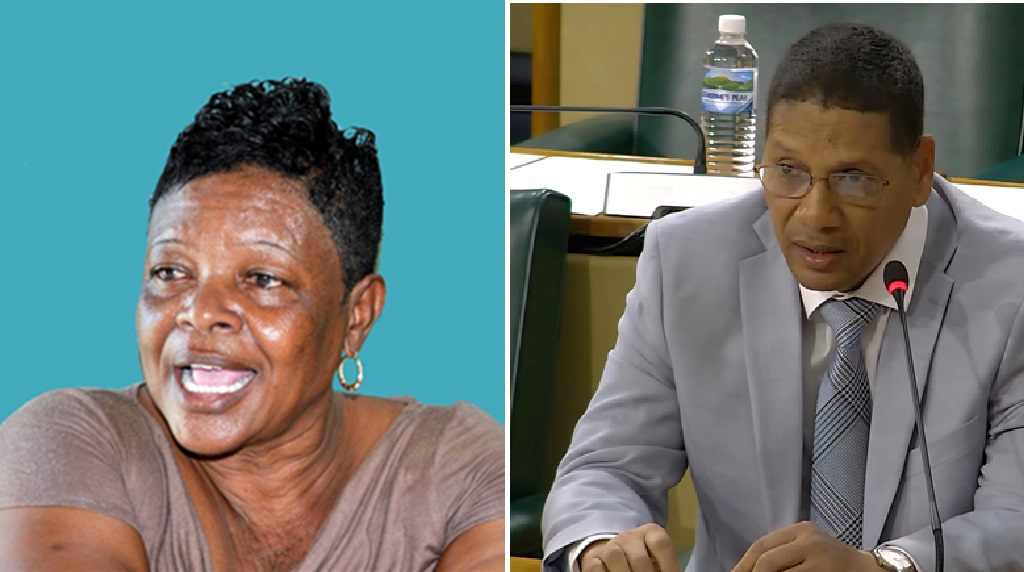
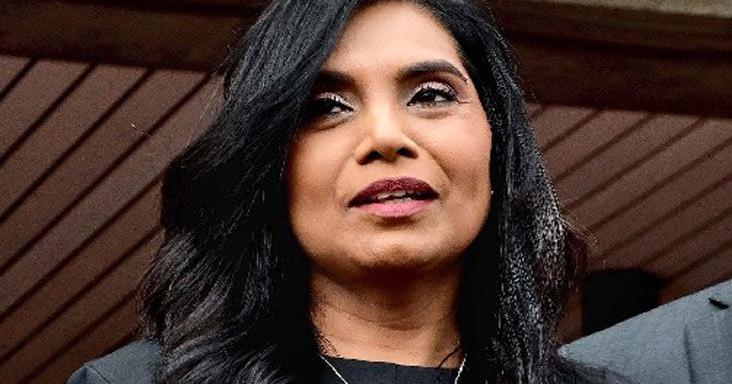
    As Alincia Williams-Grant prepares to step into her fourth consecutive term as President of the Senate of Antigua and Barbuda, the veteran lawmaker has laid out a clear policy agenda focused on boosting public civic literacy, strengthening parliamentary autonomy, and advancing gender representation in national politics.

    Williams-Grant spoke publicly about her goals shortly after Friday’s swearing-in ceremony held at Government House, where she described her reappointment to one of the nation’s top legislative roles as a deeply meaningful and humbling milestone. “It’s emotional and it’s an honor,” she told reporters. “Public service is a daily calling, and you must always approach this office with humility and gratitude.”

    First appointed to the role after the Antigua and Barbuda Labour Party won national office in 2014, Williams-Grant acknowledged that this incoming term will bring a fresh set of unprecedented challenges, but she said she is ready to take them on. “This is my fourth term in this position, and it has been a tremendous responsibility over the years,” she noted. “I’m looking forward to the challenges that come with this new dispensation.”

    Turning to the topic of gender representation in the upper chamber, Williams-Grant shared that while four women were newly appointed to the Senate this term, she had hoped to see a greater number of female legislators seated. She pointed out that the current figure actually represents a small step backward; when the administration first took office in 2014, the Senate boasted a higher share of female representatives. Even so, she praised the Gaston Browne-led administration for its ongoing commitment to lifting women into leadership positions across all levels of government. “We’re very happy that there has been a continued commitment by the Gaston Browne administration to empower women in every way possible, at every level possible,” she said.

    Williams-Grant also took time during her remarks to pay tribute to former senator Mary-Claire Hurst, who she described as a foundational mentor and inspiration for women across Antigua and Barbuda’s public sphere. “Her motto has always been mentoring and empowering others — young people, women,” Williams-Grant said. “In this moment, we must honor that legacy; because of her work, so many of us are able to stand here today.”

    On a positive note, Williams-Grant highlighted a notable shift in youth engagement over the past decade: she has observed a sharp increase in interest from young women seeking to enter public life, with many now reaching out to ask how they can pursue a senate appointment. This growing enthusiasm stands in stark contrast to the widespread political apathy among young people that marked the early days of the current administration in 2014, when many young people distanced themselves entirely from political processes, she noted.

    Addressing the internal operations of the Senate, Williams-Grant emphasized that the upper house serves a critical function as the final legislative review body, requiring rigorous standards and careful attention to the details of proposed policy before it reaches the public. “We are the most civilized chamber,” she said with a laugh. “We are very particular about the work that we do because we are the review body — we are the last stop before legislation affects the public.”

    To support incoming first-time senators, Williams-Grant revealed she has already reached out to regional and international parliamentary partners to organize specialized training programs, designed to help new legislators understand their constitutional roles and responsibilities thoroughly. “We want to make sure that they understand the role from day one,” she explained.

    A core priority for Williams-Grant this term will be closing the persistent gap in public understanding of how parliament functions. She argued that many Antigua and Barbuda residents still fail to distinguish the legislative branch of government from the executive, a lack of clarity that erodes public respect for the legislature’s independent mandate. “I think too often in this country, persons do not appreciate the legislative function,” she said. “There’s no deference given to the legislature separate from the executive. It’s confusing, and people don’t understand the separation.”

    To address this, Williams-Grant aims to launch targeted civic education initiatives this term to boost public awareness of the legislature’s independent role, while also strengthening the institution’s structural capacity. Beyond public education, she is also pushing for greater formal autonomy for parliament, arguing that the legislative branch should operate with the same level of independent authority already granted to the judiciary and executive branches. Williams-Grant disclosed that she first discussed the need for these changes with the late prominent parliamentarian Sir Gerald Watt, and revealed that targeted structural reforms could be introduced during the new term. “You will be seeing some changes… more in terms of tightening up how we function as a legislative arm of government, in line with our constitutional mandate,” she said.

    She credited ongoing youth outreach programs and civic engagement efforts for the growing interest in parliamentary participation among young people, especially young women. Working to dismantle outdated stereotypes about political life, Williams-Grant noted that “Politics, political life, parliament is not just for the ordinary boring person.” She praised the growing visibility and advocacy of younger senators and civic leaders for making public service feel more accessible and appealing to a new generation of Antiguans and Barbudans.

  • President Simons ziet grote invloed van social media op parlementair werk

    President Simons ziet grote invloed van social media op parlementair werk

    On Friday, Suriname marked a historic milestone: 160 years of representative parliamentary governance, with President Jennifer Simons using the occasion to outline both progress made and critical adaptations the National Assembly (DNA) must make to meet 21st-century challenges.

    During a special public plenary session held to commemorate the anniversary, President Simons walked attendees through the decades-long evolution of Suriname’s parliamentary system, highlighting how far the institution has come since its founding. 160 years ago, the body only represented a narrow, privileged segment of Suriname’s population. Today, it boasts representation from nearly every demographic group across the South American nation, a shift driven by targeted reforms to the country’s electoral and governance frameworks.

    “More and more of our people now have a seat at the political table,” Simons noted, emphasizing that expanded representation has not only made the parliament more inclusive but also strengthened Suriname’s democratic foundations as a whole. Beyond looking back at the 160-year history of the legislature, the president centered her address on the collective work of government, parliament, and civil society to build resilient, effective democratic institutions for coming generations.

    A core focus of Simons’ speech was the disruption and opportunity brought by shifting communication norms, particularly the rise of social media. Where parliamentary debates were once confined to the walls of the legislative chamber, modern lawmakers now operate in a constant digital spotlight, where every statement and vote draws immediate public reaction via online platforms.

    “Members of the National Assembly receive instant, nonstop feedback from the public on their work,” Simons said. She noted that this direct engagement can be positive and supportive of democratic accountability, but it also carries risks: much immediate online feedback can be negative, or rooted in incomplete understanding of the complex context and tradeoffs that shape legislative decision-making. Simons added that the presence of cameras and social media has already reshaped lawmaker behavior during public sessions, contrasting with closed-door committee meetings that often proceed in a more constructive, solution-focused manner. “We have long understood the impact of cameras on parliamentary dynamics, and now the influence of social media has added an entirely new layer,” she explained.

    Simons stressed that both parliament and the executive branch must grapple seriously with how modern communication reshapes public trust in government and civic engagement in governance. Beyond digital platforms, she highlighted that emerging technologies, most notably artificial intelligence, will bring transformative changes to the daily work of lawmakers and government officials. To meet these shifts, she argued, legislators must proactively prepare and remain flexible to adapt to evolving societal needs.

    Even as the president called for urgent adaptation, she reaffirmed that the core mission of Suriname’s parliament remains unchanged. “This institution exists to represent the people, hold the government to account, and the executive branch – including the presidency – owes its accountability to the National Assembly,” she stated. The fundamental principle of checks and balances, she emphasized, must never be abandoned, and should instead be strengthened to meet modern challenges.

    Simons also underscored the critical need for robust expertise within the legislative branch, noting that the DNA must maintain sufficient independent knowledge to rigorously review government budgets, draft legislation, and assess policy proposals from an impartial, substantive perspective. Closing her address, she framed the 160-year survival of Suriname’s parliamentary system as proof of the resilience of the nation and its people. “Through every upheaval and every transformation, we remain rooted in a democratic system that lets us build our collective future together,” she said.

  • Adhin: olie mag geen bestemming worden maar brug naar nieuw Suriname

    Adhin: olie mag geen bestemming worden maar brug naar nieuw Suriname

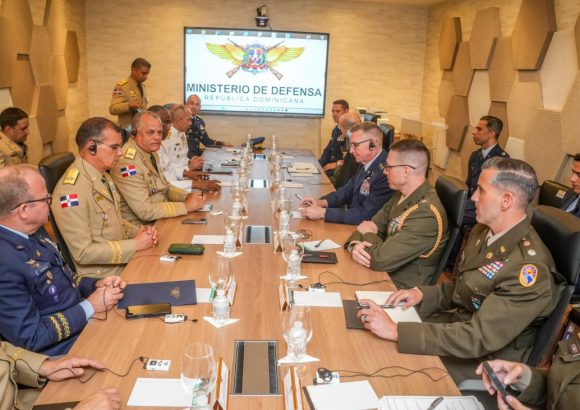
    On the 160th anniversary of Suriname’s people’s representative system, National Assembly Speaker Ashwin Adhin delivered a landmark address on Friday, calling for deep, transformative institutional, economic, and democratic reforms to guide the South American nation through what he frames as a defining historical turning point.

    Addressing assembled attendees, Adhin emphasized that newly emerging oil revenues must not become a trap of resource dependence, but rather serve as a catalyst to build a stronger, more inclusive Suriname that leaves no group behind. He laid out a sweeping, long-term vision for the country’s future that covers broad priorities from economic diversification to democratic strengthening, social inclusion, and parliamentary governance reform.

    Central to Adhin’s economic vision is a break from Suriname’s long-standing reliance on natural resource extraction. “Oil is not a destination, it is a bridge,” he stressed. Instead of centering the entire economy on oil and gas extraction, the country should evolve to what Adhin terms a “network identity” that leverages its comparative advantages across multiple sectors: agriculture, water resources, renewable energy, tourism, services, knowledge development, and digital innovation. He noted that Suriname’s strategic geographic position between the Caribbean and South America, paired with its existing port and airport infrastructure, untapped potential for data center development, and growing capacity in medical and educational services, positions the nation to become a regional hub for finance, logistics, digital technology, and education.

    Adhin made clear that natural resources alone can never deliver lasting, shared prosperity for the nation. To achieve sustainable growth, Suriname must first build robust public institutions, update outdated legal frameworks, and invest in a well-educated, skilled workforce. He called for rapid modernization of national legislation across key areas: labor market regulation, investment attraction, environmental protection, anti-money laundering protocols, and technical vocational education. “Fifty years of sustainable growth does not start with the first barrel of oil, it starts with the laws we write today,” he said.

    The speaker also drew attention to marginalized groups that have historically been excluded from Suriname’s national development agenda, including people living with disabilities and Surinamese communities in the diaspora. After a recent visit to the Betheljada care facility, Adhin questioned whether people with disabilities in the country feel abandoned by state institutions. He also addressed the status of Surinamese people residing in the Netherlands, noting that at the time of Suriname’s independence, this community was “made foreigners in their own history with a single stroke of a pen.”

    Under the banner of “Together Suriname,” Adhin called for building a national society where no community is sidelined, and advocated for stronger legal and social protections for people of Surinamese origin living abroad. Turning to the role of the National Assembly (Dutch acronym DNA), Adhin pushed back against the common misunderstanding that parliament serves solely as a legislative body. He reminded attendees that the body has three core, equally important mandates: representing the people, co-writing legislation, and exercising oversight over the executive branch. “We are the people’s representative power,” he stated, adding that unchecked power always comes at the expense of the public good. For this reason, he said, strong checks and balances are non-negotiable for a functioning democratic constitutional order.

    To cement the parliament’s commitment to higher standards of governance, Adhin announced that a commemorative plaque will be unveiled inside the DNA building bearing the inscription: “If we are the highest organ of the state, we must also embody the highest level of integrity, debate, transparency, and vision.” He also laid out a broader agenda for governance reform, calling for further administrative decentralization, the creation of an independent national planning agency, improved spatial planning, and the establishment of a politically independent land board to manage national land resources. These reforms, he argued, are critical to prevent future oil revenues from being squandered through weak regulation or poor governance.

    Adhin framed the current moment as unprecedented in Suriname’s modern history: for the first time, the country can plan for long-term growth from a position of projected economic abundance, rather than reacting to constant scarcity. “One hundred and sixty years ago, a conversation began here between the people and authority,” he said in closing. “My wish is that in 10 years’ time, we can say we did not waste the abundance of our time, that we built the strong institutions we need, and that we left no one behind.” The full text of Adhin’s speech is available for public download.

  • Court Throws Out Charges Against Senator Patrick Faber

    Court Throws Out Charges Against Senator Patrick Faber

    In a major legal development for Belizean politics, sitting Senator Patrick Faber has been formally cleared of all criminal allegations against him, after a Belize City magistrate dismissed the two pending charges earlier this week. The dropped counts included obstruction of a police officer and aggravated assault, charges that originated from a late-night incident on Bay Street one year prior.

    The encounter that sparked the legal case unfolded during a routine police checkpoint operation near the BelChina Bridge, where law enforcement officers pulled over Faber’s vehicle. According to the original police account, Faber began recording one of the officers during the stop and moved closer to the law enforcement official than permitted, despite multiple verbal warnings to step back. This interaction led authorities to file the two criminal charges against the senator shortly after the incident.

    When the case was called for hearing at the Belize City Magistrate’s Court on Tuesday, May 5, the magistrate made the decision to throw out the entire case. As of press time, official authorities have not released a public explanation for the dismissal, leaving the specific legal reasoning behind the ruling unreported. Faber was represented throughout the proceedings by local defense attorney Orson “OJ” Elrington.

    This report is adapted from a verbatim transcript of a televised evening news broadcast, with standardized spelling applied to any Kriol language remarks included in the original recording.

  • Maya Leaders Taking GOB Back To CCJ

    Maya Leaders Taking GOB Back To CCJ

    Nearly three years after the Caribbean Court of Justice (CCJ) ended its direct supervision of the long-running Maya land rights conflict in southern Belize, the dispute is once again heading to the regional high court. Maya community leaders announced that bilateral negotiations with the Government of Belize (GOB) have hit a dead end on critical outstanding issues, most notably the formal identification and legal protection of Maya customary land holdings. This latest development has reignited debate over the decades-long fight for indigenous land sovereignty, even as a controversial proposal of monetary compensation has emerged as a potential middle ground for third-party stakeholders.

    Cristina Coc, spokesperson for both the Toledo Alcalde Association and the Maya Leaders Alliance, confirmed that the indigenous leadership has officially filed an application with the CCJ seeking clarification on the core directives of the court’s original 2015 ruling. After years of failed peaceful negotiation attempts, the coalition says turning back to the court is the only viable path forward.

    “The gulf between the Maya people and the Government of Belize on core issues remains unbridgeable, particularly when it comes to mapping and formalizing boundaries for Maya customary lands,” Coc stated in a public address. “We have held dozens of meetings, explored multiple paths to a negotiated settlement, and invested extensive effort into resolving this conflict amicably, but none of these steps have narrowed our differences. We are filing this application because we have made no meaningful, substantive progress on implementing the CCJ’s original consent order and judgment. We hold the court in high esteem, and we are confident that the clarifications it provides will allow both parties to move forward with full, effective implementation of the court’s original ruling.”

    As the dispute drags on, the idea of monetary compensation to resolve conflicting claims has gained mainstream attention, though the proposal remains deeply divisive. Some non-Maya landowners who hold investments in contested territories have indicated they would accept a fair payout to vacate their holdings, while others who have made large long-term investments in the land are unwilling to step away. Maya leaders, for their part, have outlined a nuanced stance on the compensation option, saying it should remain on the table for all parties but must be structured within a constitutional framework to avoid unfair outcomes for indigenous communities.

    Pablo Mis, another spokesperson for the Toledo Alcalde Association and Maya Leaders Alliance, explained that the coalition has already advanced targeted proposals for flexible, constitutionally-compliant compensation models that account for the varying circumstances of different stakeholders. “At its core, compensation should be an available option for both the Maya people and any third parties with claims to the land,” Mis noted. “For example, it would be completely unfair to force a third party who has built a life and made sustained investments on a parcel of land to leave without any compensation. At the same time, it is equally unjust to ask the Maya people to cede vast tracts of their customary land to third-party speculators who have never occupied or developed the land, just to line the pockets of investors. These are complex nuances that require clear, decisive leadership from the Belizean government to address properly.

    Mis added that all compensation negotiations must be rooted in the constitution of Belize as the ultimate guiding framework for both parties. In a nod to the strain ongoing legal and negotiation processes have placed on the country’s public finances, Mis also shared that the Maya coalition has offered an innovative solution to avoid drawing from the national public purse: the creation of a dedicated, independently funded special reserve, developed in partnership with indigenous leaders, to cover compensation costs. This model, he noted, has already been used successfully to resolve similar indigenous land conflicts in other countries.

  • Broaster Takes Rural Central’s Fuel Fight into His Own Hands

    Broaster Takes Rural Central’s Fuel Fight into His Own Hands

    Against a backdrop of soaring global oil prices driven by international tensions, working households across Belize have faced repeated financial strain, with four successive fuel price hikes recorded at the pump since April 2026. While the ruling government has framed the price surges as an uncontrollable external pressure that leaves little room for domestic policy intervention, United Democratic Party (UDP) caretaker for Belize Rural Central Edward Broaster has rejected that stance, launching an independent local fuel relief program on May 8 that doubles as a public challenge to official policy.

    Broaster’s initiative offers eligible voters in his constituency a $2 discount per gallon of fuel, capped at 10 gallons per voter — translating to a maximum total relief of $20 per person. Unlike many partisan political programs, the discount is open to all registered voters in Belize Rural Central regardless of party affiliation, a point explicitly emphasized by both Broaster’s team and participating residents.

    The program was set to kick off at 8 a.m., but eager residents began lining up as early as 7:30 a.m. to access the relief, with even voters registered in Ladyville who currently reside in Belize City making the trip to claim the discount. When reporters arrived on site, Broaster confirmed that roughly two-thirds of the program’s allocated funds had already been disbursed, with processing moving quickly to serve the steady stream of arriving residents. Broaster noted that the initiative would wrap up immediately once all allocated funds were exhausted, but early feedback from participating residents had been overwhelmingly positive.

    In a statement on site, Broaster framed the initiative as more than just short-term relief: he called out the government for imposing heavy tax burdens on working-class Belizean households while extending tax breaks to large million-dollar corporations, arguing that targeted government action could deliver far broader, lasting relief to citizens struggling with fuel costs.

    Many participating residents echoed this sentiment, noting that even the one-day small-scale relief makes a meaningful difference for households already stretching tight budgets. Several residents pointed to compounding cost pressures: ongoing highway construction work increases fuel consumption for daily commutes, while unaddressed road maintenance adds extra vehicle repair costs that already strain household finances. While many acknowledged that global market forces do push base fuel costs higher, they universally called on the government to cut fuel taxes and reorder national spending priorities to ease the burden on working families. “Every penny counts,” one resident explained, noting that even a small reduction in prices would deliver significant relief for most households.

    Alongside the fuel discount program, Broaster’s team also organized a complimentary Mother’s Day raffle for participating residents, with prizes ranging from large household appliances including 50-inch televisions, stoves and microwaves to small electronics, kitchenware and linens.

    As of the end of the program’s first day, it remains unclear whether the Belizean government will respond to Broaster’s call and implement broader, nationwide fuel tax relief to address ongoing public pressure over rising prices.

  • Fuel Fight Ignites: Government Pushback Meets Broaster’s Counterstrike

    Fuel Fight Ignites: Government Pushback Meets Broaster’s Counterstrike

    As of May 8, 2026, a bitter public political dispute over fuel price relief has erupted in Belize, pitting the sitting government against a caretaker from the country’s main opposition party. The conflict kicked off after United Democratic Party (UDP) caretaker for Belize Rural Central Edward Broaster unveiled a localized fuel relief initiative, prompting pushback from the administration’s top transport official.

    When pressed for comment on Broaster’s proposal this week, Transport Minister Dr. Louis Zabaneh struck a conciliatory opening tone, saying he welcomed the opposition figure’s willingness to address public hardship around fuel costs. But he quickly sharpened his critique, arguing that a targeted giveaway for a single electoral constituency cannot fulfill the national mandate that comes with holding national office — a duty to deliver tangible relief to all Belizean residents, not just one voting bloc.

    Broaster did not wait long to fire back in an exclusive interview with local outlet News Five, turning the minister’s challenge back on the sitting government. When Zabaneh called for a nationwide rollout of relief to prove the policy’s merit, Broaster embraced that framing: that is exactly the outcome opposition figures want, he said, because the incumbent government holds all the institutional authority and regulatory power to slash fuel prices at a national scale. Broaster argued that the government has deliberately dodged its responsibility to lower costs, and that the minister’s critique only exposes the ruling party’s lack of care for working Belizeans.

    “I don’t hold the national budget or the regulatory power to roll this out across the country. That power rests entirely with the Prime Minister,” Broaster noted, pointing to the Prime Minister’s own repeated public claims that he has the capacity to cut fuel prices. Broaster went on to challenge the government’s track record, highlighting that fuel prices have been raised repeatedly since the Prime Minister took office: ten separate hikes hit consumers in 2022 alone, with additional increases in the years following. He dismissed the Prime Minister’s go-to justification that global conflicts are to blame for sustained high prices, saying the administration has more than enough room to bring costs down regardless of international volatility.

    Broaster also dismissed the government’s existing small relief measure as inconsequential: the 68-cent excise tax cut the Prime Minister has touted is little more than nominal, he argued, because the government still retains steep environmental and goods and services taxes on fuel that deliver massive revenue to the state. Broaster admitted that his localized constituency relief push is a deliberate political gesture, framing it as a necessary gimmick to force the ruling government into meaningful action that eases cost-of-living burdens for all Belizeans.

    This report is a transcribed excerpt from News Five’s evening television broadcast, reproduced for online readers.

  • Sweeping new law to expand maritime powers

    Sweeping new law to expand maritime powers

    As a small island nation with an outsized maritime footprint, Barbados is moving to cement its legal control over territorial waters, offshore natural assets, and fast-growing emerging maritime sectors through a sweeping new piece of legislation that also addresses two of the 21st century’s most pressing and emerging priorities: climate change-driven sea level rise and the growing intersection of ocean activity and outer space innovation.

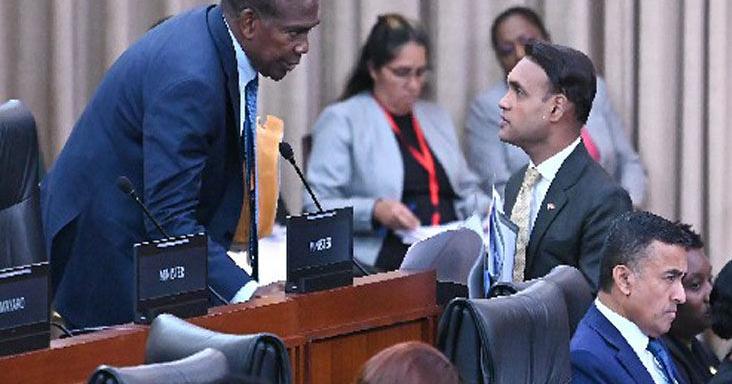
    The comprehensive Maritime Areas (Jurisdiction and Rights) Bill was formally tabled in Barbados’ House of Assembly this Friday by Ian Gooding-Edghill, the country’s Minister of Tourism and International Transport. Gooding-Edghill framed the legislation as a landmark update that brings the nation’s domestic legal framework fully into alignment with the United Nations Convention on the Law of the Sea (UNCLOS), the foundational global agreement governing maritime rights and responsibilities.

    Speaking to fellow members of parliament, the minister outlined the core goals of the proposed law: to build a clear, robust legal regime governing all of Barbados’ maritime territories, formalize the boundaries of the nation’s sovereign authority and jurisdiction, enable more effective sustainable stewardship of marine resources, and embed internationally recognized standards for the protection of fragile marine biodiversity. Beyond foundational boundary-setting, the bill grants expanded enforcement authority to Barbados’ maritime law enforcement personnel, including the right to board, arrest individuals on, and seize vessels without a warrant in specific high-priority circumstances.

    The legislation formalizes Barbados’ long-held claims under UNCLOS to its full network of maritime zones, including internal waters, a 12-nautical-mile territorial sea, and a 200-nautical-mile exclusive economic zone (EEZ). Within the 12-nautical-mile territorial sea, the bill confirms Barbados’ full sovereignty over all assets, from the airspace above to the seabed and subsoil below the water column. The EEZ designation grants the nation exclusive economic rights to all offshore resources and commercial activity within that zone, a protection Gooding-Edghill emphasized has grown increasingly critical as oil and mineral exploration accelerates across the Caribbean region.

    “There are people drilling for oil all over the globe and especially within the Caribbean Sea,” Gooding-Edghill told MPs. “It is important for us to ensure that we have exclusive jurisdiction of our zones and that we maintain our sovereign rights.”

    The bill also extends Barbados’ legal authority to offshore islands, artificial installations, and maritime infrastructure, granting regulators oversight over key governance areas including customs, immigration, and public health and safety rules. Beyond resource protection, the legislation unlocks new economic development potential: Barbados’ total maritime area is far larger than its land territory, opening opportunities across shipping, coastal infrastructure development, and sustainable marine tourism.

    Forward-looking provisions set the legislation apart from outdated existing frameworks. It includes explicit legal language that preserves Barbados’ sovereign claims and maritime boundaries even in worst-case climate scenarios, where rising sea levels lead to partial submergence of the nation’s territory. The bill also breaks new ground by addressing the fast-growing overlap between the maritime and space sectors, explicitly extending legal oversight to “space-related ocean activities” and even research related to extraterrestrial oceans, under the purview of the government ministry responsible for space affairs.

    Gooding-Edghill confirmed his team is already exploring the synergies between the two sectors, hinting at upcoming opportunities that could benefit key parts of the Barbadian economy, including education, tourism, and youth employment. “Barbadians should ‘stay tuned’ for interesting and exciting opportunities” that will deliver widespread benefits, the minister added.

  • Politie krijgt bodycams en nieuwe uniformen

    Politie krijgt bodycams en nieuwe uniformen

    Suriname’s national police force is set for a major modernization upgrade in the coming weeks, with the introduction of body-worn cameras for frontline officers and a rollout of updated uniforms, senior law enforcement and government officials have confirmed. The initiative, which aims to boost operational transparency, officer safety and criminal evidence gathering, has received full backing from Police Commissioner Melvin Pinas, who has also called for the future integration of digital facial recognition and other advanced technologies to strengthen the country’s fight against rising criminal activity.

    Justice and Police Minister Harish Monorath made the announcement of the body cam program during a recent promotion ceremony for 205 new police recruits, who were elevated to the rank of special police officers. Monorath confirmed that 250 body cameras are already ready for deployment, with donations coming from multiple domestic and international partners: 150 units were contributed by the U.S. Embassy in Paramaribo, 50 were donated by Suriname’s local private sector, and an additional 50 units were provided by Suriname’s e-government initiative e-Gov. According to the minister, the first batch of body cameras will be officially deployed to active officers by the end of May.

    Speaking at a press briefing on Thursday, Commissioner Pinas emphasized the transformative potential of the body cam program for Suriname’s police service, and reaffirmed his unwavering support for full national rollout within 2025. “This project delivers three core benefits that will strengthen our entire force: improved officer safety, greater operational transparency, and more solid, verifiable evidence for criminal prosecutions,” Pinas told reporters. “That is why I stand 100 percent behind this initiative, and we are committed to making full deployment a reality this year.”

    The commissioner also noted that the body cam program is just the first step in a broader push to integrate advanced technology into Suriname’s law enforcement operations. He pointed to the already proven success of the country’s existing Safe City closed-circuit camera network, which has helped police solve hundreds of cases across the nation. “You can think of the Safe City camera network as police officers with three extra eyes, constantly monitoring and recording activity across our urban areas,” Pinas said. “We have already recorded so many investigative wins using this system, and I am a strong supporter of adding facial recognition technology and other next-generation tools to our existing technological toolkit to help us tackle crime more effectively.”

    In addition to the body cam announcement, Maureen Palmtak, Director of Policy Preparation and Management at the Suriname Police Force, revealed that updated uniforms will be rolled out to frontline general duty officers between May and June. The first officers to wear the new standardized uniforms will be the 205 newly promoted special officers, who are set to be appointed as probationary police officers following their promotion.

  • Portable benefits plan needs national education push – AG

    Portable benefits plan needs national education push – AG

    As debate over the transformative National Portable Benefits Framework continued in Barbados’ House of Assembly Friday, top law enforcement official Attorney General Wilfred Abrahams has pushed for an immediate, nationwide public outreach campaign to ensure all Barbadian workers understand the new system’s rules and advantages. He warned that gaps in public knowledge could leave working people locked out of critical protections and new opportunities that the proposed policy is designed to deliver.