分类: politics

  • ‘General Orders don’t require ZNS chief to tender resignation’

    ‘General Orders don’t require ZNS chief to tender resignation’

    The Bahamas government has firmly rejected opposition calls for the resignation of ZNS General Manager Clint Watson, who continues to lead the state-owned broadcaster while pursuing political candidacy. Public Services Minister Pia Glover-Rolle has invoked General Order 949 to defend Mr. Watson’s position, stating that public officers are not required to resign during political activities until formally ratified as candidates.

    The controversy centers on Mr. Watson’s dual role as head of the Broadcasting Corporation of The Bahamas and his aspirations to represent the Progressive Liberal Party in Southern Shores. The opposition Free National Movement (FNM) contends this arrangement compromises the impartiality of the national broadcaster and undermines public trust.

    The debate intensified following the resignation of ZNS sports reporter Jay Phillipe, who stepped down from his position at the organization’s Grand Bahama station to pursue nomination for the FNM in Bain and Grants Town. Mr. Phillipe stated his resignation was necessary to avoid any perceived conflict of interest while seeking political office.

    FNM chairman Dr. Duane Sands has challenged the government’s position, arguing that Mr. Watson’s continued leadership creates legitimate concerns about institutional neutrality. Dr. Sands maintains that the appearance of impartiality is essential for a national broadcaster, and that public confidence diminishes when its chief executive engages in partisan political activities.

    Mr. Watson has previously committed to resigning if formally nominated as a PLP candidate, but opposition leaders consider this position inadequate to address immediate concerns about neutrality and the integrity of public broadcasting.

  • PNP WM raises concerns over sexual harassment allegations raised by Julian Chang

    PNP WM raises concerns over sexual harassment allegations raised by Julian Chang

    KINGSTON, Jamaica—The People’s National Party Women’s Movement has broken its silence regarding serious sexual misconduct allegations within party ranks. President Patricia Duncan Sutherland addressed growing concerns after Savanna-la-Mar councillor Julian Chang publicly accused Westmoreland Central MP Dwayne Vaz of inappropriate behavior.

    The controversy emerged during a radio interview on January 26th when Councillor Chang first detailed the allegations. According to the claims, Vaz allegedly sent sexually explicit messages via WhatsApp platform. Following Chang’s refusal of these purported advances, the councillor reportedly faced exclusion from crucial constituency executive meetings—a move interpreted by some as retaliatory action.

    Duncan Sutherland emphasized the Women’s Movement’s firm stance against all forms of sexual harassment and abuse. In an official statement released Tuesday, she expressed confidence that the PNP would activate its Independent Complaints Committee pursuant to established party bylaws derived from its Sexual Harassment Policy. The process mandates thorough investigation, transparent examination, and appropriate disciplinary measures if warranted.

    The Women’s Movement leader reiterated their commitment to fostering environments where all citizens, particularly women, feel secure and empowered. She stressed the importance of addressing concerns through proper channels with fairness and appropriateness, noting that institutional change must begin within political organizations themselves.

    This development occurs amid heightened global attention to workplace misconduct and power dynamics within political structures. The case represents a significant test for Jamaica’s opposition party’s internal accountability mechanisms and its adherence to self-established governance protocols regarding gender-based violations.

  • ‘Niemand is veilig’: China’s Xi richt zich op zijn nauwe bondgenoot in zuivering

    ‘Niemand is veilig’: China’s Xi richt zich op zijn nauwe bondgenoot in zuivering

    Chinese President Xi Jinping’s sweeping anti-corruption campaign has penetrated his innermost circle with the announced investigation of General Zhang Youxia, his longtime ally and senior vice-chairman of China’s Central Military Commission (CMC). This unprecedented move demonstrates that even the closest personal connections offer no protection when party loyalty is questioned, fundamentally reshaping China’s political landscape.

    Defense Ministry officials confirmed on Saturday that General Zhang—second only to Xi in military command hierarchy—faces scrutiny over “suspected serious violations of discipline and law.” The investigation marks a significant escalation in Xi’s decade-long corruption purge that previously targeted the Rocket Force leadership overseeing nuclear weapons and removed two defense ministers.

    Analysts from Washington-based think tanks describe the development as “astonishing,” noting that Xi has effectively dismantled the PLA’s leadership structure to an unprecedented degree. The seven-member CMC now functionally operates with just two members following simultaneous investigations into Liu Zhenli, chief of joint staff.

    The PLA Daily’s front-page editorial framed the investigations as a major achievement, accusing both generals of “seriously undermining and violating the Chairman Responsibility System”—the institutional mechanism granting Xi ultimate military decision-making authority. This suggests Zhang may have exercised power beyond prescribed boundaries, though no evidence of power struggle has been presented.

    Notably, both Xi and Zhang belong to the “princeling” class—children of revolutionary veterans—with their relationship dating back decades. The 75-year-old general had been expected to retire in 2022 but was retained by Xi for an unusual third term, highlighting their historically close ties.

    The leadership vacuum raises operational questions for the world’s largest military, with analysts suggesting joint exercises and major initiatives may slow until Xi rebuilds the command structure. Some expect comprehensive appointments during next year’s Communist Party Congress after thorough vetting of candidates.

    Regional security implications are significant: the purge suggests diminished likelihood of immediate military action against Taiwan as Xi prioritizes internal consolidation. However, analysts warn this restructuring aims to create more capable and loyal military leadership that could pose greater future threats to regional stability.

    As Xi continues his mission to ensure absolute political loyalty within party and military ranks, the investigation demonstrates his unwavering commitment to power consolidation—even at the cost of longstanding alliances.

  • Estwick: Barbadians suffering under BLP

    Estwick: Barbadians suffering under BLP

    In a fiery address during the Democratic Labour Party’s national rally at Independence Square, St Philip West candidate Dr. David Estwick launched a comprehensive critique against the incumbent Barbados Labour Party administration. The former parliamentarian asserted that BLP fiscal policies have directly precipitated the escalating cost of living crisis, imposing disproportionate financial strain on ordinary citizens through increased taxation mechanisms.

    Estwick systematically detailed how rising land taxes, fuel levies, and utility charges have created cascading economic pressures that ultimately burden consumers. “The cumulative effect of higher diesel prices, water rates, and new levies creates unbearable pressure on households and businesses,” he told supporters, emphasizing that diminished purchasing power prevents Barbadians from meeting basic needs as their income stretches less far with each policy change.

    The criticism extended beyond economic matters to proposed legislation that Estwick characterized as threatening constitutional rights. He raised particular concerns about the Trident ID system, arguing that citizens should not require new identification to access inherent rights. The Cybercrime Bill faced even stronger condemnation, described as “a blatant and rude affront on democratic rights” that jeopardizes free speech through provisions enabling telephone interception without judicial oversight.

    As former Minister of Agriculture, Estwick provided sector-specific criticism regarding water rate increases for farmers from 60 cents to $1.80 per cubic meter, warning that well metering would further raise production costs. He contended that these policies force local farmers to increase produce prices while government support for food imports undermines domestic production viability. The sugar industry received particular attention, with Estwick declaring it had been “brought on its deathbed” through importation policies and terminated production arrangements with Coop Energy.

    Estwick concluded with a stark warning that Barbadians would continue suffering under these conditions if the Mia Mottley-led administration retains power, positioning the upcoming election as crucial for reversing these policies.

  • Armstrong promises increased focus on sports

    Armstrong promises increased focus on sports

    In a forceful address at the Democratic Labour Party’s (DLP) national rally in Independence Square, St Michael North candidate Dawn-Marie Armstrong launched a comprehensive critique of the ruling Barbados Labour Party (BLP) administration. The former national cricketer and sport psychologist asserted that systemic neglect of community infrastructure has directly crippled sports development and youth engagement, creating a vacuum that fuels rising crime rates across the island.

    Armstrong outlined a stark vision for reform, pledging that a DLP government elected on February 11 would abandon what she condemned as superficial tokenism and ad-hoc tournaments. Instead, her party would institute a professionally structured sports framework designed for long-term sustainability. This new approach would guarantee athletes proper wages and establish clear pathways for professional development.

    Central to her proposal is the strategic reopening and modernization of community centers, which she identified as critical hubs for positive social intervention. Armstrong revealed an innovative technological component to this plan: the development of a dedicated national app to facilitate universal access to these facilities. This digital platform would enable young people to seek mentorship, allow women to secure safe recreational spaces for children, and provide athletes with direct booking capabilities for training sessions.

    Beyond sports, Armstrong highlighted broader governance issues, condemning excessive bureaucratic barriers and political gatekeeping in constituency development. She shared anecdotes from St Michael North residents who reported needing formal permission from parliamentary representatives for basic infrastructure like street lighting. Promising a radical departure from this system, Armstrong committed to eliminating these political obstacles, ensuring communities can directly pursue development initiatives without administrative interference.

    The DLP candidate positioned these policies as essential measures for crime reduction, arguing that structured community engagement through sports and accessible facilities would provide positive alternatives for at-risk youth, particularly young men.

  • PM Says Immigration Amnesty Needed to Unlock Skills Already in Workforce

    PM Says Immigration Amnesty Needed to Unlock Skills Already in Workforce

    Prime Minister Gaston Browne has articulated a compelling economic rationale for Antigua and Barbuda’s newly announced immigration amnesty program. In a recent appearance on Pointe FM’s ‘Browne and Browne’ programme, the leader emphasized that regularizing undocumented workers represents an essential strategy for sustaining the nation’s economic expansion.

    The policy initiative, according to Browne, aims to harness the untapped potential of skilled laborers already contributing to the economy while constrained by their irregular immigration status. ‘The economy is growing, and quite frankly, without the immigrants, we would not be able to sustain the growth,’ Browne stated, highlighting critical workforce gaps in construction, tourism, and other rapidly expanding sectors.

    Browne pointed to the increasingly tight labor market as development activities intensify across the twin-island nation. This economic reality has created unprecedented demand that cannot be satisfied solely by the local workforce. ‘Practically anyone who wants a job and is not too fussy about what job they do can find a job,’ the Prime Minister observed, noting that immigrant labor has become indispensable for maintaining momentum across multiple industries.

    The regularization program is designed to transition workers from informal economic participation to fully documented status, enabling them to contribute more openly and productively. Browne emphasized that this approach benefits both workers and the state, creating a more regulated and compliant workforce while addressing genuine economic needs rather than political considerations.

    While specific details regarding implementation timelines and eligibility criteria will be formally outlined by relevant authorities, the Prime Minister positioned the amnesty as a cornerstone of a broader labor-management strategy. This comprehensive approach seeks to balance continued economic growth with improved regulatory frameworks and workforce compliance mechanisms.

  • Cubaanse diplomaat beschuldigt VS van ‘piraterij’ na blokkade Venezolaanse olie

    Cubaanse diplomaat beschuldigt VS van ‘piraterij’ na blokkade Venezolaanse olie

    Cuban Ambassador to Colombia Carlos de Cespedes has leveled serious accusations against the United States, characterizing Washington’s interception of Venezuelan oil shipments to Cuba as “international piracy.” This dramatic escalation follows a controversial U.S. military operation that resulted in the abduction of Venezuelan President Nicolás Maduro.

    In an exclusive interview with Al Jazeera on Saturday, de Cespedes described the American restrictions as a “maritime siege” that severely impacts Cuba’s economy. He asserted that Cuba currently faces the most intense threats from the United States since the 1959 revolution, with comprehensive sanctions and military pressure creating unprecedented economic strain.

    The oil supply from Venezuela, which had served as Cuba’s primary energy source for years, has virtually ceased following Maduro’s capture. President Donald Trump declared earlier this month that “zero” Venezuelan oil would reach Cuba and threatened additional military actions if necessary.

    American forces have been intercepting and confiscating Venezuelan oil tankers throughout the Caribbean region—actions that critics equate with modern-day piracy. Trump has stated that Cuba stands “ready to collapse” due to the loss of these critical energy revenues.

    Although Cuba continues importing limited oil supplies from alternative sources including Mexico, the termination of Venezuelan shipments threatens to push the island’s already fragile economy to the brink. Washington is reportedly considering a complete energy blockade that could potentially trigger a humanitarian crisis.

    Relations between Washington and Havana have remained tense since Fidel Castro’s communist revolution in 1959. The current Trump administration, influenced by Cuban-American officials including Senator Marco Rubio, has adopted an increasingly hardline stance toward Cuba.

    The United States continues to implement its hemispheric foreign policy through a strategy reminiscent of the 19th-century Monroe Doctrine, which treats the American continent as an exclusive sphere of influence. This historical precedent established that European interference in the Americas would be viewed as an attack on the United States itself.

    Despite these mounting pressures, Ambassador de Cespedes emphasized Cuba’s resilience: “It will not subjugate us or break our determination, even if not another drop of oil enters our country.” He invoked Fidel Castro’s anti-imperialist legacy and affirmed that Cuba remains unafraid of threats or terror, concluding with a powerful statement: “Those who seek peace must be prepared to defend it.”

  • PM Predicts significant improvement in agricultural production with million-dollar equipment purchase

    PM Predicts significant improvement in agricultural production with million-dollar equipment purchase

    The government of Antigua and Barbuda has initiated a comprehensive agricultural modernization program featuring significant infrastructure investments to address food security challenges and enhance climate resilience. Prime Minister Gaston Browne announced these developments during his recent appearance on Pointe FM’s ‘Browne and Browne’ program, detailing substantial equipment acquisitions and facility upgrades currently underway.

    The Ministry of Agriculture has already taken delivery of new heavy machinery including two 20-ton trucks and an excavator, with additional equipment scheduled to arrive within weeks. The incoming inventory includes a bulldozer, track loader, backhoe, and another excavator—all designated exclusively for agricultural purposes. This specialized equipment will directly support farmers with critical tasks including land preparation, water storage solutions, and improved farm accessibility.

    Concurrently, the government has procured two modern abattoirs whose equipment has already been shipped and is expected to reach the islands within approximately 45 days. Site preparation and civil works for these facilities are slated to commence imminently, with projected operational status within 12-18 months.

    As part of climate adaptation initiatives, the administration will implement solar-powered lighting systems to facilitate night farming operations. This innovative approach addresses growing concerns about heat waves exacerbated by climate change, enabling agricultural workers to avoid peak daytime temperatures while maintaining productivity.

    Prime Minister Browne emphasized that these combined investments represent strategic measures to reduce the nation’s dependency on imported food supplies. While acknowledging that complete food self-sufficiency remains challenging, the government is implementing deliberate policies to expand domestic production capacity and strengthen national food security.

  • President Abinader leads parade commemorating 213th anniversary of Juan Pablo Duarte

    President Abinader leads parade commemorating 213th anniversary of Juan Pablo Duarte

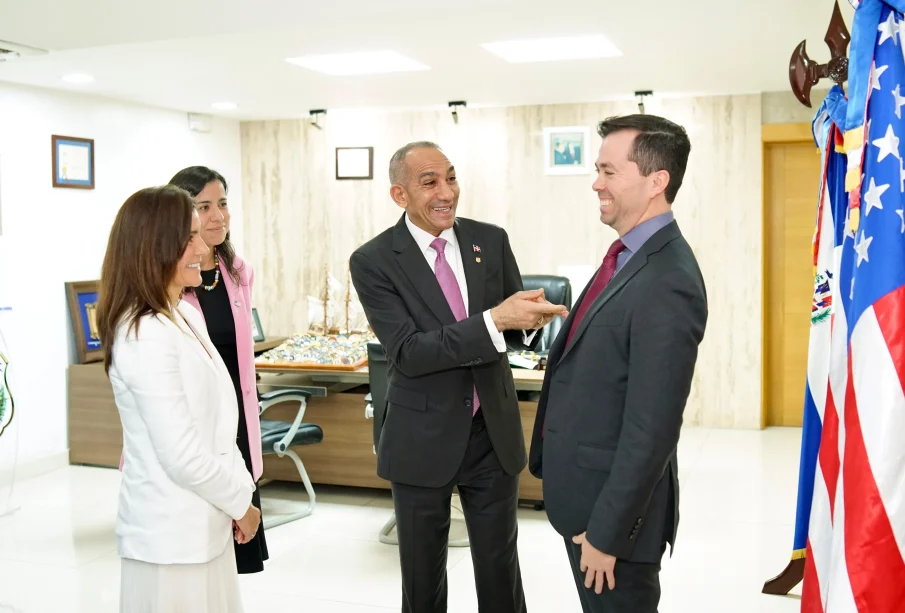
    SAN FRANCISCO DE MACORÍS – The Dominican Republic officially launched its Month of the Homeland celebrations with a grand commemorative parade honoring the 213th birth anniversary of Juan Pablo Duarte, the nation’s founding father. President Luis Abinader presided over Monday’s ceremonial events that emphasized the government’s dedication to preserving Duarte’s core principles of freedom, national sovereignty, and patriotic values.

    Juan Pablo Uribe, heading the Permanent Commission of Patriotic Anniversaries (CPEP), delivered a stirring tribute characterizing Duarte as “the Dominican of purest glory.” Uribe urged citizens to embrace the founding father’s exemplary dedication through love, diligent work, and national sacrifice. The CPEP president notably connected these historical values to the current administration, praising President Abinader for embodying Duartean ideals including governmental honesty, personal integrity, national dignity, and transparent leadership.

    Local leadership including San Francisco de Macorís Mayor Alex Díaz and Provincial Governor Ana Xiomara Cortés echoed these sentiments, stressing how Duarte’s legacy translates to modern governance through strong civic ethics, social responsibility, and dedicated public service. Both officials emphasized that transparency and commitment to communal welfare serve as fundamental pillars for national development.

    The ceremony culminated with President Abinader authorizing a combined civic-military and police parade featuring students from Duarte province schools, elite Armed Forces units, and specialized National Police divisions. The president’s participation alongside high-ranking military, governmental, and religious authorities reinforced the institutional commitment to honoring Duarte’s enduring influence on Dominican society and governance.

  • “When we have united, history has shown that we have always achieved victory”

    “When we have united, history has shown that we have always achieved victory”

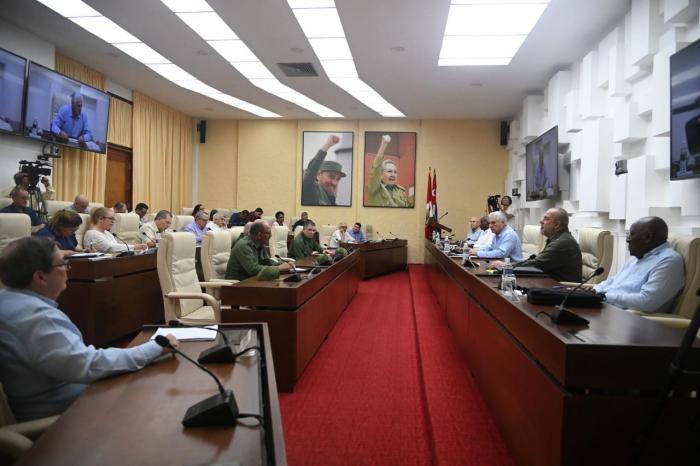
    Cuban President Miguel Díaz-Canel Bermúdez oversaw extensive military exercises on National Defense Day, emphasizing the nation’s preparedness against potential foreign aggression. The tactical demonstrations at the Great Tank Unit of Combat Glory Rescate de Sanguily featured combined forces from regular military units, Territorial Troop Militias, and Production and Defense Brigades.

    Accompanied by high-ranking military officials including Army Corps General Álvaro López Miera and General Roberto Legrá Sotolongo, Díaz-Canel observed the drills that began three weeks prior. The President highlighted the significance of these exercises in the current geopolitical climate, specifically referencing the “hegemonic offensive being carried out by the United States government” since January 3.

    The drills demonstrated remarkable coordination between different components of Cuba’s territorial defense system. Díaz-Canel praised the “levels of preparation, cohesion, and cooperation” as admirable, noting that the systematic preparation program is yielding concrete results while strengthening national patriotism and anti-imperialist sentiment.

    The President later visited university students practicing rifle assembly, mine deployment, and other combat skills. He emphasized to the future professionals that defense preparedness remains crucial, echoing historical warnings from Fidel and Raúl Castro that the best deterrent against aggression is comprehensive military readiness. The students responded with revolutionary slogans including “Fatherland or Death!” and “No one surrenders here!”

    The inspection concluded at an air defense unit where Díaz-Canel verified combat technology conditions and observed demonstrations of Cuba’s response capabilities to potential enemy attacks.