分类: politics

  • Antigua and Barbuda advances CHOGM 2026 preparations following successful advance visits

    Antigua and Barbuda advances CHOGM 2026 preparations following successful advance visits

    St. John’s, Antigua – May 11, 2025 – As the countdown continues to the 2026 Commonwealth Heads of Government Meeting (CHOGM), set to take place across the Caribbean nation of Antigua and Barbuda from November 1 to 4, 2026, the host government has hit a key milestone in pre-event preparations. Three coordinated advance visits – two in-person engagements held April 28–29 and May 5–6, and a final virtual briefing on May 11 – have wrapped up successfully, laying critical groundwork for the high-profile diplomatic gathering.

    The pre-summit visits drew participation from representatives of 26 Commonwealth member states, alongside senior officials from the Commonwealth Secretariat, Antigua and Barbuda’s own CHOGM 2026 Taskforce, national government agencies, cross-functional protocol teams, security units, logistics coordinators and a wide range of other key stakeholders.

    During the visits, Antigua and Barbuda’s organizing team provided delegations with a full, detailed walkthrough of all planned preparations for what will be one of the Commonwealth’s most influential annual diplomatic events. Briefings covered every critical operational domain, from official protocol processes, delegate accreditation systems and streamlined arrival and departure procedures to enhanced immigration facilitation, pre-booked accommodation arrangements, inter-venue transportation plans, media operations infrastructure, cross-agency security coordination, programming for special high-level events, and logistical setups for the official Commonwealth forums and associated side events.

    The in-person visits offered visiting delegations a unique opportunity to connect directly with their Antiguan and Barbudan counterparts, meet the dedicated liaison officers assigned to each delegation, inspect on-ground operational setups first-hand, and flag any technical concerns related to their upcoming participation in the November summit. These interactive engagements have already tightened cross-stakeholder coordination across protocol, logistics, media services, transportation and delegate support, while reaffirming Antigua and Barbuda’s firm commitment to delivering a smoothly run, warmly welcoming summit for the entire Commonwealth community.

    For its part, the virtual advance engagement ensured that even delegations unable to travel for in-person visits received full access to all critical briefing materials and up-to-date preparatory information, leaving no participant out of pre-summit planning loops.

    Speaking on the completion of the advance visits, E. P. Chet Greene, Antigua and Barbuda’s Minister of Foreign Affairs, Trade and Immigration, emphasized the significance of the milestone for the host nation. “These visits have allowed Antigua and Barbuda to showcase just how far our coordination, preparation and planning for CHOGM have advanced,” Greene noted. “Welcoming the entire Commonwealth family to our shores later this year is both a tremendous honour and a serious responsibility. Our team is working tirelessly to ensure every delegation is received with warmth, efficiency and excellence, as leaders gather to discuss an urgent, important global agenda at this critical moment in world affairs.”

    Sir Vivian Richards, the designated CHOGM 2026 Envoy, echoed that sentiment, highlighting the national spirit that will define the summit. “Antigua and Barbuda is preparing to welcome the Commonwealth family with the core values that define our people: confidence, resilience, hospitality and national pride,” Richards said. “CHOGM 2026 is far more than just another diplomatic meeting; it is a moment for our small nation to stand proudly on the global stage and showcase everything we have to offer.”

    Key dignitaries including Sir Rodney Williams, Governor General of Antigua and Barbuda, took part in the closing receptions held for both in-person advance visits. Karen-Mae Hill, CHOGM Focal Point and High Commissioner, also joined both in-person visit delegations to support coordination throughout the process.

    The Government of Antigua and Barbuda has formally extended its gratitude to all participating delegations, national agencies, technical working groups, volunteer teams, service providers and partner organizations that have contributed to the planning and delivery of both the advance visits and the broader CHOGM 2026 project. Special recognition was given to the Ministry of Foreign Affairs for leading and coordinating all aspects of the advance visit program.

  • Baltimore Begins Duties as Agriculture Minister of State

    Baltimore Begins Duties as Agriculture Minister of State

    Randy Baltimore has officially stepped into his new post as Minister of State within Antigua and Barbuda’s Ministry of Agriculture, Lands, Fisheries and the Blue Economy, and he has identified targeted collaboration with and tangible support for local producers as his top priorities heading into the role. Monday marked Baltimore’s first full day on the job, a day he spent engaging in strategic working sessions alongside senior ministry leadership. He joined Cabinet-level Agriculture Minister Anthony Smith Jr. for discussions with the Permanent Secretary of the ministry and the department’s core technical team to align on early operational goals.

    During the introductory meetings, participants centered talks on upgrading and reinforcing the institutional frameworks that underpin the nation’s agricultural and fisheries industries. The talks also focused on aligning these system improvements with the broader development objectives the ministry has laid out for the coming term. Baltimore’s appointment comes at a critical juncture for the Caribbean nation, as the national government continues rolling out ambitious work to expand national food security programs and unlock sustainable growth in the blue economy, a sector that holds massive potential for job creation, export expansion and long-term economic resilience for the island nation.

  • President-commissaris Scheek ziet grote uitdagingen bij TAS

    President-commissaris Scheek ziet grote uitdagingen bij TAS

    On May 12, a key leadership appointment was formalized for one of Suriname’s most critical telecommunications regulatory bodies, marking a new chapter in the South American nation’s digital governance efforts. Emanuel Scheek has taken up the post of president-commissioner of the Telecommunicatie Autoriteit Suriname (TAS), during a shareholders’ general meeting held at the Presidential Cabinet.

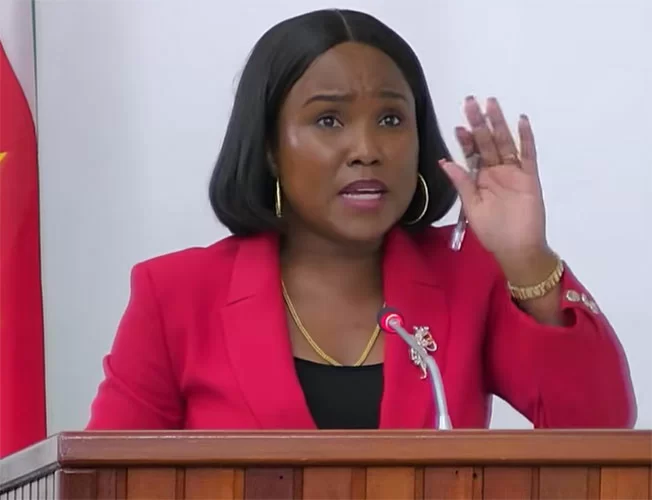
    The installation ceremony was led by Raymond Landveld, Suriname’s Minister of Transport, Communication and Tourism, who stood in for President Jennifer Simons, who was unable to attend the event. In his remarks at the ceremony, Minister Landveld underscored the outsized regulatory importance TAS holds for Suriname’s fast-evolving telecommunications sector. He noted that both TAS and national telecom provider Telesur rank among the government’s core strategic institutions for the country’s digital ecosystem, emphasizing that TAS carries the formal mandate to oversee operations of Telesur and every other private and public telecommunications company operating across Suriname.

    Beyond routine market oversight, Landveld confirmed that the Surinamese government has tasked TAS with a high-priority additional responsibility: contributing substantially to the drafting and preparation of a landmark new electronic communications law. The new regulatory framework is designed to keep pace with rapid technological advancements reshaping the global and local telecom sector, updating outdated rules to match current industry realities, and TAS will bring its on-the-ground regulatory expertise to shape fit-for-purpose legislation and sector standards.

    In his first public remarks following his appointment, Scheek acknowledged the heavy workload ahead for the agency and his new leadership role, but expressed confidence that collaborative work centered on national interests will deliver tangible progress. “There is a great deal of work waiting to be done. But I am certain that if we work together and put national interest first, we will overcome the challenges ahead,” Scheek told attendees.

    The new TAS chief noted he did not accept the position lightly, saying the immediate coming months will be dedicated to aligning goals with TAS’s governing board, setting clear institutional priorities, and mapping out a strategic path forward. “The goal is for me to contribute my part in my own way, and we will adapt as developments unfold,” he added.

    Scheek also highlighted that he has existing professional ties with multiple members of the TAS board, having collaborated with them on prior initiatives. This existing working relationship, he said, creates a strong foundation to advance the shared goal of strengthening TAS as an independent, effective regulatory authority for Suriname’s telecom sector. “I look forward to a productive collaboration, so that we can deliver strong results and ensure TAS truly lives up to the standard of the authoritative regulatory body it is meant to be,” Scheek said.

  • PNM blasts Lee over HDC ‘chaos’

    PNM blasts Lee over HDC ‘chaos’

    A brewing political storm in Trinidad and Tobago has intensified after the main opposition party, the People’s National Movement (PNM), publicly called for Housing Minister David Lee to step down, citing mounting allegations of mismanagement, lack of accountability and a disturbing attempted bribery scandal tied to the state-run Housing Development Corporation (HDC).

    The controversy ignited following an investigative report published by the *Sunday Express*, penned by journalist Mark Bassant. Bassant revealed that last Thursday, during a meeting on Ariapita Avenue in Woodbrook, an unnamed man claiming to act on behalf of a senior HDC official offered him undisclosed financial compensation to drop the planned investigative story. The man reportedly told Bassant that senior HDC leadership wanted to avoid negative public attention for the agency at this time, and that in exchange for killing the story, he would also provide the reporter with internal documents alleging mismanagement that occurred during the previous PNM administration.

    When contacted by the *Sunday Express* for comment on the allegations over the weekend, Minister Lee distanced himself entirely from the situation, claiming total ignorance of the incident. “I have no idea or information about what is reported in the articles,” Lee said. “I, as minister, don’t get involved in the running of HDC or any State agency under my purview. Also, I don’t get involved in any procurement process!”

    That response has drawn sharp condemnation from former Housing Minister and current PNM spokesperson Camille Robinson-Regis, who launched a scathing attack on Lee in an official statement released Monday. Robinson-Regis argued that Lee’s repeated “I don’t know” responses to growing crises in the housing sector prove he is unfit to hold office, and that he must either take responsibility for the chaos on his watch or resign honorably.

    Robinson-Regis emphasized that the attempted bribery incident is far from an isolated problem. Over the course of the last several months, she said, the Trinidad and Tobago public has watched a steady stream of controversies, confusion and ethically questionable decisions emerge from the housing sector, with Lee consistently appearing unaware, uninformed or completely detached from the operations of his own ministry. She listed a litany of outstanding concerns, including controversial handling of public housing allocations, widespread delays and incomplete construction projects, and persistent confusion over the actual number of finished housing units versus projects that have only broken ground.

    She also highlighted two particularly high-stakes issues currently under scrutiny: the government’s decision to regularize squatters who illegally occupied HDC-owned housing units, and a $3.4 billion Design-Build-Finance public procurement program that is now being formally investigated by the Office of Procurement Regulation. Multiple complaints have been filed about the program, including claims of selective tendering that excludes long-established local contractors, and unreasonably compressed bid deadlines for projects requiring more than $100 million in financing.

    These ongoing issues have fueled growing public concern over transparency, accountability and regulatory oversight across the entire housing sector, Robinson-Regis noted, yet Lee has once again fallen back on a claim of total ignorance. “It raises a serious and troubling question for the people of Trinidad and Tobago—when will the minister ever know what is happening in his ministry?” she said. “If the minister cannot do the job, then he needs to do the honourable thing and just resign.” On behalf of Trinidad and Tobago’s citizens, Robinson-Regis demanded answers: what does Lee actually know about the operations of his ministry, who is actually making key decisions for the housing sector, who is exercising required oversight, and why does the minister consistently only learn about critical controversies after they become public knowledge?

    Robinson-Regis rejected Lee’s attempt to distance himself from responsibility, reminding him that a cabinet minister is not a spectator or a sideline observer. She cited Section 79 of Trinidad and Tobago’s Constitution, which clearly states that a minister assigned to a government department holds responsibility for general direction and control over that department. Ministers are individually accountable for all activities of their portfolio, answerable first to Parliament and ultimately to the people of the country, she said.

    Public office comes with mandatory accountability, Robinson-Regis stressed. Cabinet ministers are tasked with shaping policy, making key decisions, and ensuring optimal management of all human, physical and financial resources allocated to their portfolio. “They cannot enjoy the authority and prestige of office while distancing themselves from controversy whenever serious questions arise,” she said. If Lee is truthful about having no knowledge of the critical issues unfolding in his ministry, she added, the country is forced to confront an even more alarming question: who exactly is running Trinidad and Tobago’s housing sector?

  • PM: No more ‘empty diplomacy’

    PM: No more ‘empty diplomacy’

    Trinidad and Tobago Prime Minister Kamla Persad-Bissessar has marked a new era of results-driven international diplomacy, celebrating the successful recent visit of India’s External Affairs Minister Subrahmanyam Jaishankar that delivered eight new binding bilateral agreements and a slate of tangible development gains for the Caribbean nation.

    In an exclusive interview with local outlet the Express, Persad-Bissessar drew a clear distinction between her administration’s proactive approach and the perceived inaction of previous governments, arguing that unfulfilled bilateral agreements represent hollow, purposeless diplomacy that her government has rejected outright. Over the past 12 months, she noted, her administration has secured substantial and actionable support from key global partners, including the United States for national security collaboration, and India – which she confirmed has delivered on every commitment made by Indian Prime Minister Narendra Modi during his 2025 visit to Trinidad and Tobago less than a year prior.

    The eight new MOUs signed during Jaishankar’s visit cover a diverse range of sectors aligned with Trinidad and Tobago’s domestic development priorities. Key agreements include strengthened tourism cooperation between the two nations, a project to install solar energy infrastructure at Trinidad and Tobago’s Ministry of Foreign and Caricom Affairs headquarters, planned infrastructure upgrades for historic Nelson Island, and the establishment of a dedicated Ayurveda Chair at the University of the West Indies. Additional memoranda cover the implementation of Quick Impact Projects (QIPs) and public health vector control programs, expanded collaboration in cybersecurity and digital forensics, alongside targeted development assistance.

    Beyond formal agreements, the visit saw the Indian government complete the handover of 2,000 laptops to Trinidad and Tobago students as part of a bilateral digital inclusion initiative. New Delhi also provided $1 million in funding for agro-processing equipment and capacity building for the Caribbean country’s small and medium-sized enterprise (SME) sector. A major highlight of the visit was the official launch of the National Prosthetics Centre in Penal, established with support from the Indian government and Jaipur Foot USA. Persad-Bissessar emphasized that the facility offers free prosthetic care to all Trinidad and Tobago citizens in need, regardless of age, religion or ethnicity, restoring independence and dignity to residents requiring limb replacements. The Prime Minister shared that she was moved to tears by testimonials from recipients who had regained the ability to live independently after receiving care at the new centre.

    Calling the outcomes of the visit a testament to constructive, forward-looking dialogue that delivers real gains for Trinidad and Tobago’s population, Persad-Bissessar extended her gratitude to Prime Minister Modi and the people of India for their partnership and generosity. She noted that the longstanding relationship between the two nations, built over more than a century across thousands of miles of ocean, has grown dramatically in recent months, with two visits from India’s top leadership to the 1.4 million-person Caribbean nation in less than a year. Home to one of the largest Indian diaspora communities in the Caribbean and Latin America, Trinidad and Tobago remains committed to deepening ties not just diplomatically, but also in trade, energy exploration and economic cooperation, she added.

    Persad-Bissessar also outlined her government’s broader push to reposition Trinidad and Tobago as a leading investment and trade hub in the region, after nearly a decade of domestic stagnation. She highlighted successful outcomes from her attendance at the 2024 Shield of the Americas Summit in Florida, noting that foreign minister Sean Sobers has already held follow-up working meetings with partner nations across Latin America. Trinidad and Tobago has also submitted an application for associate membership in MERCOSUR, a move the Prime Minister said will unlock new market access and trade opportunities for local businesses. Recent high-level diplomatic engagements also include a meeting with a senior delegation led by the French ambassador just one week prior to her interview, and a new agreement with the World Bank Group that will see the multilateral institution open a local office in Trinidad and Tobago to support critical infrastructure pipeline projects.

    With growing international interest in partnering with Trinidad and Tobago, Persad-Bissessar reaffirmed her administration’s commitment to delivering on campaign promises of improved prosperity for all citizens. “I promised brighter and better days ahead and they are here and coming,” she said. “As I said hold on, hold strain, we have plenty work to do and we are ensuring that every plan is actioned and there are meaningful benefits to the people of Trinidad and Tobago.”

  • Pringle Says UPP Will “Regroup and Come With Force” After Return as Opposition Leader

    Pringle Says UPP Will “Regroup and Come With Force” After Return as Opposition Leader

    Fresh off his formal appointment as Opposition Leader of Antigua and Barbuda, Jamale Pringle has announced that the United Progressive Party (UPP) is launching a full-scale rebuilding effort, promising to return to the political arena with renewed force after the party’s defeat in the April 30 general election.

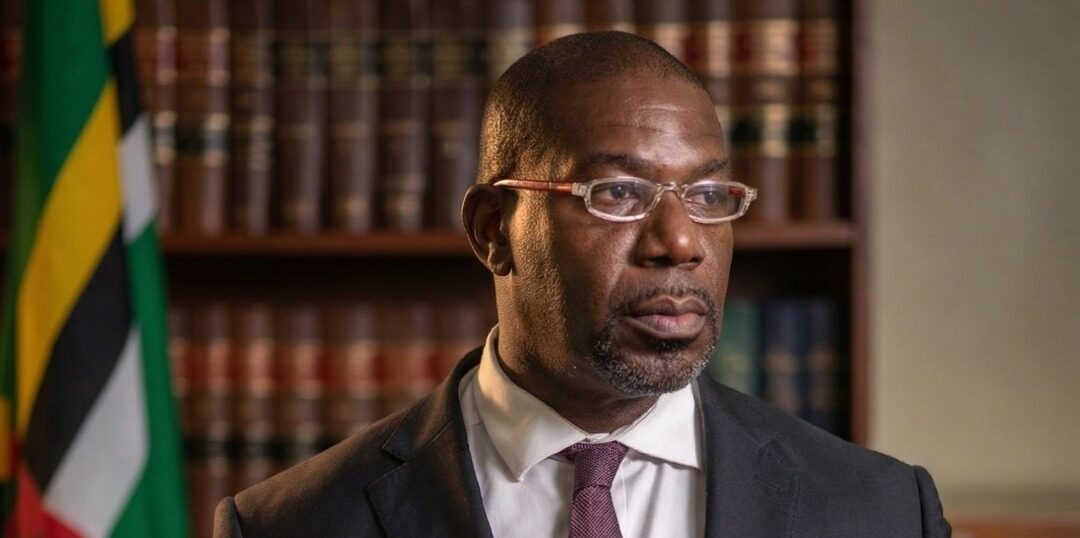
    Pringle received his official instruments of appointment from Governor General Sir Rodney Williams during a ceremony at Government House on Monday, and spoke immediately after with ABS Television to lay out his agenda for the coming parliamentary term. In the interview, he framed the UPP’s next chapter as focused on regaining lost public trust, with a far more assertive presence in parliamentary proceedings than in previous cycles.

    “We have to rebuild the confidence of the people of this nation,” Pringle said. “Under my leadership, both as Opposition Leader and head of the party, I am committed to getting our team regrouped and coming forward with force to earn back the public’s trust.” Pringle shared that he felt both humbled and elated to return to this constitutional role, noting he had been away from parliamentary work for a period.

    For constituents, Pringle pledged a new standard of advocacy: “The public can expect representation with greater force — the aggressive, unflinching representation that they deserve.” He emphasized that this second tenure as Opposition Leader, which follows his first term after the 2018 general election, will look markedly different from his first stint in the role.

    Reflecting on his entry into national politics in 2018, Pringle acknowledged he was a political novice when he first took on the post of Opposition Leader straight after winning his seat. “When I started in 2018, I was literally a rookie,” he said. “It was my first time ever serving in the House of Parliament, let alone stepping into the huge responsibility of Opposition Leader. That experience shaped me, both as a politician and a person, over the last several years.”

    With that on-the-job training behind him, Pringle said he has grown from strength to strength with public support, and is ready to deliver bolder leadership for the opposition. He also detailed the reasoning behind the UPP’s recent Senate appointments, which prioritized bringing new voices into the Upper House while retaining seasoned institutional knowledge.

    Pringle pointed specifically to newly appointed Senator Chester Hughes, a long-time workers’ rights advocate with prior parliamentary experience, as a standout addition to the caucus. “He has been an unwavering advocate for the working class, and a formidable presence in parliamentary debates, which is why we tapped Brother Chester Hughes to serve,” Pringle explained. The mix of new perspectives, seasoned experience, and intellectual depth across the appointed senators will allow the opposition to match the strength of its lower house caucus in the Senate, he argued.

    The UPP’s current Senate opposition team includes Ashworth Azille, Jonathan Wehner, and Chester Hughes, with Senator-designate Malaka Jones set to be sworn in at a later date after missing Monday’s ceremony due to ongoing travel commitments. Pringle extended congratulations to all four incoming senators, thanking them for their commitment to keeping the UPP a vibrant, relevant force in Antigua and Barbuda’s political landscape following the election loss.

    “Our goal with these appointments is to guarantee true, full representation for the people of Antigua and Barbuda across both chambers of Parliament,” Pringle added, expressing optimism that the new caucus will deliver impactful contributions that advance the opposition’s mandate.

  • UN Youth Advisory Group Congratulates Antigua and Barbuda’s Youngest Senator

    UN Youth Advisory Group Congratulates Antigua and Barbuda’s Youngest Senator

    A new chapter of youth representation in Caribbean governance has opened after 22-year-old youth advocate Shaquan O’Neil was appointed to the Senate of Antigua and Barbuda, earning formal congratulations and historic recognition from the United Nations Youth Advisory Group.

    O’Neil, who already serves as both a member of the UN Youth Advisory Group and Antigua and Barbuda’s National Youth Ambassador, has built a years-long track record of amplifying the priorities and perspectives of young people across the Caribbean region. Following the country’s April 30 general election, he was selected to fill a seat in the Upper House as part of the newly formed government’s Senate lineup.

    In an official statement, the UN Youth Advisory Group highlighted the milestone nature of O’Neil’s appointment, noting that it marks a breakthrough for bringing youth voices directly to the highest tiers of national decision-making. The organization praised O’Neil’s consistent leadership, his unwavering commitment to public service, and his track record of centering youth needs in advocacy work. It also expressed firm confidence that he will build on his past work to continue inspiring and lifting up young communities across the entire Caribbean region.

    O’Neil’s selection has drawn significant attention across Antigua and Barbuda and the broader Caribbean, driven both by his status as a young leader entering national office and his well-documented history of centering youth issues in public life. The appointment is being widely watched as a test case for greater youth inclusion in regional governance.

  • Youth Parliament Association Congratulates Jonathan Wehner on Senate Appointment

    Youth Parliament Association Congratulates Jonathan Wehner on Senate Appointment

    In a formal ceremony held at Government House this past Sunday, 24-year-old Jonathan Wehner was officially sworn in as a new Opposition Senator, drawing a message of congratulations and strong endorsement from the National Youth Parliament Association of Antigua and Barbuda (NYPAAB), the organization that helped shape his early political training. Wehner stands out as one of the youngest individuals ever to secure a seat in Antigua and Barbuda’s Upper House of Parliament, earning his appointment following the 2026 general election that reshuffled the country’s opposition legislative roster.

    Long before his official appointment to national office, Wehner cut his political teeth through NYPAAB programming, cutting his teeth participating in the organization’s youth-led parliamentary debates and hands-on leadership development initiatives. This prior connection has made the association particularly vocal in its support for his new role, releasing an official statement expressing unwavering confidence in his capabilities as a incoming legislator.

    In the statement, NYPAAB noted that it is convinced Wehner will bring the strong personal and professional qualities he cultivated through youth programming to his work in the Senate, enabling him to deliver tangible, meaningful contributions to national legislative discourse. The organization shared that it is eager to watch the new senator carve out meaningful progress and advance key priorities during his tenure in the upper chamber. NYPAAB also offered guidance for Wehner as he steps into this new public role, encouraging him to remain steadfast in his commitments and grounded in humility as he takes on legislative responsibilities. The association further confirmed that it will continue to stand behind Wehner throughout his term, providing ongoing organizational support as he navigates his work as a young opposition legislator.

  • New Senator Jonathan Wehner Pledges Focus on Youth Issues, Cost of Living and Accountability

    New Senator Jonathan Wehner Pledges Focus on Youth Issues, Cost of Living and Accountability

    At a swearing-in ceremony held Monday at Antigua and Barbuda’s Government House, 24-year-old Jonathan Wehner took office as one of the newly appointed Opposition senators, bringing a fresh, youth-centered agenda to the country’s Upper House of Parliament. Fresh off formally accepting his legislative post, Wehner laid out his policy and legislative priorities in an exclusive interview with ABS Television, framing his tenure as a commitment to elevating young voices across the twin-island nation.

    Wehner made clear that his work in the Senate will center on pushing for tangible action on the critical issues that hit young Antiguans and Barbudans the hardest, including access to affordable high-quality healthcare, expanded educational opportunities, robust youth employment programs, and policy interventions to curb the skyrocketing cost of living. “In Parliament, I will be a voice for youth, an advocate for youth, across every issue that touches young people across our country,” he explained. “Whether it is healthcare, education, employment, or rising living costs, young people deserve representation that shows up for their needs.”

    Beyond his policy priorities, Wehner emphasized that he intends to move beyond petty partisan rivalry to focus on solving pressing national challenges, rejecting the common political tactic of scoring points at the expense of public good. He described his unexpected appointment to the Senate as a deeply humbling milestone, and extended public gratitude to Opposition Leader Jamale Pringle and the United Progressive Party for putting their trust in a young, emerging political leader.

    Opening the interview with a show of cross-party goodwill, Wehner publicly congratulated the incumbent government on its victory in the April 30 general election, noting that the final result reflected the clear will of Antigua and Barbuda’s voters. “The government has won, the people have spoken, and we must all listen to the voice of the people,” he said. Wehner pushed back against the common misconception that the role of an opposition legislator is simply to block government action, arguing instead that the Opposition’s core responsibility is to enforce government accountability and advance shared national progress. “It is our job to hold the government accountable, keep their feet to the fire, to ensure we deliver a better future for all of Antigua and Barbuda,” he noted. “This is never about party colors. It is always about moving our country forward.”

    Wehner also credited the wide network of supporters, family members, and party leaders who helped him build his political career, stressing that his appointment to the Senate was not a solo achievement. He noted that the United Progressive Party gave him multiple opportunities to grow as a leader, including roles as an executive committee member and acting public relations officer, and he owed a deep debt of gratitude to the party and its leadership for his journey to the Upper House.

    In a notable gesture of cross-party respect, Wehner also extended congratulations to Shaquan O’Neil, the newly sworn-in government senator who made history at 22 as the youngest senator in Antigua and Barbuda’s history. Wehner revealed that O’Neil is a close personal relative, and argued that political differences should never stand in the way of celebrating achievement and extending mutual respect. “Even though we are on different sides of the political aisle, it is still important to congratulate him on this milestone,” he said. Wehner also singled out Senator Colin O’Neil for special thanks, calling him one of his biggest supporters and most influential encouragers throughout his political career.

    Wehner was one of three opposition senators sworn in during Monday’s ceremony, joining fellow legislators Ashworth Azille and Chester Hughes. A fourth opposition senator-designate, Malaka Parker, was unable to attend the event due to ongoing international travel, and will be sworn in at a formal ceremony at a later date.

  • Wurggreep van mamio-regeringen: Na suiker, bauxiet, goud en offshore olie geen ontwikkeling!

    Wurggreep van mamio-regeringen: Na suiker, bauxiet, goud en offshore olie geen ontwikkeling!

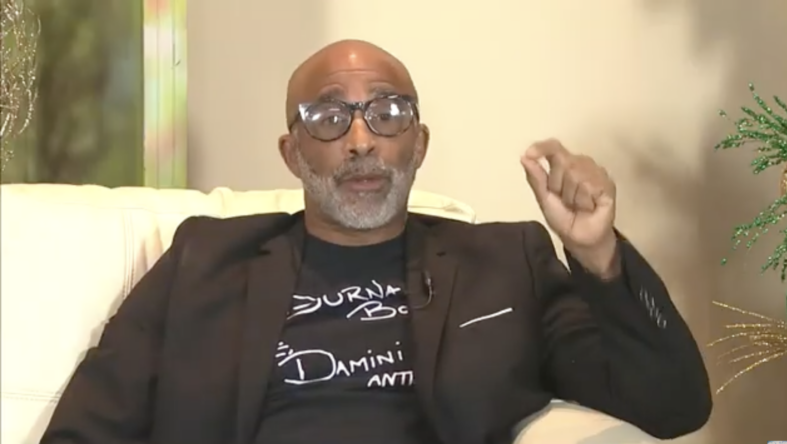
    Suriname remains trapped in a neocolonial stranglehold under what commentator Jack Menke terms “mamio-regeringen” — coalition governments that prioritize patronage over national progress, perpetuating what is widely known as the resource curse across the small South American nation. Writing in a critical opinion piece published May 12, Menke argues that after decades of exploitation centered on sugar, bauxite and gold extraction, a new term of mamio-led government would put even the potential economic gains from offshore oil development completely out of reach for ordinary Surinamese people.

    Menke defines a mamio government as a fragmented “patchwork failure”: a loose coalition of competing political parties that never coalesce into a unified, functional administration with a clear development vision. According to his analysis, this pattern of failed coalition governance has repeated consistently across successive Surinamese administrations, dating back to the adoption of the country’s 1987 constitution. A troubling core dynamic, Menke notes, is that political parties have steadily accumulated more power over the decades even as public trust in these institutions has collapsed to near-zero among the Surinamese population.

    Legislative changes have only reinforced this imbalance of power, Menke argues. The 1988 Political Organizations Act, the 2005 recall law, and the 2024 ban on pre-electoral coalitions have all consolidated control over government formation in the hands of large established parties and their financial backers. Smaller parties, which often maintain more robust internal democratic practices, have been systematically squeezed out of meaningful representation in the political system.

    Against this backdrop, state-owned enterprises (SOEs) have become a central locus of corruption, mismanagement and patronage, Menke says. The public has been repeatedly confronted with high-profile scandals in SOEs spanning agriculture, forestry and transportation sectors, yet almost all of these cases fade away without meaningful accountability after temporary, half-baked fixes from politicians and self-styled experts. While the current governing coalition inherits most of these conflicts from previous administrations, Menke documents that endless infighting, embezzlement and mismanagement persist across both governing coalition partners and opposition parties within the current system.

    At the root of the crisis, Menke explains, is the practice of dividing up leadership positions in government agencies and state-owned enterprises as political spoils for coalition party members, rather than appointing qualified, competent leaders. He outlines three core factors that sustain the “mamio curse” on Suriname’s SOE sector: first, the flawed legacy of pre-independence strategies that relied on unproductive state-owned entities and joint ventures with foreign multinational corporations; second, the failure to address systemic problems, which Menke attributes to short-term political self-preservation and competing economic interests that allow scandals to fester without resolution; and third, the ongoing pattern of visonless mamio governments leaving mountains of unresolved problems for successive administrations to muddle through. As of 2026, Menke notes, more than 150 Surinamese state-owned enterprises are effectively looted, drained and operating at a sustained loss. He points to the Suriname Landbouw Maatschappij (SLM) as a notable example: decades of chaos, mismanagement and financial scandal have left the state agricultural firm a poorly grounded experiment that continues to operate without any sustainable foundation.

    The exposed scandals that reach public attention are only the tip of the iceberg, Menke emphasizes: the entire mamio political system is structured to perpetuate itself, regardless of whether parties hold power in coalition or sit in opposition. The core function of a mamio government is the deliberate division of control over central government ministries, directorates, overseas diplomatic posts and SOEs, with positions filled by unqualified party loyalists and political opportunists seeking personal gain rather than public good.

    Menke argues that the long-term cost of clinging to this colonial-era economic model, which centers resource extraction as the core policy priority for all mamio governments, is stunted development and entrenched systemic inequality. By delaying progress on collective land rights while facilitating multinational exploitation along neocolonial lines, successive governments have fueled persistent conflict with Indigenous and Maroon communities across the country. The outsized legal power granted to political parties, combined with their deep ties to illegal activity, failing SOEs and private economic interests, blocks the formation of functional, productive coalitions and derails any path to sustainable national development. Even well-intentioned, honest government leaders are ground down by the system, Menke says, eventually falling back on counterproductive micromanagement within this rotten neocolonial political structure.

    In Menke’s view, there is only one path to meaningful development for Suriname: the entire existing political system must be fundamentally rebuilt. To achieve this overhaul, he argues that targeted extra-parliamentary pressure from the Surinamese public is the only viable lever for change. Menke outlines that voters frustrated with the status quo have multiple options to exercise their opposition: casting a regular ballot for change, submitting a blank protest vote, discarding their ballot or joining collective direct action to push for systemic reform.