分类: politics

  • Dr James questions Trinidad and Tobago’s approach to Caricom

    Dr James questions Trinidad and Tobago’s approach to Caricom

    Trinidad and Tobago finds itself at a critical juncture in foreign policy as prominent voices express diverging views on the nation’s regional alliances and international positioning. The escalating discourse centers on Prime Minister Kamla Persad-Bissessar’s recent criticism of the Caribbean Community (Caricom), with economist Dr. James questioning whether adequate justification has been provided for these diplomatic maneuvers. ‘I remain unconvinced that the grounds for her position have been sufficiently explained,’ Dr. James noted, suggesting the administration appears to be addressing perceived problems that may not yet exist.

    The debate has expanded to include concerns about national sovereignty amidst evolving global dynamics. Dr. James emphasized that despite the nation’s size, it must assert its independence: ‘The fact that I am small doesn’t mean that I am not my own man. I cannot allow another country, simply because it has money or power, to treat me however it likes.’

    Movement for Social Justice leader David Abdulah issued strong cautions against weakening Caricom ties, highlighting the economic necessity of regional trade relationships. ‘We cannot diss Caricom. We cannot seek to break our relationship with Caricom,’ Abdulah stated, pointing to limited access for Trinidadian manufactured goods in United States markets. He further questioned what tangible benefits the nation might gain from what he characterized as a pivot toward Washington, noting insufficient public scrutiny of potential economic or diplomatic returns.

    The political discourse intensified following Prime Minister Persad-Bissessar’s response to criticism from Antigua and Barbuda’s Prime Minister Gaston Browne, which included distancing Trinidad and Tobago from Caricom’s traditional ‘zone of peace’ position and accusations of the regional bloc aligning with Venezuela’s government.

    Adding judicial perspective to the conversation, Justice of Appeal and Presbyterian minister Frankie Seepersad urged consideration of broader regional contexts, particularly Venezuela’s mass migration crisis and territorial claims against Guyana. Speaking after a church service in Marabella, Seepersad warned against revisionist narratives that overlook recent instability: ‘Millions of people do not leave their homes because all is well.’ He called for honest discourse that acknowledges recent history and the plight of displaced populations when evaluating decisions aimed at restoring regional balance.

  • Development Permit Mandatory for All Land Development in Antigua and Barbuda

    Development Permit Mandatory for All Land Development in Antigua and Barbuda

    The Government of Antigua and Barbuda has enacted a sweeping regulatory mandate requiring development permits for all land development activities across the twin-island nation. This comprehensive policy shift represents a significant strengthening of the country’s land use governance framework and environmental protection protocols.

    The new regulations, administered through the Development Control Authority (DCA), establish a standardized approval process applicable to both commercial and residential projects regardless of scale. The mandate encompasses everything from minor structural modifications to large-scale commercial developments, effectively closing previous loopholes that allowed certain projects to proceed without formal oversight.

    Prime Minister Gaston Browne emphasized that this universal permit requirement addresses critical gaps in the nation’s sustainable development strategy. “This isn’t merely about regulation—it’s about responsible stewardship of our limited land resources,” Browne stated during the policy announcement. “We’re ensuring that every development project aligns with our national vision for environmentally conscious growth.”

    The regulatory framework introduces tiered review processes based on project complexity, with streamlined procedures for small-scale residential projects and comprehensive environmental impact assessments for major developments. The implementation includes provisions for public consultation on projects with significant community impact, enhancing transparency in the approval process.

    Environmental advocacy groups have welcomed the policy as a landmark achievement in conservation efforts. The mandate specifically strengthens protections for coastal areas, watersheds, and wildlife habitats that were previously vulnerable to unregulated development.

    The permit system also incorporates climate resilience standards, requiring developers to demonstrate how projects will withstand increasingly severe weather events—a crucial consideration for the Caribbean nation facing climate change challenges.

    Economic analysts note that while the regulations introduce additional compliance requirements, they create long-term stability for investors by establishing clear development parameters and reducing legal uncertainties surrounding land use disputes.

    The implementation timeline includes a 90-day grace period for projects already in progress, with the DCA establishing expedited review channels to minimize disruption to the construction sector during the transition to the new regulatory environment.

  • End of Year Message from Dr Carla Barnett, Secretary-General of the Caribbean Community (CARICOM)

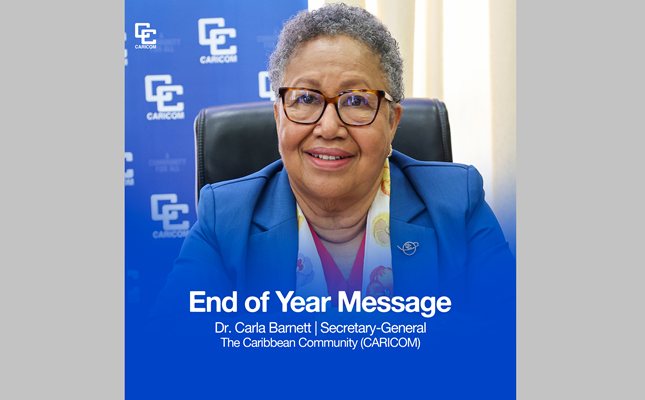
    End of Year Message from Dr Carla Barnett, Secretary-General of the Caribbean Community (CARICOM)

    In her annual year-end message, Dr. Carla Barnett, Secretary-General of the Caribbean Community (CARICOM), delivered a comprehensive assessment of the region’s tumultuous year while highlighting significant institutional progress. The address, disseminated from the CARICOM Secretariat in Georgetown, Guyana on December 22, 2025, acknowledged the devastating impacts of Hurricane Melissa which followed closely on the heels of 2024’s Hurricane Beryl, causing substantial destruction in Jamaica and Haiti. Dr. Barnett emphasized that recovery efforts would demand considerable resources and extended timeframes given the scale of devastation.

    Beyond natural disasters, the Secretary-General noted that unprecedented geopolitical tensions had threatened regional export earnings, peace, and sovereignty throughout the year. Despite these compounded challenges, Dr. Barnett highlighted the Community’s characteristic resilience, with member states collaborating urgently to address critical post-hurricane needs and implementing creative solutions to safeguard economic stability and livelihoods.

    Significant institutional advancements were achieved in regional integration, particularly through the CARICOM Single Market and Economy (CSME) framework. Barbados, Belize, Dominica, and St. Vincent and the Grenadines committed to full free movement of persons among themselves, establishing foundations for enhanced economic activity and people-to-people connections. The development of a comprehensive CARICOM Industrial Policy and Strategy progressed substantially, aiming to strengthen productive capacity, innovation, and economic diversification across member states.

    Agricultural initiatives under the 25 by 2025+ strategy demonstrated production growth despite climate-related setbacks, while cultural celebrations during CARIFESTA XV in Barbados showcased regional artistic talent. Democratic processes remained robust with seven Member States and five Associate Members conducting peaceful general elections throughout the year.

    The Secretary-General emphasized ongoing commitments to human capital development, particularly focusing on youth and women’s participation in economic activities and decision-making processes. Future priorities include examining Artificial Intelligence implications for regional business practices, expanding physical and digital connectivity, strengthening disaster resilience, and enhancing food and nutrition security programs.

    Dr. Barnett expressed gratitude to CARICOM citizens, Secretariat staff, international partners, civil society organizations, private sector representatives, labor movements, and the Caribbean diaspora for their sustained advocacy and engagement. She concluded with confidence in the Community’s ability to address forthcoming challenges, referencing strategic outcomes from Heads of Government meetings in Barbados and Jamaica covering trade, security, foreign policy coordination, reparations, governance, human development, and climate change initiatives.

  • Premier Brantley Lobbies Federal Government for Reduction in the VAT, Customs Duty Rates

    Premier Brantley Lobbies Federal Government for Reduction in the VAT, Customs Duty Rates

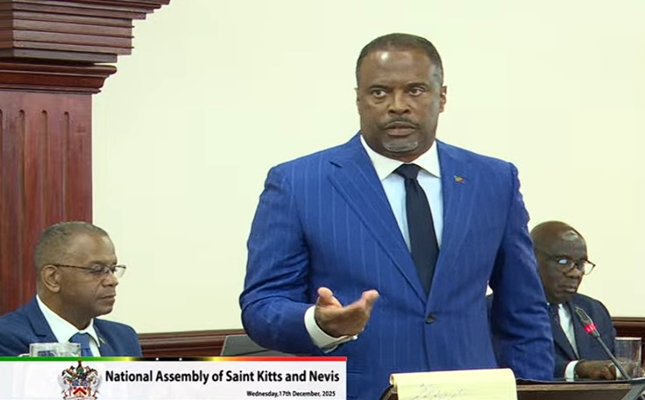
    In a significant parliamentary address, Nevis Premier Honourable Mark Brantley has issued a compelling call for comprehensive tax reforms within the Federation of St. Kitts and Nevis. Delivering his official response to the 2026 Federal Budget in the National Assembly, the Premier and Federal Opposition Leader urged the Drew administration to reconsider current taxation structures, particularly targeting Value Added Tax (VAT) and Customs Duty regimes.

    Premier Brantley’s proposal centers on reducing the current 17% VAT rate, suggesting a gradual reduction to potentially 10% over time. His recommendations are grounded in observable economic patterns, noting that temporary VAT relief periods consistently generate substantial consumer activity and business engagement. The Premier referenced Nevis’s own experience with a six-month VAT reduction period, during which the island maintained stable tax receipts while experiencing increased consumption levels—indicating that lower rates might actually stimulate broader economic activity without diminishing government revenue.

    Beyond VAT reform, Brantley advocated for restructuring seasonal duty-free concessions into a more equitable year-round system. He highlighted regional models where minimum threshold exemptions operate continuously, providing consistent relief to lower-income households rather than creating seasonal consumption spikes. The Premier emphasized that such innovative fiscal policies could drive sustainable economic development and growth across the federation.

    While acknowledging his non-economist background, Brantley expressed confidence in local expertise, specifically mentioning the potential for collaborative analysis between the Ministry of Finance and the Chamber of Industry and Commerce to develop viable implementation strategies. His address framed tax reform as both an economic necessity and an opportunity to enhance the federation’s regional competitiveness, given that current VAT rates rank among the highest in the Caribbean region.

  • VS roept ambassadeurs terug, ook in Suriname

    VS roept ambassadeurs terug, ook in Suriname

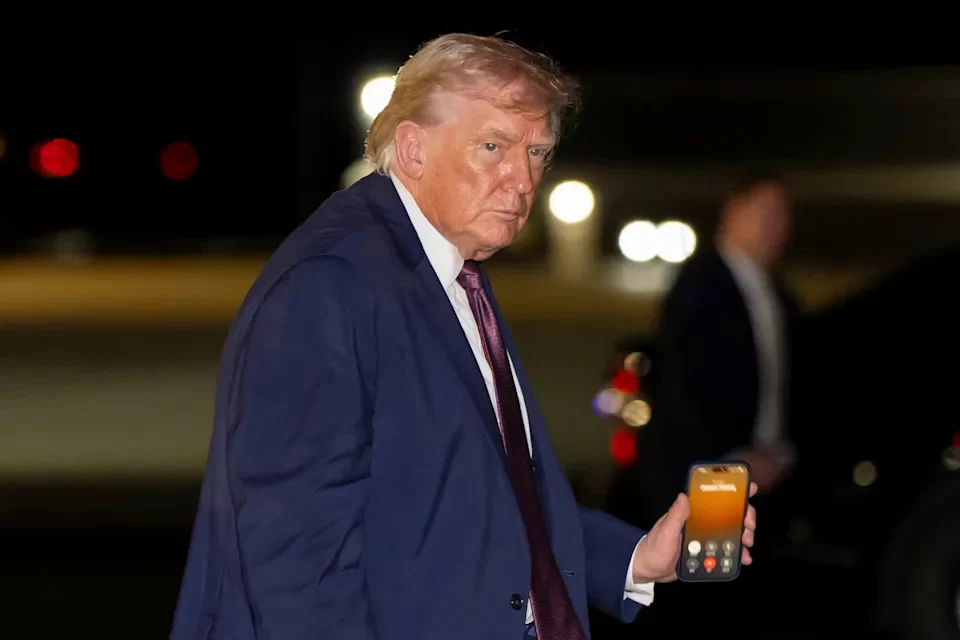
    The Trump administration has initiated a sweeping restructuring of U.S. diplomatic corps, recalling approximately 30 career ambassadors from missions worldwide including Suriname’s envoy Robert Faucher. This strategic move replaces Biden-appointed diplomats who had previously survived an initial review during the early phase of President Trump’s second term.

    According to two anonymous State Department officials, affected ambassadors across at least 29 countries received notifications last week that their tenures would conclude in January. While these diplomats won’t lose their Foreign Service positions, they will return to Washington for reassignment to different roles within the department.

    The State Department declined to confirm specific names or exact numbers but characterized the recalls as “standard procedure during any new administration.” Officials emphasized that ambassadors serve as the president’s personal representatives, and the administration maintains the right to appoint individuals who fully align with its “America First” policy priorities.

    Africa experiences the most significant impact with 13 nations affected, including key posts in Burundi, Cameroon, Ivory Coast, Nigeria, and Rwanda. Asia faces six ambassador changes covering the Philippines and Vietnam, while additional recalls affect diplomatic missions across Europe, the Middle East, South and Central Asia, and the Western Hemisphere. Beyond Suriname, the list includes Guatemala, Nepal, Sri Lanka, Armenia, and Macedonia.

    The recalls, first reported by Politico, have raised concerns among some U.S. Congress members and the union representing American diplomats, who question the potential disruption to international relationships and continuity in foreign policy implementation.

  • Parmessar wil onderzoek uitgifte honderden hectaren grond in Nickerie

    Parmessar wil onderzoek uitgifte honderden hectaren grond in Nickerie

    In a dramatic parliamentary session on Monday, opposition leader Rabin Parmessar of the National Democratic Party (NDP) launched sharp accusations against the Surinamese government regarding the allocation of hundreds of hectares of land in the Nickerie region and surrounding areas.

    During his address to the National Assembly, Parmessar expressed profound concern over both the scale and methodology of land distributions in Nickerie and Apoera. He revealed documentation indicating individual persons and commercial entities had received allocations ranging from approximately 230 to over 450 hectares per recipient—extraordinary allocations that far exceed normal land distribution practices.

    The opposition leader presented compelling evidence to parliamentary leadership, challenging the legality of these transactions. Parmessar emphatically stated that according to Surinamese law, only the Ministry of Land Policy and Forest Management holds constitutional authority for land allocation decisions. However, he alleged that the former Minister of Agriculture, Animal Husbandry and Fisheries, Parmanand Sewdien, had unlawfully authorized these substantial land distributions.

    ‘If these allegations prove accurate, these allocations must be immediately reversed without exception,’ Parmessar declared, directly challenging the government to clarify who has been blocking corrective actions and why intervention has stalled.

    Adding environmental concerns to his critique, Parmessar raised alarms about potential land allocations within or adjacent to protected natural reserves, specifically mentioning a conservation area in Coronie. He questioned how such ecologically sensitive territories could even be considered for distribution.

    The NDP leader concluded with an urgent appeal to government officials and responsible ministers to conduct a thorough investigation and deliver concrete results, emphasizing that this matter transcends political gamesmanship and touches fundamental issues of legality, governmental transparency, and protection of national interests.

  • Column: Een wet met een prijskaartje: US$ 20 miljoen en een prullenmand

    Column: Een wet met een prijskaartje: US$ 20 miljoen en een prullenmand

    Suriname’s National Assembly has delivered a rare unified rejection of the proposed Sustainable Nature Management Act during its first reading, with lawmakers across political factions expressing profound concerns about the legislation’s fundamental flaws. The bill, which aims to regulate environmental conservation, faced unprecedented criticism for its vague power distribution, inadequate protections for indigenous communities, and questionable alignment with international funding agreements.

    The parliamentary debate revealed deep reservations about the bill’s core architecture, with legislators questioning the concentration of authority, lack of clear checks and balances, and insufficient safeguards for tribal populations. Particularly alarming to lawmakers was the timing of the legislation following a September 2025 pledge of $20 million from international environmental organizations to President Jennifer Simons for nature conservation initiatives.

    This financial commitment has raised sovereignty concerns among assembly members, who openly questioned whether the legislation serves Suriname’s interests or responds to external expectations. The debate highlighted the dangerous intersection of idealistic environmental goals, rushed legislative processes, and potential foreign influence that could compromise national autonomy.

    Despite initial assumptions that the bill could be amended into acceptability, parliamentarians concluded that the legislation requires complete restructuring rather than superficial modifications. The assembly sent a clear message that Suriname needs robust, transparent legislation developed through inclusive domestic processes rather than expedited measures potentially influenced by international frameworks.

    The rejection underscores parliament’s insistence that environmental legislation must prioritize legal soundness, social justice, and administrative effectiveness over international recognition or donor approval. Lawmakers emphasized that nature conservation cannot become a pretext for compromising national sovereignty or establishing foreign oversight over Suriname’s natural resources.

  • Danielle Veira: ‘Ik ben smalend weggezet als een ondeugd en als verdachte’

    Danielle Veira: ‘Ik ben smalend weggezet als een ondeugd en als verdachte’

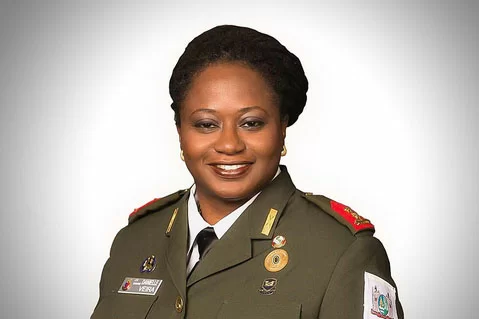
    In a dramatic courtroom scene, Danielle Veira, former head of Suriname’s Directorate of National Security (DNV), delivered an emotionally charged final statement before the Military Court on Monday, vehemently denying all charges against her while decrying what she described as a systematic campaign to destroy her reputation.

    The once-respected intelligence chief, known publicly as ‘Doewet’ and ‘Help Yourself’ for her efforts protecting citizens during the early COVID-19 pandemic, emotionally recounted her fall from grace. ‘In my worst nightmares, I never imagined having to defend myself here,’ Veira stated, her voice trembling with emotion. ‘I’ve been scornfully labeled as a villain and suspect despite my service to the nation.’

    Veira, who made history as Suriname’s first female intelligence director, highlighted the fragility of professional reputation. ‘I was appointed based on my reliability, competence, and integrity, yet here I stand today,’ she told the court, describing her recent years as ‘going through hell’ while maintaining her faith in divine justice despite being ‘portrayed as public enemy number one.’

    Addressing specific allegations regarding the Rodney Cairo hostage incident, Veira acknowledged wishing she ‘had been more alert that morning’ but maintained her decision to contact the police commissioner was intended to secure observations rather than conceal criminal activity. She revealed DNV had been monitoring Cairo for ‘considerable time’ due to indications he ‘could endanger state security.’

    Veira repeatedly asserted her innocence regarding all thirteen charges brought by the Public Prosecutor’s Office (OM), suggesting she’d been targeted by ‘a plan to bring her down’ and expressing hope for ‘a justice system not driven by ego.’

    Earlier in proceedings, defense attorneys raised substantive questions about prosecution inconsistencies. Lawyer Cedric Meijnaar questioned why other DNV leaders who authorized weapon permits before and after Veira’s tenure faced no prosecution, while Derrick Veira highlighted what he termed ‘numerous investigative blunders’ by prosecutors—including accepting Cairo’s statements without verification and failing to authenticate submitted evidence despite contradictions with camera footage.

    With prosecutors seeking a nine-year sentence, the Military Court is scheduled to deliver its verdict next week in a case that has exposed deep tensions within Suriname’s security apparatus.

  • China donates electronic equipment to Dominican Chamber of Deputies

    China donates electronic equipment to Dominican Chamber of Deputies

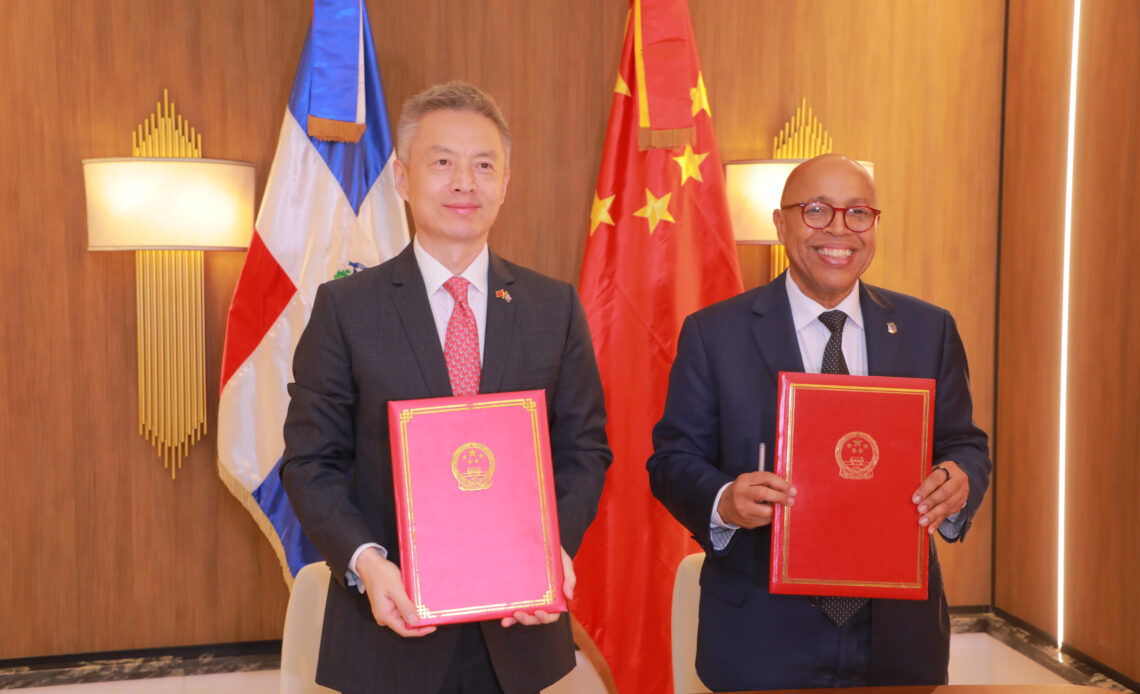
    In a significant diplomatic gesture, the People’s Republic of China has provided advanced electronic equipment to the Chamber of Deputies of the Dominican Republic, marking a substantial step toward enhancing legislative efficiency and institutional modernization. The formal handover ceremony, presided over by Chinese Ambassador Chen Luning and Chamber President Alfredo Pacheco, underscored the growing strategic partnership between the two nations.

    Ambassador Luning emphasized the remarkable dynamism characterizing Sino-Dominican relations, noting that bilateral ties have reached unprecedented levels of mutual trust and cooperative engagement. The Chinese diplomat reaffirmed his nation’s commitment to treating the Caribbean nation as a pivotal trade partner and strategic ally in international affairs. He further articulated technology’s critical role in driving national development agendas and optimizing institutional performance within governmental frameworks.

    President Pacheco expressed profound appreciation for the technological contribution, highlighting how these resources would directly enhance parliamentary operations and legislative management capabilities. The legislative leader pointed to parliamentary diplomacy as an instrumental mechanism for fortifying relationships between the two countries’ governing bodies. The ceremonial proceedings culminated in a symbolic exchange of gifts and the formalization of a donation agreement, cementing both nations’ dedication to ongoing collaborative initiatives focused on technological advancement and institutional strengthening.

  • FLASH : Limited-time offer of $3,000 USD and a free plane ticket

    FLASH : Limited-time offer of $3,000 USD and a free plane ticket

    The U.S. Department of Homeland Security (DHS) has announced a significant, time-limited enhancement to its voluntary departure program, offering undocumented immigrants substantial financial incentives to leave the country before year’s end. Through the CBP Home mobile application, individuals who register for self-deportation by December 31, 2025, will receive a $3,000 cash bonus along with a fully funded plane ticket to their home country.

    Homeland Security Secretary Kristi Noem characterized the increased incentive as a “generous” holiday-season offering from U.S. taxpayers, noting that the amount represents a tripling of previous voluntary departure bonuses. The program not only provides financial compensation and travel arrangements but also guarantees exemption from fines or civil penalties typically associated with deportation orders.

    Official statistics reveal substantial program participation, with approximately 1.9 million undocumented immigrants having voluntarily departed since January 2025, including tens of thousands who utilized the CBP Home application. Secretary Noem emphasized the urgency of the limited-time offer while issuing a stern warning to those who might decline: “Illegal aliens should take advantage of this gift and self-deport because if they don’t, we will find them, we will arrest them, and they will never return.”

    The DHS describes the process as streamlined and user-friendly. Prospective participants need only download the CBP Home app, complete their personal information, and await transportation arrangements—all coordinated and financed by the department. This initiative represents one of the most significant financial incentives ever offered for voluntary departure from the United States.