分类: politics

  • Political appointments?

    Political appointments?

    KINGSTON, Jamaica – During Wednesday’s Sectoral Debate in the country’s House of Representatives, Jamaica’s Opposition Spokesperson on Rural and Community Development Dr. Kenneth Russell has put forward serious allegations of systemic partisan patronage at the nation’s Social Development Commission (SDC), warning that blurred lines between partisan politics and community development risk eroding public trust in the key public institution.

    Dr. Russell, a first-term Member of Parliament, told lawmakers that a troubling pattern has emerged: multiple defeated candidates from the governing Jamaica Labour Party (JLP) have been appointed to top leadership positions at the SDC, a body mandated to drive grassroots community organizing and development across the island. Among the appointees he named are SDC Chairman Hidran McKlusky, Executive Director Omar Frith, and Kingston and St Andrew Parish Manager Wade Brown. All three lost recent electoral contests to candidates from the opposition People’s National Party (PNP): McKlusky was defeated by PNP’s Peter Bunting in the Manchester Southern constituency during the 2025 General Election, Frith lost to Mikael Phillips in Manchester North Western in the same poll, and Brown fell to Oliver Clue in the 2024 Local Government Election for the Harbour View division.

    “These are not hidden party volunteers – all of them ran for and lost public office in very recent contests,” Russell told the chamber. “This is a very disconcerting pattern that demands urgent government clarification.” The Opposition spokesperson also called on Rural and Community Development Minister Desmond McKenzie to provide a full update on the SDC’s current governance status, including whether a fully authorized, properly constituted board is currently in place.

    Beyond the controversial appointments, Dr. Russell highlighted long-running staffing shortages that he says have left community services crippled across much of the country. He told Parliament that while three community development liaison officers are supposed to be assigned to the South East St Ann constituency, the post has operated with only a single officer for multiple years. While he acknowledged that recruitment efforts are ongoing, Russell urged the minister to prioritize filling all vacant posts as quickly as possible through a transparent, non-partisan hiring process.

    Dr. Russell emphasized that the SDC holds a unique role in Jamaican public life, operating not as a regulatory or enforcement body, but as a neutral facilitator for grassroots participation, local leadership, and collective community action. “Trust is the most valuable currency of community development,” he explained. “When the lines between partisan politics and community-focused work get blurred, the institution’s credibility erodes, public participation drops, and the public trust that makes our work possible dies.”

    Looking beyond the current leadership and staffing issues, the Opposition spokesperson called for a sweeping, full review and modernization of the decades-old legislative framework that governs the SDC. The commission currently operates under the Jamaica Social Welfare Commission Act, a law first passed in 1958 and last revised in 1965. Russell argued that the 68-year-old legislation is completely out of step with modern community needs, digital technologies, and evolving public expectations.

    “Today’s opportunities, tools, and community aspirations are nothing like what they were when this law was written,” he noted. “The world is changing fast, and the aspirations of Jamaican people are changing even faster, yet too much of our policy thinking around rural and community development remains trapped in outdated assumptions. It sometimes feels like this Government is still playing an outdated children’s game while the rest of Jamaican society has moved on to meet new challenges.”

    Dr. Russell rooted his push for reform in the original vision of the commission’s precursor, Jamaica Welfare, founded by Norman Manley in 1939 to drive grassroots development. Manley convinced the banana industry to commit an annual £80,000 investment to the initiative – a sum equal to roughly J$1.49 billion today. By comparison, Russell pointed out, the total SDC budget for 2026 is only J$1.9 billion, despite the country now having more than twice the population it did when the original initiative launched.

    “Nearly 90 years have passed since that original, ambitious vision was laid out, and we have to ask hard questions: Have we kept pace with that founding ambition? Have we updated our approach to meet the needs of 21st century Jamaican communities?” Russell asked, closing his call for urgent government action to address both partisan appointments and structural reform of the country’s community development system.
  • Adriano Espaillat backs deportation for immigrants convicted of violent crimes

    Adriano Espaillat backs deportation for immigrants convicted of violent crimes

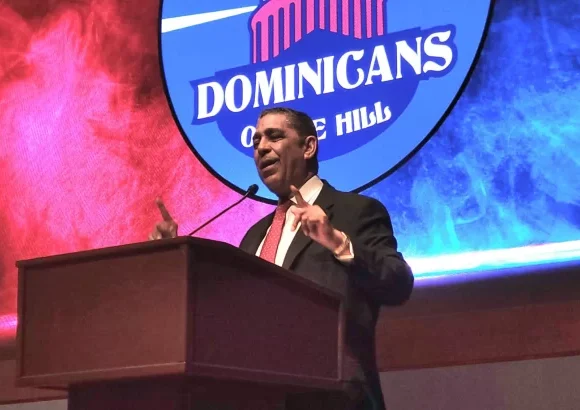
    As national conversations over U.S. immigration enforcement and deportation rules continue to roil policymakers and communities across the country, Democratic Congressman Adriano Espaillat has laid out a measured, targeted approach to how the nation should handle immigrant residents convicted of crimes. Speaking from New York in a recent televised public appearance, the lawmaker drew a clear line between immigrants who have committed violent felonies and those convicted of low-level, non-violent minor offenses, arguing that one-size-fits-all automatic deportation does not align with American legal principles.

    For immigrants convicted of severe violent crimes — including homicide and sexual assault — Espaillat affirmed that they must be held fully accountable through the existing U.S. criminal justice system. When existing federal or state law explicitly requires deportation following a conviction for such offenses, he stressed that those legal mandates must be enforced without exception. This position marks a break from more hardline progressive stances that call for sweeping rollbacks of deportation authority, positioning Espaillat as a voice seeking common ground in the polarizing immigration debate.

    When it comes to minor offenses, however, the Dominican-born congressman pushed back against mandatory automatic deportation policies. He pointed out that a large share of these low-level cases involve long-term U.S. residents and parents who have put down roots in American communities, many of whom have lived in the country for decades. Instead of permanent separation from their families and communities through deportation, Espaillat argued these individuals should be granted a meaningful chance to take accountability for their actions and rebuild their lives within the U.S.

    Espaillat brought personal context to his policy arguments, drawing on his own childhood experiences with aggressive immigration enforcement in his family. He reflected that harsh, overreaching immigration raids targeting immigrant communities were common long before the creation of U.S. Immigration and Customs Enforcement (ICE), noting that aggressive enforcement has a long and troubling history in the country that continues to shape immigrant trust in public institutions today.

    Central to Espaillat’s framework is a unwavering commitment to due process for all immigrants, regardless of the offenses they are accused of. He emphasized that deportation proceedings should never be initiated before an individual has completed their process through the criminal justice system and received a formal conviction. Any removal action, he added, must be carried out in strict compliance with existing U.S. law and the constitutional protections that apply to all people within the country’s borders, regardless of immigration status.

  • Golding says no PNP MPs or senators under illicit enrichment probe, renews call for Wheatley to step down

    Golding says no PNP MPs or senators under illicit enrichment probe, renews call for Wheatley to step down

    KINGSTON, Jamaica — In a charged press briefing held Thursday, Mark Golding, leader of Jamaica’s main opposition People’s National Party (PNP), has publicly stated that none of the party’s sitting Members of Parliament or senators are under active investigation for illicit enrichment by the country’s Integrity Commission (IC), based on all information available to him.

    Golding’s confirmation of the PNP’s clean record came as he amplified his public call for embattled Cabinet minister Dr Andrew Wheatley to step down immediately. The demand follows the tabling of a damning IC investigative report in Jamaica’s Parliament Wednesday, which formally recommended criminal charges of illicit enrichment against Wheatley, the sitting MP for St Catherine South Central.

    The IC’s probe concluded that Wheatley holds total assets worth approximately J$164 million that far outpace his documented lawful income, and that he failed to provide a credible, satisfactory explanation for the massive gap between his earnings and his accumulated wealth. Wheatley has forcefully pushed back against the report’s conclusions, releasing a lengthy public statement that accuses inquiry leaders of ignoring key exculpatory evidence that he argues would have completely changed the investigation’s final outcome.

    Speaking to journalists Thursday, Golding said his confidence in his party’s lack of ongoing probes stems from both prior guidance provided by IC representatives serving on the parliamentary Integrity Commission Oversight Committee, and direct one-on-one questioning he conducted with every PNP lawmaker. He explained that standard investigative practice means any public official under active investigation for illicit enrichment would already have been contacted by the IC and asked to submit additional documentation to verify their asset declarations, meaning any lawmaker under probe would be aware of the process.

    Golding recalled that after annual IC disclosures revealed multiple public officials were facing illicit enrichment investigations, he personally polled all PNP MPs and senators. When the first annual report confirmed six public officials were under investigation, and a follow-up report raised that number to eight, Golding said he asked each PNP legislator directly about whether they were part of the probe pool.

    “Every single one of our members gave me the same answer. None told me they were the subject of an illicit enrichment investigation, and they all knew I was asking so I could give the Jamaican public a clear, accurate account of where the PNP stands on this issue,” Golding added.

    Golding’s remarks capped an opposition push to force the government’s hand on Wheatley’s future, renewing the PNP’s demand that either Wheatley resign voluntarily from Prime Minister Andrew Holness’ Cabinet, or that Holness dismisses him immediately. “The prime minister has the full authority to remove him right now, and I have no doubt he is weighing his next steps,” Golding noted.

    The opposition leader stressed that the controversy extends far beyond personal political loyalties, and goes straight to the core of Jamaica’s international reputation and the standards of public governance the country upholds. “What matters most is Jamaica’s standing, both at home and abroad, and our commitment to upholding the rule of law and basic decency in public office,” Golding said. “The prime minister has a clear responsibility to lead on this issue. He cannot keep a member of Cabinet who faces serious confirmed illicit enrichment findings.”

    Golding also noted that the opposition is rallying support from civil society and other Jamaican organizations to back its demand, and will continue pressing for action until what he calls a Jamaica-positive outcome is reached. “We will keep agitating for this until we get the result that is best for our country,” he said.

    In addition, Golding brought up the separate ongoing investigation into Prime Minister Holness himself, pointing out that the IC previously referred findings related to Holness’ statutory asset declarations to the Financial Investigations Division (FID) for further review. He argued that this context, which already raises questions about executive accountability, makes decisive action on Wheatley’s position even more urgent.

    “We hope that all right-minded Jamaicans, and every organization that cares about national development and good governance, will add their pressure to the government to do the right thing here,” Golding added.

  • Inside the $164-million calculation

    Inside the $164-million calculation

    In a high-stakes forensic investigation that has captured Jamaica’s political attention, the country’s Integrity Commission has concluded that former legislator Dr. Andrew Wheatley holds roughly $164 million in assets and expenditures that cannot be traced to verifiable lawful sources of income, setting the stage for four criminal charges and a bitter public dispute over conflicting financial records. This is no simple he-said-she-said allegation: it is a granular, method-driven forensic accounting fight that turns on which income streams were counted, which were excluded, and what evidence remains out of public view five years after the probe first launched.

    The core of the conflict hinges on a source-and-application-of-funds analysis, a standard forensic tool that compares all confirmed lawful income against documented spending, asset purchases, and other uses of money across a multi-year period. Investigators began by compiling all verifiable income streams available to Wheatley, including parliamentary and employment salaries, confirmed rental earnings, investment returns, proceeds from verified property sales, documented business income, and approved loans. They then mapped all of Wheatley’s confirmed outlays: real estate acquisitions, new investments, loan repayments, estimated day-to-day living costs, and the net growth of his asset portfolio. After adjusting the calculation to credit all explanations investigators deemed satisfactory, all independently verified bank deposits, and consistent transaction patterns, the commission still found a $164 million gap between confirmed lawful income and recorded uses of funds. Crucially, investigators stress this is not an allegation that $164 million was stolen from the Jamaican government, but rather that the origin of $164 million in spending and assets cannot be linked to confirmed legal sources.

    Wheatley has forcefully rejected the commission’s final calculation, arguing that the investigation wrongfully excluded roughly $168 million in documented, fully lawful rental income, plus additional legitimate proceeds used to repay approximately $50 million in business loans. He insists every dollar of his assets and spending can be traced to legal sources, and that the commission’s analysis is fundamentally inaccurate, incomplete, and unfair. The commission pushes back on this claim, emphasizing that all verified rental income and credible explanations were already included in its final calculation before arriving at the $164 million gap.

    A key point of confusion for outside observers is the overlapping $168 million figures cited by both sides: one is the commission’s estimate of total bank deposits that remain unexplained after adjustments, while the other is the total rental income Wheatley says was wrongfully excluded from the analysis. The central unresolved question here is how much of Wheatley’s claimed rental income was already counted by investigators, how much was left out, and whether the two $168 million figures actually overlap.

    Digging into the granular disputes between the two parties reveals multiple unresolved points that will ultimately be settled in court. On the topic of rental income, Wheatley says he provided leases and bank records proving $168 million in lawful rental earnings that the commission failed to recognize. The commission counters that Wheatley only reported $143.3 million in rental income initially, and investigators only received supporting documentation for a subset of his properties, so they only credited income that could be independently verified. It remains unclear exactly which deposits were accepted, rejected, or already counted, and why the two sides report vastly different total rental figures.

    Next, Wheatley argues the commission failed to properly account for lawful, verifiable sources he used to repay $50 million in business loans. The commission notes that many of these loans should have been disclosed as liabilities in Wheatley’s mandatory statutory declarations, a requirement he allegedly failed to meet. It is still unresolved whether all loan proceeds and repayments were correctly traced, and whether all liabilities were properly disclosed as required by law.

    Disputes also surround a 20-lot real estate development held jointly by Wheatley and business partner Patrick Phipps. Six of the 20 subdivided apartments were transferred to Wheatley’s sole ownership, which he describes as his 30 percent commercial share of the joint venture, not an unreported gift as initially described by his legal team. The commission says it already considered this explanation, but remains concerned about the failure to disclose ownership interests in all 20 lots, and the subsequent disposal of 14 remaining lots while Wheatley was a joint owner. To date, Wheatley has not publicly detailed how the 14 lots were sold or transferred, where the proceeds went, and how these interests were disclosed in his mandatory filings.

    Other unresolved points include a down payment for land tied to Prosperity Realtor, which the commission says should have been reported as an investment in the landowning company that has not been disclosed; the sale of Wheatley’s former ownership stake in Western Medical Centre, which he says is a lawful business transaction, but the commission says the proceeds of the sale could not be verified from the records provided or obtained independently; and the commission’s claim that Wheatley failed to fully provide requested information despite repeated formal requests, which Wheatley denies, arguing he cooperated fully and investigators could have requested additional evidence if needed.

    The investigation stretched across five years, beginning with a formal referral in 2021, followed by multiple rounds of record requests, interviews, and updated analysis. The commission obtained additional third-party records earlier this year, before submitting its final investigation report and indicative prosecutorial ruling to Jamaica’s Parliament in June 2026. The Director of Corruption Prosecution has recommended four charges against Wheatley: knowingly making false statements in statutory declarations between 2013 and 2017 under the former parliamentary integrity law; knowingly making false statements in statutory declarations between 2018 and 2022 under the current Integrity Commission Act; failing without reasonable cause to provide information requested by the Director of Information and Complaints; and illicit enrichment under the Corruption (Prevention) Act.

    To date, these charges are only a prosecutorial recommendation, not a conviction, and Wheatley has repeatedly denied all wrongdoing, asserting he is entitled to the legal presumption of innocence and plans to vigorously contest the charges in court. Both sides have published summary accounts of their positions, but the core of the dispute will only be resolved through a full court examination of line-by-line financial records, including a full reconciliation of claimed rental income, loan documentation, full records for the 20-lot development, sale paperwork for the medical centre, ownership records for Prosperity Realtor, and the full forensic model used by the commission to calculate the $164 million gap. The outcome of this case will turn on tangible evidence, not persuasive rhetoric: the critical missing document is a full line-by-line reconciliation that shows what was claimed, what was proven, what was accepted, what was rejected, and why each decision was made.

    This reporting is based on the Integrity Commission’s public investigation report, the indicative prosecutorial ruling, and Dr. Andrew Wheatley’s official media statement released on June 17, 2026.

  • New five mph speed limit set for Nassau Harbour boaters

    New five mph speed limit set for Nassau Harbour boaters

    Starting July 1, all boaters navigating Nassau Harbour will be required to adhere to a new, strict 5-mile-per-hour speed limit, part of a package of far-reaching maritime safety legislation introduced by Bahamas’ Transport Minister Leon Lundy.

    The regulatory overhaul comes as the government moves to address longstanding safety and environmental challenges in the island nation’s busiest harbor. Currently, existing navigation rules for the Port of Nassau do not outline a fixed numerical speed cap, only barring vessels from operating at speeds that create wakes capable of damaging other craft or endangering people on the water. The new legislative framework codifies the 5 mph no-wake limit into law for Nassau Harbour, a change that brings clear, enforceable standards to the busy waterway.

    Beyond the Nassau Harbour speed rule, the legislation establishes a broad requirement that all vessels operating in any Bahamian port area must maintain a “safe speed” — defined as a speed that allows the operator to take full, effective evasive action to avoid collisions. The 5 mph cap will also apply to commercial recreational watercraft under the separate Commercial Recreational Watercraft (Amendment) Bill 2026, while the Water Skiing and Motor Boat Control (Amendment) Bill 2026 extends identical safety protections to all other motorized boats operating in regulated waters.

    A second major pillar of the reform package targets the growing problem of abandoned and derelict vessels, which have plagued Bahamian waterways for years. Under the Boat Registration amendment, vessel owners who leave their craft unmanned for 21 consecutive days or more will face strict legal liability, with financial penalties that can reach as high as $100,000 for violations. Minister Lundy emphasized that abandoned vessels pose a cascade of problems: they block critical navigation channels, cause lasting damage to coastal and marine ecosystems, and impose significant public costs for removal and remediation.

    For violations under the Water Skiing and Motor Boat Control amendment, penalties can climb to $50,000 in fines, and the most severe offenses may even result in up to two years of prison time.

    The new legislative measures build on ongoing clean-up and removal efforts already underway by the country’s Port Department. In recent months, agency crews have already removed sunken derelict vessels from Montague Dock and Potter’s Cay, and are currently overseeing the removal of three large abandoned craft: the 80-foot steel-hull trawler *Adrianna*, the M/Y Double Shot, and the Transcargo. Minister Lundy confirmed that that removal work is nearly complete, with additional clean-up operations already carried out at Clifton Pier.

    Lundy stressed that the new regulatory framework sends an unambiguous message to all water users: Nassau Harbour is a working commercial harbor, and reckless or irresponsible behavior on the water will no longer be tolerated with weak enforcement. “The recklessness that has too long been tolerated on our waters will now meet the firm hand of the law,” he said.

  • Spain reaffirms support for Dominican efforts to protect crime victims

    Spain reaffirms support for Dominican efforts to protect crime victims

    A high-stakes bilateral meeting between senior Spanish development cooperation officials and Dominican Republic’s top prosecutorial leadership has reinforced ongoing collaborative work to advance victims’ rights and expand equitable access to justice across the Caribbean nation. Álvaro Borrega, Deputy Director of the Spanish Agency for International Development Cooperation (AECID) in charge of partnership programming with Central America, Mexico and the Caribbean, traveled to Santo Domingo to review joint initiatives and align future priorities for institutional capacity building.

    During closed-door discussions with Dominican Attorney General Yeni Berenice Reynoso, Borrega offered public praise for the transformative work the Dominican Public Prosecutor’s Office has delivered in reforming the national justice sector in recent years. He underscored the strong strategic alignment between the AECID’s development priorities and the Dominican government’s goals for institutional strengthening, reaffirming Spain’s long-standing commitment to funding programs that shield vulnerable populations and reinforce the rule of law.

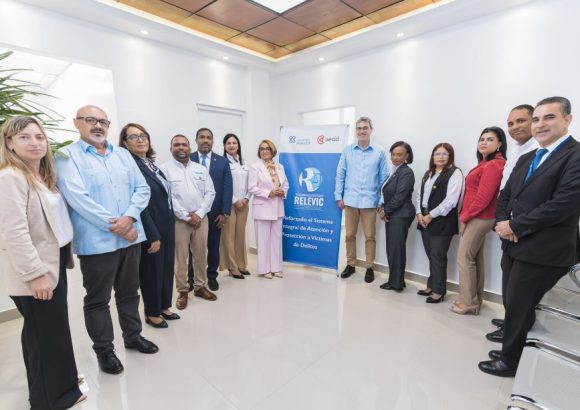
    Hosted by Spain’s Ambassador to the Dominican Republic Laura Oroz Ulibarri, Borrega took part in a series of official engagement activities, including a guided tour of the headquarters of the National Service for Legal Representation of Victims’ Rights, commonly known by its Spanish acronym Relevic. During the tour, the Spanish delegation received a detailed walkthrough of the free nationwide legal assistance services Relevic provides to people impacted by all types of crime.

    Borrega shared that he left the visit impressed by how effectively AECID funding has been deployed to advance shared goals, noting that contributions from Spanish taxpayers are being strategically invested in initiatives that directly remove barriers to justice and defend the fundamental rights of crime victims. He specifically commended Relevic’s innovative model of victim support, which prioritizes preventing revictimization by ensuring survivors receive consistent, informed legal guidance and wraparound support at every stage of judicial proceedings.

    María Rosalba Díaz Henríquez, Director of Relevic, walked the delegation through the organization’s community-centered legal representation framework, highlighting a key recent expansion of the service: the addition of 100 new criminal law specialists that has grown the institution’s total legal workforce to 142 attorneys, who now serve clients across 37 regional offices covering all major regions of the country.

    The meeting also included updates on two high-priority Dominican prosecutorial initiatives: the Attorney General’s 2026-2029 Institutional Strategic Plan, and the Vitalia Initiative, a landmark coordinated program designed to deliver comprehensive specialized support services for women survivors of gender-based violence. Closing the visit, Borrega reiterated AECID’s pledge to continue backing the Dominican Republic’s ongoing efforts to strengthen democratic institutions, expand victim support infrastructure, and make equal access to justice a reality for all citizens.

  • Seabreeze MP laughs off health rumours caused by seafood poisoning

    Seabreeze MP laughs off health rumours caused by seafood poisoning

    Bahamian Member of Parliament for Seabreeze Leslia Brice turned to lighthearted wit to put widespread health rumors to rest during an address to the House of Assembly this week, revealing that a simple unexpected reaction to a weekend lobster meal was behind the recent public concern over her wellbeing.

    The incident unfolded Saturday, when Brice had an unanticipated adverse reaction shortly after eating the crustacean. News of the sudden episode spread quickly through local networks, sparking unconfirmed speculation about the severity of her condition that soon reached the public sphere. In the hours that followed, Brice was flooded with calls, texts and messages of concern from close family, friends and political supporters across her constituency.

    Addressing the chamber, Brice framed the moment with characteristic good humor, joking that the unexpected challenge came not from a political rival or a contentious legislative debate, but from a single piece of lobster that derailed her weekend plans. She went on to acknowledge the outpouring of support she received, noting that constituents in Seabreeze reached out en masse, with many even saying they were prepared to travel to her side immediately to offer support.

    “Madam Speaker, that is love, that is the connection, that is the bond that I share with the people of Sea Breeze,” Brice told the chamber, emphasizing how moved she was by the community’s response.

    Brice extended her sincere gratitude to everyone who reached out with well wishes and prayers, noting that the widespread show of care underscored the deep, trusting relationship she has built with the residents she represents during her time in office. The lawmaker also used the moment to quash any remaining uncertainty about her ability to serve, drawing a parallel between the recent health scare and the grueling general election campaign she just navigated to secure her seat.

    “Now, I want to be clear, I was not about to let that little lobster take me out, Madam Speaker,” she said. “I survived a gruelling and intense campaign. I walked those streets, I knocked on those doors, I stood in the heat for hours, and I am still standing. And if a whole election could not slow me down, a piece of seafood certainly was not going to stop me.”

    The address quickly drew a warm reaction from fellow representatives and observers, closing out public speculation about Brice’s health while highlighting the popular lawmaker’s well-known sense of humor and close connection to her constituency.

  • TCN arrangement was initiated by US, says Morris Dixon

    TCN arrangement was initiated by US, says Morris Dixon

    KINGSTON, Jamaica — Top Jamaican government officials have moved to clear widespread public confusion surrounding the newly disclosed Third Country Nationals (TCN) transit agreement, confirming the arrangement was first proposed by the United States government rather than initiated by Jamaican authorities.

    Senator Dr Dana Morris Dixon, Jamaica’s Minister of Education, Skills, Youth and Information, laid out the origins of the deal during an official Ministerial Update hosted by the Jamaica Information Service (JIS) at Jamaica House this Thursday. She emphasized that the entire conversation around the TCN programme began with a formal approach from the U.S. to Jamaican diplomatic officials.

    Her public statement comes just days after news broke that Jamaican authorities had signed a Memorandum of Understanding (MoU) that enables the transit of people transferred from U.S. custody through Jamaican territory before they reach their final destinations. Morris Dixon was quick to draw a clear line between this transit agreement and a separate, unrelated policy discussion currently underway: a separate initiative led by Ambassador Audrey Marks, Minister without portfolio in the Office of the Prime Minister, focused on attracting skilled foreign workers to boost Jamaica’s domestic economy.

    According to Morris Dixon, Jamaican officials issued formal clarification of this distinction almost immediately after the confidential diplomatic cable at the center of recent media coverage was first drafted, noting that bilateral negotiations are almost always kept private to allow for flexible, iterative discussions between parties without unnecessary public speculation.

    The details of the agreement’s approval process were further outlined by Deputy Prime Minister Dr Horace Chang, who also serves as Minister of National Security and Peace, during Wednesday’s post-Cabinet press briefing at Jamaica House. Chang confirmed that the final decision to sign the MoU followed months of extensive cross-government negotiations, involving Jamaica’s Ministry of Foreign Affairs and Foreign Trade, the Ministry of National Security and Peace, the Office of the Prime Minister, and legal advisors from the Attorney General’s Office.

    Crucially, Chang pushed back against widespread misinformation that the agreement would open Jamaica to permanent migration from individuals transferred by the U.S. He stressed that all people processed under the deal are only in transit through Jamaica, and will not remain in the country as permanent residents. To enforce this, the two sides have agreed to a strict quota: no more than 25 individuals will be processed for transit every two weeks, regardless of destination, which includes the individuals’ home countries.

    Chang added that Jamaica retains full sovereign authority over the arrangement: Jamaican officials hold the right to refuse entry to any individual at any time, and both the U.S. and Jamaica can terminate the entire agreement without being required to provide long-form advance notice to the other party.

  • Families of Fatal Accident Victims Eligible for Up to $20,000 Under New Law

    Families of Fatal Accident Victims Eligible for Up to $20,000 Under New Law

    After decades of outdated legal provisions leaving grieving families without formal recognition for their emotional loss, the national Parliament has given final approval to a historic piece of legislation that will for the first time grant bereavement compensation to families of fatal accident victims.

    The Fatal Accidents Bill 2026, which cleared parliamentary voting on Tuesday, overhauls a century-old legal framework that has not seen substantial update since it was first enacted in 1924. At its core, the new law introduces a long-awaited change: formal damages for the grief, psychological pain and emotional trauma that surviving dependents endure after losing a loved one to a preventable fatal accident caused by another party’s actions.

    Attorney General Sir Steadroy Benjamin, who championed the bill through parliamentary debate, explained that the creation of a formal bereavement compensation category addresses a critical gap in the old legislation. “This is an acknowledgment of something that has always existed, but never been recognized in law: the unquantifiable pain that dependents carry when their family member is taken from them prematurely by someone else’s fault,” Benjamin told participating lawmakers during debate on the measure.

    When the bill was first introduced, the proposed maximum compensation amount stood at just $5,000. Benjamin publicly pushed back on this initial figure, arguing that it failed to reflect the severity of trauma many families experience. He highlighted a recent high-profile fatal roadway crash that killed a young worker on the job, a tragedy that he said underscored just how inadequate the original proposed amount was. “Five thousand dollars clearly cannot be appropriate,” he stated, referencing the ongoing emotional toll on that young man’s surviving family.

    During the committee review stage of the legislative process, Parliament approved amendments to address this concern: the maximum bereavement award was raised to $20,000, and eligibility to file claims was expanded to include a wider range of surviving relatives. Under the updated rules, spouses, children, parents, and other dependent family members are all now eligible to seek compensation for their bereavement.

    Benjamin emphasized that the revised legislation reflects the government’s commitment to supporting not just accident victims themselves, but the loved ones they leave behind. “For over a hundred years, our law has failed to recognize the profound suffering that surviving families go through. This bill fixes that longstanding injustice,” he said. Following the approval of amendments, the full Parliament voted to pass the bill, which will now replace the outdated 1924 legal provisions and bring the country’s fatal accident compensation rules into line with modern needs.

  • Walker Says His Time in Parliament Is ‘Coming to an End’

    Walker Says His Time in Parliament Is ‘Coming to an End’

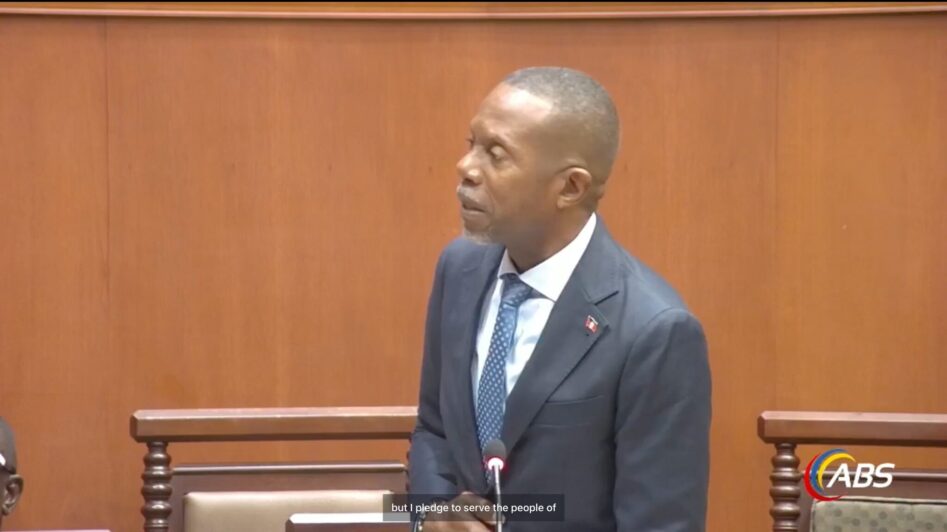
    Fresh off his re-election to Antigua and Barbuda’s newly convened Parliament, a decades-long veteran of national politics has sent subtle shockwaves through the legislative chamber with unexpected hints that his time in office is drawing to a close. Trevor Walker, the long-serving Member of Parliament for Barbuda, shared the cryptic revelation during his first remarks after being sworn in to his latest term on Tuesday.

    Reflecting on a political career that has spanned more than 20 years, one of the nation’s longest-tenured elected officials opened with gratitude to the constituents who have repeatedly entrusted him with office. In a reflection on his unique electoral trajectory, Walker noted that his support has only grown with each election cycle, bucking the common trend of incumbents seeing their margins shrink over time. “My political career seems to be different from most persons,” he told the assembled House. “The longer I go, the more votes I get. And the larger my margin seems to be.”

    It was after this reflection that Walker dropped the comment that immediately drew attention from his fellow parliamentarians. Speaking to Speaker Osbert Frederick, he stated plainly: “I can say here, Mr. Speaker, that my time in this honorable house, Mr. Speaker, is coming to an end. And I’ll just leave it at that.”

    Walker chose not to elaborate on the announcement, offering no timeline for his departure or details about what he plans to do after leaving office. Despite the confirmation that his legislative career is approaching its end, the MP made clear that he remains fully committed to serving the people of Barbuda through the entirety of this new term. In a formal pledge to his constituents, he said he would serve “with more vigor and with more determination” than in any previous term.

    Beyond the retirement announcement, Walker used his swearing-in remarks to congratulate Frederick on his return to the Speaker’s chair, and to acknowledge the landslide victory of the governing Antigua and Barbuda Labour Party in the April 30 general election. He also reaffirmed his core policy priorities, which center on advocating for Barbuda’s interests, particularly the long-running contentious issue of land ownership on the island.

    Walker stressed that he is open to collaborative work with the national administration, but drew a firm line on protecting local control of Barbuda’s land. “We have no problem cooperating with the Prime Minister,” he said. “But I must say on the record that we prefer not to be interfered with either. Leave us with our land. That is our land. It’s ours.”

    Walker’s comments on Tuesday confirm what political observers have begun to speculate in recent months: after 20-plus years representing his island in Parliament, the veteran lawmaker is planning to step away from elective office before the next election cycle. While no official departure date has been set, the public comment marks the first time Walker has openly acknowledged that his legislative career is nearing its conclusion.