分类: politics

  • Bangladesh: Tribunaal veroordeelt afgezette Sheikh Hasina tot de doodstraf

    Bangladesh: Tribunaal veroordeelt afgezette Sheikh Hasina tot de doodstraf

    In a landmark ruling, a special tribunal in Dhaka has sentenced Bangladesh’s ousted Prime Minister Sheikh Hasina to death for crimes against humanity. The charges stem from her alleged harsh crackdown on a student-led uprising in 2024, which resulted in hundreds of deaths and the collapse of her 15-year rule. The International Crimes Tribunal also handed down a death sentence to former Home Minister Asaduzzaman Khan for his role in the violent suppression of protesters. Both Hasina and Khan fled to India last year and were convicted in absentia. A former police chief, who turned state witness against Hasina, received a five-year prison sentence. The tribunal, led by Judge Golam Mortuza Mozumder, announced the verdict in a session broadcast live, drawing mixed reactions from the crowded courtroom. Hasina has condemned the ruling as “biased and politically motivated,” asserting that she acted in good faith to minimize casualties. The verdict comes amid ongoing instability in Bangladesh following Hasina’s ousting on August 5, 2024. Nobel Peace Prize laureate Muhammad Yunus, who now heads an interim government, has vowed to punish Hasina and banned her Awami League party from participating in upcoming elections. The country remains tense, with increased security measures and sporadic violence reported in the lead-up to the verdict. Hasina has the option to appeal the sentence within 30 days, though her return to Bangladesh seems unlikely.

  • Cuba congratulates students and remembers Fidel Castro’s message

    Cuba congratulates students and remembers Fidel Castro’s message

    In a heartfelt tribute on International Students’ Day, Cuban President Miguel Diaz-Canel took to social media to extend his warm wishes to students worldwide. He urged them to revisit the profound words of Fidel Castro, the iconic leader of the Cuban Revolution, delivered two decades ago. Diaz-Canel emphasized the enduring relevance of Castro’s message, stating, ‘His words from then carry remarkable significance and timeless lessons for the future.’ Simultaneously, Cuban Foreign Minister Bruno Rodriguez commemorated Castro’s historic speech at the University of Havana on November 17, 2005, marking the 60th anniversary of Castro’s enrollment at the institution. Rodriguez highlighted the speech’s critical warnings about imperialist threats to the Global South and its rallying cry for unity, awareness, and intelligence to safeguard the Revolution’s achievements. He also celebrated Castro’s unwavering optimism, quoting his declaration that dedicating one’s life to the cause made it ‘worth being born! Worth living!’ International Students’ Day traces its origins to November 17, 1939, when Czechoslovakian students bravely resisted Nazi forces in Prague, symbolizing the enduring spirit of youth in the face of oppression.

  • Duchess of Edinburgh to Meet Prime Minister Briceno

    Duchess of Edinburgh to Meet Prime Minister Briceno

    Sophie Rhys-Jones, the Duchess of Edinburgh, commenced a significant three-day diplomatic visit to Belize, arriving at Philip Goldson International Airport on the evening of November 16, 2025. She was warmly received by a delegation including Governor-General Dame Froyla Tzalam, Ambassador Amalia Mai, and representatives from the Belize Defence Force Honour Guard, underscoring the importance of her visit. The Duchess’s itinerary is packed with engagements aimed at fostering bilateral relations and supporting local initiatives. Her first stop was the Belize Council for the Visually Impaired (BCVI) in Belize City, where she interacted with the community and highlighted the importance of health and social welfare programs. Later in the day, she is scheduled to hold a pivotal meeting with Prime Minister John Briceño to discuss mutual interests and collaborative efforts. The day will culminate with a formal reception at the House of Culture, featuring an investiture ceremony. The Duchess’s visit emphasizes key areas such as health, the empowerment of indigenous women, and the preservation of Belize’s renowned barrier reef. This visit not only reinforces the strong historical ties between Belize, a Commonwealth realm, and the United Kingdom but also showcases the ongoing commitment to shared values and cooperation.

  • Democratic People’s Movement: We move together!

    Democratic People’s Movement: We move together!

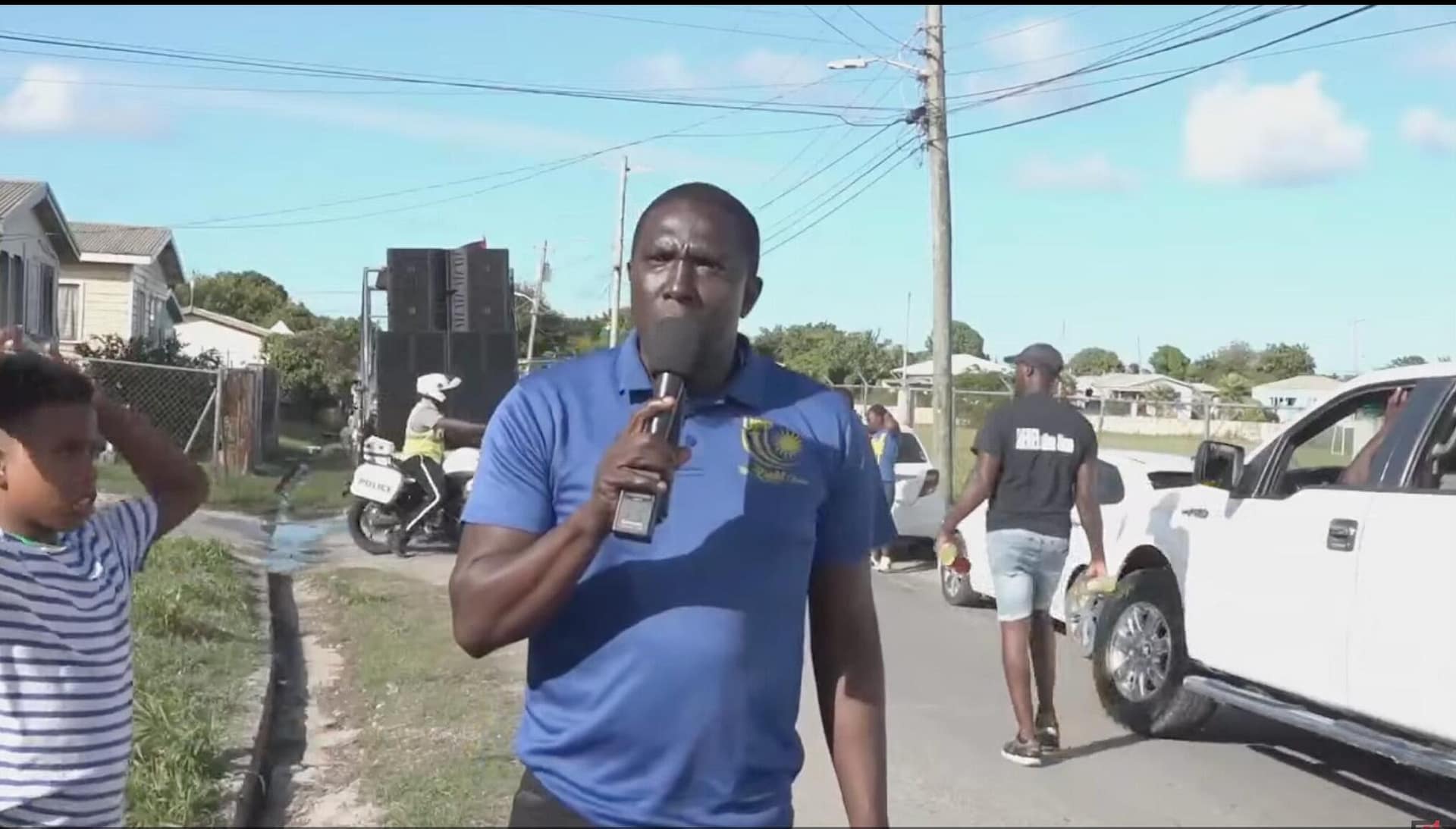
    On Sunday, 16 November 2025, Peter David officially launched the Democratic People’s Movement (DPM) in a historic event that marked a turning point for Grenada. Addressing a diverse audience, David declared that the movement is no longer just an idea but a tangible force for change. He emphasized unity, action, and progress as the core principles of the DPM, urging Grenadians to move beyond division and stagnation.

    David acknowledged the challenges Grenada faces, including political division, economic struggles, and social inequality. He shared stories from his travels across the country, where he listened to the concerns of citizens—parents worried about their children’s future, business owners battling economic hardships, and a general frustration with the status quo. He framed the DPM as a grassroots movement, born from the shared hope of rebuilding a nation that honors its past while embracing a brighter future.

    The DPM’s philosophy centers on the belief that a nation’s strength lies in the participation of all its people, not just a select few. David outlined three key commitments: ‘Work that pays and stays,’ ‘Food that feeds us,’ and ‘Healthcare that reaches you.’ These pillars aim to address unemployment, food security, and healthcare accessibility, ensuring a better quality of life for all Grenadians.

    David also highlighted the need for economic resilience, particularly in the face of global challenges that disproportionately affect small island states. He called for strategic partnerships, sustainable investment, and policies that protect Grenada’s sovereignty and dignity. The movement’s Progressive Agenda for Empowerment (PAE) will be unveiled in the coming weeks, focusing on youth empowerment, small business support, and agricultural revitalization.

    In a passionate conclusion, David invoked the spirit of unity and courage, urging Grenadians to join the movement and shape its future. He emphasized that the DPM is not about leaders or parties but about ideas, policies, and action. The event concluded with a call to action: ‘First, we question. Then, we organize. Finally, we move forward, together.’

  • Electoral Officer announces that the process of voter confirmation is proceeding with no interruptions

    Electoral Officer announces that the process of voter confirmation is proceeding with no interruptions

    The Electoral Office has issued a clarification regarding the ongoing voter confirmation process, emphasizing that it remains uninterrupted despite the temporary suspension of new voter registrations. In a recent statement, the Office addressed public concerns and misinformation, confirming that voter confirmation activities are proceeding as planned until the October 15, 2026, deadline. The suspension of new voter registrations, announced last week, does not affect the confirmation process, which allows registered voters to verify, update, or amend their personal information. The Office highlighted the distinction between the two processes: voter registration, which is currently on hold, is for individuals not yet listed on the Voters Register, while voter confirmation is for those already registered. To facilitate the confirmation process, designated centres across all constituencies remain operational during specified hours: Monday, Tuesday, Thursday, and Friday from 9:30 AM to 5:30 PM, and Saturday from 9:00 AM to 3:00 PM. The Electoral Office encourages all registered voters to complete their confirmation before the deadline. For further assistance, the public can contact the Electoral Office hotline at 617-9595 or 275-8164. The Office is located at the commissions building on Jewel Street, Roseau, in the Commonwealth of Dominica.

  • CoP mum on police involvement in US military training

    CoP mum on police involvement in US military training

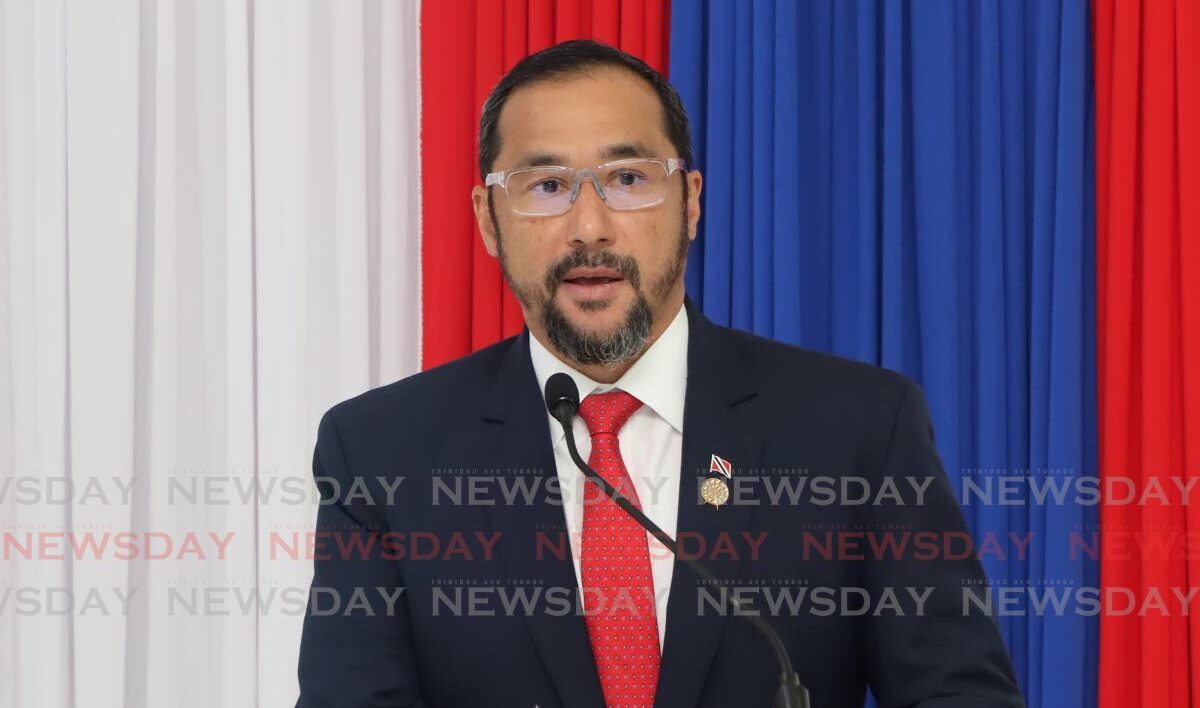
    Commissioner of Police Allister Guevarro remained tight-lipped regarding the Trinidad and Tobago Police Service’s (TTPS) involvement in joint training exercises with the US military’s 22nd Marine Expeditionary Unit. Speaking at the passing-out parade for 126 new police officers at the Police Training Academy in St James on November 17, Guevarro emphasized the strategic nature of such collaborations, stating it would be unwise to disclose specific details publicly.

  • Trump promises to talk with Maduro

    Trump promises to talk with Maduro

    US President Donald Trump has hinted at possible discussions with Venezuelan leader Nicolás Maduro, marking a potential shift in the strained relations between the two nations. Speaking to reporters at Palm Beach International Airport on November 16, Trump stated, ‘Let’s see how that turns out. They would like to talk.’ However, he remained noncommittal about Maduro’s future as Venezuela’s leader, citing the significant damage Maduro has caused to the US, particularly through drug-related issues and the release of prisoners into the country. Trump emphasized that the situation is complex and that further decisions would be made in due course. This announcement came shortly after the US Department of State declared its intention to designate Venezuela’s Cartel de los Soles as a terrorist organization, effective November 24. Secretary of State Marco Rubio affirmed that the US would continue to employ all available tools to safeguard national security and disrupt funding to narco-terrorists. Trump acknowledged that the designation could enable the US to target Maduro’s assets but clarified that no definitive actions have been decided. The backdrop to these developments includes a reported offer from Maduro’s administration to grant the US a dominant stake in Venezuela’s oil and mineral wealth, as revealed by The New York Times on October 10. Meanwhile, US Secretary of War Pete Hegseth has launched Operation Southern Spear, aimed at dismantling drug cartels in the Western Hemisphere. The US has also increased the bounty for Maduro’s arrest from $15 million to $50 million. Recent US military actions in the Eastern Pacific and Caribbean Sea have resulted in at least 83 deaths, further straining relations between Venezuela and Trinidad and Tobago (TT). Venezuela has accused TT of collaborating with the US, a claim vehemently denied by TT Prime Minister Kamla Persad-Bissessar, who has expressed strong support for US efforts to curb illegal weapons and drugs. In response, Venezuela has suspended energy deals with TT and declared Persad-Bissessar persona non grata.

  • US lawmakers set for explosive vote on Epstein files

    US lawmakers set for explosive vote on Epstein files

    In a significant political development, the US House of Representatives is set to vote on Tuesday for the release of government records related to Jeffrey Epstein, the convicted sex offender whose case has sparked widespread controversy. This move comes despite initial resistance from President Donald Trump, who had sought to suppress the documents. However, mounting pressure from within his own party has forced a reversal of his stance. The Epstein Files Transparency Act, which mandates the publication of unclassified documents detailing the investigation into Epstein’s operations and his 2019 death in custody, is expected to pass, potentially unanimously. Lawmakers argue that the public deserves transparency in a case involving over 1,000 alleged victims. Trump has claimed the files will expose powerful Democrats’ ties to Epstein, but his own long-standing friendship with the financier has drawn scrutiny. While the House vote appears decisive, the Justice Department retains the authority to withhold information if it jeopardizes an active investigation. The saga has revealed rare divisions within the Republican Party, with some members defying Trump to push for the release. Epstein survivors have expressed skepticism about the president’s motives, emphasizing the need for accountability. The case continues to cast a shadow over Washington, with potential revelations likely to fuel further political and public debate.

  • Sentenced to death

    Sentenced to death

    In a landmark ruling, Bangladesh’s former Prime Minister Sheikh Hasina has been sentenced to death for crimes against humanity, following a brutal state crackdown on student-led protests in 2024. A UN fact-finding report revealed that 1,400 people were killed, including 13% children, while thousands were maimed and 11,700 arbitrarily detained. The crackdown, marked by extrajudicial killings, torture, and surveillance, targeted dissenters, journalists, and medical staff. Women and girls faced sexual and gender-based violence, all orchestrated under Hasina’s iron-fisted regime. Despite her conviction, Hasina, exiled in India, remains unlikely to face extradition. She dismissed the tribunal’s ruling as a “farce,” claiming it was politically motivated. Her lawyers preemptively lodged a complaint with the UN, arguing the trial was retribution. The UN report corroborated the tribunal’s findings, detailing how Hasina, also the defense minister, directed security forces to violently suppress opposition. UN Human Rights Chief Volker Türk described the response as a calculated strategy to retain power. Hasina, the world’s longest-serving female head of state, openly demeaned protesters, asserting their efforts were futile. While international bodies face challenges in enforcing accountability, this ruling serves as a stark reminder that leaders may eventually face consequences for disregarding due process and human rights for political gain.

  • Trump’s Venezuela strategy collapsing

    Trump’s Venezuela strategy collapsing

    US President Donald Trump’s recent decision to launch missile strikes on suspected drug-trafficking boats in the Caribbean has ignited a firestorm of criticism, both domestically and internationally. Initially framed as a decisive move against organized crime, the operation has instead highlighted the limitations of unilateral military action and the perils of prioritizing force over diplomacy. The strikes resulted in 76 fatalities, yet the US has failed to provide concrete evidence linking the destroyed vessels to drug trafficking. This lack of transparency raises serious concerns about due process and the rule of law, principles that are foundational to any democratic society. The most striking reactions have come not from Trump’s critics but from his traditional allies. The UK, America’s closest partner, has ceased intelligence-sharing to avoid complicity, while Canada has distanced itself and Colombia has severed ties entirely. This widespread disengagement underscores the flawed nature of the strategy. Trump’s supporters argue that the strikes were necessary to protect American citizens, but such actions, devoid of legal justification, represent unchecked power rather than genuine security. History has repeatedly shown that wars waged on fear and instinct, rather than clear evidence, rarely yield positive outcomes. Equally troubling is the silence from Republican leaders, who once championed constitutional values but now turn a blind eye to extrajudicial killings carried out in America’s name. The global backlash is not an overreaction but a stark warning. When a nation forsakes transparency, legality, and alliances, it does not strengthen itself—it isolates itself. Trump’s promise of strength rings hollow when it lacks the support of allies, adherence to law, and a foundation of humanity. This episode marks the beginning of a decline, and the world is already witnessing it unfold.