分类: politics

  • Abinader welcomes seven new ambassadors

    Abinader welcomes seven new ambassadors

    In a significant diplomatic event, President Luis Abinader of the Dominican Republic officially welcomed seven new ambassadors during a formal ceremony held at the National Palace’s Ambassadors’ Hall. The occasion, attended by Vice President Raquel Peña and Foreign Minister Roberto Álvarez, marked the commencement of diplomatic missions from the European Union, the Sovereign Military Order of Malta, India, the United States, Norway, the Czech Republic, and Belarus. The ceremony began with Raúl Fuentes Milani, the European Union’s new representative, a veteran diplomat with expertise in global health and European affairs. Enrique Antonio Valdez Aguiar, representing the Sovereign Military Order of Malta, followed. Kishan Dan Dewal, India’s new ambassador with over two decades of international service, presented his credentials alongside Leah Francis Campos, the U.S. ambassador, who brings a wealth of experience in public affairs and foreign policy. Norway’s ambassador, John Petter Opdahl, with a distinguished career in Latin America and the Caribbean, also formalized his role. Zdeněk Kubánek, the Czech Republic’s representative, known for his work in international trade and Latin American diplomacy, was next. The event concluded with Belarusian ambassador Vitali P. Barchuk, who specializes in foreign economic relations and previously served in Cuba.

  • Column: Welbegrepen eigenbelang

    Column: Welbegrepen eigenbelang

    During the general political deliberations, President Jennifer Geerlings-Simons of Suriname outlined a series of transformative reforms aimed at addressing long-standing issues in land policy and education. Her proposals, which have been met with cautious optimism, seek to rectify systemic inefficiencies and promote equitable development across the nation.

  • Cuba celebrated 50 years of Angola’s independence and a friendship that has grown stronger over time

    Cuba celebrated 50 years of Angola’s independence and a friendship that has grown stronger over time

    In a historic ceremony at the Palace of the Revolution, Cuba commemorated the 50th anniversary of Angola’s independence and the enduring diplomatic relations between the two nations. The event, led by Miguel Díaz-Canel Bermúdez, President of the National Defense Council, highlighted the deep historical and emotional bonds that unite Cuba and Angola as sister nations. Army Corps General Álvaro López Miera, Minister of the Revolutionary Armed Forces, emphasized the shared struggles of the past, recalling Cuba’s pivotal role in Angola’s fight for independence. He noted that Angola remains the African country with the most diverse and extensive collaboration with Cuba, spanning healthcare, education, and construction. The ceremony also honored the legacy of Operation Carlota, a Cuban military mission launched in 1975 to support Angola against colonial and apartheid forces. Ambassador Carlos Cruz de Lemos Sardinha expressed profound gratitude for Cuba’s unwavering solidarity, describing it as a beacon of hope for oppressed peoples. The event concluded with performances by renowned artists Beatriz Márquez and Pancho Amat, symbolizing the cultural ties that continue to strengthen the relationship between the two nations.

  • Induced inflation: The economic warfare driving up prices from abroad

    Induced inflation: The economic warfare driving up prices from abroad

    In recent weeks, the issue of induced inflation has taken center stage in Cuban public discourse and media. Cuban Television has exposed a plot involving external actors linked to the U.S. State Department and intelligence services, alleging their role in destabilizing Cuba’s economy. This revelation has sparked widespread concern among Cuban citizens, who are already grappling with severe economic challenges. Media outlets like El Toque have been accused of intentionally manipulating exchange rates as part of a broader economic warfare strategy against Cuba. Induced inflation, a deliberate and sustained rise in prices, differs from organic inflation, which stems from market imbalances. It is often triggered by coercive economic measures, such as those imposed by the United States and the European Union, which restrict access to markets, foreign currency, and technology. These actions lead to shortages of essential goods and capital, driving prices upward. The media and social networks play a critical role in amplifying this crisis by shaping inflationary expectations. Experts argue that this phenomenon is not merely economic but also psychological. When consumers and businesses anticipate rising prices, they adjust their behavior accordingly, fueling a self-perpetuating cycle of inflation. In Cuba, the narrative that “the dollar has gone up” is frequently cited as justification for price hikes. Alarmist media coverage, such as headlines proclaiming “Inflation Runs Out of Control” or “Prices Skyrocket,” exacerbates public anxiety. Economic analysts’ predictions further influence market behavior, while social media spreads fear and misinformation. Viral posts or videos warning of a dollar surge can trigger panic buying, destabilizing the local currency. This strategy, part of a multifaceted campaign against Cuba, aims to incite internal unrest, create chaos, and undermine the government’s stability. Sources: BBC, NYT, Academic Journals.

  • Two Cabinet Reshuffles in a Week Raise Questions About Stability

    Two Cabinet Reshuffles in a Week Raise Questions About Stability

    In an unprecedented move, Belize’s Briceño administration has undergone two Cabinet reshuffles within a single week, raising questions about the stability and direction of the government. The latest adjustments were finalized during a high-level meeting of senior ministers at the Sir Edney Cain Building in Belmopan. This comes just days after the People’s United Party (PUP) celebrated its fifth anniversary in office, a milestone overshadowed by sudden resignations and portfolio reassignments. Prime Minister John Briceño addressed the changes, emphasizing the need for continuous improvement in governance. He clarified that only one reshuffle had been officially enacted, despite reports suggesting multiple adjustments. Among the notable changes, Orange Walk South Area Representative Jose Abelardo Mai resigned from his role as Minister of Agriculture, a position he held since the PUP’s rise to power in 2020. His successor, Rodwell Ferguson, brings extensive experience as a deputy party leader and long-serving area representative. Meanwhile, Belmopan Area Representative Oscar Mira has transitioned from Minister of National Defense and Border Security to Minister of Home Affairs and Enterprise, a move aimed at addressing cross-border security concerns. Other key appointments include Florencio Marin Jr. taking over National Defense and Oscar Requena returning to his former role in Rural Transformation and Community Development. These rapid changes have sparked debates about their implications for governance and voter confidence in the administration.

  • Jose Mai Steps Down Amid Health, Speculation Swirls

    Jose Mai Steps Down Amid Health, Speculation Swirls

    In a surprising turn of events, Jose Abelardo Mai, Belize’s Minister of Agriculture, Food Security, and Enterprise, resigned from his Cabinet position on Monday, November 18, 2025. Prime Minister John Briceño attributed Mai’s departure to health concerns, specifically an upcoming back surgery. However, the resignation has sparked widespread speculation, as the timing coincides with recent controversies and diplomatic murmurs. Notably, Mai had recently traveled to Brazil to represent Belize at the Conference of Ministers of Agriculture, raising questions about the severity of his condition given the extensive travel involved. Prime Minister Briceño emphasized Mai’s contributions, calling him the best agriculture minister since 1981, but the distinction between resignation and a leave of absence has left many skeptical. Mai’s recent public appearances, including photos on the Ministry’s Facebook page, showed no visible signs of health issues, further fueling doubts. Despite Briceño’s assurances that the U.S. Embassy had no role in Mai’s resignation, the lack of transparency has left the public questioning the true reasons behind the decision. Mai remains the Area Representative for Orange Walk South, but his ability to serve effectively post-surgery remains uncertain. Requests for comment from Mai have gone unanswered, leaving the future of his political career in limbo.

  • Mai’s Sudden Exit Adds Fuel to Cabinet Turmoil

    Mai’s Sudden Exit Adds Fuel to Cabinet Turmoil

    The Briceno administration faced heightened turmoil as Orange Walk South Area Representative Jose Abelardo Mai abruptly resigned from his position as Minister of Agriculture on Monday. Mai’s departure came amid escalating allegations of cartel involvement and mounting pressure from the U.S. Embassy to address these accusations. The resignation occurred during an ongoing Cabinet reshuffle, which Prime Minister John Briceno initiated last Tuesday to mark the administration’s fifth anniversary. The sudden vacancy in the agriculture portfolio has intensified political tensions, with Opposition Leader Tracy Taegar-Panton demanding transparency from the Prime Minister regarding the circumstances surrounding Mai’s exit. The administration is now grappling with the dual challenges of restoring public trust and stabilizing its leadership team.

  • Nestor Mendez Returns as Belize’s OAS Representative

    Nestor Mendez Returns as Belize’s OAS Representative

    Belize has reinstated a seasoned diplomat to its representation at the Organization of American States (OAS). Nestor Mendez, who previously held the position of Assistant Secretary General for ten years, has officially resumed his role as Belize’s Permanent Representative to the OAS. The credential presentation ceremony took place in Washington, D.C., where Mendez expressed his renewed commitment to the organization, emphasizing its critical role in fostering peace, dialogue, and development across the Americas. Secretary General Albert Ramdin warmly welcomed Mendez back, highlighting the constructive contributions he made during his prior tenure. This reappointment marks Mendez’s second stint representing Belize at the OAS, underscoring his extensive experience and dedication to regional diplomacy.

  • 222nd of Vertières : Official ceremony (video)

    222nd of Vertières : Official ceremony (video)

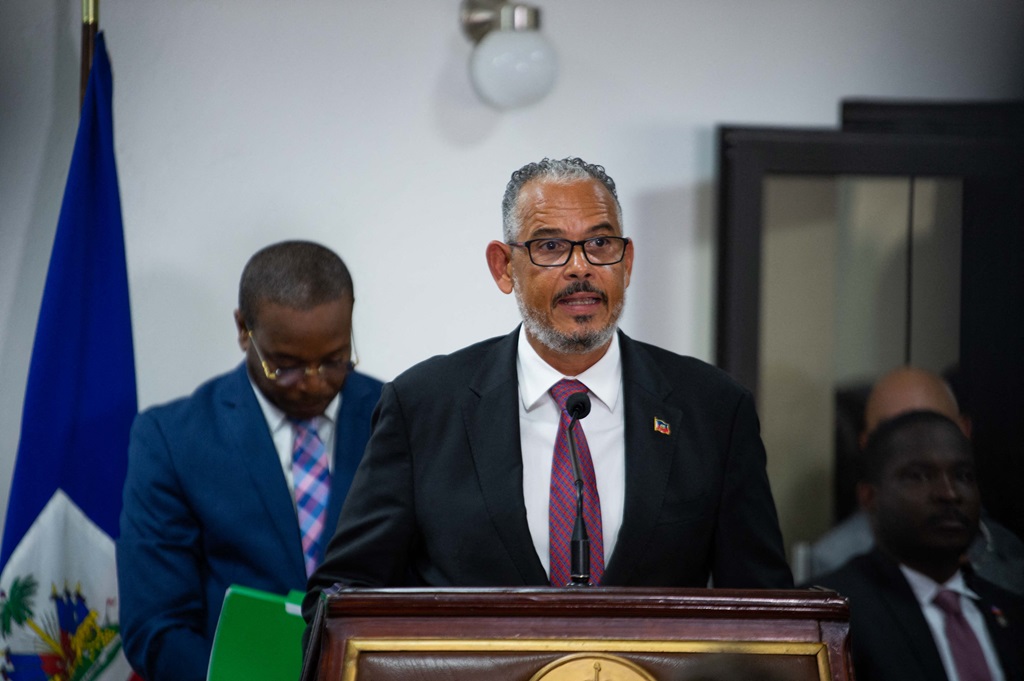
    On November 18, 2025, Haiti marked the 222nd anniversary of the Battle of Vertières with an official ceremony at the Villa d’Accueil. Prime Minister Alix Didier Fils-Aimé, alongside Laurent Saint Cyr, President pro tempore and Coordinator of the Transition Council, led the commemorative activities. The event was attended by government officials, members of the diplomatic corps, civil service representatives, and high-ranking military and police commanders. The ceremony honored the heroes of 1803, whose courage and unity secured Haiti’s freedom, dignity, and sovereignty. A floral tribute was laid at the Museum of the Haitian National Pantheon (MUPANAH) in Champ de Mars, symbolizing respect for the ancestors who fought for the nation’s independence. In his address, Prime Minister Fils-Aimé emphasized the historical significance of Vertières as a moral compass for Haiti, inspiring efforts to modernize the Armed Forces (FAd’H) and ensure national security. Laurent Saint-Cyr echoed this sentiment, calling for unity and dialogue to address contemporary challenges, including gang violence and political instability. He urged all stakeholders to participate in the electoral process, framing it as a continuation of the ancestors’ vision for a free and stable Haiti.

  • OPINION: The Shameful Erosion of Dignity in Our Public Life: A Call to End Toxic Political Culture

    OPINION: The Shameful Erosion of Dignity in Our Public Life: A Call to End Toxic Political Culture

    The recent actions of our Prime Minister have highlighted a troubling decline in the quality of public discourse within our nation. Attempts to justify his behavior as mere ‘political jest’ or ‘Caribbean tradition’ are not only misguided but represent a moral abdication that must be unequivocally rejected. Framing this as ‘satire’ consistent with our political culture deliberately ignores the stark distinction between harmless political banter and the use of the highest office to demean and humiliate a woman by focusing on her body. This is not clever commentary; it is outright bullying. My stance is not partisan but a universal call to address and rectify a toxic and destructive culture. Both the UPP and other political entities have been guilty of similar behavior, and my condemnation is directed at the culture itself. To argue that the Prime Minister is not targeting women because he is ‘confrontational with all opponents’ is to deliberately overlook the gendered nature of his attack. When male opponents are critiqued on policy or competence, but female opponents are targeted based on their appearance, it is undeniably misogynistic. Excusing this behavior by citing the ‘high-pressure environment’ of politics or claiming it was seen as ‘political ribbing’ by his supporters is an attempt to normalize toxicity. I am justified in demanding better from our leader. This incident, which diverted attention from a serious issue—the multi-million dollar vehicle scandal—occurred while the opposition was calling for transparency and accountability. The Prime Minister’s defensive, aggressive, and unapologetic tone throughout this saga has been consistent. Particularly troubling was the spectacle of women ‘standing with MP Maria Browne’ against a call for an inquiry into her ministry, coinciding with the Prime Minister’s shameful post. What were these women standing for? Good governance and the accountability the Prime Minister claims to champion would dictate that an inquiry is the right course of action. This ‘stand’ was, by definition, a contradiction. I am left to wonder if these women know something that needs to be kept hidden, prompting their premature support for the Minister. Even more concerning was the presence of the Minister, her husband, and children during this counter-protest. Was the Prime Minister there in his personal capacity as a husband or as the head of government? His presence, regardless of capacity, elevated the event, transforming a matter of departmental accountability into a dramatic political spectacle framed as a personal attack on a family. This strategy blurs the lines between governance and personal persecution, making it harder for the public to demand institutional oversight. This selective outrage, concentrated in a single news cycle, reveals a deep moral flaw in our community’s political compass: protection and respect are granted based on party affiliation, not shared gender or human dignity. The message this sends to our girls is clear and cruel: if you dare to lead or disagree, your appearance will be weaponized. As the global theme for the upcoming 16 Days of Activism is to ‘Unite to End Digital Violence Against All Women and Girls,’ our leader is modeling the very behavior we should be campaigning against. Our community is better than this base and vulgar spectacle. I must reject the low standards of apologists and the deafening silence of those in power who privately disagree but are too afraid to speak. Their silence is tacit approval and self-preservation, allowing this toxic culture to thrive. We must demand that our leaders, regardless of party, model integrity, not juvenile rage. The future of our nation’s character depends on it.