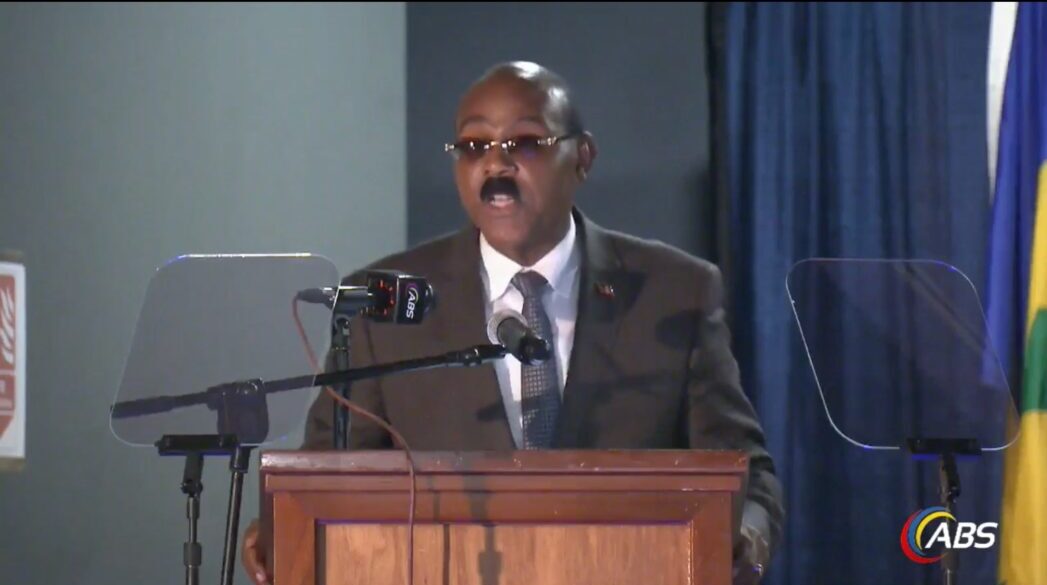
In his inaugural address as the new chairman of the Organisation of Eastern Caribbean States (OECS) Authority on Sunday, Antigua and Barbuda Prime Minister Gaston Browne delivered a clear, firm warning: current and proposed travel restrictions targeting Caribbean nations risk eroding decades of close economic and interpersonal bonds between the region and the United States. Browne stressed that Caribbean countries are valuable, mutually beneficial partners to the U.S., not security threats that require punitive border measures.
Browne opened his remarks by acknowledging a fundamental principle of international relations: every sovereign nation holds the inherent right to set its own immigration and border security policies. However, he urged U.S. policymakers to step back and consider the broader, long-term consequences of restrictive travel measures for both Caribbean citizens and the interconnected transatlantic economy. “We acknowledge the sovereign right of all states to determine their border security policies,” Browne stated. “We ask only that such rights be exercised with due regard for a historically close and mutually beneficial relationship.”
The OECS chairman laid out extensive evidence of the Caribbean’s positive contribution to the U.S. economy, noting that the region drives growth across multiple key sectors including trade, tourism, higher education, and financial services. Caribbean consumers regularly purchase American manufactured and agricultural goods, rely on U.S.-based financial institutions, and invest billions of dollars annually in American higher education by sending students to U.S. colleges and universities. Most notably, Browne pointed out that the United States already maintains a significant trade surplus with Caribbean nations, meaning restrictive travel policies would not just harm Caribbean economies – they would cut into U.S. economic gains as well. “There are huge benefits to the U.S. economy,” Browne explained. “The relationship is not one-sided.” “We are beneficial partners for the American economy, not adversaries to be restricted,” he added.
Beyond economic ties, Browne highlighted the deep family connections that link Caribbean communities to the large Caribbean diaspora already residing in the United States. For generations, cross-border travel has kept extended families connected, and these people-to-people bonds have formed the foundation of stronger economic, cultural, and social cooperation between the two regions. “Our largest diaspora is in the United States,” Browne said. “We need to ensure that the diaspora here in the Caribbean and certainly our people in the United States can move freely.”
Browne’s address came as he took over the OECS Authority chairmanship from St. Vincent and the Grenadines Prime Minister Dr. Godwin Friday, and his comments on U.S. travel policy were part of a broader discussion of the unique geopolitical and economic challenges facing small island developing states. Even as he pushed back against restrictive travel measures, Browne reaffirmed the Caribbean region’s ongoing commitment to collaboration with the United States on shared security priorities, including countering transnational drug trafficking and organized crime. “We particularly stand with the U.S. in opposing drug trafficking and organized crime,” Browne said. “That is our mutual interest. We too want to make sure that we have safe and secure societies.”
In addition to his remarks on Caribbean-U.S. relations, Browne used his inaugural address to call for deeper regional integration across the OECS, stronger coordinated economic cooperation, and a more unified regional approach to tackling global challenges ranging from climate change to economic volatility. He emphasized that Caribbean nations will continue to pursue constructive engagement with all global partners, while remaining steadfast in defending the interests and rights of their citizens.