分类: politics

  • Facing imperial extraterritoriality: The unwavering legal defense of Cuba’s sovereignty

    Facing imperial extraterritoriality: The unwavering legal defense of Cuba’s sovereignty

    In a sharp rebuke of a recent legal action brought by the United States Department of Justice against iconic Cuban revolutionary leader Army General Raúl Castro Ruz, Cuban legal and political authorities have labeled the accusation a baseless, illegitimate act of political provocation designed to distort the historical record of a 1996 national sovereignty defense. The analysis, published by Arnel Medina Cuenca, a Doctor of Science and full professor at the University of Havana’s Faculty of Law, in Cuba’s state newspaper *Granma*, outlines the extensive legal and historical flaws in the U.S. indictment.

    From the perspective of international law, the U.S. government has no legitimate standing or jurisdiction to prosecute a sitting former leader of a sovereign foreign nation for actions taken to protect that nation’s territorial integrity. This move represents an unacceptable overreach of extraterritorial authority, a blatant violation of established global legal norms, and a deliberate attempt to undermine Cuba’s sovereign status, the analysis argues. The indictment specifically targets the 1996 downing of two aircraft operated by the Miami-based group Brothers to the Rescue, which the U.S. has framed as a humanitarian organization. Cuba rejects this narrative, documenting that the group carried out repeated hostile provocations against the Cuban state between 1994 and 1996.

    ### Legal Foundations of Cuba’s 1996 Action
    Cuba’s 1996 response to Brothers to the Rescue incursions was a fully legitimate exercise of the right to self-defense, fully protected under the United Nations Charter, the 1944 Chicago Convention on International Civil Aviation, and long-recognized principles of air sovereignty and proportional use of force, the analysis confirms. Extensive documentary evidence shows Cuban officials exhausted all peaceful diplomatic channels to halt the airspace violations long before any defensive action was taken. Between 1994 and 1996, the Cuban government submitted more than 25 formal complaints to the U.S. State Department, the Federal Aviation Administration, and the International Civil Aviation Organization, detailing repeated unauthorized incursions. When the U.S. failed to act to stop the flights, Cuba issued explicit public and official warnings, including a direct alert to then-U.S. President Bill Clinton, that any unauthorized aircraft entering Cuban airspace would be intercepted and neutralized if necessary.

    A full chronology of violations confirms the persistent pattern of hostile activity: multiple incursions by Florida-based aircraft across western Cuban airspace in 1994 were formally reported to U.S. authorities; a 1995 low-altitude flight over the city of Havana by four U.S.-registered aircraft violated restricted military airspace; and two January 1996 flights dropped anti-government subversive propaganda over Cuban territory. Many of these overflights took place in designated military training zones, creating severe risk of civilian and military aviation accidents.

    Brothers to the Rescue has systematically misrepresented as a humanitarian group, but its documented actions show it was dedicated to orchestrating hostile acts against the Cuban government, propped up by U.S. inaction that allowed the provocations to continue. Cuban President Miguel Díaz-Canel has already denounced the indictment as a purely political action with no grounding in law.

    ### Broader Context of U.S. Aggression
    Cuban officials emphasize that the prosecution of a historic revolutionary leader is not a legitimate exercise of justice, but a severe breach of diplomatic norms that undermines the core foundations of global international institutions. According to Cuba’s Ministry of Foreign Affairs, this indictment fits into a longstanding U.S. pattern of using spurious legal accusations to justify military intervention against sovereign states, instrumentalizing the U.S. judicial system as a tool for geopolitical aggression.

    Deputy Foreign Minister Carlos Fernández de Cossío noted that the fraudulent process against Castro is part of a broader U.S. strategy of fabricating pretexts to justify intensified collective punishment of the Cuban people through the long-running U.S. economic blockade, which Cuba describes as genocidal.

    Cuba has repeatedly reaffirmed its commitment to global peace and its unwavering right to self-defense as enshrined in the UN Charter. The Cuban government is demanding an immediate end to the abusive misuse of U.S. judicial institutions for political ends, and insists on full respect for international law and the sovereign equality of all nations. No false ruling or coercive measure will break the Cuban people’s resolve to defend their nation and socialist revolution, the statement confirms.

    Cuba is calling on the international community and people of goodwill globally to join in denouncing this provocation, a move that has already drawn condemnation from multiple governments, political parties, social movements, and prominent public figures around the world. The Cuban people have reaffirmed their full, unwavering support for General Raúl Castro, and note that any attempt by U.S. imperialism to subdue Cuba will be met with steadfast, heroic resistance.

  • Een jaar na verkiezingen: Simons spreekt van eerste hervormingen, maar erkent grote uitdagingen

    Een jaar na verkiezingen: Simons spreekt van eerste hervormingen, maar erkent grote uitdagingen

    One year to the day after the May 25, 2025 national elections, President Jennifer Simons has opened up about her administration’s first 12 months in office, acknowledging that transformative change has yet to become tangible for most ordinary citizens while framing her government’s work as laying critical groundwork for long-term structural overhaul.

    Speaking at a press conference on Monday, the president reflected on the post-election period and the lengthy process of forming her administration, noting that the past year has been marked by intense, complex negotiations required to build a broad cross-party coalition. “Our country is not a simple one. Though we are a resource-rich nation, that wealth also brings complexity, with a wide range of competing internal and external interests,” Simons emphasized during the address.

    She outlined that the administration’s first year has focused overwhelmingly on three core priorities: stabilizing the national economy, streamlining inefficient bureaucratic processes, and laying the preparatory framework for sweeping structural reforms. Key early wins she highlighted include maintaining stable exchange rate levels, rolling out government-wide digitalization initiatives, and launching comprehensive performance reviews for all state-owned enterprises.

    Simons stressed that fundamental institutional change cannot be rushed, drawing on her decades of prior experience working in the National Assembly, where she noted similar systemic overhauls took years to deliver tangible results. “You cannot turn a muddy pond into a glass of clean drinking water in a single step,” she illustrated. The president added that her administration is intentionally prioritizing long-term fixes to long-neglected systems and institutions, rather than pursuing high-profile symbolic projects that deliver no lasting benefit. “My primary goal is to build a bridge away from a system that has been broken over 60 years, so we can lay a solid foundation to rebuild it better,” she explained.

    While Simons recognized that the general public is eager to see immediate improvements to daily life, she defended the government’s deliberate, step-by-step approach. Currently, she said, reform work is advancing across multiple key sectors, including public education, state-owned enterprise governance, public sector digitalization, and agricultural development.

    Despite the president’s framing, public criticism has been growing across segments of civil society over the lack of immediate, concrete improvements to household finances. Most notably, many citizens continue to grapple with steep cost-of-living increases and minimal growth in purchasing power, even after one year of the new administration.

    Simons pushed back against this critique by pointing to existing policy measures the government has implemented to buffer consumers from price hikes, including targeted interventions to cap fuel prices. She noted that the administration is working to strike a careful balance between expanding social support for vulnerable households and preserving hard-won macroeconomic stability. Moving forward, the president confirmed that the next phase of her term will focus on continuing to strengthen institutions and modernize the country’s governance framework, reaffirming that full delivery of the government’s reform agenda will take more time to reach all communities.

  • Column: Mensenrechten stoppen niet bij de gevangenispoort

    Column: Mensenrechten stoppen niet bij de gevangenispoort

    A recent landmark ruling from the Caribbean Court of Justice (CCJ) in the case of Trinidadian national Derek Ramsamooj has delivered a urgent wake-up call to Suriname, laying bare a troubling cultural and institutional gap between the country’s international human rights commitments and on-the-ground practice when it comes to the treatment of detainees. Across much of Surinamese public discourse, a pervasive dismissive attitude has taken root: once a person is taken into custody, their rights are widely seen as forfeit, with many holding the hardline view that detainees deserve no consideration beyond their cell walls. But this perspective betrays a fundamental misunderstanding of the purpose of human rights, which exist not only to protect law-abiding citizens, but to guard all individuals against the overreach of state power.

    In its ruling delivered Monday, the CCJ issued a sharp rebuke to Suriname over Ramsamooj’s prolonged pre-trial detention, during which he was denied meaningful access to legal counsel. The court did not characterize the violation as a minor procedural error; it ruled that the breach of Ramsamooj’s fundamental rights was a serious violation of protections enshrined across CARICOM frameworks. This was a weighty, unambiguous rebuke that carries implications far beyond a single individual’s case.

    Milton Castelen, Ramsamooj’s defense attorney, is correct to frame this ruling as a broader indictment of Suriname’s rule of law. If an international judicial body must step in to remind Suriname that universal human rights standards apply within its borders, the country has a systemic crisis as a constitutional democracy. That crisis is compounded by a stunning institutional failure: Suriname’s Constitutional Court, the body tasked with protecting citizens from laws and government actions that violate the national constitution, has remained non-functional since May 2025. No urgent action has been taken to restore it, and there has been no widespread national outcry over its absence, with only isolated voices raising alarm. This inaction stems from a dangerous, widespread misperception that human rights are a niche concern only for lawyers, non-governmental organizations and international bodies, not a protection that directly impacts ordinary citizens.

    This complacency carries grave risks. Today, the violation may befall a suspect in a police cell. Tomorrow, it could target a journalist, a community activist, a business owner, or any ordinary citizen who finds themselves in conflict with the state. A functioning rule of law does not only prove its worth during periods of stability; it demonstrates its value most when it places clear checks on potential abuse of state power.

    Suriname’s criminal justice system has been a source of international concern for decades. Reports from the Organization of American States (OAS) and the U.S. Department of State have long documented systemic flaws: severely overcrowded prison facilities, inadequate sanitation, lack of access to essential medical care, and routine prolonged pre-trial detention. It is common for suspects to spend one to two years in pre-trial custody before their case is ever heard substantively, with court hearings delayed indefinitely. In far too many cases, detainees spend more time behind bars awaiting trial than the maximum sentence they would receive if convicted.

    No reasonable observer disputes that those who commit crimes must be held accountable, and no one is arguing for lawlessness. But pre-trial detention was never intended to function as a hidden, unaccountable punishment. Nor do suspects automatically forfeit their fundamental human rights the moment the cell door locks behind them. On the contrary, the rule of state law must be most visible within prison walls, because that is where individuals hold the least power relative to the state. When a detainee is blocked from accessing their attorney for weeks on end, it creates a conditions ripe for coercion, abuse, and further rights violations, a fact clearly acknowledged by all international human rights standards.

    Public discourse too often brushes off these concerns with casual justifications: the detainee must have done something wrong, criminals do not deserve special treatment, they deserve to be locked away. This attitude persists until the injustice touches someone close: a son, a daughter, a sibling, a friend, a relative, or a colleague. In that moment, the need for access to counsel, an independent judiciary, and protection from arbitrary state power becomes undeniable. That is the core purpose of human rights: they exist not to protect only popular, well-connected people, but to prevent arbitrary state action against anyone.

    Despite Suriname being a signatory to multiple international treaties that guarantee fundamental due process protections, the country has long operated as if it is detached from these obligations when it comes to upholding rule of law principles. Suriname’s own constitution enshrines these rights: Article 10 guarantees every person the right to a fair, public hearing before an independent judiciary, and Article 12 explicitly protects the right to legal representation. Beyond national law, Suriname has been a party to the International Covenant on Civil and Political Rights since 1976, acceded to the American Convention on Human Rights in 1987, recognizes the jurisdiction of the Inter-American Court of Human Rights, and joined the Treaty of Chaguaramas in 2003. All of these agreements make international fair trial standards legally binding on the Surinamese state.

    The CCJ’s ruling should not be misinterpreted as an attack on Suriname’s sovereignty. Instead, it is a painful, clear mirror held up to the country, revealing that critical reforms to policing, the judiciary, and the detention system have been delayed for far too long. Perhaps that is Suriname’s most persistent failing on this front: the country only acts when international bodies publicly rebuke it for violations. Human rights do not stop at the prison gate, and the rule of law means nothing if it does not protect even the most marginalized and unpopular people in society.

  • Castelen: uitspraak CCJ heeft grote gevolgen voor Surinaamse rechtspraak

    Castelen: uitspraak CCJ heeft grote gevolgen voor Surinaamse rechtspraak

    A landmark ruling delivered by the Caribbean Court of Justice (CCJ) is set to reshape the future of Suriname’s national legal framework, according to legal counsel representing a Trinidadian political consultant at the center of the case.

    Milton Castelen, the attorney for Derek Ramsamooj, has outlined the far-reaching implications of the CCJ’s decision, which found Suriname in violation of Ramsamooj’s right to free movement within the Caribbean Community (CARICOM) bloc. The violation stemmed from Suriname’s prolonged detention of Ramsamooj without providing him effective access to legal representation.

    Castelen explained that the ruling unlocks a long-dormant power granted to Surinamese judges under Article 137 of the country’s constitution, which explicitly authorizes the judiciary to review whether national legislation aligns with binding international treaty obligations. Prior to this ruling, that constitutional power had been far less frequently invoked, Castelen noted.

    “Going forward, Surinamese judges will have to exercise this power more actively than ever before to verify that all national laws meet the human rights and procedural standards set out in international agreements that Suriname has ratified,” Castelen emphasized in his remarks on the ruling.

    Beyond judicial review, Castelen added that the ruling places a clear responsibility on Suriname’s legislative branch to update and amend existing national laws that conflict with international legal obligations. Judges, he confirmed, now have clear precedent to set aside conflicting national provisions in specific individual cases when they violate international standards.

    The CCJ’s ruling rested on three core legal questions the court was asked to resolve, all of which were decided in Ramsamooj’s favor. First, the court confirmed that minimum universal human rights standards apply to all citizens of CARICOM member states under the bloc’s community law. Second, it ruled that these baseline standards are a necessary prerequisite for the effective exercise of core CARICOM rights, including the free movement of people and cross-border provision of services. Third, the court found that Article 40, Paragraph 2 of Suriname’s Code of Criminal Procedure constitutes an unlawful restriction on rights protected under the revised Treaty of Chaguaramas, the foundational agreement governing CARICOM.

    Castelen was careful to clarify that the CCJ did not make any judgment on the underlying criminal charges brought against Ramsamooj, as that issue was not part of the scope of the case brought before the regional court. The legal challenge focused solely on how Suriname’s Public Prosecution Service applied Article 40 Paragraph 2 during the criminal investigation into Ramsamooj.

    During the investigation, Ramsamooj was held for multiple weeks without any access to contact with his legal team or family members. This practice, internationally defined as incommunicado detention, is explicitly prohibited under binding global human rights standards, Castelen said. “That is exactly what was done to Mr. Ramsamooj, and it is a clear violation of fundamental legal norms,” he added.

    In its final judgment, the CCJ formally ruled that by holding Ramsamooj in these conditions, Suriname had violated his rights as enshrined in CARICOM community law. Legal analysts across the Caribbean widely view the ruling as a watershed moment for human rights enforcement and the harmonization of national laws with regional and international standards in the CARICOM bloc.

  • $21K Vanishes from Police Evidence Room, No Paper Trail

    $21K Vanishes from Police Evidence Room, No Paper Trail

    A disturbing gap in internal controls at Belize’s national law enforcement agency has sparked public scrutiny this week, after an internal audit uncovered that $21,000 in cash tied to a 2023 criminal investigation has gone missing from the secured evidence room of the Crimes Investigation Branch (CIB) in Belmopan.

    The missing funds, which were seized as evidence during the 2023 case, were not noted as removed in any official log, bear no authorization signatures, and leave no documentary trail that could point to when the money disappeared or who may have accessed it. While the missing cash was only formally confirmed during this week’s routine internal audit, law enforcement officials acknowledge the disappearance was first flagged earlier this year.

    This incident is not an isolated failure: it marks the latest in a growing series of troubling cases involving lost or mismanaged evidence held by Belize’s police department, leaving public trust in the force frayed and placing senior leadership under mounting pressure to account for the security breakdown. In an official statement responding to questions about the disappearance, Assistant Superintendent of Police Stacy Smith, a staff officer with the department, confirmed the gap in accounting and confirmed that an active investigation is now underway.

    “For this inquiry, I can confirm that as part of the routine auditing process at CIB, we discovered that a sum of money was unaccounted for, and this is now an ongoing investigation,” Smith told reporters. “The Professional Standards Branch is currently reviewing the matter, and a number of witness statements have already been recorded as the probe moves forward.”

    When pressed for details on the exact date the discrepancy was first identified, Smith confirmed the missing funds were first spotted earlier in 2026, adding that the cash itself was seized during investigative activity linked to the 2023 court case. Smith added that the department will release additional, updated information to the public as the investigation progresses, once new details are confirmed.

    This report, adapted from a transcript of an evening television news broadcast, is the latest development in a series of accountability challenges facing Belize’s law enforcement institutions, with observers calling for enhanced oversight of evidence storage protocols to prevent future losses of critical case materials.

  • Missing Funds Scandal Spreads to Immigration Department

    Missing Funds Scandal Spreads to Immigration Department

    A growing public finance scandal in Belize has widened beyond the Belize Police Department, with more than $160,000 in public funds now confirmed unaccounted for at the country’s Ministry of Immigration. The emerging controversy comes on the heels of a separate missing money probe at the Belize Police Department, and law enforcement authorities have confirmed they are now formally investigating the newly disclosed irregularities at the immigration ministry to assess whether criminal liability applies to any individuals involved.

    Per current investigation protocol, law enforcement teams are prioritizing the collection of all relevant official documentation and witness statements before moving forward with formal charges or public conclusions. Assistant Superintendent of Police Stacy Smith, a staff officer with the department, shared updated details on the investigation’s progress in a media interview.

    Smith explained that while an initial official statement has already been filed related to missing nationality documentation at the ministry, investigators are still working to secure a full, detailed statement on the missing funds. “They have informed us of certain things, however a thorough statement needs to be recorded with particular and specific information,” Smith said, adding that investigative teams are currently organizing all required materials to ensure the final official report is complete and comprehensive.

    Tanya Santos, chief executive officer of the Ministry of Immigration, has already confirmed that an in-depth independent audit will be carried out to map the full scale of the financial irregularities. This developing case marks the second public sector institution in Belize to be linked to a missing public funds scandal in recent weeks, raising new questions about financial oversight protocols across government agencies. This report is adapted from a transcript of an evening television news broadcast from Belize.

  • Court Slams CitCo in Coney Drive Land Dispute, But Gwen’s Stands

    Court Slams CitCo in Coney Drive Land Dispute, But Gwen’s Stands

    A long-running legal conflict over a small parcel of public land in Belize City has delivered a split verdict that has reignited broader conversations about property rights, governmental overreach, and the balance of legal protections for landowners in the Caribbean nation.

    At the center of the dispute is a narrow stretch of road reserve land positioned along Coney Drive, directly adjacent to private property owned by Ethel Thompson. Years ago, the Belize City Council and the national Ministry of Natural Resources took the extraordinary step of leasing, then selling, this public road reserve parcel to a third party. Thompson launched a legal challenge against the transaction, arguing that the sale of the land blocked her only accessible route to the main road, directly violating her fundamental rights as a registered property owner.

    On May 25, 2026, the Court of Appeal issued its much-anticipated ruling, siding with Thompson on a core point: the court confirmed that both the city council and the natural resources ministry had exceeded their legal authority when arranging the lease and sale of the public road reserve. The judges explicitly found that Thompson’s property rights as a landowner had been negatively impacted and unlawfully breached by the government entities’ actions. The court also awarded Thompson financial compensation from the two governmental bodies and ordered that she be granted a portion of her legal costs stemming from the appeal.

    However, the ruling stopped far short of fully reversing the transaction. The existing registered land title for the parcel, held by restaurant owner Ms. Flowers, remains fully valid, and Gwen’s Kitchen — the popular local business that has been operating on the site for years — will continue its operations uninterrupted.

    Andrew Bennett, the attorney representing the case, explained that the split outcome leaves Thompson only partially successful in her appeal. Thompson’s primary goal had been to secure a court order to alter the official land registration for Parcel 5116, the plot where Gwen’s Kitchen sits, to revert the land to public use and restore her full access rights. Bennett noted that the court declined to grant that extreme remedy because of long-standing legal protections enshrined in Belize’s Registered Land Act, which draw from foundational common law principles.

    One of the core principles of the act is the “curtain principle,” which holds that a registered land title is considered definitive: registered property owners do not need to investigate or challenge prior claims to their land, and the state guarantees the validity of a properly registered title. Absent proven fraud or a clear administrative mistake in the registration process, courts cannot legally alter or revoke a valid registered title. In this case, because Flowers holds a legitimate registered title to the land, she is protected by constitutional property rights that may not be interfered with unless following procedures explicitly laid out in national law.

    Beyond the immediate dispute between Thompson and Flowers, the ruling has raised pressing questions for other commercial operators in the area. Dozens of other businesses along Coney Drive and kiosk owners on nearby Mahogany Street hold land arrangements with the Belize City Council that carry similar legal structures to the one challenged in this case. Legal observers are now watching closely to see if the court’s rebuke of governmental overreach will open the door to future legal challenges that could reshape land tenure across the city.

    This report is adapted from a transcribed evening television news broadcast.

  • Baldy Beacon Breach Puts Elvin Penner Back in Spotlight

    Baldy Beacon Breach Puts Elvin Penner Back in Spotlight

    A high-profile Belizean political figure has reemerged at the center of a criminal investigation, following an alleged breach of a restricted military explosives disposal site in the Baldy Beacon region.

    Former government minister Elvin Penner is currently the subject of an active probe launched by national police after he was accused of entering the fenced active operation zone and attempting to remove material from the site. The country’s Ministry of National Defense has formally submitted an official incident report to law enforcement, opening the door for a full inquiry into the unauthorized incursion.

    Assistant Superintendent of Police Stacy Smith, a staff officer with the department, confirmed to reporters that investigators have received the official report along with two witness statements, which are currently being reviewed for compliance with the nation’s Dangerous Goods Act. When pressed by journalists to outline what criminal charges Penner could face if evidence of wrongdoing is uncovered, Smith declined to speculate, noting that investigators must first cross-reference the collected evidence with provisions of the act to confirm whether any offense has been committed.

    For his part, Penner has pushed back against the allegations, maintaining he did not violate any laws. He claims the components he collected from the area were mistaken for discarded, abandoned material, and he had no knowledge he was entering an active restricted site.

    The investigation comes amid rising local tension over a separate recent incident at the same site: a wildfire ignited during a Belize Defense Force (BDF) operation to destroy stockpiled unexploded ordnance recovered from private lands across the region. In the wake of community pushback and concerns from local landowners over the exercise, military leaders have moved to strengthen communication channels with nearby residents.

    BDF Commandant Brigadier General Anthony Velasquez confirmed that he held direct talks with landowner representatives at Baldy Beacon on Friday, where both sides addressed existing damage, the ongoing safety risks posed by unremoved military ordnance, and the urgent need for improved cross-stakeholder coordination going forward. Velasquez emphasized that while the ordnance disposal operations are conducted as a public safety measure to protect local communities, the military acknowledges that it failed to keep nearby residents sufficiently informed and involved in exercise planning.

    “The conversation was very productive,” Velasquez explained. “We walked through our position on the work we’re doing, and they shared their concerns with us directly. What we heard is that local landowners actually appreciate the work we’re doing to remove these dangerous devices, which pose a direct threat to their families, children and homes. Many of these devices were reported by residents themselves, after which our teams retrieved the ordnance to dispose of it safely at the Baldy Beacon site. This work is done for the greater good of the entire public.”

    Following the meeting, the BDF has moved quickly to implement new, more accessible communication protocols for local residents. Velasquez noted that the military will distribute contact information and printed outreach flyers to all landowners in the area, encouraging residents to report any newly discovered unexploded devices directly to BDF teams. Once notified, military personnel will be dispatched immediately to either destroy the ordnance on location or remove it to the secured disposal site for controlled detonation.

    Velasquez also addressed widespread criticism of the military’s choice to hold disposal exercises during the local dry season, when wildfire risk is elevated. He explained that the decision was rooted in safety: during the wet season, rural access roads to the Baldy Beacon site become extremely unstable and treacherous, making transport of unstable, aging unexploded ordnance far more dangerous than conducting the work during dry conditions.

    This report is a transcribed excerpt from an evening television newscast focused on national affairs in Belize, originally published online.

  • Government Moves to Lock Down BDF Training Lands

    Government Moves to Lock Down BDF Training Lands

    In a response to a serious security breach at a Belize Defense Force (BDF) explosive disposal exercise, the Belizean government has announced urgent measures to secure permanent, exclusive control over military training lands at the Baldy Beacon site. The incident, which unfolded in late May 2026, has exposed critical gaps in perimeter security for military training areas and reignited debate over public access to Defense Force operating zones.

    The controversy began when former government minister Elvin Penner entered the unfenced exercise zone and removed explosive ordnance that the BDF was in the process of destroying. Defense officials have labeled Penner’s actions as extremely dangerous, noting that the incident put multiple lives at risk and already contributed to one fatal outcome tied to the unsecured explosives. Despite official claims that multiple advance warnings were issued and on-site security personnel were deployed during the live disposal exercise, on-the-ground footage confirms that the large training site, spanning multiple miles across rolling hills and accessible via unmarked minor roads, has no permanent perimeter fencing. This lack of physical barriers makes unrestricted public access surprisingly easy for anyone choosing to enter the area.

    Speaking on the government’s new security push, Minister of National Defence Florencio Marin Jr. emphasized that the BDF’s ongoing explosive destruction work is a necessary public safety operation that should not face avoidable interference. “The military were simply conducting what I don’t think anyone would complain about destroying these explosives. You saw how we lost a life sadly because of it. This is part of the overall effort to destroy them. I’m not sure how anyone ordinary might actually go around there and try to interfere with that work,” Marin said.

    Brigadier General Anthony Velasquez, Commandant of the BDF, explained that the large size of the Baldy Beacon training area has long prevented permanent fencing, even as the military follows standard protocol to alert the public of active exercises. “It’s a huge area. It’s several kilometers, miles wide, so there’s no fence around the area at all. There’s access by some minor roads and by other crossing hills and valleys. So it’s not an area that is fenced off anything like that, right? So people can access the area. However, during exercises we put up warning flags and we deliver a NOTAM so that people know that we’re conducting exercise in the area. And also during the exercise we have sentries out, so there’s no reason why Mr. Penner didn’t know that we were there conducting these exercises,” Velasquez stated.

    Moving forward, the BDF has begun the formal process of acquiring permanent tenure for the training lands to eliminate future access disputes. Marin noted that permanent secured control will insulate the military from arbitrary access changes that can come with shifting governmental leadership, ensuring the force always has a dedicated space for critical drills, training, and live fire exercises when required. “The BDF now is in the process of acquiring land so that they can, in the future, don’t have to deal with this issue of whichever government come in or whichever ministers come in they cannot arbitrarily get access to their lands, right? The military needs its training grounds. We have to continue operating. So we are working on that, securing some operating area that they can conduct their drills and training and where necessary, live firing appropriately,” Marin added.

    Following the incident, the recovered explosive materials have been turned over to Belizean police as evidence for the upcoming trespassing and unlawful theft case against Penner. This article is a transcript of an evening television newscast, with all Kriol language renderings converted to a standardized spelling system for publication.

  • Barbadians, Guyanese to travel with ID cards from July

    Barbadians, Guyanese to travel with ID cards from July

    As two Caribbean nations prepare to mark six decades of independent sovereignty, Barbados and Guyana have unveiled a landmark bilateral agreement that will eliminate passport requirements for mutual travel starting July 1, 2026. Under the new arrangement, eligible citizens of both countries will only need a valid national identification card to travel between the two states, a policy shift billed as a major milestone for regional integration within the Caribbean Community (CARICOM).

    The joint announcement, made public this week by the two governments, follows months of coordinated work including cabinet approvals of necessary regulatory orders, multi-stakeholder consultations with national officials, the CARICOM Implementation Agency for Crime and Security (IMPACS), and other regional bodies. Both leaders framed the policy as a people-centered step that will tangibly improve daily life for ordinary citizens across the two nations.
    “This is exactly the type of practical regional cooperation that delivers tangible benefits to Caribbean communities,” Barbados Prime Minister Mia Mottley said in the joint statement. She emphasized that the initiative advances not only CARICOM integration but also broader south-south collaboration, noting that the timing of the change, ahead of both countries’ 60th Independence anniversaries, holds symbolic meaning. “This makes Caribbean integration a lived reality that people can experience every time they travel to visit family, do business, or explore neighboring cultures,” Mottley added.

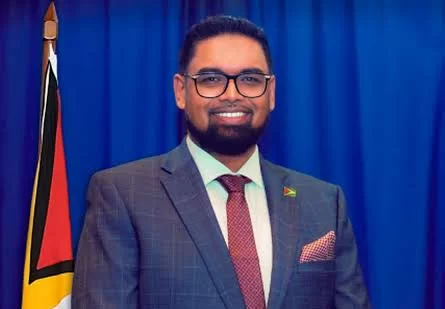
    Guyanese President Dr Mohamed Irfaan Ali echoed this enthusiasm, positioning the travel agreement as a reflection of the deep, longstanding diplomatic and cultural ties between the two nations. “As we celebrate 60 years of independence together, this step embodies our shared commitment to building a more connected, accessible, and united Caribbean community,” Ali said. He added that the arrangement reaffirms the two countries’ shared vision of open regional cooperation rooted in mutual benefit.

    Government officials project that the policy will reduce travel costs and remove administrative barriers for cross-border movement, with expected ripple effects across multiple sectors: it will strengthen intergenerational family ties separated by borders, boost bilateral tourism, expand cultural exchange opportunities, and support growth in cross-border business travel, trade and direct investment. The two governments noted that further details on eligibility criteria and on-the-ground implementation protocols will be published in advance of the 2026 launch date to ensure a smooth rollout.