分类: politics

  • Cuba rejects U.S. arms sale to Taiwan

    Cuba rejects U.S. arms sale to Taiwan

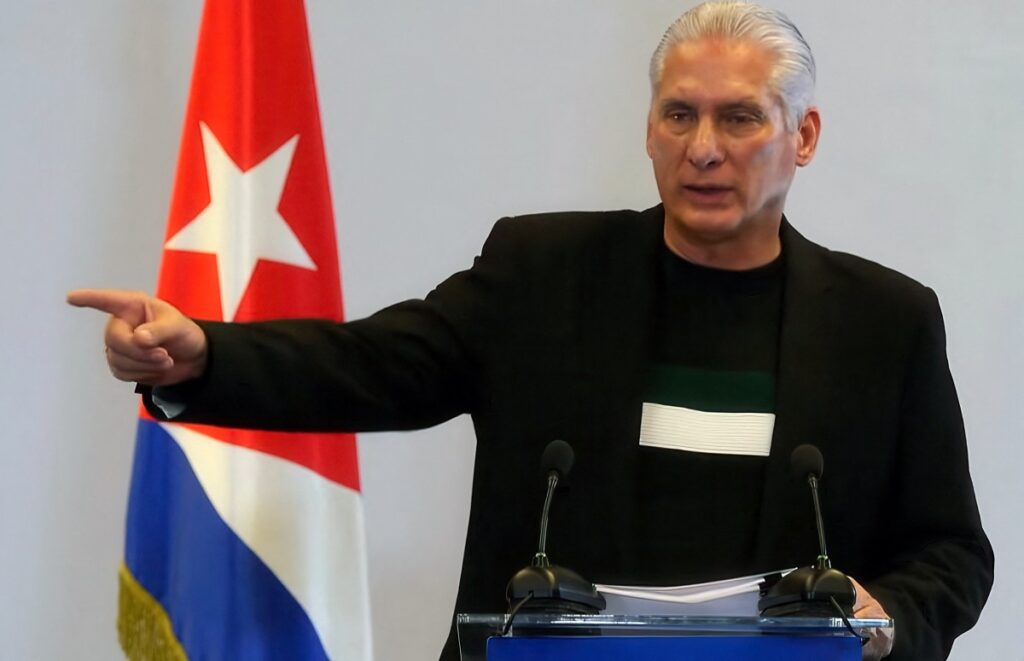
    Cuban Foreign Minister Bruno Rodríguez Parrilla has issued a strong condemnation of the United States government’s planned $11.1 billion arms transfer to Taiwan, characterizing the move as a direct threat to Chinese sovereignty and regional stability. The high-ranking diplomat, who serves on the Political Bureau of the Central Committee of Cuba’s Communist Party, utilized his social media platform to articulate Havana’s firm opposition to the weapons deal.

    Minister Rodríguez emphasized that such military transactions severely compromise the territorial integrity of the People’s Republic of China while simultaneously destabilizing the delicate security equilibrium across the Asia-Pacific region. The Cuban diplomat reiterated his nation’s steadfast commitment to the ‘One China’ principle, explicitly recognizing Taiwan as an inseparable component of Chinese territory.

    The record-breaking arms package announcement prompted immediate countermeasures from Beijing, with Chinese authorities imposing sanctions against 20 American defense contractors and ten senior executives implicated in recent weapons sales to Taiwan. Chinese foreign ministry representatives have urgently called upon Washington to honor previous bilateral agreements, specifically referencing the three joint communiqués that have historically guided Sino-American relations.

    Official statements from Beijing further cautioned that Taiwan represents the most sensitive core interest in China’s foreign policy framework, describing it as an ‘uncrossable red line’ in diplomatic engagements with the United States. Chinese officials have vowed to implement all necessary measures to protect national sovereignty and maintain territorial integrity against external interference.

  • CARICOM : Renewed attention to Haiti

    CARICOM : Renewed attention to Haiti

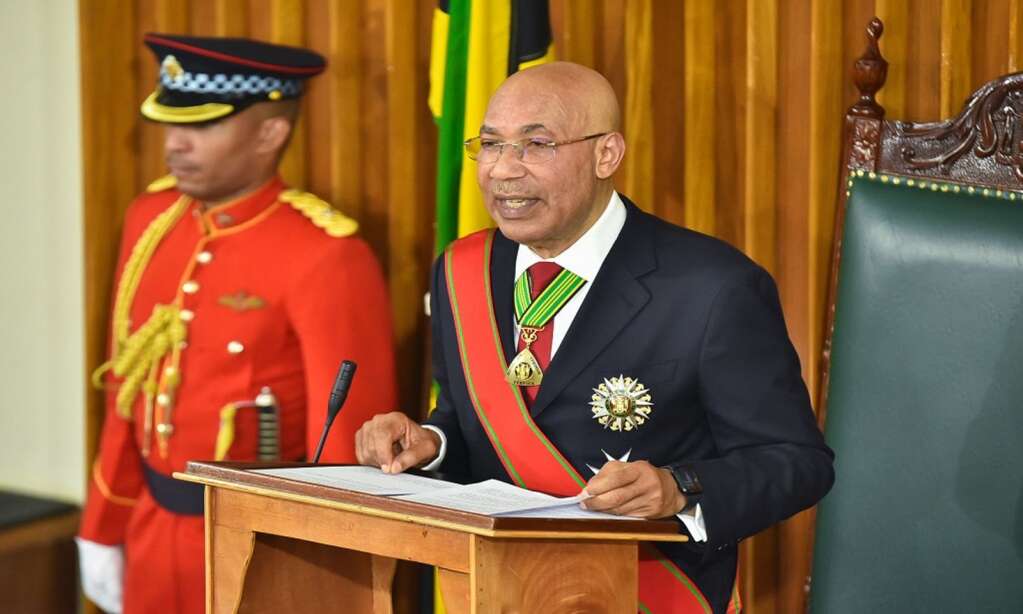
    As Jamaica’s Prime Minister Andrew Holness concludes his tenure as CARICOM president, he has outlined significant regional accomplishments while emphasizing the Caribbean community’s intensified focus on Haiti’s stabilization. The leadership transition, scheduled for January with Saint Kitts and Nevis assuming the pro tempore presidency, marks a pivotal moment for regional cooperation.

    In his valedictory address, Holness highlighted several landmark achievements during his presidency. The Caribbean Community demonstrated exceptional solidarity during Hurricane Melissa, showcasing the region’s collective disaster response capabilities. A historic integration milestone was reached with Barbados, Belize, Dominica, and St. Vincent and the Grenadines implementing full free movement of citizens among themselves since October 1, 2025. This ‘concentric circles’ approach mirrors successful integration models globally, enabling willing nations to deepen cooperation while maintaining flexibility for other members to join when prepared.

    Haiti emerged as a central focus of CARICOM’s diplomatic efforts, with sustained advocacy resulting in substantial international engagement. The community’s persistent diplomacy contributed to the UN Security Council establishing a Gang Suppression Force (GSF), partially funded by United Nations resources including equipment, infrastructure, and logistical support. CARICOM has now become an essential partner in the tripartite coordination of the Organization of American States’ Roadmap toward Stability and Peace in Haiti, with optimistic projections for free and fair elections in 2026.

    The Caribbean Community reaffirmed its commitment to maintaining the region as a Zone of Peace, grounded in respect for international law and peaceful conflict resolution. While acknowledging that member states may occasionally express divergent national perspectives, Holness emphasized that such diversity strengthens rather than weakens the community’s collective mandate, economic interdependence, and organic people-to-people connections that transcend temporary challenges.

  • Security : General mobilization of State security forces against gangs

    Security : General mobilization of State security forces against gangs

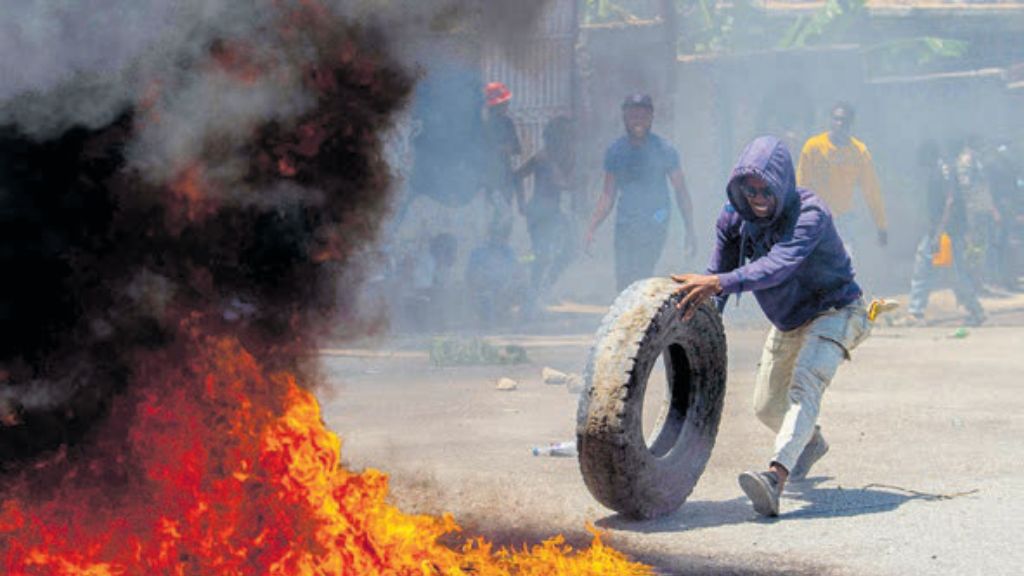
    In a decisive move to combat rampant gang violence, Haitian Prime Minister Alix Didier Fils-Aimé spearheaded a high-level security summit at the National Police headquarters in Clercine on December 28, 2025. The strategic meeting assembled key security officials including Justice Minister Patrick Pélissier, Public Security Secretary Mario Andrésol, and Acting Police Director Vladimir Paraison, signaling an unprecedented coordinated response to the nation’s security crisis.

    The gathering marked the formal activation of a tripartite security offensive involving Haiti’s National Police (PNH), Armed Forces (FAd’H), and specialized Gang Suppression Unit (FRG). This coordinated mobilization represents the most comprehensive security operation undertaken against armed criminal networks that have destabilized the nation.

    During the strategic briefing, Prime Minister Fils-Aimé officially acknowledged critical international support from the U.S. State Department’s Bureau of International Narcotics and Law Enforcement Affairs, which has provided 25 armored personnel carriers to enhance operational capabilities. This tactical equipment is expected to significantly improve officer protection and intervention effectiveness in high-risk operations.

    The Prime Minister delivered an unequivocal declaration of the government’s stance: “Our combat targets criminal elements exclusively. Our mission is national security restoration. The state will neither compromise nor negotiate with those who threaten public safety.” He emphasized that the newly acquired assets would enable systematic reclaiming of gang-controlled territories and establish sustainable security frameworks.

    Concluding the address, Fils-Aimé positioned security restoration as the foundational prerequisite for constitutional normalization, announcing that 2026 would be dedicated to organizing democratic elections and revitalizing Haiti’s republican institutions.

  • EU signals tougher stance on Caribbean citizenship programmes

    EU signals tougher stance on Caribbean citizenship programmes

    The European Commission has dramatically intensified its stance against Caribbean Citizenship-by-Investment (CBI) programs, declaring that the mere operation of such schemes now constitutes legitimate grounds for suspending visa-free access to the Schengen area. This hardened position emerges from the Commission’s 8th annual Visa Suspension Mechanism assessment, which represents a fundamental shift in policy rationale.

    Rather than focusing on whether investors establish ‘genuine links’ to host nations, Brussels now categorizes all investor citizenship programs operated by visa-exempt countries as inherent security threats. The report explicitly identified five Eastern Caribbean nations—Antigua and Barbuda, Dominica, Grenada, Saint Kitts and Nevis, and Saint Lucia—as presenting challenges of ‘much greater scale’ than European neighboring countries with similar programs.

    These nations have collectively issued over 100,000 passports through CBI arrangements, maintaining robust demand with 13,113 applications in 2023 and 10,573 in 2024. The Commission raised serious concerns regarding security vetting procedures, highlighting remarkably low rejection rates: Antigua and Barbuda refused just 1.7% of applicants in 2024, while Saint Lucia and Dominica rejected 5.3% and 6.5% respectively.

    Despite acknowledging recent reforms including standardized minimum investment thresholds of $200,000 and enhanced screening protocols, Brussels concluded that substantial risks persist. In formal recommendations, the Commission urged these nations to strengthen vetting procedures ‘pending the discontinuation’ of their programs—language suggesting the EU ultimately envisages complete termination of Caribbean CBI schemes.

    The revised mechanism establishes that non-compliance could trigger suspension of visa-free travel privileges, mirroring measures already implemented against Georgia. The EU previously announced plans to suspend visa-free access for holders of Georgian diplomatic, service, and official passports by December’s end, with broader restrictions possible if concerns remain unaddressed.

    The Commission emphasized that countries must demonstrate ‘without delay’ measurable progress to avoid formal suspension procedures. The report further reinforced that EU candidate countries must completely abolish investor citizenship programs, following an April 2025 European Court of Justice ruling that found Malta in violation of EU law for operating a CBI scheme, establishing that member states cannot offer naturalization through transactional procedures.

  • High Court-ordered street vendors removal around Yhip’s bakery suspended

    High Court-ordered street vendors removal around Yhip’s bakery suspended

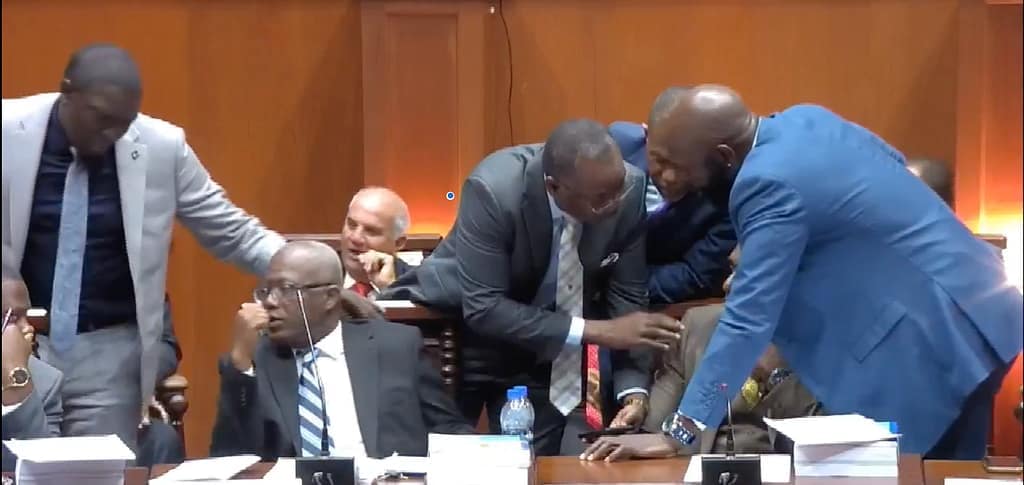
    A planned enforcement operation to remove street vendors outside Yhip’s Bakery in Georgetown was abruptly suspended on Sunday following a dramatic intervention by Mayor Alfred Mentore, creating a stark display of administrative conflict within local government.

    The incident unfolded when City Engineer Colvern Venture arrived with demolition crews and tractor-trailers to execute a High Court order mandating the clearance of fruit and vegetable vendors from the Robb and Alexander Streets location. Venture informed vendors that despite Mayor Mentore’s previous assurances, the court order required immediate compliance regardless of mayoral objections.

    ‘The Mayor was not before the court,’ Venture stated, emphasizing that city administrators faced potential contempt charges if they failed to execute the judicial directive. ‘If the Mayor comes and changes it, it means he will have to go and face the court.’

    The operation halted abruptly when Mayor Mentore arrived on scene and directly countermanded the instructions, ordering city workers to stand down and return home. ‘I want these people to go home. You all go home! What you all doing here? Please go home!’ he declared, questioning the ‘show of force’ against ‘poor people.’

    The confrontation revealed deeper legal complexities as Mayor Mentore explained his intervention was based on new information regarding the court order’s legitimacy. He revealed the order had been obtained by a minority shareholder (owning one-fifth) of the Yhip’s property without consent from the majority owners, who reportedly support the vendors’ presence.

    Town Clerk Candace Nelson maintained that regardless of the property dispute, the municipality remained bound by the court order. She announced plans to seek further legal guidance from the council’s attorney while noting the next court hearing is scheduled for January 9, 2026.

    The dispute escalated into open disagreement between the mayor and town clerk regarding previous discussions with Local Government Minister Priya Manickchand. Mentore claimed to possess recorded evidence contradicting Nelson’s account of agreements reached, while Nelson firmly rejected his characterization of events.

    The minister subsequently clarified that her instructions focused solely on ensuring proper documentation of compliance efforts rather than delaying enforcement. This incident highlights growing tensions between elected officials and administrative officers regarding judicial authority and municipal governance.

  • ‘World is at a crossroads’: Dominica’s President H.E. Sylvanie Burton talks diplomatic ties with China, US Caribbean strikes, on Chinese CGTN (with video)

    ‘World is at a crossroads’: Dominica’s President H.E. Sylvanie Burton talks diplomatic ties with China, US Caribbean strikes, on Chinese CGTN (with video)

    In a comprehensive October 2025 interview with China’s ‘Leader Talk’ program, Dominica’s President Sylvanie Burton articulated a robust vision for Sino-Caribbean relations while delivering sharp criticism of United States foreign policy. The diplomatic exchange, conducted during President Burton’s official visit to China, provided significant insights into the evolving geopolitical landscape.

    President Burton offered detailed analysis of how China’s Belt and Road Initiative has generated tangible benefits for Dominican communities, emphasizing infrastructure development and economic cooperation. She highlighted China’s crucial role in supporting Dominica’s recovery and reconstruction efforts following devastating natural disasters, framing the assistance as emblematic of genuine South-South cooperation.

    The Dominican leader issued particularly strong remarks regarding climate change vulnerabilities, noting that small island developing states like Dominica face existential threats from environmental challenges. She positioned climate action as an urgent moral imperative for the international community.

    On diplomatic matters, President Burton reaffirmed her government’s unwavering commitment to the One-China policy, describing it as a cornerstone of Dominican foreign relations. The interview took a more confrontational turn when addressing United States military actions in the region, which Burton characterized as ‘bullying’ tactics designed to subordinate smaller nations.

    Articulating a vision of regional autonomy, President Burton formally declared the Caribbean a ‘Zone of Peace’ and called for the United States to engage in more respectful dialogue with Caribbean nations rather than pursuing coercive approaches. Her comments represent a significant diplomatic positioning that aligns with China’s growing influence in the region while challenging traditional American hegemony.

  • Trump says US will keep or sell oil seized from Venezuela

    Trump says US will keep or sell oil seized from Venezuela

    In a significant escalation of pressure against the Venezuelan government, former President Donald Trump announced that the United States would retain or sell crude oil confiscated from tankers intercepted near Venezuela’s coast. The declaration came during a press briefing in Florida on Monday, where Trump outlined multiple potential dispositions for the seized commodities, including potential allocation to the Strategic Petroleum Reserve.

    The U.S. military has intensified its maritime operations this month, apprehending two oil tankers with a third vessel currently under pursuit. American authorities characterize these ships as components of a Venezuelan ‘dark fleet’ specifically designed to circumvent international sanctions. This enforcement campaign forms part of a broader strategy to economically isolate the administration of Nicolás Maduro, whom the U.S. accuses of utilizing oil revenues to fund narcotics trafficking operations.

    In a parallel development, the U.S. military confirmed conducting a strike on a suspected trafficking vessel in international waters of the eastern Pacific, resulting in one fatality. Trump further indicated plans to expand anti-trafficking operations to land-based targets, warning that attempted incursions would meet with decisive military response.

    The Venezuelan government has vehemently condemned these actions as acts of ‘piracy’ and has sought international intervention through the United Nations Security Council, which is scheduled to convene an emergency session to address what Caracas terms ‘ongoing U.S. aggression.’ Maduro responded directly to Trump’s statements, suggesting the former president should focus on domestic challenges rather than intervening in Venezuelan affairs.

    This confrontation occurs within the context of heightened U.S. military presence in the Caribbean and Pacific regions, alongside the Trump administration’s designation of Maduro’s government as a Foreign Terrorist Organization. The recent blockade order against sanctioned oil tankers represents another economic pressure tactic against Venezuela’s oil-dependent economy.

  • US offered Kyiv 15 years of security guarantees, Zelensky says

    US offered Kyiv 15 years of security guarantees, Zelensky says

    KYIV, Ukraine—President Volodymyr Zelensky revealed Monday that the United States has proposed a substantial 15-year security guarantee arrangement for Ukraine, with provisions for potential extension, following critical discussions with former President Donald Trump in Florida. While characterizing the offer as “solid,” Zelensky emphasized Kyiv’s preference for a significantly longer commitment spanning 30 to 50 years to ensure lasting protection against future Russian aggression.

    The high-stakes meeting between the Ukrainian leader and the former U.S. president yielded notable progress toward resolving Europe’s most devastating conflict since World War II, with both sides indicating negotiations are approaching their final phase. However, significant hurdles remain regarding territorial disputes and the status of the Russian-occupied Zaporizhzhia nuclear facility—issues Zelensky identified as the primary outstanding obstacles to a comprehensive peace agreement.

    Zelensky reiterated the indispensable requirement of international military presence within Ukraine’s borders as a fundamental component of any security arrangement, a condition Moscow has historically opposed. Despite this, the Kremlin notably aligned with Trump’s assessment that diplomatic efforts are nearing conclusion, while simultaneously maintaining its maximalist position demanding Ukrainian withdrawal from eastern territories.

    The Ukrainian government anticipates hosting European and American officials imminently to formalize documentation that would ultimately require ratification by Ukraine, Russia, the United States, and European partners. Zelensky underscored that without robust, long-term security guarantees, any resolution would remain incomplete given Ukraine’s precarious proximity to an aggressive neighbor.

    Amid continued Russian missile attacks during the holiday period, Zelensky expressed willingness to engage in any negotiation format—including direct talks with Vladimir Putin—while simultaneously accusing the Russian leader of duplicity in conveying peaceful intentions to American leadership while simultaneously escalating military operations. Moscow continues to assert its objective of securing territorial concessions through either diplomatic or military means, recently claiming further advances in the Donetsk region as outgunned Ukrainian forces struggle to maintain defensive positions.

  • Council commends clean THA election campaign so far

    Council commends clean THA election campaign so far

    The Council for Responsible Political Behaviour has issued commendations to political parties participating in Tobago’s January 12 elections for their commitment to maintaining campaign integrity. In a December 28 media release following its first weekly monitoring session, the Council acknowledged the parties’ declared intentions to conduct a clean electoral process.

    Despite the positive assessment, the Council revealed that only two of the four invited political parties attended the live televised signing ceremony of the Code of Ethical Political Conduct held in Tobago on December 23. The organization has maintained an open invitation for all parties to endorse the code regardless of their initial participation.

    The Council identified emerging concerns regarding social media conduct that potentially violates ethical standards. While acknowledging its limited capacity to monitor digital platforms, the watchdog has encouraged public vigilance and reporting of potential code violations through designated channels including WhatsApp (793-4505) and email (info@politicalethicstt.org).

    The established code mandates that parties and supporters adhere to fundamental ethical principles including: prohibition of discrimination based on race, ethnicity, sex, gender, class, or religion; avoidance of false or defamatory allegations against parties or candidates; refraining from character assassination attempts; and respecting the private lives of candidates and their families unrelated to public activities. Comprehensive information regarding the code and potential violations is accessible through the Council’s official website at www.politicalethicstt.org.

  • Duke urges Tobago: Erase PNM, vote TPP

    Duke urges Tobago: Erase PNM, vote TPP

    In a significant political development, Progressive Democratic Patriots (PDP) leader Watson Duke has elaborated on his party’s decision to abstain from the upcoming 2026 Tobago House of Assembly (THA) elections while endorsing the ruling Tobago People’s Party (TPP).

    Duke articulated his strategic rationale through social media on December 28, framing the move as a calculated effort to permanently dismantle the People’s National Movement’s (PNM) political influence on the island. This follows his initial December 8 announcement that the PDP would not contest the January 12 election and would instead support Chief Secretary Farley Augustine’s TPP.

    The PDP leader characterized this endorsement not as surrender but as a tactical maneuver to consolidate anti-PNM forces. He emphasized that a TPP victory would conclusively demonstrate that PNM has no viable future as a governing force in Tobago politics.

    Duke provided historical context, noting that before PDP’s emergence in 2015, Tobago’s political landscape had been dominated by PNM for decades, with previous opposition parties like the Democratic Action Congress and National Alliance for Reconstruction being effectively erased from contention. The PDP’s stunning 14-1 victory against PNM in the December 2021 THA elections—described as the worst electoral defeat in PNM’s history from 1956 onward—broke this pattern of predictability.

    Despite the PDP’s subsequent internal fracture that led to Augustine forming the TPP in August 2023, Duke maintains both parties share common roots in challenging PNM dominance. He now urges supporters to transcend past differences and personal grievances to achieve what he considers the greater objective: preventing PNM’s return to power.

    Duke characterized PNM as an ‘outsider party’ that has historically prioritized national agendas over Tobago’s specific needs, treating the island ‘as an extension of national political priorities rather than a people with their own identity, needs, and future.’

    Political analyst Dr. Bishnu Ragoonath has expressed skepticism about other parties’ ability to win seats, while Augustine has welcomed Duke’s support while explicitly ruling out any formal coalition or partnership. Public reaction to the announcement remains mixed across social media platforms.

    The upcoming election will ultimately test whether Duke’s strategic withdrawal proves decisive in reshaping Tobago’s political destiny.