分类: politics

  • CARICOM foreign council condemns US measures against Cuba

    CARICOM foreign council condemns US measures against Cuba

    GEORGETOWN, GUYANA – May 27, 2026 — The Caribbean Community’s top foreign affairs body has issued a scathing rebuke of long-running coercive economic and financial measures targeting Cuba, issuing a stark warning that escalating external pressure and looming threats of military action threaten to destabilize the entire Caribbean region.

    The CARICOM Council for Foreign and Community Relations (COFCOR), the regional bloc’s lead body coordinating foreign policy and community cooperation, released a formal declaration Wednesday outlining deep alarm over the intensifying embargo and sanctions regime that has strangled Cuba’s economy for more than 60 years. In the statement, the council emphasized that the mounting economic hardship gripping the island is not limited to Cuban citizens — it is also directly harming hundreds of CARICOM nationals who live and study in Cuba, whose well-being the bloc counts as a core priority.

    Decades of unilateral trade and economic restrictions have already inflicted persistent damage to Cuban livelihoods, the council noted, and the recent tightening of financial and commercial measures has only compounded this decades-long crisis. Most critically, COFCOR issued an unqualified defense of Cuba’s sovereign right to secure energy resources, explicitly condemning external interference with fuel shipments bound for the island. The body confirmed that consistent disruptions to energy access have already pushed Cuba into a serious humanitarian emergency, with widespread impacts on access to basic services for the civilian population.

    The declaration also addressed growing geopolitical tension in the region, following a series of developments that have raised fears of direct military conflict. Recent weeks have seen the United States issue a controversial indictment of former Cuban President Raúl Castro, alongside public reports of a U.S. military buildup in Caribbean waters. U.S. Secretary of State Marco Rubio has framed Cuba as a security threat due to its diplomatic and economic ties to Russia and China, admitting that while the U.S. “prefers” diplomatic action, the probability of a peaceful resolution is “not high.”

    In response, COFCOR reaffirmed its long-standing commitment to preserving the entire Caribbean basin as a formal Zone of Peace, saying the bloc is deeply alarmed by open suggestions of military aggression against Cuba. Any military strike or intervention on the island, the council warned, would trigger widespread unnecessary human suffering, inflict crippling economic damage across the region, and shatter the fragile security framework that has kept the Caribbean stable for decades.

    Grounding its position in international law and consistent resolutions supported by the overwhelming majority of United Nations member states year after year, COFCOR pushed back against claims that Cuba constitutes a global security threat. The council stressed that Cuba is a peaceful, cooperative member of the international community that poses no risk to any sovereign nation. It further argued that the ongoing use of unilateral coercive measures against the island amounts to an unjustifiable violation of fundamental human rights, core principles of free global trade, and the basic norms that govern relations between independent states.

    In a note of division within the bloc, the declaration confirmed that two CARICOM member states — Guyana and Trinidad and Tobago — have reserved their official positions on the statement, declining to endorse the full text. The full declaration was released from the CARICOM Secretariat headquarters in Greater Georgetown, Guyana.

  • Nevis Remains a Safe Destination; Premier Brantley Commends Police Efforts

    Nevis Remains a Safe Destination; Premier Brantley Commends Police Efforts

    CHARLESTOWN, Nevis – May 27, 2026 – The small Caribbean island of Nevis is celebrating a landmark public safety achievement, with zero violent criminal incidents recorded across the territory in the first five months of 2026. That progress has been credited to the consistent, dedicated work of the Royal St. Christopher and Nevis Police Force (RSCNPF) Nevis Division, according to Nevis Premier Mark Brantley, who has highlighted the island’s standing as one of the safest destinations in the region for both local residents and international visitors.

    Brantley made the announcement during his monthly press conference on May 26, framing the sharp decline in violent crime as a collective win for law enforcement, the Nevis Island Administration (NIA), and the island’s community. “Crime has dropped so dramatically over recent years, and this milestone is a source of pride for every person who calls Nevis home,” Brantley said. “Through May of this year, we have not recorded a single violent incident. We are grateful for this progress and hopeful it continues. Today, Nevisians feel far safer walking out after dark than they did five or ten years ago – that change is tangible, and it is thanks to our police force.”

    The Premier’s remarks came just over a week after he served as the featured speaker at the RSCNPF Nevis Division’s 18th Annual Constables Award Ceremony and Dinner, held May 16 at the Malcolm Guishard Recreational Park. The event is held annually to recognize exceptional service from officers stationed across Nevis, and Brantley used the occasion to extend public gratitude on behalf of all residents of St. Kitts and Nevis.

    “I am incredibly proud of the work this police force does every day. Their dedication, loyalty, and commitment to protecting our communities deserve to be celebrated,” Brantley told attendees. “This ceremony doesn’t just honor individual excellence – it shines a light on the collective strength of every officer who puts on a uniform. Too often, we take their work for granted: they rush toward danger during disasters, risk their lives to save vulnerable community members, and confront dangerous criminals to keep the rest of us safe. I sleep easier at night knowing these men and women are standing guard, protecting and serving the people of Nevis and St. Kitts.”

    In addition to praising the full force, Brantley recognized Police Commissioner James Sutton and the RSCNPF High Command for their leadership, with special shoutout to Nevis Divisional Commander Superintendent Alonzo Carty, who Brantley said has continued to lead the local division with exceptional distinction. Brantley also reaffirmed the NIA’s ongoing commitment to supporting local law enforcement as they work to maintain the island’s low crime rate.

    The 2026 ceremony also marked a historic first for the annual awards program: WPC Shaneke Clarke made history as the first female officer to be named Constable of the Year in the 18-year history of the honor, a milestone that adds an extra layer of significance to this year’s event.

  • Government Links Global Wars to Rising Fuel, Shipping and Consumer Costs in Antigua and Barbuda

    Government Links Global Wars to Rising Fuel, Shipping and Consumer Costs in Antigua and Barbuda

    In the ceremonial opening of the country’s Parliament on Tuesday, Governor-General Sir Rodney Williams used the annual Throne Speech to shine a stark spotlight on a growing inequity in the global geopolitical landscape: small developing island nations like Antigua and Barbuda are being forced to shoulder crippling economic costs from international conflicts they had no part in starting or shaping.

    Sir Rodney outlined how multiple ongoing flashpoints across the globe, from the Russia-Ukraine war to rising tensions between Iran, Israel and the United States, have sent shockwaves through global supply chains and energy markets that hit vulnerable small economies the hardest. “There are two wars being waged by the strongest nations on earth, resulting in deaths in those affected countries and significant burdens being borne by small countries like ours,” he told assembled parliamentarians.

    Breaking down the specific pathways of economic spillover, the Throne Speech linked the Russia-Ukraine conflict directly to soaring global fossil fuel prices. Sanctions imposed on the Russian Federation, one of the world’s top energy exporters, have cut its global energy sales, creating a supply shortage that has pushed up oil and gas costs worldwide. That impact ripples across every sector of small island economies, from transportation to consumer goods.

    Beyond energy markets, escalating tensions involving Iran and Israel have disrupted critical global shipping infrastructure, Sir Rodney noted. When recent strikes by the U.S. and Iran prompted closures to a key Persian Gulf sea lane that carries roughly 20% of the world’s global oil supply, the disruption triggered simultaneous spikes in shipping rates, maritime insurance premiums, and end-consumer costs across every continent.

    This pattern, the Antigua and Barbuda government emphasized, is an injustice that repeatedly targets small developing states. “Small states have played no role in starting these conflicts that have generated tough economic choices for the people of Antigua and Barbuda, the Caribbean, and the people of these two large states,” Sir Rodney said.

    In addition to highlighting this unfair burden, the speech laid out the government’s long-standing foreign policy priorities, reaffirming its unwavering support for multilateral cooperation and coordinated regional action through the Caribbean Community (CARICOM). The Governor-General also extended formal praise to Foreign Affairs Minister E.P. Chet Greene, crediting him with deft and skillful navigation of the country’s foreign relations amid a period of unprecedented global geopolitical instability.

  • Cement Shortage Nearing End, Government Says

    Cement Shortage Nearing End, Government Says

    In the ceremonial opening of Antigua and Barbuda’s Parliament for the 2026 legislative session, Governor-General Sir Rodney Williams delivered a widely anticipated Throne Speech on Tuesday that addressed one of the country’s most pressing construction sector headaches: persistent cement shortages that have slowed public and private building work across the twin-island nation. Sir Rodney confirmed that the ongoing supply crunches, which have hampered the government’s flagship infrastructure expansion and road rehabilitation agenda, are on track to be resolved imminently as dredging work on the navigation channel leading to the national cement silos at Crabbes enters its final phase.

    “A shortage of cement has been a challenge; however, as the dredging of the channel leading to the silos at Crabbes nears completion, that scarcity of cement will be of the past,” Sir Rodney told assembled lawmakers and guests. The update comes after months of regional supply chain disruptions and shipping delays that have driven cement shortages across multiple Caribbean nations, grinding construction projects to a halt in several territories. For Antigua and Barbuda, the bottleneck has been compounded by limited access to the Crabbes silos, which prevents large delivery vessels from offloading sufficient cement stock to meet growing demand from large-scale public works.

    The Throne Speech dedicated a significant segment to outlining the current state of the country’s multi-year infrastructure overhaul, revealing that work is advancing across dozens of primary and secondary road corridors. Several major arterial routes have already wrapped up rehabilitation work, including the Sir George Walter Highway, Friars Hill Road, and Sir Sidney Walling Highway. Upgrades are also actively progressing on the Valley Road connecting Golden Grove to Old Road, the Parham to Willikies Highway, and the heavily trafficked All Saints Road. In tandem with work on major highways, paving crews have been deployed to resurface secondary local roads across rural villages and urban communities island-wide.

    To sustain this ambitious infrastructure push, the government announced a landmark financing agreement: a consortium of local financial institutions has committed EC$150 million in funding for ongoing road rehabilitation, to be repaid through a structured vehicle user-fee mechanism. The arrangement clears the way for continued investment in transportation infrastructure, which the government has identified as a core driver of long-term economic growth and tourism competitiveness.

    Sir Rodney also used the speech to recognize the leadership of Works Minister Maria Browne and the entire team at the Ministry of Works for their handling of the expansive infrastructure program amid ongoing supply headwinds. “My Government expresses its sincerest thanks to the Minister of Works, the Honourable Maria Browne, for her management of a workforce that has performed admirably,” he said. Moving forward, officials expect the completion of the Crabbes dredging project to streamline cement delivery and storage operations, eliminating the supply bottleneck that has slowed progress for months.

  • Governor-General Says CARICOM Remains Essential to Antigua and Barbuda’s Stability and Prosperity

    Governor-General Says CARICOM Remains Essential to Antigua and Barbuda’s Stability and Prosperity

    Against a backdrop of mounting global geopolitical tension, Antigua and Barbuda has used its annual ceremonial opening of Parliament to underscore its long-standing dedication to Caribbean regional unity, framing the Caribbean Community (CARICOM) as an indispensable pillar of the nation’s ongoing stability and future prosperity. In his traditional Throne Speech delivered Tuesday, Governor-General Sir Rodney Williams tied the country’s modern regional identity to nearly 80 years of incremental political and economic collaboration across the Caribbean, tracing the evolution of integration through key historical milestones that laid the groundwork for today’s collective framework.

    Williams outlined the clear position of the Antigua and Barbuda government, stating, “My Government views the CARICOM as essential to our island-nation’s stability and prosperity.” In a walk through regional history, he tracked integration’s earliest local roots back to the 1946 manifesto released by the Antigua Trades and Labour Union Political Committee, before moving to the 1958 formation of the West Indies Federation, an initiative Williams noted “embodied the hopes and aspirations of a single Caribbean State.” He went on to highlight the 1965 launch of the Caribbean Free Trade Association and the 1973 establishment of CARICOM itself as defining turning points that advanced the region’s shared push for collective progress and cross-border cooperation.

    Beyond historical context, Williams emphasized that CARICOM’s multilateral institutions remain a critical lifeline for small island developing states navigating overlapping economic and geopolitical headwinds. “The several multilateral institutions created to meet the collective and individual needs of the CARICOM member-States, form a protective blanket that allows for collaboration and far-ranging security building measures,” he explained.

    The remarks on regional integration came as part of a broader section of the speech focused on foreign policy and growing global instability. Williams drew explicit attention to the cascading economic costs that distant conflicts impose on small, developing Caribbean nations, pointing specifically to the ongoing Russia-Ukraine war and escalating tensions between Iran, Israel, and the United States. Even though the Caribbean region bears no responsibility for these crises, Williams said the resulting spikes in fuel, shipping, and insurance costs have created significant, unfair economic burdens that ripple through local economies across the bloc.

    To close his remarks on foreign affairs, Williams offered high praise for Antigua and Barbuda’s Foreign Affairs Minister E.P. Chet Greene, lauding him as a “very skillful Minister” whose adept stewardship of the nation’s foreign portfolio has helped the country navigate the increasingly choppy geopolitical conditions defining the current global landscape.

  • Pringle says he attended Parliament because the president summoned him to do so

    Pringle says he attended Parliament because the president summoned him to do so

    A political controversy has erupted in Antigua and Barbuda after opposition leader Jamale Pringle was ordered to leave Parliament just hours before the opening of a new legislative session, despite receiving a formal summons to attend and be sworn in. The incident triggered an immediate walkout by all opposition members of parliament and senators, who left the chamber in protest of the unexpected snub to their leader.

    In an interview with Observer Radio just hours after the chaotic scenes, Pringle laid out the sequence of events that led to the confrontation, calling for transparency over why parliamentary authorities blocked him from taking his oath of allegiance. He stressed that his aim is not to stoke unnecessary division among opposition lawmakers, but to unpack the confusing sequence of events that left him locked out of the official sitting.

    Pringle explained that his absence from an earlier planned swearing-in session was entirely justified: he traveled out of the country with his daughter to receive urgent medical care, and submitted formal advance notification of his absence to parliamentary officials. After returning, he received a second official summons dated May 14, ordering him to attend the opening of Parliament’s first session on May 26 at 9 a.m., with an instruction to arrive 15 minutes early “for the dispatch of such business as may be necessary.”

    Based on the wording of this correspondence, Pringle said he reasonably assumed the pre-session gathering would be used to administer his oath of allegiance, bringing him into formal membership of the new Parliament. He arrived at the legislative chamber at 8:25 a.m., almost 20 minutes ahead of the scheduled pre-session meeting, and took a seat that had already been set up with his name displayed. He waited in the chamber for nearly an hour before the Sergeant-at-Arms approached him and requested he leave to meet with Senate President Alincia Williams-Grant.

    During that private meeting, Pringle said the Senate President informed him he could not take a seat in the chamber because he had not completed the required oath of allegiance. In response, Pringle proposed that the oath be administered publicly on the floor of Parliament, a procedural step he argued would have been quick, transparent, and fully in line with parliamentary rules. He emphasized that he holds the institution of Parliament in high regard and makes every effort to attend all scheduled sittings, noting that the oath is an extremely brief procedure that could easily have been completed before the formal Throne Speech got underway.

    When asked if he believed the oversight was a deliberate attempt to embarrass the opposition and disrupt the opening of the first parliamentary session, Pringle said he believed that was likely. Adding to his confusion, he noted that parliamentary staff had already prepared a name-plated seat for him in the chamber, confirming that organizers expected his attendance. Pringle has yet to receive a clear explanation from parliamentary officials for why he was summoned if he was not going to be allowed to complete the required swearing-in process, leaving key questions about the incident unresolved.

  • Antigua and Barbuda To Enact Laws Targeting Food Safety, Nursing Homes, Mental Health and Medical Labs

    Antigua and Barbuda To Enact Laws Targeting Food Safety, Nursing Homes, Mental Health and Medical Labs

    At the formal opening of the new parliamentary session on Tuesday, the government of Antigua and Barbuda unveiled a sweeping legislative package that places healthcare system improvement at the core of its 2026–2031 policy agenda, with a slate of new laws and regulatory reforms targeting five critical health-related sectors: food safety, mental health services, pharmacy operations, medical laboratories, and nursing homes.

    The full set of proposals was laid out by Governor-General Sir Rodney Williams during the annual Throne Speech, which outlines the incoming administration’s policy priorities following the April 30 general election. Sir Rodney emphasized that the upcoming regulatory updates are designed to reinforce oversight across the healthcare landscape and raise public safety standards for all residents of the twin-island nation.

    “Other laws that impact food safety, mental health, pharmacy regulation, and the operation of medical laboratories and nursing homes, will come before this Parliament in the interest of ensuring better treatment of the sick, and improved safety standards for all,” Sir Rodney told assembled lawmakers during the ceremonial address.

    While the government confirmed the broad scope of the healthcare-focused legislative package, it has not yet released specific timelines for parliamentary review or granular details of the proposed regulatory changes. The proposal marks just one component of a broader, five-year legislative reform agenda that also encompasses overhauls of electronic crime legislation, new protections for workers against workplace harassment, updates to border security protocols, and structural changes to police and forensic services.

    In a nod to continuity in health governance, the speech opened with formal recognition of former Health Minister Sir Molwyn Joseph, honoring his decades of cross-sector service in health, wellness, environmental policy, and civil administration. The administration also formally welcomed newly appointed Health Minister Michael Joseph, who will lead the rollout of the government’s health policy priorities.

    “The health and well-being of the people of Antigua and Barbuda continue to remain a priority for my Government, for we believe that a healthy nation is a wealthy nation,” the Governor-General affirmed, cementing the administration’s commitment to centering public health in its term. Addressing growing global concerns about transboundary disease spread, the speech also expressed full confidence in the Ministry of Health and the nation’s medical professionals to maintain robust protections for the population and mitigate emerging public health risks.

  • LISTEN: Senator Chester Hughes Says Standing Orders Allow Pringle to Be Sworn In During Any Sitting

    LISTEN: Senator Chester Hughes Says Standing Orders Allow Pringle to Be Sworn In During Any Sitting

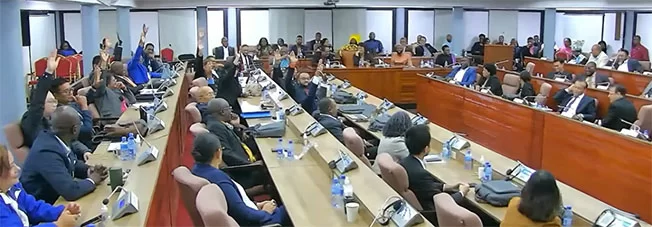
    A heated political dispute has erupted in Antigua and Barbuda’s Parliament following the government’s decision to bar Opposition Leader Jamale Pringle from taking his oath of office during a recent sitting, drawing sharp accusations of democratic erosion from opposition lawmakers. Senate Minority Leader Chester Hughes has publicly defended Pringle, arguing that longstanding parliamentary standing orders explicitly permitted the oath of allegiance to be administered mid-session following Pringle’s re-election via by-election.

    In an interview with Observer Radio conducted after all opposition members staged a mass walkout from the chamber ahead of the annual Throne Speech delivered by the Governor General, Hughes outlined the legal and procedural case for the opposition’s position. He clarified that while the national Constitution requires all elected members to complete the oath before participating in parliamentary proceedings, the specific timing of this step is governed by standing orders, not the foundational legal document.

    Hughes pointed specifically to Standing Order 15, contained within Chapter 4 of Parliament’s procedural rules. This provision sets the standard order of business for every parliamentary sitting, and explicitly lists “the oath of allegiance of a new member” as a routine agenda item. This inclusion, Hughes argued, was intentionally designed to accommodate special circumstances such as by-elections, where newly elected members join the legislature mid-session and require swearing-in after a parliamentary term has already begun.

    “Standing orders explicitly allow new members to be admitted at any sitting — that is exactly why the oath item is permanently on the agenda for every session,” Hughes stated.

    The controversy unfolded Tuesday, when parliamentary officials ordered Pringle to leave the joint sitting before the Throne Speech after confirming he had not yet completed his oath following re-election. In response, all opposition lawmakers walked out of the chamber in coordinated protest. Hughes told reporters that opposition members smelled trouble before official proceedings even began, after noting closed-door consultations between Prime Minister Gaston Browne, Attorney General Sir Steadroy Benjamin, and other senior government officials inside the chamber. He added that government officials were seen making frantic calls to external advisers moments before the Sergeant-at-Arms approached Pringle to remove him.

    Hughes also flagged a separate procedural red flag ahead of the sitting: key parliamentary documents were never distributed to opposition members in advance, a break from standard protocol. When Hughes attempted to raise the issue of Pringle’s swearing-in once the sitting began, he was denied permission to speak on the opposition leader’s behalf. He questioned why the government refused to accommodate the straightforward step of administering the oath, asking: “What damage would it have done to simply follow procedure and swear Pringle in alongside other new members?”

    A core point of contention for Hughes is the government’s repeated reliance on the constitutional requirement for oaths while ignoring the standing orders that govern timing. He also launched a direct critique of Senate President Alincia Williams-Grant, accusing her of bias in allowing the Attorney General to speak at length on the dispute while barring him, the elected Senate minority leader, from addressing the chamber to defend Pringle.

    “She let the Attorney General rise and speak on this matter, but refused to let me, as the leader of the minority, come to the defense of the leader of the opposition,” Hughes said.

    Closing his remarks, Hughes issued a stark warning about the long-term implications of the government’s actions, arguing that this procedural overreach poses a tangible threat to the country’s democratic foundations: “All democracies are under threat when a government behaves this way.”

  • GG Praises PM for Rejecting Second IMF Programme and Repaying EC$320 Million Debt

    GG Praises PM for Rejecting Second IMF Programme and Repaying EC$320 Million Debt

    During the ceremonial opening of the country’s new parliamentary term on Tuesday, Governor-General Sir Rodney Williams used the annual Throne Speech to spotlight a landmark 2014 decision by Prime Minister Gaston Browne’s administration that officials now frame as the turning point for Antigua and Barbuda’s economic resurgence.

    Shortly after the Antigua and Barbuda Labour Party (ABLP) won the June 2014 general election, Browne – who also holds the finance portfolio – was confronted with an unexpected demand from the International Monetary Fund. A representative from the global lending body reached out to the newly sworn-in government to demand repayment on a defaulted existing loan. When the administration requested a repayment moratorium to ease the strain on national finances, the IMF offered a second structured economic program instead of granting the extension. Drawing on his background as a former banker, Browne made the controversial call to turn down the IMF’s offer, committing instead to clearing the entire EC$320 million outstanding debt within a four-year window.

    Against early expectations, the Browne administration delivered on that promise, fully settling the obligation to the IMF by 2018. In Tuesday’s address, Sir Rodney framed this achievement as proof of the sitting government’s strong fiscal stewardship and decisive leadership, noting that extricating the nation from long-term dependence on IMF programs was one of the greatest early challenges for the new administration back in 2014.

    This milestone is positioned as a foundational step in the government’s decade-long strategic vision, which aims to reposition Antigua and Barbuda as a regional “economic powerhouse” and a leading “lifestyle superpower” for both citizens and residents. The Throne Speech repeatedly lauded the ABLP’s governance over the past 12 years, crediting consistent “superb leadership” for the country’s current economic trajectory.

    Tuesday’s address capped off the official transition to the new parliamentary term, coming two months after the ABLP secured its fourth consecutive general election victory on April 30, where it earned a fresh mandate to continue its policy agenda for the Caribbean nation.

  • Penny wants a stronger PCA

    Penny wants a stronger PCA

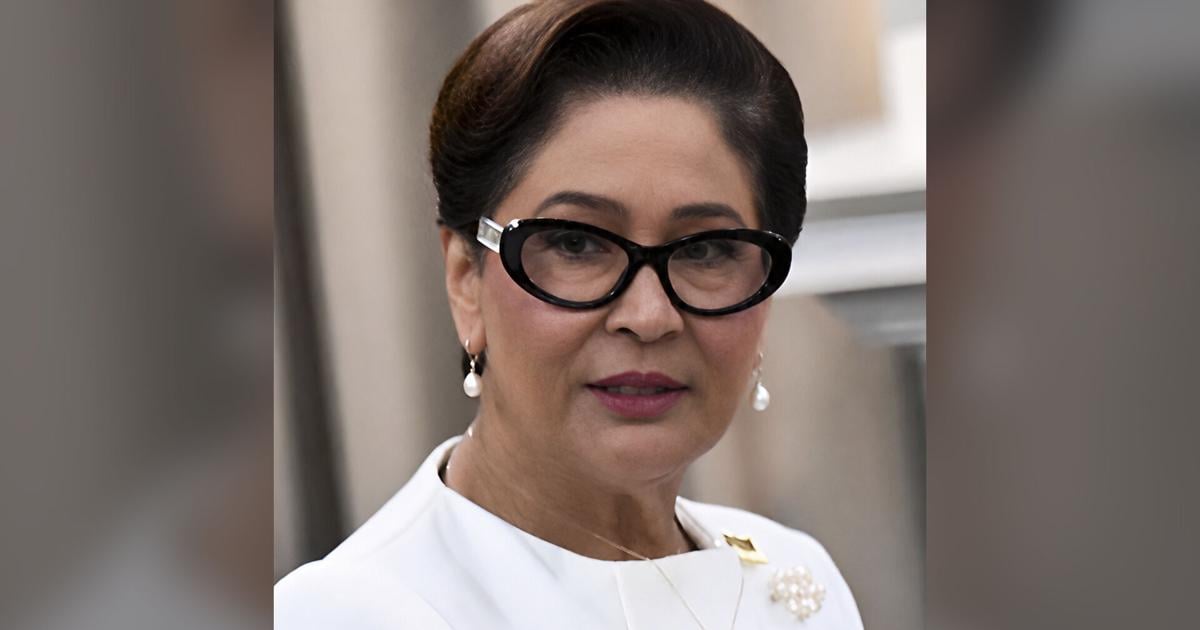
    Trinidad and Tobago’s opposition leader Pennelope Beckles has ramped up pressure on Prime Minister Kamla Persad-Bissessar, accusing the sitting head of government of ignoring a sharp rise in public distrust of national police operations. Speaking out via a public social media statement on Wednesday, Beckles laid out two urgent legislative priorities her bloc is pushing to overhaul police accountability: strengthening the oversight powers of the Police Complaints Authority (PCA) and mandating all frontline law enforcement officers to wear activated body-worn cameras during duty.

    Beckles argues the current PCA lacks sufficient investigatory authority to handle high-stakes cases involving police-involved killings, and is calling for the local oversight body to be restructured along the lines of Jamaica’s Independent Commission of Investigations (INDECOM), a model that grants independent investigators immediate on-site access to preserve evidence and launch probes right after a fatal police incident occurs. “As Opposition Leader I have made a plain and simple call for the Prime Minister to immediately cause legislative amendments to be made to improve the powers and investigatory procedures of the Police Complaints Authority modelling the Jamaican INDECOM example which will allow features such as on-scene site evidence preservation and access by PCA personnel immediately upon the occurrence of police killing,” Beckles said in her official statement.

    The push for PCA reform is paired with a longstanding opposition demand for binding legislation requiring body-worn camera use for all on-duty police and authorized law enforcement personnel. Beckles emphasized that updated legislation covering both PCA oversight and body cameras would deliver tangible benefits for all parties: “Legislation relating to the PCA and the use of body cameras will ensure transparency, accountability and protection for both officers and civilians alike,” she said.

    Beyond attacking the prime minister’s inaction, Beckles also targeted Homeland Security Minister Roger Alexander over the unexplained cancellation of a planned procurement of body cameras, noting the public has received no official clarification or timeline for reversing the decision. She also took aim at the soon-to-expire State of Emergency (SoE), suggesting the government is quietly paving the way to extend emergency powers by manufacturing a new national crisis to shield cabinet ministers who have avoided media scrutiny amid widespread corruption allegations.

    As chair of the National Security Council, Persad-Bissessar has completely failed to address growing public concerns over police accountability and transparency, Beckles claimed. She criticized the prime minister for only recently breaking her public silence on policing issues via text message, using the outlet only to announce vague plans for appointing a new Chancellor of the Judiciary and adjusting age limits for alcohol consumption, recreational marijuana use, and gambling—while ignoring the far more pressing demand for policing reform.

    “From the vacuum of her silence and absence, the Prime Minister as the head of the National Security Council has finally emerged by text message once again to now gift the nation with two cryptic quotes and the promise of a Chancellor of the Judiciary, an increase in the age for consumption of alcohol, use of marijuana and gambling,” Beckles said. She called Persad-Bissessar’s inaction on policing transparency a clear dereliction of constitutional duty, noting that balanced reform would protect the rights of both civilians and law enforcement officers by creating clear, documented records of police interactions.

    Beckles tied the growing public distrust to recent high-profile developments, including the controversial execution of warrants against Kaia Sealy. “It is undeniable that suspicion in police action has taken unnecessary root in the matter of the charges brought against Kaia Sealy,” she stated. She also condemned previous provocative comments made by the prime minister about public safety, including remarks describing “rough men” protecting citizens at night and earlier calls to “buss heads and kill people violently”—language that Beckles says has done nothing to ease public anxiety about excessive police force.

    In closing, Beckles praised the Office of the Director of Public Prosecutions as one of the last remaining independent pillars of public trust in the country, while reiterating that the prime minister has consistently refused to engage with or adopt the opposition’s evidence-based recommendations for strengthening policing accountability.