分类: politics

  • Cabinet Halts Coastal Dredging Amid Public Outcries

    Cabinet Halts Coastal Dredging Amid Public Outcries

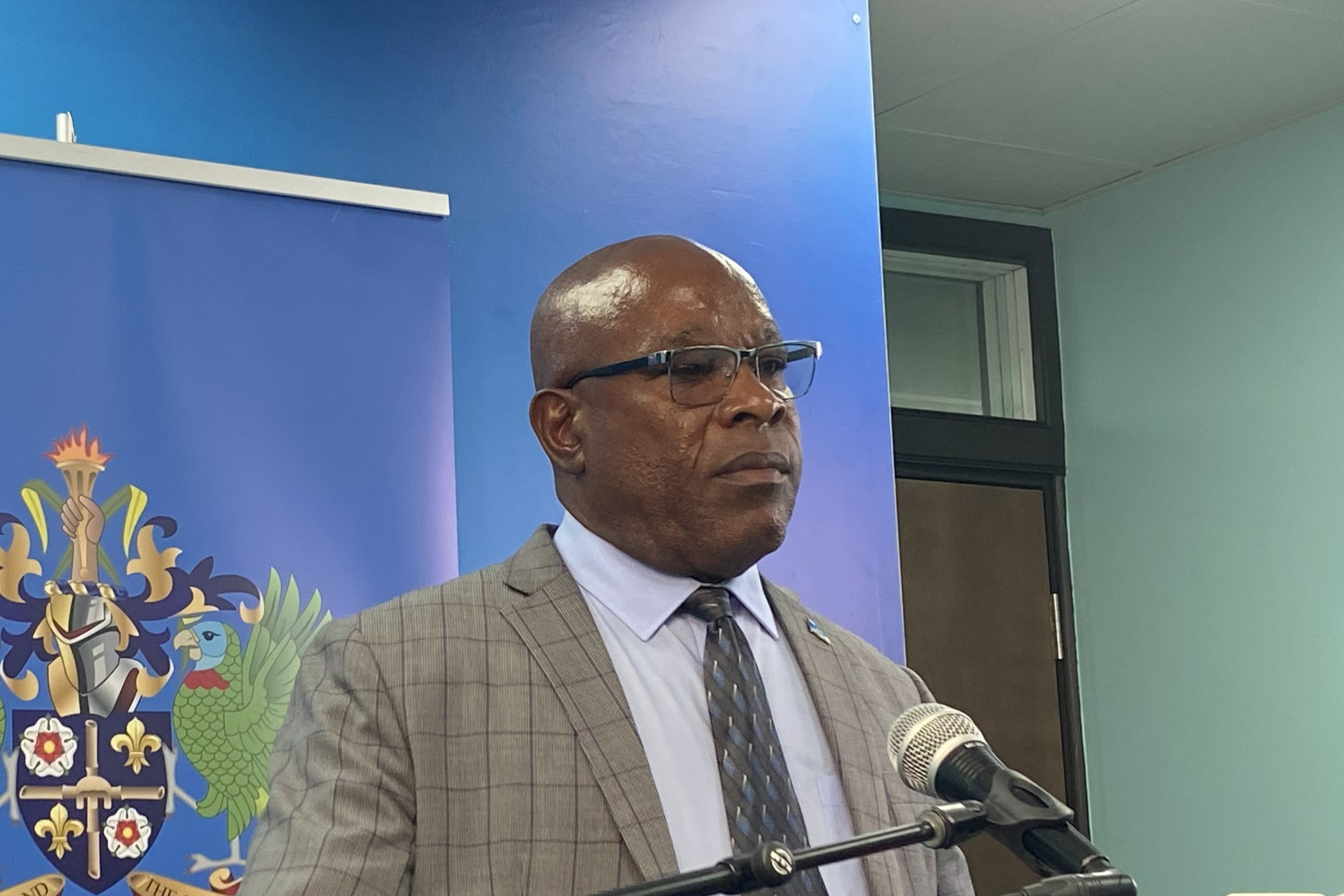
    BELIZE CITY – May 28, 2026 – Facing sustained public outcry and growing pressure from environmental advocacy groups over unregulated coastal development, Belize’s national Cabinet has approved an immediate temporary moratorium on all commercial dredging and private beach reclamation work across the country’s vulnerable shorelines. The pause will remain in effect while inter-agency officials craft a comprehensive, science-backed regulatory framework to oversee future coastal activities.\n\nThe decision comes after months of mounting pushback from coastal residents and community organizations, with the Ambergris North Alliance the most recent group to formally demand an end to unapproved dredging that they argue threatens both local ecosystems and the livelihoods of coastal communities. Blue Economy Minister Andre Perez, who confirmed the policy shift in a recent televised interview, noted that the government had heard widespread public concern and acted to address gaps in existing oversight.\n\nPerez explained that the temporary halt is not intended to permanently end legitimate coastal development, but rather to create space for all relevant government bodies to collaborate on a clear, consistent plan that balances economic activity with environmental protection. In the coming weeks, officials from the Department of the Environment (DOE), mining authorities, fisheries management, public health agencies, cultural heritage departments, and local town councils will convene to map out permitted activity zones across high-priority coastal areas, including San Pedro, Caye Caulker, Placencia, Hopkins, and St. Seine Bight.\n\nA key issue driving the moratorium is the proliferation of unapproved, haphazard development in popular coastal areas such as Secret Beach. Perez highlighted that many private developers have built illegal water-based platforms and structures without permits, even blocking public access to community docks in some cases. While the government aims to work with legitimate local businesses to address unmet infrastructure needs such as access to water and electricity, Perez emphasized that gaps in public services do not justify unlawful construction that harms coastal ecosystems.\n\nWhen asked about potential regulatory reforms to prevent future unapproved activity, Perez expressed full support for increasing fines for environmental violations. He argued that stiffer penalties are necessary to deter unauthorized dredging and construction, noting that most violating projects currently operate without any required government approvals. The temporary moratorium, Perez added, is designed to strengthen regulatory accountability, improve inter-agency coordination, and safeguard Belize’s ecologically critical coastline that supports both tourism and domestic fishing industries.\n\nThis report is adapted from a transcript of a May 28, 2026 evening television broadcast.

  • Govt explores Bridgetown harbour relocation amid storm damage, capacity concerns

    Govt explores Bridgetown harbour relocation amid storm damage, capacity concerns

    Barbados Prime Minister Mia Mottley has announced that the national government is conducting formal assessments of plans to relocate the Bridgetown Fisheries Harbour, a move prompted by severe storm damage and long-standing overcrowding that have laid bare critical structural and geographic limitations at the facility’s current site. Mottley made the announcement Thursday during the official launch ceremony for the newly completed Berth 6 at the Port of Bridgetown, where she detailed both the pressing challenges facing the existing fishing harbour and the long-term development options the administration is evaluating.

    The destruction caused by Hurricane Beryl served as a critical wake-up call, exposing deep vulnerabilities at the already overcapacity site, which sustained extensive structural damage when the storm made landfall. “We saw those vulnerabilities laid bare with Hurricane Beryl, when our already congested fishing harbour suffered major damage,” Mottley stated. While most repair work has been finished to restore partial operations, the prime minister confirmed that any significant expansion at the current location is impossible. A steep underwater drop-off immediately adjacent to the existing harbour would drive expansion costs to levels that are completely unfeasible for the government, she explained.

    In response to this barrier, the administration has quietly launched an evaluation of potential relocation sites and is drafting plans for a purpose-built new fish market alongside the new harbour facility. “The government has been working steadily, and will continue to advance work, on environmental impact assessments for the relocation of the Bridgetown fishing harbour, including plans to reclaim additional coastal land to accommodate both the new harbour and a new Bridgetown fish market,” Mottley said. According to her timeline, all required technical studies and geographic modelling will be finalized by the end of this year to determine if the proposed location—north of the Barbados Coast Guard station—is suitable for construction.

    If approved, the new site is designed to deliver multi-purpose economic value beyond the fishing industry. Mottley outlined that the development’s core infrastructure could support not just a new fishing harbour, but also an aggregate handling facility, and offer enough extra space to accommodate both local fishing fleets and recreational pleasure craft.

    Mottley also noted that Barbados’ unique coastal geography creates unusual hurdles for harbour development, setting it apart from many other Caribbean nations. Unlike neighboring territories that benefit from abundant natural inlets and sheltered bays, Barbados has a largely straight, uninterrupted coastline that severely limits available sites for sheltered vessel mooring. “That linear coastline means we have very limited options when it comes to finding safe, sheltered water for our vessels,” she explained.

    While the prime minister acknowledged that the full relocation and construction project will require a substantial public investment, she emphasized that preserving and growing the domestic fishing industry is non-negotiable for Barbados’ economy and social identity. “Can you imagine Barbados without a fishing industry? Can you imagine Barbados without fishermen?” she asked. She also highlighted the sector’s untapped export potential, pointing to the island’s already thriving tuna export market, where long-line fishermen regularly ship local product to buyers across North America.

  • Court Orders JLSC, AG to Pay Enriquez

    Court Orders JLSC, AG to Pay Enriquez

    In a landmark judicial ruling delivered May 26, High Court Justice Martha Alexander has ordered the Judicial and Legal Services Commission (JLSC) and the national Attorney General to cover all legal costs incurred by government accountability activist Jeremy Enriquez. The decision follows a scathing judicial finding that the JLSC violated statutory obligations by failing to properly address Enriquez’s official complaint against sitting High Court Justice Tawanda Hondora, leaving the activist mired in months of unnecessary legal limbo.

    The case originated on April 28, 2025, when Enriquez lodged a formal complaint alleging judicial bias and professional misconduct against Justice Hondora. The accusation stems from an unplanned incident during a court proceeding recess, when Hondora allegedly forgot to mute his microphone during a lunch break, leading Enriquez and his legal representation to overhear the justice discussing their active, ongoing case.

    Over the next seven months, Enriquez submitted repeated written inquiries requesting updates on the status of his misconduct complaint. Despite these consistent follow-ups, the JLSC failed to issue any substantive response or ruling on the allegation. Frustrated by the prolonged lack of transparency and action, Enriquez filed an application for judicial review of the JLSC’s inaction in November 2025. Only after the review claim was lodged did the commission finally notify Enriquez that it had dismissed his complaint.

    In her written judgment, Justice Alexander sharply criticized the JLSC’s handling of the complaint process. She found that the commission failed to adhere to mandatory pre-action protocols established to prevent unnecessary litigation, and its prolonged silence on the matter ran counter to both the explicit language and underlying principles of administrative law. The justice further rejected the Attorney General’s counter-argument that Enriquez should be ordered to pay the state’s legal costs for the judicial review, instead upholding that the activist had acted reasonably in pursuing the claim.

    Alexander explicitly rejected claims that Enriquez had rushed to file legal action, noting that the entire dispute could have been avoided entirely if the JLSC had provided a timely, clear response to the original complaint. This ruling marks the third recent legal victory for Enriquez, who previously won two separate appeals at the Caribbean Court of Justice connected to his constitutional challenge of national redistricting plans.

    Notably, the core dispute over Enriquez’s misconduct allegation remains unresolved. The activist has launched a separate legal challenge to the JLSC’s eventual decision to dismiss his complaint against Hondora, and that substantive case is scheduled to proceed to a full trial in the coming months.

  • PM Says Sex Offenders Registry Will Be Public, But Structured in Tiers

    PM Says Sex Offenders Registry Will Be Public, But Structured in Tiers

    Amid mounting public pressure to open Belize’s existing sex offenders registry to general public access, a multi-stakeholder gathering convened in Belmopan this week to review the nation’s handling of sexual violence cases and identify unaddressed gaps in survivor protection. The meeting, organized by the Ministry of Human Development in partnership with the National Commission for Families and Children (NCFC) and the National Women’s Commission (NWC), brought together judicial representatives, law enforcement officials, government agencies and advocacy groups to examine every stage of the legal process for sexual offenses, from initial incident reporting to court proceedings, and the persistent barriers survivors encounter at each step.

    This round of discussions comes just weeks after Rossana Briceño, Belize’s Special Envoy for the Development of Families and Children, launched a public campaign pushing for full public access to the registry, which currently remains restricted from general view. Attendees covered a wide range of critical topics, including multiple categories of sexual offenses ranging from rape and incest to human trafficking and commercial sexual exploitation of children, as well as gaps in existing witness protection legislation and the current operational structure of the national sex offenders registry.

    In recent days, Prime Minister John Briceño confirmed that the proposal for public access has been formally raised for discussion at the Cabinet level, and government teams are currently working through the logistical and regulatory details to implement the change. Speaking during an appearance on the local program *Open Your Eyes*, the Prime Minister outlined that the new public registry will operate under a structured tiered framework, rather than opening the entire list of registered offenders to unrestricted public view. Only offenders convicted of the most severe sexual offenses and repeat offenders will have their information made publicly available under the proposed model.

    Briceño explained that the tiered system is designed to empower community safety, noting that residents would be able to check the registry to identify high-risk offenders living or working near them, allowing parents to warn children to avoid repeat offenders in local neighborhoods or public spaces. At the same time, he emphasized a clear distinction between high-risk cases and other convictions, such as first-time offenses or situations where an offender did not know their partner was underage. The Prime Minister stressed that these lower-risk individuals should be provided a clear pathway to rehabilitation after completing their sentences, without being burdened by permanent public stigma that would block their ability to rebuild their lives. He was careful to clarify that this differentiated approach does not minimize the seriousness of any sexual offense.

    “Sometimes people make mistakes, and in many cases, they want to turn their lives around,” Briceño said during the interview. “If you have to carry that label over your head for the rest of your life, you’re essentially condemned to a permanent second-class status. I’m not in any way suggesting that these offenses are acceptable—they are not. We are building this framework based on guidance from legal and criminology experts.”

    Briceño added that interagency working groups involving the Belize Police Department, the Attorney General’s Ministry and the Ministry of Human Development are currently finalizing the specific rules, access protocols and tier classification criteria that will govern the new public registry, with no final timeline for launch announced as of yet.

  • Zabaneh: Join NBC or Find Your Own Electric Buses

    Zabaneh: Join NBC or Find Your Own Electric Buses

    May 28, 2026 — Belize’s government-led electric bus pilot initiative has drawn to a close without a single member of the Belize Bus Association (BBA) having the opportunity to test or operate the new electric vehicles. Now, the association is pushing for a seat at the table in the project’s next phase, but their request comes after the pilot program has already concluded, leaving their demand facing an uncertain outcome.

    Shortly before Minister of Transport Dr. Louis Zabaneh spoke to reporters on Wednesday, the BBA released an official letter laying out their position. The association is calling for the pilot electric buses to be rotated onto routes currently managed by BBA operators, arguing that a genuine nationwide transition to electric public transit cannot happen if independent operators are locked out of hands-on testing of the new technology.

    The BBA’s letter emphasizes that asking independent bus operators to commit to large-scale investments in electric vehicles, and make long-term strategic decisions about the future of their businesses, without first gaining direct experience operating the buses, is an unrealistic expectation. The association stresses that it is not seeking any form of preferential treatment, but rather demanding equal and meaningful inclusion in the government’s electric bus rollout plans.

    Minister Zabaneh pushed back on the request in his remarks to local outlet News 5, confirming that the pilot initiative has been fully completed, and no additional electric buses will be allocated through that specific program. He outlined only two available paths forward for BBA members who want to integrate electric buses into their operations: either merge their operations into the state-run National Bus Company (NBC), or organize independently as a private entity and purchase their own electric buses directly.

    Zabaneh clarified that while the Ministry of Transport is willing to share all data and lessons learned from the completed pilot program with independent operators, the electric buses already owned by the NBC are reserved exclusively for use on NBC-managed routes. “They would have to, as independent operators, organise, form a company and procure e-buses,” the minister explained.

    The minister also noted that growing numbers of BBA members have already chosen to join the NBC, drawn by the advantages of operating under the national entity. Just recently, three additional independent operators made the decision to align with the NBC. “I am pleased to share with you that the last operator from the south that did not join has now joined, and two operators from the north have now applied to join the National Bus Company,” Zabaneh announced.

  • Belize Rewriting “Decades-Old” Labour Laws

    Belize Rewriting “Decades-Old” Labour Laws

    On May 28, 2026, the government of Belize announced a comprehensive overhaul of the nation’s decades-old Labour Act, a move driven by rapid shifts in the country’s employment landscape and growing systemic gaps in the existing labor framework. According to Tanya Santos, Chief Executive Officer of Belize’s Ministry of Labour, the current legislation has not kept pace with the evolution of work, leaving critical modern employment scenarios unaddressed.

    The rise of non-traditional work arrangements, such as remote work and the fast-expanding domestic call center industry, has exposed major gaps in the outdated law, Santos explained. What was fit for the labor market of generations ago fails to reflect the realities of how Belizeans work today, with new industries and employment models emerging far faster than existing regulations have been able to adapt.

    Beyond updating rules for modern work structures, the review process is also targeting pressing economic and demographic challenges that are weighing on Belize’s development. Santos highlighted that skilled labor shortages, exacerbated by outmigration of local workers, have created costly delays for major public projects across the country. As a concrete example, she pointed to the ongoing construction of the San Pedro hospital, which has fallen behind schedule due to the lack of available qualified local workers to complete the project.

    To ensure the revised legislation balances the needs of all stakeholders, the Ministry of Labour has launched cross-sector consultations bringing together a diverse range of groups. Union representatives, leadership from the Belize Chamber of Commerce, and stakeholders from key sectors including tourism have gathered to negotiate core labor issues that will be integrated into the new law. Key topics under discussion include fair minimum wage standards, improved job security protections, updated workplace safety regulations, and manageable cost burdens for small and large employers alike.

    Santos emphasized that updating the outdated labor framework is a long-overdue step for Belize, noting that “it is always a perfect time to update your legislation” to better serve the evolving needs of the nation’s workers and economy.

  • OPEN LETTER: Gregor Nassief to the prime minister on the need for a reset of the Electoral Commission

    OPEN LETTER: Gregor Nassief to the prime minister on the need for a reset of the Electoral Commission

    An open letter addressed to the Prime Minister of Dominica from prominent local figure Gregor Nassief is sounding the alarm over a deeply troubled electoral reform process, calling for an urgent overhaul of the island nation’s Electoral Commission just four and a half months ahead of the October 15, 2026 general election. Nassief argues that repeated institutional failures, eroded public trust, and widespread perceptions of political dependence have left the body incapable of delivering a free, fair, and visibly legitimate election, making a full leadership reset non-negotiable.

    Nassief’s case for reform rests on a pattern of systemic dysfunction that stretches back more than a year. The most foundational violation he cites is the 355-day suspension of continuous voter registration, which ran from March 19, 2025, to March 9, 2026. This pause barred thousands of newly eligible citizens from adding their names to the voter rolls ahead of local government elections, a violation of the constitutional right to voter registration that the Prime Minister has dismissed as “water under the bridge.” When asked whether the suspension could have altered past election outcomes, the sitting Chief Elections Officer (CEO) refused to rule out potential impact, further deepening public uncertainty.

    The ongoing voter list confirmation process, a core component of the government’s electoral reform agenda, has also stalled dramatically. Official data shared by the Prime Minister at a May 5, 2026 press conference shows that by April 30, just 6,592 confirmation applications had been approved out of 16,573 total submissions received over six and a half months. With Dominica’s total voting-age resident population estimated at roughly 55,000, that means fewer than 12% of eligible voters have been successfully added to the new voter roll less than five months out from election day. Even for the small share of voters that have been approved, no identification cards have been issued, with distribution not expected to start for another six to eight weeks.

    Beyond slow progress, the Commission has failed to meet basic transparency and accountability standards expected of democratic institutions, Nassief argues. The body has refused to publish regular, up-to-date data on application volumes, approval rates and overall progress — information that would allow the public to track whether bottlenecks are being addressed and statutory deadlines are on track. It has also failed to communicate openly with the public and press about delays, apologize for disruptions to the process, or lay out clear plans to get back on schedule. Nassief notes that the Prime Minister recently publicly lambasted local utility provider DOMLEC for failing to communicate during power outages, yet has applied no similar standard to the Electoral Commission, despite the body’s responsibility for safeguarding democracy rather than just electricity supply.

    The most damaging flaw, Nassief argues, is the complete lack of visible independence that the Commission has displayed, in violation of constitutional requirements. Section 56(11) of Dominica’s Constitution explicitly states that the Electoral Commission must not be subject to direction or control from any other authority, but in practice, the Prime Minister has repeatedly stepped in to speak on the Commission’s behalf, explain its failures, defend its actions, and even secure external technical assistance from regional bodies. Earlier this month, the Prime Minister announced the government had formally requested support from the Commonwealth Secretariat, Organization of American States, Organisation of Eastern Caribbean States and CARICOM to address operational shortfalls — a step that Nassief says should have been taken publicly by the independent Commission itself, not the head of government. When the Prime Minister acts as the Commission’s default intermediary, advocate and facilitator, Nassief writes, it creates an unavoidable impression of dependence, not the constitutionally mandated independence the public demands.

    Structural weaknesses have compounded these performance failures. Former Caribbean judge Sir Dennis Byron previously recommended that the Commission expand its membership beyond political party representatives to include independent voices from civil society, academia, religious groups and the business sector, and add at least one female member. That reform has never been implemented, leaving the body structurally unbalanced and less able to build broad public trust.

    When pressed at the May 5 press conference on whether the public perceives the current Commission as impartial, the Prime Minister declined to answer. Nassief says the honest answer is no — and that this lack of perceived legitimacy is itself reason enough for a reset. He is calling for the full Commission and sitting CEO to resign, or at a minimum for the Commission Chair and CEO to be replaced to rebuild trust ahead of the election.

    Nassief also draws attention to a 2024 controversy over the CEO appointment, when all five sitting members of the Commission unanimously recommended reinstating former CEO Ian Michael Anthony, a recommendation that the government rejected in favor of appointing the current incumbent. Anthony, who served as CEO from 2017 to 2024, holds a law degree, a qualification in legislative drafting, and is currently pursuing a master’s degree in Electoral Policy and Administration. He has also served as an election observer with the Commonwealth Observer Group in multiple regional elections as recently as 2026 in Antigua, making him exceptionally well-qualified for the role, Nassief argues. He is calling for Anthony to be reinstated as CEO, and for a new independent chair — such as a retired Dominican judge — to take over leadership of the Commission.

    Closing the letter, Nassief emphasizes that the call for reform is rooted in concern for the country’s democratic future, not political malice. “Dominica needs a way forward that can restore public confidence before the next general election, and that begins with accepting that the present arrangement has failed,” he writes. If the Prime Minister acts now to reset the Commission’s leadership, Nassief says, the public will have an opportunity to rebuild trust in the electoral process, leading to higher voter participation and a legitimate outcome that all Dominicans can accept. “This is the moment to do what is right for the country: restore confidence, protect the integrity of the process, and help heal the nation by ensuring that the institutions administering our elections are not only independent, but seen by all to be independent,” Nassief concludes.

    The letter includes a disclaimer that the views expressed are those of author Gregor Nassief alone, and do not represent the positions of Duravision Inc., Dominica News Online, or any of their subsidiary brands.

  • UNC members call for alderman’s resignation

    UNC members call for alderman’s resignation

    A high-stakes political standoff unfolded in Siparia on Wednesday, when a faction of United National Congress (UNC) party members staged an organized public demonstration to push long-serving alderman Victor Roberts out of his post at the Siparia Borough Corporation (SBC). The demonstrators carried hand-painted placards emblazoned with calls for Roberts’ departure and chanted unified slogans demanding he step down, marching a pre-planned route from Irwin Park past the Siparia Police Station along SS Erin Road before arriving at the SBC compound, ahead of the body’s scheduled statutory monthly meeting. Once at the building, protest organizer and senior UNC member Naresh Maharaj formally submitted a signed petition calling for Roberts’ resignation to Siparia Mayor Doodnath Mayrhoo. Maharaj laid out the core of the UNC’s grievance: Roberts was appointed to his alderman position by former Prime Minister and UNC leader Kamla Persad-Bissessar as a representative of the party, making his recent defection to the opposition People’s National Movement (PNM) a violation of the public trust that came with the role. “You cannot take your chair, a UNC chair, and put it by the PNM and say, I support the PNM … If you decide to take up your things and go, you need to resign,” Maharaj stated in his remarks to the mayor. He further noted that current law prevents Persad-Bissessar from removing Roberts from the post, meaning Roberts legally remains a UNC-appointed alderman even after switching party affiliation. The UNC is demanding that the seat be filled by a party loyalist who will uphold the platform that got him appointed, Maharaj added, confirming the petition would next be sent to Persad-Bissessar for further action. Roberts, who was already present in the SBC building when the protest began, did not back down in the face of the demonstration, and instead doubled down on his refusal to resign in comments to reporters following the protest. He reiterated that he would remain in his role to serve the public, acting as a check on the corporation’s decision-making until the end of his term or until the government calls new municipal elections. The path that led to this public clash began last year, when Roberts stepped down from his official UNC membership, and just two weeks ago he confirmed his open defection to PNM, after he was spotted attending the party’s annual Sports and Family Day. At the time, he told local media he had applied for and received PNM membership earlier in 2024. Even after the switch, he has retained his alderman post, prompting SBC UNC members to not only call for his resignation but also push for amendments to the Municipal Corporations Act to close the loophole that allows defectors to keep their appointed seats. Mayor Mayrhoo, a member of the UNC, has publicly aligned with the protestors, dismissing Roberts as a “frog hopper politician” for his history of switching political allegiances: he previously left the PNM to run as an independent, later joined the UNC, and has now returned to his original party. Mayrhoo also claimed Roberts is planning to run as the PNM candidate for the Erin district in upcoming local government elections, a prediction he says will end in defeat for Roberts. For his part, Roberts has pushed back against the protest and the UNC’s demands, raising multiple pointed questions about the demonstration’s legality amid the ongoing national State of Emergency. He called on the Commissioner of Police to launch a formal investigation into whether the protest, held on government property, received the required official approval, and also called for Mayrhoo to resign over the incident, questioning the mayor’s competence as a leader. The alderman also questioned why he is facing such fierce backlash when other UNC defectors to the PNM have not faced similar public calls for resignation. He raised the controversial question of whether the targeted campaign against him is rooted in racial prejudice, asking reporters: “Is it because I am a proud black man? That is my question … I have also seen the councillor for Siparia West/Fyzabad, Jason Ali, left the UNC and went over to the PNM, I haven’t seen this type of behaviour.” Roberts rejected claims that he has violated political integrity by refusing to resign, arguing he has remained in the post to prioritize public interest over party loyalty, and has pushed back against harmful council decisions that would harm local residents. “I am here to do what I am supposed to do on behalf of the people and that is what I am going to do. That is my role,” he said. Responding to Mayrhoo’s claim that he will contest the upcoming local election for PNM, Roberts said he had no idea where the mayor got that information, and confirmed the PNM has not approached him about running. “I don’t know what the political future holds for me, probably it holds nothing, I don’t know, but that would not stop me from being an advocate for the poor, the oppressed and the downtrodden,” he added.

  • ABLP Congratulates Samantha Marshall on Ambassador-at-Large Appointment

    ABLP Congratulates Samantha Marshall on Ambassador-at-Large Appointment

    The Antigua and Barbuda Labour Party (ABLP) has issued an official statement extending warm congratulations to one of its former lawmakers and veteran attorney, Samantha Marshall, following her selection to the post of Ambassador-at-Large.

    In the public release, the ruling political party highlighted Marshall’s extensive track record of public service, which includes stints in both the upper and lower chambers of Antigua and Barbuda’s national parliament. Over her decades of engagement in the country’s public sphere, she has repeatedly delivered meaningful advances that have pushed forward national progress across multiple policy areas, the party noted.

    Marshall’s career extends beyond legislative work: she has also previously held a cabinet position as a government minister, building deep expertise in governance and public administration that sets her apart for the new diplomatic role. According to the ABLP, her appointment to the ambassador-at-large post is a direct recognition of her well-honed experience, unwavering professional ethics, sharp intellectual capacity, and consistent commitment to advancing both national priorities and the party’s mission.

    The ABLP expressed full confidence that Marshall will bring the same level of dedication to her new diplomatic assignment, upholding the reputation of Antigua and Barbuda with exceptional performance, grace, and firm leadership across regional and global diplomatic platforms. Closing the statement, the entire ABLP community conveyed its best wishes for a productive, influential tenure for Her Excellency Samantha Marshall in her new role.

  • Court Orders JLSC to Pay Up

    Court Orders JLSC to Pay Up

    In a ruling that underscores the importance of procedural accountability for judicial oversight bodies in Belize, the country’s High Court has delivered a decisive judgment against the Judicial and Legal Services Commission (JLSC), ordering the agency to cover all legal costs incurred by activist Jeremy Enriquez, who brought a challenge over the JLSC’s botched handling of his misconduct complaint against a senior justice.

    The dispute traces back to the high-stakes redistricting legal battle that has drawn significant public attention across Belize. In that case, Enriquez filed a formal misconduct complaint against Justice Tawanda Hondora, claiming that an accidentally unmuted microphone during a court lunch break captured a problematic conversation between Hondora and another sitting judge. The activist argued that the exposed conversation irreparably eroded his trust in Hondora’s ability to fairly preside over the redistricting proceedings. To support his allegations, Enriquez submitted audio recordings of the exchange to the JLSC, the body legally tasked with investigating judicial misconduct claims in the country, and awaited a substantive response.

    Instead of launching a formal review or issuing a detailed reply to the complaint, the JLSC only provided Enriquez with a series of generic, vague single-sentence acknowledgements that provided no clarity on whether the commission would investigate his claims. Frustrated by the months of inaction and stonewalling, Enriquez turned to the High Court to challenge the JLSC’s failure to meet its legal obligations.

    In his written judgment delivered on May 28, 2026, Justice Alexander rejected the core defense put forward by the JLSC: that Enriquez had acted prematurely and impatiently in bringing the court challenge. Alexander explicitly found that Enriquez “acted reasonably in filing his application,” noting that the activist had waited an appropriate length of time for a substantive response from the oversight commission before pursuing legal action. The justice further ruled that the JLSC’s non-responsive conduct directly violated the core principles of Belize’s pre-action protocols, which require government and judicial bodies to engage in good-faith processing of public complaints before parties turn to the courts for resolution.

    “The matter could have been easily avoided by a more responsive and reasonable conduct of the JLSC,” the judgment noted. Enriquez had not only requested the JLSC be ordered to cover his legal costs but also asked the court to certify the case as sufficiently complex to justify his legal team including both a senior and junior barrister, meaning the JLSC would be required to pay for both legal professionals. Justice Alexander granted this request, emphasizing that the entire court challenge would have been unnecessary if the JLSC had simply followed established procedural rules when handling Enriquez’s original complaint.

    While the court has issued a clear ruling on liability, the final total amount of costs that the JLSC will be required to pay is still pending formal calculation, and has not yet been publicly announced.