分类: politics

  • HAPPENING NOW: UPP Leader and Candidates Begin Nomination Process

    HAPPENING NOW: UPP Leader and Candidates Begin Nomination Process

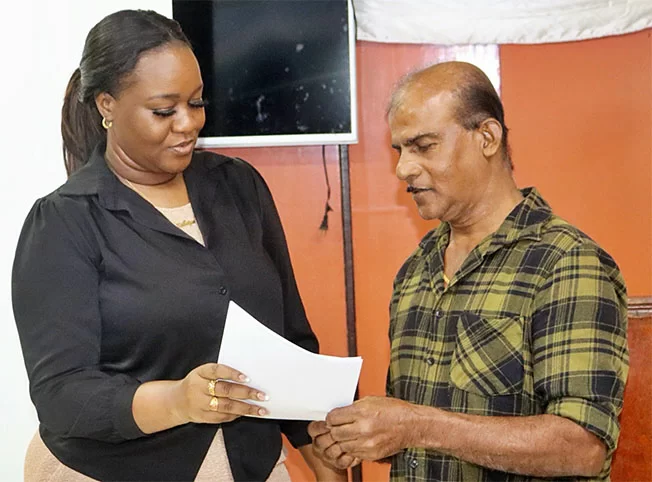
    As election season gains momentum, the United Progressive Party (UPP) has entered a critical new phase this week, with party leader and all endorsed candidates officially launching their nomination process at party headquarters across multiple regional constituencies.

    The nomination period, a mandatory procedural step required by the national electoral commission, marks the formal start of candidates’ qualification for the upcoming general election, scheduled to take place in six weeks. Party officials confirmed that the UPP leader was the first to file their nomination papers early Monday morning, accompanied by senior party members, before proceeding to meet with grassroots supporters outside the commission’s local office.

    Representatives from the electoral commission have stated that all nomination materials submitted so far by UPP candidates appear to meet all regulatory requirements, with preliminary reviews expected to be completed within three business days. The process, which requires candidates to submit valid voter signatures, registration documents, and financial disclosure forms, is a foundational step that all aspiring elected officials must complete to appear on the final ballot.

    In a brief press statement following the submission of his nomination, the UPP leader emphasized that the party’s slate of candidates reflects a broad cross-section of national society, including first-time political candidates, community organizers, and incumbent representatives with proven legislative records. “This nomination process is not just a bureaucratic step—it is a commitment to the voters that we are ready to deliver on the promises we have laid out for economic growth, healthcare reform, and expanded educational opportunity,” the leader told assembled reporters.

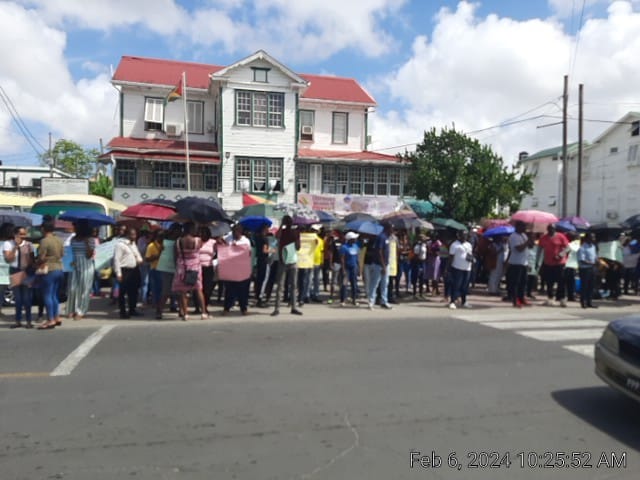
    Grassroots supporters gathered outside the nomination venue to cheer on the UPP team, holding campaign signs and chanting party slogans, in a display of early enthusiasm for the party’s election bid. Political analysts note that the early launch of the nomination process gives the UPP a strategic advantage, allowing candidates extra time to campaign in key swing constituencies before early voting begins next month.

    Opposition parties have also begun their own nomination processes this week, with all candidates required to complete their submissions by the end of the two-week nomination window set by the electoral commission. The finalized list of all qualified candidates will be published by the commission one week after the nomination period closes, clearing the way for the official campaign period to begin in full.

  • VAT relief extended for four months

    VAT relief extended for four months

    Facing renewed global economic uncertainty driven by shifting geopolitical tensions, the government of Dominica has approved a four-month extension of value-added tax (VAT) and import duty exemptions on 26 staple consumer goods, pushing the end date of the relief program to July 31, 2026. The announcement was made by Finance Minister Dr. Irving McIntyre during Friday’s plenary sitting of the Sixth Meeting of the Third Session of the Eleventh Parliament, as part of the government’s ongoing response to cost-of-living pressures across the island nation.

    The original VAT exemption scheme for the 26 essential goods – covering core food items, hygiene products, and household necessities – took effect on October 1, 2025, and was scheduled to expire on March 31, 2026. The expanded list of exempt goods, which includes salted herrings, codfish, multiple legume varieties, cereals, canned meats and fish, cornmeal, oats, biscuits, orange juice, tomato ketchup, toothpaste, laundry detergent, toilet paper, and sanitary napkins, was formally affirmed by parliamentary resolution in November 2025.

    When the program was first drafted, government officials designed it as a six-month buffer to offset the impact of elevated imported inflation on Dominican households and residents. While an International Monetary Fund (IMF) assessment released in recent months confirmed that regional and domestic inflation has been gradually easing, unforeseen geopolitical developments in the Middle East have triggered a sharp uptick in global crude oil prices, creating new ripple effects that threaten to raise transportation and commodity costs across small import-dependent economies like Dominica.

    Against this evolving backdrop, the Dominican government has opted to reverse its original plan to reinstate VAT on the 26 goods at the end of March. “In this circumstance, government has determined that it is necessary to extend the period of exemptions for another four months, ending on 31st of July 2026, in order to mitigate the impact of rising prices on consumers,” McIntyre told parliament. Alongside the VAT extension, the government has also extended parallel import duty exemptions for the same 26 goods over the identical four-month window, doubling down on efforts to cut overall landed costs for these essential products.

    McIntyre emphasized that the administration remains focused on prioritizing household financial wellbeing amid volatility. “To avoid hardships on our people we find ways other than through taxes to raise revenue and provide relief when required,” he said, adding an appeal to suppliers and retailers: he encouraged all businesses in the supply chain for these goods to fully pass on the cost savings generated by the exemptions to end consumers, rather than retaining the margin as extra profit.

    Prime Minister Roosevelt Skerrit reinforced the government’s commitment to supporting working and middle-class families in his remarks on the extension. “We reaffirm our commitment to stand with the people, not only in times of stability, but more importantly, in times of uncertainty,” Skerrit said. He added that the current Dominican administration, which he leads, has proven unmatched in its focus on centering public needs: “the history of Dominica will show that no government in Dominica has been more people-centered, more compassionate, more caring and more empathetic, than this government that I have the honour to lead.”

    The extension was formalized through the Value Added Tax (Schedule) (Amendment) Order 2026, which was introduced to parliament on April 10, 2026, and approved via affirmative resolution in line with the provisions of Dominica’s 2017 Value Added Tax Act. The law grants the Finance Minister authority to amend VAT exemption schedules via official gazette order, with any changes required to receive formal parliamentary approval to take effect. Following the vote on the order, parliament was adjourned Sine Die.

  • HAPPENING NOW: ABLP Candidates Begin Nomination Process

    HAPPENING NOW: ABLP Candidates Begin Nomination Process

    The formal candidate nomination process for Antigua and Barbuda’s upcoming general election officially got underway on Monday, with Attorney General Steadroy “Cutie” Benjamin making history as the first official nominee from the ruling Antigua and Barbuda Labour Party (ABLP).

    Benjamin’s early completion of nomination requirements sets the stage for a packed electoral field, with all major political groups moving to finalize their candidate rosters. Alongside the incumbent ABLP, the main opposition United Progressive Party (UPP), the Barbuda-based Barbuda People’s Movement (BPM), and a number of independent hopefuls are all expected to field candidates across the country’s legislative districts.

    Across all 17 of Antigua and Barbuda’s electoral constituencies, nomination activities are unfolding in parallel. Candidates are presenting their official nomination paperwork at local nomination centers, with each submission overseen by appointed returning officers tasked with verifying eligibility and documentation.

    Thousands of party supporters have gathered at nomination centers across the islands to rally behind their respective candidates as proceedings continue through the day. The entire nomination window is scheduled to close sharply at 6 p.m. local time.

    Following the closure of nominations, the Antigua and Barbuda Electoral Commission (ABEC) will begin compiling and validating submissions, with plans to publish a complete official list of all confirmed candidates later this evening. This formal list will lock in the contenders set to compete in the April 30 general election, one of the most highly anticipated political events in the region this year.

    As a key milestone in the national electoral timeline, Nomination Day formally marks the transition to the official campaign period. Political analysts and voters across the country are already framing this election as one of the most competitive in recent decades, with close contests expected in multiple key constituencies.

  • STATEMENT: CARICOM Chair on special emergency C.O.H meeting to address concerns leveraged by T&T about organization’s leadership

    STATEMENT: CARICOM Chair on special emergency C.O.H meeting to address concerns leveraged by T&T about organization’s leadership

    In an extraordinary development for the Caribbean Community (CARICOM), regional heads of government convened a special emergency meeting on 10 April 2026 to address long-simmering governance concerns raised by Trinidad and Tobago, centered largely on the planned reappointment of CARICOM’s top Secretary-General. Notably, neither the Prime Minister of Trinidad and Tobago nor any official government representative from the country took part in the closed-door consultations.

    Hosted by the CARICOM Secretariat based in Greater Georgetown, Guyana, the gathering followed a contentious lead-up stemming from disputes that emerged during the bloc’s 50th Regular Conference of Heads of Government, held in St. Kitts and Nevis between 24 and 27 February 2026. In a new official release issued Saturday 11 April, the CARICOM Secretariat has clarified the full sequence of events behind the absence of Trinidad and Tobago’s leadership from the key February 2026 leadership retreat, where the Secretary-General reappointment was first approved.

    According to official correspondence records released by the bloc, all 15 CARICOM member states received full advance notification of the 50th conference’s schedule, draft agenda, and planned proceedings, including the separate closed retreat for heads of government scheduled for 26 February. All member states formally acknowledged receipt of these documents. The Prime Minister of Trinidad and Tobago departed the host island of St. Kitts on the evening of 25 February, the first full day of the conference, ahead of the retreat scheduled for the following day, which required a boat transfer to its remote venue.

    Shortly after the Prime Minister’s departure, at 10:33 PM that same evening, Trinidad and Tobago’s Foreign Minister Sean Sobers contacted the incumbent CARICOM Secretary-General via WhatsApp to ask whether he could attend the retreat in the Prime Minister’s absence. He was informed that substitution by a foreign minister was permitted under the bloc’s procedures, as had been done in past cases for other heads who could not attend. However, Sobers noted that he suffered from severe seasickness and was hesitant to make the required boat journey.

    Internal communications shared by the Secretariat show that 22 minutes after the initial call, the Secretary-General relayed this update to the CARICOM Chairman, noting that Trinidad and Tobago would likely have no representation at the retreat. Shortly after midnight on 26 February, the Secretary-General followed up with Sobers to confirm the Chairman would understand if he opted not to attend due to his seasickness. Sobers never sent a subsequent confirmation that he would attend the meeting, leaving Trinidad and Tobago unrepresented at the retreat.

    During the retreat, under the scheduled agenda item covering bloc financing and governance, heads of government debated the reappointment of the Secretary-General in the incumbent’s absence, and approved the reappointment in accordance with the terms of Article 24 of the Revised Treaty of Chaguaramas, CARICOM’s founding legal document. To uphold procedural courtesy, heads agreed to delay any public announcement of the decision to allow time to notify all absent heads of government before the news was made public. While attempts were made to reach the absent Trinidad and Tobago Prime Minister via both email and telephone, no contact was successfully made, and the Chairman ultimately connected with the country’s foreign minister to share the outcome.

    Beyond the Secretary-General reappointment, heads of government also took two other key decisions during the February retreat: they agreed to establish a special sub-committee of heads representing Barbados, Dominica, Guyana and Jamaica to conduct a full review of governance and financing frameworks for all CARICOM institutions, and they authorized the release of an official statement on the bloc’s recent meeting with United States Secretary of State Marco Rubio under the agenda item covering global geopolitical shifts.

    Following the April 10 emergency meeting, the CARICOM Secretariat has released full supporting documents including the complete timeline of official correspondence and the conference’s detailed work programme for public access via its official website. In the official statement, CARICOM leaders expressed the hope that going forward, all internal disputes within the bloc would be resolved through established internal mechanisms. The release warned that public misinformation and unproductive external statements risk undermining the decades of progress the region has made toward deepening regional integration, a process designed to deliver tangible economic and social benefits to all people across the Caribbean.

  • Public Advised of Increased Military Activity as ABDF Begins ‘Exercise Daybreak’ Training Exercise

    Public Advised of Increased Military Activity as ABDF Begins ‘Exercise Daybreak’ Training Exercise

    In a formal public announcement issued recently, the Antigua and Barbuda Defence Force (ABDF) has outlined plans for a large-scale, multi-partner military training exercise codenamed “Exercise Daybreak”, scheduled to run from April 13 to 17, 2026. The drill is explicitly framed as a core component of the country’s comprehensive readiness-building efforts ahead of the upcoming Commonwealth Heads of Government Meeting (CHOGM), a high-profile regional and international summit set to be hosted in the nation.

    Unlike routine domestic training maneuvers, Exercise Daybreak brings together a broad coalition of security partners from across the Caribbean and beyond. Alongside the host ABDF and multiple local government agencies from Antigua and Barbados, participating stakeholders include defense forces from neighboring Caribbean nations St. Kitts and Nevis and Barbados, personnel from the Canadian Armed Forces, and operational teams from the Regional Security System (RSS) Headquarters, the Caribbean’s leading integrated security coordination body.

    Over the five-day exercise period, coordinated training activities will be staged at multiple sites spread across both islands of the Antigua and Barbuda archipelago. ABDF officials noted that local residents and visitors should expect a noticeable uptick in uniformed military presence across these areas, with troops running through simulated real-world security scenarios designed to test response capabilities for large-scale international events.

    In an effort to preempt public concern, the ABDF moved quickly to reassure the general public that all heightened activity is part of a pre-planned, fully controlled training program. The force emphasized there is no threat to public safety or national security tied to the exercise, and extended its gratitude to local communities for their expected cooperation and understanding as the drill proceeds.

  • Kamla hits back at Caricom: Fuss over fancy shirt

    Kamla hits back at Caricom: Fuss over fancy shirt

    A deepening dispute over the reappointment of Caricom Secretary-General Dr Carla Barnett has escalated into a public conflict, with Trinidad and Tobago Prime Minister Kamla Persad-Bissessar leveraging internal regional body correspondence to argue the selection process was conducted in a covert and procedurally flawed manner. The Prime Minister has also issued a clear warning: any attempt to damage the reputation of the country’s Minister of Foreign and Caricom Affairs, Sean Sobers, will be met with immediate, forceful pushback from her and her entire administration.

    The public standoff erupted after Persad-Bissessar took to her official social media channels to respond directly to claims made by Caricom Chairman Dr Terrance Drew, opening her rebuttal with a stinging comparison that highlighted what she called misplaced institutional priorities: more official communication had been dedicated to coordinating a ceremonial event shirt than to the high-stakes reappointment of the bloc’s top administrative leader.

    The conflict traces back to a February 26 leadership retreat held in St Kitts and Nevis, where the decision to reappoint Barnett was finalized. Over the course of 39 days leading up to the retreat, from January 19 to February 26, Persad-Bissessar revealed that Caricom had sent eight separate communications to the Trinidad and Tobago government all focused on the ceremonial Caricom shirt, but not a single message mentioning Barnett’s reappointment as an agenda item. “Clearly the shirt was of utmost significance and importance but the reappointment of the GS of Caricom was not,” she noted, arguing that this lopsided communication pattern raises serious red flags about institutional governance and transparency within the regional bloc.

    The most critical contradiction at the heart of the dispute surrounds the attendance of Foreign Minister Sobers. After Drew claimed in an April 8 leaked letter that Sobers had been invited to the retreat but declined to attend due to seasickness, Persad-Bissessar pushed back by publishing an April 9 letter from Sobers to Drew that refuted that account, plus internal Caricom communications that confirm Sobers was effectively disinvited the morning of the retreat.

    On the day of the meeting, a WhatsApp message sent directly to all regional foreign ministers, including Sobers, from the Caricom Secretariat explicitly stated that Chairman Drew had determined the retreat would be “Heads of Government only.” The message, timestamped 8:56 a.m., read: “Good morning Foreign Ministers. Chairman PM Drew has indicated that today will be a Heads only retreat. Notwithstanding any indication otherwise, he would like it to remain Heads only. He apologises for any inconvenience. Ministers should therefore remain for the Community Council Meeting to complete its work, including those agenda items from the Heads agenda which Community Council is to consider and provide recommendations to Heads for adoption.” Persad-Bissessar confirmed this notification was later verified by Caricom Chef de Cabinet Janice Miller, and a separate February 22 email from Miller to member states also explicitly designated the retreat as Heads-only, further undermining Drew’s claims that Sobers was invited and declined.

    After Drew released a public statement including a timeline of events following Persad-Bissessar’s initial social media post, the Prime Minister pointed out that the Caricom chairman’s account intentionally omitted this key WhatsApp correspondence, creating a false narrative about Sobers’ non-attendance. “When will Barnett and Miller address this WhatsApp message which was sent to foreign ministers including Minister Sobers that was verified by our director of Caricom?” she asked. “At best Minister Sobers was disinvited because he had no fancy Caricom shirt, at worst he was disinvited to deliberately facilitate Ms Barnett’s surreptitious reappointment process.”

    Persad-Bissessar has since demanded the release of four critical sets of documents that the Trinidad and Tobago government has repeatedly requested but not received: official meeting minutes from the retreat, a full performance appraisal for Dr Barnett, documentation of the 2021 appointment procedure that Caricom claims the 2026 process mirrored, and all additional records requested in Sobers’ April 9 letter to Drew.

    The Prime Minister warned that the Caricom Secretariat’s continued refusal to release these public records is eroding public and institutional confidence in the entire regional integration project. “Any progress towards deepening the integration process is being diminished by the continued aversion to transparency regarding this surreptitious, corrupted and flawed process used to reappoint GS Barnett,” she said.

    Reaffirming her commitment to defending her cabinet minister, Persad-Bissessar closed her statement by emphasizing that any future attempts to smear Sobers will be met with clear, public pushback. “The deliberate attempts to avoid accountability but instead wilfully and publicly smear my Minister of Foreign and Caricom Affairs Sean Sobers will continue to be met with public responses from myself and my Government,” she said. When asked by local outlet *Trinidad Express* to clarify a passing reference to an unnamed “Charles” in her social media post who could assist in further smearing Sobers, the Prime Minister deferred the question back to Caricom, saying the regional body should explain the reference.

  • Lewis Says Rural West Will ‘Stay the Course’ as He Defends Record and Seeks Re-election

    Lewis Says Rural West Will ‘Stay the Course’ as He Defends Record and Seeks Re-election

    As the April 30 general election in Antigua and Barbuda draws near, incumbent United Progressive Party (UPP) Member of Parliament Richard Lewis is doubling down on his bid for re-election, framing his campaign around a message of steady leadership and a rejection of political experimentation in the St. John’s Rural West constituency.

    Speaking to energized supporters at the UPP’s official campaign launch held Sunday night, Lewis stepped forward to defend his tenure in office and make his case to voters. He pledged that if returned to Parliament, he would continue to champion the interests of local residents with renewed commitment, upholding the principles of dignity and honor that have defined his time in public service.

    “I will continue to stand between you and any injustice, and fight every day to make your daily lives and livelihoods better,” Lewis told the crowd.

    The incumbent framed the upcoming vote as a clear choice between maintaining the current progress his leadership has delivered and returning to the missteps of the past. He pointed to the 2018 election, when voters in the constituency backed a change in representation that he labeled a “resounding failure.” “There is no need for more experimentation. That chapter is behind us,” Lewis emphasized.

    He noted that voters already returned the UPP to power in the constituency in the most recent election, arguing that continuing this political alignment is the wisest path forward. “Wisely, we returned to our roots in 2023… we are staying the course with Richard Lewis and the United Progressive Party,” he said.

    Lewis also leaned into his deep personal connection with the constituency, telling supporters “I love and respect each of you,” before closing with a direct appeal for their votes on polling day, urging them to mark their ballots for the UPP’s iconic sun symbol.

    Lewis’s remarks came after UPP party leader Jamale Pringle presented the party’s full national policy platform, which includes key promises to deliver relief from soaring cost of living, expand access to clean drinking water across the country, and strengthen public accountability for government officials.

    Lewis added that his continued work for St. John’s Rural West would be part of a broader UPP agenda to lift living standards for all residents across Antigua and Barbuda, while safeguarding the stability the constituency has enjoyed under his leadership.

    The St. John’s Rural West parliamentary seat is widely expected to be one of the most closely contested races in the upcoming general election, with both of the nation’s major political parties ramping up their campaign operations and outreach to voters in the lead-up to polling day.

  • Independent candidate Alan Weston campaigns on National Parks reform, transparency agenda for St. Paul’s

    Independent candidate Alan Weston campaigns on National Parks reform, transparency agenda for St. Paul’s

    In a kickoff event held downtown earlier this week, independent congressional candidate Alan Stevenson Weston formally launched his campaign for the St. Paul’s congressional district, positioning himself as an outsider alternative to major party candidates with a two-pronged policy platform centered on National Parks reform and governmental transparency.

    Weston, a former park ranger and small business owner with no prior elected office experience, told a crowd of roughly 120 supporters that decades of mismanagement and underfunding have left St. Paul’s three federal National Park sites in a state of disrepair, hurting both local ecological health and the region’s $450 million annual outdoor tourism economy. “Right now, special interest lobbying from development groups has blocked common-sense upgrades to trail systems, water quality monitoring, and habitat restoration that these public lands desperately need,” Weston argued during his speech. “As an independent, I don’t take corporate campaign cash, so I won’t be beholden to those interests when I get to Congress.”

    His transparency agenda includes pledges to post all earmark requests, campaign donor lists, and member meeting schedules publicly on his official website within 72 hours, and to support sweeping lobbying reform that would extend the ban on former members of Congress lobbying current legislative bodies from one year to ten years. He also called out both major political parties for failing to address constituent priorities, saying that partisan gridlock in Washington has left critical local issues like park management unaddressed for far too long.

    Local political analysts note that the St. Paul’s district has grown increasingly competitive in recent election cycles, with independent candidates capturing an average of 18 percent of the vote in the last three congressional races. Weston’s focus on local environmental issues and transparency is seen as an effort to appeal to moderate voters frustrated with both major parties ahead of the November general election. While major party candidates have not yet formally responded to Weston’s platform, early polling from a local nonpartisan research group shows that 62 percent of district voters rank governmental transparency and public land protection as top-tier issues in the 2024 election.

  • ABLP leader Browne warns against ‘inexperience’, urges stability ahead of April 30 election

    ABLP leader Browne warns against ‘inexperience’, urges stability ahead of April 30 election

    As the small Caribbean twin-island nation of Antigua and Barbuda prepares for its hotly contested April 30 general election, incumbent leader of the Antigua and Barbuda Labour Party Gaston Browne has launched a pre-election push centered on framing his administration as a steady, proven steward, while cautioning voters against the dangers of handing power to untested opposition leadership.

    Speaking to hundreds of gathered party delegates at the ruling party’s national convention held at its headquarters, Browne positioned the upcoming ballot as a far more than routine democratic exercise: for a small developing state deeply vulnerable to shifting global currents, he argued, every leadership decision carries outsized consequences. Against a backdrop of persistent global economic volatility, soaring inflation worldwide, and escalating geopolitical tensions that threaten small open economies like Antigua and Barbuda, Browne stressed that the nation cannot afford to gamble on its future.

    “In such a world, the future cannot be gambled. It cannot be handed over to inexperience,” Browne told the crowd, pushing back against opposition calls for change by highlighting his administration’s tangible policy wins over its term in office. He pointed to the country’s robust post-COVID-19 economic recovery, consistent private-sector job creation, and growing household incomes as evidence that deliberate, experienced governance has delivered real results for residents.

    “These are not slogans. These are facts,” Browne emphasized, drawing a sharp contrast between his government’s track record and the uncertainty he claimed would accompany a transition to opposition leadership. The incumbent leader also outlined a continued vision for national development, highlighting ongoing and planned infrastructure investments that will outlast the upcoming election cycle, including upgrades to overburdened road networks, improved drinking water systems, and expanded access to core public services.

    “Our choices must be careful. Our leadership must be steady. Our direction must be clear,” Browne said, noting that preserving national economic and social stability is the single most critical factor to protect and expand the gains the country has made in recent years. He called on all party members and supporters to remain unified and actively mobilize ahead of voting day, warning that the election will determine whether Antigua and Barbuda continues along its current path of progress or faces disruptive policy shifts that put its growth at risk.

    While Browne stopped short of naming specific opposition leaders or parties by name, his remarks made clear his core critique: given the country’s small size and inherent exposure to external economic and geopolitical shocks, even minor policy missteps from inexperienced leadership could cause severe, long-lasting damage.

    Beyond Browne’s keynote address, the convention served as a final pre-election organizing event for the ruling party. Delegates formally ratified the full slate of the Antigua and Barbuda Labour Party’s candidates for the election, and party officials used the gathering to remind supporters to update and prepare their voter identification cards ahead of polling day.

    The April 30 general election is widely expected to be a tight, closely watched contest, with the incumbent Labour Party facing a coordinated challenge from a bloc of opposition groups working to unseat the ruling administration and take control of the country’s parliament.

  • New ABPSA Executive Installed as Janela Evanson Takes Over as President

    New ABPSA Executive Installed as Janela Evanson Takes Over as President

    The Antigua and Barbuda Public Service Association (ABPSA), a key advocacy body for the nation’s public sector workforce, has inaugurated a fully new executive leadership team following competitive elections held during its most recent annual general meeting.

    Long-time association insider Janela Evanson, who previously held the senior post of general secretary within the ABPSA, will step into the top leadership role as president. She succeeds outgoing leader Joan Peters, who made the decision not to stand for re-election ahead of the vote.

    In addition to Evanson’s elevation to the presidency, the election results brought several familiar and new faces to key leadership positions. Jannelle Wehner-Watts will retain her position as vice-president, returning to the role for another term. Karis George has been selected to fill Evanson’s former post as general secretary, while Sandra Benta-Richards will take over the critical treasury portfolio, managing the association’s finances and budget.

    The broader 9-member executive committee also includes well-known figures from Antigua and Barbuda’s public service sector: Dr. Janelle O’Mard, Dr. Desiree Antonio, Orrin Steele, Jenique Joseph, and Garolyn Cornelius-Hector, who will all support core governance and strategic initiatives over the coming term.

    Six shop stewards, tasked with direct grassroots representation for public sector workers across workplaces, were also elected to their posts. The cohort includes Onesha Elvin, Jeannette Mason, Sabrina Carlisle, Craig Martin, Delma Jules-St. Agnes, and Verlyn Charles, who won re-election to retain her seat. To complete the new ABPSA leadership structure, Kerry-Ann Mussington and Adrian Julian have been appointed as association trustees, responsible for fiduciary oversight.

    The freshly elected leadership team will now take the reins of the organization for a one-year term. Over the next 12 months, the executive will manage all day-to-day ABPSA operations, advance the policy priorities of public sector employees, and act as the official collective voice for the association’s membership in discussions with government and institutional stakeholders.