分类: politics

  • The new PSC must strength impartiality

    The new PSC must strength impartiality

    In a national address delivered on Wednesday, May 27, 2026, St. Vincent and the Grenadines Prime Minister Dr. Godwin Friday laid out a clear policy direction for public sector governance: the country will formalize a merit-based management system for public service appointments, prioritizing recruitment of the most qualified candidates over well-connected political and personal associates.

    This opinion piece, written by a self-identified concerned but hopeful civil servant and published by iWitness News, expands on the Prime Minister’s remarks to examine ongoing challenges in the island nation’s public service appointment process. At the center of the current reform effort is the newly convened Public Service Commission (PSC), which inherited a deeply flawed and widely discredited system from its ineffective predecessor.

    As the author notes, the overall effectiveness of any public civil service hinges entirely on two core functions carried out by a competent PSC: fair, evidence-based hiring decisions and consistent, lawful disciplinary oversight. For a PSC to function as intended, it must embed four core values into every part of its work: consistency, impartiality, thorough working knowledge of governing regulations and orders, and radical transparency.

    Since taking office, members of the new commission have made consistent efforts to rebuild public trust by positioning themselves as a competent, impartial and hardworking governing body. Across multiple stakeholder observations and open dialogues, the new PSC has already demonstrated tangible improvement over previous commissions. That said, significant gaps remain, particularly in the processes for candidate nomination and final appointment to public service roles.

    The most persistent issue identified by the author centers on department heads, who often prioritize candidates with close personal or professional connections over applicants with stronger qualifications and more relevant on-the-job experience. When nepotistic appointments go through, the ripple effects are far-reaching: overall workforce morale plummets, workplace culture erodes, and the quality of public service delivered to citizens declines sharply.

    When appointments appear arbitrary or driven by favoritism, public confidence in department heads, the chief personnel officer (CPO), and the PSC itself quickly erodes. In a well-functioning system, a capable CPO working under the guidance of a skilled PSC would move quickly to correct these irregularities. Today, the new PSC stands as the strongest remaining check and balance in the public service appointment process.

    Even with this improved institutional safeguard, concerns about cronyism persist. Reports continue to emerge of appointments where well-connected candidates are prioritized over colleagues with longer institutional tenure and proven job performance. In some documented cases, appointments have moved forward without adequate review of core criteria: formal qualifications, accumulated seniority, technical expertise, or operational continuity within the affected department.

    The author closes with a call to action and a measured note of optimism, urging the PSC to continue strengthening impartiality, transparency, and public trust in the appointment process. The PSC, the author emphasizes, must remain the final, independent authority governing all public service appointments. There is genuine potential for this new commission to act as a catalyst for meaningful positive change and long-overdue institutional reform. Ultimately, only time will tell if this moment marks a true renewal of public service in St. Vincent and the Grenadines, or simply a continuation of the broken practices of the past.

    Disclaimer: The opinions expressed in this piece are solely those of the author and do not represent the official editorial position of iWitness News. Opinion contributions can be submitted to [email protected]. Readers can subscribe to the iWitness News WhatsApp Channel for ongoing coverage.

  • Beckles: On the brink of a ‘policing state’

    Beckles: On the brink of a ‘policing state’

    Trinidad and Tobago’s political landscape has erupted in fresh tension this week, as opposition leaders ramp up scathing criticism of the ruling government over the ongoing state of emergency (SoE), heavy-handed police action against protesters, and claims the administration is steering the nation toward authoritarian rule.

    Opposition Leader Pennelope Beckles made the most high-profile condemnation in an official statement released Thursday, calling directly on Prime Minister Kamla Persad-Bissessar to immediately lift the emergency order that has granted expanded powers to state security forces. Beckles’ criticism was triggered by this week’s arrest of two people — social media commentator Jason De Silva and Alyssa Phillip — who participated in a Wednesday demonstration outside the Office of the Director of Public Prosecutions in Port of Spain.

    That protest was organized by loved ones of Kaia Sealy, a woman who faces charges connected to the January police-involved shooting death of her common-law husband Joshua Samaroo in St Augustine. Protesters gathered to demand transparency and answers about the circumstances of the case, a demonstration that ended with the two arrests.

    Beckles warned that the island nation is now drifting dangerously close to becoming a policing state, a shift that runs counter to its foundational democratic values. “Freedom trembles in these times. Trinidad and Tobago should never, ever find itself on the brink of becoming a policing state,” she said. The arrests, she argued, have alarmed right-minded citizens across the country, with a police response that appears wildly disproportionate to the actions of peaceful demonstrators. She also took aim at the prime minister, condemning what she called “callous gun talk” from a leader she labeled as absent on key governance issues.

    Beyond calling for an end to the SoE, Beckles urged Persad-Bissessar to restore full democratic protections as outlined in the country’s Constitution. She further accused the government of applying a double standard to protests across the country, noting that a separate demonstration held the same day in Siparia by members of the ruling United National Congress (UNC) drew no pushback from police or political leadership. That protest was organized by UNC members of the Siparia Borough Corporation, who demanded the resignation of alderman Victor Roberts after he crossed the floor to join the opposition People’s National Movement (PNM).

    Beckles claimed the prime minister deliberately turned a blind eye to the UNC-aligned protest, while harshly condemning demonstrations critical of the government. She also warned that Persad-Bissessar’s public comments on the Sealy case threaten to prejudice ongoing legal proceedings. The prime minister, a Senior Counsel, dismissed Wednesday’s protesters as engaging in “victim gimmickry”, but Beckles argued that as a legal professional, Persad-Bissessar understands full well that her public statements create damaging pre-trial publicity that can undermine a fair trial.

    To back up her argument that the arrests were unjustified, Beckles pointed to a May 24 media release from the Trinidad and Tobago Police Service (TTPS), which explicitly confirmed that protests are not prohibited under existing SoE regulations. “No country can survive when peaceful citizens are treated like enemies of the State,” she added.

    The criticism extended to other opposition figures, who also pushed back against the prime minister’s recent comment that she would have no issue extending the SoE if recommended by the National Security Council — a body she chairs. Opposition Chief Whip Marvin Gonzales dismissed the claim as self-serving, arguing that any extension of the emergency order would amount to a clear admission of failure by the administration. It would also, he said, prove that the prime minister lied to the public when she campaigned on a promise of a credible plan to reduce violent crime.

    Mickela Panday, political leader of the smaller Patriotic Front party, added her own rebuke in a public Facebook post Thursday, calling out Persad-Bissessar for labeling the Sealy protesters “grifters”. Panday argued that the prime minister’s words reflect not strength, but deep contempt for citizens exercising their democratic rights.

    “If anyone breaks the law, let the law take its course. But citizens must not be broadly smeared because they speak, gather, question, or express concern about the use of State power,” she said. Panday stressed that when citizens are mocked for raising legitimate concerns, democratic institutions become weaker across the board. She echoed the opposition’s core argument that emergency powers have become a lazy replacement for actual policy, saying: “When emergency powers become the substitute for an anti-crime strategy, everyone should be concerned. Trinidad and Tobago does not need badjohn talk. It needs a crime plan.”

  • CoP restricts protests near State institutions

    CoP restricts protests near State institutions

    On May 27, 2026, Trinidad and Tobago’s Police Commissioner Allister Guevarro signed a new Emergency Powers Order that has reshaped the parameters of public protest across the twin-island nation. The order creates 500-meter no-protest buffer zones surrounding 15 critical state and security institutions, a policy that has ignited fierce debate over civil liberties and state security amid an ongoing national state of emergency.

    The protected sites listed under the new regulations include key government hubs such as the Parliament building, Office of the President, Office of the Prime Minister, and the Ministry of Finance; core security infrastructure including all police stations, national prisons, army bases, the TTPS Police Headquarters, and the Office of the Director of Public Prosecutions (DPP); and key transportation assets including Piarco International Airport, ANR Robinson International Airport, and the Port Authority of Trinidad and Tobago. This marked a notable shift from earlier state of emergency (SoE) rules, which focused broadly on curfews, expanded police detention powers, and general public order, without the targeted, detailed list of restricted locations for protest activity that the new order establishes.

    Guevarro’s order was signed on the same day that supporters of Kaia Sealy held an unauthorised demonstration outside the DPP’s office in Port of Spain. The protest was part of the group’s ongoing “19 Bullets, 19 Protests” campaign, launched after a January 20 police-involved shooting in St Augustine. The incident, which unfolded following a police chase, left Sealy’s common-law husband Joshua Samaroo dead and Sealy wounded. Authorities dispersed the Wednesday demonstration, and three people including protest organiser Allysa Phillip were taken into custody. Prior to the protest, the Trinidad and Tobago Police Service (TTPS) had publicly stated that no official permission had been granted for the gathering, warning that any unauthorised assembly during the SoE would be treated as a violation of emergency regulations.

    Prime Minister Kamla Persad-Bissessar publicly criticised the demonstrators on the day the order was signed, accusing participants of intentionally provoking police and seeking undue media attention. The current SoE first entered into force on March 3, 2026, and was extended for an additional three months by Parliament 10 days later. It is currently scheduled to expire in June 2026, though the Prime Minister has already indicated she supports a further three-month extension if the National Security Council recommends the move. The SoE was originally declared to address widespread gang violence across the nation.

    The new no-protest zone policy has drawn divided reactions from legal and political figures. Attorney and temporary People’s National Movement Senator Larry Lalla, SC, condemned the order as an overreach of executive power. In a social media statement, Lalla argued that the blanket ban on all protest activity within the buffer zones—including protests outside Parliament—was not a proportional use of the Police Commissioner’s emergency powers, given the SoE’s stated narrow goal of curbing gang violence. He stressed that the policy violates core constitutional rights guaranteed to Trinidad and Tobago citizens, including freedom of thought, freedom of expression, and the right to share political dissent, noting that even small, single-person peaceful protests are prohibited under the new order.

    However, Israel Khan, SC, president of the Criminal Bar Association, defended the policy as a reasonable and justified measure during the temporary state of emergency. Speaking to local outlet *Express*, Khan called the Commissioner’s decision “sagacious,” arguing that the restrictions are necessary to maintain public order at critical state sites and prevent disruptive action that could sow confusion across government operations. Khan clarified that he fully supports the right to peaceful protest, freedom of expression, and freedom of the press, but added that no small group has the right to disrupt the day-to-day peaceful function of the country for their own publicity. He added that any parties who believe the order oversteps state authority have access to judicial review, noting that democratic processes remain in place to resolve the dispute. Khan also noted that while Sealy faces pending criminal charges, that does not equal a finding of guilt — a determination that will be made exclusively by the courts, as is required under the rule of law.

  • Immigration Ministry Reports Missing Funds to Police

    Immigration Ministry Reports Missing Funds to Police

    A high-stakes internal investigation is unfolding at Belize’s Ministry of Immigration after $160,000 in public funds disappeared from the department’s Belize City headquarters, prompting senior officials to formally refer the case to national police and launch an independent financial audit.

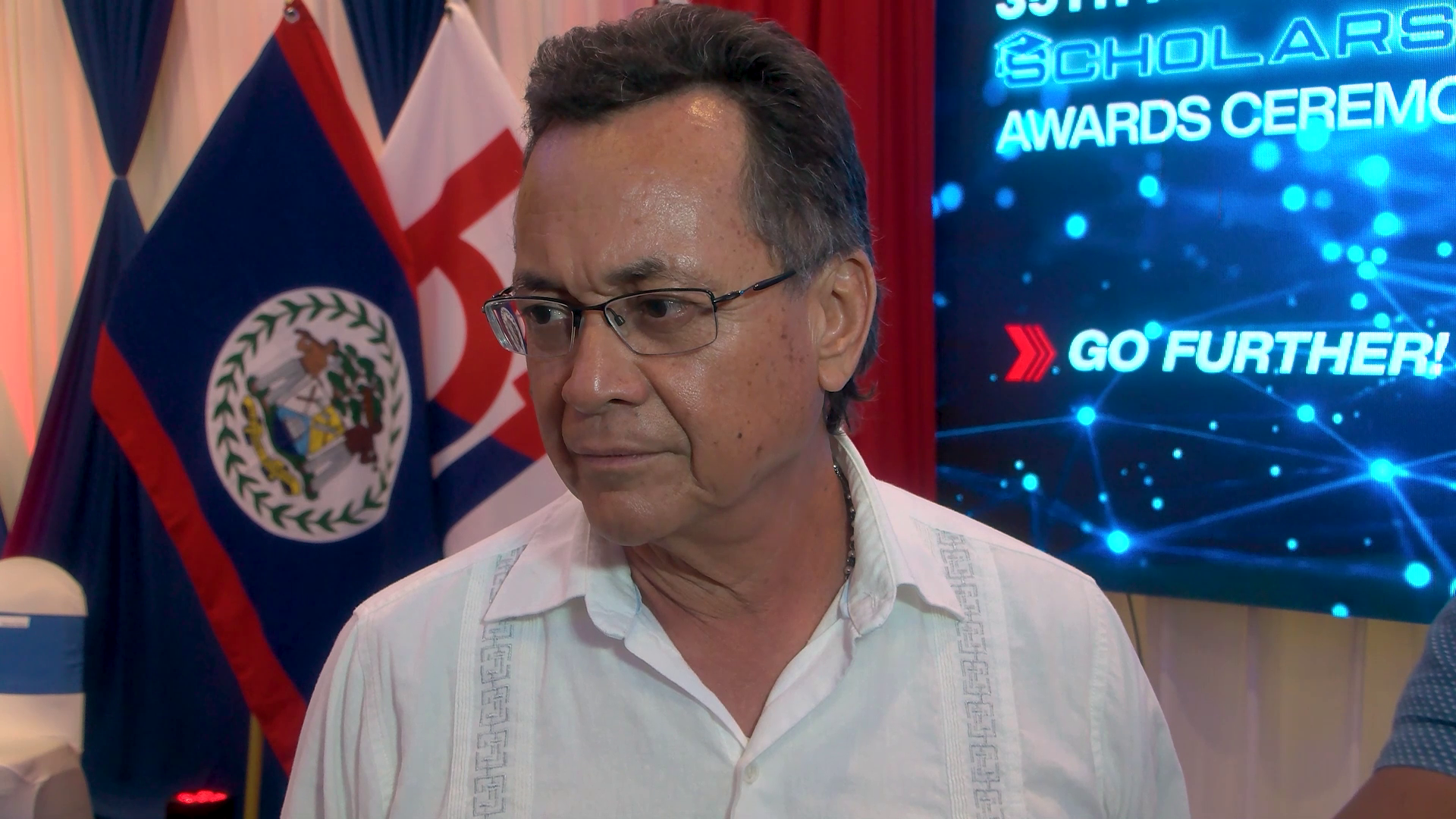
    The incident, first disclosed in official updates on May 28, 2026, has already drawn the attention of Belize’s Cabinet, which received a full briefing following the completion of an initial preliminary review last week. Tanya Santos, Chief Executive Officer of the Ministry of Immigration, confirmed that authorities have documented multiple suspicious incidents with hallmarks of criminal activity, falling clearly within the investigative jurisdiction of Belize’s police force.

    “We highlighted instances of those activities to them so they can come in do a deeper dive, a deeper investigation and find out more details of what was going on,” Santos said in an official briefing to reporters.

    When asked whether law enforcement had narrowed the focus of the probe to a single person of interest, Santos confirmed that as of the latest update, investigators are centering their work on one individual, though she added that the scope could expand if new evidence emerges pointing to additional co-conspirators.

    Alongside the probe into the missing public funds, the ministry has also submitted a separate police report over the unexplained disappearance of two official nationality certificates, documents that are critical for processing citizenship claims and verifying legal status for Belizean residents. Senior ministry officials have stressed that they are leaving no stone unturned in the parallel investigations, committing to full transparency and a complete public accounting once probes are complete.

    Authorities have moved quickly to tighten internal financial oversight across all ministry departments in the wake of the discovery, with investigators following every potential lead to trace the missing funds and hold responsible parties accountable. This report is adapted from a transcribed broadcast transcript of Belizean evening news, with all statements verified for accuracy prior to publication.

  • CEO Santos Reveals Corruption Concerns at Western Border

    CEO Santos Reveals Corruption Concerns at Western Border

    In a bombshell revelation that has shaken Belize’s immigration sector, Chief Executive Officer Tanya Santos of the country’s Ministry of Immigration has confirmed that an internal probe launched amid widespread rumors of a coordinated worker sickout at the western border has uncovered alleged corruption incidents at the key crossing.

    The controversy traces back several weeks, when reports of a mass staff absence at the western border checkpoint sparked speculation that employees had organized a coordinated sickout to protest working conditions or agency policies. That mass absence put significant strain on border processing operations, prompting the Ministry of Immigration to launch a full internal investigation to get to the bottom of the incident.

    Following the conclusion of the probe, Santos announced that investigators found no concrete evidence to back up claims of a pre-planned, coordinated sickout. Every employee who missed work provided apparently legitimate medical documentation approving their leave, and Santos noted that as head of the agency, it is not within her authority to override certified medical excuses for absence.

    Even without proof of a coordinated action, however, Santos made clear that the timing of the mass absences, the pattern of employees returning to work immediately after the peak of the protest-related tensions, and other surrounding circumstances still raise serious questions about the true nature of the sick leave. The investigation also captured multiple complaints from frontline staff about poor working conditions and unaddressed grievances within the western border division.

    Most notably, the probe uncovered separate allegations of ongoing corruption at the western border checkpoint, a critical port of entry for trade and travel between Belize and its neighbors. Santos confirmed that the corruption allegations are now being actively investigated by immigration officials, with new oversight measures being put in place to root out misconduct.

    To address both the staff grievances uncovered in the probe and the emerging corruption claims, the Ministry of Immigration has established a new independent internal grievance committee. The multi-stakeholder body includes senior immigration staff, external administrative experts, a retired senior public officer, in-house legal counsel, and the CEO herself, designed to deliver impartial reviews of both employee complaints and allegations of institutional misconduct.

    The original on-air broadcast of this report notes that all transcribed comments from speakers who used Kriol were converted to text using a standardized spelling system to preserve accuracy for online readers.

  • High-level meeting on securing production areas in Tabarre, Haiti

    High-level meeting on securing production areas in Tabarre, Haiti

    On May 27, 2026, Haitian government officials held a high-stakes inter-ministerial meeting in Tabarre to address escalating threats to local industrial operations, marking a critical milestone in the country’s efforts to reverse economic stagnation and protect thousands of private-sector jobs.

    The gathering grew out of commitments first made by Haiti’s Ministry of Public Works (MTPTC) in May 2025, when ministry leadership held initial consultations with major industrial firms operating across Tabarre municipality. This latest meeting expanded the conversation to include cross-government stakeholders from national security and economic portfolios, answering repeated calls for a coordinated, whole-of-government response to the region’s overlapping crises.

    Attendees included three top cabinet members: Public Works Minister Joseph Almathe Pierre Louis, Defense Minister Mario Andrésol, and Trade and Industry Minister James Monazard. They joined C-suite executives and official representatives from some of Haiti’s most prominent private companies, including iconic rum producer Société du Rhum Barbancourt, leading beverage manufacturer Brasserie de la Couronne, energy firms ECEM S.A. and E-Power, and local industrial leaders Comme Il Faut and Séjourné.

    Over the course of frank, solution-focused discussions, participants mapped out the two most pressing barriers to stable production: crumbling road infrastructure that disrupts supply chains, and a worsening regional security crisis that has brought many industrial operations to a standstill. Both challenges have put thousands of direct and indirect jobs at immediate risk, making swift intervention a priority for both government and private sector leaders.

    By the close of the working session, attendees agreed on a concrete next step: the establishment of a dedicated, cross-agency Task Force to oversee progress. The new body will be responsible for coordinated, rigorous monitoring of all ongoing discussions and action initiatives, aligning road rehabilitation projects led by the Ministry of Public Works, security enhancement strategies developed by the Ministry of Defense, and economic support programs rolled out by the Ministry of Trade and Industry.

    Through the creation of this Task Force, the Haitian government has reaffirmed its public commitment to turning rhetorical pledges into tangible action. The overarching goal of the initiative is to rebuild a stable, secure investment climate and clear the way for the safe, full resumption of economic activity across Tabarre’s key production zones.

  • Red Tape Slows Urgent Workplace Safety Reform

    Red Tape Slows Urgent Workplace Safety Reform

    Scheduled for months of advance review and stakeholder input, a landmark bill designed to strengthen national workplace safety protections has hit another unexpected bureaucratic roadblock, pushing its return to the National Assembly back by weeks and leaving worker advocacy groups waiting for action on a reform many call decades overdue. The Occupational Safety and Health Bill, which aims to address longstanding gaps in the country’s current worker protection framework, is currently stalled in the Senate review process. Even after upper chamber lawmakers have submitted a full set of recommended revisions to the legislation, the formal review and revision cycle remains far from complete, according to Tanya Santos, Chief Executive Officer of the national Ministry of Labor.

    In an interview Wednesday ahead of the announcement of the new delay, Santos clarified that the Senate’s recommendations run the gamut from high-level policy adjustments to granular technical changes that require cross-government coordination. “Some are at a policy level that we are discussing with the minister of labor. And others are technical that we can address with the Attorney General’s Ministry,” she explained, noting that the extended review comes even after multiple rounds of public and stakeholder consultations held in the early stages of drafting the legislation.

    The core sticking point that has emerged during the Senate review centers on provisions for workplace inspections in cases involving domestic workers, according to reporting on the stalled legislation. Currently, when a domestic worker files a safety or wage complaint, regulators face limitations accessing private home workplaces to verify claims, a gap the reform was intended to address. When asked how workers can pursue meaningful recourse without on-site inspections to confirm case facts, Santos noted that existing channels remain available to domestic workers even before the reform passes. “even currently there exist options for redress for domestic workers. There is the Labor Department. You can always go and lodge a complaint there. There is a Labor Complaint Tribunal. So any other measure would be additional if it comes to that,” she said. Santos added that the issue of domestic workplace inspections is still under active negotiation, and that the Ministry of Labor is working to craft a solution that balances the needs of all stakeholders. “It is all being looked at … we can look at it and come up with a favorable position for all parties,” she said.

    The Ministry of Labor has committed to responding to all of the Senate’s recommended changes within 30 days, but even after that step, additional rounds of debate and voting will be required before the bill can become law. For worker advocates who have pushed for this overhaul of outdated workplace safety rules for years, the new delay is yet another reminder of how bureaucratic gridlock can slow progress on urgent public policy priorities.

  • Wally Nuñez Won’t Budge, But Tzul Is Coming for the Top Job

    Wally Nuñez Won’t Budge, But Tzul Is Coming for the Top Job

    Nearly 12 months out from Belize’s 2027 municipal elections, the contest for San Pedro’s highest municipal office is already taking clear shape, emerging as one of the country’s most anticipated political contests in the coming election cycle.

    Incumbent mayor Wally Nuñez has shown no intention of ceding his position, confirming that he will launch a campaign for a third consecutive term in office. His re-election bid already carries formal backing from Andre Perez, the Area Representative for Belize Rural South, who publicly thrown his support behind the sitting mayor. Perez noted that while the party’s nomination process remains open to all interested candidates, Nuñez’s plan to seek re-election has his full endorsement.

    Nuñez will not run unopposed, however. Political veteran Celestino Tzul, who previously ran for a municipal council seat in 2018, has announced a challenge for the top post, leading a new political initiative he has branded the “New Era” movement. Tzul’s campaign centers on a platform of renewed governance, greater inclusion of young residents in local political processes, and targeted policy action to address unmet needs in the community.

    In his first public comments since launching his bid, Tzul framed his candidacy as a calling to public service, emphasizing that he is building a slate of candidates committed to collaborative accountability rather than blind top-down loyalty. He criticized the current administration for what he described as short-term, token projects that only temporarily placate residents instead of delivering the structural change needed to lift local communities out of hardship. If elected, Tzul says his administration will prioritize tangible action aligned with the actual needs of San Pedro residents, rather than the self-serving interests of incumbent officials.

    As the race takes shape, the main opposition United Democratic Party has not yet revealed its candidate for the San Pedro mayoral post, leaving voters and political observers waiting for the final line-up of contenders ahead of the official election campaign period.

  • Transfer Freeze Hits Resistance Inside Government Ranks

    Transfer Freeze Hits Resistance Inside Government Ranks

    In April 2026, the Ministry of Public Service implemented a sweeping government-wide moratorium on all public employee transfers, framed as a measure to streamline bureaucratic operations and cut administrative friction. Just two months later, however, the policy has hit unexpected internal pushback from a key government agency facing critical staffing gaps.

    Tanya Santos, Chief Executive Officer of the country’s Immigration Ministry, has publicly pushed back against the blanket freeze, arguing that the one-size-fits-all policy is severely hampering her department’s ability to address urgent staffing and leadership needs. According to Santos, the Immigration Ministry had already completed all required transfer paperwork and submitted requests in line with Public Service Regulations, which require all transfer processes to be finalized by the end of March — weeks before the moratorium was announced.

    Many of the transfers the department requested were tied to long-planned personnel rotations, with some employees set to return to their home stations and others scheduled to relocate to new ports of entry to align with service demand. Even after the freeze went into effect, the department submitted targeted, small-scale requests to fill critical gaps, but almost all have been rejected under the blanket policy. Among the blocked transfers are four senior management appointments meant to address understaffing in high-priority areas, Santos confirmed.

    One of the most high-priority gaps the blocked transfers were meant to fill is the country’s visa processing division, a department that has long faced public criticism for long wait times and backlogs. “We know we need more human resources to keep up with demand,” Santos explained in comments following the policy announcement. The rejections have left some local immigration offices without any senior leadership on staff, creating operational risks that could worsen existing service delays.

    Santos emphasized that the Immigration Ministry is not seeking to overturn the entire moratorium — only to secure exemptions for a small number of critical transfers that address pressing operational needs. Currently, the department is preparing to submit a new round of targeted requests, with the goal of convincing public service leaders that the blanket freeze is doing more harm than good in critical frontline agencies. What was initially designed as a policy to cut bureaucratic bottlenecks, it turns out, may be creating new, unplanned barriers to effective public service delivery.

  • Cabinet Halts Coastal Dredging Amid Public Outcries

    Cabinet Halts Coastal Dredging Amid Public Outcries

    BELIZE CITY – May 28, 2026 – Facing sustained public outcry and growing pressure from environmental advocacy groups over unregulated coastal development, Belize’s national Cabinet has approved an immediate temporary moratorium on all commercial dredging and private beach reclamation work across the country’s vulnerable shorelines. The pause will remain in effect while inter-agency officials craft a comprehensive, science-backed regulatory framework to oversee future coastal activities.\n\nThe decision comes after months of mounting pushback from coastal residents and community organizations, with the Ambergris North Alliance the most recent group to formally demand an end to unapproved dredging that they argue threatens both local ecosystems and the livelihoods of coastal communities. Blue Economy Minister Andre Perez, who confirmed the policy shift in a recent televised interview, noted that the government had heard widespread public concern and acted to address gaps in existing oversight.\n\nPerez explained that the temporary halt is not intended to permanently end legitimate coastal development, but rather to create space for all relevant government bodies to collaborate on a clear, consistent plan that balances economic activity with environmental protection. In the coming weeks, officials from the Department of the Environment (DOE), mining authorities, fisheries management, public health agencies, cultural heritage departments, and local town councils will convene to map out permitted activity zones across high-priority coastal areas, including San Pedro, Caye Caulker, Placencia, Hopkins, and St. Seine Bight.\n\nA key issue driving the moratorium is the proliferation of unapproved, haphazard development in popular coastal areas such as Secret Beach. Perez highlighted that many private developers have built illegal water-based platforms and structures without permits, even blocking public access to community docks in some cases. While the government aims to work with legitimate local businesses to address unmet infrastructure needs such as access to water and electricity, Perez emphasized that gaps in public services do not justify unlawful construction that harms coastal ecosystems.\n\nWhen asked about potential regulatory reforms to prevent future unapproved activity, Perez expressed full support for increasing fines for environmental violations. He argued that stiffer penalties are necessary to deter unauthorized dredging and construction, noting that most violating projects currently operate without any required government approvals. The temporary moratorium, Perez added, is designed to strengthen regulatory accountability, improve inter-agency coordination, and safeguard Belize’s ecologically critical coastline that supports both tourism and domestic fishing industries.\n\nThis report is adapted from a transcript of a May 28, 2026 evening television broadcast.